Posted on 01/05/2026 10:51:03 AM PST by ebb tide
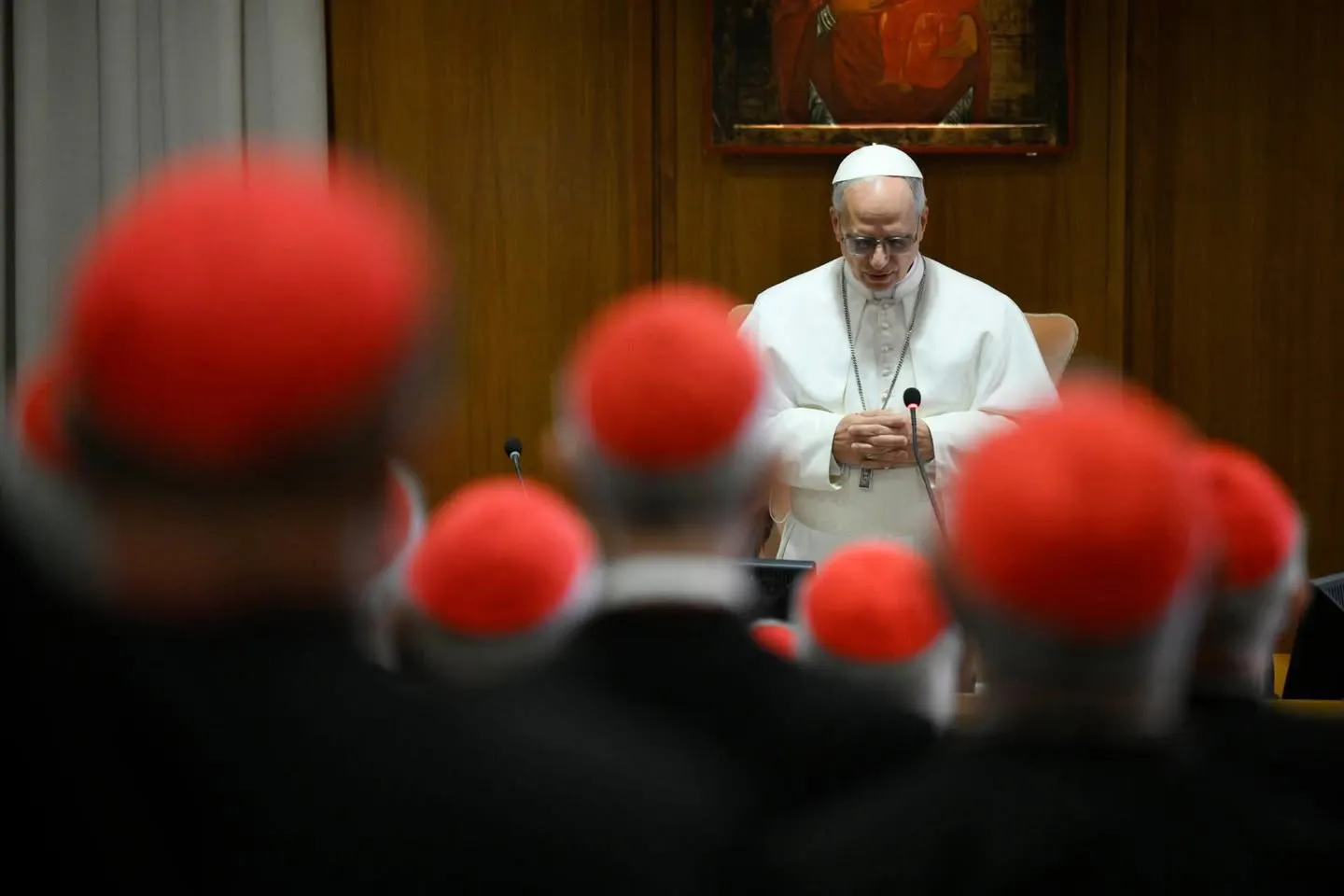
ROME, 5 January 2026 — In view of the liturgy being on the agenda at the extraordinary consistory of cardinals convened by Pope Leo XIV this week, one of France’s most senior traditionalist clergy has sent members of the Sacred College a letter proposing a new path for the ancient Roman Rite in the Catholic Church.
Published here exclusively in French and English translation, the letter aims to open a constructive dialogue and provide a stable pastoral framework for communities and faithful devoted to the traditional Roman liturgy.
Written by Father Louis-Marie de Blignières, founder of the Fraternity of Saint Vincent Ferrer, and dated Dec. 24, the letter was sent in hard copy to fifteen cardinals known for their concern for the traditional liturgy, and to an additional hundred cardinals by email. At its core is a proposal to establish an ecclesiastical jurisdiction—modeled in principle on Military Ordinariates—dedicated to the vetus ordo, offering a canonical structure that respects both tradition and communion with the Holy See.
Father de Blignières, 76, is widely regarded as having considerable moral authority and extensive experience in the traditionalist movement. In 1988, following the illicit episcopal consecrations by Archbishop Marcel Lefebvre, Father de Blignières was among the clergy who engaged in dialogue with Pope John Paul II, contributing to discussions that led to the creation of the Pontifical Commission Ecclesia Dei to reconcile groups attached to the traditional rite.
He served as prior of the Fraternity of Saint Vincent Ferrer from its founding in 1979 until 2011, and again from 2017 to 2023, leading the community for more than three decades across two terms.
The concept of an ecclesiastical jurisdiction dedicated to the Old Rite is not new and has been discussed, particularly among French traditionalist communities, for the past decade. Those conversations, however, largely paused after Pope Francis’ 2021 motu proprio, Traditionis Custodes, which imposed severe restrictions on the vetus ordo.
To understand how such a jurisdiction might function in practice, I spoke with Father Matthieu Raffray, Superior of the European District of the Institute of the Good Shepherd and a former philosophy lecturer at the Angelicum in Rome. Fr. Raffray, who is familiar with the letter and supportive of its proposal, brings extensive pastoral and institutional experience, as well as a social media apostolate that has led many people — particularly young adults — to convert or return to the Catholic faith.
In this interview, we discuss how an ecclesiastical jurisdiction dedicated to the ancient Roman liturgy might work—from its relation to ex-Ecclesia Dei communities, to priestly formation, to its impact on the celebration of the traditional liturgy in existing dioceses.
Father Raffray notes that the letter was not sent to Pope Leo XIV and is not a “request or demand.” Rather, he says, it is “a working hypothesis addressed to cardinals” ahead of the Jan. 7-8 consistory, and would naturally need to be examined and developed further, particularly with the assistance of canonists.
Such an approach, he says, “acknowledges from the outset that this proposal is not the only possible solution. It is likely that some members of traditional communities may not favor this path or may suggest alternative avenues of study. The letter does not seek to impose a uniform response, but to open a serious and reasoned discussion.”
According to Father Raffray, the letter’s most positive element is its constructive, proactive approach which aims at strengthening “ecclesial unity, in a spirit of communion and in service to the Holy See.”
Here is my interview with Father Matthieu Raffray.
Diane Montagna (DM): Fr. Raffray, what is the central aim of the letter sent to the cardinals by Father de Blignières?
Fr. Matthieu Raffray (MR): Its central aim is to propose a stable and constructive ecclesial solution to an opposition that has grown sterile and divided the Church for many years — between those attached to the ancient Latin rite and those who oppose it. Observing the pastoral and human impasse produced by this recurring conflict, the text seeks to move beyond confrontation and to open a positive path in the service of ecclesial communion.
This prolonged opposition has caused real suffering, particularly within communities attached to the traditional liturgy, which have often been placed in a situation of institutional fragility and, at times, confronted with attitudes suggesting that they have no legitimate future within the Church. The letter takes this reality seriously and underlines the urgency of a just, peaceful, and lasting solution.
In this perspective, it proposes the erection of a dedicated ecclesiastical jurisdiction—such as a personal apostolic administration or an ordinariate—providing a stable canonical framework for priests and faithful who are fully in communion with the Holy See and attached to the ancient Latin rite. Far from presenting this liturgy as a threat or as a nostalgic retreat into an idealized past, the text emphasizes its present fruitfulness as a genuine means of sanctification and evangelization, particularly in highly secularized societies.
Thus, the letter does not seek to revive a liturgical controversy, but to offer a pragmatic institutional response, in continuity with the Church’s living tradition, which has repeatedly devised juridical structures to safeguard unity while respecting legitimate diversity. Its distinctive merit lies in proposing a constructive way out of an impasse, rather than entering into a new phase of internal confrontation.
(DM): The letter proposes an ecclesiastical jurisdiction analogous in some respects to Military Ordinariates. For readers unfamiliar with these structures, could you explain how the proposed jurisdiction would function, particularly with regard to cumulative jurisdiction and relationships with local bishops of already existing dioceses?
(MR): The letter draws on the analogy of Military Ordinariates to show how the proposed solution could be integrated harmoniously into existing diocesan structures. A Military Ordinariate is a personal ecclesiastical jurisdiction, defined not by territory but by the persons who belong to it due to a particular pastoral need. In the present case, this need would consist in a free and voluntary attachment to the traditional liturgy.
The proposed jurisdiction would therefore overlap with territorial dioceses without replacing them, within a framework of complementarity and communion. The bishop entrusted with this structure—at the level of a country or a linguistic area—would work in coordination with diocesan bishops in order to discern, according to local contexts, the most appropriate pastoral arrangements.
A key point in this proposal is that it does not seek to isolate the faithful attached to the traditional liturgy, but rather to offer them a clear and legitimate pastoral framework, accessible to anyone who may benefit from it, whether on a temporary or a long-term basis. Placed under the authority of the Holy See and in harmony with local Ordinaries, such a jurisdiction could thus contribute to a more peaceful pastoral care, in the service of communion and unity within the Church.
What would the creation of an Ordinariate or personal ecclesiastical jurisdiction for the Vetus Ordo mean concretely for former Ecclesia Dei communities, such as your own? Is the intention that these communities would come under the authority of such an Ordinariate? Given the diversity among these communities, how would concerns about autonomy or charism be addressed?
Concretely, such a solution would not entail any substantial change in the status or internal life of the communities formerly associated with the Ecclesia Dei Commission. These institutes would retain their canonical autonomy, their proper governance, and their specific charism. As is already the case, their priests could be placed at the service of different ecclesial realities through clearly defined agreements: either within territorial dioceses, or, where pastoral needs so require, within the proposed Ordinariate or personal jurisdiction.
The relationships between these communities, the authority of the Ordinariate, and diocesan bishops would be regulated by clear canonical arrangements, ensuring respect for the respective competencies of each and full ecclesial communion. Such a configuration would allow the liturgical and pastoral experience of these communities to be placed at the service of the Church without absorbing or standardizing them, while offering a more stable and intelligible juridical framework for their mission.
How would priestly formation be organized within such an ecclesiastical jurisdiction? Would it envisage its own seminaries, shared seminaries, or cooperation with existing institutions? How would formation ensure both fidelity to tradition and full ecclesial communion?
In principle, an Ordinariate or a personal ecclesiastical jurisdiction could have its own seminary, provided that the pastoral, human, and institutional conditions allow for it. Such a possibility would, however, require prudent and gradual discernment and could not be envisaged in a uniform or immediate manner.
In practice, the organization of priestly formation would need to be adapted to the realities of each country or geographical area. Depending on the context, this could take various forms: the establishment of proper seminaries where the number of candidates and the stability of structures justify it; formation programs carried out within diocesan seminaries; or formation provided in seminaries or houses of formation belonging to communities specialized in the celebration of the traditional liturgy. Mixed solutions could also be envisaged, allowing for shared formation in certain academic disciplines while ensuring specific liturgical and spiritual formation.
Such a gradual and pragmatic approach, grounded in real pastoral needs, would provide the necessary guarantees to ensure both fidelity to the liturgical and doctrinal tradition proper to the Vetus Ordo and full insertion into ecclesial communion, under the authority of the Holy See and in coordination with the Church’s existing structures of formation.
What practical effects would the establishment of such a jurisdiction have on the use of the Vetus Ordo within existing dioceses, and on diocesan clergy who wish to celebrate it?
The establishment of a personal ecclesiastical jurisdiction dedicated to the Vetus Ordo would have primarily pastoral and pragmatic effects, to be discerned on a case-by-case basis, according to local circumstances. In dioceses where the local bishop and the faithful concerned are satisfied with existing arrangements, there would be no requirement to alter the current organization: the use of the Vetus Ordo could continue to be exercised fully within the ordinary diocesan framework.
By contrast, in situations marked by tension, or where a new group of faithful emerges, the proposed jurisdiction would provide a clear framework for mediation and coordination. In such cases, it would fall to the Ordinary of the personal jurisdiction to enter into dialogue with the diocesan Ordinary in order to identify the most appropriate pastoral solutions, with due respect for the respective competencies of each and for the good of the faithful.
With regard to diocesan clergy, several possibilities could be envisaged. Diocesan priests might be made available to the personal jurisdiction for a limited period or could request permanent incardination within it. This practice would follow an already well-established canonical model, comparable to that of diocesan priests who are assigned, either temporarily or definitively, to the service of Military Ordinariates.
Thus understood, the creation of such a jurisdiction would not aim to deprive dioceses of their clergy or to impose rigid solutions, but rather to offer canonical flexibility capable of responding more serenely to pastoral needs connected with the use of the Vetus Ordo, in the service of ecclesial peace and communion.
Given the geographical overlap between dioceses and the proposed ecclesiastical jurisdiction, could this structure offer solutions in situations involving church closures, underused buildings, or declining parochial life?
The question of places of worship and parochial structures once again calls for differentiated responses, grounded in pragmatic pastoral discernment and attentive to local realities. The geographical coexistence of territorial dioceses and a personal ecclesiastical jurisdiction would make it possible to offer flexible solutions to a wide range of situations.
In certain parts of the world, particularly in Europe, where an increasing number of churches are closed or underused, such a jurisdiction could provide a fruitful pastoral response. Church buildings could be entrusted to the Ordinariate by diocesan bishops through clearly defined agreements, ensuring both the preservation of ecclesiastical patrimony and the restoration of a stable liturgical and pastoral life.
In other contexts, for example in Latin America or Asia, where ecclesial dynamics are different and pastoral needs are more oriented toward growth than restructuring, the Ordinariate could instead encourage the construction of new places of worship, supported by local communities. Depending on circumstances, the acquisition of existing buildings suitable for liturgical and pastoral use could also be envisaged.
Thus, by virtue of its personal nature and its capacity for coordination with local Ordinaries, such a jurisdiction would be well placed to contribute in a realistic and orderly manner to the management of places of worship, supporting pastoral vitality where it is fragile and fostering a more fruitful use of existing ecclesial resources, always in a spirit of communion and respect for the responsibilities of diocesan bishops.
As the letter notes, this solution has been proposed several times in the past. Pope Benedict XVI established the Anglican Ordinariates through the 2009 Apostolic Constitution Anglicanorum coetibus yet chose a different approach—Summorum Pontificum—to address the Vetus Ordo. Why do you believe that a personal jurisdiction would be an appropriate or even preferable solution today?
Since the promulgation of Summorum Pontificum, traditional communities and groups tried to work directly with the parishes and dioceses, but the fact is that in some places it worked very well, while in other places it did not. Therefore, it seems reasonable to find a new solution and not to return to Summorum Pontificum.
The relevance today of a solution based on the establishment of a personal ecclesiastical jurisdiction rests, first of all, on a theological clarification. Indeed, the successive approaches to the Vetus Ordo have brought to light a real tension concerning its liturgical status. Pope Benedict XVI, in Summorum Pontificum, proposed a unifying interpretation by speaking of two forms—ordinary and extraordinary—of the one Roman rite. Pope Francis, by contrast, has explicitly affirmed that there exists only one form of the Roman rite, namely that which resulted from the liturgical reform.
Faced with this apparent contradiction, the most coherent solution would seem to be the recognition, de facto if not yet fully de iure, of the existence of two distinct Latin rites: an ancient or traditional Latin rite, and a reformed Latin rite. Such recognition would make it possible to move beyond a conceptual opposition that has become increasingly difficult to sustain, while offering a clearer theological and canonical framework.
The peaceful coexistence of two Latin rites would, moreover, be in keeping with the Church’s own tradition, which has long known how to accommodate a plurality of rites within the unity of ecclesial communion. It also corresponds to the Gospel image of the wise householder who “brings out of his treasure what is new and what is old,” acknowledging that the fruitfulness of tradition lies not in exclusion, but in the ordered integration of what has been received and what has been developed.
From this perspective, a personal ecclesiastical jurisdiction would appear not merely as a pastoral solution, but as the appropriate institutional expression of a theological reality that has now reached maturity: namely, the existence of two Latin rites called to coexist peacefully, in the service of the unity of the Church and of her evangelizing mission.
Was the letter sent to Pope Leo XIV?
To the best of my knowledge, the text was not sent directly to the Pope. This point itself is significant, for the letter does not present itself as a request or a demand, but rather as a working hypothesis addressed to cardinals in a preparatory context. It is proposed as a contribution to reflection, intended to be examined and developed further, particularly with the assistance of canonists.
Such an approach acknowledges from the outset that this proposal is not the only possible solution. It is likely that some members of traditional communities may not favor this path or may suggest alternative avenues of study. The letter does not seek to impose a uniform response, but to open a serious and reasoned discussion.
What appears most positive in this text is precisely this constructive spirit. Traditionalist communities have often been criticized for adopting a primarily reactive or critical posture. Here, by contrast, the letter seeks to contribute proactively to the building up of ecclesial unity, in a spirit of communion and in service to the Holy See.
Traditional Latin Mass which had been oppressed by the ape of the true church, the current fake pope and his predecessors since the illegitimate Vatican II. It was canonized in the Council of Trent and anyone who messes with it is an anathema.
Why post to a Catholic Caucus thread when you’re not even a Catholic?
It’s how the article title was written.
If you were a Catholic, you would have known what TLM stands for.
Benedict’s Motu Proprio on the Mass clarified that the TLM was always lawful in reality, and that the it could be celebrated in any parish where the faithful desired it. Now we’re talking about personal prelatures and ordinariates again. The nineties are calling, they want their failed ideas back.
It matters because this is a Catholic Caucus.
Are you a practicing Catholic? Yes or No?
LOL
Given that the TLM is a distinct minority when it comes to liturgical use among self-professed Catholics, I can easily imagine someone not recognizing the acronym at first glance if they’re not adjacent to that particular sphere of Catholics.
No one who lived through the suppression of the Tridentine Mass following the promulgation of Missale Romanum by Paul VI could make that claim with a straight face. (After all, the reason the TLM was called an indult prior to Summorum Pontificum was precisely because special permission was required to be allowed to offer it: the 1984 document Quattuor Abhinc Annos was the first Vatican concession of an indult for those who wished to use the old Missal, though it had severe restrictions; the second, wider indult came in John Paul II’s 1988 motu proprio Ecclesia Dei.)
The claim that the TLM was always lawful to celebrate was just pure historical revisionism by Ratzinger.
That's a bold-faced lie!
What rock did you crawl out from under?
PIUS EPISCOPUS
As soon as we were brought to the Apostolic throne, we directed our mind and strength without stint, and all our thoughts, to those measures appropriate to the preservation of true church worship; and those measures we strove to prepare, and, with God's help, to carry into effect with complete enthusiasm. Among the other decrees of the holy Council of Trent, we were appointed to publish and emend the sacred books, the catechism, the missal and the breviary. By the will of God the catechism for the instruction of the people has already been published; and the breviary, for the performance of the praises which are owed to God, has been revised. It then seemed altogether necessary that, so that breviary might be balanced by missal, as is right and proper (it being most fitting that as the church has one way of praising God, it should have one rite for the celebration of mass), we should consider as soon as possible what remains in this respect, namely the publication of the missal itself. We therefore held that the task should be entrusted to selected scholars, who have carefully collated the ancient codices, emended and incorrupt, both of our own Vatican Library, and others sought out from all parts. They have also consulted the writings of ancient and approved authors who have left to us records of the sacred arrangement of those same rites. Thus they have restored the missal itself to the original norm and rite of the Holy Fathers. On mature reflection we have commanded that this missal, now revised and corrected, should be printed at Rome as soon as possible, and, once printed, published; so that, the work begun, all may receive the fruits of this arrangement, namely, that priests may understand which prayers they should from now on use, what rites and what ceremonies they should keep to when celebrating mass.
We require then that all men, everywhere, shall embrace and observe the teachings of the sacred and holy Roman Church, mother and mistress of other churches; and that at no time in the future should mass be sung or recited otherwise than according to the manner of the missal which we have published, in any of the churches of the provinces of Christendom, of Patriarchal, Cathedral, Collegiate or parochial status, secular and regular belonging to any kind of order, monasteries, both of men and women, also the military orders, and churches without cure of souls or chapels, in which conventual Mass is customarily celebrated or ought to be celebrated according to the rite of the Roman Church, either aloud with a choir, or in a low voice. This we require even if these churches should have been in any way exempted by indult from the Apostolic See, by custom, privilege, and also by oath, by Apostolic confirmation, or if they should have been protected by any other permissions of any kind – unless from its first institution it was approved by the Apostolic See or by custom (or the said institution) of celebrating Masses in the same churches assiduously for more than two hundred years.
As we do not by any means remove from these the aforesaid constitution or custom of the celebration of Mass yet if this missal with the publication of which we have concerned ourselves, should seem preferable to them, we give permission that they may celebrate Masses according to it, if they have the consent of bishop or prelate and the whole chapter, all objections to the contrary notwithstanding; from all the other aforesaid churches taking away the use of the same missals and wholly and entirely rejecting them and decreeing that nothing shall ever be added to, taken from or changed in this our missal lately published, under pain of our indignation, we enact and ordain, by this our constitution, which shall be valid in perpetuity, commanding and strictly ordering each and every Patriarch and Administrator of the aforesaid churches, and other persons distinguished by any ecclesiastical rank, be they Cardinals of the Holy Roman Church or of any other grade and pre-eminence, that, in virtue of sacred obedience, they should from now on entirely abandon and completely reject all manners and rites from other missals which have hitherto customarily been observed, however ancient the missals; and that they should Sing and read the Mass according to the rite, mode, and norm which is now proclaimed by us through this missal; neither should they presume in the celebration of the Mass to add or recite any other ceremonies or prayers than those which are contained in this missal.
And we grant and allow, by Apostolic authority and for ever, according to the tenor of these presents, that they may from now on follow this same missal entirely when singing or reciting Mass, in any church whatever without any scruple of conscience, and without incurring any penalties, sentences, or censures, and that they may be able and have the power to use it freely and lawfully. We likewise order and declare that Prelates, Administrators, Canons, chaplains and other secular priests, by whatsoever name they are called, or regular priests of any order, may not be obliged to celebrate Mass in any other way than that which we have ordered; and that they cannot be forced or compelled by anybody to change this missal, and that this present letter cannot at any time be revoked or modified, but that it shall always remain firm and valid in its force.
All this is notwithstanding the premises and apostolic constitutions and ordinances, and general or special constitutions and ordinances published in provincial and synodal councils and also the use (i.e. usage or rite) of the aforesaid churches confirmed by the most ancient and venerable prescription of not more than two hundred years however – and any contrary laws and customs whatsoever. We will, and by the same authority decree, that, after the publication of this our edict and of the missal, priests who are present at the Roman Curia shall be obliged after a month to sing or read the Mass according to that missal; those who live this side of the Alps after three months; those who live beyond the Alps after six months, or as soon as this missal shall have been offered to them for sale. In order that the missal shall be kept incorrupt in all lands and free from faults and errors, We, by the same apostolic authority and tenor of these presents, prohibit all printers who dwell under the direct or indirect rule of Ourselves and the Holy Roman Church, under pain of the confiscation of their books and a hundred ducats of gold, to be applied ipso facto to the Apostolic Camera; and ether printers in whatever part of the world they live, under pain of excommunication, latae sententiae, and other penalties according to our discretion – we prohibit all these printers from in any way daring or presuming to print, set forth or receive this missal without our permission, or that of the special Apostolic Commissary to be appointed for this purpose by us; and unless full certification has previously been made by the name commissary to the same printer that the copy of the missal which is to be taken as the norm for printing others by the said printer has been collated with the missal printed in Rome in large format and that it agrees with it and does not differ from it in any particular.
But because it might be difficult for this letter to be taken to all parts of the Christian world, and brought at the earliest opportunity to everyone’s notice, we command that, according to custom, it be displayed and posted up at the Basilica of the Prince of the Apostles and the Apostolic Chancery and at one end of the Campus Florae; and we command that the same undoubted faith shall everywhere be placed in the printed copies of the same letter when copies of this letter have been printed, and signed by the hand of a public notary, and also authenticated by the seal of a person holding ecclesiastical office as is given, shown or exhibited to these presents. No man whatsoever may have permission to infringe these provisions containing our permission, statute, ordinance, mandate, precept, concession, indult, declaration, will, decree and prohibition, or be so rash as to oppose them. But if anyone should presume to attempt this, he must know that he will incur the wrath of Almighty God and of his Blessed Apostles Peter and Paul.
Given at Rome at St. Peters, in the year of the Incarnation of Our Lord 1570, on the day before the Ides of July, in the fifth year of our pontificate.
Quo Primum guarantees the right of every priest to say the Roman Mass in perpetuity, and Benedict was clarifying that. The corrupt churchmen who persecuted priests for saying the Mass were the ones breaking the laws of the Church.
The same rock that Ratzinger was under when he referred to the TLM as a dead liturgy in the late '60s.
It is a historical fact that the TLM was suppressed in favor of the Novus Ordo Missae. To say it was always "lawful" to celebrate after the fact (de facto or de jure) is a falsehood.
After all, Quo Primum is literally referred to by Paul VI prior to remarking the Roman Rite is to be revised and promulgated accordingly:
In this revision of the Roman Missal...In conclusion, we wish to give the force of law to all that we have set forth concerning the new Roman Missal...We order that the prescriptions of this Constitution go into effect November 30th of this year, the first Sunday of Advent. We wish that these Our decrees and prescriptions may be firm and effective now and in the future, notwithstanding, to the extent necessary, the apostolic constitutions and ordinances issued by Our predecessors, and other prescriptions, even those deserving particular mention and derogation.
It is therefore permitted to celebrate the Sacrifice of the Mass following the typical edition of the Roman Missal, which was promulgated by Blessed John XXIII in 1962 and never abrogated, as an extraordinary form of the Church’s Liturgy.
???
Go crawl back under your rock.
Disclaimer: Opinions posted on Free Republic are those of the individual posters and do not necessarily represent the opinion of Free Republic or its management. All materials posted herein are protected by copyright law and the exemption for fair use of copyrighted works.