Posted on 12/27/2025 11:04:12 AM PST by fidelis
By Dr. John Bergsma
The Sunday that falls in the Octave of the Solemnity of Christmas is dedicated to celebrating the Holy Family. The Readings for this Sunday focus on the rights and responsibilities of family members toward each other, and the Gospel focuses on the role of the “most forgotten” member of the Holy Family, St. Joseph, who cared for and protected the Blessed Mother and infant Jesus through the dangerous early years of Jesus’ childhood.
1. The First Reading is Sirach 3:2-6, 12-14:
God sets a father in honor over his children; a mother’s authority he confirms over her sons.
Whoever honors his father atones for sins, and preserves himself from them. When he prays, he is heard; he stores up riches who reveres his mother. Whoever honors his father is gladdened by children, and, when he prays, is heard. Whoever reveres his father will live a long life; he who obeys his father brings comfort to his mother.
My son, take care of your father when he is old; grieve him not as long as he lives. Even if his mind fail, be considerate of him; revile him not all the days of his life; kindness to a father will not be forgotten, firmly planted against the debt of your sins —a house raised in justice to you.
Sirach is the last of the wisdom books in the Catholic order of the canon, and may be regarded as a massive summation of the Israelite wisdom tradition composed around 200 BC. In fact, Sirach is truly a meditation on the entire body of Israel’s Scriptures from the perspective of wisdom, that is, the practical knowledge of successful living. Because Sirach provides such a useful digest of the moral message of the Old Testament Scriptures, the early Church used it heavily in catechesis, earning it the name “Ecclesiasticus,” that is, “the Church book.”
Sirach excels in giving practical advice—teaching people the application of natural virtues in daily life. Early on, the Church realized that it was difficult to catechize pagan cultures that did not practice the natural virtues well. Theological virtues—faith, hope, and love—rest upon and perfect the natural virtues—prudence, justice, fortitude, and temperance. The Book of Sirach was employed to form people in basic Judeo-Christian morality and family life. Leading a moral and well-ordered natural life is, of course, not ultimate goal of the Christian life—union with God is. However, it is very difficult to make progress in union with God in the midst of immorality and disorder.
The teaching of the Book of Sirach frequently strikes us these days as quaint or dated. However, our modern alternatives to the moral vision laid out in this book have not been empirically successful—by almost any psychological or sociological measure, our culture is growing more unhealthy and dysfunctional. Sirach has been treasured in Christianity (and even in Judaism) for centuries because its principles work.
The first paragraph of this Reading from Sirach focuses on the responsibility of children to revere their parents. One’s relationship with one’s parents affects one’s relationship to God: it preserves one from sin, merits forgiveness of sin, and makes one’s prayers efficacious.
Happy is the person who finds it easy to revere his father and mother, because they are virtuous and admirable people! You are truly blessed in body and soul. But many of us meditating on these Readings struggle with this command to revere parents, because we have been hurt by them: perhaps we are children of divorce or were abandoned my father or mother. Perhaps we suffered abuse of some kind. How then do we react to this Reading?
It is still applicable to us. Our identity is so strongly bound up with our parents that hatred of them becomes self-hatred, damaging us at the core of our being. So for the sake of our own health and the health of our relationship to God, we need to pray for divine strength—what we call “Grace”—to forgive hurts that otherwise are beyond our ability to forgive, and ask God to show us whatever was good, true, and beautiful in our parents, in order that we may emphasize and dwell on that.
Isn’t this part of “loving our neighbors as ourselves”? Aren’t we conscious of ways we sinned against our own children, and don’t we hope they will come one day to forgive our vices and emphasize our virtues? This Reading from Sirach is, in a way, an application to the child-parent relationship of the principle of the Lord’s prayer: “Forgive us our trespasses, as we have forgiven those who trespass against us,” because “if you forgive men their trespasses, your heavenly Father also will forgive you; but if you do not forgive men their trespasses, neither will your Father forgive your trespasses.” (Matthew 6:14-15).”
The second paragraph of this First Reading especially commends honoring one’s father in his old age. These verses remind us of the times that Pope Francis, like his predecessors, has emphasized that the moral measure of a society—and we may add, of individuals, too—is how we treat the very old and the very young, those who don’t seem to “contribute” very much to the economy. This de-supernaturalized way of evaluating human worth is contrary to the Gospel of Jesus Christ. The elderly deserve honor and care for their own sake, as image-bearers of God. Moreover, since there is an order to charity, those closest to us (like our parents) have the first claim on our love. Therefore, much later in salvation history, St. Paul will affirm: “If any one does not provide for his relatives, and especially for his own family, he has disowned the faith and is worse than an unbeliever” (1 Timothy 5:8). Why “worse than an unbeliever?” Because he brings discredit to the Christian faith.
2. Responsorial Psalm is Psalm 128:1-2, 3, 4-5:
Blessed is everyone who fears the LORD,
who walks in his ways!
For you shall eat the fruit of your handiwork;
blessed shall you be, and favored.
R. Blessed are those who fear the Lord and walk in his ways.
Your wife shall be like a fruitful vine
in the recesses of your home;
your children like olive plants
around your table.
R. Blessed are those who fear the Lord and walk in his ways.
Behold, thus is the man blessed
who fears the LORD.
The LORD bless you from Zion:
may you see the prosperity of Jerusalem
all the days of your life.
R. Blessed are those who fear the Lord and walk in his ways.
This psalm emphasizes the natural blessing that family life is. One of the blessings God grants to the one who fears him is the joy of married love and fruitfulness:
Your wife shall be like a fruitful vine
in the recesses of your home;
your children like olive plants
around your table.
This does not rule out the possibility that person may sacrifice the great good of family life in order more radically to be devoted to God through a life of celibacy (Matthew 19:10-12). But the person who gives up family life because he or she has contempt for them, misunderstands the call to religious life. Marriage and family life are a great good. They mirror the life of the Trinity, since God Himself—Father, Son, and Holy Spirit—is familial in his nature. “Father” and “Son,” after all, are family terms. Apostolic celibacy gains its value because it is the sacrifice of a great good (a spotless lamb) in order more fully to dedicate this temporal life to God and to His sacramental family, the Church.
Sadly, marriage and family life are not even perceived as desirable goods by many in our culture. Marriage rates are dropping and too often children are perceived as a burden and distraction from our career or hobbies. Is that well-ordered? Is your job at some corporation really a greater eternal good than one’s own child? We are very far from seeing reality through the eyes of God.
3. The Second Reading is Colossians 3:12-21:
Brothers and sisters: Put on, as God’s chosen ones, holy and beloved, heartfelt compassion, kindness, humility, gentleness, and patience, bearing with one another and forgiving one another, if one has a grievance against another; as the Lord has forgiven you, so must you also do. And over all these put on love, that is, the bond of perfection. And let the peace of Christ control your hearts, the peace into which you were also called in one body. And be thankful. Let the word of Christ dwell in you richly, as in all wisdom you teach and admonish one another, singing psalms, hymns, and spiritual songs with gratitude in your hearts to God. And whatever you do, in word or in deed, do everything in the name of the Lord Jesus, giving thanks to God the Father through him.
Wives, be subordinate to your husbands, as is proper in the Lord. Husbands, love your wives, and avoid any bitterness toward them. Children, obey your parents in everything, for this is pleasing to the Lord. Fathers, do not provoke your children, so they may not become discouraged.
This Reading breaks down into two main sections: the first concerns how to behave with the spiritual family which is the Church, the second how to behave within the natural family, the ecclesia domestica, the domestic Church.
The second section lays out responsibilities of family members toward one another. “Wives, be subordinate to your husbands, as is proper in the Lord.” This is because, throughout Scripture, beginning with Adam in the Garden-sanctuary of Eden, the ideal held up for the father and husband is to serve as the priest or spiritual leader of the family, the domestic church. To do this, he needs the support of his wife. He needs her both to expect him to be and to respect him as the “family priest,” as it were. The children will take their cue from their mother. If they see she does not respect her husband or look to him for spiritual leadership, neither will they. Let’s remember the Blessed Mother, who—though she was the sinless Mother of God—looked with respect on St. Joseph and honored him as her husband.
To lead the family toward God is the responsibility of a husband and father, but one that is frequently shirked. When I worked in urban ministry, I encountered fathers who were willing to send their kids to Church or youth programs, as long as they weren’t involved. I told them that, statistically, they'd do more for their children by leaving the kids and home and coming to worship themselves.
St. Paul moves on to speak of the husband’s responsibility: “love your wives and avoid any bitterness toward them.” A longer treatment of the husband’s responsibility is found in the famous passage of Ephesians 5, which likens the husband’s love of his wife to that of Christ for the Church. Thus, the model of Christ’s love even to a sacrificial death is held out as normative for husbands. This is a high calling. It also rules out any abuse, any selfishness, any chauvinism, any “machismo” on the part of the husband. Any such thing is a disorder incompatible with the command to love one’s wife as Christ loved the Church. Though the husband many be the priest of the domestic church, this is for him a role of service, not one of “lording it over others” (see Luke 22:25-26).
St. Paul moves on to speak of children and fathers. “Children, obey your parents in everything.” Of course, this does not mean to obey parents in anything that is sinful. Obedience is always guided by the moral law of God. In moral issues, “we must obey God rather than men” (Acts 5:29). This holds true also for sins against our person. We are not called to submit to offenses against our person perpetrated by one in authority.
But St. Paul presumes the good will of parents in this passage, and so says, “obey your parents in everything,” knowing that parents typically have the best interest of their children at heart, and that, moreover, willful disobedience just introduces chaos into the home.
Then he says, “Fathers, do not provoke your children, lest they become discouraged.” Notice that he addresses fathers! He assumes that fathers take an active role in the raising of their children, and of setting family policy! He assumes they do more than come home from work and sit on the couch drinking beer and watching football! The role of the father is so important in children’s development. Let’s not listen to the lies of those who say the father can be replaced without harm: that is bad science and bad theology. The father who is a strong, loving, and directing presence in his children’s lives contributes greatly to their spiritual and psychological health, and makes it easier for them to find faith in a God who calls Himself “Father.”
(I highly recommend the book Biblical Faith and Fathering by John W. Miller for priests, catechists, and all those in a teaching role in the Church. It makes a strong theological and sociological argument for the unique contribution of biblical religion to the human family and especially the role of the father in society.)
4. The Gospel is Matthew 2:13-15, 19-23:
When the magi had departed, behold, the angel of the Lord appeared to Joseph in a dream and said, “Rise, take the child and his mother, flee to Egypt, and stay there until I tell you. Herod is going to search for the child to destroy him.” Joseph rose and took the child and his mother by night and departed for Egypt. He stayed there until the death of Herod, that what the Lord had said through the prophet might be fulfilled,
Out of Egypt I called my son.
When Herod had died, behold, the angel of the Lord appeared in a dream to Joseph in Egypt and said, “Rise, take the child and his mother and go to the land of Israel, for those who sought the child’s life are dead.” He rose, took the child and his mother, and went to the land of Israel. But when he heard that Archelaus was ruling over Judea in place of his father Herod, he was afraid to go back there.
And because he had been warned in a dream, he departed for the region of Galilee. He went and dwelt in a town called Nazareth, so that what had been spoken through the prophets might be fulfilled,
He shall be called a Nazorean.
This Gospel is one of the few that focuses on St. Joseph as the protagonist. Let’s recall a few facts about such a great but overlooked saint. St. Joseph was of royal blood. In fact, he himself was heir to the throne of Jerusalem: that is the point of the genealogy of Matthew 1. However, although he is the legitimate heir, he has to flee from the imposter who actually sits on the throne: Herod, a half-Jewish, half-Edomite aristocrat and politician who bribed, manipulated, and married his way onto the throne of Israel. Herod is one of the original anti-Christ figures of the Bible.
Although St. Joseph was of the royal line of the tribe of Judah, he’s named after the patriarch of a different tribe, one that always rivaled Judah for leadership of the twelve tribes of Israel (cf. Genesis 49:10 & 26, NAB). Like Joseph of the coat-of-many-colors fame, St. Joseph is particularly open to communication from God, and receives revelatory dreams that involve traveling to Egypt and preserving God’s people from harm.
In this period of salvation history, the safety of the Holy Family and thus the preservation of the hope of salvation for the entire human family is all in St. Joseph’s hands. Mary is immaculate, the child Jesus divine, but like many good action flicks, at the moment of crisis the plot is all in the hands of the one character who does not have “superpowers”! In this way St. Joseph is a type of the believer: Jesus entrusts himself to us, he dwells within us through his Spirit and the Eucharist. In a way, too, through the communion of saints in the Spirit, the Blessed Mother dwells with us (John 19:27). But how well do we cherish the Lord and his mother who have been entrusted to us? Do we allow their life to flourish, such that we can say, “It is no longer I who live, but Christ who lives in me?” (Galatians 2:20).
What does the Scripture highlight about St. Joseph? What qualities does it put forward as the virtues that made him successful in the role to which God called him?
We note two qualities in this passage: (1) He was open to hear the voice of God, and (2) he was prompt in obedience.
Practically speaking, being open to hear the voice of God in our own lives usually requires certain habits, among which we may list: (1) devoting adequate time to prayer, including silence in prayer when we can let our heart be moved by God; (2) reading and meditating on Scripture, through which God speaks to us; (3) the counsel of a holy confessor or spiritual director; (4) the practice of penance and (at least small) mortifications, through which we develop detachment from the material goods and pleasures that often dull our spiritual senses.
Hearing the word of God for us must lead to action, however. Some spiritual writers say that God stops sending inspirations when we habitually refuse to act on them.
St. Joseph sets an example for all Christian fathers in particular, and for all believers generally, of how to hear God’s Word and obey it. St. Joseph, pray for us!
Please keep in mind that this is a Catholic Caucus/Devotional thread for the purpose of prayerful reflection on the Sacred Scriptures and is closed to debate of any kind. Per FR policy on Religion Caucus threads, off-topic, argumentative, and abusive comments are not allowed and will be submitted to the Mods for deletion. Thanks, and God bless you and have a holy Lord’s Day.

Pinging the weekly Sacred Page list!

This Sunday’s First Reading
From: Sirach 3:2-6, 12-14
Duties Towards Parents
-----------------------------
[2] For the Lord honored the father above the children, and he confirmed the right of the mother over her sons. [3] Whoever honors his father atones for sins, [4] and whoever glorifies his mother is like one who lays up treasure. [5] Whoever honors his father will he gladdened by his own children, and when he prays he will he heard. [6] Whoever glorifies his father will have long life, and whoever obeys the Lord will refresh his mother.
[12] 0 son, help your father in his old age, and do not grieve him as long as he lives; [13] even if he is lacking in understanding, show forbearance; in all your strength do not despise him. [14] For kindness to a father will not be forgotten, and against your sins it will be credited to you
***********************************************************************
Commentary:
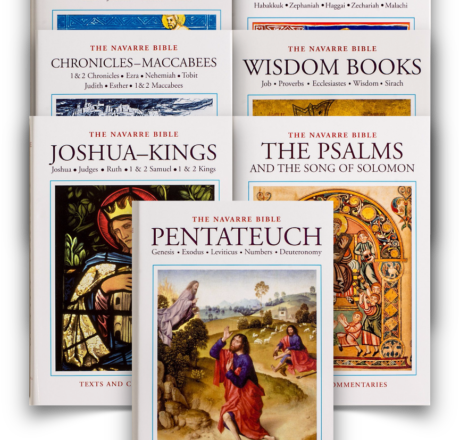
3:1-16:23. Throughout the book each doctrinal passage is followed by a section to do with practical applications, sapiential thoughts on moral conduct, eulogies of virtues and sapiential advice on where to seek things that are truly good, etc. This is the first such section. In it the reader will find an exhortation to prudence in all its various forms.
3:1-16. Traditional wisdom encourages people to be observant and to reflect on life in order to discover the best route to happiness. Here it focuses on the relationship between children and their parents: honoring one’s parents brings blessings.
However, Ben Sirach’s viewpoint is primarily a religious one. “Whoever fears the Lord will honor his father” (v. 7, RSV note m). The Decalogue laid this down very clearly: “Honor your father and your mother, as the Lord your God commanded you; that your day may be prolonged, and that it may go well with you, in the land ...“ (Deut 5:16; cf. Ex 20:12), and these verses are a valuable commentary that is generous in its praise of those who attend to that commandment. Very appropriately, the Church uses these verses as the first reading on the feast of the Holy Family, for God honors Mary and St Joseph by entrusting Jesus to their care.
Finally (cf. vv. 12-26), the passage dwells on children’s duties to their parents when they can no longer look after themselves: The fourth commandment reminds grown children of their "responsibilities toward their parents". As much as they can, they must give them material and moral support in old age and in times of illness, loneliness or distress. Jesus recalls this duty of gratitude (cf. Mk 7:10-12)” ("Catechism of the Catholic Church", 2218).
From: Colossians 3:12-21
Progress in the Spiritual Life
------------------------------
[12] Put on then, as God's chosen ones, holy and beloved, compassion, kindness, lowliness, meekness, and patience, [13] forbearing one another and, if one has a complaint against another, forgiving each other; as the Lord has forgiven you, so you also must forgive. [14] And above all these put on love, which binds everything together in perfect harmony. [15] And let the peace of Christ rule in your hearts, to which indeed you were called in the one body. And be thankful. [16] Let the word of Christ dwell in you richly, as you teach and admonish one another in all wisdom, and as you sing psalms and hymns and spiritual songs with thankfulness in your hearts to God. [17] And whatever you do, in word or deed, do everything in the name of the Lord Jesus, giving thanks to God the Father through him.
Morals in Family Life
---------------------
[18] Wives, be subject to your husband as is fitting in the Lord. [19] Husbands, love your wives, and do not be harsh with them. [20] Children, obey your parents in everything, for this pleases the Lord. [21] Fathers, do not provoke your children, lest they become discouraged.
***********************************************************************
Commentary:
12-13. Putting on the new nature is not just an external action, like putting on different clothes. It is a transfiguration involving the whole person--soul and body, mind and will. This interior change begins to operate when one makes a firm resolution to lead a fully Christian life; but it calls for an on-going effort, day in day out, to practice all the virtues. "Conversion is something momentary; sanctification is the work of a lifetime. The divine seed of charity, which God has sown in our souls, wants to grow, to express itself in action, to yield results which continually coincide with what God wants. Therefore, we must be ready to begin again, to find again--in new situations—the light and the stimulus of our first conversion" (St J. Escriva, "Christ Is Passing By", 58).
The virtues which the Apostle lists here as characteristic of the new man are all expressions, in one way or another, of charity, which "binds everything together in total harmony" (v. 14). Meekness, patience, forgiveness and gratefulness all reflect an essential virtue--humility. Only a humble person can be forgiving and truly appreciative, because only he realizes that everything he has comes from God. This realization leads him to be understanding towards his neighbor, forgiving him as often as needs be; by acting in this way he is proving the genuineness of his faith and love.
See the note on Eph 4:20-24.
14. The comparison of the new nature to a new outfit is extended here by a further metaphor: charity is the belt which keeps everything together. Without it the other virtues would fall apart: supernatural virtue could not survive (cf. 1 Cor 13:1-3). St Francis de Sales uses simple examples to explain this truth: "Without cement and mortar, which knits the bricks together and strengthens the walls, the entire building is bound to collapse; a human body would simply disintegrate unless it had nerves, muscles and tendons; and if charity were absent, virtues simply could not stay together" (St Francis de Sales, "Treatise on the Love of God", 11, 9).
"Love, as the bond of perfection and fullness of the law (cf. Col 3:14; Rom 13:10), governs, imbues, and perfects all the means of sanctification" (Vatican II, "Lumen Gentium", 42). Therefore, "if we want to achieve holiness--in spite of personal shortcomings and miseries which will last as long as we live--we must make an effort, with God's grace, to practice charity, which is the fullness of the law and the bond of perfection. Charity is not something abstract, it entails a real, complete, self-giving to the service of God and all men --to the service of that God who speaks to us in the silence of prayer and in the hubbub of the world and of those people whose existence is interwoven with our own. By living charity--Love--we live all the human and supernatural virtues required of a Christian" (St J. Escriva, "Conversations", 62).
15. The "peace of Christ" is that which flows from the new order of grace which he has established; grace gives man direct access to God and therefore to that peace he so much yearns for. "Thou has made us for thyself and our hearts are restless till they rest in thee" (St Augustine, "Confessions", 1, 1). This is not a peace the world can give (cf. Jn 14:27), because it is not a function of purely material progress or well-being, nor does it derive from the sort of peace that should obtain among nations. "Peace on earth, which men of every era have most eagerly yearned for, can be firmly established only if the order laid down by God is dutifully observed" (John XXIII, "Pacem In Terris", 1).
The peace of Christ, then, is "a peace that comes from knowing that our Father God loves us, and that we are made one with Christ. It results from being under the protection of the Virgin, our Lady, and assisted by St Joseph. This is the great light that illuminates our lives. In the midst of difficulties and of our personal failings, it encourages us to keep up our effort" (St J. Escriva, "Christ Is Passing By", 22).
16. "The word of Christ": the whole corpus of our Lord's teachings, of which the Apostles are accredited witnesses. This should be ever-present to the Christian's soul and "dwell...richly" in him, imbuing everything he does: the word of Christ is the best nourishment of one's life of prayer and an inexhaustible source of practical teaching; and it is to be found in the first instance in the books of the New Testament. St John Chrysostom says that these writings "are teachers which never cease to instruct us [...]. Open these books. What a treasury of good remedies they contain! [...]. All you need do is look at the book, read it and remember well the wise teachings therein. The source of all our evils is our ignorance of the sacred books" ("Hom. on Col, ad loc.").
St Paul also reminds us that our appreciation should lead us to glorify the Lord with songs of joy and gratitude. We can use ready-made hymns for this purpose, and also the Psalms, which the Church has always used in its liturgy to praise God and to nourish the spiritual life. "Just as the mouth savors good food, so does the heart savor the Psalms" (St Bernard, "Sermons on the Song of Songs", 7, 5).
See the note on Eph 5:19.
17. All genuinely human things can and should be sanctified (cf. 1 Cor 10:31), by being done perfectly and for love of God.
The Second Vatican Council has recalled this teaching: "Lay people [...], while meeting their human obligations in the ordinary conditions of life, should not separate their union with Christ from their ordinary life; through the very performance of their tasks, which are God's will for them, they actually promote the growth of their union with him. This is the path along which lay people must advance, fervently, joyfully" ("Apostolicam Actuositatem", 4).
This teaching was very much part of the message and life of the founder of Opus Dei: "I assure you, my children, that when a Christian carries out with love the most insignificant everyday action, that action overflows with the transcendence of God. That is why I have told you repeatedly, and hammered away once and again on the idea, that the Christian vocation consists in making heroic verse out of the prose of each day. Heaven and earth seem to merge, my children, on the horizon. But where they really meet is in your hearts, when you sanctify your everyday lives" ("Conversations", 116).
The Second Vatican Council also sees in this passage of Colossians a basis for ecumenical dialogue with non-Catholics: "And if in moral matters there are many Christians who do not always understand the Gospel in the same way as Catholics, and do not admit the same solutions for the more difficult problems of modern society, they nevertheless want to cling to Christ's word as the source of Christian virtue and to obey the command of the Apostle: [Col 3:17 follows]" ("Unitatis Redintegratio", 23).
18-19. In the period when this epistle was written, especially in the East, women were regarded as inferior to men. St Paul does not make a direct attack on the customs of his time, but the way he focuses the question of the role of women provides the elements of an answer to it. He identifies what a woman's role in the family should be: it is true that the husband has an important part to play, but the wife also has a role to perform and one which is non-transferable. The wife is not the husband's slave: she is his equal in dignity and must be treated by him with respect and sincere love. It is taken for granted that the family needs a center of authority, and that this authority belongs to the husband, in accordance with God's design (cf. 1 Cor 11:3, 12-14). "The place and task of the father in and for the family is of unique and irreplaceable importance [...]. In revealing and in reliving on earth the very fatherhood of God (cf. Eph 3:15), a man is called upon to ensure the harmonious and united development of all the members of the family" (John Paul II, "Familiaris Consortio", 25).
God gave Eve to Adam as his inseparable companion and complement (cf. Gen 2:18); she was therefore duty-bound to live in peace with him. Man and woman have different, though complementary, roles in family life; they are equal in dignity, by virtue of the fact that they are human persons: "The unity of marriage, distinctly recognized by our Lord, is made clear in the equal personal dignity which must be accorded to man and woman in mutual and unreserved affection" (Vatican II, "Gaudium Et Spes", 49).
Therefore, a husband should make a special effort to love and respect his wife: "You are not her master", writes Saint Ambrose, "but her husband; she was not given to you to be your slave, but your wife [...]. Reciprocate her attentiveness to you and be grateful to her for her love" ("Exameron", 5, 7, 19 quoted in "Familiaris Consortio", 25).
See the note on Eph 5:22-24 and 5:25-33.
20-21. Children should obey their parents in everything, as God has commanded (cf. Ex 20:12; Sir 3:8ff)--a commandment which shows that this is something which is part of human nature. Obviously for a child's obedience to "please the Lord" it must not involve doing anything that is opposed to God's will, for Jesus taught that "he who loves father or mother more than me is not worthy of me" (Mt 10:37).
For their part, parents must do everything they can to bring up their children well. In every family there should be an "educational exchange between parents and children (cf. Eph 6:1-4; Col 3:20f) in which each gives and receives. By means of love, respect and obedience towards their parents, children offer their specific and irreplaceable contribution to the construction of an authentically human and Christian family (cf. "Gaudium Et Spes", 48). They will be aided in this if parents exercise their unrenounceable authority as a true and proper 'ministry', that is, as a service to the human and Christian well-being of their children, and in particular as a service aimed at helping them acquire a truly responsible freedom" ("Familiaris Consortio", 21). See the note on Eph 6:1-4
From: Matthew 2:13-15, 19-23
The Flight into Egypt
---------------------
[13] Now when they (the Magi) had departed, behold, an angel of the Lord appeared to Joseph in a dream and said, "Rise, take the Child and His mother, and flee to Egypt, and remain there till I tell you; for Herod is about to search for the Child, to destroy Him." [14] And he rose and took the Child and His mother by night, and departed to Egypt, [15]and remained there until the death of Herod. This was to fulfill what the Lord had spoken by the prophet, "Out of Egypt have I called My Son."
The Return to Nazareth
----------------------------------
[19] But when Herod died, behold, an angel of the Lord appeared in a dream to Joseph in Egypt, saying, [20] "Rise, take the child and his mother, and go to the land of Israel, for those who sought the child's life are dead." [21] And he rose and took the child and his mother, and went to the land of Israel. [22] But when he heard that Archelaus reigned over Judea in place of his father Herod, he was afraid to go there, and being warned in a dream he withdrew to the district of Galilee. [23] And he went and dwelt in a city called Nazareth, that what was spoken by the prophets might be fulfilled, "He shall be called a Nazarene."
***********************************************************************
Commentary:
14. St. John Chrysostom, commenting on this passage, draws a particular attention to Joseph's faithfulness and obedience: "On hearing this, Joseph was not scandalized, nor did he say, `This is hard to understand. You yourself told me not long ago that He would save His people, and not He is not able to save even Himself. Indeed, we have to flee and undertake a journey and be away for a long time...'. But he does not say any of these things, because Joseph is a faithful man. Neither does he ask when they will be coming back, even though the angel had left it open when he said `and remain there till I tell you.' This does not hold him back: on the contrary, he obeys, believes and endures all trials with joy" ("Hom. on St. Matthew", 8).
It is worth noting also how God's way of dealing with His chosen ones contains light and shade: they have to put up with intense sufferings side by side with great joy: "It can be clearly seen that God, who is full of love for man, mixes pleasant things with unpleasant ones, as He did with all the Saints. He gives us neither dangers nor consolations in a continual way, but rather He makes the lives of the just a mixture of both. This was what He did with Joseph" ("ibid".).
15. The text of Hosea 11:1 speaks of a child who comes out of Egypt and is a son of God. This refers in the first place to the people of Israel whom God brought out of Egypt under Moses' leadership. But this event was a symbol or prefiguration of Jesus, the Head of the Church, the New People of God. It is in Him that this prophecy is principally fulfilled. The sacred text gives a quotation from the Old Testament in the light of its fulfillment in Jesus Christ. The Old Testament achieves its full meaning in Christ, and, in the words of St. Paul, to read it without keeping in mind Jesus is to have one's face covered by a veil (cf. 2 Corinthians 3:12-18).
18. Ramah was the city in which Nebuchadnezzar, king of Babylon, concentrated the Israelites he had taken prisoner. Since Ramah was in the land of Benjamin, Jeremiah puts this lament for the children of Israel in the mouth of Rachel, the mother of Benjamin and Joseph. So great was the misfortune of those exiled to Babylon that Jeremiah says poetically that Rachel's sorrow is too great to allow for consolation.
"Rachel was buried in the racecourse near Bethlehem. Since her grave was nearby and the property belonged to her son, Benjamin (Rachel was of the tribe of Benjamin), the children beheaded in Bethlehem could reasonably be called Rachel's children" (St John Chrysostom, "Hom. On St Matthew", 9).
22. History tells us that Archelaus was ambitious and cruel like his father. By the time Joseph returned from Egypt, the new king was quite notorious.
"In the different circumstances of his life, St. Joseph never refuses to think, never neglects his responsibilities. On the contrary, he puts his human experience at the service of faith. When he returns from Egypt, learning `that Archelaus reigned over Judea in place of his father Herod, he was afraid to go there.' In other words, he had learned to work within the Divine Plan. And to confirm that he was doing the right thing, Joseph received an instruction to return to Galilee" (St J. Escriva, "Christ Is Passing By", 42).
23. Nazareth, where the Anunciation had taken place (Luke 1:26), was a tiny and insignificant Palestinian village. It was located in Galilee, the most northerly part of the country. The term "Nazarene" refers to Jesus' geographic origin, but His critics used it as term of abuse when He began His mission (John 1:46). Even in the time of St. Paul the Jews tried to humiliate the Christians by calling them Nazarenes (Acts 24:5). Many prophets predicted that the Messiah would suffer poverty and contempt (Isaiah 52:2ff.; Jeremiah 11:19; Psalm 22), but the words "He shall be called a Nazarene" are not to be found as such in any prophetic text. They are, as St. Jerome points out, a summary of the prophets' teaching in a short and expressive phrase.
However, St. Jerome himself (cf. "Comm. on Isaiah", 11:1) says that the name "Nazarene" fulfills the prophecy of Isaiah 11:1: Christ is the "shoot" ("nezer", in Hebrew) of the entire race of Abraham and David.
There’s another element in the Gospel that’s worth mentioning. Matthew’s audience were primarily Jewish-Christians, so in addition to presenting Jesus as the fulfillment of OT prophecies, Matthew also expresses the Holy Family’s Flight to Egypt in terms of that present Jesus as recapitulating in his person the salvation history of the Jews.
For example, when Joseph takes his family into Egypt in response to a dream, it recalls the patriarch Joseph’s ending up in Egypt and interpreting dreams. And Jesus’ escape from the slaughter of the Holy Innocents by King Herod recalls Moses’ escape from the slaughter of the Jewish children by Pharaoh.
In addition the flight into Egypt not only looks backward to Israel’s history and sees that history recapitulated in the life of Christ, it also looks forward to Jesus’ own ministry and anticipates the persecution of Jesus by the Jewish leaders of his day, the shedding of his own innocent blood on the cross, and ultimately his escape and final victory over his enemies as manifest in his resurrection and ascension into Heaven.
Oh yes, there are a multitude of OT types found in this story and in the rest of the NT, especially in Matthew. We're in for a treat this year as the the liturgy will be focusing on his Gospel.
A couple of more OT types of people seeking refuge in Egypt: Abraham (then Abram) because of a famine, Jeroboam escaping to Egypt to escape the wrath of Solomon, then coming back after Solomon's death to Israel to be the first king of the northern kingdom, and the prophet Uriah (not the same guy who David had killed) who lived in the time of Jeremiah and preached the same message. He fled to Egypt, but the evil king Jehoiakim had him hunted down, brought him back to Judah, and had him killed. I may be missing a couple more.
Disclaimer: Opinions posted on Free Republic are those of the individual posters and do not necessarily represent the opinion of Free Republic or its management. All materials posted herein are protected by copyright law and the exemption for fair use of copyrighted works.