Free Republic
Browse · Search
Religion
Topics · Post Article

Skip to comments.

Catholic Caucus: Daily Mass Readings 23-December-2025
Universalis/Jerusalem Bible ^

Posted on 12/23/2025 4:47:34 AM PST by annalex

Tuesday 23 December 2025

23 December (optional commemoration of Saint John of Kęty, Priest)


Chicago, IL

Readings at Mass

Liturgical Colour: Violet. Year: A(II).


First reading
Malachi 3:1-4,23-24

Before my day comes, I will send you Elijah my prophet

The Lord God says this: Look, I am going to send my messenger to prepare a way before me. And the Lord you are seeking will suddenly enter his Temple; and the angel of the covenant whom you are longing for, yes, he is coming, says the Lord of Hosts. Who will be able to resist the day of his coming? Who will remain standing when he appears? For he is like the refiner’s fire and the fullers’ alkali. He will take his seat as refiner and purifier; he will purify the sons of Levi and refine them like gold and silver, and then they will make the offering to the Lord as it should be made. The offering of Judah and Jerusalem will then be welcomed by the Lord as in former days, as in the years of old.
  Know that I am going to send you Elijah the prophet before my day comes, that great and terrible day. He shall turn the hearts of fathers towards their children and the hearts of children towards their fathers, lest I come and strike the land with a curse.


Responsorial Psalm
Psalm 24(25):4-5,8-9,10,14
Stand erect, hold your heads high, because your liberation is near at hand.
Lord, make me know your ways.
  Lord, teach me your paths.
Make me walk in your truth, and teach me:
  for you are God my saviour.
Stand erect, hold your heads high, because your liberation is near at hand.
The Lord is good and upright.
  He shows the path to those who stray,
He guides the humble in the right path,
  He teaches his way to the poor.
Stand erect, hold your heads high, because your liberation is near at hand.
His ways are faithfulness and love
  for those who keep his covenant and law.
The Lord’s friendship is for those who revere him;
  to them he reveals his covenant.
Stand erect, hold your heads high, because your liberation is near at hand.

Gospel Acclamation
Alleluia, alleluia!
King of the peoples
  and cornerstone of the Church,
come and save man,
  whom you made from the dust of the earth.
Alleluia!

GospelLuke 1:57-66

'His name is John'

The time came for Elizabeth to have her child, and she gave birth to a son; and when her neighbours and relations heard that the Lord had shown her so great a kindness, they shared her joy.
  Now on the eighth day they came to circumcise the child; they were going to call him Zechariah after his father, but his mother spoke up. ‘No,’ she said ‘he is to be called John.’ They said to her, ‘But no one in your family has that name’, and made signs to his father to find out what he wanted him called. The father asked for a writing-tablet and wrote, ‘His name is John.’ And they were all astonished. At that instant his power of speech returned and he spoke and praised God. All their neighbours were filled with awe and the whole affair was talked about throughout the hill country of Judaea. All those who heard of it treasured it in their hearts. ‘What will this child turn out to be?’ they wondered. And indeed the hand of the Lord was with him.

You can also view this page with the New Testament in Greek and English.

Christian Art

Illustration

Each day, The Christian Art website gives a picture and reflection on the Gospel of the day.

The readings on this page are from the Jerusalem Bible, which is used at Mass in most of the English-speaking world. The New American Bible readings, which are used at Mass in the United States, are available in the Universalis apps, programs and downloads.

You can also view this page with the Gospel in Greek and English.


TOPICS: Catholic; General Discusssion; Prayer; Worship
KEYWORDS: catholic; lk1; ordinarytime; prayer
For your reading, reflection, faith-sharing, comments, questions, discussion.

1 posted on 12/23/2025 4:47:34 AM PST by annalex
[ Post Reply | Private Reply | View Replies]

To: All

KEYWORDS: catholic; lk1; ordinarytime; prayer


2 posted on 12/23/2025 4:48:12 AM PST by annalex (fear them not)
[ Post Reply | Private Reply | To 1 | View Replies]

To: nickcarraway; NYer; ELS; Pyro7480; livius; ArrogantBustard; Catholicguy; RobbyS; marshmallow; ...


Alleluia Ping

Please FReepmail me to get on/off the Alleluia Ping List.


3 posted on 12/23/2025 4:49:10 AM PST by annalex (fear them not)
[ Post Reply | Private Reply | To 2 | View Replies]

To: annalex
Chris Robinson: My Dad [our Jim Robinson] Passed Away Peacefully Monday Night (October 27th) In Our Home.
Jim still needs our prayers. Thread 2
Prayer thread for Salvation's recovery
Pray for Ukraine
Prayer thread for Fidelis' recovery
Update on Jim Robinson's health issues
4 posted on 12/23/2025 4:49:45 AM PST by annalex (fear them not)
[ Post Reply | Private Reply | To 3 | View Replies]

To: annalex
Luke
 English: Douay-RheimsLatin: Nova VulgataGreek NT: Byzantine/Majority Text (2000)
 Luke 1
57Now Elizabeth's full time of being delivered was come, and she brought forth a son. Elisabeth autem impletum est tempus pariendi, et peperit filium. τη δε ελισαβετ επλησθη ο χρονος του τεκειν αυτην και εγεννησεν υιον
58And her neighbours and kinsfolks heard that the Lord had shewed his great mercy towards her, and they congratulated with her. Et audierunt vicini et cognati eius quia magnificavit Dominus misericordiam suam cum illa, et congratulabantur ei. και ηκουσαν οι περιοικοι και οι συγγενεις αυτης οτι εμεγαλυνεν κυριος το ελεος αυτου μετ αυτης και συνεχαιρον αυτη
59And it came to pass, that on the eighth day they came to circumcise the child, and they called him by his father's name Zachary. Et factum est, in die octavo venerunt circumcidere puerum et vocabant eum nomine patris eius, Zachariam. και εγενετο εν τη ογδοη ημερα ηλθον περιτεμειν το παιδιον και εκαλουν αυτο επι τω ονοματι του πατρος αυτου ζαχαριαν
60And his mother answering, said: Not so; but he shall be called John. Et respondens mater eius dixit: “ Nequaquam, sed vocabitur Ioannes ”. και αποκριθεισα η μητηρ αυτου ειπεν ουχι αλλα κληθησεται ιωαννης
61And they said to her: There is none of thy kindred that is called by this name. Et dixerunt ad illam: “ Nemo est in cognatione tua, qui vocetur hoc nomine ”. και ειπον προς αυτην οτι ουδεις εστιν εν τη συγγενεια σου ος καλειται τω ονοματι τουτω
62And they made signs to his father, how he would have him called. Innuebant autem patri eius quem vellet vocari eum. ενενευον δε τω πατρι αυτου το τι αν θελοι καλεισθαι αυτον
63And demanding a writing table, he wrote, saying: John is his name. And they all wondered. Et postulans pugillarem scripsit dicens: “ Ioannes est nomen eius ”. Et mirati sunt universi. και αιτησας πινακιδιον εγραψεν λεγων ιωαννης εστιν το ονομα αυτου και εθαυμασαν παντες
64And immediately his mouth was opened, and his tongue loosed, and he spoke, blessing God. Apertum est autem ilico os eius et lingua eius, et loquebatur benedicens Deum. ανεωχθη δε το στομα αυτου παραχρημα και η γλωσσα αυτου και ελαλει ευλογων τον θεον
65And fear came upon all their neighbours; and all these things were noised abroad over all the hill country of Judea. Et factus est timor super omnes vicinos eorum, et super omnia montana Iudaeae divulgabantur omnia verba haec. και εγενετο επι παντας φοβος τους περιοικουντας αυτους και εν ολη τη ορεινη της ιουδαιας διελαλειτο παντα τα ρηματα ταυτα
66And all they that had heard them laid them up in their heart, saying: What an one, think ye, shall this child be? For the hand of the Lord was with him. Et posuerunt omnes, qui audierant, in corde suo dicentes: “ Quid putas puer iste erit? ”. Etenim manus Domini erat cum illo.και εθεντο παντες οι ακουσαντες εν τη καρδια αυτων λεγοντες τι αρα το παιδιον τουτο εσται και χειρ κυριου ην μετ αυτου

5 posted on 12/23/2025 4:52:05 AM PST by annalex (fear them not)
[ Post Reply | Private Reply | To 4 | View Replies]

To: annalex

Catena Aurea by St. Thomas Aguinas

1:57–58

57. Now Elisabeth’s full time came that she should be delivered; and she brought forth a son.

58. And her neighbours and her cousins heard how the Lord had shewed great mercy upon her; and they rejoiced with her.

AMBROSE. If you carefully observe, you will find that the word signifying fulness is no where used except at the birth of the righteous. Hence it is said, Now Elisabeth’s full time came. For the life of the righteous hath fulness, but the days of the wicked are empty.

CHRYSOSTOM. And for that reason the Lord kept back the delivery of Elisabeth, that her joy might be increased, and her fame the greater. Hence it follows, And her neighbours and cousins heard, &c. For they who had known her barrenness were made the witnesses of the Divine grace, and no one seeing the child departed in silence, but gave praise to God, Who had vouchsafed him beyond their expectation.

AMBROSE. For the bringing forth of saints causes the rejoicing of many; it is a common blessing; for justice is a public virtue, and therefore at the birth of a just man a sign of his future life is sent beforehand, and the grace of the virtue which is to follow is represented, being foreshadowed by the rejoicing of the neighbours.

1:59–64

59. And it came to pass, that on the eighth day they came to circumcise the child; and they called him Zacharias, after the name of his father.

60. And his mother answered and said, Not so; but he shall be called John.

61. And they said unto her, There is none of thy kindred that is called by this name.

62. And they made signs to his father, how he would have him called.

63. And he asked for a writing table, and wrote, saying, His name is John. And they marvelled all.

64. And his mouth was opened immediately, and his tongue loosed, and he spake, and praised God.

CHRYSOSTOM. (in Gen. Hom. 39.) The rite of circumcision was first delivered to Abraham as a sign of distinction, that the race of the Patriarch might be preserved in unmixed purity, and so might be able to obtain the promises. But now that the promise of the covenant is fulfilled, the sign attached to it is removed. So then through Christ circumcision ceased, and baptism came in its place; but first it was right that John should be circumcised; as it is said, And it came to pass, that on the eighth day, &c. For the Lord had said, Let the child of eight days be circumcised among you. (Gen. 17:13.) But this measurement of time I conceive was ordered by Divine mercy for two reasons. First, because in its most tender years the child the more easily bears the cutting of the flesh. Secondly, that from the very operation itself we might be reminded that it was done for a sign; for the young child scarcely distinguishes any of the things that are around him. But after the circumcision, the name was conferred, as it follows, And they called him. But this was done because we must first receive the seal of the Lord, then the name of man. Or, because no man except he first cast aside his fleshly lusts, which circumcision signifies, is worthy to have his name written in the book of life.

AMBROSE. The holy Evangelist has especially remarked, that many thought the child should be called after his father Zacharias, in order that we might understand, not that any name of his kinsfolk was displeasing to his mother, but that the same word had been communicated to her by the Holy Spirit, which had been foretold by the Angel to Zacharias. And in truth, being dumb, Zacharias was unable to mention his son’s name to his wife, but Elisabeth obtained by prophecy what she had not learnt from her husband. Hence it follows, And she answered, &c. Marvel not that the woman pronounced the name which she had never heard, seeing the Holy Spirit who imparted it to the Angel revealed it to her; nor could she be ignorant of the forerunner of the Lord, who had prophesied of Christ. And it well follows, And they said unto her, &c. that you might consider that the name belongs not to the family, but to the Prophet. Zacharias also is questioned, and signs made to him, as it follows, And they made signs to the father, &c. But since unbelief had so bereft him of utterance and hearing, that he could not use his voice, he spoke by his hand-writing, as it follows, And he asked for a writing table, and wrote, saying, His name is John; that is, we give no name to him who has received his name from God.

ORIGEN. (non occ.) Zacharias is by interpretation “remembering God,” but John signifies “pointing to.” Now “memory” relates to something absent, “pointing to,” to something present. But John was not about to set forth the memory of God as absent, but with his finger to point him out as present, saying, Behold the Lamb of God.

CHRYSOSTOM. But the name John is also interpreted the grace of God. Because then by the favour of Divine grace, not by nature, Elisabeth conceived this son, they engraved the memory of the benefit on the name of the child.

THEOPHYLACT. And because with the mother the dumb father also agreed as to the name of the child, it follows, And they all marvelled. For there was no one of this name among their kinsfolk that any one could say that they had both previously determined upon it.

GREGORY NAZIANZEN. (Orat. vi.) The birth of John then broke the silence of Zacharias, as it follows, And his mouth was opened. For it were unreasonable when the voice of the Word had come forth, that his father should remain speechless.

AMBROSE. Rightly also, from that moment was his tongue loosed, for that which unbelief had bound, faith set free. Let us then also believe, in order that our tongue, which has been bound by the chains of unbelief, may be loosed by the voice of reason. Let us write mysteries by the Spirit if we wish to speak. Let us write the forerunner of Christ, not on tables of stone, but on the fleshly tablets of the heart. For he who names John, prophesies Christ. For it follows, And he spake, giving thanks.

BEDE. Now in an allegory, the celebration of John’s birth was the beginning of the grace of the New Covenant. His neighbours and kinsfolk had rather give him the name of his father than that of John. For the Jews, who by the observance of the Law were united to him as it were by ties of kindred, chose rather to follow the righteousness which is of the Law, than receive the grace of faith. But the name of John, (i. e. the grace of God,) his mother in word, his father in writing, suffice to announce, for both the Law itself as well as the Psalms and the Prophecies, in the plainest language foretel the grace of Christ; and that ancient priesthood, by the foreshadowing of its ceremonies and sacrifices, bears testimony to the same. And well doth Zacharias speak on the eighth day of the birth of his child, for by the resurrection of the Lord, which took place on the eighth day, i. e. the day after the sabbath, (septimam sabbati.) the hidden secrets of the legal priesthood were revealed.

1:65–66

65. And fear came on all that dwelt round about them: and all these sayings were noised abroad throughout all the hill country of Judæa.

66. And all they that heard them laid them up in their hearts, saying, What manner of child shall this be! And the hand of the Lord was with him.

THEOPHYLACT. As at the silence of Zacharias the people marvelled, so likewise when he spoke. Hence it is said, And fear came upon all; that from these two circumstances all might believe there was something great in the child that was born. But all these things were ordained, to the end that he who was to bear witness of Christ might also be esteemed trustworthy. Hence it follows, And all they that heard them laid them up in their heart, saying, What manner of child, &c.

BEDE. For forerunning signs prepare the way for the forerunner of the truth, and the future prophet is recommended by auspices sent before him; hence it follows, For the hand of the Lord was with him.

GREEK EXPOSITOR. (Metaphrastes.) For God worked miracles in John which he did not himself, but the right hand of God in him.

GLOSS. (ordin.) But mystically, at the time of our Lord’s resurrection, by the preaching of the grace of Christ, a wholesome dread shook the hearts not only of the Jews, (who were neighbours, either from the place of their dwelling, or from the knowledge of the law,) but of the foreign nations also. The name of Christ surmounts not only the hilly country of Judæa, but all the heights of worldly dominion and wisdom.

Catena Aurea Luke 1


6 posted on 12/23/2025 4:53:55 AM PST by annalex (fear them not)
[ Post Reply | Private Reply | To 5 | View Replies]

To: annalex


The Naming of St John the Baptist

Fra Angelico

1434-35
Tempera and gold on panel, 26 x 24 cm
Museo di San Marco, Florence

7 posted on 12/23/2025 4:56:09 AM PST by annalex (fear them not)
[ Post Reply | Private Reply | To 6 | View Replies]

To: annalex

St. John Cantius

Born at Kenty, near Oswiecim, Diocese of Krakow, Poland, 1412 (or 1403); died at Krakow, 1473, and was buried there under the church of St. Anne; his feast is on 20 October. He was the son of Stanislaus and Anne who were pious country people; he received his primary education at his native town, and then being sent by his parents to the Academy of Krakow, he soon impressed his professors and colleagues with his pleasant and amiable disposition; always happy, but serious, humble, and godly, he won the hearts of all who came in contact with him. Having made excellent progress in the study of philosophical and theological sciences, he was graduated first as bachelor, then as master and doctor, was ordained priest and then appointed professor of theology at the Academy of Krakow, from where he was sent, after a short time, by his superiors to Olkusz, Diocese of Krakow, to be parish priest. Being afraid of the great responsibility of parish work, he very soon left the parish, and was again appointed professor of Sacred Scripture at the Academy of Krakow, which position he held without interruption until his death. As testified by Michael Miechowita, the medieval Polish historian and the saint's first biographer, extreme humility and charity were conspicuous in his life; he took as his motto:
Conturbare cave: non est placare suave,
Infamare cave; nam revocare grave.
He distributed to the poor all the money and clothes he had, retaining only what was absolutely necessary to support himself. He slept but little, and on the floor, ate very sparingly, and was a total abstainer from meat after he became a doctor. He made one pilgrimage to Jerusalem with the desire of becoming a martyr among the Turks, and four pilgrimages to Rome on foot. During his life he performed various miracles, which were multiplied after his death at his tomb. He was canonized by Clement XIII in 1767. The Roman Breviary distinguishes him with three hymns; he is the only confessor not a bishop who is thus honoured.

About this page

APA citation. Godrycz, J. (1910). St. John Cantius. In The Catholic Encyclopedia. New York: Robert Appleton Company. http://www.newadvent.org/cathen/08451b.htm

MLA citation. Godrycz, John. "St. John Cantius." The Catholic Encyclopedia. Vol. 8. New York: Robert Appleton Company, 1910. .

Transcription. This article was transcribed for New Advent by Joseph P. Thomas. In memory of Mrs. Jean Chadwickwas.

Ecclesiastical approbation. Nihil Obstat. October 1, 1910. Remy Lafort, S.T.D., Censor. Imprimatur. +John Cardinal Farley, Archbishop of New York.

Contact information. The editor of New Advent is Kevin Knight. My email address is webmaster at newadvent.org. Regrettably, I can't reply to every letter, but I greatly appreciate your feedback — especially notifications about typographical errors and inappropriate ads.

8 posted on 12/23/2025 5:00:01 AM PST by annalex (fear them not)
[ Post Reply | Private Reply | To 7 | View Replies]

To: annalex
newadvent.org
9 posted on 12/23/2025 5:02:47 AM PST by annalex (fear them not)
[ Post Reply | Private Reply | To 8 | View Replies]

To: annalex

10 posted on 12/23/2025 5:05:12 AM PST by annalex (fear them not)
[ Post Reply | Private Reply | To 9 | View Replies]

To: annalex
The optional reading suggested something to me for what is difficult teaching, namely to love your enemies.
Gospel
Luke 6:27-38


Jesus said to his disciples:
"To you who hear I say,
love your enemies, do good to those who hate you,
bless those who curse you, pray for those who mistreat you.
To the person who strikes you on one cheek,
offer the other one as well,
and from the person who takes your cloak,
do not withhold even your tunic.
Give to everyone who asks of you,
and from the one who takes what is yours do not demand it back.
Do to others as you would have them do to you.
For if you love those who love you,
what credit is that to you?
Even sinners love those who love them.
And if you do good to those who do good to you,
what credit is that to you?
Even sinners do the same.
If you lend money to those from whom you expect repayment,
what credit is that to you?
Even sinners lend to sinners,
and get back the same amount.
But rather, love your enemies and do good to them,
and lend expecting nothing back;
then your reward will be great
and you will be children of the Most High,
for he himself is kind to the ungrateful and the wicked.
Be merciful, just as your Father is merciful.

"Stop judging and you will not be judged.
Stop condemning and you will not be condemned.
Forgive and you will be forgiven.
Give and gifts will be given to you;
a good measure, packed together, shaken down, and overflowing,
will be poured into your lap.
For the measure with which you measure
will in return be measured out to you."


Who was this addressed to ?

It was addressed, primarily, to the Jewish Apostles and those disciples eligible to be Apostles. And when it was day, he called unto him his disciples: and of them he chose twelve, whom also he named apostles; It was not about a nation going to war against an enemy or enemies. It was individual. Who hated the Jewish Apostles and those disciples eligible to be Apostles ? It was their Jewish brethren who were their enemies, who hated them. The Messiah commanded them to love their brethren.

Sometimes pronouns are important.
Here is how it was taught by the Apostle to the Gentiles who believe:

Romans 11:25-32


For I would not, brethren, that ye should be ignorant of this mystery, lest ye should be wise in your own conceits; that blindness in part is happened to Israel, until the fulness of the Gentiles be come in.
And so all Israel shall be saved: as it is written, There shall come out of Sion the Deliverer, and shall turn away ungodliness from Jacob:
For this is my covenant unto them, when I shall take away their sins.
As concerning the gospel, they are enemies for your sakes: but as touching the election, they are beloved for the fathers' sakes.
For the gifts and calling of God are without repentance.
For as ye in times past have not believed God, yet have now obtained mercy through their unbelief:
Even so have these also now not believed, that through your mercy they also may obtain mercy.
For God hath concluded them all in unbelief, that he might have mercy upon all.


And this makes sense and dovetails nicely with the Judgment of the Nations (Gentiles) in Matthew 25.
11 posted on 12/23/2025 5:23:53 AM PST by af_vet_1981 ( The bus came by and I got on, That's when it all began.)
[ Post Reply | Private Reply | To 1 | View Replies]

To: annalex

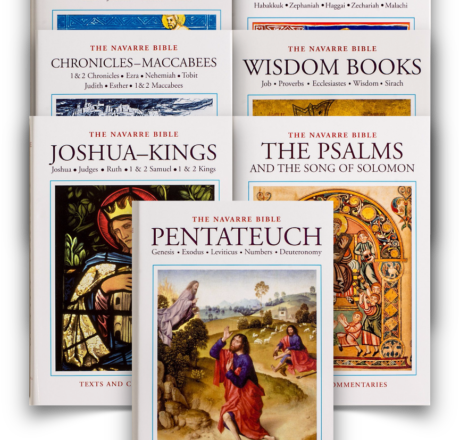
NAVARRE BIBLE COMMENTARY(RSV)

Ad Majorem Dei Gloriam (To the Greater Glory of God)

First Reading

From: Malachi 3:1-4; 4:5-6 (RSVCE)
(3:1-4; 23-24 – NABRE)

Shortcoming of Priests (Continuation)
-------------------------------------
(The oracle of the word of the LORD to Israel by Malachi.)
[1] “Behold, I send my messenger to prepare the way before me, and the Lord whom you seek will suddenly come to his temple; the messenger of the covenant in whom you delight, behold, he is coming, says the LORD of hosts. [2] But who can endure the day of his coming, and who can stand when he appears?

“For he is like a refiner’s fire and like fullers’ soap; [3] he will sit as a refiner and purifier of silver, and he will purify the sons of Levi and refine them like gold and silver, till they present right offerings to the LORD. [4] Then the offering of Judah and Jerusalem will be pleasing to the LORD as in the days of old and as in former years."

[4:5] "Behold, I will send you Elijah the prophet before the great and terrible day of the LORD comes. [6] And he will turn the hearts of fathers to their children and the hearts of children to their fathers, lest I come and smite the land with a curse."

***********************************************************************
Commentary:

2:17-3:5. As at the start of the book, the question raised here is a fairly general one: What is the point of keeping the Law if those who do evil are the ones who have success in life? The question focuses on rewards in this life only (cf. 2:17), but the prophet’s reply extends beyond that: he announces a day of judgment when priests and ritual will be purified (3:3-4) and the oppressed will receive justice (3:5); on the day of the Lord, God will set everything right.

However, the force of the oracle lies not so much in the fact of divine judgment as in the mysterious way in which that day is announced (3:1-2). We are told that the Lord of hosts himself will come to His temple, and his coming will strike fear into the hearts of men. The passage, in fact, seems to be speaking about three different personages--the messenger who will precede the coming of the Lord and who later on, in the epilogue, is identified as the prophet Elijah (cf. 4:5); the Lord himself; and the angel (literally the “messenger”) of the Covenant (3:1). In mentioning the first (the messenger who prepares the way: 3:1) the prophet may have in mind the sort of protocol used by kings who had a herald announce their arrival. This personage’s role is similar to that described in Isaiah 40:3ff. However, a little further on there is the “messenger of the covenant”. It is not clear what this means; it could be the Lord himself; a further messenger, whose role is similar to that of Moses, that is, a mediator of the Covenant; or, finally, the messenger mentioned earlier, the herald, who is now being given a new role. No clear interpretation can be established beyond doubt.

The New Testament will resolve this question of interpretation. The Synoptic Gospels (cf. Mk 1:2) and Jesus himself (Mt 11:7-15; cf. Lk 7:24-30) identify the first messenger, the one who prepares the way, with Elijah, and sees his fulfillment in the person of John the Baptist. This makes Jesus the Lord who comes to his temple. The Church reads it that way when the liturgy of the feast of the Presentation of Jesus in the Temple (cf. Lk 2:22-40) includes Malachi 3:1-4 as a first reading. But as can be seen from many passages of the New Testament (for example, the episode of the Transfiguration: Mt 17:1-13 and par.), Jesus is also the mediator of the New Covenant.

In the tradition of the Church, the ambiguity here is seen as a way of indicating the two-fold coming of the Lord-in the humility of the flesh, and in the glory and splendor of the End: “We proclaim the coming of Christ: he comes not once, but twice, and the second coming will be more glorious than the first. The first was a time of suffering; in the second, however, he will wear the crown of divine kingship. Almost everything in the life our Lord Jesus Christ has two meanings. He was born twice: once, of the Father, from all eternity; and then, of the Virgin, in the fullness of time. He comes twice, too: he came first in silence, like rain falling on wool; and he will come again in glory. First, he was wrapped in swaddling clothes and laid in a manger; when he comes again, he will be robed in light. First, he shouldered the cross, without fear of suffering; when he comes again, he will come in glory, surrounded by the hosts of angels. Let us consider not only the life of the Lord, but also his future coming [...]. Because of his great mercy, he was made man to teach men and persuade them; when he comes again, all men, whether they want to or not, will be made subject to the power and authority of the King. The words of the prophet Malachy refer to both of these events” (St Cyril of Jerusalem, "Catecheses Ad Illuminandos", 15, 1-2).

12 posted on 12/23/2025 10:15:07 AM PST by fidelis (👈 Under no obligation to respond to rude, ignorant, abusive, bellicose, and obnoxious posts.)
[ Post Reply | Private Reply | To 10 | View Replies]

Gospel Reading

From: Luke 1:57-66

The Birth and Circumcision of John the Baptist
-----------------------------------------------------------
[57] Now the time came for Elizabeth to be delivered, and she gave birth to a son. [58] And her neighbors and kinsfolk heard that the Lord had shown great mercy to her, and they rejoiced with her. [59] And on the eighth day they came to circumcise the child; and they would have named him Zechariah after his father, [60] but his mother said, "Not so; he shall be called John." [61] And they said to her, "None of your kindred is called by this name." [62] And they made signs to his father, inquiring what he would have him called. [63] And he asked for a writing tablet, and wrote, "His name is John." And they all marvelled. [64] And immediately his mouth was opened and his tongue loosed, and he spoke, blessing God. [65] And fear came on all their neighbors. And all these things were talked about through all the hill country of Judea; [66] and all who heard them laid them up in their hearts, saying "What then will this child be?" For the hand of the Lord was with him.

***********************************************************************
Commentary:

59. Circumcision was a rite established by God under the Old Covenant to mark out those who belonged to His chosen people: He commanded Abraham to institute circumcision as a sign of the Covenant He had made with him and all his descendants (cf. Genesis 17:10-14), prescribing that it should be done on the eighth day after birth. The rite was performed either at home or in the synagogue, and, in addition to the actual circumcision, the ceremony included prayers and the naming of the child.

With the institution of Christian Baptism the commandment to circumcise ceased to apply. At the Council of Jerusalem (cf. Acts 15:1ff), the Apostles definitely declared that those entering the Church had no need to be circumcised.

St. Paul's explicit teaching on the irrelevance of circumcision in the context of the New Alliance established by Christ is to be found in Galatians 5:2ff; 6:12ff; and Colossians 2:11ff.

60-63. By naming the child John, Zechariah complies with the instructions God sent him through the angel (Luke 1:13).

64. This miraculous event fulfills the prophecy the angel Gabriel made to Zechariah when he announced the conception and birth of the Baptist (Luke 1:19-20). St. Ambrose observes: `With good reason was his tongue loosed, because faith untied what had been tied by disbelief" ("Expositio Evangelii Sec. Lucam. in loc.").

Zechariah's is a case similar to that of St. Thomas, who was reluctant to believe in the resurrection of our Lord, and who believed only when Jesus gave him clear proof (cf. John 20:24-29). For these two men God worked a miracle and won their belief; but normally He requires us to have faith and to obey Him without His working any new miracles. This was why He upbraided Zechariah and punished him, and why He reproached Thomas: "Have you believed because you have seen Me? Blessed are those who have not seen and yet believe" (John 20:29).

13 posted on 12/23/2025 10:15:54 AM PST by fidelis (👈 Under no obligation to respond to rude, ignorant, abusive, bellicose, and obnoxious posts.)
[ Post Reply | Private Reply | To 12 | View Replies]

Click here to go to the My Catholic Life! Devotional thread for a meditation on today’s Gospel Reading.

14 posted on 12/23/2025 10:20:40 AM PST by fidelis (👈 Under no obligation to respond to rude, ignorant, abusive, bellicose, and obnoxious posts.)
[ Post Reply | Private Reply | To 13 | View Replies]

To: af_vet_1981

Thank you for your post and for your service.


15 posted on 12/24/2025 4:44:30 PM PST by annalex (fear them not)
[ Post Reply | Private Reply | To 11 | View Replies]

Disclaimer: Opinions posted on Free Republic are those of the individual posters and do not necessarily represent the opinion of Free Republic or its management. All materials posted herein are protected by copyright law and the exemption for fair use of copyrighted works.

Free Republic
Browse · Search
Religion
Topics · Post Article

FreeRepublic, LLC, PO BOX 9771, FRESNO, CA 93794
FreeRepublic.com is powered by software copyright 2000-2008 John Robinson