Free Republic
Browse · Search
Religion
Topics · Post Article

Skip to comments.

Catholic Caucus: Daily Mass Readings 11-November-2025
Universalis/Jerusalem Bible ^

Posted on 11/11/2025 6:08:52 AM PST by annalex

11 November 2025

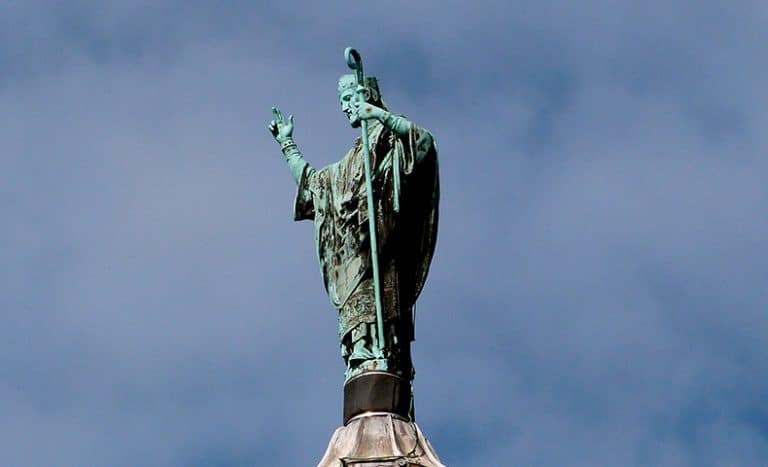
Saint Martin of Tours, Bishop
on Tuesday of week 32 in Ordinary Time


St. Martin of Tours Catholic Church, Louisville, KY

Readings at Mass

Liturgical Colour: White. Year: C(I).

Readings for the feria

Readings for the memorial

These are the readings for the feria


First readingWisdom 2:23-3:9

The souls of the virtuous are in the hands of God

God made man imperishable,
he made him in the image of his own nature;
it was the devil’s envy that brought death into the world,
as those who are his partners will discover.
But the souls of the virtuous are in the hands of God,
no torment shall ever touch them.
In the eyes of the unwise, they did appear to die,
their going looked like a disaster,
their leaving us, like annihilation;
but they are in peace.
If they experienced punishment as men see it,
their hope was rich with immortality;
slight was their affliction, great will their blessings be.
God has put them to the test
and proved them worthy to be with him;
he has tested them like gold in a furnace,
and accepted them as a holocaust.
When the time comes for his visitation they will shine out;
as sparks run through the stubble, so will they.
They shall judge nations, rule over peoples,
and the Lord will be their king for ever.
They who trust in him will understand the truth,
those who are faithful will live with him in love;
for grace and mercy await those he has chosen.


Responsorial Psalm
Psalm 33(34):2-3,16-19
I will bless the Lord at all times.
I will bless the Lord at all times,
  his praise always on my lips;
in the Lord my soul shall make its boast.
  The humble shall hear and be glad.
I will bless the Lord at all times.
The Lord turns his face against the wicked
  to destroy their remembrance from the earth.
The Lord turns his eyes to the just
  and his ears to their appeal.
I will bless the Lord at all times.
They call and the Lord hears
  and rescues them in all their distress.
The Lord is close to the broken-hearted;
  those whose spirit is crushed he will save.
I will bless the Lord at all times.

Gospel AcclamationMt4:4
Alleluia, alleluia!
Man does not live on bread alone,
but on every word that comes from the mouth of God.
Alleluia!
Or:Jn14:23
Alleluia, alleluia!
If anyone loves me he will keep my word,
and my Father will love him,
and we shall come to him.
Alleluia!

GospelLuke 17:7-10

You are merely servants

Jesus said to his disciples: ‘Which of you, with a servant ploughing or minding sheep, would say to him when he returned from the fields, “Come and have your meal immediately”? Would he not be more likely to say, “Get my supper laid; make yourself tidy and wait on me while I eat and drink. You can eat and drink yourself afterwards”? Must he be grateful to the servant for doing what he was told? So with you: when you have done all you have been told to do, say, “We are merely servants: we have done no more than our duty.”’

Continue

These are the readings for the memorial


First readingIsaiah 61:1-3

He has sent me to proclaim a year of favour from the Lord

The spirit of the Lord has been given to me,
for the Lord has anointed me.
He has sent me to bring good news to the poor,
to bind up hearts that are broken;
to proclaim liberty to captives,
freedom to those in prison;
to proclaim a year of favour from the Lord,
a day of vengeance for our God,
to comfort all those who mourn and to give them
for ashes a garland;
for mourning robe the oil of gladness,
for despondency, praise.


Responsorial Psalm
Psalm 88(89):2-5,21-22,25,27
I will sing for ever of your love, O Lord.
I will sing for ever of your love, O Lord;
  through all ages my mouth will proclaim your truth.
Of this I am sure, that your love lasts for ever,
  that your truth is firmly established as the heavens.
I will sing for ever of your love, O Lord.
‘I have made a covenant with my chosen one;
  I have sworn to David my servant:
I will establish your dynasty for ever
  and set up your throne through all ages.
I will sing for ever of your love, O Lord.
‘I have found David my servant
  and with my holy oil anointed him.
My hand shall always be with him
  and my arm shall make him strong.
I will sing for ever of your love, O Lord.
‘My truth and my love shall be with him;
  by my name his might shall be exalted.
He will say to me: “You are my father,
  my God, the rock who saves me.”’
I will sing for ever of your love, O Lord.

Gospel AcclamationJn13:34
Alleluia, alleluia!
I give you a new commandment:
love one another just as I have loved you,
says the Lord.
Alleluia!

Gospel
Matthew 25:31-40

I was naked and you clothed me; sick, and you visited me

Jesus said to his disciples: ‘When the Son of Man comes in his glory, escorted by all the angels, then he will take his seat on his throne of glory. All the nations will be assembled before him and he will separate men one from another as the shepherd separates sheep from goats. He will place the sheep on his right hand and the goats on his left.
  ‘Then the King will say to those on his right hand, “Come, you whom my Father has blessed, take for your heritage the kingdom prepared for you since the foundation of the world. For I was hungry and you gave me food; I was thirsty and you gave me drink; I was a stranger and you made me welcome; naked and you clothed me, sick and you visited me, in prison and you came to see me.” Then the virtuous will say to him in reply, “Lord, when did we see you hungry and feed you; or thirsty and give you drink? When did we see you a stranger and make you welcome; naked and clothe you; sick or in prison and go to see you?” And the King will answer, “I tell you solemnly, in so far as you did this to one of the least of these brothers of mine, you did it to me.”’

Continue


You can also view this page with the New Testament in Greek and English.

Universalis podcast: Resurrection is Now: part 3 of 8

Death as the Beginning: Natural Resurrection, The Death of Isolation. (26 minutes)
Episode notes.Play

Christian Art

Illustration

Each day, The Christian Art website gives a picture and reflection on the Gospel of the day.

The readings on this page are from the Jerusalem Bible, which is used at Mass in most of the English-speaking world. The New American Bible readings, which are used at Mass in the United States, are available in the Universalis apps, programs and downloads.

You can also view this page with the Gospel in Greek and English.


TOPICS: Catholic; General Discusssion; Prayer; Worship
KEYWORDS: catholic; lk17; mt25; ordinarytime; prayer
For your reading, reflection, faith-sharing, comments, questions, discussion.

1 posted on 11/11/2025 6:08:52 AM PST by annalex
[ Post Reply | Private Reply | View Replies]

To: All

KEYWORDS: catholic; lk17; mt25; ordinarytime; prayer


2 posted on 11/11/2025 6:09:43 AM PST by annalex (fear them not)
[ Post Reply | Private Reply | To 1 | View Replies]

To: annalex

I love Matthew 25, especially in tandem with Jeremiah 31.


3 posted on 11/11/2025 6:10:49 AM PST by af_vet_1981 ( The bus came by and I got on, That's when it all began.)
[ Post Reply | Private Reply | To 2 | View Replies]

To: nickcarraway; NYer; ELS; Pyro7480; livius; ArrogantBustard; Catholicguy; RobbyS; marshmallow; ...


Alleluia Ping

Please FReepmail me to get on/off the Alleluia Ping List.


4 posted on 11/11/2025 6:11:17 AM PST by annalex (fear them not)
[ Post Reply | Private Reply | To 2 | View Replies]

To: annalex
Chris Robinson: My Dad [our Jim Robinson] Passed Away Peacefully Monday Night (October 27th) In Our Home.
Jim still needs our prayers. Thread 2
Prayer thread for Salvation's recovery
Pray for Ukraine
Prayer thread for Fidelis' recovery
Update on Jim Robinson's health issues
5 posted on 11/11/2025 6:12:22 AM PST by annalex (fear them not)
[ Post Reply | Private Reply | To 4 | View Replies]

To: annalex
Luke
 English: Douay-RheimsLatin: Vulgata ClementinaGreek NT: Byzantine/Majority Text (2000)
 Luke 17
7But which of you having a servant ploughing, or feeding cattle, will say to him, when he is come from the field: Immediately go, sit down to meat: Quis autem vestrum habens servum arantem aut pascentem, qui regresso de agro dicat illi : Statim transi, recumbe :τις δε εξ υμων δουλον εχων αροτριωντα η ποιμαινοντα ος εισελθοντι εκ του αγρου ερει ευθεως παρελθων αναπεσε
8And will not rather say to him: Make ready my supper, and gird thyself, and serve me, whilst I eat and drink, and afterwards thou shalt eat and drink? et non dicat ei : Para quod cœnem, et præcinge te, et ministra mihi donec manducem, et bibam, et post hæc tu manducabis, et bibes ?αλλ ουχι ερει αυτω ετοιμασον τι δειπνησω και περιζωσαμενος διακονει μοι εως φαγω και πιω και μετα ταυτα φαγεσαι και πιεσαι συ
9Doth he thank that servant, for doing the things which he commanded him? Numquid gratiam habet servo illi, quia fecit quæ ei imperaverat ?μη χαριν εχει τω δουλω εκεινω οτι εποιησεν τα διαταχθεντα ου δοκω
10I think not. So you also, when you shall have done all these things that are commanded you, say: We are unprofitable servants; we have done that which we ought to do. non puto. Sic et vos cum feceritis omnia quæ præcepta sunt vobis, dicite : Servi inutiles sumus : quod debuimus facere, fecimus.ουτως και υμεις οταν ποιησητε παντα τα διαταχθεντα υμιν λεγετε οτι δουλοι αχρειοι εσμεν οτι ο οφειλομεν ποιησαι πεποιηκαμεν

6 posted on 11/11/2025 6:15:08 AM PST by annalex (fear them not)
[ Post Reply | Private Reply | To 5 | View Replies]

To: annalex

Catena Aurea by St. Thomas Aguinas

17:7–10

7. But which of you, having a servant plowing or feeding cattle, will say unto him by and by, when he is come from the field, Go and sit down to meat?

8. And will not rather say unto him, Make ready wherewith I may sup, and gird thyself, and serve me, till I have eaten and drunken; and afterward thou shalt eat and drink?

9. Doth he thank that servant because he did the things that were commanded him? I trow not.

10. So likewise ye, when ye shall have done all those things which are commanded you, say, We are unprofitable servants: we have done that which was our duty to do.

THEOPHYLACT. Because faith makes its possessor a keeper of God’s commandments, and adorns him with wonderful works; it would seem from thence that a man might thereby fall into the sin of pride. Our Lord therefore forewarned His Apostles by a fit example, not to boast themselves in their virtues, saying, But which of you having a servant plowing, &c.

AUGUSTINE. (de Quæst. Ev. l. 2. qu. 39.) Or else; To the many who understand not this faith in the truth already present, our Lord might seem not to have answered the petitions of His disciples. And there appears a difficulty in the connexion here, unless we suppose He meant the change from faith to faith, from that faith, namely, by which we serve God, to that whereby we enjoy Him. For then will our faith be increased when we first believe the word preached, next the reality present. But that joyful contemplation possesseth perfect peace, which is given unto us in the everlasting kingdom of God. And that perfect peace is the reward of those righteous labours, which are performed in the administration of the Church. Be then the servant in the field ploughing, or feeding, that is, in this life either following his worldly business, or serving foolish men, as it were cattle, he must after his labours return home, that is, be united to the Church.

BEDE. Or the servant departs from the field when giving up for a time his work of preaching, the teacher retires into his own conscience, pondering his own words or deeds within himself. To whom our Lord does not at once say, Go from this mortal life, and sit down to meat, that is, refresh thyself in the everlasting resting-place of a blessed life.

AMBROSE. For we know that no one sits down before he has first passed over. Moses indeed also passed over, that he might see a great sight. Since then thou not only sayest to thy servant, Sit down to meat, but requirest from him another service, so in this life the Lord does not put up with the performance of one work and labour, because as long as we live we ought always to work. Therefore it follows, And will not rather say, Make ready wherewith I may sup.

BEDE. He bids make ready wherewith he may sup, that is, after the labours of public discourse, He bids him humble himself in self-examination. With such a supper our Lord desires to be fed. But to gird one’s self is to collect the mind which has been enfolded in the base coil of fluctuating thoughts, whereby its steps in the cause of good works are wont to be entangled. For he who girds up his garments does so, that in walking he may not be tripped up. But to minister unto God, is to acknowledge that we have no strength without the help of His grace.

AUGUSTINE. (de Quæst. Ev. ubi sup.) While His servants also are ministering, that is, preaching the Gospel, our Lord is eating and drinking the faith and confession of the Gentiles. It follows, And afterward thou shall eat and drink. As if He says, After that I have been delighted with the work of thy preaching, and refreshed myself with the choice food of thy compunction, then at length shalt thou go, and feast thyself everlastingly with the eternal banquet of wisdom.

CYRIL OF ALEXANDRIA. Our Lord teaches us that it is no more than the just and proper right of a master to require, as their bounden duty, subjection from servants, adding, Doth he thank that servant because he did the things that were commanded him? I trow not. Here then is the disease of pride cut away. Why boastest thou thyself? Dost thou know that if thou payest not thy debt, danger is at hand, but if thou payest, thou doest nothing thankworthy? As St. Paul says, For though I preach the Gospel I have nothing to glory of, for necessity is laid upon me, yea, woe is unto me if I preach not the Gospel. (1 Cor. 9:16.)

Observe then that they who have rule among us, do not thank their subjects, when they perform their appointed service, but by kindness gaining the affections of their people, breed in them a greater eagerness to serve them. So likewise God requires from us that we should wait upon Him as His servants, but because He is merciful, and of great goodness, He promises reward to them that work, and the greatness of His loving-kindness far exceeds the labours of His servants.

AMBROSE. Boast not thyself then that thou hast been a good servant. Thou hast done what thou oughtest to have done. The sun obeys, the moon submits herself, the angels are subject; let us not then seek praise from ourselves. Therefore He adds in conclusion, So likewise ye, when ye have done all good things, say, We are unprofitable servants, we have done that which it was our duty to do.

BEDE. Servants, I say, because bought with a price; (1 Cor. 6:20) unprofitable, for the Lord needeth not our good things, (Ps. 16:2) or because the sufferings of this present time are not worthy to be compared to the glory which shall be revealed in us. (Rom. 8:18.) Herein then is the perfect faith of men, when having done all things which were commanded them, they acknowledge themselves to be imperfect.

Catena Aurea Luke 17

7 posted on 11/11/2025 6:16:30 AM PST by annalex (fear them not)
[ Post Reply | Private Reply | To 6 | View Replies]

To: annalex


Christ the Angel of the Great Council

No attribution, Byzantine


8 posted on 11/11/2025 6:17:56 AM PST by annalex (fear them not)
[ Post Reply | Private Reply | To 7 | View Replies]

To: annalex
Matthew
 English: Douay-RheimsLatin: Vulgata ClementinaGreek NT: Byzantine/Majority Text (2000)
 Matthew 25
31And when the Son of man shall come in his majesty, and all the angels with him, then shall he sit upon the seat of his majesty. Cum autem venerit Filius hominis in majestate sua, et omnes angeli cum eo, tunc sedebit super sedem majestatis suæ :οταν δε ελθη ο υιος του ανθρωπου εν τη δοξη αυτου και παντες οι αγιοι αγγελοι μετ αυτου τοτε καθισει επι θρονου δοξης αυτου
32And all nations shall be gathered together before him, and he shall separate them one from another, as the shepherd separateth the sheep from the goats: et congregabuntur ante eum omnes gentes, et separabit eos ab invicem, sicut pastor segregat oves ab hædis :και συναχθησεται εμπροσθεν αυτου παντα τα εθνη και αφοριει αυτους απ αλληλων ωσπερ ο ποιμην αφοριζει τα προβατα απο των εριφων
33And he shall set the sheep on his right hand, but the goats on his left. et statuet oves quidem a dextris suis, hædos autem a sinistris.και στησει τα μεν προβατα εκ δεξιων αυτου τα δε εριφια εξ ευωνυμων
34Then shall the king say to them that shall be on his right hand: Come, ye blessed of my Father, possess you the kingdom prepared for you from the foundation of the world. Tunc dicet rex his qui a dextris ejus erunt : Venite benedicti Patris mei, possidete paratum vobis regnum a constitutione mundi :τοτε ερει ο βασιλευς τοις εκ δεξιων αυτου δευτε οι ευλογημενοι του πατρος μου κληρονομησατε την ητοιμασμενην υμιν βασιλειαν απο καταβολης κοσμου
35For I was hungry, and you gave me to eat; I was thirsty, and you gave me to drink; I was a stranger, and you took me in: esurivi enim, et dedistis mihi manducare : sitivi, et dedistis mihi bibere : hospes eram, et collegistis me :επεινασα γαρ και εδωκατε μοι φαγειν εδιψησα και εποτισατε με ξενος ημην και συνηγαγετε με
36Naked, and you covered me: sick, and you visited me: I was in prison, and you came to me. nudus, et cooperuistis me : infirmus, et visitastis me : in carcere eram, et venistis ad me.γυμνος και περιεβαλετε με ησθενησα και επεσκεψασθε με εν φυλακη ημην και ηλθετε προς με
37Then shall the just answer him, saying: Lord, when did we see thee hungry, and fed thee; thirsty, and gave thee drink? Tunc respondebunt ei justi, dicentes : Domine, quando te vidimus esurientem, et pavimus te : sitientem, et dedimus tibi potum ?τοτε αποκριθησονται αυτω οι δικαιοι λεγοντες κυριε ποτε σε ειδομεν πεινωντα και εθρεψαμεν η διψωντα και εποτισαμεν
38And when did we see thee a stranger, and took thee in? or naked, and covered thee? quando autem te vidimus hospitem, et collegimus te : aut nudum, et cooperuimus te ?ποτε δε σε ειδομεν ξενον και συνηγαγομεν η γυμνον και περιεβαλομεν
39Or when did we see thee sick or in prison, and came to thee? aut quando te vidimus infirmum, aut in carcere, et venimus ad te ?ποτε δε σε ειδομεν ασθενη η εν φυλακη και ηλθομεν προς σε
40And the king answering, shall say to them: Amen I say to you, as long as you did it to one of these my least brethren, you did it to me. Et respondens rex, dicet illis : Amen dico vobis, quamdiu fecistis uni ex his fratribus meis minimis, mihi fecistis.και αποκριθεις ο βασιλευς ερει αυτοις αμην λεγω υμιν εφ οσον εποιησατε ενι τουτων των αδελφων μου των ελαχιστων εμοι εποιησατε

9 posted on 11/11/2025 6:21:28 AM PST by annalex (fear them not)
[ Post Reply | Private Reply | To 8 | View Replies]

To: annalex

Catena Aurea by St. Thomas Aguinas

25:31–45

31. When the Son of man shall come in his glory, and all the holy angels with him, then shall he sit upon the throne of his glory:

32. And before him shall be gathered all nations: and he shall separate them one from another, as a shepherd divideth his sheep from the goats:

33. And he shall set the sheep on his right hand, but the goats on the left.

34. Then shall the King say unto them on his right hand, Come, ye blessed of my Father, inherit the kingdom prepared for you from the foundation of the world:

35. For I was an hungred, and ye gave me meat: I was thirsty, and ye gave me drink: I was a stranger, and ye took me in:

36. Naked, and ye clothed me: I was sick, and ye visited me: I was in prison, and ye came unto me.

37. Then shall the righteous answer him, saying, Lord, when saw we thee an hungred, and fed thee? or thirsty, and gave thee drink?

38. When saw we thee a stranger, and took thee in? or naked, and clothed thee?

39. Or when saw we thee sick, or in prison, and came unto thee

40. And the King shall answer and say unto them, Verily I say unto you, Inasmuch as ye have done it unto one of the least of these my brethren, ye have done it unto me.

41. Then shall he say also unto them on the left hand, Depart from me, ye cursed, into everlasting fire, prepared for the devil and his angels:

42. For I was an hungred, and ye gave me no meat: I was thirsty, and ye gave me no drink:

43. I was a stranger, and ye took me not in: naked, and ye clothed me not: sick, and in prison, and ye visited me not.

44. Then shall they also answer him, saying, Lord, when saw we thee an hungred, or athirst, or a stranger, or naked, or sick, or in prison, and did not minister unto thee?

45. Then shall he answer them, saying, Verily I say unto you, Inasmuch as ye did it not to one of the least of these, ye did it not to me.

RABANUS. After the parables concerning the end of the world the Lord proceeds to describe the manner of the judgment to come.

CHRYSOSTOM. (Hom. lxxix.) To this most sweet section of Scripture which we cease not continually to ponder, let us now listen with all attention and compunction of spirit, for Christ does indeed clothe this discourse with more terrors and vividness. He does not accordingly say of this as of the others, The kingdom of heaven is like, but shews of Himself by direct revelation, saying, When the Son of man shall come in his majesty.

JEROME. He who was within two days to celebrate the passover, to be delivered to the cross, and mocked by men, fitly now holds out the glory of His triumph, that He may overbalance the offences that were to follow by the promise of reward. And it is to be noted, that He who shall be seen in majesty is the Son of Man.

AUGUSTINE. (in Joan. Tr. 21.) The wicked and they also who shall be set on His right hand shall see Him in human shape, for He shall appear in the judgment in that form which He took on Him from us; but it shall be afterwards that He shall be seen in the form of God, for which all the believers long.

REMIGIUS. These words overthrow the error of those who said that the Lord should not continue in the same form of a servant. By his majesty, He means His divinity, in which He is equal to the Father and the Holy Spirit.

ORIGEN. Or, He shall come again with glory, that His body may be such as when He was transfigured on the mount. His throne is either certain of the more perfect of the Saints, of whom it is written, For there are set thrones in judgment; (Ps. 122:5.) or certain Angelic Powers of whom it is said, Thrones or dominions. (Col. 1:16.)

AUGUSTINE. (de Civ. Dei, xx. 24.) He shall come down with the Angels whom He shall call from heavenly places to hold judgment.

CHRYSOSTOM. For all his Angels shall be with him to bear witness to the things wherein they have administered to men’s salvation at His bidding.

AUGUSTINE. (Serm. 351, 8.) Or, by Angels here He means men who shall judge with Christ; for Angels are messengers, and such we rightly understand all who have brought tidings of heavenly salvation to men.

REMIGIUS. And all nations shall be gathered before Him. These words prove that the resurrection of men shall be real.

AUGUSTINE. (de Civ. Dei, xx. 24.) This gathering shall be executed by the ministry of Angels, as it is said in the Psalm, Gather to him his saints. (Ps. 50:5.)

ORIGEN. Or, we need not understand this of a local gathering together, but that the nations shall be no more dispersed in divers and false dogmas concerning Him. For Christ’s divinity shall be manifested so that not even sinners shall any longer be ignorant of Him. He shall not then shew Himself as Son of God in one place and not in another; as He sought to express to us by the comparison of the lightning. So as long as the wicked know neither themselves nor Christ, or the righteous see through a glass darkly, (1 Cor. 13:12.) so long the good are not severed from the evil, but when by the manifestation of the Son of God all shall come to the knowledge of Him, then shall the Saviour sever the good from the evil; for then shall sinners see their sins, and the righteous shall see clearly to what end the seeds of righteousness in them have led. They that are saved are called sheep by reason of that mildness which they have learnt of Him who said, Learn of me, for I am meek and lowly, (Mat. 11:29.) and because they are ready to go even to death in imitation of Christ, who was led as a sheep to the slaughter. (Isa. 53:7.) The wicked, are called goats, because they climb rough and rugged rocks, and walk in dangerous places.

CHRYSOSTOM. Or, He calls the one sheep and the other goats, to denote the unprofitableness of the one, and the fruitfulness of the other, for sheep are greatly productive in fleece, milk, and lambs.

GLOSS. (non occ.) Under the figure of a sheep in Scripture is signified simplicity and innocence. Beautifully then in this place are the elect denoted by sheep.

JEROME. Also the goat is a salacious animal, and was the offering for sins in the Law; and He says not ‘she goats’ which can produce young, and come up shorn from the washing. (Song of Solomon 4:2.)

CHRYSOSTOM. Then He separates them in place.

ORIGEN. For the Saints who have wrought right works, shall receive in recompense of their right works the King’s right hand, at which is rest and glory; but the wicked for their evil and sinister deeds have fallen to the left hand, that is, into the misery of torments. Then shall the King say to those who are on his right hand, Come, that in whatsoever they are behind they may make it up when they are more perfectly united to Christ. He adds, ye blessed of my Father, to shew how eminendy blessed they were, being of old blessed of the Lord, which made heaven and earth. (Ps. 115:15.)

RABANUS. Or, they are called blessed, to whom an eternal blessing is due for their good deserts. He calls it the kingdom of His Father, ascribing the dominion of the kingdom to Him by whom Himself the King was begotten. For by His royal power, with which He shall be exalted alone in that day, He shall pronounce the sentence of judgment, Then shall the King say.

CHRYSOSTOM. Observe that He says not ‘Receive,’ but possess, or inherit, as duo to you from of old.

JEROME. This prepared for you from the foundation, of the world, is to be understood as of the foreknowledge of God, with whom things to come are as already done.

AUGUSTINE. (de Civ. Dei, xx. 9.) Besides that kingdom of which He will say in the end, Inherit the kingdom prepared for you, though in a very inferior manner, the present Church is also called His kingdom, in the which we are yet in conflict with the enemy until we come to that kingdom of peace, where we shall reign without an enemy.

AUGUSTINE. (Serm. 351. 8.) But one will say, I desire not to reign, it is enough for me that I be saved. Wherein they are deceived, first, because there is no salvation for those whose iniquity abounds; and, secondly, because if there be any difference between those that reign, and those that do not reign, yet must all be within the same kingdom, lest they be esteemed for foes or aliens, and perish while the others reign. Thus all the Romans inherit the kingdom of Rome, though all do not reign in it.

CHRYSOSTOM. For what the Saints obtain the boon of this heavenly kingdom He shews when He adds, I was an hungred, and ye gave me to eat.

REMIGIUS. And it is to be noted, that the Lord here enumerates six works of mercy which whoso shall study to accomplish shall be entitled to the kingdom prepared for the chosen from the foundation of the world.

RABANUS. Mystically, He who with the bread of the word and the drink of wisdom refreshes the soul hungering and thirsting after righteousness, or admits into the home of our mother the Church him who is wandering in heresy or sin, or who strengthens the weak in faith, such an one discharges the obligations of true love.

GREGORY. (Mor. xxvi. 27.) These, to whom as they stand on His right hand the Judge at His coming shall say, I was an hungred &c. are they who are judged on the side of the elect, and who reign; who wash away the stains of their life with tears; who redeem former sins by good deeds following; who, whatever unlawful thing they have at any time done, have covered it from the Judge’s eyes by a cloak of alms. Others indeed there are who are not judged, yet reign, who have gone even beyond the precepts of the Law in the perfection of their virtue.

ORIGEN. It is from humility that they declare themselves unworthy of any praise for their good deeds, not that they are forgetful of what they have done. But He shews them His close sympathy with His own.

RABANUS. Lord, when sate we thee &c. This they say not because they distrust the Lord’s words, but they are in amaze at so great exaltation, and at the greatness of their own glory; or because the good which they have done will seem to them to be so small according to that of the Apostle, For the sufferings of this present time are not worthy to be compared to the glory that shall be revealed in us. (Rom. 8:18.)

JEROME. It were indeed free to us to understand that it is Christ in every poor man whom we feed when he is hungry, or give drink to when he is thirsty, and so of other things; but when He says, In that ye have done it to one of the least of these my brethren, He seems tome not to speak of the poor generally, but of the poor in spirit, those to whom He pointed and said, Whosoever shall do the will of my Father which is in heaven, the same is my brother. (Matt. 12:50.)

CHRYSOSTOM. But if they are His brethren, why does He call them the least? Because they are lowly, poor, and outcast. By these He means not only the monks who have retired to the mountains, but every believer though he should be secular, though an hungred, or the like, yet He would have him obtain merciful succours, for baptism and communication of the Divine mysteries makes him a brother.

ORIGEN. As He had said to the righteous, Come ye, so He says to the wicked, Depart ye, for they who keep God’s commandment are near to the Word, and are called that they may be made more near; but they are far from it, though they may seem to stand hard by, who do not His commands; therefore it is said to them, Depart ye, that those who seemed to be living before Him, might be no more seen. It should be remarked, that though He had said to the Saints, Ye blessed of my Father, He says not now, Ye cursed of my Father, because of all blessing the Father is the author, but each man is the origin of his own curse when he does the things that deserve the curse. They who depart from Jesus fall into eternal fire, which is of a very different kind from that fire which we use. For no fire which we have is eternal, nor even of any long continuance. And note, that He does not say, ‘the kingdom prepared for the Angels,’ as He does say everlasting fire prepared for the Devil and his Angels; because He did not, as far as in Him lay, create men to perdition, but sinners yoke themselves to the Devil, so that as they that are saved are made equal to the holy Angels, they that perish are made equal with the Devil’s Angels.

AUGUSTINE. (de Civ. Dei, xxi. 10.) It is hence clear, that the same fire will be appropriated to the punishment of men and of dæmons. If then it inflicts pain by corporeal touch, so as to produce bodily torment, how will there be in it any punishment for the evil spirits, unless the dæmons have, as some have thought, bodies composed of gross and fluid air. But if any man asserts that the dæmons have no bodies, we would not pugnaciously contend the point. For why may we not say, that truly, though wonderfully, even incorporeal spirit can feel pain of corporeal fire? If the spirits of men, though themselves incorporeal, can be now inclosed in bodily limbs, they can then be inseparably attached to the bonds of body. The dæmons then will be united to a body of material fire, though themselves immaterial, drawing punishment from their body, not giving life to it. And that fire being material will torture such bodies as ours with their spirits; but the dæmons are spirits without bodies.

ORIGEN. Or it may be that fire is of such nature that it can but invisible substances, being itself invisible, as the Apostle speaks, The things which are seen are temporal, but the things which are not seen are eternal. (2 Cor. 4:18.) Wonder not when you hear that there is a fire which though unseen has power to torture, when you see that there is an internal fever which comes upon men, and pains them grievously. It follows, I was an hungred, and ye gave me no meat. It is written to the believers, Ye are the body of Christ. (1 Cor. 12:27.) As then the soul dwelling in the body, though it hungers not in respect of its spiritual substance, yet hungers for the food of the body, because it is yoked to the body; so the Saviour suffers whatever His body the Church suffers, though He Himself be impassible. And observe how in speaking to the righteous He reckons up their good deeds under their several kinds, but to the unrighteous He cuts short the description under the one head, I was sick and in prison, and ye visited me not, because it was the part of a merciful Judge to enlarge and dwell upon men’s good deeds, but to pass lightly and cursorily over their evil deeds.

CHRYSOSTOM. Observe how they had failed in mercifulness, not in one or two respects only, but in all; not only did they not feed Him when He was hungry, but they did not even visit Him when He was sick, which was easier. And look how light things He enjoins; He said not, I was in prison, and ye did not set me free, but, and ye visited me not. Also His hunger required no costly dainties, but necessary food. Each of these counts then is enough for their punishment. First, the slightness of His prayer, viz. for bread; secondly, the destitution of Him who sought it, for He was poor; thirdly, the natural feelings of compassion, for He was a man; fourthly, the expectation of His promise, for He promised a kingdom; fifthly, the greatness of Him who received, for it is God who receives in the poor man; sixthly, the preeminent honour, in that He condescended to take of men; and, seventhly, the righteousness of so bestowing it, for what He takes from us is our own. But avarice blinds men to all these considerations.

GREGORY. (ubi sup.) They to whom this is said are the wicked believers, who are judged and perish; others, being unbelievers, are not judged and perish; for there is no examination of the condition of such as appear before the face of an impartial Judge already condemned by their unbelief; but those who hold the profession of the faith, but have not the works of their profession, are convicted that they may be condemned. These at least hear the words of their Judge, because they have at least kept the words of His faith. The others hear no words of their Judge pronouncing sentence of condemnation, because they have not paid Him honour even in word. For a prince who governs an earthly kingdom punishes after a different manner the rebellion of a subject and the hostile attempts of an enemy; in the former case, he recurs to his prerogative; against an enemy he takes arms, and does not ask what penalty the law attaches to his crime.

CHRYSOSTOM. Thus convicted by the words of the Judge, they make answer submissively, Lord, when saw we thee &c.

ORIGEN. Mark how the righteous dwell upon each word, while the unrighteous answer summarily, and not going through the particular instances; for so it becomes the righteous out of humility to disclaim each individual generous action, when imputed to them publicly; whereas bad men excuse their sins, and endeavour to prove them few and venial. And Christ’s answer conveys this. And to the righteous He says, In that ye did it to my brethren, to shew the greatness of their good deeds; to the sinners He says only, to one of the least of these, not aggravating their sin. For they are truly His brethren who are perfect; and a deed of mercy shewn to the more holy is more acceptable to God than one shewn to the less holy; and the sin of overlooking the less holy is less than of overlooking the more holy.

AUGUSTINE. (de Civ. Dei, xx. 1.) He is now treating of the last judgment, when Christ shall come from heaven to judge the quick and dead. This day of the Divine judgment we call the Last Day, that is, the end of time; for we cannot tell through how many days that judgment will be prolonged; but day, as is the use of holy Scripture, is put for time. And we therefore call it the last or latest judgment, because He both now judges and has judged from the beginning of the human race, when He thrust forth the first man from the tree of life, and spared not the Angels that sinned. But in that final judgment both men and Angels shall be judged together, when the Divine power shall bring each man’s good and evil deeds in review before his memory, and one intuitive glance shall present them to the perception, so that at once we shall be condemned or acquitted in our consciences.

25:46

46. And these shall go away into everlasting punishment: but the righteous into life eternal.

AUGUSTINE. (de Fid. et Op. 15.) Some deceive themselves, saying, that the fire indeed is called everlasting, but not the punishment. This the Lord foreseeing, sums up His sentence in these words.

ORIGEN. Observe that whereas He put first the invitation, Come, ye blessed, and after that, Depart, ye cursed, because it is the property of a merciful God to record the good deeds of the good, before the bad deeds of the bad; He now reverses the order, describing first the punishment of the wicked, and then the life of the good, that the terrors of the one may deter us from evil, and the honour of the other incite us to good.

GREGORY. (Mor. xv. 19.) If he who has not given to others is visited with so heavy a punishment, what shall he get who is convicted of having robbed others of their own.

AUGUSTINE. (de Civ. Dei, xix. 11.) Eternal life is our chief good, and the end of the city of God, of which the Apostle speaks, And the end everlasting life. (Rom. 6:22.) But because eternal life might be understood by those who are not well versed in Holy Scripture, to mean also the life of the wicked, because of the immortality of their souls, or because of the endless torments of the wicked; therefore we must call the end of this City in which the chief good shall be attained, either peace in life eternal, or life eternal in peace, that it may be intelligible to all.

AUGUSTINE. (de Trin. i. 8.) That which the Lord spoke to His servant Moses, I am that I am, (Exod. 3:14.) this we shall contemplate when we shall live in eternity. For thus the Lord speaks, This is life eternal, that they might know thee the only true God. (John 17:3.) This contemplation is promised to us as the end of all action, and the eternal perfection of our joys, of which John speaks, We shall see him as he is. (1 John 3:2.)

JEROME. Let the thoughtful reader observe that punishments are eternal, and that that continuing life has thenceforward no fear of fall.

GREGORY. (Mor. xxxiv. 19.) They say that He held out empty terrors to deter them from sin. We answer, if He threatened falsely to check unrighteousness, then He promised falsely to promote good conduct. Thus while they go out of the way to prove God merciful, they are not afraid to charge Him with fraud. But, they urge, finite sin ought not to be visited with infinite punishment; we answer, that this argument would be just, if the righteous Judge considered men’s actions, and not their hearts. Therefore it belongs to the righteousness of an impartial Judge, that those whose heart would never be without sin in this life, should never be without punishment.

AUGUSTINE. (de Civ. Dei, xxi. 11.) And the justice of no law is concerned to provide that the duration of each man’s punishment should be the same with the sin which drew that punishment upon him. There never was any man, who held that the torment of him, who committed a murder or adultery, should be compressed within the same space of time as the commission of the act. And when for any enormous crime a man is punished with death, does the law estimate his punishment by the delay that takes place in putting him to death, and not rather by this, that they remove him for ever from the society of the living? And fines, disgrace, exile, slavery, when they are inflicted without any hopes of mercy, do they not seem like eternal punishments in proportion to the length of this life? They are only therefore not eternal, because the life which suffers them is not itself eternal. But they say, How then is that true which Christ says, With what measure ye mete, it shall be measured to you again, (Matt. 7:2.) if temporal sin is punished with eternal pain? They do not observe that this is said with a view, not to the equality of the period of time, but of the retribution of evil, i. e. that he that has done evil should suffer evil. Man was made worthy of everlasting evil, because he destroyed in himself that good which might have eternal.

GREGORY. (ubi sup.) But they say, no just man takes pleasure in cruelties, and the guilty servant was scourged to correct his fault. But when the wicked are given over to hell fire, to what purpose shall they burn there for ever? We reply, that Almighty God, seeing He is good, does not delight in the torments of the wretched; but forasmuch as He is righteous, He ceases not from taking vengeance on the wicked; yet do the wicked burn not without some purpose, namely, that the righteous may acknowledge how they are debtors for eternity to Divine grace, when they see the wicked suffering for eternity misery, which themselves have escaped only by the assistance of that Divine grace.

AUGUSTINE. (de Civ. Dei, xxi. 3.) But, they assert, nobody can be at once capable of suffering pain, and incapable of death. It must be that one live in pain, but it need not be that pain kill him; for not even these mortal bodies die from every pain; but the reason that some pain causes their death is, that the connection between the soul and our present body is such that it gives way to extreme pain. But then the soul shall be united to such a body, and in such a way, that no pain shall be able to overcome the connection. There will not then be no death, but an everlasting death, the soul being unable to live, as being without God, and equally unable to rid itself of the pains of body by dying.

AUGUSTINE. (17.) Among these impugners of the eternity of punishment, Origen is the most merciful, who believed that the Devil himself and his Angels, after sufferings proportioned to their deserts, and a long endurance, should be delivered from those torments, and associated with the holy Angels. But for these and other things he was not undeservedly rebuked by the Church, because even his seeming mercy was thrown away, making for the saints real pains in which their sins were to be expiated, and fictitious blessedness, if the joys of the good were not to be secure and endless. In quite another way does the mercy of others err through their humane sympathies, who think that the sufferings of those men who are condemned by this sentence will be temporal, but that the happiness of those who are set free sooner or later will be eternal. Why does their charity extend to the whole race of man, but dries up when they come to the angelic race?

GREGORY. (ubi sup.) But they say, How can they be called Saints, if they shall not pray for their enemies whom they see then burning? They do not indeed pray for their enemies, so long as there is any possibility of converting their hearts to a profitable penitence, but how shall they pray for them when any change from their wickedness is no longer possible?

AUGUSTINE. (de Civ. Dei, xxi. 19, 20. &c.) So some there are who hold out liberation from punishment not to all men, but to those only who have been washed in Christ’s Baptism, and have been partakers of His Body, let them have lived as they will; because of that which the Lord speaks, If any man eat of this bread, he shall not die eternally. (John 6:51.) Again, others promise this not to all who have Christ’s sacrament, but to Catholics only, however ill their lives, who have eaten Christ’s Body, not in sacrament only, but in verity, (inasmuch as they are set in the Church, which is His Body,) even though they should afterwards have fallen into heresy or idolatry of the Gentiles. And others again, because of what is written above, He that shall endure to the end, the same shall be saved, (Matt. 24:13.) promise this only to those who persevere in the Catholic Church, that by the worthiness of their foundation, that is, of their faith, they shall be saved by fire. All these the Apostle opposes when he says, The works of the flesh are manifest, which are these, uncleanness, fornication, and the like; of which I tell you before, that they which do such things shall not inherit the kingdom of God. (Gal. 5:19.) Whoever in his heart prefers temporal things to Christ, Christ is not his foundation, though he seem to have the faith of Christ. How much more then is he, who has committed things unlawful, convicted of not preferring Christ, but preferring other things to Him? I have also met with some who thought that only those would burn in eternal torments who neglected to give alms proportioned to their sins; and for this reason they think that the Judge Himself here mentions nothing else that He shall make enquiry of, but of the giving or not giving alms. But whoso gives alms worthily for his sins, first begins with himself; for it were unmeet that he should not do that to himself which he does to others when he has heard the words of God, Thou shalt love thy neighbour as thyself, (Matt. 22:39.) and hears likewise, Be merciful to thy soul in pleasing God? (Ecclus. 30:24.) He then who does not to his own soul this alms of pleasing God, how can he be said to give alms meet for his sins? Why we are to give alms then is only that when we pray for mercy for sins past, we may be heard; not that we may purchase thereby license for continuing in sin. And the Lord forewarns us that He will put alms done on the right hand, and on the left alms not done, to hew us how mighty are alms to do away former sins, not to give impunity to a continuance in sin.

ORIGEN. Or, It is not one kind of righteousness only that is rewarded, as many think. In whatsoever matters any one does Christ’s commands, he gives Christ meat and drink, Who feeds ever upon the truth and righteousness of His faithful people. So do we weave raiment for Christ when cold, when taking wisdom’s web, we inculcate upon others, and put upon them bowels of mercy. Also when we make ready with divers virtues our heart for receiving Him, or those who are His, we take Him in a stranger into the home of our bosom. Also when we visit a brother sick either in faith or in good works, with doctrine, reproof, or comfort, we visit Christ Himself. Moreover, all that is here, is the prison of Christ, and of them that are His, who live in this world, as though chained in the prison of natural necessity. When we do a good work to these; we visit them in prison, and Christ in them.



Catena Aurea Matthew 25
10 posted on 11/11/2025 6:23:53 AM PST by annalex (fear them not)
[ Post Reply | Private Reply | To 9 | View Replies]

To: annalex


Christ and Archangel Michael

11 posted on 11/11/2025 6:24:14 AM PST by annalex (fear them not)
[ Post Reply | Private Reply | To 10 | View Replies]

To: annalex

Saint of the Day for November 11

(c. 316 – November 8, 397)


Saint Martin of Tours’ Story

A conscientious objector who wanted to be a monk; a monk who was maneuvered into being a bishop; a bishop who fought paganism as well as pleaded for mercy to heretics—such was Martin of Tours, one of the most popular of saints and one of the first not to be a martyr.

Born of pagan parents in what is now Hungary, and raised in Italy, this son of a veteran was forced at the age of 15 to serve in the army. Martin became a Christian catechumen and was baptized when he was 18. It was said that he lived more like a monk than a soldier. At 23, Martin of Tours refused a war bonus and told his commander: “I have served you as a soldier; now let me serve Christ. Give the bounty to those who are going to fight. But I am a soldier of Christ and it is not lawful for me to fight.” After great difficulties, he was discharged and went to be a disciple of Hilary of Poitiers.

He was ordained an exorcist and worked with great zeal against the Arians. Martin became a monk, living first at Milan and later on a small island. When Hilary was restored to his see following his exile, Martin returned to France and established what may have been the first French monastery near Poitiers. He lived there for 10 years, forming his disciples and preaching throughout the countryside.

The people of Tours demanded that he become their bishop. Martin was drawn to that city by a ruse—the need of a sick person—and was brought to the church, where he reluctantly allowed himself to be consecrated bishop. Some of the consecrating bishops thought his rumpled appearance and unkempt hair indicated that he was not dignified enough for the office.

Along with Saint Ambrose, Martin rejected Bishop Ithacius’s principle of putting heretics to death—as well as the intrusion of the emperor into such matters. He prevailed upon the emperor to spare the life of the heretic Priscillian. For his efforts, Martin was accused of the same heresy, and Priscillian was executed after all. Martin then pleaded for a cessation of the persecution of Priscillian’s followers in Spain. He still felt he could cooperate with Ithacius in other areas, but afterwards his conscience troubled him about this decision.

As death approached, Martin’s followers begged him not to leave them. He prayed, “Lord, if your people still need me, I do not refuse the work. Your will be done.”


Reflection

Martin’s worry about cooperation with evil reminds us that almost nothing is either all black or all white. The saints are not creatures of another world: They face the same perplexing decisions that we do. Any decision of conscience always involves some risk. If we choose to go north, we may never know what would have happened had we gone east, west, or south. A hyper-cautious withdrawal from all perplexing situations is not the virtue of prudence; it is in fact, a bad decision, for “not to decide is to decide.”

Let us pray that we are able to journey this life of ours with the same passion and zeal as Martin of Tours. And let us hope that our efforts, however brave or futile, can convert hearts to God’s overflowing grace. Saint Martin: Pray for us!


Saint Martin of Tours is a Patron Saint of:

Horses
Soldiers
South Africa


franciscanmedia.org
12 posted on 11/11/2025 6:28:17 AM PST by annalex (fear them not)
[ Post Reply | Private Reply | To 11 | View Replies]

To: annalex

13 posted on 11/11/2025 6:29:22 AM PST by annalex (fear them not)
[ Post Reply | Private Reply | To 12 | View Replies]

To: af_vet_1981

Happy Veterans Day!


14 posted on 11/11/2025 6:31:15 AM PST by annalex (fear them not)
[ Post Reply | Private Reply | To 3 | View Replies]

To: annalex

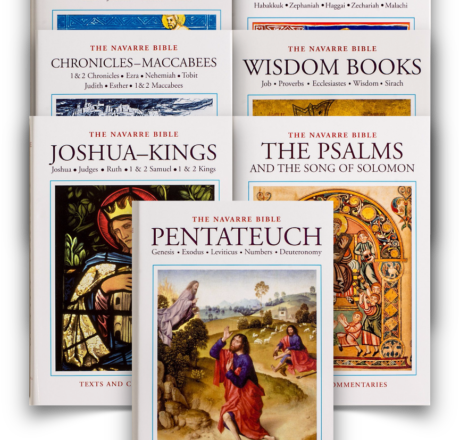
NAVARRE BIBLE COMMENTARY(RSV)

Ad Majorem Dei Gloriam (To the Greater Glory of God)

First Reading:

From: Wisdom 2:23-3:9

The Origin of Evil and Death
----------------------------
[23] For God created man for incorruption, and made him in the image of his own eternity, but through the devil’s envy death entered the world, and those who belong to his party experience it.

The Death of the Righteous
--------------------------
[1] But the souls of the righteous are in the hand of God, and no torment will ever touch them. [2] In the eyes of the foolish they seemed to have died, and their departure was thought to be an affliction, [3] and their going from us to be their destruction; but they are at peace. [4] For though in the sight of men they were punished, their hope is full of immortality. [5] Having been disciplined a little, they will receive great good, because God tested them and found them worthy of himself; [6] like gold in the furnace he tried them, and like a sacrificial burnt offering he accepted them. [7] In the time of their visitation they will shine forth, and will run like sparks through the stubble. [8] They will govern nations and rule over peoples, and the Lord will reign over them for ever. [9] Those who trust in him will understand truth, and the faithful will abide with him in love, because grace and mercy are upon his elect, and he watches over his holy ones.

***********************************************************************
Commentary:

2:21-24. The mistake of the ungodly is to think that nothing lies beyond death. But this way of thinking stems from the wickedness of their lives which prevents them from knowing God’s purposes and causes them to despise the way upright people live. The inspired author takes issue with them and spells out God’s plan for man and how death came to be (vv. 23-24). But here again “death” has a far-reaching meaning: it means losing that incorruptibility which, as the author sees it, lies beyond physical death. The death that entered the world through the devil’s envy, the death experienced by those who belong to the devil’s “party”, means to be reduced to nothing, to become “dishonored corpses” (4:18), through losing the incorruptibility that comes from God. What the author is saying here presupposes the Genesis account of how man was created in the image and likeness of God (Gen 1:26) and therefore with a seed of immortality, and how the devil tempted man to commit the original sin that resulted in the loss of immortality (cf. Gen 3-4). But the author of Wisdom goes further than that: he says that only those who belong to the devil lose the “immortality” (which he terms “incorruption”) of the human person as an entity made up of soul and body. On the basis of this interpretation and in the light of the resurrection of Jesus Christ, St Paul teaches that death, both physical and spiritual, reaches all human beings through the sin committed by Adam; but Christ, the new Adam, redeems all from death.

The devil, in Greek "diabolos", means “accuser, calumniator” and is the usual translation given for the Hebrew "Satan". These verses do not quote Genesis explicitly, but Genesis is in the background, for it is there we find the serpent identified as God’s enemy and man’s. The New Testament writers remind us that the devil was a murderer from the beginning (cf. Jn 8:44); and in its account of the battle between good and bad angels, the book of Revelation will say: “The great dragon was thrown down, that ancient serpent, who is called the Devil and Satan, the deceiver of the whole world” (Rev 12:9).

3:1-4:20. This passage describes at some length the contrasting situations of the righteous and the ungodly in this life, in death, and beyond the grave. The author has consoling things to say to the righteous as regards afflictions; they have every reason to hope. But evildoers he describes as foolish; theirs is a fundamental error which will cause them grief now; any suffering they experience will do them no good; their death is grievous and so is what lies beyond it: “Two possibilities are laid open to us at the same time: life and death--and each person will come to the end that befits him. Life and death are like two types of coin, one belongs to God and the other to this world, each with its own hallmark: unbelievers deal in the currency of this world, and those who have remained faithful through love carry the coin of God the Father, which is marked with Jesus Christ. If we are not ready to die for him or to imitate his passion, we will not have his life within us” (St Ignatius of Antioch, "Ad Magnesios", 5, 2).

3:1-9. These very poetic lines convey very well the notion of the reward that awaits the just in the after-life, but they are not very specific about it. The author uses expressions that correspond to the time in history and Revelation in which he lives, but they do enable us to get an idea of the state of the blessed: “The souls of the righteous are in the hands of God, and no torment will ever touch them” (v. 1); the righteous dead are “at peace” (v. 3), that is, in the sphere proper to God; they can be sure of immortality, "athanasia" (v. 4). They will abide in the Kingdom of God forever and share in God’s power to judge and rule (v. 8; cf. Mt 19:28)--a pointer to their power of intercession. One could say that the most encouraging line of all is, “the faithful will abide with him in love” (v. 9). Still to come is the explicit New Testament revelation which tells us that the blessed “shall see God as he is” (1 Jn 3:2), not as in a (dull) mirror but “face to face”; they will know him as he knows them (cf. 1 Cor 13:12) and they will be with Christ forever in heaven (cf. 1 Thess 4:17).

15 posted on 11/11/2025 7:15:21 AM PST by fidelis (Ecce Crucem Domini! Fugite partes adversae! Vicit Leo de tribu Juda, Radix David! Alleluia!)
[ Post Reply | Private Reply | To 13 | View Replies]

Gospel Reading:

From: Luke 17:5-10

Humble Service
--------------
[7] "Will any of you, who has a servant ploughing or keeping sheep, say to him when he has come in from the field, `Come at once and sit down at table'? [8] Will he not rather say to him, `Prepare supper for me, and gird yourself and serve me, till I eat and drink; and afterward you shall eat and drink'? [9] Does he thank the servant because he did what was commanded? [10] So you also, when you have done all that is commanded you, say, `We are unworthy servants; we have only done what was our duty.'"

***********************************************************************
Commentary:

7-10. Jesus is not approving this master's abusive and arbitrary behavior: He is using an example very familiar to His audience to show the attitude a person should have towards his Creator: everything, from our very existence to the eternal happiness promised us, is one huge gift from God. Man is always in debt to God; no matter what service he renders Him he can never adequately repay the gifts God has given him. There is no sense in a creature adopting a proud attitude towards God. What Jesus teaches us here we see being put into practice by our Lady, who replied to God's messenger (the Archangel Gabriel), "Behold, I am the handmaid of the Lord" (Luke 1:38).

16 posted on 11/11/2025 7:15:46 AM PST by fidelis (Ecce Crucem Domini! Fugite partes adversae! Vicit Leo de tribu Juda, Radix David! Alleluia!)
[ Post Reply | Private Reply | To 15 | View Replies]

Click here to go to the My Catholic Life! Devotional thread for a meditation on today’s Gospel Reading.

17 posted on 11/11/2025 7:16:48 AM PST by fidelis (Ecce Crucem Domini! Fugite partes adversae! Vicit Leo de tribu Juda, Radix David! Alleluia!)
[ Post Reply | Private Reply | To 16 | View Replies]

Disclaimer: Opinions posted on Free Republic are those of the individual posters and do not necessarily represent the opinion of Free Republic or its management. All materials posted herein are protected by copyright law and the exemption for fair use of copyrighted works.

Free Republic
Browse · Search
Religion
Topics · Post Article

FreeRepublic, LLC, PO BOX 9771, FRESNO, CA 93794
FreeRepublic.com is powered by software copyright 2000-2008 John Robinson