
Catena Aurea by St. Thomas Aguinas
13:1017
10. And he was teaching in one of the synagogues on the sabbath.
11. And, behold, there was a woman which had a spirit of infirmity eighteen years, and was bowed together, and could in no wise lift up herself.
12. And when Jesus saw her, he called her to him, and said unto her, Woman, thou art loosed from thine infirmity.
13. And he laid his hands on her: and immediately she was made straight, and glorified God.
14. And the ruler of the synagogue answered with indignation, because that Jesus had healed on the sabbath day, and said unto the people, There are six days in which men ought to work: in them therefore come and be healed, and not on the sabbath day.
15. The Lord then answered him, and said, Thou hypocrite, doth not each one of you on the sabbath loose his ox or his ass from the stall, and lead him away to watering?
16. And ought not this woman, being a daughter of Abraham, whom Satan hath bound, lo, these eighteen years, be loosed from this bond on the sabbath day?
17. And when he had said these things, all his adversaries were ashamed: and all the people rejoiced for all the glorious things that were done by him.
AMBROSE.

He soon explained that He had been speaking of the synagogue, shewing, that He truly came to it, who preached in it, as it is said, And he was teaching in one of the synagogues.
CHRYSOSTOM.

He teaches indeed not separately, but in the synagogues; calmly, neither wavering in any thing, nor determining aught against the law of Moses; on the Sabbath also, because the Jews were then engaged in the hearing of the law.
CYRIL OF ALEXANDRIA.

Now that the Incarnation of the Word was manifested to destroy corruption and death, and the hatred of the devil against us, is plain from the actual events; for it follows, And behold there was a woman which had a spirit of infirmity, &c. He says spirit of infirmity, because the woman suffered from the cruelty of the devil, forsaken by God because of her own crimes or for the transgression of Adam, on account of which the bodies of men incur infirmity and death. But God gives this power to the Devil, to the end that men when pressed down by the weight of their adversity might betake them to better things. He points out the nature of her infirmity, saying, And was bowed together, and could in no wise lift up herself.
BASIL. (Hom. 9. in Hex.)
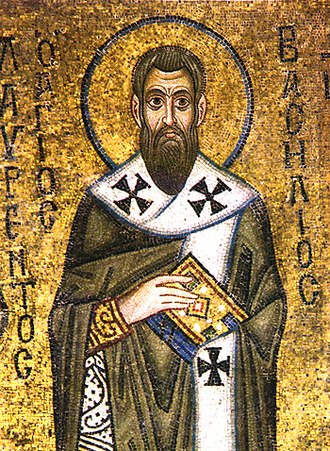
Because the head of the brutes is bent down towards the ground and looks upon the earth, but the head of man was made erect towards the heaven, his eyes tending upward. For it becomes us to seek what is above, and with our sight to pierce beyond earthly things.
CYRIL OF ALEXANDRIA.
But our Lord, to shew that His coming into this world was to be the loosing of human infirmities, healed this woman. Hence it follows, And when Jesus saw her, he called her to him, and said unto her, Woman, thou art loosed from thine infirmity. A word most suitable to God, full of heavenly majesty; for by His royal assent He dispels the disease. He also laid His hands upon her, for it follows, He laid his hands on her, and immediately she was made straight, and glorified God. We should here answer, that the Divine power had put on the sacred flesh. For it was the flesh of God Himself, and of no other, as if the Son of Man existed apart from the Son of God, as some have falsely thought. But the ungrateful ruler of the synagogue, when he saw the woman, who before was creeping on the ground, now by Christs single touch made upright, and relating the mighty works of God, sullies his zeal for the glory of the Lord with envy, and condemns the miracle, that he might appear to be jealous for the Sabbath. As it follows, And the ruler of the synagogue answered with indignation, because that Jesus had healed on the sabbath-day, and said unto the people, There are six days in which men ought to work, and not on the sabbath-day. He would have those who are dispersed about on the other days, and engaged in their own works, not come on the Sabbath to see and admire our Lords miracles, lest by chance they should believe. But the law has not forbidden all manual work on the Sabbath-day, and has it forbidden that which is done by a word or the mouth? Cease then both to eat and drink and speak and sing. And if thou readest not the law, how is it a Sabbath to thee? But supposing the law has forbidden manual works, how is it a manual work to raise a woman upright by a word?
AMBROSE.
Lastly, God rested from the works of the world not from holy works, for His working is constant and everlasting; as the Son says, My Father worketh until now, and I work; (John 5:17.) that after the likeness of God our worldly, not our religious, works should cease. Accordingly our Lord pointedly answered him, as it follows, Thou hypocrite, doth not each one of you on the sabbath-day loose his ox or his ass? &c.
BASIL. (Basil. Hom. 1. de Jej.)
The hypocrite is one who on the stage assumes a different character from his own. So also in this life some men carry one thing in their heart, and shew another on the surface to the world.
CHRYSOSTOM.
Well then does he call the ruler of the synagogue a hypocrite, for he had the appearance of an observer of the law, but in his heart was a crafty and envious man. For it troubles him not that the Sabbath is broken, but that Christ is glorified. Now observe, that whenever Christ orders a work to be done, (as when He ordered the man sick of the palsy to take up his bed,) He raises His words to something higher, convincing men by the majesty of the Father, as He says, My Father worketh until now, and I work. (John 5:17.) But in this place, as doing every thing by word, He adds nothing further, refuting their calumny by the very things which they themselves did.
CYRIL OF ALEXANDRIA.
Now the ruler of the synagogue is convicted a hypocrite, in that he leads his cattle to watering on the Sabbath-day, but this woman, not more by birth than by faith the daughter of Abraham, he thought unworthy to be loosed from the chain of her infirmity. Therefore He adds, And ought not this woman, being a daughter of Abraham, whom Satan has bound, lo, these eighteen years, to be loosed from this bond on the sabbath-day? The ruler preferred that this woman should like the beasts rather look upon the earth than receive her natural stature, provided that Christ was not magnified. But they had nothing to answer; they themselves unanswerably condemned themselves. Hence it follows, And when he had said these things, all his adversaries were ashamed. But the people, reaping great good from His miracles, rejoiced at the signs which they saw, as it follows, And all the people rejoiced. For the glory of His works vanquished every scruple in them who sought Him not with corrupt hearts.
GREGORY. (Hom. 31. in Evang.)

Mystically the unfruitful fig tree signifies the woman that was bowed down. For human nature of its own will rushes into sin, and as it would not bring forth the fruit of obedience, has lost the state of uprightness. The same fig tree preserved signifies the woman made upright.
AMBROSE.
Or the fig tree represents the synagogue; afterwards in the infirm woman there follows as it were a figure of the Church, which having fulfilled the measure of the law and the resurrection, and now raised up on high in that eternal resting place, can no more experience the frailty of our weak inclinations. Nor could this woman be healed except she had fulfilled the law and grace. For in ten sentences is contained the perfection of the law, and in the number eight the fulness of the resurrection.
GREGORY. (ut sup.)
Or else; man was made on the sixth day, and on the same sixth day were all the works of the Lord finished, but the number six multiplied three times makes eighteen. Because then man who was made on the sixth day was unwilling to do perfect works, but before the law, under the law, and at the beginning of grace, was weak, the woman was bowed down eighteen years.
AUGUSTINE. (Serm. 110.) That which the three years signified in the tree, the eighteen did in the woman, for three times six is eighteen. But she was crooked and could not look up, for in vain she heard the words, lift up your hearts.
GREGORY. (up sup.)
For every sinner who thinketh earthly things, not seeking those that are in heaven, is unable to look up. For while pursuing his baser desires, he declines from the uprightness of his state; or his heart is bent crooked, and he ever looks upon that which he unceasingly thinks about. The Lord called her and made her upright, for He enlightened her and succoured her. He sometimes calls but does not make upright, for when we are enlightened by grace, we ofttimes see what should be done, but because of sin do not practise it. For habitual sin binds down the mind, so that it cannot rise to uprightness. It makes attempts and fails, because when it has long stood by its own will, when the will is lacking, it falls.
AMBROSE.
Now this miracle is a sign of the coming sabbath, when every one who has fulfilled the law and grace, shall by the mercy of God put off the toils of this weak body. But why did He not mention any more animals, save to shew that the time would come when the Jewish and Gentile nations should quench their bodily thirst, and this worlds heat in the fulness of the fountain of the Lord, and so through the calling forth of two nations, the Church should be saved.
BEDE.

But the daughter of Abraham is every faithful soul, or the Church gathered out of both nations into the unity of the faith. There is the same mystery then in the ox or ass being loosed and led to water, as in the daughter of Abraham being released from the bondage of our affections.
Catena Aurea Luke 13
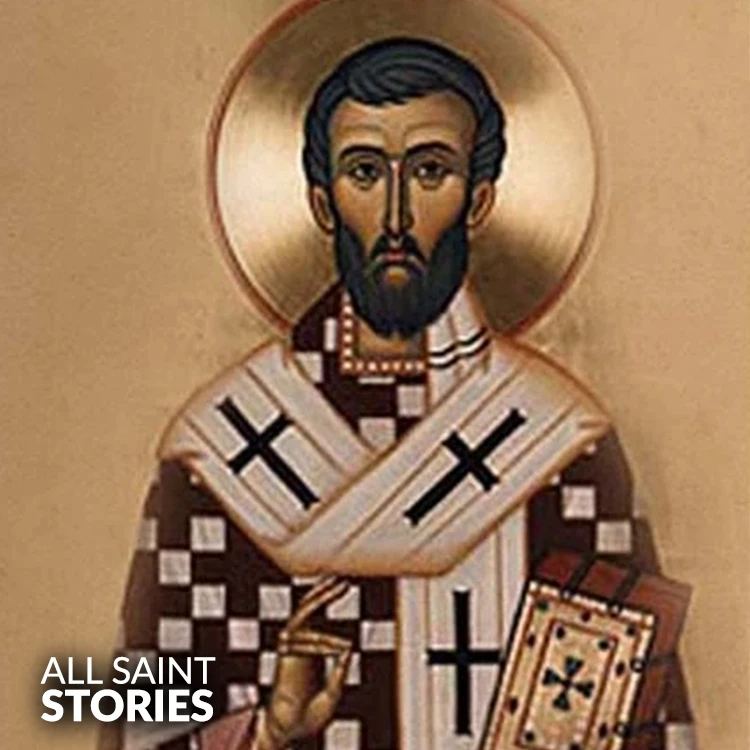
St. Frumentius was a 4th-century bishop and missionary credited with bringing Christianity to Ethiopia. Captured as a child and later freed, he played a key role in converting the Aksumite Kingdom. He was ordained by St. Athanasius of Alexandria and became the first bishop of Ethiopia, establishing the Ethiopian Church. His feast day is celebrated on October 27.
St. Frumentius was born around the early 4th century, possibly in Tyre (modern-day Lebanon). As a young boy, he and his brother Aedesius traveled with a Phoenician philosopher to Ethiopia. During their journey, their ship was attacked by local warriors, and the brothers were taken captive. They were brought to the court of the King of Axum, where they were treated kindly and given positions of trust.
Frumentius, known for his wisdom and learning, became a close advisor to the king. When the ruler died, Frumentius and his brother continued to serve the queen regent and her young son, Ezana. During this time, Frumentius encouraged Christian merchants in the kingdom to practice their faith openly and helped spread Christianity within the royal court. His efforts planted the seeds for what would become one of the earliest Christian nations.
When Ezana came of age and took the throne, Frumentius left Ethiopia and traveled to Alexandria, seeking guidance from the Christian Church. There, he met St. Athanasius, the Patriarch of Alexandria, and requested that a bishop be sent to oversee the growing Christian community in Ethiopia. Recognizing Frumentius’ dedication and leadership, Athanasius ordained him as Ethiopia’s first bishop and sent him back to Axum to continue his missionary work.
As bishop, Frumentius played a crucial role in organizing the Ethiopian Church, establishing places of worship, and training native clergy. He baptized King Ezana, who officially declared Christianity the state religion, making Ethiopia one of the first Christian nations in history. This marked a turning point in Ethiopian religious and cultural identity, solidifying its ties to the broader Christian world.
Frumentius remained in Ethiopia for the rest of his life, tirelessly preaching the Gospel and nurturing the faith. He established strong connections with the Church in Alexandria, ensuring that Ethiopian Christianity remained under its influence for centuries. He was deeply revered as "Abba Salama" (Father of Peace), a title given to the head of the Ethiopian Church.
St. Frumentius is honored as the Apostle of Ethiopia and a key figure in early Christian missionary history. His legacy endures in the Ethiopian Orthodox Tewahedo Church, which traces its apostolic succession back to him. His feast day is celebrated on October 27, and he is remembered for his courage, faith, and efforts to bring Christianity to Africa.
allsaintstories.com
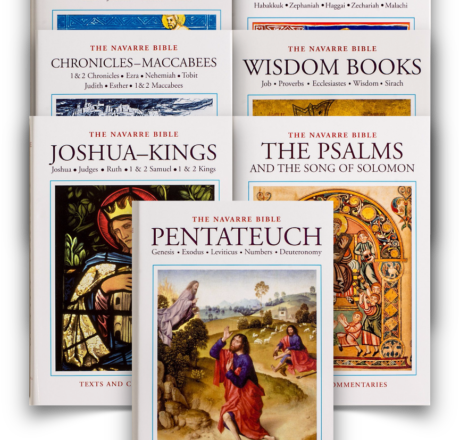
NAVARRE BIBLE COMMENTARY(RSV)
Ad Majorem Dei Gloriam (To the Greater Glory of God)
First Reading:
From: Romans 8:12-17
Life in the Spirit (Continuation)
---------------------------------
[12] So then, brethren, we are debtors, not to the flesh, to live according to the flesh--[13] for if you live according to the flesh you will die, but if by the Spirit you put to death the deeds of the body you will live.
Christians Are Children of God
------------------------------
[14] For all who are led by the Spirit of God are sons of God. [15] For you did not receive the spirit of slavery to fall back into fear, but you have received the spirit of sonship. When we cry, "Abba! Father!" [16] it is the Spirit himself bearing witness with our spirit that we are children of God, [17] and if children, then heirs, heirs of God and fellow heirs with Christ, provided we suffer with him in order that we may also be glorified with him.
***********************************************************************
Commentary:
14-30. The life of a Christian is sharing in the life of Christ, God's only Son. By becoming, through adoption, true children of God we have, so to speak, a right to share also in Christ's inheritance—eternal life in heaven (vv. 14-18). This divine life in us, begun in Baptism through rebirth in the Holy Spirit, will grow under the guidance of this Spirit, who makes us ever more like Christ (vv. 14, 26-27). So, our adoption as sons is already a fact--we already have the first-fruits of the Spirit (v. 23)—but only at the end of time, when our body rises in glory, will our redemption reach its climax (vv. 23-25). Meanwhile we are in a waiting situation--not free from suffering (v. 18), groans (v. 23) and weakness (v. 26)—a situation characterized by a certain tension between what we already possess and are, and what we yearn for. This yearning is something which all creation experiences; by God's will, its destiny is intimately linked to our own, and it too awaits its transformation at the end of the world (vv. 19-22). All this is happening in accordance with a plan which God has, a plan established from all eternity which is unfolding in the course of time under the firm guidance of divine Providence (vv. 28-30).
14-15. St. J. Escriva taught thousands of people about this awareness of divine filiation which is such an important part of the Christian vocation. Here is what he says, for example, in "The Way", 267: "We've got to be convinced that God is always near us. We live as though he were far away, in the heavens high above, and we forget that he is also continually by our side.
"He is there like a loving Father. He loves each of us more than all the mothers in the world can love their children--helping us, inspiring us, blessing...and forgiving.
"How often we have misbehaved and then cleared the frowns from our parents' brows, telling them: I won't do it any more!—that same day, perhaps, we fall again...—and our father, with feigned harshness in his voice and serious face, reprimands us while in his heart he is moved, realizing our weakness and thinking: poor child, how hard he tries to behave well!
"We've got to be filled, to be imbued with the idea that our Father, and very much our Father, is God who is both near us and in heaven."
This awareness of God as Father was something which the first chancellor of the University of Navarre experienced with special intensity one day in 1931: "They were difficult times, from a human point of view, but even so I was quite sure of the impossible—this impossibility which you can now see as an accomplished fact. I felt God acting within me with overriding force, filling my heart and bringing to my lips this tender invocation--'Abba! Pater!' I was out in the street, in a tram: being out in the street is no hindrance for our contemplative dialogue; for us, the hustle and bustle of the world is a place for prayer" (S. Bernal, "Monsignor Josemaria Escriva de Balaguer", p. 214).


