Posted on 09/06/2025 10:52:32 AM PDT by fidelis
By Dr. John Bergsma
One of the most famous German opponents of Adolf Hitler and Nazism was the Lutheran pastor and theologian Dietrich Bonhoeffer, whom the Nazis executed by hanging in April 1945 for his involvement in a plot against Hitler himself. Bonhoeffer’s most famous work was a meditation on the Sermon on the Mount entitled (in English) The Cost of Discipleship. In it, Bonhoeffer parted ways with a Protestantism that understood “salvation by faith alone” as some kind of easy road to heaven. Bonhoeffer criticized “easy-believism” as “cheap grace”:
Cheap grace is the preaching of forgiveness without requiring repentance, baptism without church discipline, communion without confession. Cheap grace is grace without discipleship, grace without the cross, grace without Jesus Christ.
Costly grace confronts us as a gracious call to follow Jesus, it comes as a word of forgiveness to the broken spirit and the contrite heart. It is costly because it compels a man to submit to the yoke of Christ and follow him; it is grace because Jesus says: "My yoke is easy and my burden is light.
Bonhoeffer was a Protestant, but there is much in his writings that a Catholic can affirm, including the passage above. Like St. Maximillian Kolbe, he died at the hands of a totalitarian government because he would not compromise his faith in Christ. I could not help thinking of Bonhoeffer as I meditated on the Readings for this coming Sunday, which stress the high cost of discipleship to this mysterious man Jesus of Nazareth, who is nothing other than the Wisdom of God in the flesh.
1. Our First Reading is Wisdom 9:13-18b:
Who can know God’s counsel, or who can conceive what the LORD intends? For the deliberations of mortals are timid, and unsure are our plans. For the corruptible body burdens the soul and the earthen shelter weighs down the mind that has many concerns. And scarce do we guess the things on earth, and what is within our grasp we find with difficulty; but when things are in heaven, who can search them out? Or who ever knew your counsel, except you had given wisdom and sent your holy spirit from on high? And thus were the paths of those on earth made straight.
There is little controversy over the date and authorship of the Wisdom of Solomon. Strictly speaking, the book makes no claims about its own authorship, although the first-person “voice” of the book clearly cloaks itself in the persona of the biblical Solomon. The Church Fathers recognized this as a literary device. St. Augustine’s remark is representative:
Next are the … three books of Solomon, viz., Proverbs, Song of Songs, and Ecclesiastes. For two books, one called Wisdom and the other Ecclesiasticus, are ascribed to Solomon from a certain resemblance of style, but the most likely opinion is that they were written by Jesus the son of Sirach. Still they are to be reckoned among the prophetical books, since they have attained recognition as being authoritative.
The Wisdom of Solomon is heavily influenced by Greek philosophy and rhetoric. It gives every evidence of having been composed originally in Greek, and a variety of factors, including the dominating concern with matters Egyptian in the second half of the book, suggest that the large Jewish community in Alexandria, Egypt, was the location of composition, at some time between 250 and 100 BC. Since the author seems to be responding to a campaign of persecution against observant Jews, scholars often propose either the reign of Ptolemy IV Philopator (221-204 B.C.), or Ptolemy VII Physicon (145-117 B.C.) as likely periods of composition.
A major contribution of the Book of Wisdom is to the theology of the Holy Spirit. The book characterizes divine wisdom as a person and virtually identifies her with the spirit of God, i.e. the Holy Spirit:
• For wisdom is a kindly spirit (1:6)
• In her there is a spirit that is intelligent, holy, unique … all-powerful, all-seeing (7:22)
• She is a breath of the power of God, and pure emanation of the glory of the Almighty (7:25)
• Who has learned your counsel, unless you have given Wisdom, and sent your Holy Spirit from on high? (9:17)
So there is progress in revelation in the Book of Wisdom. In this late Old Testament work, we see further articulated a reality hinted at previously, namely, that there are multiple persons in the Godhead, and God’s Spirit is a Person.
In Patristic exegesis, these passages about Wisdom are often taken as describing Christ, whom the New Testament identifies as “the wisdom of God” (1 Corinthians 1:24). Although the more natural application of these passages of Wisdom is directly to the Third Person, the Holy Spirit, their application to the Second Person is justified inasmuch as he is the Christ, the “Anointed One,” who is anointed with the Spirit and thus shares the Spirit’s attributes.
Focusing on this Sunday’s Reading, we note that the sacred author stresses how difficult the attainment of wisdom is, even in relation to material concerns, much less to supernatural and transcendent truth. Our physical needs and appetites confuse and cloud our thinking, because we are strongly motivated to reason to conclusions that allow us to satisfy our bodies, rather than to conclusions that are strictly true. In humility, the sage acknowledges that the attainment of truth about ultimate reality is really a superhuman effort. It is something beyond our strength, truly a miracle. Without the help of God, we would all but despair of coming to the truth about the reality of things. But God makes it possible by the gift of the Holy Spirit:
Or who ever knew your counsel, except you had given wisdom and sent your holy spirit from on high?
The sage here reflects a biblical theme that wisdom is the gift of God’s Spirit. This can be seen in the accounts of notable wise men in salvation history.
For example, Joseph, the visionary and royal steward over the land of Egypt, derived his wisdom from the Holy Spirit:
Genesis 41:38-39 And Pharaoh said to his servants, “Can we find such a man as this, in whom is the Spirit of God?” So Pharaoh said to Joseph, “Since God has shown you all this, there is none so discreet and wise as you are …
Likewise, Daniel:
Daniel 5:11 There is in your kingdom a man in whom is the spirit of the holy gods. In the days of your father light and understanding and wisdom, like the wisdom of the gods, were found in him …
And the Messiah who is to come will be marked by similar wisdom:
Isaiah 11:2 And the Spirit of the LORD shall rest upon him, the spirit of wisdom and understanding, the spirit of counsel and might, the spirit of knowledge and the fear of the LORD.
2. Our Responsorial Psalm is Psalm 90:3-4, 5-6, 12-13, 14-1:
R. (1) In every age, O Lord, you have been our refuge.
You turn man back to dust,
saying, “Return, O children of men.”
For a thousand years in your sight
are as yesterday, now that it is past,
or as a watch of the night.
R. In every age, O Lord, you have been our refuge.
You make an end of them in their sleep;
the next morning they are like the changing grass,
Which at dawn springs up anew,
but by evening wilts and fades.
R. In every age, O Lord, you have been our refuge.
Teach us to number our days aright,
that we may gain wisdom of heart.
Return, O LORD! How long?
Have pity on your servants!
R. In every age, O Lord, you have been our refuge.
Fill us at daybreak with your kindness,
that we may shout for joy and gladness all our days.
And may the gracious care of the LORD our God be ours;
prosper the work of our hands for us!
Prosper the work of our hands!
R. In every age, O Lord, you have been our refuge.
Psalm 90 is the only Psalm attributed to Moses, and the it has a decided melancholy tone, as a meditation on human frailty immediately after the disastrous ending of Psalm 89, in which all the hopes of Israel pinned upon the Davidic dynasty are dashed in tragedy and destruction. The Israelite reader of the psalms, having been brought to despair over the apparent failure of the covenant with David, now “goes back to Moses” for advice in Psalm 90. Moses observes the utter lack of power on the part of human beings, and recognizes that the only lasting things are those granted by God. He leads Israel in prayer: “Teach us to number our days aright, that we may gain wisdom of heart!” Much like the sacred author of the Book of Wisdom, Moses acknowledges that wisdom is beyond our reach, and is ultimately a gift from God.
3. Our Second Reading is Philemon 9-10, 12-17:
I, Paul, an old man, and now also a prisoner for Christ Jesus, urge you on behalf of my child Onesimus, whose father I have become in my imprisonment; I am sending him, that is, my own heart, back to you. I should have liked to retain him for myself, so that he might serve me on your behalf in my imprisonment for the gospel, but I did not want to do anything without your consent, so that the good you do might not be forced but voluntary. Perhaps this is why he was away from you for a while, that you might have him back forever, no longer as a slave but more than a slave, a brother, beloved especially to me, but even more so to you, as a man and in the Lord. So if you regard me as a partner, welcome him as you would me.
From now to the end of the liturgical year, the Lectionary reads semi-continuously through St. Paul’s letters to individuals (Philemon, Timothy, Titus), starting with St. Paul’s shortest letter, the one-chapter epistle to Philemon. This is the only reading of Philemon on a Sunday or Feast Day in the Church’s calendar. The Letter to Philemon concerns a runaway slave, Onesimus, whom Paul met, converted, and discipled while he was in prison. When Onesimus was finally released, Paul sent him back to his master Philemon (already a Christian) with a letter asking Philemon to free Onesimus and allow him to return to assist Paul in his ministry. The letter is an important testimony to the Christian belief in the equal human dignity of all persons, despite societal structures (like slavery or abortion) that deny dignity to some.
Onesimus was Philemon’s legal “possession”, but Paul is asking Philemon to “renounce his possessions” for the sake of the Gospel, that is, for the sake of the success of Paul’s preaching ministry. Jesus will call all his disciples to “renounce their possessions” in the following Gospel Reading.
4. Our Gospel is Luke 14:25-33:
Great crowds were traveling with Jesus, and he turned and addressed them, “If anyone comes to me without hating his father and mother, wife and children, brothers and sisters, and even his own life, he cannot be my disciple.
When speaking of “hating” one’s family, Jesus is not speaking literally, but using a common rabbinic literary technique we now call “hyperbole,” that is, a dramatic overstatement that attracts attention and provokes thought. What does it mean to “hate” one’s family? It means one needs to be willing to break family ties if one’s family opposes the call of Christ on one’s life. One never stops loving one’s family, though, because love of God and love of neighbor are the summation of God’s law, and one’s family certainly counts as one’s “neighbors.” Furthermore, elsewhere Jesus criticizes the Pharisees for using a loophole in the law to justify not caring for their parents (Mark 7:11), and Paul rebukes Christians who do not care for their own family (1 Timothy 5:8). So we know that under ordinary circumstances, love for family is mandated (as in the Fourth Commandment). Nonetheless, if the choice is between honoring family and following Jesus, one must choose Jesus. The Muslim convert Joseph Fadelle faced this choice and writes about it in the riveting book, The Price to Pay.
Whoever does not carry his own cross and come after me cannot be my disciple.
This is absolutely shocking language, whose original effect is lost on us who now where crosses around our necks as jewelry. The cross was an instrument of execution and torture, like an electric chair but much worse. The use of crosses was almost unique to the Roman Empire, which liked to employ them to make awful spectacle of the agonizing deaths of anyone who opposed Roman power. Jews hated the cross, because a curse was attached to anyone who died “on a tree” according to Deuteronomy 21:22-23.
The condemned man carried his own cross to the site of his execution, so “to carry one’s cross” meant that you were on death row, there was no chance of appeal, you would certainly die soon. Let’s keep in mind that Jesus says this during Luke’s “Travel Narrative”—that is, while he is on his “death march” to Jerusalem to experience his passion (Luke 9-19). Jesus knew he was going to his death, and anyone who followed him also risked death. As it would turn out, everyone abandoned Jesus at the end, so he went to the cross alone. But in years afterward, many of his disciples would share the cross with him.
Which of you wishing to construct a tower does not first sit down and calculate the cost to see if there is enough for its completion? Otherwise, after laying the foundation and finding himself unable to finish the work the onlookers should laugh at him and say, ‘This one began to build but did not have the resources to finish.’ Or what king marching into battle would not first sit down and decide whether with ten thousand troops he can successfully oppose another king advancing upon him with twenty thousand troops? But if not, while he is still far away, he will send a delegation to ask for peace terms. In the same way, anyone of you who does not renounce all his possessions cannot be my disciple.” >
Jesus’ method of preaching is so different from methods I was taught or have witnessed at megachurches or on TV. Much of contemporary evangelism relies on some variation of “come to Jesus and your troubles will be solved.” But Jesus seems here to be encouraging people to leave and go away, telling them that they don’t realize what they are getting into. Following Jesus will cost everything that you own. If there is any possession you won’t give up for the sake of Jesus, you have not attained discipleship.
Can the renunciation of your material goods really be the way to salvation and communion with God? This seems paradoxical, difficult to accept. This is the Wisdom that does not follow human logic, that defies natural reasoning. To see the wisdom and beauty of poverty and renunciation requires a gift of insight from God, a reception of his Spirit.
Several times in the Gospel of Luke, Jesus is shown to be the bearer of God’s Wisdom:
Luke 2:40 And the child (Jesus) grew and became strong, filled with wisdom; and the favor of God was upon him.
Luke 2:52 And Jesus increased in wisdom and in stature, and in favor with God and man.
Luke 7:34 The Son of man has come eating and drinking; and you say, ‘Behold, a glutton and a drunkard, a friend of tax collectors and sinners!’ Yet wisdom is justified by all her children.”
Luke 11:31 The queen of the South will arise at the judgment with the men of this generation and condemn them; for she came from the ends of the earth to hear the wisdom of Solomon, and behold, something greater than Solomon is here.
Jesus now tells us that the path to salvation requires us to embrace death and renounce our family and material wealth in order to follow him. That is not the path to salvation we would have reasoned out for ourselves! But it is the Wisdom of God which transcends our categories, the Wisdom of God that we prayed to receive with “Solomon” the sage and Moses the psalmist.
Please keep in mind that this is a Catholic Caucus/Devotional thread for the purpose of prayerful reflection on the Sacred Scriptures and is closed to debate of any kind. Per FR policy on Religion Caucus threads, off-topic, argumentative, and abusive comments are not allowed and will be submitted to the Mods for deletion. Thanks, and God bless you and have a holy Lord’s Day.

Pinging the weekly Sacred Page list!
First Reading:
From: Wisdom 9:13-18
Wisdom essential for discerning God’s will
-------------------------------------------------------------
[13] For what man can learn the counsel of God?
Or who can discern what the Lord wills?
[14] For the reasoning of mortals is worthless,
and our designs are likely to fail,
[15] for a perishable body weighs down the soul,
and this earthly tent burdens the thoughtful mind.
[16] We can hardly guess at what is on earth,
and what is at hand we find with labour;
but who has traced out what is in the heavens?
[17] Who has learned thy counsel, unless thou hast given wisdom
and sent thy holy Spirit from on high?
[18] And thus the paths of those on earth were set right,
and men were taught what pleases thee,
and were saved by wisdom.”
******************************************************
Commentary:
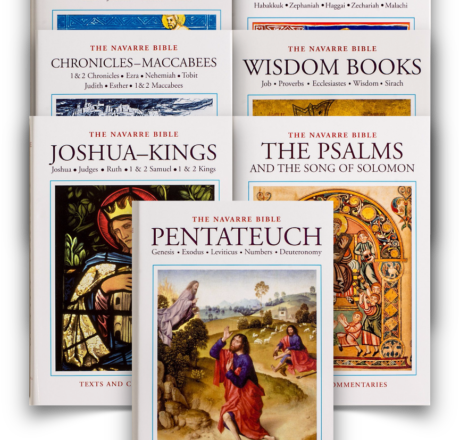
9:13-18. These verses conclude the survey of wisdom, which as we saw is sometimes identified with the “holy Spirit” that God sends from on high (v. 17). The last verse says that thanks to wisdom men are saved (v. 18), for through it they have learned to understand God’s purposes. Left to himself, man cannot attain wisdom because his reasoning powers are quite limited and he is often side-tracked (v. 14); moreover, the cares of life get in the way (v. 15); in the last analysis, man is really quite limited (v. 16). In speaking like this, the writer is not saying that we cannot discover truth; all he means is that God’s purposes, the Wisdom of God, cannot be discovered by man on his own. But now that the Word has become man, we can manage to know the mystery of God: “Because God did not wish to be known any longer through the image and sign of living wisdom to be found in created things, as happened in former times, it was his will that Wisdom itself would become flesh, and that, having been made man, he would suffer death on the cross; so that in all the days to come, everyone who believed in him could be saved through their faith in the cross. In former times, the Wisdom of God stamped his seal on all created things – and the presence of his sign is the reason why we called them ‘created’ – to reveal himself and so make his Father known. But later, this same Wisdom, who is the Word, was made flesh, as St John says; and having overcome death and saved the human race, he revealed himself in a clearer way and, through himself, revealed the Father” (St Athanasius, Contra arianos, 2, 81-82).
Verse 15 seems to contain the Platonic idea of the body being the prison of the soul, but the sacred writer does not think that the soul pre-existed the body: all he is doing is making the point that the physical part of man blinds him to spiritual things. St Paul will expand on this when he talks about how his members contend with his “inmost self”: “Wretched man that I am! Who will deliver me from this body of death?” (Rom 7:24).
------------------------------------
Second Reading:
From: Philemon 9-10, 12-17
A Plea on Onesimus' Behalf
--------------------------
[9] Yet for love's sake I prefer to appeal to you—I, Paul, an ambassador and now a prisoner also for Christ Jesus—[10] I appeal to you for my, child, Onesimus, whose father I have become in my imprisonment.
[12] I am sending him back to you, sending my very heart. [13] I would have been glad to keep him with me, in order that he might serve me on your behalf during my imprisonment for the gospel; [14] but I preferred to do nothing without your consent in order that your goodness might not be by compulsion but of your own free will.
[15] Perhaps this is why he was parted from you for a while, that you might have him back for ever, [16] no longer as a slave but more than a slave, as a beloved brother, especially to me but how much more to you, both in the flesh and in the Lord. [17] So if you consider me your partner, receive him as you would receive me.
***********************************************************************
Commentary:
8-12. At this point St Paul gives his main reason for writing—to intercede for Onesimus. Typically, he appeals to Philemon's charity, rather than demanding his cooperation (cf. 2 Cor 1:23), and to support this appeal he refers to his (Paul's) being "an old man" and a "prisoner" for love of Jesus Christ (v. 9).
The Apostle's generosity of spirit is plain to see: in spite of being imprisoned he is self-forgetful and he uses every opportunity that presents itself to win converts--as was the case with Onesimus; and now he intercedes on his behalf. If once he was "useless" to his master, Onesimus can now be very "useful"; there is here a play on words, because the name Onesimus means "useful": it is as if he were saying that maybe Onesimus did not formerly live up to his name, but now he does; he has been very useful to Paul and now that he is going back he will also be useful to Philemon, who should receive him as if he were the Apostle himself (v. 12).
We should never have fixed ideas about people; despite mistakes and shortcomings, everyone can improve and, with God's grace, undergo a true change of heart.
The New Testament writings clearly show that the first Christians' apostolate extended to all sectors of society with the result that Christians were to be found everywhere. St John Chrysostom points this out as follows: "Aquila worked at a manual wade; the lady who sold purple ran a workshop, another [Christian] was in charge of a gaol; another a centurion, like Cornelius; another was sick, like Timothy; another, Onesimus, was a slave and a fugitive; yet none of them found any of this an obstacle, and all shone for their holiness--men and women, young and old, slaves and free, soldiers and civilians" ("Hom. on St Matthew", 43).
13-14. This is another example of the Apostle's typical refinement. Although his first idea was to keep Onesimus with him to help him during his imprisonment, he prefers that he who has the force of law on his side (Roman law, in this instance) should freely decide what action to take (cf. his approach to making collections: 2 Cor 9:7).
In line with the teaching of Christ and his Apostles, the Second Vatican Council "urges everyone, especially those responsible for educating others, to try to form men and women with a respect for the moral order and who will obey lawful authority and be lovers of true freedom--men, and women, who direct their activities with a sense of responsibility, and strive for what is true and just in willing cooperation with others" ("Dignitatis Humanae", 8).
St Paul's refinement was not inspired only by reasons of friendship nor was it a mere tactic: he wants people--in this case, Philemon--to come to free personal decisions, for freedom is a great gift which God has given to every person. "If only we lived like this, if only we knew how to imbue our behavior with generosity, with a desire for understanding and peace! We would encourage the rightful independence of all. Everyone would take a responsible approach to the tasks that correspond to him in temporal matters" ([St] J. Escriva, "Christ Is Passing By", 124).
15-16. At this point Paul's thinking becomes exceptionally theological and incisive. What at first sight could have been seen as something bad--Onesimus' running away--can now be viewed in another light, the sharper light of divine providence: God can draw good out of evil, for "in everything, God works for good with those who love him" (Rom 8:28); he has allowed this incident to happen so as to give Onesimus the chance to discover the Christian faith.
Therefore, Philemon should now recognize him as a brother, for faith in Jesus Christ makes us all children of the same Father (cf. Gal 3:27- 28; Eph 6:9). "Look at Paul writing on behalf of Onesimus, a runaway slave; he is not ashamed to call him his child, his very heart, his brother, his partner. What can I say?", St John Chrysostom asks; "Jesus Christ lowered himself to the point of making our slaves his brothers. If they are brothers of Jesus Christ, then they are also our brothers" ("Hom. on Philem", 2, ad loc.).
Due to this teaching slavery gradually died out. The teaching of the Church's Magisterium has contributed to a growing realization that all workers have innate dignity and rights as men and as sons and daughters of God. In an early encyclical of modern times Leo XIII called on employers to see that "it is truly shameful and inhuman to misuse men< BR>as though they were mere things designed just to be used in the pursuit of gain", and reminded them of their duties never "to look upon workers as their bondsmen but to respect in every man his dignity and worth as a man and a Christian" ("Rerum Novarum", 16).
Christianity, then, elevates and gives a new dignity to interpersonal relationships, thereby helping produce changes and improvements in social structures. Every Christian insofar as he can should contribute to bringing these changes about, but the methods used to do so must always be moral. Neglect to play one's part in social reform could even constitute a grave sin, a "social" sin against the virtue of justice.
John Paul II teaches that "the term 'social' applies to every sin against justice in interpersonal relationships, committed either by the individual against the community or by the community against the individual. Also 'social' is every sin against the rights of th e human person, beginning with the right to life and including the life of the unborn, or against a person's physical integrity. Likewise 'social' is every sin against others' freedom, especially against the supreme freedom to believe in God and adore him; 'social' is every sin against the dignity and honor of one's neighbor. Also 'social' is every sin against the common good and its exigencies in relation to the whole broad spectrum of the rights and duties of citizens. The term 'social' can be applied to sins of commission or omission--on the part of political, economic or trade union leaders, who though in a position to do so do not work diligently and wisely for the improvement and transformation of society according to the requirements and potential of the given historic moment; as also on the part of workers who through absenteeism or non-cooperation fail to ensure that their industries can continue to advance the well-being of the workers themselves, of their families, and of the whole of society" ("Reconciliatio Et Paenitentia", 16).
17. Paul identifies himself with Onesimus because they share the same faith--and Paul is an extremely generous person. Here we can clearly see his great charity which leads him to love everyone much more than is his strict duly. "Be convinced that justice alone is never enough to solve the great problems of mankind. When justice alone is done, do not be surprised if people are hurt: the dignity of man, who is a son of God, requires much more. Charity must penetrate and accompany justice because it sweetens and deifies everything: 'God is love' (1 Jn 4:16). Our motive in everything we do should be the Love of God, which makes it easier for us to love our neighbor and which purifies all earthly love and raises it on to a higher level" ([St] J. Escriva, "Friends of God", 172).
--------------------------------
Gospel Reading:
From: Luke 14:25-33
Conditions For Following Jesus
---------------------------------------------
[25] Now great multitudes accompanied Him (Jesus); and He turned and said to them, [26] "If any one comes to Me and does not hate his own father and mother and wife and children and brothers and sisters, yes, and even his own life, he cannot be My disciple. [27] Whoever does not bear his own cross and come after Me, cannot be My disciple. [28] For which of you, desiring to build a tower, does not first sit down and count the cost, whether he has enough to complete it? [29] Otherwise, when he has laid a foundation, and is not able to finish, all who see it begin to mock him, [30] saying, 'This man began to build, and was not able to finish.' [31] Or what king, going to encounter another king in a war, will not sit down first and take counsel whether he is able with ten thousand to meet him who comes against him with twenty thousand? [32] And if not, while the other is yet a great way off, he sends an embassy and asks terms of peace. [33] So therefore, whoever of you does not renounce all that he has cannot be My disciple."
******************************************
Commentary:
26. These words of our Lord should not disconcert us. Love for God and for Jesus should have pride of place in our lives and we should keep away from anything which obstructs this love: "In this world let us love everyone," St. Gregory the Great comments, "even though he be our enemy; but let us hate him who opposes us on our way to God, though he be our relative [...]. We should then, love, our neighbor; we should have charity towards all -- towards relative and towards strangers -- but without separating ourselves from the love of God out of love for them" ("In Evangelia Homiliae", 37, 3). In the last analysis, it is a matter of keeping the proper hierarchy of charity: God must take priority over everything.
This verse must be understood, therefore, in the context of all of our Lord's teachings (cf. Luke 6:27-35). These are "hard words. True, 'hate' does not exactly express what Jesus meant. Yet He did put it very strongly, because He doesn't just mean 'love less,' as some people interpret it in an attempt to tone down the sentence. The force behind these vigorous words does not lie in their implying a negative or pitiless attitude, for the Jesus who is speaking here is none other than that Jesus who commands us to love others as we love ourselves and who gives up His life for mankind. These words indicate simply that we cannot be half-hearted when it comes to loving God. Christ's words could be translated as 'love more, love better', in the sense that a selfish or partial love is not enough: we have to love others with the love of God" (St. J. Escriva, "Christ Is Passing By", 97). See the notes on Matthew 10:34-37; Luke 2:49.
As the Second Vatican Council explains, Christians "strive to please God rather than men, always ready to abandon everything for Christ" (Vatican II, "Apostolicam Actuositatem", 4).
27. Christ "by suffering for us not only gave us an example so that we might follow in His footsteps, but He also opened up a way. If we follow that way, life and death becomes holy and acquire a new meaning" (Vatican II, "Gaudium Et Spes", 22).
The way the Christian follows is that of imitating Christ. We can follow Him only if we help Him bear His cross. We all have experience of suffering, and suffering leads to unhappiness unless it is accepted with a Christian outlook. The Cross is not a tragedy: it is God's way of teaching us that through sin we can be sanctified, becoming one with Christ and winning Heaven as a reward. This is why it is so Christian to love pain: "Let us bless pain. Love pain. Sanctify pain.... Glorify pain!" (St. J. Escriva, "The Way", 208).
28-35. Our Lord uses different examples to show that if mere human prudence means that a person should try to work out in advance the risks he may run, with all the more reason should a Christian embrace the cross voluntarily and generously, because there is no other way he can follow Jesus Christ. "'Quia hic homo coepit aedificare et non potuit consummare! He started to build and was unable to finish!' A sad commentary which, if you don't want, need be made about you: for you possess everything necessary to crown the edifice of your sanctification -- the grace of God and your own will." (St. J. Escriva, "The Way", 324).
33. Earlier our Lord spoke about "hating" one's parents and one's very life; now He equally vigorously requires us to be completely detached from possessions. This verse is a direct application of the two foregoing parables: just as a king is imprudent if he goes to war with an inadequate army, so anyone is foolish who thinks he can follow our Lord without renouncing all his possessions. This renunciation should really bite: our heart has to be unencumbered by anything material if we are able to follow in our Lord's footsteps. The reason is, as He tells us later on, that it is impossible to "serve God and Mammon" (Luke 16:13). Not infrequently our Lord asks a person to practice total, voluntary poverty; and He asks everyone to practice genuine detachment and generosity in the use of material things. If a Christian has to be ready to give up even life itself, with all the more reason should he renounce possessions: If you are a man of God, you will seek to despise riches as intensely as men of the world seek to possess them" (St. J. Escriva, "The Way", 633). See the note on Luke 12:33-34.
[Note on Luke 12:33-34. Our Lord concludes this address by insisting on those imperishable goods to which we should aspire. In this connection the Second Vatican Council concludes its teaching on the universal call to holiness saying: "Therefore all the faithful are invited and obliged to holiness and perfection of their own state of life. Accordingly let all of them see that they direct their affections rightly, lest they be hindered in their pursuit of perfect love by the use of worldly things and by an adherence to riches which is contrary to the spirit of evangelical poverty, following the Apostle's advice: Let those who use this world not fix their abode in it, for the form of this world is passing away (cf. 1 Corinthians 7:31)" ("Lumen Gentium", 42). "When Holy Scripture refers to the heart, it does not refer to some fleeting sentiment of joy or tears. By heart it means the person who directs his whole being, soul and body, to what he considers his good, as Jesus himself indicated: 'For where your treasure is, there will your heart be also' (Matthew 6:21)" (St. J. Escriva, "Christ Is Passing By", 164). Our Lord's teaching is quite clear: man's heart yearns to possess wealth, a good social position, prestigious public or professional appointments, which he sees as providing him with security, contentment and self-affirmation; however, this kind of treasure involves endless worry and disappointment, because there is always a danger of losing it. Jesus does not mean that man should forget about earthly things, but he does teach us that no created thing should become our "treasure", our main in life: that should be God, our Creator and Lord, whom we should love and serve as we go about our ordinary affairs, putting our hopes on the eternal joy of heaven. See also the note on Matthew 6:19-21.]
Besides, for a soul to become filled with God it must first be emptied of everything that could be an obstacle to God's indwelling: "The doctrine that the Son of God came to teach was contempt for all things in order to receive as a reward the Spirit of God in himself. For, as long as the soul does not reject all things, it has no capacity to receive the Spirit of God in pure transformation" (St. John of the Cross, "Ascent of Mount Carmel", Book 1, Chapter 5, 2).
Disclaimer: Opinions posted on Free Republic are those of the individual posters and do not necessarily represent the opinion of Free Republic or its management. All materials posted herein are protected by copyright law and the exemption for fair use of copyrighted works.