Posted on 01/26/2025 1:46:41 PM PST by annalex
3rd Sunday in Ordinary Time (Sunday of the Word of God) ![]() St. Timothy Catholic Church, Los Angeles Readings at MassLiturgical Colour: Green. Year: C(I).
All the people listened attentively to the Book of the LawEzra the priest brought the Law before the assembly, consisting of men, women, and children old enough to understand. This was the first day of the seventh month. On the square before the Water Gate, in the presence of the men and women, and children old enough to understand, he read from the book from early morning till noon; all the people listened attentively to the Book of the Law. Ezra the scribe stood on a wooden dais erected for the purpose. In full view of all the people – since he stood higher than all the people – Ezra opened the book; and when he opened it all the people stood up. Then Ezra blessed the Lord, the great God, and all the people raised their hands and answered, ‘Amen! Amen!’ Then they bowed down and, face to the ground, prostrated themselves before the Lord. And Ezra read from the Law of God, translating and giving the sense, so that the people understood what was read. Then Nehemiah – His Excellency – and Ezra, priest and scribe, and the Levites who were instructing the people, said to all the people, ‘This day is sacred to the Lord your God. Do not be mournful, do not weep.’ For the people were all in tears as they listened to the words of the Law. He then said, ‘Go, eat the fat, drink the sweet wine, and send a portion to the man who has nothing prepared ready. For this day is sacred to our Lord. Do not be sad: the joy of the Lord is your stronghold.’
Your words are spirit, Lord, and they are life. The law of the Lord is perfect, it revives the soul. The rule of the Lord is to be trusted, it gives wisdom to the simple. Your words are spirit, Lord, and they are life. The precepts of the Lord are right, they gladden the heart. The command of the Lord is clear, it gives light to the eyes. Your words are spirit, Lord, and they are life. The fear of the Lord is holy, abiding for ever. The decrees of the Lord are truth and all of them just. Your words are spirit, Lord, and they are life. May the spoken words of my mouth, the thoughts of my heart, win favour in your sight, O Lord, my rescuer, my rock! Your words are spirit, Lord, and they are life.
You together are Christ's body, but each a different part of itJust as a human body, though it is made up of many parts, is a single unit because all these parts, though many, make one body, so it is with Christ. In the one Spirit we were all baptised, Jews as well as Greeks, slaves as well as citizens, and one Spirit was given to us all to drink. Nor is the body to be identified with any one of its many parts. If the foot were to say, ‘I am not a hand and so I do not belong to the body’, would that mean that it stopped being part of the body? If the ear were to say, ‘I am not an eye, and so I do not belong to the body’, would that mean that it was not a part of the body? If your whole body was just one eye, how would you hear anything? If it was just one ear, how would you smell anything? Instead of that, God put all the separate parts into the body on purpose. If all the parts were the same, how could it be a body? As it is, the parts are many but the body is one. The eye cannot say to the hand, ‘I do not need you’, nor can the head say to the feet, ‘I do not need you.’ What is more, it is precisely the parts of the body that seem to be the weakest which are the indispensable ones; and it is the least honourable parts of the body that we clothe with the greatest care. So our more improper parts get decorated in a way that our more proper parts do not need. God has arranged the body so that more dignity is given to the parts which are without it, and that there may not be disagreements inside the body, but that each part may be equally concerned for all the others. If one part is hurt, all parts are hurt with it. If one part is given special honour, all parts enjoy it. Now you together are Christ’s body; but each of you is a different part of it. In the Church, God has given the first place to apostles, the second to prophets, the third to teachers; after them, miracles, and after them the gift of healing; helpers, good leaders, those with many languages. Are all of them apostles, or all of them prophets, or all of them teachers? Do they all have the gift of miracles, or all have the gift of healing? Do all speak strange languages, and all interpret them?
Alleluia, alleluia! The Lord has sent me to bring the good news to the poor, to proclaim liberty to captives. Alleluia!
'This text is being fulfilled today even as you listen'Seeing that many others have undertaken to draw up accounts of the events that have taken place among us, exactly as these were handed down to us by those who from the outset were eyewitnesses and ministers of the word, I in my turn, after carefully going over the whole story from the beginning, have decided to write an ordered account for you, Theophilus, so that your Excellency may learn how well founded the teaching is that you have received. Jesus, with the power of the Spirit in him, returned to Galilee; and his reputation spread throughout the countryside. He taught in their synagogues and everyone praised him. He came to Nazara, where he had been brought up, and went into the synagogue on the sabbath day as he usually did. He stood up to read and they handed him the scroll of the prophet Isaiah. Unrolling the scroll he found the place where it is written: The spirit of the Lord has been given to me, for he has anointed me. He has sent me to bring the good news to the poor, to proclaim liberty to captives and to the blind new sight, to set the downtrodden free, to proclaim the Lord’s year of favour. He then rolled up the scroll, gave it back to the assistant and sat down. And all eyes in the synagogue were fixed on him. Then he began to speak to them, ‘This text is being fulfilled today even as you listen.’ Universalis podcast: The week ahead – from 26 January to 1 FenruarySunday of the Word of God. Reading; listening; commentaries. Lectio Divina. Saint Thomas Aquinas. (17 minutes) Christian Art![]() Each day, The Christian Art website gives a picture and reflection on the Gospel of the day. The readings on this page are from the Jerusalem Bible, which is used at Mass in most of the English-speaking world. The New American Bible readings, which are used at Mass in the United States, are available in the Universalis apps, programs and downloads. |
KEYWORDS: catholic; lk1; ordinarytime; prayer;

Please FReepmail me to get on/off the Alleluia Ping List.

1:5–7
5. There was in the days of Herod, the king of Judæa, a certain priest named Zacharias, of the course of Abia: and his wife was of the daughters of Aaron, and her name was Elisabeth.
6. And they were both righteous before God, walking in all the commandments and ordinances of the Lord blameless.
7. And they had no child, because that Elisabeth was barren, and they both were now well stricken in years.
CHRYSOSTOM. (noc occ.) St. Luke commences the history of his Gospel with Zacharias and the birth of John; relating one marvellous event before another, the less before the greater. For since a virgin was about to become a mother, it had been fore-ordained by grace that the old should previously conceive. He fixes the time, when he says, In the days of Herod, and in the following words adds his rank, king of Judæa. (in Matt. cap. 2.). There was another Herod, who killed John; he was tetrarch, whereas this one was king.
BEDE. (in Luc. Evang.) Now the time of Herod, i. e. of a foreign king, bears witness to our Lord’s coming, for it had been foretold, The sceptre shall not depart from Judah, nor a lawgiver from between his feet, until Shiloh come. (Gen. 49:12.) For from the time that our fathers came out of Egypt, they were governed by judges of their own nation, until the Prophet Samuel; and then by kings, until the carrying away to Babylon. But after the return from Babylon, the chief power was in the hands of priests, until the time of Hyrcanus, who was both king and high priest. He was slain by Herod, after which the government of the kingdom was delivered over by the command of Augustus Cæsar to this same Herod, a foreigner, in whose thirty-first year, according to the prophecy we have mentioned, Shiloh came.
AMBROSE. Divine Scripture teaches us with respect to those whom we commemorate, that not only the characters of the men themselves, but of their parents also, ought to be praised, that they might be distinguished by an inheritance, as it were, handed down to them of unspotted purity. Now not only from his parents, but also from his ancestors, St. John derives his illustrious descent, a descent not exalted by secular power, but venerable from its sanctity. Complete then is that praise which comprehends birth, character, office, actions, and judgments.
The office was that of the Priesthood, as it is said, A certain Priest of the name of Zacharias.
BEDE. (in Homil. in vigil. S. Joh. Bap.) For John was allotted a Priestly tribe, that he might with the more authority herald forth a change of priesthood.
AMBROSE. His birth is implied in the mention made of his ancestors. Of the course of Abia, i. e. of high rank among the noblest families.
BEDE. There were Princes of the Sanctuary or High Priests, both of the sons of Eleazar and the sons of Thamar, whose courses according to their respective services when they entered into the House of God David divided into twenty-four lots, of which the family of Abia (from which Zacharias was descended) obtained the eighth lot. (1 Chron. 24.) But it was not without meaning that the first preacher of the new covenant was born with the rights of the eighth lot; because as the old Covenant is often expressed by the seventh number on account of the Sabbath, so frequently is the new Covenant by the eighth, because of the sacrament of our Lord’s or our resurrection.
THEOPHYLACT. Wishing to shew also that John was legally of Priestly descent, Luke adds, And his wife was of the daughters of Aaron, and her name was Elisabeth, for it was not permitted to the Jews to take a wife from any other tribe but their own. Elisabeth by interpretation signifies “rest,” Zacharias “the remembrance of the land.”
BEDE. John was born of just parents, that so he might the more boldly give precepts of justice to the people, which he had not learnt as novelties, but had received by right of inheritance from his ancestors. Hence it follows, And they were both just before God.
AMBROSE. Here their whole character is comprehended in their justice, but it is well said before God, for a man by affecting a popular good-will might seem just to me, but not be just before God, if that justice instead of springing from simpleness of heart, was a mere pretence carried on by flattery. Perfect then is the praise, “that a man is just before God;” for he only is perfect who is approved by Him who cannot be deceived. St. Luke comprehends the action in the commandment, the doing justice in the justification. Hence it follows, walking in all the commandments and justifications of the Lord. For when we obey the command of heaven we walk in the commandments of the Lord, when we observe justice we seem to possess the justification of the Lord. But to be “blameless” we must “provide things honest, not only before God, but also before men”; (Prov. 3:4.) there is no blame when both motive and action are alike good, but a too austere righteousness often provokes censure. A righteous act may also be done unrighteously, as when a man out of ostentation gives largely to the poor, which is not without just cause of blame. It follows, And they had no son, because Elisabeth was barren.
CHRYSOSTOM. (ex Hom. in Gen. 49.) Not only Elisabeth, but the wives of the Patriarchs also, Sarah, Rebecca, Rachel, were barren, which was counted a disgrace among the ancients. Not that their barrenness was the effect of sin, since all were just and virtuous, but ordained rather for your benefit, that when you saw a virgin giving birth to the Lord, you might not be faithless, or perplexing your mind with respect to the womb of the barren.
THEOPHYLACT. And that you might learn that the law of God seeketh not a bodily increase of sons but a spiritual, both were far advanced, not only in the body but in the Spirit, “making ascents in their heartb,” having their life as the day not as the night, and walking honestly as in the day. (Ps. 84:6, 1 Thess. 5:5.)
1:8–10
8. And it came to pass, that while he executed the Priest’s office before God in the order of his course,
9. According to the custom of the Priest’s office, his lot was to burn incense when he went into the temple of the Lord.
10. And the whole multitude of the people were praying without at the time of incense.
BEDE. The Lord appointed by the hand of Moses one High Priest, at whose death another was to succeed in due order. This was observed until the time of David, who by the command of the Lord increased the number of the Priests; and so at this time Zacharias is said to have been performing his Priest’s office in the order of his course, as it follows: But it came to pass, when Zacharias was performing the Priest’s office in the order of his course before God, according to the custom of the Priesthood, his lot was, &c.
AMBROSE. Zacharias seems here to be designated High Priest, because into the second tabernacle went the High Priest alone once every year, not without blood, which he offered for himself and the sins of the people. (Heb. 9:7.)
BEDE. It was not by a new lot that he was chosen when the incense was to be burnt, but by the old lot, whereby according to the order of his Priesthood he succeeded in the course of Abia. It follows, And all the multitude of the people, &c. Incense was ordered to be carried into the Holy of Holies by the High Priest, the whole people waiting without the temple. It was to be on the tenth day of the seventh month, and this day was to be called the day of expiation or propitiation, the mystery of which day the Apostle explaining to the Hebrews, points to Jesus as the true High Priest, who in His own blood has entered the secret places of heaven that he might reconcile the Father unto us, and intercede for the sins of those who still wait praying before the doors.
AMBROSE. This then is that High Priest who is still sought by lot, for as yet the true High Priest is unknown; for he who is chosen by lot is not obtained by man’s judgment. That High Priest therefore was sought for, and another typified, the true High Priest for ever, who not by the blood of victims, but by His own blood, was to reconcile God the Father to mankind. Then indeed there were changes in the Priesthood, now it is unchangeable.
1:11–14
11. And there appeared unto him an angel of the the Lord standing on the right side of the altar of incense.
12. And when Zacharias saw him, he was troubled, and fear fell upon him.
13. But the angel said unto him, Fear not, Zacharias: for thy prayer is heard; and thy wife Elisabeth shall bear thee a son, and thou shalt call his name John.
14. And thou shalt have joy and gladness; and many shall rejoice at his birth.
CHRYSOSTOM. (Hom. 2. de Inc. Dei Nat.) When Zacharias entered into the temple to offer up prayers to God for all men, interceding between God and man, he saw an angel standing within, as it is said, And there appeared unto him an angel.
AMBROSE. It is well said that there appeared an angel to Zacharias, who suddenly beheld him; and this is the expression especially used by Divine Scripture with respect to angels or God, that what cannot be seen beforehand may be said to appear. For things which are the objects of our senses are not seen as He is seen, Who is seen only as He will, and Whose nature is not to be seen.
ORIGEN. And we speak thus not only of the present time, but also of the future. When we shall have passed from the world, God will not appear unto all men, nor will the angels, but unto him only who has a clean heart. The place will neither hinder nor serve any one.
CHRYSOSTOM. (Hom. li. in Matt.) But the angel evidently came not in a dream, because the tidings he brought were too hard to be understood, and needed therefore a more visible and marvellous manifestation.
DAMASCENE. (de fide Orthodox. ii. 3.) Angels, however, are revealed not as they really are, but transformed (as men are able to behold them) into whatever the Lord commands.
THEOPHYLACT. It is said the altar of incense, because the other altar was set apart for burnt offerings.
AMBROSE. It was not without good reason that the angel appeared in the temple, for the coming of the true High Priest was now announced, and the Heavenly Sacrifice was preparing at which angels were to minister. For one cannot doubt that an angel stands by where Christ is sacrificed. But he appeared at the right hand of the altar of incense, because he brought down the token of Divine mercy. For the Lord is on my right hand, so that I should not be moved. (Ps. 16:8.)
CHRYSOSTOM. (de Inc. Dei Nat.) The justest of men can not without fear behold an angel; Zacharias therefore, not sustaining the sight of the angel’s presence, nor able to withstand his brightness, is troubled, as it is added, Zacharias was troubled. But as it happens, when a charioteer is frightened, and has let loose his reins, the horses run headlong, and the chariot is overturned; so is it with the soul, when it is taken by any surprise or alarm; as it is here added, and fear fell upon him.
ORIGEN. A new face suddenly presenting itself to the human eye, troubles and startles the mind. The angel knowing this to be the nature of man, first dispels the alarm, as it follows, But the angel said unto him, Fear not.
ATHANASIUS. (in vita Anton.) Whereby it is not difficult to discern between good and bad spirits, for if joy has succeeded to fear, we may know that relief has come from God, because the peace of the soul is a sign of the Divine Presence; but if the fear remains unshaken, it is an enemy who is seen.
ORIGEN. The angel not only soothes his fears, but gladdens him with good tidings, adding, For thy prayer is heard, and thy wife Elisabeth shall bear a son.
AUGUSTINE. (de Quæst. Evan. l. i. q. l.) Now here we must first consider that it is not likely that Zacharias, when offering sacrifice for the sins or for the salvation or redemption of the people, would neglect the public petitions, to pray (though himself an old man, and his wife also old) that he might receive children; and, next, above all that no one prays for what he despairs of ever obtaining. And even up to this time, sc much had he despaired of ever having children, that he would not believe, even when an angel promised it to him. The words, Thy prayer is heard, must be understood therefore to refer to the people; and as salvation, redemption, and the putting away of the sins of the people was to be through Christ, it is told Zacharias that a son shall be born to him, because that son was ordained to be the forerunner of Christ.
CHRYSOSTOM. (sup.) Or it means, that this was to be the proof of his prayer having been heard, namely, that a son should be born to him, crying, Behold the Lamb of God!
THEOPHYLACT. As if when Zacharias asks, How shall I know this? the angel answers, Because Elisabeth shall bring forth a son, thou shalt believe that the sins of thy people are forgiven.
AMBROSE. Or, as follows; Divine mercy is ever full and overflowing, not narrowed to a single gift, but pouring in an abundant store of blessings; as in this case, where first the fruit of his prayer is promised; and next, that his barren wife shall bear a child, whose name is announced as follows; And thou shalt call his name John.
BEDE. It is meant as a token of particular merit, when a man has a name given him or changed by God.
CHRYSOSTOM. (Joann. Hom. xviii.) Which must be the meaning here, for those who from their earliest years were destined to shine forth in virtue, received their names at the very first from a divine source; while those who were to rise up in later years, had a name given them afterwards.
BEDE. John is therefore interpreted, “one in whom is grace, or the grace of God;” by which name it is declared, first, that grace was given to his parents, to whom in their old age a son was to be born; next, to John himself, who was to become great before the Lord; lastly, also to the children of Israel, whom he was to convert to the Lord. Hence it follows, And he shall be a joy unto thee, and a cause of rejoicing.
ORIGEN. For when a just man is born into the world, the authors of his birth rejoice; but when one is born who is to be as it were an exile to labour and punishment, they are struck with terror and dismay.
AMBROSE. But a saint is not only the blessing of his parents, but also the salvation of many; as it follows, And many shall rejoice at his birth. Parents are reminded here to rejoice at the birth of saints, and to give thanks. For it is no slight gift of God to vouchsafe unto us children, to be the transmitters of our race, to be the heirs of succession.
1:15–17
15. For he shall be great in the sight of the Lord, and shall drink neither wine nor strong drink; and he shall be filled with the Holy Ghost, even from his mother’s womb.
16. And many of the children of Israel shall he turn to the Lord their God.
17. And he shall go before him in the spirit and power of Elias, to turn the hearts of the fathers to the children, and the disobedient to the wisdom of the just; to make ready a people prepared for the Lord.
AMBROSE. Next to his becoming the rejoicing of many, the greatness of his virtue is prophesied; as it is said, For he shall be great in the sight of the Lord. The greatness signified is not of the body, but of the soul. Greatness in the sight of the Lord is greatness of soul, greatness of virtue.
THEOPHYLACT. For many are called great before men, but not before God, as the hypocrites. And so in like manner was John called great, as the parents of John were called just, before the Lord.
AMBROSE. He extended not the boundaries of an empire, nor brought back in triumph the spoils of war, (but, what is far greater,) preaching in the desert he overcame by his great virtue the delights of the world, and the lusts of the flesh. Hence it follows; And he shall drink no wine nor strong drink.
BEDE. Sicera is interpreted “drunkenness,” and by the word the Hebrews understand any drink that can intoxicate, (whether made from fruits, corn, or any other thing.) But it was part of the law of the Nazarites to give up wine and strong drink at the time of their consecration. (Numb. 6:5.) Hence John, and others like him, that they might always remain Nazarites, (i. e. holy,) are careful always to abstain from these things. For he ought not to be drunk with wine (in which is licentiousness) who desires to be filled with the new wine of the Holy Spirit; rightly then is he, from whom all drunkenness with wine is utterly put away, filled with the grace of the Spirit. But it follows, And he shall be filled with the Holy Spirit.
AMBROSE. On whomsoever the Holy Spirit is poured, in him there is fulness of great virtue; as in St. John, who before he was born, when yet in his mother’s womb, bore witness to the grace of the Spirit which he had received, when leaping in the womb of his parent he hailed the glad tidings of the coming of the Lord. There is one spirit of this life, another of grace. The former has its beginning at birth, its end at death; the latter is not tied down to times and seasons, is not quenched by death, is not shut out of the womb.
GREEK EXPOSITOR. (Metaphrastes sup.) But what John’s work is to be, and what he will do through the Holy Spirit, is shewn as follows; And many of the children of Israel shall he turn, &c.
ORIGEN. John indeed turned many, but it is the Lord’s work to turn all to God their Father.
BEDE. Now since John (who, bearing witness to Christ, baptized the people in His faith) is said to have turned the children of Israel to the Lord their God, it is plain that Christ is the God of Israel. Let the Arians then cease to deny that Christ our Lord is God. Let the Photiniansc blush to ascribe Christ’s beginning to the Virgin. Let the Manichæns no longer believe that there is one God of the people of Israel, another of the Christians.
AMBROSE. But we need no testimony that St. John turned the hearts of many, for to this point we have the express witness of both prophetic and and evangelical Scriptures. For the voice of one crying in the wilderness, Prepare ye the way of the Lord, and make His paths straight; and his baptisms thronged by the people, declare the rapid progress of conversion. For the forerunner of Christ preached, not himself, but the Lord; and therefore it follows, And he shall go before Him. It was well said, that he shall go before Him, who both in birth and in death was His forerunner.
ORIGEN. In the spirit and power of Elijah.—He says not, in the mind of Elijah, but in the spirit and power. For the spirit which was in Elijah came upon John, and in like manner his power.
AMBROSE. For never is the spirit without power, nor power without the spirit. And therefore it is said, in the spirit and power; because holy Elijah had great power and grace. Power, so that he turned back the false hearts of the people to faith; power of abstinence, and patience, and the spirit of prophecy. Elijah was in the wilderness, in the wilderness also was John. The one sought not the favour of king Ahab; the other despised that of Herod. The one divided Jordan; the other brought men to the Saving waters; John, the forerunner of our Lord’s first coming; Elijah of His latter.
BEDE. But what was foretold of Elias by Malachi, is now spoken by the angel of John; as it follows, That he should turn the hearts of the parents to the children; (Mal. 4:5, 6.) pouring into the minds of the people, by his preaching, the spiritual knowledge of the ancient saints. And the disobedient to the wisdom of the just; i. e. not laying claim to righteousness from the works of the law, but seeking salvation by faith. (Rom. 10. sup.)
GREEK EXPOSITOR. Or else; The Jews were the parents of John and the Apostles; but, nevertheless, from pride and infidelity raged violently against the Gospel. Therefore, like dutiful children, John first, and the Apostles after him, declared to them the truth, winning them over to their own righteousness and wisdom. So also will Elias convert the remnant of Hebrews to the truth of the Apostles.
BEDE. But because he had said that Zacharias’ prayer for the people was heard, he adds, To make ready a people prepared1 for the Lord; by which he teaches in what manner the same people must be healed and prepared; namely, by repenting at the preaching of John and believing on Christ.
THEOPHYLACT. Or, John made ready a people not disbelieving but prepared, that is, previously fitted to receive Christ.
ORIGEN. This sacrament 2 of preparation is even now fulfilled in the world, for even now the spirit and power of John must come upon the soul, before it believes in Jesus Christ.
1:18–22
18. And Zacharias said unto the angel, Whereby shall I know this? for I am an old man, and my wife well stricken in years.
19. And the angel answering said unto him, I am Gabriel, that stand in the presence of God; and am sent to speak unto thee, and to shew thee these glad tidings.
20. And, behold, thou shalt be dumb, and not able to speak, until the day that these things shall be performed, because thou believest not my words, which shall be fulfilled in their season.
21. And the people waited for Zacharias, and marvelled that he tarried so long in the temple.
22. And when he came out, he could not speak unto them: and they perceived that he had seen a vision in the temple: for he beckoned unto them and remained speechless.
CHRYSOSTOM. (Hom. ii. De Inc. Nat. Dei sup.) Considering his own age, and moreover the barrenness of his wife, Zacharias doubted; as it is said, And Zacharias said unto the angel, Whereby shall I know this? as if he said, “How shall this be?” And he adds the reason of his doubting; For I am an old man. An unseasonable time of life, an ill-suited nature; the planter infirm, the soil barren. But it is thought by some a thing unpardonable. in the priest, that he raises a course of objections; for whenever God declares any thing, it becomes us to receive it in faith, and moreover, disputes of this kind are the mark of a rebellious spirit. Hence it follows; And the angel answering said unto him, I am Gabriel, who stand before God.
BEDE. As if he says, “If it were man who promised these miracles, one might with impunity demand a sign, but when an angel promises, it is then not right to doubt. It follows; And I am sent to speak to thee.
CHRYSOSTOM. (sup.) That when you hear that I am sent from God, you should deem none of the things which are said unto thee to be of man, for I speak not of myself, but declare the message of Him who sends me. And this is the merit and excellence of a messenger to relate nothing of his own.
BEDE. Here we must remark, that the angel testifies, that he both stands before God, and is sent to bring good tidings to Zacharias.
GREGORY. (Hom. xxxiv. in Evang.) For when angels come to us, they so outwardly fulfil their ministry, as at the same time inwardly to be never absent from His sight; since, though the angelic spirit is circumscribed, the highest Spirit, which is God, is not circumscribed. The angels therefore even when sent are before Him, because on whatever mission they go, they pass within Him.
BEDE. But he gives him the sign which he asks for, that he who spoke in unbelief, might now by silence learn to believe; as it follows; and, behold, thou shall be dumb.
CHRYSOSTOM. (sup.) That the bonds might be transferred from the powers of generation to the vocal organs. From no regard to the priesthood was he spared, but for this reason was the more smitten, because in a matter of faith he ought to have set an example to others.
THEOPHYLACT. (cap. i.) Because the word in the Greek (κωφὸς) may also signify deaf, he well says, Because thou believest not, thou shalt be deaf, and shalt not be able to speak. For most reasonably he suffered these two things; as disobedient, he incurs the penalty of deafness; as an objector, of silence.
CHRYSOSTOM. (sup.) But the Angel says, And, behold; in other words, “At this instant.” But mark the mercy of God in what follows: Until the day in which these things shall be performed. As if he said, “When by the issues of events I shall have proved my words, and thou shalt perceive that thou art rightly punished, I will remove the punishment from thee.” And he points out the cause of the punishment, adding, Because thou believest not my words, which shall be fulfilled in their season; not considering His power Who sent me, and before Whom I stand. But if he who was incredulous about a mortal birth is punished, how shall he escape vengeance, who speaks falsely of the heavenly and unspeakable birth?
GREEK EXPOSITOR. (Antipater Bostrensis.) Now while these things were going on within, the delay excited surprise among the multitudes who were waiting without, as it follows: And the people waited for Zacharias, and marvelled that he tarried. And while various suspicions were going about, each man repeating them as it pleased him, Zacharias coming forth told by his silence what he secretly endured. Hence it follows, And when he came out, he could not speak.
THEOPHYLACT. But Zacharias beckoned to the people, who perhaps enquired the cause of his silence, which, as he was not able to speak, he signified to them by nodding. Hence it follows, And he beckoned to them, and remained speechless.
AMBROSE. But a nod is a certain action of the body, without speech endeavouring to declare the will, yet not expressing it.
1:23–25
23. And it came to pass, that, as soon as the days of his ministration were accomplished, he departed to his own house.
24. And after those days his wife Elisabeth conceived, and hid herself five months, saying,
25. Thus hath the Lord dealt with me in the days wherein he looked on me, to take away my reproach among men.
BEDE. During the time of their course, the priests of the temple were so occupied by their office, that they kept themselves not only from the society of their wives, but even from the very threshold of their houses. Hence it is said, And it came to pass, that, as soon as the days were accomplished, &c. For as there was then required a priestly succession from the root of Aaron, of necessity then a time was appointed for keeping up the inheritance. But as now not a carnal succession, but spiritual perfection, is looked for, the priests are enjoined (in order that they might ever be able to serve the altar) the perpetual observance of chastity. It follows: But after those days, &c. that is, after the days of Zacharias’s ministration were completed. But these things were done in the month of September, the twenty-second day of the month, upon which the Jews were bound to observe the feast of the Tabernacles, just before the equinox, at which the night began to be longer than the day, because Christ must increase, but John must decrease. And those days of fasting were not without their meaning; for by the mouth of John, repentance and mortification were to be preached to men. It follows: And she hid herself. (see John 3:30.)
AMBROSE. What reason then for concealment, except shame? For there are certain allowed times in wedlock, when it is becoming to attend to the begetting of children; while the years thrive, while there is hope of child-bearing. But when in good time old age has come on, and the period of life is more fitted for governing children, than begetting them, it is a shame to bear about the signs of pregnancy, however lawful. It is a shame to be laden with the burden of another age, and for the womb to swell with the fruit of not one’s own time of life. It was a shame then to her on account of her age; and hence we may understand the reason why they did not at this time come together, for surely she who blushed not at their coming together in their old age, would not blush at her child-bearing; and yet she blushes at the parental burden, while she yet is unconscious of the religious mystery. But she who hid herself because she had conceived a son, began to glory that she carried in her womb a prophet.
ORIGEN. And therefore he says, Five months, that is, until Mary should conceive, and her babe leaping with joy should prophesy.
AMBROSE. And though she might blush at the time of her child-bearing, on the other hand she rejoiced that she was free from reproach, saying, Thus hath the Lord dealt with me.
CHRYSOSTOM. Truly He has loosed her barrenness, a supernatural gift He has bestowed upon her, and the unfruitful rock has produced the green blade. He has taken away her disgrace, in that He has made her to bring forth. Hence it follows: In the days wherein he looked on me, to take away my reproach among men.
AMBROSE. For it is a shame among women not to receive that reward of marriage, which is the only cause of their being married.
CHRYSOSTOM. (Homil. de Anna.) Her joy therefore is twofold. The Lord has taken away from her the mark of barrenness, and also given her an illustrious offspring. In the case of other births, the coming together of the parents only occurs; this birth was the effect of heavenly grace.
BEDE. Now mystically by Zacharias may be signified the Jewish Priesthood, by Elisabeth the law itself; which, well administered by the teaching of the Priests, ought to have borne spiritual children to God, but was not able, because the Law made no one perfect. (Heb. 7:19, 1 Tim. 1:8.) Both were just, because the law is good, and the Priesthood for that time holy; both were well stricken in years, because at Christ’s coming both the Law and Priesthood were just bending to old age. Zacharias enters the temple, because it is the priest’s office to enter into the sanctuary of heavenly mysteries. There was a multitude without the doors, because the multitude cannot penetrate mysteries. When he places frankincense on the altar, he discovers that John will be born; for while the teachers are kindled with the flame of divine reading, they find the grace of God flow to them through Jesus: and this is done by an angel, for the Law was ordained by angels. (Gal. 3:19.)
AMBROSE. But in one man the voice of the people was put to silence, because in one man the whole people was addressing God. For the word of God has come over to us, and in us is not silent. He is dumb who understands not the Law; for why should you think the man who knows not a sound, to be more dumb than him who knows not a mystery. The Jewish people are like to one beckoning, who cannot make his actions intelligible.
BEDE. And yet Elisabeth conceives John, because the more inward parts of the Law abound with sacraments of Christ. She conceals her conception five months, because Moses in five books set forth the mysteries of Christ; or because the dispensation of Christ is represented by the words or deeds of the saints, in the five ages of the world.
Catena Aurea Luke 1

Saint Timothy, a prominent figure in early Christianity, stands as a model of youthful dedication and unwavering faith. Though his life is primarily documented through the epistles of Saint Paul, Timothy emerges as a key player in the early Church’s expansion.
This blog post contains affiliate links. When you click on a link on this page and make a purchase I may earn a small commission, at no additional cost to you. Thank you for your support.
Born to a Greek father and Jewish mother, Timothy grew up in a religiously diverse environment (Acts 16:1). His mother, Eunice, and grandmother, Lois, deeply influenced his Christian faith (2 Timothy 1:5).
“For I remind you to stir up the gift of God that is in you through the laying on of my hands.” – 2 Timothy 1:6
Paul encountered Timothy in Lystra during his first missionary journey and recognized his potential (Acts 16:1-3).
“For this reason, when I was going to Macedonia, I urged you to remain at Ephesus so that you might command certain men not to teach false doctrines any longer.” – 1 Timothy 1:3
Timothy, despite his youth, was ordained by the laying on of hands, a significant step in his ministry (1 Timothy 4:14).
Timothy served as a close companion and collaborator with Saint Paul.
“I urge you, therefore, first of all, to entreat that petitions and prayers, intercessions and thanksgivings, be made for all people, for kings and all who are in high positions, that we may lead a peaceful and quiet life, godly and dignified in every way.” – 1 Timothy 2:1-2
He accompanied Paul on missionary journeys, assisting in preaching, teaching, and establishing churches (Acts 16:1-5).
“Do your best to present yourself to God as one approved, a worker who has no need to be ashamed, rightly handling the word of truth.” – 2 Timothy 2:15
Paul entrusted Timothy with significant responsibilities, including overseeing churches in various regions (Philippians 2:19-23).
“The things you have heard from me among many witnesses, entrust to reliable people who will also be qualified to teach others.” – 2 Timothy 2:2
He played a crucial role in strengthening and guiding the early Christian communities. The letters of 1st and 2nd Timothy and the letter to Titus, attributed to Paul, provide valuable insights into Timothy’s ministry and the challenges he faced.
Timothy exemplified the importance of obedience to God’s will and submission to spiritual authority (1 Timothy 6:20).
“Guard the good deposit that was entrusted to you, with the help of the Holy Spirit who lives in us.” – 2 Timothy 1:14
He emphasized the importance of sound doctrine, combating false teachings and heresies (1 Timothy 1:3-11).
“But mark this: There will be terrible times in the last days. People will be lovers of themselves, lovers of money, boastful, proud, abusive, disobedient to their parents, ungrateful, unholy, heartless, unappeasable, slanderous, without self-control, brutal, not lovers of the good, treacherous, rash, conceited, lovers of pleasure rather than lovers of God – having a form of godliness but denying its power. Have nothing to do with such people.” – 2 Timothy 3:1-5
He encouraged the development of Christian character, emphasizing love, humility, and perseverance (1 Timothy 4:12).
“Let no one despise you for your youth, but set an example for the believers in speech, in conduct, in love, in faith, in purity.” – 1 Timothy 4:12
Timothy’s life serves as an inspiration to young people and all believers, demonstrating the power of faith and the importance of serving God.

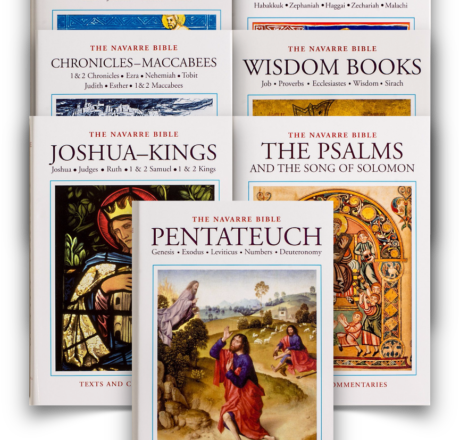
NAVARRE BIBLE COMMENTARY (RSV)
Ad Majorem Dei Gloriam (To the Greater Glory of God)
First Reading:
From: Nehemiah 8:1-4a, 5-6, 7b-10
The Law is read out. The feast of Tabernacles
---------------------------------------------------------
[1] And all the people gathered as one man into the square before the Water Gate; and they told Ezra the scribe to bring the book of the law of Moses which the Lord had given to bring the book of the law of Moses which the Lord had given to Israel. [2] And Ezra the priest brought the law before the assembly, both men and women and all who could hear with understanding, on the first day of the seventh month. [3] And he read from it facing the square before the Water Gate from early morning until midday, in the presence of the man and the women and those who could understand; and the ears of all the people were attentive to the book of the law. [4] And Ezra the scribe stood on a wooden pulpit which they had made for the purpose; [5] And Ezra opened the book in the sight of all the people, for he was above all the people; and when he opened it all the people stood. [6] And Ezra blessed the Lord, the great God; and all the people answered, |Amen, Amen,” lifting up their hands; and they bowed their heads and worshipped the Lord with their faces to the ground. [7] The Levites helped the people to understand the law, while the people remained in their places. [8] And they read from the book, from the law of God, clearly, and they gave the sense, so that the people understood the reading.
[9] And Nehemiah, who was the governor, and Ezra the priest and scribe, and the Levites who taught the people said to all the people, “This day is holy to the Lord your God; do not mourn or weep.” For all the people wept when they heard the words of the law. [10] Then he said to them, “Go your way, eat the fat and drink sweet wine and send portions to him for whom nothing is prepared; for this day is holy to our Lord; and do not be grieved, for the joy of the Lord is your strength.”
****************************************
Commentary:
8:1-18 The text of this chapter forms part of the “memoirs of Ezra” which the sacred writer has moved and positioned here in the account of the rebuilding of the city. By doing so, he highlights the importance of the Law in the new stage of the history of the chosen people (as the writer sees it, this stage begins with the reconstruction of their national and religious life spearheaded by Ezra the priest and Nehemiah the layman). We do not know the exact year when the events dealt with here occurred, nor the exact content of the Law proclaimed on this occasion. It is possible that a substantial part of the present Pentateuch was read out.
The reading and explanation of the Law did not take place inside the temple; the people gathered around the stage specially set up in front of that building. From the time of Solomon up to the fall of Jerusalem, religious activity centered on the temple liturgy. From the exile onwards it was built around the Law by means of the institution of the synagogue. Because they could not go up to the House of the Lord, exiles used to meet in private houses or in the open air to listen to the reading of legal and prophetical texts. The formal meeting described here, held in a square beside the city wall, shows that in this new stage, with Ezra to the fore, the Law of the Lord was coming to occupy pride of place in the religious life of the people, and that it was already more important than the offering of victims for the purpose of sacrifice.
When they hear the commandments of the Law read out, the people weep because they have not been keeping some of them and they are afraid that God will punish them on that account. But Ezra and the Levites make them see that what they have to do is to start again, on that day, for it is a “holy” day. It was the festival day of the new civil year (cf. Lev 23:24-25; Num 29:1-6).
The proclamation of the Law seems to be linked to the celebration of the feast of Booths (or Tents, or Tabernacles). That celebration was already (briefly) mentioned in Ezra 3:4-6, but there is a new element here (which must be due to Ezra’s interpretation) – the fact that the booths are made with branches cut in the hills (cf. Lev 23:39-43). No mention is made of the day of Atonement which was celebrated on the tenth day of the same month (cf. Lev 23:26-32). During the seven days of the feast of booths Ezra keeps reading out the Law as Deuteronomy 31:9-13 lays down must be done when the year is a sabbatical one. In these actions of Ezra and the Levites, the teachers of the Laws, we can see the origin of what will become the “Great Assembly”, the official body which will, in the centuries to come, interpret the Law and identify which books form part of the canon. The reading of the books of the Law will from now on become the most important way of meeting God and listening to his word.
From: 1 Corinthians 12:12-14, 27-30
Unity and Variety in the Mystical Body of Christ
------------------------------------------------
[12] For just as the body is one and has many members, and all the members of the body, though many, are one body, so it is with Christ. [13] For by one Spirit we were all baptized into one body--Jews or Greeks, slaves or free--and all were made to drink of one Spirit. [14] For the body does not consist of one member but of many. [15] If the foot should say, "Because I am not a hand, I do not belong to the body," that would not make it any less a part of the body. [16] And if the ear should say, "Because I am not an eye, I do not belong to the body," that would not make it any less a part of the body. [17] If the whole body were an eye, where would be the hearing? If the whole body were an ear, where would be the sense of smell? [18] But as it is, God arranged the organs in the body, each one of them, as he chose. [19] If all were a single organ, where would the body be? [20] As it is, there are many parts, yet one body. [21] The eye cannot say to the hand, "I have no need of you," nor again the head to the feet, "I have no need of you." [22] On the contrary, the parts of the body which seem to be weaker are indispensable, [23] and those parts of the body which we think less honorable we invest with the greater honor, and our unpresentable parts are treated with greater modesty, [24] which our more presentable parts do not require. But God has so composed the body, giving the greater honor to the inferior part, [25] that there may be no discord in the body, but that the members may have the same care for one another. [26] If one member suffers, all suffer together; if one member is honored, all rejoice together. [27] Now you are the body of Christ and individually members of it. [28] And God has appointed in the church first apostles, second prophets, third teachers, then workers of miracles, then healers, helpers, administrators, speakers in various kinds of tongues. [29] Are all apostles? Are all prophets? Are all teachers? Do all work miracles? [30] Do all possess gifts of healing? Do all speak with tongues? Do all interpret?
*****************************************************************
Commentary:
12-13. In Greek and Latin literature, society is often compared to a body: even today we talk of "corporations", a term which conveys the idea that all the citizens of a particular city are responsible for the common good. St Paul, starting with this metaphor, adds two important features: 1) he identifies the Church with Christ: "so it is with Christ" (v. 12); and 2) he says that the Holy Spirit is its life-principle: "by one Spirit we were all baptized . . ., and all made to drink of the Spirit" (v. 13). The Magisterium summarizes this teaching by defining the Church as the "mystical body of Christ", an expression which "is derived from and is, as it were, the fair flower of the repeated teaching of Sacred Scripture and the holy Fathers" (Pius XII, "Mystici Corporis").
"So it is with Christ": "One would have expected him to say, so it is with the Church, but he does not say that [. . .]. For, just as the body and the head are one man, so too Christ and the Church are one, and therefore instead of 'the Church' he says 'Christ"' (Chrysostom, "Hom. on 1 Cor", 30, "ad loc."). This identification of the Church with Christ is much more than a mere metaphor; it makes the Church a society which is radically different from any other society: "The complete Christ is made up of the head and the body, as I am sure you know well. The head is our Savior himself, who suffered under Pontius Pilate and now, after rising from the dead, is seated at the right hand of the Father. And his body is the Church. Not this or that church, but the Church which is to be found all over the world. Nor is it only that which exists among us today, for also belonging to it are those who lived before us and those who will live in the future, right up to the end of the world. All this Church, made up of the assembly of the faithful--for all the faithful are members of Christ--has Christ as its head, governing his body from heaven. And although this head is located out of sight of the body, he is, however, joined to it by love" (St Augustine, "Enarrationes In Psalmos", 56, 1).
The Church's remarkable unity derives from the Holy Spirit who not only assembles the faithful into a society but also imbues and vivifies its members, exercising the same function as the soul does in a physical body: "In order that we might be unceasingly renewed in him (cf. Eph 4:23), he has shared with us his Spirit who, being one and the same in head and members, gives life to, unifies and moves the whole body. Consequently, his work could be compared by the Fathers to the function that the principle of life, the soul, fulfills in the human body" (Vatican II, "Lumen Gentium", 7).
"All were made to drink of one Spirit": given that the Apostle says this immediately after mentioning Baptism, he seems to be referring to a further outpouring of the Spirit, possibly in the sacrament of Confirmation. It is not uncommon for Sacred Scripture to compare the outpouring of the Spirit to drink, indicating that the effects of his presence are to revive the parched soul; in the Old Testament the coming of the Holy Spirit is already compared to dew, rain etc.; and St John repeats what our Lord said about "living water" (Jn 7:38; cf. 4:13-14).
Together with the sacraments of Christian initiation, the Eucharist plays a special role in building up the unity of the body of Christ. "Really sharing in the body of the Lord in the breaking of the eucharistic bread, we are taken up into communion with him and with one another. 'Because the bread is one, we, who are many, are one body, for we all partake of the one bread' (1 Cor 10:17). In this way all of us are made members of his body (cf. 1 Cor 12:27), 'and individual members of one another' (Rom 12:5)" ("Lumen Gentium", 7).
14-27. The unity of the mystical body, which derives from a single life- principle, the Holy Spirit, and tends towards a common same goal, that is, the building up of the Church, means that all its members, whatever their position, have the same basic dignity and the same importance. St Paul develops this thinking by a very effective literary device: he personifies the members of the human body and imagines the nobler members looking down on the lesser ones (vv. 21-24). This serves to reaffirm the truth of v. 25: "that the members may have the same care for one another". The responsibility of each Christian derives from the very essence of the vocation he or she receives at Baptism and Confirmation: "In the Church there is a diversity of ministries," [St. Josemaria] Escriva explains, "but there is only one aim—the sanctification of men. And in this task all Christians participate in some way, through the character imprinted by the sacraments of Baptism and Confirmation. We must all feel responsible for the mission of the Church, which is the mission of Christ. He who does not have zeal for the salvation of souls, he who does not strive with all his strength to make the name and the teaching of Christ known and loved, will not understand the apostolicity of the Church.
"A passive Christian has failed to understand what Christ wants from all of us. A Christian who 'goes his own way', unconcerned about the salvation of others, does not love with the heart of Jesus. Apostolate is not a mission exclusive to the hierarchy, or to priests and religious. The Lord calls all of us to be, by our example and word, instruments of the stream of grace which springs up to eternal life" ("In Love with the Church", 15).
28-30. St Paul concludes this description of the different parts of the body by applying it to the Church, where variety of functions does not detract from unity. It would be a serious mistake not to recognize in the visible structure of the Church, which is so multifaceted, the fact that the Church founded by Christ is "one", visible at the same time as it is spiritual. The Second Vatican Council puts this very clearly: "But the society structured with hierarchical organs and the mystical body of Christ, the visible society and the spiritual community, the earthly Church and the Church endowed with heavenly riches, are not to be thought of as two realities. On the contrary, they form one complex reality which comes together from a human element and a divine element. For this reason the Church is compared, not without significance, to the mystery of the incarnate Word. As the assumed nature, inseparably united to Him, serves the divine Word as a living organ of salvation, so, in a somewhat similar way, does the social structure of the Church serve the Spirit of Christ who vivifies it, in the building up of the body (cf. Eph 4:15)" "Lumen Gentium", 8).
The Church is this way because that is the will of its founder, Jesus Christ: "The Church is by divine will a hierarchical institution. The Second Vatican Council describes it as a 'society structured with hierarchical organs' ("Lumen Gentium", 8) in which 'ministers are invested with a sacred power' ("ibid., 18). The hierarchy is not only compatible with freedom: it is at the service of the freedom of the children of God (cf. Rom 8:21)…'Hierarchy' means holy government and sacred order. In no way does it imply a merely human arbitrary order or a subhuman despotism. Our Lord established in the Church a hierarchical order which should not degenerate into tyranny, because authority is as much a call to serve as is obedience.
"In the Church there is equality, because once baptized we are all equal, all children of the same God, our Father. There is no difference as Christians between the Pope and someone who has just joined the Church. But this radical equality does not mean that we can change the constitution of the Church in those things that were established by Christ. By expressed divine will there are different functions which imply different capacities, an indelible 'character' conferred on the sacred ministers by the sacrament of Order. At the summit of this order is Peter's successors and with him, and under him, all the bishops with the triple mission of sanctifying, governing and teaching" (J. Escriva, "In Love with the Church", 30).
From: Luke 1:1-22, 4:14-21
Prologue
--------
[1]Inasmuch as many have undertaken to compile a narrative of the things which have been accomplished among us, [2] just as they were delivered to us by those who from the beginning were eyewitnesses and ministers of the word, [3]it seemed good to me also, having followed all things closely for some time past, to write an orderly account for you, most excellent Theophilus, [4] that you may know the truth concerning the things of which you have been informed.
Jesus Fasts and is Tempted in the Wilderness (Continuation)
-----------------------------------------------------------
[14] And Jesus returned in the power of the Spirit into Galilee, and a report concerning Him went out through all the surrounding country. [15] And He taught in their synagogues, being glorified by all.
Jesus Preaches in Nazareth
--------------------------
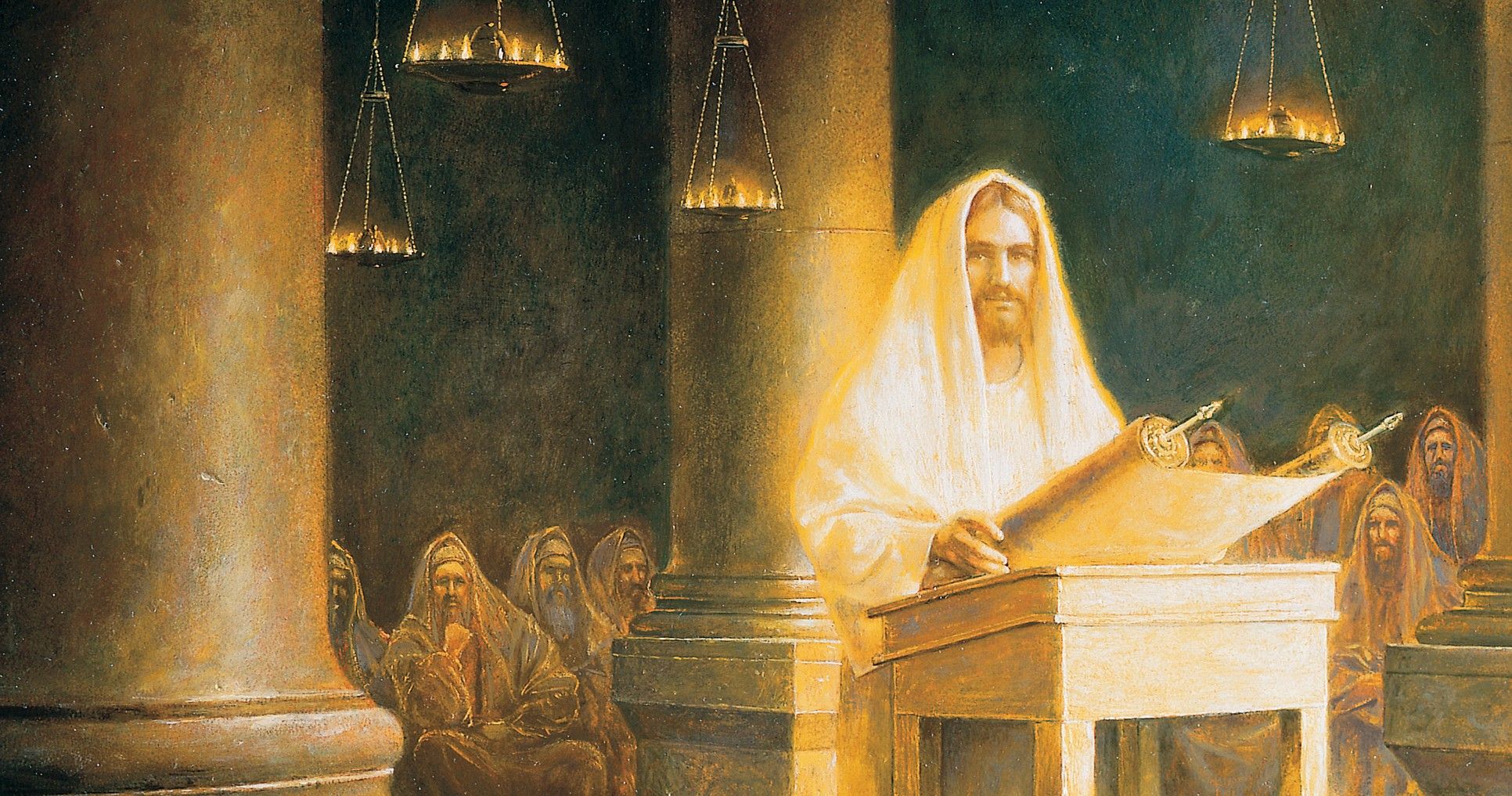
[16] And He came to Nazareth, where He had been brought up; and He went to the synagogue, as His custom was, on the Sabbath Day. And He stood up to read; [17] and there was given to Him the book of the prophet Isaiah. He opened the book and found the place where it was written, [18] "The Spirit of the Lord is upon Me, because He has anointed Me to preach good news to the poor. He has sent Me to proclaim release to the captives and recovering of sight to the blind, to set at liberty those who are oppressed, [19] to proclaim the acceptable year of the Lord." [20] And He closed the book, and gave it back to the attendant, and sat down; and the eyes of all in the synagogue were fixed on Him. [21] And He began to say to them, "Today this scripture has been fulfilled in your hearing.
********************************************************
Commentary:
1-4. St. Luke is the only evangelist to give his book a preface or prologue. What is usually described as the "prologue" to St. John is really a summary of what the Gospel contains. St. Luke's prologue, which is very short and very elegantly written, describes why he has written the book--to provide an orderly, documented account of the life of Christ, starting at the beginning.
These verses help us realize that Jesus Christ's message of salvation, the Gospel, was preached before it came to be written down: cf. the quotation from Vatican II's "Dei Verbum", 19 (p. 21 above). God, then, wanted us to have written Gospels as a permanent, divine testimony providing a firm basis for our faith. "He does not tell Theophilus new things, things he did not previously know; he undertakes to tell him the truth concerning the things in which he has already been instructed. This he does so that you can know everything you have been told about the Lord and His doings" (St. Bede, "In Lucae Evangelium Expositio, in loc.").
2. The "eyewitnesses" the evangelist refers to would have been the Blessed Virgin, the Apostles, the holy women and others who shared Jesus' life during His time on earth.
3. "It seemed good to me": "When he says `it seemed good to me' this does not exclude God's action, because it is God who prepares men's will [...]. He dedicates his Gospel to Theophilus, that is, to one whom God loves. But if you love God, it has also been written for you; and if it has been written for you, then accept this present from the evangelist, keep this token of friendship very close to your heart" (St. Ambrose, "Expositio Evangelii Sec. Lucam, in loc.").
4:16-30. For the Jews the Sabbath was a day of rest and prayer, as God commanded (Exodus 20:8-11). On that day they would gather together to be instructed in Sacred Scripture. At the beginning of this meeting they all recited the "Shema", a summary of the precepts of the Lord, and the "eighteen blessings". Then a passage was read from the Book of the Law--the Pentateuch--and another from the Prophets. The president invited one of those present who was well versed in the Scriptures to address the gathering. Sometimes someone would volunteer and request the honor of being allowed to give this address--as must have happened on this occasion. Jesus avails Himself of this opportunity to instruct the people (cf. Luke 4:16ff), as will His Apostles later on (cf. Acts 13:5, 14, 42, 44; 14:1; etc.). The Sabbath meeting concluded with the priestly blessing, recited by the president or by a priest if there was one present, to which the people answered "Amen" (cf. Numbers 6:22ff).
18-21. Jesus read the passage from Isaiah 61:1-2 where the prophet announces the coming of the Lord, who will free His people of their afflictions. In Christ this prophecy finds its fulfillment, for He is the Anointed, the Messiah whom God has sent to His people in their tribulation. Jesus has been anointed by the Holy Spirit for the mission the Father has entrusted to Him. "These phrases, according to Luke (verses 18-19), are His first messianic declaration. They are followed by the actions and words known through the Gospel. By these actions and words Christ makes the Father present among men" (John Paul II, "Dives In Misericordia", 3).
The promises proclaimed in verses 18 and 19 are the blessings God will send His people through the Messiah. According to Old Testament tradition and Jesus' own preaching (cf. note on Matthew 5:3), "the poor" refers not so much to a particular social condition as to a very religious attitude of indigence and humility towards God, which is to be found in those who, instead of relying on their possessions and merits, trust in God's goodness and mercy. Thus, preaching good news to the poor means bringing them the "good news" that God has taken pity on them. Similarly, the Redemption, the release, which the text mentions, is to be understood mainly in a spiritual, transcendental sense: Christ has come to free us from the blindness and oppression of sin, which, in the last analysis, is slavery imposed on us by the devil. "Captivity can be felt", St. John Chrysostom teaches in a commentary on Psalm 126, "when it proceeds from physical enemies, but the spiritual captivity referred to here is worse; sin exerts a more severe tyranny, evil takes control and blinds those who lend it obedience; from this spiritual prison Jesus Christ rescued us" ("Catena Aurea"). However, this passage is also in line with Jesus' special concern for those most in need. "Similarly, the Church encompasses with her love all those who are afflicted by human misery and she recognizes in those who are poor and who suffer the image of her poor and suffering Founder. She does all in her power to relieve their need and in them she strives to serve Christ" (Vatican II, "Lumen Gentium", 8).
18-19. The words of Isaiah which Christ read out on this occasion describe very graphically the reason why God has sent His Son into the world--to redeem men from sin, to liberate them from slavery to the devil and from eternal death. It is true that in the course of His public ministry Christ, in His mercy, worked many cures, cast out devils, etc. But He did not cure all the sick people in the world, nor did He eliminate all forms of distress in this life, because pain, which entered the world through sin, has a permanent redemptive value when associated with the sufferings of Christ. Therefore, Christ worked miracles not so much to release the people concerned from suffering, as to demonstrate that He had a God-given mission to bring everyone to eternal salvation.
The Church carries on this mission of Christ: "Go therefore and make disciples of all nations, baptizing them in the name of the Father and of the Son and of the Holy Spirit, teaching them to observe all that I have commanded you; and lo, I am with you always, to the close of the age" (Matthew 28:19-20). These simple and sublime words, which conclude the Gospel of St. Matthew, point out "the obligation to preach the truths of faith, the need for sacramental life, the promise of Christ's continual assistance to His Church. You cannot be faithful to our Lord if you neglect these supernatural demands--to receive instruction in Christian faith and morality and to frequent the Sacraments. It is with this mandate that Christ founded His Church [...]. And the Church can bring salvation to souls only if she remains faithful to Christ in her constitution and teaching, both dogmatic and moral.
"Let us reject, therefore, the suggestion that the Church, ignoring the Sermon on the Mount, seeks a purely human happiness on earth, since we know that her only task is to bring men to eternal glory in Heaven. Let us reject any purely naturalistic view that fails to value the supernatural role of divine grace. Let us reject materialistic opinions that exclude spiritual values from human life. Let us equally reject any secularizing theory which attempts to equate the aims of the Church with those of earthly states, distorting its essence, institutions and activities into something similar to those of temporal society" ([St] J. Escriva, "In Love with the Church", 23 and 31).
18. The Fathers of the Church see in this verse a reference to the three persons of the Holy Trinity: the Spirit (the Holy Spirit) of the Lord (the Father) is upon Me (the Son); cf. Origen, "Homily 32". The Holy Spirit dwelt in Christ's soul from the very moment of the Incarnation and descended visibly upon Him in the form of a dove when He was baptized by John (cf. Luke 3:21-22).
"Because He has anointed Me": this is a reference to the anointing Jesus received at the moment of His Incarnation, principally through the grace of the hypostatic union. "This anointing of Jesus Christ was not an anointing of the body as in the case of the ancient kings, priests and prophets; rather it was entirely spiritual and divine, because the fullness of the Godhead dwells in Him substantially" ("St. Pius X Catechism", 77). From this hypostatic union the fullness of all graces derives. To show this, Jesus Christ is said to have been anointed by the Holy Spirit Himself--not just to have received the graces and gifts of the Spirit, like the saints. 19. "The acceptable year": this is a reference to the jubilee year of the Jews, which the Law of God (Leviticus 25:8) lays down as occurring every fifty years, symbolizing the era of redemption and liberation which the Messiah would usher in. The era inaugurated by Christ, the era of the New Law extending to the end of the world, is "the acceptable year", the time of mercy and redemption, which will be obtained definitively in Heaven.
The Catholic Church's custom of the "Holy Year" is also designed to proclaim and remind people of the redemption brought by Christ, and of the full form it will take in the future life.
20-22. Christ's words in verse 21 show us the authenticity with which He preached and explained the Scriptures: "Today this scripture has been fulfilled in your hearing." Jesus teaches that this prophecy, like the other main prophecies in the Old Testament, refers to Him and finds its fulfillment in Him (cf. Luke 24:44ff). Thus, the Old Testament can be rightly understood only in the light of the New—as the risen Christ showed the Apostles when He opened their minds to understand the Scriptures (cf. Luke 24:45), an understanding which the Holy Spirit perfected on the day of Pentecost (cf. Acts 2:4).
In this homily, Father Ricardo Pineda of the Fathers of Mercy, celebrates the Sunday of the Word of God by encouraging the faithful to grow in their familiarity with and formation in Sacred Scripture by taking advantage of the Bible in a Year Podcast put out by Ascension and by practicing regular lectio divina, that is, divine reading.
Disclaimer: Opinions posted on Free Republic are those of the individual posters and do not necessarily represent the opinion of Free Republic or its management. All materials posted herein are protected by copyright law and the exemption for fair use of copyrighted works.