Posted on 07/21/2024 9:20:06 AM PDT by fidelis
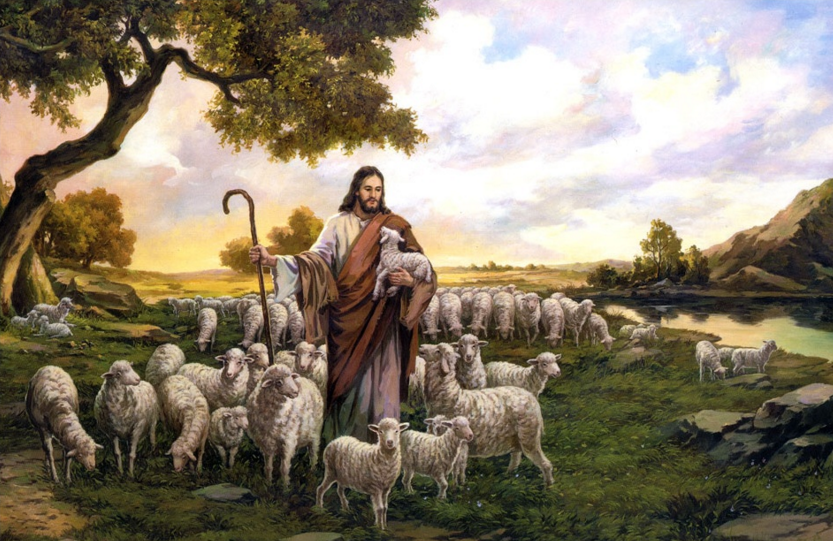
When he disembarked and saw the vast crowd, his heart was moved with pity for them, for they were like sheep without a shepherd; and he began to teach them many things. Mark 6:34
Both Jesus and the Twelve Apostles had been working very hard. The Twelve had been out on mission to many of the neighboring towns preaching, healing the sick and casting out demons. Upon the completion of their mission, they returned to Jesus and reported all that they had done. Jesus, in turn, invited them to “Come away by yourselves to a deserted place and rest a while.” But the crowds heard about their departure by boat and quickly went to the other side of the Sea of Galilee so that they would arrive before Jesus and the Twelve.
The passage quoted above reveals the internal reaction that Jesus had toward the crowds as He and the Twelve disembarked from the boat. Though they had attempted to go away together to a quiet place for rest, the crowds were intent on being with them. Jesus, of course, was not upset that the crowds had spoiled His attempt to find some quiet time with the Twelve. Instead, His heart was moved with compassion. He could see that the people were hungry for more and were “like sheep without a shepherd.” For that reason, Jesus immediately began to feed them with His teachings.
A helpful point to ponder in this passage is that the people who gathered were described as a “vast crowd.” From the subsequent passage in Mark’s Gospel, we learn that when Jesus finished teaching them many things, He performed the miracle of the multiplication of fish and bread and fed 5,000 men, not counting the women and children. Given the fact that the estimated ratio at that time of adult men to women and children was at least 5:1, the crowd could have been as large as 25,000 people. For a spontaneous gathering of people in a remote area by the Sea of Galilee, that is a huge number. This is especially the case, since it is estimated that there were only about 1,500 people living in Capernaum at that time. People had flocked to our Lord from very far away.
This vast and spontaneous gathering reveals to us the hunger that Jesus instilled in the hearts of very many people. Some of these people had already heard Jesus speak and had witnessed His miracles. Others were those to whom the Twelve had just preached in the surrounding villages. The Twelve had spoken clearly and convincingly by the power of the Holy Spirit about Jesus, and many people responded, wanting to know more about our Lord.
As you ponder the enthusiasm of so many people, try to compare that with your own enthusiasm for Jesus. Are you driven to seek Him out with the same passion and zeal that consumed these first followers? Or do you find that your zeal and enthusiasm are lacking at times? This vast crowd, with their zeal and determination to seek out our Lord, should be a source of inspiration and self-examination for us all.
Reflect, today, upon this vast crowd. Try to see yourself joining them. Ponder yourself being so moved by the preaching of the Apostles that you become single-focused in your determination to be fed by Jesus’ holy teaching. If it is hard to imagine yourself acting this way, then humbly acknowledge that you may need more zeal for Jesus in your life. Pray that these holy desires become stirred up within you, and do all that you can to foster such zeal.
My compassionate Lord, the vast crowds sought You out to listen to You and to be fed by Your holy Word. They burned with a desire to be with You, and You responded to them with great mercy. Please fill my heart with the same zeal and desire for You. Teach me, Lord, feed me and draw me close to You. Jesus, I trust in You.
Please keep in mind that this is a Catholic Caucus/Devotional thread for the purpose of prayerful reflection on the Sacred Scriptures and is closed to debate of any kind. Per FR policy on Religion Caucus threads, off-topic, argumentative, and abusive comments are not allowed and will be submitted to the Mods for deletion. Thanks, and God bless you.
Ad Majorem Dei Gloriam (To the Greater Glory of God)
First Reading:
From: Jeremiah 23:1-6
The future king
-------------------
[1] "Woe to the shepherds who destroy and scatter the sheep of my pasture!" says the LORD. [2] Therefore thus says the LORD, the God of Israel, concerning the shepherds who care for my people: "You have scattered my flock, and have driven them away, and you have not attended to them. Behold, I will attend to you for your evil doings, says the LORD. [3] Then I will gather the remnant of my flock out of all the countries where I have driven them, and I will bring them back to their fold, and they shall be fruitful and multiply. [4] I will set shepherds over them who will care for them, and they shall fear no more, nor be dismayed, neither shall any be missing, says the LORD.
[5] Behold, the days are coming, says the Lord, when I will raise up for David a righteous Branch, and he shall reign as king and deal wisely, and shall execute justice and righteousness in the land. [6] In his days Judah will be saved, and Israel will dwell securely. And this is the name by which he will be called: ‘The Lord is our righteousness.’
****************************************************************************
Commentary:
23:1-8. The previous chapters (21:1-22:30) announced the exile to come, and come it did, on account of the kings’ failure to keep the Covenant. The kings, in chronological order, were the subject of the various oracles. Now Jeremiah, looking to the future, uses the image of shepherds to proclaim a new era in which God himself will be the shepherd-ruler of his people (vv. 1-4); he will raise up a new king who will govern justly (vv. 5-6); and the new situation that will develop after the return from exile will be more glorious than that of the period after the exodus from Egypt (vv. 7-8). John Paul II refers to this oracle to stress that the new people of God, the Church, will always have pastors to guide it: “In these words from the prophet Jeremiah, God promises his people that he will never leave them without shepherds to father them together and guide them: ‘I will set shepherds over them [my sheep] who will care for them, and they shall fear no more, nor be dismayed’ (Jer 23:4). The Church, the people of God, constantly experiences the reality of the prophetic message and continues joyfully to thank God for it. She knows that Jesus Christ himself is the living, supreme and definitive fulfillment of God’s promise: ‘I am the good shepherd’ (Jn 10:11). He, ‘the great shepherd of the sheep’ (Heb 13:20), entrusted to the apostles and their successors the ministry of shepherding God’s flock (cf. Jn 21:15ff; 1 Pet 5:2)” (“Pastores dabo vobis,” 1).
23:5-6. The promise of the new king is the key to understanding Jeremiah’s thought. The passage is repeated (with slight variations) in 33:15-16. “The days are coming”, a phrase often found in oracles of salvation, is a reference to the End time, but sometimes it can mean the return from exile. The “righteous branch”, meaning the future king, will eventually become a technical term for the Messiah, in both Zechariah (Zech 3:8; 6:12) and the New Testament (cf. Lk 1:78): he is “righteous”, he shall “execute…righteousness” and he will be called “the Lord in our righteousness”. All this insistence on justice and right indicates, firstly, that Jeremiah wants to justify the accession of Zedekiah, whose name means “justice of the Lord”; but he also wants to show that the future Messiah will be David’s legal, legitimate descendant: the Lord guarantees this by calling him a “righteous” that is “legitimate”, branch. And the main message, of course, is that in the new era justice will reign and there will be peace and security; it will be the time of definitive salvation.
Thus, Jeremiah is proclaiming the coming of a descendant of David who will bring about a new era of prosperity and salvation. Jeremiah is the last prophet, in order of time, to proclaim a Messiah King, an intermediary between God and his people. At the same time, he is also promising direct intervention by God.
From: Ephesians 2:13-18
Reconciliation of Jews and Gentiles in Christ
-----------------------------------------------------
[13] But now in Christ Jesus you who once were far off have been brought near in the blood of Christ. [14] For he is our peace, who has made us both one, and has broken down the dividing wall of hostility, [15] by abolishing, in his flesh the law of commandments and ordinances, that he might create in himself one new man in place of the two, so making peace, [16] and might reconcile us both to God in one body through the cross, thereby bringing the hostility to an end. [17] And he came and preached peace to you who were far off and peace to those who were near; [18] for through him we both have access in one Spirit to the Father. [19] So then you are no longer strangers and sojourners, but you are fellow citizens with the saints and members of the household of God, [20] built upon the foundation of the apostles and prophets, Christ Jesus himself being the cornerstone, [21] in whom the whole structure is joined together and grows into a holy temple in the Lord; [22] in whom you also are built into it for a dwelling place of God in the Spirit.
***********************************************************************
Commentary:
11-22. What is the significance of the calling of the Gentiles to the Church? Their previous situation, separated from Christ (vv. 11-12), has undergone radical change as a result of the Redemption Christ achieved on the Cross: that action has, on the one hand, brought the two peoples together (made peace between them: vv. 13-15) and, on the other, it has reconciled them with God, whose enemy each was (w. 16-18). The Redemption has given rise to the Church, which St Paul here describes as a holy temple built on the foundation of the apostles and prophets (vv. 19-22).
14-15. "He is our peace": through his death on the cross Christ has abolished the division of mankind into Jews and Gentiles. The Gentiles, who had been far away from God, from his covenant and from his promises (cf. v. 12), are now on a par with the Jews: they share in the New Covenant that has been sealed with the blood of Christ. That is why he is "our peace". In him all men find that solidarity they yearned for, because, through his obedient self-sacrifice unto death, Christ has made up for the disobedience of Adam, which had been the cause of human strife and division (cf. Gen 3-4). "Christ, the Word made flesh, the prince of peace, reconciled all men to God by the cross, and, restoring the unity of all in one people and one body, he abolished hatred in his own flesh (cf. Eph 2:16; Col 1:20-22) and, having been lifted up through his resurrection, he poured forth the Spirit of love into the hearts of men" (Vatican II, "Gaudium Et Spes", 78).
God's plan to attract mankind to himself and to reestablish peace included the election of the Jewish people, from whom the Messiah would be born; and in that Messiah all the nations of the world would be blessed (cf. Gen 11:3). He is in fact called "prince of peace" (Is 9:6; cf. Mic 5:4). However, many Jews had come to regard their election in such a narrow-minded way that they saw it as creating a permanent barrier between themselves and the Gentiles. Some rabbis of our Lord's time despised and even hated the Gentiles. The separation between the two peoples was reflected in the temple wall which divided the court of the Gentiles from the rest of the sacred precincts (cf. Acts 21:28). The real roots of the separation lay in Jewish pride at being the only ones to have the Law of God and keep it by scrupulous attention to countless legal niceties.
By his death on the cross Jesus Christ has broken down the barriers dividing Jews from Gentiles and also those which kept man and God apart. St Paul says this metaphorically when he says that Christ "has broken down the dividing wall", referring to the wall in the temple. But he is not resorting to metaphor when he says that Christ abolished "in his flesh the law of commandments and ordinances". Christ, through his obedience to the Father unto death (cf. Phil 2:8), has brought the Law to fulfillment (cf. Mt 5:17 and note on Mt 5:17-19); he has become, for all mankind, the way to the Father. The Law of the Old Testament, although it was something good and holy, also created an unbridgeable gap between God and man, because man, on his own, was incapable of keeping the Law (cf. notes on Gal 3:19-20; 3:21-25; and Acts 15:7-11). Christ, through grace, has created a new man who can keep the very essence of the Law--obedience and love.
The "new man" of whom St Paul speaks here is Jesus Christ himself, who stands for both Jews and Gentiles, because he is the new Adam, the head of a new mankind: the "new man", St Thomas Aquinas explains, "refers to Christ himself, who is called 'new man' because of the new form his conception took, ...the newness of the grace which he extends ..., and the new commandment which he brings" ("Commentary on Eph, ad loc.").
By taking human nature and bringing about our redemption, the Son of God has become the cause of salvation for all, without any distinction between Jew and Greek, slave and free, male and female (cf. Gal 3:28): only through Christ's grace can peace be achieved and all differences overcome. Pope John XXIII explains this in his encyclical "Pacem In Terris": peace is "such a noble and elevated task that human resources, even though inspired by the most praiseworthy goodwill, cannot bring it to realization alone. In order that human society may reflect as faithfully as possible the Kingdom of God, help from on high is necessary. For this reason, during these sacred days our supplication is raised with greater fervor towards him who by his painful passion and death overcame sin--the root of discord and the source of sorrows and inequalities--and by his blood reconciled mankind to the Eternal Father: 'For he is our peace, who has made us both one'."
16. Through his death on the cross, Jesus Christ reestablishes man's friendship with God, which sin had destroyed. Pope John Paul suggests that "With our eyes fixed on the mystery of Golgotha we should be reminded always of that 'vertical' dimension of division and reconciliation concerning the relationship between man and God, a dimension which in the eyes of faith always prevails over the 'horizontal' dimension, that is to say, over the reality of division between people and the need for reconciliation between them. For we know that reconciliation between people is and can only be the fruit of the redemptive act of Christ, who died and rose again to conquer the kingdom of sin, to reestablish the covenant with God and thus break down the dividing wall which sin had raised up between people" ("Reconciliatio Et Paenitentia", 7). Redemption therefore brings about our reconciliation with God (cf. Rom 5:10-2 Cor 5:18) and it affects everyone, Gentiles as well as Jews, and all creation (cf. Col 1:20). This reconciliation is achieved in the physical body of Christ sacrificed on the cross (cf. Col 1:22) and also in his mystical body, in which Christ convokes and assembles all whom he has reconciled with God by his redemptive sacrifice (cf. 1 Cor 12:13ff). The words "in one body" can be taken in two senses--as referring to Christ's physical body on the cross and to his mystical body, the Church.
The sacrifice of the body and blood of Christ, "the memorial of the death and resurrection of the Lord, in which the Sacrifice of the cross is forever perpetuated, is the summit and the source of all worship and Christian life. By means of it the unity of the body of Christ is signified and brought about, and the building up of the body of Christ is perfected" (Code of Canon Law, can. 897).
18. Prior to Christ's coming, man was excluded from the Father's house, living like a slave rather than a son (cf. Gal 4:1-5). But in the fullness of time God sent his Son to give us the spirit of sonship that enables us to call God our Father (cf. note on Rom 8:15-17).
"The way that leads to the throne of grace would be closed to sinners had Christ not opened the gate. That is what he does: he opens the gate, leads us to the Father, and by the merits of his passion obtains from the Father forgiveness of our sins and all those graces God bestows on us" (St Alphonsus, "Thoughts on the Passion", 10, 4).
Here we see the part played by the Holy Spirit in the work of salvation decreed by the Father and carried out by the Son. The words "in one Spirit", as well as identifying the access route to the Father, also imply two basic facts: on the one hand, that the mysterious union which binds Christians together is caused by the action of the Holy Spirit who acts in them; on the other, that this same Holy Spirit, inseparable from the Son (and from the Father) because they constitute the same divine nature, is always present and continually active in the Church, the mystical body of Christ. "When the work which the Father gave the Son to do on earth (cf. In 17:4) was accomplished, the Holy Spirit was sent on the day of Pentecost in order that he might continually sanctify the Church, and that, consequently, those who believe might have access through Christ in one Spirit to the Father (cf. Eph 2:18). [...] Hence the universal Church is seen to be 'a people brought into unity from the unity of the Father, the Son and the Holy Spirit' (cf. St Cyprian, "De Oratione Dominica", 23)" (Vatican II, "Lumen Gentium", 4).
Christ has brought about salvation, and, to enable all to appropriate that salvations he calls them to form part of his body, which is the Church. The Holy Spirit is, as it were, the soul of this mystical body; it is he who gives it life and unites all its members. "If Christ is the head of the Church, the Holy Spirit is its soul: 'As the soul is in our body, so the Holy Spirit is in the body of Christ, that is, the Church' (St Augustine, "Sermon 187")" (Leo XIII, "Divinum Illud Munus", 8). The Holy Spirit is inseparably united to the Church, for St Irenaeus says, "where the Church is, there is the Spirit of God; and where the Spirit of God is, there is the Church and the fullness of grace" ("Against Heresies", III, 24).
From: Mark 6:30-34
The Apostles Return
-------------------------
[30] The Apostles returned to Jesus, and told Him all that they had done and taught. [31] And He said to them, "Come away by yourselves to a lonely place, and rest a while." For many were coming and going, and they had no leisure even to eat. [32] And they went away in the boat to a lonely place by themselves.
[33] Now many saw them going, and knew them, and they ran there on foot from the towns, and got there ahead of them. [34] As He landed He saw a great throng, and He had compassion on them, because they were like sheep without a shepherd; and He began to teach them many things.
***********************************************************************
Commentary:
30-31. We can see here the intensity of Jesus' public ministry. Such was His dedication to souls that St. Mark twice mentions that the disciples did not even have time to eat (cf. Mark 3:20). A Christian should be ready to sacrifice his time and even his rest in the service of the Gospel. This attitude of availability will lead us to change our plans whenever the good of souls so requires.
But Jesus also teaches us here to have common sense and not to go to such extremes that we physically cannot cope: "The Lord makes His disciples rest, to show those in charge that people who work or preach cannot do so without breaks" (St. Bede, "In Marci Evangelium Expositio, in loc."). "He who pledges himself to work for Christ should never have a free moment, because to rest is not to do nothing: it is to relax in activities which demand less effort" (St J. Escriva, "The Way", 357).
34. Our Lord had planned a period of rest, for Himself and His disciples, from the pressures of the apostolate (Mark 6:31-32). And He has to change His plans because so many people come, eager to hear Him speak. Not only is He not annoyed with them: He feels compassion on seeing their spiritual need. "My people are destroyed for lack of knowledge" (Hosea 4:6). They need instruction and our Lord wants to meet this need by preaching to them. "Jesus is moved by hunger and sorrow, but what moves Him most is ignorance" (St J. Escriva, "Christ Is Passing By", 109).
Let us pray.
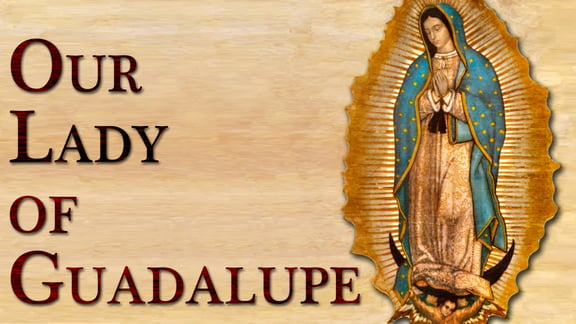
O Virgin Mother of God, we fly to your protection and beg your intercession against the darkness and sin which ever more envelop the world and menace the Church. Your Son, Our Lord Jesus Christ, gave you to us as our mother as He died on the Cross for our salvation. So too, in 1531, when darkness and sin beset us, He sent you, as Our Lady of Guadalupe, on Tepeyac to lead us to Him Who alone is our light and our salvation.
Through your apparitions on Tepeyac and your abiding presence with us on the miraculous mantle of your messenger, Saint Juan Diego, millions of souls converted to faith in your Divine Son. Through this novena and our consecration to you, we humbly implore your intercession for our daily conversion of life to Him and the conversion of millions more who do not yet believe in Him. In our homes and in our nation, lead us to Him Who alone wins the victory over sin and darkness in us and in the world.
Unite our hearts to your Immaculate Heart so that they may find their true and lasting home in the Most Sacred Heart of Jesus. Ever guide us along the pilgrimage of life to our eternal home with Him. So may our hearts, one with yours, always trust in God's promise of salvation, in His never-failing mercy toward all who turn to Him with a humble and contrite heart. Through this novena and our consecration to you, O Virgin of Guadalupe, lead all souls in America and throughout the world to your Divine Son in Whose name we pray. Amen.
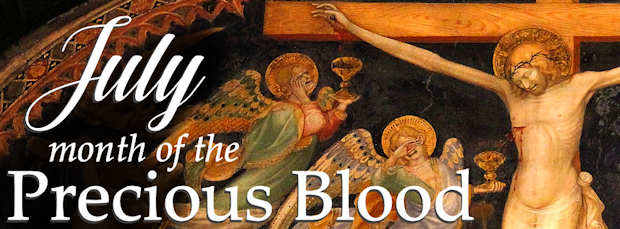
"If we walk in the light, as he is in the light, we have fellowship with one another, and the blood of Jesus his Son cleanses us from all sin.”
(1 John 1:7)
Disclaimer: Opinions posted on Free Republic are those of the individual posters and do not necessarily represent the opinion of Free Republic or its management. All materials posted herein are protected by copyright law and the exemption for fair use of copyrighted works.