Pinging the weekly Sacred Page list!
Posted on 07/20/2024 9:58:21 AM PDT by fidelis
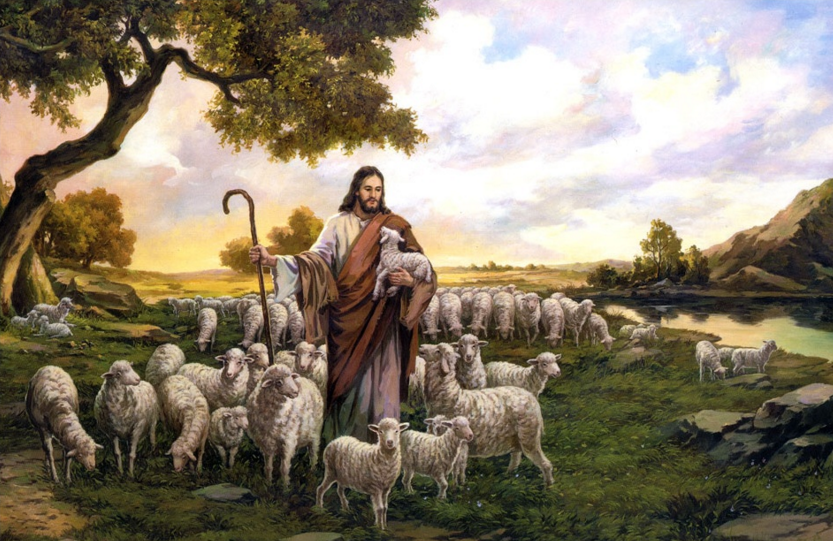
At this time in the Church year, we are working our way through the Gospel of Mark, approaching the record of the Feeding of the 5,000 (Mark 6). In the next five weeks, we are going to take a break from Mark in order to meditate on John’s account of the same event (John 6), which will provide a lengthy opportunity to reflect on the theology and biblical basis for the Eucharist. This Sunday, however, we will only read the introduction of the account of the 5,000, and focus on the issue of leadership for God’s people rather than the Eucharist itself.
1. Our first reading comes from the prophet Jeremiah: Jeremiah 23:1-6
Woe to the shepherds who mislead and scatter the flock of my pasture, says the LORD. Therefore, thus says the LORD, the God of Israel, against the shepherds who shepherd my people: You have scattered my sheep and driven them away. You have not cared for them, but I will take care to punish your evil deeds. I myself will gather the remnant of my flock from all the lands to which I have driven them and bring them back to their meadow; there they shall increase and multiply. I will appoint shepherds for them who will shepherd them so that they need no longer fear and tremble; and none shall be missing, says the LORD.
Behold, the days are coming, says the LORD, when I will raise up a righteous shoot to David; as king he shall reign and govern wisely, he shall do what is just and right in the land. In his days Judah shall be saved, Israel shall dwell in security. This is the name they give him: "The LORD our justice."
The “shepherds” of Israel are their leaders, primarily the king and his servants, but also the priests and prophets. King, priest, and prophet were the basic leadership roles in ancient Israelite society, and each role was bestowed on an individual through the ritual of anointing with oil.
In the days of Jeremiah, the king, priests, and prophets of Judah were leading the people for their own gain, taking advantage of them in order to enrich themselves (see e.g. Jer 34:8-22). Jeremiah, speaking on behalf of God, promises the coming of a “righteous shoot” from the line of David, a just king who will lead God’s people according to God’s law and not simply by the principles of Realpolitik (political expediency).
The word for “shoot” or “branch” here is Tzemach; its synonym netzer is used in a similar context in Isaiah 11:1, another prophecy of this righteous son from the line of David who will arrive to rule one day.
Obviously, the authors of the New Testament recognized Jesus as this promised righteous “branch.” Matthew in particular sees it as striking that the promised netzer came from the town of netzereth (“branchtown” or “branchton”) and draws attention to providential “coincidence” in Matt 2:23.
2. The Responsorial is Psalm 23:
R. (1) The Lord is my shepherd; there is nothing I shall want.
The LORD is my shepherd; I shall not want.
In verdant pastures he gives me repose;
beside restful waters he leads me;
he refreshes my soul.
R. The Lord is my shepherd; there is nothing I shall want.
He guides me in right paths
for his name's sake.
Even though I walk in the dark valley
I fear no evil; for you are at my side
with your rod and your staff
that give me courage.
R. The Lord is my shepherd; there is nothing I shall want.
You spread the table before me
in the sight of my foes;
you anoint my head with oil;
my cup overflows.
R. The Lord is my shepherd; there is nothing I shall want.
Only goodness and kindness follow me
all the days of my life;
and I shall dwell in the house of the LORD
for years to come.
R. The Lord is my shepherd; there is nothing I shall want.
Along with John 3:16 and the Lord’s Prayer, Psalm 23 is one of the most beloved passages in all of Scripture, and one of the most frequently memorized. Interestingly, it was one of two sections of the Old Testament (the other being Song of Songs!) most popular among the Church Fathers to use for sacramental catechesis. The whole psalm may be read as a description of the Christian sacramental life. The “restful waters” are Baptism; the “table before me” is the Eucharistic table; the “overflowing cup” contains the Precious Blood”; the anointing of “my head with oil” is Confirmation; the “walk through the dark valley” is death, from which we are resurrected to “dwell in the house of the LORD” eternally. There is scarcely a better psalm to be read on this Sunday, when we reflect on Jesus our Good Shepherd, who in this very Mass will set the table before us and feed us with his very body. The Eucharistic table is set “in the sight of my foes,” which points out the mystery of persecution in the Christian life. Persecution is never wholly absent, and often powerfully present, for the follower of Christ. As we in America watch as various forms of indirect persecution mount under the current government, let’s pray for deliverance and freedom, not only for ourselves but more especially for those under Muslim, communist, and other regimes around the world who face even more visible and violent abuse for their faith.
3. The Second Reading is from Ephesians 2:13-18:
Brothers and sisters: In Christ Jesus you who once were far off have become near by the blood of Christ. For he is our peace, he who made both one and broke down the dividing wall of enmity, through his flesh, abolishing the law with its commandments and legal claims, that he might create in himself one new person in place of the two, thus establishing peace, and might reconcile both with God, in one body, through the cross, putting that enmity to death by it. He came and preached peace to you who were far off and peace to those who were near, for through him we both have access in one Spirit to the Father.
The Second Reading is “marching to the beat of its own drummer” during Ordinary Time, in this case moving through Ephesians regardless of the theme of the Gospel. Nonetheless, there are always providential connections.
In this reading, Paul is encouraging Gentile Christians to be grateful for what God did for them in Jesus Christ. These Gentiles were once “far off” but now they are “near” by the blood of Christ. Jesus “made both one”—that is, Jews and Gentiles into one people, the Church. The “dividing wall of enmity” St. Paul speaks of is a complex image taken from the actual architecture of the Jerusalem Temple, which had a physical wall separating the outer court accessible to Gentiles from the inner precincts only permissible for Jews. We have recovered the inscription from the door through this wall (see above), written in Greek and roughly translated: "Any Gentile who enters here will have only himself to blame for his ensuing death."
St. Paul uses this image of the dividing wall as a metaphor for the Mosaic covenant (the “Old Covenant”) and its laws, which due to its ceremonial and ritual requirements prevented Jews from living, eating, or worshiping with Gentiles—it forced cultural and religious separation of Jews and non-Jews. However, Christ is the “one new person”—literally, “the one new Man,” an allusion to Adam. Jesus is the New Adam, a spiritual father of all people, just as Adam is physical father of both Jew and Gentile. So he brings us “peace,” a concept associated with Eden. The New Adam leads all his children back to the peaceful garden of Eden, where we eat from the Tree of Life (the cross) which bears the fruit of his own body and blood. The Good Shepherd lays down his life for this sheep.
Combined with the other readings, this passage of Ephesians reminds us that Jesus came to create of mankind one united flock. In St. Paul’s day the greatest source of division was the cultural rift of Jew and Gentile, but in our own day his words urge us to think beyond the divisions in our hearts and in our culture: East vs. West; First World vs. Third World; Democrat vs. Republican; rich vs. poor, urban vs. “redneck”, or whatever other category we use to divide “us” from “them.” Jesus came to remove “us” and “them” thinking and replace it with “we” thinking. St. Josemaria used to say “Out of a hundred persons, we are interested in a hundred.” By that he meant, Christ died for all and wants every individual regardless of his/her demographic characteristics to be part of his one flock. We can’t exclude anyone from our love and our prayer.
4. The Gospel is Mark 6:30-34:
The apostles gathered together with Jesus and reported all they had done and taught. He said to them, "Come away by yourselves to a deserted place and rest a while." People were coming and going in great numbers, and they had no opportunity even to eat. So they went off in the boat by themselves to a deserted place. People saw them leaving and many came to know about it. They hastened there on foot from all the towns and arrived at the place before them. When he disembarked and saw the vast crowd, his heart was moved with pity for them, for they were like sheep without a shepherd; and he began to teach them many things.
In the first part of this passage, we see that Jesus is a Good Shepherd to his under-shepherds, the apostles, and makes the effort to allow them time for prayer, rest, and refreshment. This is an important reminder for those that work in some form of pastoral or religious ministry, because there can be a tendency toward burn-out. We need to be reminded that Jesus loves also us, and doesn’t will our self-destruction. We, too, need time for rest, prayer, and renewal. We, too, need to experience Jesus as our Good Shepherd before we can be good shepherds for others.
In the second part of this gospel, we see Jesus disembarking and feeling pity for the people who were “like sheep without a shepherd.” These were descendants of Israel, who were without a shepherd in many senses. For example, there was no Son of David, their legitimate king, reigning over them. A Roman governor named Pilate and an half-Jew named Herod were their leaders. Even the religious leaders were corrupt: the high priesthood was from an illegitimate line of descent, and was more interested in maintaining its own wealth and privilege by collaborating with the Romans than it was in leading the people to God through the liturgy. The Pharisees tried to fill the gap by providing religious instruction for the people, but their interpretations of the law were so demanding that common people could never live up to their standards of “cleanliness” and “holiness.”
So Jesus begins to teach them “many things,” which reminds us that his role as Good Shepherd encompasses the role of Teacher. He teaches them “many things,” not just a simple Gospel message (“accept me as your Lord and personal savior!”) as important as that may be. The Christian life is an entire lifestyle, an entire way of living and being. It includes “many things,” because following Jesus has implications for how we shop, for what we do in the bedroom, how we act on the job, the way we raise our kids, etc. For this reason Jesus did not commission the Apostles simple to “Go therefore and make disciples of all nations, teaching them all a few simple principles,” but “Go, therefore, and make disciples, teaching them to observe all that I have commanded you.” So todays Gospel reminds us of the teaching ministry of the Church, and gives encouragement to everyone involved in Catholic education. In a time when so many Church institutions of learning have abandoned their mission to communicate the teachings of Christ, let’s pray fervently at this Mass for those that remain faithful, that our efforts will be effective in communicating the Good Shepherd’s teaching to the next generation.
Jesus the Good Shepherd bestowed his teaching role on the apostles, they in turn bestowed it on their successors the bishops, and so on down to the current day. The bishop is the chief teacher of the faith in his own diocese. Persons like myself, who teach theology for a living, can only do so in cooperation (better, "communion") with the bishop. For that reason I have a mandatum, a commission from my bishop, permitting me to teach the Catholic faith under his authority. This is for the good of the flock, lest some maverick start teaching religious truth he made up out of his own head, or things that he finds appealing or suitable for his lifestyle rather than what is actually true and revealed to us by Jesus Christ.
Let's give thanks to God for our bishops and pray for them that they fully live up to the high calling that Jesus as entrusted to them.
a href=https://thesacredpage.com/author/johnsbergsma/>© 2012 thesacredpage.com
Please keep in mind that this is a Catholic Caucus/Devotional thread for the purpose of prayerful reflection on the Sacred Scriptures and is closed to debate of any kind. Per FR policy on Religion Caucus threads, off-topic, argumentative, and abusive comments are not allowed and will be submitted to the Mods for deletion. Thanks, and God bless you and have a holy Lord’s Day.
Pinging the weekly Sacred Page list!
Let us pray.
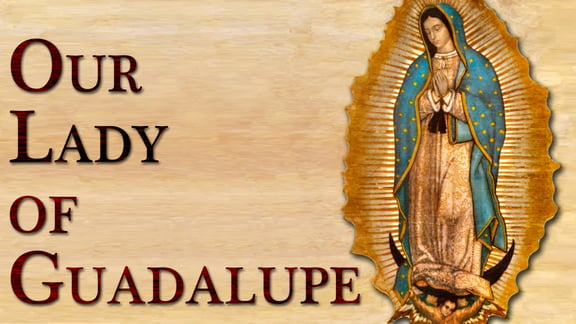
O Virgin Mother of God, we fly to your protection and beg your intercession against the darkness and sin which ever more envelop the world and menace the Church. Your Son, Our Lord Jesus Christ, gave you to us as our mother as He died on the Cross for our salvation. So too, in 1531, when darkness and sin beset us, He sent you, as Our Lady of Guadalupe, on Tepeyac to lead us to Him Who alone is our light and our salvation.
Through your apparitions on Tepeyac and your abiding presence with us on the miraculous mantle of your messenger, Saint Juan Diego, millions of souls converted to faith in your Divine Son. Through this novena and our consecration to you, we humbly implore your intercession for our daily conversion of life to Him and the conversion of millions more who do not yet believe in Him. In our homes and in our nation, lead us to Him Who alone wins the victory over sin and darkness in us and in the world.
Unite our hearts to your Immaculate Heart so that they may find their true and lasting home in the Most Sacred Heart of Jesus. Ever guide us along the pilgrimage of life to our eternal home with Him. So may our hearts, one with yours, always trust in God's promise of salvation, in His never-failing mercy toward all who turn to Him with a humble and contrite heart. Through this novena and our consecration to you, O Virgin of Guadalupe, lead all souls in America and throughout the world to your Divine Son in Whose name we pray. Amen.
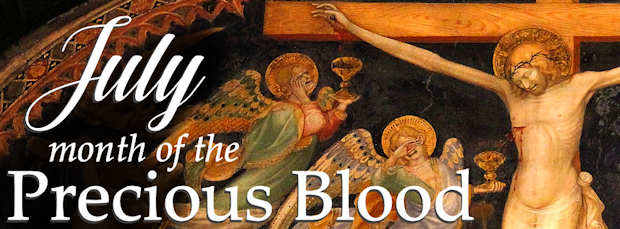
"If we walk in the light, as he is in the light, we have fellowship with one another, and the blood of Jesus his Son cleanses us from all sin.”
(1 John 1:7)
Disclaimer: Opinions posted on Free Republic are those of the individual posters and do not necessarily represent the opinion of Free Republic or its management. All materials posted herein are protected by copyright law and the exemption for fair use of copyrighted works.