Free Republic
Browse · Search
Religion
Topics · Post Article

Skip to comments.

Catholic Caucus: Daily Mass Readings 30-October-2022
Universalis/Jerusalem Bible ^

Posted on 10/30/2022 9:21:38 AM PDT by annalex

30 October 2022

31st Sunday in Ordinary Time


Saint Alphonsus Rodriguez Church, Woodstock, MD

Readings at Mass

Liturgical Colour: Green. Year: C(II).


First reading
Wisdom 11:22-12:2 ©

You are merciful to all, because you love all that exists

In your sight, Lord, the whole world is like a grain of dust that tips the scales,
like a drop of morning dew falling on the ground.
Yet you are merciful to all, because you can do all things
and overlook men’s sins so that they can repent.
Yes, you love all that exists, you hold nothing of what you have made in abhorrence,
for had you hated anything, you would not have formed it.
And how, had you not willed it, could a thing persist,
how be conserved if not called forth by you?
You spare all things because all things are yours, Lord, lover of life,
you whose imperishable spirit is in all.
Little by little, therefore, you correct those who offend,
you admonish and remind them of how they have sinned,
so that they may abstain from evil and trust in you, Lord.

Responsorial Psalm
Psalm 144(145):1-2,8-11,13b-14 ©
I will bless your name for ever, O God my King.
I will give you glory, O God my king,
  I will bless your name for ever.
I will bless you day after day
  and praise your name for ever.
I will bless your name for ever, O God my King.
The Lord is kind and full of compassion,
  slow to anger, abounding in love.
How good is the Lord to all,
  compassionate to all his creatures.
I will bless your name for ever, O God my King.
All your creatures shall thank you, O Lord,
  and your friends shall repeat their blessing.
They shall speak of the glory of your reign
  and declare your might, O God.
I will bless your name for ever, O God my King.
The Lord is faithful in all his words
  and loving in all his deeds.
The Lord supports all who fall
  and raises all who are bowed down.
I will bless your name for ever, O God my King.

Second reading
2 Thessalonians 1:11-2:2 ©

The name of Christ will be glorified in you, and you in him

We pray continually that our God will make you worthy of his call, and by his power fulfil all your desires for goodness and complete all that you have been doing through faith; because in this way the name of our Lord Jesus Christ will be glorified in you and you in him, by the grace of our God and the Lord Jesus Christ.
  To turn now, brothers, to the coming of our Lord Jesus Christ and how we shall all be gathered round him: please do not get excited too soon or alarmed by any prediction or rumour or any letter claiming to come from us, implying that the Day of the Lord has already arrived.

Gospel Acclamationcf.Lk19:38,2:14
Alleluia, alleluia!
Blessings on the King who comes,
in the name of the Lord!
Peace in heaven
and glory in the highest heavens!
Alleluia!
Or:Jn3:16
Alleluia, alleluia!
God loved the world so much that he gave his only Son:
everyone who believes in him has eternal life.
Alleluia!

GospelLuke 19:1-10 ©

Salvation comes to the house of Zacchaeus

Jesus entered Jericho and was going through the town when a man whose name was Zacchaeus made his appearance: he was one of the senior tax collectors and a wealthy man. He was anxious to see what kind of man Jesus was, but he was too short and could not see him for the crowd. So he ran ahead and climbed a sycamore tree to catch a glimpse of Jesus who was to pass that way. When Jesus reached the spot he looked up and spoke to him: ‘Zacchaeus, come down. Hurry, because I must stay at your house today.’ And he hurried down and welcomed him joyfully. They all complained when they saw what was happening. ‘He has gone to stay at a sinner’s house’ they said. But Zacchaeus stood his ground and said to the Lord, ‘Look, sir, I am going to give half my property to the poor, and if I have cheated anybody I will pay him back four times the amount.’ And Jesus said to him, ‘Today salvation has come to this house, because this man too is a son of Abraham; for the Son of Man has come to seek out and save what was lost.’

Christian Art

Illustration

Each day, The Christian Art website gives a picture and reflection on the Gospel of the day.

The readings on this page are from the Jerusalem Bible, which is used at Mass in most of the English-speaking world. The New American Bible readings, which are used at Mass in the United States, are available in the Universalis apps, programs and downloads.

You can also view this page with the Gospel in Greek and English.


TOPICS: Catholic; General Discusssion; Prayer; Worship
KEYWORDS: catholic; lk19; ordinarytime; prayer
For your reading, reflection, faith-sharing, comments, questions, discussion.

1 posted on 10/30/2022 9:21:38 AM PDT by annalex
[ Post Reply | Private Reply | View Replies]

To: All

KEYWORDS: catholic; lk19; ordinarytime; prayer;


2 posted on 10/30/2022 9:22:24 AM PDT by annalex (fear them not)
[ Post Reply | Private Reply | To 1 | View Replies]

To: nickcarraway; NYer; ELS; Pyro7480; livius; ArrogantBustard; Catholicguy; RobbyS; marshmallow; ...
Alleluia Ping

Please FReepmail me to get on/off the Alleluia Ping List.

NOTE: previous ping today was for the October 23 readings
3 posted on 10/30/2022 9:25:07 AM PDT by annalex (fear them not)
[ Post Reply | Private Reply | To 2 | View Replies]

To: annalex
Jim still needs our prayers. Thread 2
Prayer thread for Salvation's recovery
Pray for Ukraine
4 posted on 10/30/2022 9:25:43 AM PDT by annalex (fear them not)
[ Post Reply | Private Reply | To 3 | View Replies]

To: annalex
Luke
 English: Douay-RheimsLatin: Vulgata ClementinaGreek NT: Byzantine/Majority Text (2000)
 Luke 19
1AND entering in, he walked through Jericho. Et ingressus perambulabat Jericho.και εισελθων διηρχετο την ιεριχω
2And behold, there was a man named Zacheus, who was the chief of the publicans, and he was rich. Et ecce vir nomine Zachæus : et hic princeps erat publicanorum, et ipse dives :και ιδου ανηρ ονοματι καλουμενος ζακχαιος και αυτος ην αρχιτελωνης και ουτος ην πλουσιος
3And he sought to see Jesus who he was, and he could not for the crowd, because he was low of stature. et quærebat videre Jesum, quis esset : et non poterat præ turba, quia statura pusillus erat.και εζητει ιδειν τον ιησουν τις εστιν και ουκ ηδυνατο απο του οχλου οτι τη ηλικια μικρος ην
4And running before, he climbed up into a sycamore tree, that he might see him; for he was to pass that way. Et præcurrens ascendit in arborem sycomorum ut videret eum : quia inde erat transiturus.και προδραμων εμπροσθεν ανεβη επι συκομωραιαν ινα ιδη αυτον οτι [δι] εκεινης εμελλεν διερχεσθαι
5And when Jesus was come to the place, looking up, he saw him, and said to him: Zacheus, make haste and come down; for this day I must abide in thy house. Et cum venisset ad locum, suspiciens Jesus vidit illum, et dixit ad eum : Zachæe, festinans descende : quia hodie in domo tua oportet me manere.και ως ηλθεν επι τον τοπον αναβλεψας ο ιησους ειδεν αυτον και ειπεν προς αυτον ζακχαιε σπευσας καταβηθι σημερον γαρ εν τω οικω σου δει με μειναι
6And he made haste and came down; and received him with joy. Et festinans descendit, et excepit illum gaudens.και σπευσας κατεβη και υπεδεξατο αυτον χαιρων
7And when all saw it, they murmured, saying, that he was gone to be a guest with a man that was a sinner. Et cum viderent omnes, murmurabant, dicentes quod ad hominem peccatorem divertisset.και ιδοντες παντες διεγογγυζον λεγοντες οτι παρα αμαρτωλω ανδρι εισηλθεν καταλυσαι
8But Zacheus standing, said to the Lord: Behold, Lord, the half of my goods I give to the poor; and if I have wronged any man of any thing, I restore him fourfold. Stans autem Zachæus, dixit ad Dominum : Ecce dimidium bonorum meorum, Domine, do pauperibus : et si quid aliquem defraudavi, reddo quadruplum.σταθεις δε ζακχαιος ειπεν προς τον κυριον ιδου τα ημιση των υπαρχοντων μου κυριε διδωμι τοις πτωχοις και ει τινος τι εσυκοφαντησα αποδιδωμι τετραπλουν
9Jesus said to him: This day is salvation come to this house, because he also is a son of Abraham. Ait Jesus ad eum : Quia hodie salus domui huic facta est : eo quod et ipse filius sit Abrahæ.ειπεν δε προς αυτον ο ιησους οτι σημερον σωτηρια τω οικω τουτω εγενετο καθοτι και αυτος υιος αβρααμ εστιν
10For the Son of man is come to seek and to save that which was lost. Venit enim Filius hominis quærere, et salvum facere quod perierat.ηλθεν γαρ ο υιος του ανθρωπου ζητησαι και σωσαι το απολωλος

5 posted on 10/30/2022 9:28:27 AM PDT by annalex (fear them not)
[ Post Reply | Private Reply | To 4 | View Replies]

To: annalex

Catena Aurea by St. Thomas Aguinas

19:1–10

1. And Jesus entered and passed through Jericho.

2. And, behold, there was a man named Zacchæus, which was the chief among the Publicans, and he was rich.

3. And he sought to see Jesus who he was; and could not for the press, because he was little of stature.

4. And he ran before, and climbed up into a sycomore tree to see him: for he was to pass that way.

5. And when Jesus came to the place, he looked up, and saw him, and said unto him, Zacchæus, make haste, and come down; for to day I must abide at thy house.

6. And he made haste, and came down, and received him joyfully.

7. And when they saw it, they all murmured, saying, That he was gone to be guest with a man that is a sinner.

8. And Zacchæus stood, and said unto the Lord; Behold, Lord, the half of my goods I give to the poor; and if I have taken any thing from any man by false accusation, I restore him fourfold.

9. And Jesus said unto him, This day is salvation come to this house, forsomuch as he also is a son of Abraham.

10. For the Son of man is come to seek and to save that which was lost.

AMBROSE. Zacchæus in the sycamore, the blind man by the way side: upon the one our Lord waits to shew mercy, upon the other He confers the great glory of abiding in his house. The chief among the Publicans is here fitly introduced. For who will hereafter despair of himself, now that he attains to grace who gained his living by fraud. And he too moreover a rich man, that we may know that not all rich men are covetous.

CYRIL OF ALEXANDRIA. But Zacchæus made no delay in what he did, and so was accounted worthy of the favour of God, which gives sight to the blind, and calls them who are afar off.

TITUS BOSTRENSIS. The seed of salvation had begun to spring up in him, for he desired to see Jesus, having never seen Him. For if he had seen Him, he would long since have given up the Publican’s wicked life. No one that sees Jesus can remain any longer in wickedness. But there were two obstacles to his seeing Him. The multitude not so much of men as of his sins prevented him, for he was little of stature.

AMBROSE. What means the Evangelist by describing his stature, and that of none other? It is perhaps because he was young in wickedness, or as yet weak in the faith. For he was not yet prostrate in sin who could climb up. He had not yet seen Christ.

TITUS BOSTRENSIS. But he discovered a good device; running before he climbed up into a sycamore, and saw Him whom he had long wished for, i. e. Jesus, passing by. Now Zacchæus desired no more than to see, but He who is able to do more than we ask for, granted to Him far above what he expected; as it follows, And when Jesus came to the place, he looked up, and saw him. He saw the soul of the man striving earnestly to live a holy life, and converts him to godliness.

AMBROSE. Uninvited he invites Himself to his house; as it follows, Zacchæus, make haste, and come down, & c. for He knew how richly He would reward his hospitality. And though He had not yet heard the word of invitation, He had already seen the will.

BEDE. See here, the camel disencumbered of his hunch passes through the eye of a needle, that is, the rich man and the publican abandoning his love of riches, and loathing his dishonest gains, receives the blessing of his Lord’s company. It follows, And he made haste, and came down, and received him joyfully.

AMBROSE. Let the rich learn that guilt attaches not to the goods themselves, but to those who know not how to use them. For riches, as they are hindrances to virtue in the unworthy, so are they means of advancing it in the good.

PSEUDO-CHRYSOSTOM. (Hom. de cæc. et Zacc.) Observe the gracious kindness of the Saviour. The innocent associates with the guilty, the fountain of justice with covetousness, which is the source of injustice. Having entered the publican’s house, He suffers no stain from the mists of avarice, but disperses them by the bright beam of His righteousness. But those who deal with biting words and reproaches, try to cast a slur upon the things which were done by Him; for it follows, And when they saw it, they all murmured, saying, That he was gone to be guest with a man that is a sinner. But He, though accused of being a wine-bibber and a friend of publicans, regarded it not, so long as He could accomplish His end. As a physician sometimes can not save his patients from their diseases without the defilement of blood. And so it happened here, for the publican was converted, and lived a better life. Zacchæus stood, and said unto the Lord, Behold, Lord, the half of my goods I give to the poor; and if I have defrauded any man, I restore him fourfold. Behold here is a marvel: without learning he obeys. And as the sun pouring its rays into a house enlightens it not by word, but by work, so the Saviour by the rays of righteousness put to flight the darkness of sin; for the light shineth in darkness. Now every thing united is strong, but divided, weak; therefore Zacchæus divides into two parts his substance. But we must be careful to observe, that his wealth was not made up from unjust gains, but from his patrimony, else how could he restore fourfold what he had unjustly extorted. He knew that the law ordered what was wrongly taken away to be restored fourfold, that if the law deterred not, a man’s losses might soften him. Zacchæus waits not for the judgment of the law, but makes himself his own judge.

THEOPHYLACT. If we examine more closely, we shall see that nothing was left of his own property. For having given half of his goods to the poor, out of the remainder he restored fourfold to those whom he had injured. He not only promised this, but did it. For he says not, “I will give the half, and I will restore fourfold, but, I give, and I restore. To such Christ announces salvation; Jesus saith unto him, This day is salvation come to this house, signifying that Zacchæus had attained to salvation, meaning by the house the inhabitant thereof. And it follows, forasmuch as he also is a son of Abraham. For He would not have given the name of a son of Abraham to a lifeless building.

BEDE. Zacchæus is called the son of Abraham, not because he was born of Abraham’s seed, but because he imitates his faith, that as Abraham left his country and his father’s house, so he abandoned all his goods in giving them to the poor. And He well says, “He also,” to declare that not only those who had lived justly, but those who are raised up from a life of injustice, belong to the sons of promise.

THEOPHYLACT. He said not that he “was” a son of Abraham, but that he now is. For before when he was the chief among the publicans, and bore no likeness to the righteous Abraham, he was not his son. But because some murmured that he tarried with a man who was a sinner, he adds in order to restrain them, For the Son of man came to seek and to save that which was lost.

PSEUDO-CHRYSOSTOM. (ubi sup.) Why do ye accuse me if I bring sinners to righteousness? So far am I from hating them, that for their sakes I came. For I came to heal, not to judge, therefore am I the constant guest of those that are sick, and I suffer their noisomeness that I may supply remedies. But some one may ask, how does Paul bid us, If we have a brother that is a fornicator or covetous man, with such not even to take food; (1 Cor. 5:11.) whereas Christ was the guest of publicans? They were not as yet so far advanced as to be brethren, and besides, St. Paul bids us avoid our brethren only when they persist in evil, but these were converted.

BEDE. Mystically, Zacchæus, which is by interpretation “justified,” signifies the Gentile believers, who were depressed and brought very low by their worldly occupations, but sanctified by God. And he was desirous to see our Saviour entering Jericho, inasmuch as he sought to share in that faith which Christ brought into the world.

CYRIL OF ALEXANDRIA. The crowd is the tumultuous state of an ignorant multitude, which cannot see the lofty top of wisdom. Zacchæus therefore, while he was in the crowd, saw not Christ, but having advanced beyond the vulgar ignorance, was thought worthy to entertain Him, whom he desired to look upon.

BEDE. Or the crowd, that is, the general habit of vice, which rebuked the blind man crying out, lest he should seek the light, also impedes Zacchæus looking up, that he might not see Jesus; that as by crying out the more the blind man overcame the crowd, so the man weak in the faith by forsaking earthly things, and climbing the tree of the Cross, surmounts the opposing multitude. The sycamore, which is a tree resembling the mulberry in foliage, but exceeding it in height, whence by the Latins it is called “lofty,” is called the “foolish fig-tree;” and so the Cross of our Lord sustains believers, as the fig-tree figs, and is mocked by unbelievers as foolishness. This tree Zacchæus, who was little in stature, climbed up, that he might be raised together with Christ; for every one who is humble, and conscious of his own weakness, cries out, God forbid that I should glory, save in the cross of our Lord Jesus Christ. (Gal. 6:14.)

AMBROSE. He has well added, that our Lord was to pass that way, either where the sycamore-tree was, or where he was who was about to believe, that so He might preserve the mystery, and sow the seeds of grace. For He had so come as that through the Jews He came to the Gentiles. He sees then Zacchæus above, for already the excellence of his faith shone forth amidst the fruits of good works, and the loftiness of the fruitful tree; but Zacchæus stands out above the tree, as one who is above the law.

BEDE. The Lord as He journeyed came to the place where Zacchæus had climbed the sycamore, for having sent His preachers throughout the world in whom He Himself spoke and went, He comes to the Gentile people, who were already raised up on high through faith in His Passion, and whom when He looked up He saw, for He chose them through grace. Now our Lord once abode in the house of the chief of the Pharisees, but when He did works such as none but God could do, they railed at Him. Wherefore hating their deeds He departed, saying, Your house shall be left unto you desolate; (Matt. 23:38.) but now He must needs stay at the house of the weak Zacchæus, that is, by the grace of the new law brightly shining, He must take rest in the hearts of the lowly nations. But that Zacchæus is bid to come down from the sycamore tree, and prepare an abode for Christ, this is what the Apostle says, Yea, though we have known Christ after the flesh, yet now henceforth know we Him no more. (2 Cor. 5:16.) And again elsewhere, For though he was crucified through weakness, yet he liveth by the power of God. (2 Cor. 13:4.) It is plain that the Jews always hated the salvation of the Gentiles; but salvation, which formerly filled the houses of the Jews, has this day shone upon the Gentiles, forasmuch as this people also by believing on God is a son of Abraham.

THEOPHYLACT. It is easy to turn this to a moral use. For whoever surpasses many in wickedness is small in spiritual growth, and cannot see Jesus for the crowd. For disturbed by passion and worldly things, he beholds not Jesus walking, that is, working in us, not recognising His operation. But he climbs up to the top of a sycamore-tree, in that he rises above the sweetness of pleasure, which is signified by a fig, and subduing it, and so becoming more exalted, he sees and is seen by Christ.

GREGORY. (Mor. 27. c. 46.) Or because the sycamore is from its name called the foolish fig, the little Zacchæus gets up into the sycamore and sees the Lord, for they who humbly choose the foolish things of this world are those who contemplate most closely the wisdom of God. For what is more foolish in this world than not to seek for what is lost, to give our possessions to robbers, to return not injury for injury? However, by this wise foolishness, the wisdom of God is seen, not yet really as it is, but by the light of contemplation.

THEOPHYLACT. The Lord said to him, Make haste and come down, that is, “Thou hast ascended by penitence to a place too high for thee, come down by humility, lest thy exaltation cause thee to slip. I must abide in the house of a humble man. We have two kinds of goods in us, bodily, and spiritual; the just man gives up all his bodily goods to the poor, but he forsakes not his spiritual goods, but if he has extorted any thing from any one, he restores to him fourfold; signifying thereby that if a man by repentance walks in the opposite path to his former perverseness, he by the manifold practice of virtue heals all his old offences, and so merits salvation, and is called the son of Abraham, because he went out from his own kindred, that is, from his ancient wickedness.

Catena Aurea Luke 19


6 posted on 10/30/2022 9:29:27 AM PDT by annalex (fear them not)
[ Post Reply | Private Reply | To 5 | View Replies]

To: annalex


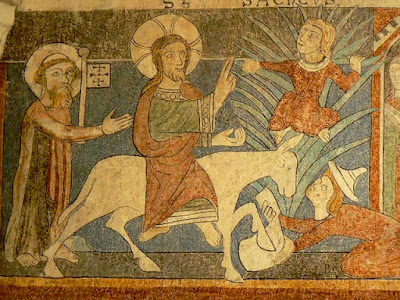
Jesus and Zacchaeus

Medieval, provenance unknown

7 posted on 10/30/2022 9:30:07 AM PDT by annalex (fear them not)
[ Post Reply | Private Reply | To 6 | View Replies]

To: annalex

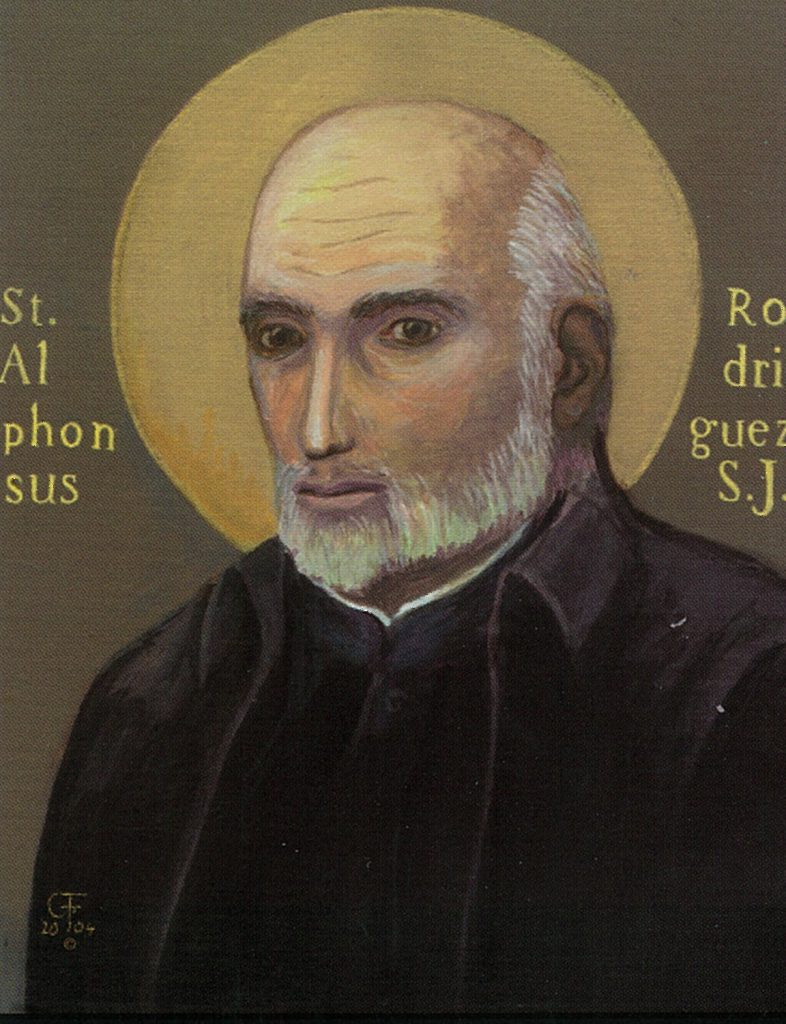
SAINT ALPHONSUS RODRIGUEZ

Alphonsus Rodriguez (Alfonso Rodriguez, 1533-1617) gained enduring fame for the extraordinary holiness that shone out of the very ordinariness of his work as the Jesuit doorkeeper of a school. He was born in Segovia, Spain, the second son of a successful wool and cloth merchant whose comfortable household provided hospitality to Father Peter Faber, one of St. Ignatius' first companions, when that Jesuit came to Segovia to preach. Faber helped the young boy prepare for his first communion, but Rodriguez's path to the Society of Jesus was slow and indirect.

When he was 12, his father sent him to the new Jesuit college at Alcalá, but studies abruptly ended when his father died. Alphonsus helped his mother run the family business and eventually took over its management altogether. At age 27 he married Maria Suárez with whom he had three children, but family life ended when all four died. Then heavy taxes drained the life from his business which eventually fell apart. The young widower viewed himself as a failure.

In his distress he turned to the Jesuits, recently arrived in Segovia, for spiritual direction. Through the inconsolable death of his wife and family, God led Rodriguez to an extraordinarily intimate relationship with himself. The widower spent sad and lonely years in prayer, seeking to do God's will. He wanted to give himself to God as a Jesuit and offered himself as a candidate for priesthood, but his advanced age of 35, poor health and limited education made him unsuitable in the eyes of the Jesuits who interviewed him for entrance. In 1568 he moved to Valencia, where his spiritual father had been transferred, and spent two years seeking the education necessary to become a priest. He was willing to become a Jesuit brother if priesthood was out of the question, but the fathers who examined him in Valencia came to the same negative conclusion as before. The provincial, however, recognized his holiness and gave him permission to enter the Society of Jesus.

On Jan. 31, 1571, at 37 years of age, Rodriguez entered the Jesuit novitiate but was sent only six months later to the college of Montesión in Palma on the island of Majorca, off the Spanish coast. There the new brother would finish his novitiate and become famous for his humble job of door-keeper and his friendship with another Jesuit saint, Peter Claver, apostle to the slaves recently arrived in Colombia.

In 1579 Rodriguez became the college's door-keeper, whose duties involved receiving visitors, searching for Jesuits or students whom someone sought, delivering messages, running errands, distributing alms to the needy, and–most importantly—consoling the troubled whom had no one else to turn to. It was repetitious and monotonous work, demanding much humility, but Rodriguez imagined everyone who knocked at the door to be the Lord himself and greeted everyone with the same smile he would have given God. Students felt the presence and influence of Brother Alphonsus and came to him for advice, encouragement and prayers.

He was 72 when Peter Claver came to the college, aflame with a desire to do something for God but uncertain how to do so. The two became friends and often discussed prayer and holiness as they walked around the school grounds. The older mentor encouraged the student to go to the South American missions.

The Jesuit doorkeeper was always appreciated for his kindness and holiness but only after his death did his memoirs and spiritual notes reveal the quality and depth of his prayer life. The humble brother had been favored by God with remarkable mystical graces, ecstasies and visions of our Lord, our Lady and the saints.

Originally Collected and edited by: Tom Rochford, SJ


jesuits.global

8 posted on 10/30/2022 9:36:31 AM PDT by annalex (fear them not)
[ Post Reply | Private Reply | To 7 | View Replies]

To: annalex

9 posted on 10/30/2022 9:37:55 AM PDT by annalex (fear them not)
[ Post Reply | Private Reply | To 8 | View Replies]

To: annalex

NAVARRE BIBLE COMMENTARY (RSV)
Ad Majorem Dei Gloriam (To the Greater Glory of God)

From: Wisdom 11:22-2:12

God, Almighty and Merciful


[22] Because the whole world before thee is like a speck that tips the scales, and like a drop of morning dew that falls upon the ground. [23] But thou art merciful to all, for thou canst do all things, and thou dost overlook men’s sins, that they may repent, [24] For thou lovest all things that exist, and hast loathing for none of the things which thou hast made, for thou wouldst not have made anything if thou hadst hated it. [25] How would anything have endured if thou hadst not willed it? Or how would anything not called forth by thee have been preserved?

[26] Thou sparest all things, for they are thine, 0 Lord who lovest the living.

[1] For thy immortal spirit is in all things. [2] Therefore thou dost correct little by little those who trespass, dost remind and warn them of the things wherein they sin, that they may be freed from wickedness and put their trust in thee, 0 Lord.

***********************************************************************
Commentary:

11:21-12:2. The lessons given here about God’s steadfast love and mercy towards all created things are not anything new, of course (cf. Hos 6:4-6; Jon 3:1-4:11), but maybe they were never quite as forcefully put as here (especially vv. 23-26), and the style of sapiential argument spells out very well the universal range of God’s mercy towards sinful man and the love that is at work in creation and in its conservation. St Thomas deals with this subject with his typical clarity: God would never have created something which he would then not love, for it derives from him and participates in his supreme goodness, even if only to a tiny degree: “God loves all living things. He does not love in the same way as we do, for our will does not make things good; human love is a movement of the will towards its object [...]; the love of God creates and fills all things with goodness” (”Summa Theologiae”, 1, 20, 2).

Therefore, when God punishes man, as he sometimes does, his intention is always one of love and mercy. It is this divine purpose that 11:23-26 takes pleasure in showing to be all-encompassing: God is all-powerful; nothing, no one, can resist him; his mercy does not stem from any weakness on his part; it is the effect of love: he loves the living.

Origen used this passage to draw lessons about God’s all-embracing love: “Because we are his children, the Lord encourages us to develop the same attitude, and teaches us to do good works for all mankind. For that is why he is called the ‘savior of all people, especially of those who believe in him’ (1 Tim 4:10), and his Christ the ‘expiation of our sins, and the sins of the whole world’ (1 Jn 2:2)” (”Contra Celsum”, 4, 28).

St Gregory the Great, in his homilies to the people of Rome, exhorted them to appreciate God’s unlimited love for sinners: “Here we read that he appeals to all those who are stained with sin, and cries out to all those who have abandoned him. Let us not spurn the hand of mercy that he holds out to us; let us not fail to see the great value of the love the Lord has for us. In his kindness he calls out to those who have lost their way, and he prepares a place for us, for when we return to his heart of mercy. Let each person consider the debt that weighs him down—and all the while God waits and never loses his patience with us. Let those who chose not to stay with him return to him; let those who failed to appreciate his love stand close by his side, so that they may be raised up” (”Homiliae in Evangelia”, 33).

The passage also underlines God’s loving providence towards all created beings. The “Catechism of the Catholic Church”, 301 puts it as follows: “With creation, God does not abandon his creatures to themselves. He not only gives them being and existence, but also, and at every moment, upholds and sustains them in being, enables them to act and bring them to their final end. Recognizing this utter dependence with respect to the Creator is a source of wisdom and freedom, of joy and confidence.”


10 posted on 10/30/2022 7:03:07 PM PDT by fidelis (👈 Under no obligation to respond to rude, ignorant, abusive, bellicose, and obnoxious posts.)
[ Post Reply | Private Reply | To 9 | View Replies]

To: fidelis

From: 2 Thessalonians 1:11-2:2
Prayer for Perseverance


[11] To this end we always pray for you, that our God may make you worthy of his call, and may fulfill every good resolve and work of faith by his power, [12] so that the name of our Lord Jesus may be glorified in you, and you in him, according to the grace of our God and the Lord Jesus Christ.

The Coming of the Lord


[1] Now concerning the coming of our Lord Jesus Christ and our assembling to meet him, we beg you, brethren, [2] not to be quickly shaken in mind or excited, either by spirit or by word, or by letter purporting to be from us, to the effect that the day of the Lord has come.

***********************************************************************
Commentary:

11. S t. Paul takes up the thread of the prayer he began in v. 4, asking God to keep the believers true to their calling. He himself is very good example of how teachers of Christian doctrine should approach their work; he does not confine himself to expounding the truths of faith: the first step he takes is to pray for his work to be fruitful. St. Augustine observes that anyone who wants to teach the word of God “tries as far as possible to make his words understandable, pleasing and persuasive. But he should be convinced that if he is to obtain a good result it will be due more to the piety of his prayers than to his gifts of speech. And so, praying for those he is to address, he should be more a supplicant than a speaker. When the time comes for him to speak, before actually doing so he should raise his parched soul to God that he may utter only what he has himself eaten and drunk” (”Christian Instruction”, 4, 15).

The Apostle asks God to make the Thessalonians “worthy of his call”, that their efforts should have the support of divine grace, for no supernatural action can be planned, begun or brought to a conclusion without the grace of God (cf. Boniface II, “Per Filium Nostrum, Dz-Sch”, 399). Hence the liturgical prayer: “Lord, be the beginning and end of all that we do and say. Prompt our actions with your grace, and complete them with your all-powerful help” (”Liturgy of the Hours”, Morning Prayer, Monday Week 1).

12. The Greek formula here translated as “according to the grace of our God and the Lord Jesus Christ” could also be interpreted as “according to the grace of our God and Lord Jesus Christ”—in which case we would have here a confession of christological faith which would be of enormous value on account of its antiquity. It would be an acknowledgment of Christ being both God (”Theos”) and Lord (”Kyrios”), that is, “Iesus Christus, Dominus et Deus noster”. However, the expression “our God” often appears in Pauline writings (cf., in this very chapter, vv. 2 and 11); he also frequently uses the formula “Lord Jesus Christ”. This suggests that there is a distinction between “our God” and “the Lord Jesus Christ” (or even “our Lord Jesus Christ”); hence the preferred translation.

1-2. The main theme of the letter is given here—the timing of the second coming of the Lord. Some people had been unsettling the minds of the Thessalonians by saying that the Parousia was about to happen. The phrase “by spirit” is a reference to people claiming to have a charismatic gift of prophecy from the Holy Spirit who were spreading their own ideas as if they came from God. Others preferred to pass off what they had to say as coming from St. Paul (orally or in writing). Those who try to mislead the people of God by teachings contrary to Christian faith often use methods of the same sort. By twisting the meaning of Sacred Scripture (cf. Mt 4:6) they not infrequently promote wrong teaching as if it were a revelation from the Holy Spirit. The Second Vatican Council has reminded us how to identify subjective interpretation of that kind: “The task of giving an authentic interpretation, whether in its written form or in the form of Tradition, has been entrusted to the living teaching office of the Church alone. Its authority is exercised in the name of Jesus Christ” (”Dei Verbum”, 10).

Even in our own day there are sects and impressionable people who put a lot of effort into working out when the second coming will take place, sometimes making specific predictions which the passage of time disproves. They are missing the main point, which is that we should be always on the watch, always ready to joyfully meet the Lord. “To the effect that the day of the Lord has come”: this is literally what the Greek says—or “as if the day of the Lord is here”, in the sense of “about to come any minute now”. The New Vulgate [and the Navarre Spanish: trs.] translate it as “as if the day of the Lord were imminent”, which is faithful to the tenor of the text and reads more clearly.


11 posted on 10/30/2022 7:04:31 PM PDT by fidelis (👈 Under no obligation to respond to rude, ignorant, abusive, bellicose, and obnoxious posts.)
[ Post Reply | Private Reply | To 10 | View Replies]

To: fidelis

From: Luke 19:1-10
The Conversion of Zacchaeus


[1] He (Jesus) entered Jericho and was passing through. [2] And there was a rich man named Zacchaeus; he was a chief tax collector, and rich. [3] And he sought to see who Jesus was, but could not, on account of the crowd, because he was small of stature. [4] So he ran on ahead and climbed up into a sycamore tree to see Him, for He was to pass that way. [5] And when Jesus came to the place, He looked up and said to him, “Zacchaeus, make haste and come down; for I must stay at your house today.” [6] So he made haste and came down, and received Him joyfully. [7] And when they saw it they all murmured, “He has gone in to be the guest of a man who is a sinner.” [8] And Zacchaeus stood and said to the Lord, “Behold, Lord, the half of my goods I give to the poor; and if I have defrauded any one of anything, I restore it fourfold.” [9] And Jesus said to him, “Today salvation has come to this house, since he also is a son of Abraham. [10] For the Son of Man came to seek and save the lost.”

***********************************************************************
Commentary:

1-10. Jesus Christ is the Savior of mankind; He has healed many sick people, has raised the dead to life and, particularly, has brought forgiveness of sin and the gift of grace to those who approach Him in faith. As in the case of the sinful woman (cf. Luke 7:36-50), here He brings salvation to Zacchaeus, for the mission of the Son of Man is to save that which was lost.

Zacchaeus was a tax collector and, as such, was hated by the people, because the tax collectors were collaborators of the Roman authorities and were often guilty of abuses. The Gospel implies that this man also had things to seek forgiveness for (cf. verses 7-10). Certainly he was very keen to see Jesus (no doubt moved by grace) and he did everything he could to do so. Jesus rewards his efforts by staying as a guest in his house. Moved by our Lord’s presence Zacchaeus begins to lead a new life.

The crowd begin to grumble against Jesus for showing affection to a man they consider to be an evildoer. Our Lord makes no excuses for his behavior: He explains that this is exactly why He has come—to seek out sinners. He is putting into practice the parable of the lost sheep (cf. Luke 15:4-7), which was already prophesied in Ezekiel: “I will seek the lost, and I will bring back the strayed, and I will bind up the crippled, and I will strengthen the weak” (34:16).

4. Zacchaeus wants to see Jesus, and to do so he has to go out and mix with the crowd. Like the blind man of Jericho he has to shed any kind of human respect. In our own search for God we should not let false shame or fear of ridicule prevent us from using the resources available to us to meet our Lord. “Convince yourself that there is no such thing as ridicule for whoever is doing what is best” (St J. Escriva, “The Way”, 392).

5-6. This is a very good example of the way God acts to save men. Jesus calls Zacchaeus personally, using his name, suggesting he invite Him home. The Gospel states that Zacchaeus does so promptly and joyfully. This is how we should respond when God calls us by means of grace.

8. Responding immediately to grace, Zacchaeus makes it known that he will restore fourfold anything he obtained unjustly—thereby going beyond what is laid down in the Law of Moses (cf. Exodus 21:37f). And in generous compensation he gives half his wealth to the poor. “Let the rich learn”, St. Ambrose comments, “that evil does not consist in having wealth, but in not putting it to good use; for just as riches are an obstacle to evil people, they are also a means of virtue for good people” (”Expositio Evangelii Sec. Lucam, in loc.”). Cf. note on Luke 16:9-11).

10. Jesus’ ardent desire to seek out a sinner to save him fills us with hope of attaining eternal salvation. “He chooses a chief tax collector: who can despair when such a man obtains grace?” (St. Ambrose, “Expositio Evangelii Sec. Lucam, in loc.”).


12 posted on 10/30/2022 7:05:08 PM PDT by fidelis (👈 Under no obligation to respond to rude, ignorant, abusive, bellicose, and obnoxious posts.)
[ Post Reply | Private Reply | To 11 | View Replies]

Disclaimer: Opinions posted on Free Republic are those of the individual posters and do not necessarily represent the opinion of Free Republic or its management. All materials posted herein are protected by copyright law and the exemption for fair use of copyrighted works.

Free Republic
Browse · Search
Religion
Topics · Post Article

FreeRepublic, LLC, PO BOX 9771, FRESNO, CA 93794
FreeRepublic.com is powered by software copyright 2000-2008 John Robinson