Free Republic
Browse · Search
Religion
Topics · Post Article

Skip to comments.

Catholic Caucus: Daily Mass Readings 16-July-2022;
Universalis/Jerusalem Bible ^ | 16th July 2022

Posted on 07/16/2022 3:17:53 AM PDT by Cronos

July 16th 2022


Saturday of Week 15 in Ordinary Time


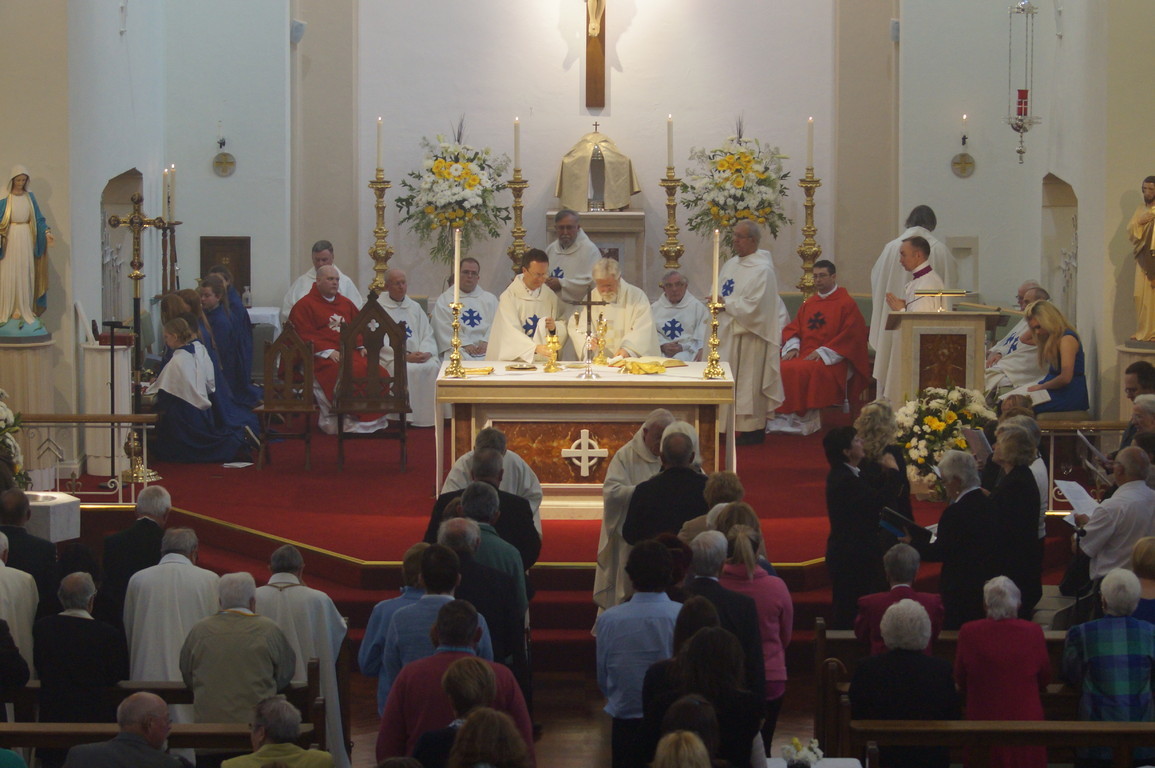
Our Lady of Walsingham, Corby, UK

Readings at Mass

Liturgical Colour: Green


First reading

Micah 2:1-5 ©

The plotters of evil will not escape

Woe to those who plot evil,
who lie in bed planning mischief!
No sooner is it dawn than they do it
– their hands have the strength for it.
Seizing the fields that they covet,
they take over houses as well,
owner and house they confiscate together,
taking both man and inheritance.
So the Lord says this:
Now it is I who plot
such mischief against this breed
as your necks will not escape;
nor will you be able to walk proudly,
so evil will the time be.
On that day they will make a satire on you,
sing a dirge and say,
‘We are stripped of everything;
my people’s portion is measured out and shared,
no one will give it back to them,
our fields are awarded to our despoiler.’
Therefore you will have no one
to measure out a share
in the community of the Lord.

Responsorial Psalm
Psalm 9B(10):1-4,7-8,14 ©
Lord, do not forget the poor.
Lord, why do you stand afar off
  and hide yourself in times of distress?
The poor man is devoured by the pride of the wicked:
  he is caught in the schemes that others have made.
Lord, do not forget the poor.
For the wicked man boasts of his heart’s desires;
  the covetous blasphemes and spurns the Lord.
In his pride the wicked says: ‘He will not punish.
  There is no God.’ Such are his thoughts.
Lord, do not forget the poor.
His mouth is full of cursing, guile, oppression,
  mischief and deceit under his tongue.
He lies in wait among the reeds;
  the innocent he murders in secret.
Lord, do not forget the poor.
His eyes are on the watch for the helpless man.
But you have seen the trouble and sorrow,
  you note it, you take it in hand.
The helpless trusts himself to you;
  for you are the helper of the orphan.
Lord, do not forget the poor.

Gospel AcclamationPs118:27
Alleluia, alleluia!
Make me grasp the way of your precepts,
and I will muse on your wonders.
Alleluia!
Or:2Co5:19
Alleluia, alleluia!
God in Christ was reconciling the world to himself,
and he has entrusted to us the news that they are reconciled.
Alleluia!

Gospel
Matthew 12:14-21 ©

He cured them all but warned them not to make him known

The Pharisees went out and began to plot against Jesus, discussing how to destroy him.
  Jesus knew this and withdrew from the district. Many followed him and he cured them all, but warned them not to make him known. This was to fulfil the prophecy of Isaiah:
Here is my servant whom I have chosen,
my beloved, the favourite of my soul.
I will endow him with my spirit,
and he will proclaim the true faith to the nations.
He will not brawl or shout,
nor will anyone hear his voice in the streets.
He will not break the crushed reed,
nor put out the smouldering wick
till he has led the truth to victory:
in his name the nations will put their hope.

The readings on this page are from the Jerusalem Bible, which is used at Mass in most of the English-speaking world. The New American Bible readings, which are used at Mass in the United States, are available in the Universalis apps, programs and downloads.

You can also view this page with the Gospel in Greek and English.


TOPICS: Catholic; General Discusssion; Prayer; Worship
KEYWORDS: catholic; mt12; ordinarytime; prayer
For your reading, reflection, faith-sharing, comments, questions, discussion.

1 posted on 07/16/2022 3:17:53 AM PDT by Cronos
[ Post Reply | Private Reply | View Replies]

To: Cronos

catholic, prayer, ordinarytime, mt12


2 posted on 07/16/2022 3:18:01 AM PDT by Cronos
[ Post Reply | Private Reply | To 1 | View Replies]

To: nickcarraway; NYer; ELS; Pyro7480; livius; ArrogantBustard; Catholicguy; RobbyS; marshmallow; ...
Alleluia Ping

Please FReepmail me/annalex to get on/off the Alleluia Ping List.


3 posted on 07/16/2022 3:18:27 AM PDT by Cronos
[ Post Reply | Private Reply | To 2 | View Replies]

To: Cronos

Catena Aurea by St. Thomas Aguinas

12:14–21

14. Then the Pharisees went out, and held a council against him, how they might destroy him.

15. But when Jesus knew it, he withdrew himself from thence: and great multitudes followed him, and he healed them all;

16. And charged them that they should not make him known:

17. That it might be fulfilled which was spoken by Esaias the prophet, saying,

18. Behold my servant, whom I have chosen; my beloved, in whom my soul is well pleased: I will put my spirit upon him, and he shall shew judgment to the Gentiles.

19. He shall not strive, nor cry; neither shall any man hear his voice in the streets.

20. A bruised reed shall he not break, and smoking flax shall he not quench, till he send forth judgment unto victory.

21. And in his name shall the Gentiles trust.

HILARY. The Pharisees are moved with jealousy at what had been done; because beholding the outward body of a man, they did not recognize the God in His works; The Pharisees went out and sought counsel against him, how they might destroy him.

RABANUS. He says, went out because their mind was alien from the Lord. They took counsel how they might destroy life, not how themselves might find life.

HILARY. And He knowing their plots withdrew, that He might be far from the counsels of the evil hearted, as it follows, Jesus knowing it departed thence.

JEROME. Knowing, that is, their designs against Him withdrew Himself, that He might remove from the Pharisees all opportunity of sin.

REMIGIUS. Or, He withdrew from thence as avoiding the designs of His own when they persecuted Him; or because that was not the time or place for Him to suffer, for It cannot he that a Prophet should perish out of Jerusalem, (Luke 13:33) as He Himself spake. The Lord also shunned those who persecuted Him through hatred, and went thither where He found many who were attached to Him from affection, whence it follows, And there followed him many. Him whom the Pharisees with one consent plotted against to destroy, the untaught multitude with one consent love and follow; whence they soon received the fulfilment of their desires, for it follows, And he healed them all.

HILARY. On those whom He healed He enjoined silence, whence it follows, And he charged them that they should not make him known. For his restored health was a witness to each man. And by commanding them to hold their peace, He avoids all ostentation of Himself, and at the same time notwithstanding affords a knowledge of Himself in that very admonition to hold their peace; for the observance of silence proceeds from that very thing which is to be kept silent.

RABANUS. In this also He instructs us, that when we have done any thing great we are not to seek praise abroad.

REMIGIUS. And He also gives them command that they should not make Him known, that they might not by persecuting Him be put into a worse state.

CHRYSOSTOM. And that you may not be troubled at those things which are done, and at the incredible madness of the Pharisees, He introduces the Prophet’s words. For such was the carefulness of the Prophets, that they had not omitted even this, but had noted all His ways and movements, and the meaning with which He did this; that you might learn that He spoke all things by the Holy Spirit, for if it be impossible to know the thoughts of men, much more to know the meaning of Christ, unless the Holy Spirit revealed it. Therefore it follows, That it might be fulfilled which was spoken by Esaias the Prophet, saying, Behold my servant whom I have chosen.

REMIGIUS. The Lord Jesus Christ is called the servant of the Almighty Godb, not in respect of His divinity, but in respect of the dispensation of the flesh which He took upon Him, because by the cooperation of the Holy Spirit He took flesh of the Virgin without stain of sin. Some books have, Elect, whom I have chosen, for He was chosen by God the Father, that is, predestinated that He should be the Son of God, proper, not adopted.

RABANUS. Whom I have chosen, he says, for a work which none else has done, that He should redeem the human race, and make peace between God and the world. It follows, My beloved, in whom my soul is well pleased, for He alone is the Lamb without spot of sin, of whom the Father speaks, This is my beloved Son, in whom I am well pleased. (Mat. 17:5)

REMIGIUS. That he says, My soul, is not to be understood as though God the Father had a soul, but by way of adaptation, shewing how God is disposed towards Him. And it is no wonder that a soul is ascribed to God in this manner, seeing that all other members of the body are likewise.

CHRYSOSTOM. This the Prophet puts in the beginning, that you might learn that that which is here said was according to the counsel of the Father. For he that is beloved does according to his will who loveth him. And again, he that is chosen, does not as an enemy break the law, nor as one being an adversary of the legislator, but as one in agreement with Him. Because therefore He is beloved, I will put my Spirit upon him.

REMIGIUS. Then also God the Father put His Spirit upon Him, when by the working of the Holy Spirit He took flesh of the Virgin; and as soon as He became man, He took the fulness of the Holy Spirit.

JEROME. But the Holy Spirit is put, not on the Word of God, but on the Only-Begotten, who came forth from the bosom of the Father; on Him, that is, of whom it is said, Behold my servant. And what He will do by Him He adds, And he shall declare judgment to the Gentiles.

AUGUSTINE. (De Civ. Dei, xx. 30.) Seeing He preached the judgment to come which was hidden from the Gentiles.

CHRYSOSTOM. Further, to shew His lowliness, He says, He shall not strive; and so He was offered up as the Father had willed, and gave Himself willingly into the hands of His persecutors. Neither shall he cry; so He was dumb as a lamb before his shearer. Nor shall any hear voice in the streets.

JEROME. For the way is broad and wide which leads to destruction, and many walk in it; and being many, they will not hear the voice of the Saviour, because they are not in the narrow but in the broad way.

REMIGIUS. The Greek πλατεῖα, is in Latin called ‘latitudo.’ No one therefore has heard His voice in the streets, because He has not promised pleasant things in this world to those that love Him, but hardships.

CHRYSOSTOM. The Lord sought to heal the Jews by this mildness. But though they rejected Him, yet He did not resist them by destroying them; whence the Prophet, displaying His power and their weakness, says, A bruised reed he shall not break, and a smoking flax he shall not quench.

JEROME. He that holds not out his hand to a sinner, nor bears his brother’s burden, he breaks a bruised reed; and he who despises a weak spark of faith in a little one, he quenches a smoking flax.

AUGUSTINE. (ubi sup) So He neither bruised nor quenched the Jewish persecutors, who are here likened to a bruised reed which has lost its wholeness, and to a smoking flax which has lost its flame; but He spared them because He was not come to judge them, but to be judged by them.

AUGUSTINE. (Quæst. Ev. i. 3.) In the smoking flax it is observed, that when the flame is out it causes a stink.

CHRYSOSTOM. Or this, He shall not break a bruised reed, shews that it was as easy for Him to break them all, as to break a reed, and that a bruised reed. And, He shall not quench a smoking flax, shews that their rage was fired, and that the power of Christ was strong to quench such rage with all readiness; hence in this is shewn the great mercy of Christ.

HILARY. Or, he means this bruised reed that is not broken, to shew that the perishing and bruised bodies of the Gentiles, are not to be broken, but are rather reserved for salvation. He shall not quench a smoking flax, shews the feebleness of that spark which though not quenched, only moulders in the flax, and that among the remnants of that ancient grace, the Spirit is yet not quite taken away from Israel, but power still remains to them of resuming the whole flame thereof in a day of penitence.

JEROME. (Ep. 121.2.) Or, the reverse, He calls the Jews a bruised reed, whom tossed by the wind and shaken from one another, the Lord did not immediately condemn, but patiently endured; and the smoking flax He calls the people gathered out of the Gentiles, who, having extinguished the light of the natural law, were involved in the wandering mazes of thick darkness of smoke, bitter and hurtful to the eyes; this He not only did not extinguish, by reducing them to ashes, but on the contrary from a small spark and one almost dead He raised a mighty flame.

CHRYSOSTOM. But one might say, What then, shall these things be always thus? Will He endure for ever those who thus lay snares, and are mad against Him? Far from it; when His own work shall be all complete, then shall He work these things also. And. this He signifies, saying, Until he shall send forth judgment to victory; as much as to say, When He shall have accomplished all things which are of Himself, then shall He bring in perfect vengeance; then shall they receive punishment when He has made his victory illustrious, that there be not left to them any irreverent opportunity of contradiction,

HILARY. Or, Until he shall send forth judgment to victory, that is, Until He shall take away the power of death, and bring in judgment and the return of His splendour.

RABANUS. Or, Until that judgment which was being done in Him should come forth to victory. For after that by His resurrection He had overcome death, and driven forth the prince of this world, He returned as conqueror to His kingdom to sit on the right hand of the Father, until He shall put all His enemies under His feet.

CHRYSOSTOM. But the things of this dispensation will not rest in this only, that they who have not believed should be punished, but He will also draw the world to Him; whence it follows, And in his name shall the Gentiles hope.

AUGUSTINE. (De Civ. Dei, xx. 30.) This last we now see fulfilled; and thus this which cannot be denied establishes the truth of that which some have denied through ignorance, the last judgment namely, which He will hold upon earth, when he Himself shall come from heaven. For who could have expected that the Gentiles would have hope in Christ’s name, when He was in the hands of His enemies, when He was bound, scourged, set at nought, and crucified; when even His disciples had lost that hope which they had begun to have in Him? That which one thief hardly hoped on the cross, the nations scattered far and wide now hope. And that they may not die for ever, they are marked with that very cross on which he died. Let none then doubt that the last judgment will be by Christ Himself.

REMIGIUS. And it should be known, that the meaning not only of this passage, but of many others also, is supported by this testimony from the Prophet. The words, Behold my servant, may be referred to the place in which the Father had said above, This is my Son. (Mat. 3:17.) The words, I will put my Spirit upon him, is referred to the descent of the Holy Spirit upon the Lord at His baptism; He shall declare judgment to the Gentiles, to that which He says below, When the Son of Man shall sit in the seat of his Majesty. (Mat. 25:31) What he adds, He shall not strive nor cry, refers to the Lord how He answered but little to the Chief Priests, and to Pilate, but to Herod nothing at all. He shall not break the bruised reed, refers to His shunning His persecutors that they might not be made worse; and that In his name shall the Gentiles hope, refers to what Himself says below, Go ye, and teach all nations. (Mat. 28:19)



Copyright ©1999-2018 e-Catholic2000.com


4 posted on 07/16/2022 3:20:31 AM PDT by Cronos
[ Post Reply | Private Reply | To 3 | View Replies]

To: Cronos
Matthew
 English: Douay-RheimsLatin: Vulgata ClementinaGreek NT: Byzantine/Majority Text (2000)
 Matthew 12
14And the Pharisees going out made a consultation against him, how they might destroy him. Exeuntes autem pharisæi, consilium faciebant adversus eum, quomodo perderent eum.οι δε φαρισαιοι συμβουλιον ελαβον κατ αυτου εξελθοντες οπως αυτον απολεσωσιν
15But Jesus knowing it, retired from thence: and many followed him, and he healed them all. Jesus autem sciens recessit inde : et secuti sunt eum multi, et curavit eos omnes :ο δε ιησους γνους ανεχωρησεν εκειθεν και ηκολουθησαν αυτω οχλοι πολλοι και εθεραπευσεν αυτους παντας
16And he charged them that they should not make him known. et præcepit eis ne manifestum eum facerent.και επετιμησεν αυτοις ινα μη φανερον αυτον ποιησωσιν
17That it might be fulfilled which was spoken by Isaias the prophet, saying: Ut adimpleretur quod dictum est per Isaiam prophetam, dicentem :οπως πληρωθη το ρηθεν δια ησαιου του προφητου λεγοντος
18Behold my servant whom I have chosen, my beloved in whom my soul hath been well pleased. I will put my spirit upon him, and he shall shew judgment to the Gentiles. Ecce puer meus, quem elegi, dilectus meus, in quo bene complacuit animæ meæ. Ponam spiritum meum super eum, et judicium gentibus nuntiabit.ιδου ο παις μου ον ηρετισα ο αγαπητος μου εις ον ευδοκησεν η ψυχη μου θησω το πνευμα μου επ αυτον και κρισιν τοις εθνεσιν απαγγελει
19He shall not contend, nor cry out, neither shall any man hear his voice in the streets. Non contendet, neque clamabit, neque audiet aliquis in plateis vocem ejus :ουκ ερισει ουδε κραυγασει ουδε ακουσει τις εν ταις πλατειαις την φωνην αυτου
20The bruised reed he shall not break: and smoking flax he shall not extinguish: till he send forth judgment unto victory. arundinem quassatam non confringet, et linum fumigans non extinguet, donec ejiciat ad victoriam judicium :καλαμον συντετριμμενον ου κατεαξει και λινον τυφομενον ου σβεσει εως αν εκβαλη εις νικος την κρισιν
21And in his name the Gentiles shall hope. et in nomine ejus gentes sperabunt.και τω ονοματι αυτου εθνη ελπιουσιν

5 posted on 07/16/2022 5:27:25 AM PDT by annalex (fear them not)
[ Post Reply | Private Reply | To 4 | View Replies]

To: annalex


Ecce Homo

Cigoli

1607
Oil on canvas, 175 x 135 cm
Galleria Palatina (Palazzo Pitti), Florence

6 posted on 07/16/2022 5:28:25 AM PDT by annalex (fear them not)
[ Post Reply | Private Reply | To 5 | View Replies]

To: annalex

Saint of the Day for July 16

Our Lady of Mount Carmel

The Story of Our Lady of Mount Carmel

Hermits lived on Mount Carmel near the Fountain of Elijah in northern Israel in the 12th century. They had a chapel dedicated to Our Lady. By the 13th century they became known as “Brothers of Our Lady of Mount Carmel.” They soon celebrated a special Mass and Office in honor of Mary. In 1726, it became a celebration of the universal Church under the title of Our Lady of Mount Carmel. For centuries the Carmelites have seen themselves as specially related to Mary. Their great saints and theologians have promoted devotion to her and often championed the mystery of her Immaculate Conception.

Saint Teresa of Avila called Carmel “the Order of the Virgin.” Saint John of the Cross credited Mary with saving him from drowning as a child, leading him to Carmel, and helping him escape from prison. Saint Thérèse of the Child Jesus believed that Mary cured her from illness. On her First Communion day, Thérèse dedicated her life to Mary. During the last days of her life she frequently spoke of Mary.

There is a tradition—which may not be historical—that Mary appeared to Saint Simon Stock, a leader of the Carmelites, and gave him a scapular, telling him to promote devotion to it. The scapular is a modified version of Mary’s own garment. It symbolizes her special protection and calls the wearers to consecrate themselves to her in a special way. The scapular reminds us of the gospel call to prayer and penance—a call that Mary models in a splendid way.


Reflection

The Carmelites were known from early on as “Brothers of Our Lady of Mount Carmel.” The title suggests that they saw Mary not only as “mother,” but also as “sister.” The word sister is a reminder that Mary is very close to us. She is the daughter of God and therefore can help us be authentic daughters and sons of God. She also can help us grow in appreciation of being sisters and brothers to one another. She leads us to a new realization that all human beings belong to the family of God. When such a conviction grows, there is hope that the human race can find its way to peace.


Our Lady of Mount Carmel is the Patron Saint of:

Chile


franciscanmedia.org
7 posted on 07/16/2022 5:32:25 AM PDT by annalex (fear them not)
[ Post Reply | Private Reply | To 6 | View Replies]

To: annalex


The Virgin of the Carmelitas

8 posted on 07/16/2022 5:34:12 AM PDT by annalex (fear them not)
[ Post Reply | Private Reply | To 7 | View Replies]

To: annalex
NAVARRE BIBLE COMMENTARY (RSV)

Ad Majorem Dei Gloriam (To the Greater Glory of God)

From: Micah 2:1-5

The prophet denounces social injustice
--------------------------------------------------
[1] Woe to those who devise wickedness and work evil upon their beds! When the morning dawns, they perform it, because it is in the power of their hand. [2] They covet fields, and seize them; and houses, and take them away; they oppress a man and his house, a man and his inheritance. [3] Therefore thus says the Lord: Behold, against this family I am devising evil, from which you cannot remove your necks; and you shall not walk haughtily, for it will be an evil time.

[4] In that day they shall take up a taunt song against you, and wail with bitter lamentation, and say, "We are utterly ruined: he changes the portion of my people; how he removes it from me! Among our captors he divides our fields." [5] Therefore you will have none to cast the line by lot in the assembly of the Lord.

***************************************************************************
Commentary:

2:1-5. This is an oracle beginning with "Woe!", and it is directed against the social injustice perpetuated by the well-to-do who take advantage of the poorer members of society. Micah speaks very clearly in this denunciation. The people with power seem to spend all their time coveting, robbing and cheating: they spend their nights making their plans, and their days carrying them out (vv. 1-2). The odd thing is that these men seem to he men of faith, for the words that the prophet puts on their lips (v. 4) are an acknowledgment that the Lord giveth and the Lord taketh away. Micah's teachings are practical applications of the fifth and tenth commandments which prohibit respectively "violence and injustice" and "coveting the goods of another, as the root of theft, robbery and fraud, which the seventh commandment forbids. 'Lust of the eyes' leads to the violence and injustice forbidden by the fifth commandment" (Catechism of the Catholic Church, 2534).

The Lord tells what punishment will apply to such sins -- the oppression in exile (v. 3), and confiscation of property (v. 4). It seems to he a veiled example of the application of the law of vengeance, though to the Christian reader it sounds somewhat like our Lord's warning: "the measure you give will be measure you get" (Mt 7:2).

9 posted on 07/16/2022 5:40:47 AM PDT by fidelis (Behold, the Cross of the Lord! Begone, all evil powers! The Lion of the tribe of Judah rules!)
[ Post Reply | Private Reply | To 8 | View Replies]

To: fidelis
From: Matthew 12:14-21

Jesus, the Suffering Servant of Yahweh
--------------------------------------
[14] But the Pharisees went out and took counsel against Him, how to destroy Him. [15] Jesus, aware of this, withdrew from there. And many followed Him, and He healed them all, [16] and ordered them not to make Him known. [17] This was to fulfill what was spoken by the prophet Isaiah: [18] "Behold my servant whom I have chosen, my beloved with whom my soul is well pleased. I will put my Spirit upon Him, and He shall proclaim justice to the Gentiles. [19] He will not wrangle or cry aloud, nor will any one hear His voice in the streets; [20] He will not break a bruised reed or quench a smoldering wick, till He brings justice to victory; [21] and in His name will the Gentiles hope."

***********************************************************************
Commentary:

17-21. Once again the sacred text points out the contrast between the contemporary mistaken Jewish notion of a spectacular messianic kingdom and the discernment which Jesus asks of those who witness and accept His teaching and miracles. By providing this long quotation from Isaiah (42:1-4), the Evangelist is giving us the key to the teaching contained in Chapters 11 and 12: in Jesus the prophecy of the Servant of Yahweh is fulfilled: the lovable and gentle teacher has come to bring the light of truth.

When narrating the passion of our Lord, the Gospels will once again remind us of the figure of the Servant of Yahweh, to show that in Jesus the suffering and expiatory aspect of the death of the Servant finds fulfillment (cf. Matthew 27:30, with reference to Is 50:6; Matthew 8:17 and Isaiah 53:4; John 1:38 and Isaiah 53:9-12; etc.).

17. Isaiah 42:1-4 speaks of a humble servant, beloved of God, chosen by God. And in fact Jesus, without ceasing to be the Son of God, one in substance with the Father, took the form of a servant (cf. Philippians 2:6). This humility led him to cure and care for the poor and afflicted of Israel, without seeking acclaim.

18. See the note on Matthew 3:16.

[Note on Matthew 3:16 states: 16. Jesus possessed the fullness of the Holy Spirit from the moment of His conception. This is due to the union of human nature and divine nature in the person of the Word (the dogma of hypostatic union). Catholic teaching says that in Christ there is only one person (who is divine) but two natures (divine and human). The descent of the Spirit of God spoken of in the text indicates that just as Jesus was solemnly commencing His messianic task, so the Holy Spirit was beginning His action through Him. There are very many texts in the Old Testament which speak of the showing forth of the Holy Spirit in the future Messiah. This sign of the Spirit gave St. John the Baptist unmistakable proof of the genuineness of his testimony concerning Christ (cf. John 1:29-34). The mystery of the Holy Trinity is revealed in the baptism of Jesus: the Son is baptized; the Holy Spirit descends on Him in the form of a dove; and the voice of the Father gives testimony about His Son. Christians must be baptized in the name of the Three Divine Persons. "If you have sincere piety, the Holy Spirit will descend on you also and you will hear the voice of the Father saying to you from above: "This was not My son, but now after Baptism he has been made My son" (St. Cyril of Jerusalem, "De Baptismo", 14).]

19. The justice proclaimed by the Servant, who is filled with the Holy Spirit, is not a noisy virtue. We can see the loving, gentle way Jesus worked His miracles, performing righteousness in all humility. This is how He brings about the triumph of His Father's Justice, His plan of revelation and salvation--very quietly and very effectively.

20. According to many Fathers, including St. Augustine and St. Jerome, the bruised reed and the smoldering wick refer to the Jewish people. They also stand for every sinner, for our Lord does not seek the sinner's death but his conversion, and his life (cf. Ezekiel 33:11). The Gospels often bear witness to this reassuring truth (cf. Luke 15:11-32), the parable of the prodigal son; Matthew 18:12-24, the parable of the lost sheep; etc.).

Source: Daily Word for Reflection—Navarre Bible Commentary

10 posted on 07/16/2022 5:41:10 AM PDT by fidelis (Behold, the Cross of the Lord! Begone, all evil powers! The Lion of the tribe of Judah rules!)
[ Post Reply | Private Reply | To 9 | View Replies]

Disclaimer: Opinions posted on Free Republic are those of the individual posters and do not necessarily represent the opinion of Free Republic or its management. All materials posted herein are protected by copyright law and the exemption for fair use of copyrighted works.

Free Republic
Browse · Search
Religion
Topics · Post Article

FreeRepublic, LLC, PO BOX 9771, FRESNO, CA 93794
FreeRepublic.com is powered by software copyright 2000-2008 John Robinson