Catena Aurea by St. Thomas Aguinas
Matthew CHAP. 9
9:36–38
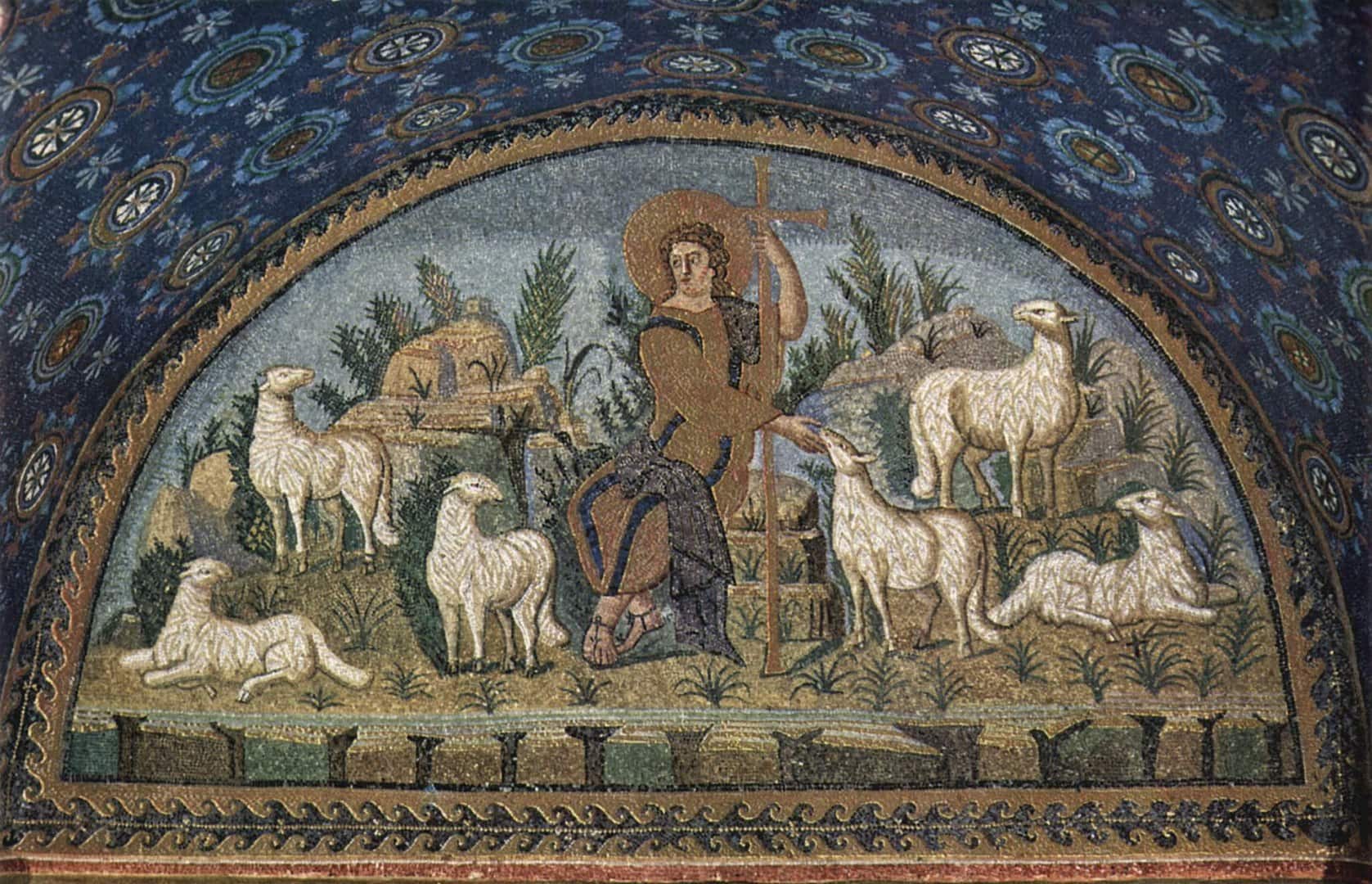
36. But when he saw the multitudes, he was moved with compassion on them, because they fainted, and were scattered abroad, as sheep having no shepherd.
37. Then saith he unto his disciples, The harvest truly is plenteous, but the labourers are few;
38. Pray ye therefore the Lord of the harvest, that he will send forth labourers into his harvest.
CHRYSOSTOM. The Lord would refute by actions the charge of the Pharisees, who said, He casteth out dæmons by the Prince of the dæmons; for a dæmon having suffered rebuke, does not return good but evil to those who have not shewn him honour. But the Lord on the other hand, when He has suffered blasphemy and contumely, not only does not punish, but does not utter a hard speech, yea He shews kindness to them that did it, as it here follows, And Jesus went about all their towns and villages. Herein He teaches us not to return accusations to them that accuse us, but kindness. For he that ceases to do good because of accusation, shews that his good has been done because of men. But if for God’s sake you do good to your fellow-servants, you will not cease from doing good whatever they do, that your reward may be greater.
JEROME. Observe how equally in villages, cities, and towns, that is to great as well as small, He preaches the Gospel, not respecting the might of the noble, but the salvation of those that believe. It follows, Teaching in their synagogues; this was His meat, going about to do the will of His Father, and saving by His teaching such as yet believed not.
GLOSS. (non occ.) He taught in their synagogues the Gospel of the Kingdom, as it follows, Preaching the Gospel of the Kingdom.
REMIGIUS. Understand, ‘of God;’ for though temporal blessings are also proclaimed, yet they are not called The Gospel. Hence the Law was not called a Gospel, because to such as kept it, it held out not heavenly, but earthly, goods.
JEROME. He first preached and taught, and then proceeded to heal sicknesses, that the works might convince those who would not believe the words. Hence it follows, Healing every sickness and every disease, for to Him alone nothing is impossible.
GLOSS. (ap. Anselm.) By disease we may understand complaints of long standing, by sickness any lesser infirmity.
REMIGIUS. It should be known that those whom He healed outwardly in their bodies, He also healed inwardly in their souls. Others cannot do this of their own power, but can by God’s grace.
CHRYSOSTOM. Nor does Christ’s goodness rest here, but He manifests His care for them, opening the bowels of His mercy towards them; whence it follows, And seeing the multitudes, he had compassion upon them.
REMIGIUS. Herein Christ shews in Himself the disposition of the good shepherd and not that of the hireling. Why He pitied them is added, Because they were troubled1, and sick1 as sheep that have no shepherd—troubled either by dæmons, or by divers sicknesses and infirmities.
GLOSS. (ap. Anselm.) Or, troubled by dæmons, and sick, that is, benumbed and unable to rise; and though they had shepherds, yet they were as though they had them not.
CHRYSOSTOM. This is an accusation against the rulers of the Jews, that being shepherds they appeared like wolves; not only not improving the multitude, but hindering their progress. For when the multitude marvelled and said, It was never so seen in Israel, these opposed themselves, saying, He casteth out dæmons by the prince of the dæmons. (vid. Ps. 102:19.)
REMIGIUS. But when the Son of God looked down from heaven upon the earth, to hear the groans of the captives, straight a great harvest began to ripen; for the multitude of the human race would never have come near to the faith, had not the Author of human salvation looked down from heaven; and it follows, Then said he unto his disciples, The harvest truly is great, but the labourers are few.
GLOSS. (ap. Anselm.) The harvest are those men who can be reaped by the preachers, and separated from the number of the damned, as grain is beaten out from the chaff that it may be laid up in granaries.
JEROME. The great harvest denotes the multitude of the people; the few labourers, the want of instructors.
REMIGIUS. For the number of the Apostles was small in comparison of so great crops to be reaped. The Lord exhorts His preachers, that is, the Apostles and their followers, that they should daily desire an increase of their number; Pray ye therefore the Lord of the harvest, that he would send forth labourers into his harvest.
CHRYSOSTOM. He privately insinuates Himself to be the Lord; for it is He Himself who is Lord of the harvest. For if He sent the Apostles to reap what they had not sown, it is manifest that He sent them not to reap the things of others, but what He had sown by the Prophets. But since the twelve Apostles are the labourers, He said, Pray ye the Lord of the harvest, that he would send labourers into his harvest; and notwithstanding He added none to their number, but rather He multiplied those twelve many times, not by increasing their numbers, but by giving them more abundant grace.
REMIGIUS. Or, He then increased their number when He chose the seventy and two, and then when many preachers were made what time the Holy Spirit descended upon the believers.
CHRYSOSTOM. He shews us that it is a great gift that one should have the power of rightly preaching, in that He tells them that they ought to pray for it. Also we are here reminded of the words of John concerning the threshing-floor, and the fan, the chaff, and the wheat.
HILARY. Figuratively; When salvation was given to the Gentiles, then all cities and towns were enlightened by the power and entrance of Christ, and escaped every former sickness and infirmity. The Lord pities the people troubled with the violence of the unclean Spirit, and sick under the burden of the Law, and having no shepherd at hand to bestow on them the guardianship of the Holy Spirit. But of that gift there was a most abundant fruit, whose plenty far exceeded the multitude of those that drank thereof; how many soever take of it, yet an inexhaustible supply remains; and because it is profitable that there should be many to minister it, He bids us ask the Lord of the harvest, that God would provide a supply of reapers for the ministration of that gift of the Holy Spirit which was made ready; for by prayer this gift is poured out upon us from God.
10:1–4
1. And when he had called unto him his twelve disciples, he gave them power against unclean spirits, to cast them out, and to heal all manner of sickness and all manner of disease.
2. Now the names of the twelve apostles are these; The first, Simon, who is called Peter, and Andrew his brother; James the son of Zebedee, and John his brother;
3. Philip, and Bartholomew; Thomas, and Matthew the Publican; James the son of Alphæus, and Lebbæus, whose surname was Thaddæus;
4. Simon the Canaanite, and Judas Iscariot, who also betrayed him.
GLOSS. (ord.) From the healing of Peter’s wife’s mother to this place there has been a continued succession of miracles; and they were done before the Sermon upon the Mount, as we know for certain from Matthew’s call, which is placed among them; for he was one of the twelve chosen to the Apostleship upon the mount. He here returns to the order of events, taking it up again at the healing of the centurion’s servant; saying, And calling to him his twelve disciples.
REMIGIUS. The Evangelist had related above that the Lord exhorted His disciples to pray the Lord of the harvest to send labourers into His vineyard; and He now seems to be fulfilling what He had exhorted them to. For the number twelve is a perfect number, being made up of the number six, which has perfection because it is formed of its own parts, one, two, three, multiplied into one another; and the number six when doubled amounts to twelve.
GLOSS. (vid. Greg. Hom. in Ev. xvii. 1.) And this doubling seems to have some reference to the two precepts of charity, or to the two Testaments.
BEDE. For the number twelve, which is made up of three into four, denotes that through the four quarters of the world they were to preach the faith of the holy Trinity.
RABANUS. (cf. Tertull. cont. Marc. iv. 13.) This number is typified by many things in the Old Testament; by the twelve sons of Jacob, by the twelve princes of the children of Israel, by the twelve running springs in Helim, by the twelve stones in Aaron’s breastplate, by the twelve loaves of the shew-bread, by the twelve spies sent by Moses, by the twelve stones of which the altar was made, by the twelve stones taken out of Jordan, by the twelve oxen which bare the brazen sea. Also in the New Testament, by the twelve stars in the bride’s crown, by the twelve foundations of Jerusalem which John saw, and her twelve gates.
CHRYSOSTOM. He makes them confident not only by calling their ministry a sending forth to the harvest, but by giving them strength for the ministry; whence it follows, He gave them power over all unclean spirits to cast them out, and to heal every sickness and every disease.
REMIGIUS. Wherein is openly shewed that the multitude were troubled not with one single kind of affliction, but with many, and this was His pity for the multitude, to give His disciples power to heal and cleanse them.
JEROME. A kind and merciful Lord and Master does not envy His servants and disciples a share in His powers. As Himself had cured every sickness and disease, He imparted the same power to His Apostles. But there is a wide difference between having and imparting, between giving and receiving. Whatever He does He does with the power of a master, whatever they do it is with confession of their own weakness, as they speak, In the name of Jesus rise and walk. (Acts 3:6.) A catalogue of the names of the Apostles is given, that all false Apostles might be excluded. The names of the twelve Apostles are these; First, Simon who is called Peter, and Andrew his brother. To arrange them in order according to their merit is His alone who searches the secrets of all hearts. But Simon is placed first, having the surname of Peter given to distinguish him from the other Simon surnamed Chananæus, from the village of Chana in Galilee where the Lord turned the water into wine.
RABANUS. (e Beda.) The Greek or Latin ‘Petrus’ is the same as the Syriac Cephas, in both tongues the word is derived from a rock; undoubtedly that of which Paul speaks, And that rock was Christ. (1 Cor. 10:4.)
REMIGIUS. (ap. Raban.) There have been some who in this name Peter, which is Greek and Latin, have sought a Hebrew interpretation, and would have it to signify, ‘Taking off the shoe,’ ‘or unloosing,’ or ‘acknowledging.’ But those that say this are contradicted by two facts. First, that the Hebrew has no letter P, but uses PH instead. Thus Pilate they call Philate. Secondly, that one of the Evangelists has used the word as an interpretation of Cephas; The Lord said, Thou shalt be called Cephas, (John 1:42.) on which the Evangelist adds, which being interpreted is Petrus. Simon is interpreted ‘obedient,’ for he obeyed the words of Andrew, and with him came to Christ, or because he obeyed the divine commands, and at one word of bidding followed the Lord. Or as some will have it, it is to be interpreted, ‘Laying aside grief,’ and, ‘hearing painful things;’ for that on the Lord’s resurrection he laid aside the grief he had for His death; and he heard sorrowful things when the Lord said to him, Another shall gird thee, and shall carry thee whither thou wouldest not. (John 21:18.)
And Andrew his brother.
CHRYSOSTOM. This is no small honour (done to Peter), He places Peter from his merit, Andrew from the nobility he had in being the brother of Peter. Mark names Andrew next after the two heads, namely, Peter and John; but this one not so; for Mark has arranged them in order of dignity.
REMIGIUS. Andrew is interpreted ‘manly;’ for as in Latin ‘virilis’ is derived from ‘vir,’ so in Greek Andrew is derived from ἀνὴρ. Rightly is he called manly, who left all and followed Christ, and manfully persevered in His commands.
JEROME. The Evangelist couples the names throughout in pairs. So he puts together Peter and Andrew, brothers not so much according to the flesh as in spirit; James and John who left their father after the flesh to follow their true Father; James the son of Zebedee and John his brother. He calls him the son of Zebedee, to distinguish him from the other James the son of Alphæus.
CHRYSOSTOM. Observe that he does not place them according to their dignity; for to me John would seem to be greater not than others only, but even than his brother.
REMIGIUS. (e Beda.) James is interpreted ‘The supplanter,’ or ‘that supplanteth;’ for he not only supplanted the vices of the flesh, but even contemned the same flesh when Herod put him to death. John is interpreted ‘The grace of God,’ because he deserved before all to be loved by the Lord; whence also in the favour of His especial love, he leaned at supper in the Lord’s bosom.
Philip and Bartholomew. (e Beda.) Philip is interpreted, ‘The mouth of a lamp,’ or ‘of lamps,’ because when he had been enlightened by the Lord, he straightway sought to communicate the light to his brother by the means of his mouth. Bartholomew is a Syriac, not a Hebrew, name, and is interpreted ‘The son of him that raiseth watera,’ that is, of Christ, who raises the hearts of His preachers from earthly to heavenly things, and hangs them there, that the more they penetrate heavenly things, the more they should steep and inebriate the hearts of their hearers with the droppings of holy preaching.
Thomas, and Matthew the Publican.
JEROME. The other Evangelists in this pair of names put Matthew before Thomas; and do not add, the Publican, that they should not seem to throw scorn upon the Evangelist by bringing to mind his former life. But writing of himself he both puts Thomas first in the pair, and styles himself the Publican; because, where sin hath abounded, there grace shall much more abound. (Rom. 5:20.)
REMIGIUS. (e Beda.) Thomas is interpreted ‘an abyss,’ or ‘a twin,’ which in Greek is Didymus. Rightly is Didymus interpreted an abyss, for the longer he doubted the more deeply did he believe the effect of the Lord’s passion, and the mystery of His Divinity, which forced him to cry, My Lord and my God. (John 20:28.) Matthew is interpreted ‘given,’ because by the Lord’s bounty he was made an Evangelist of a Publican.
James the son of Alphæus, and Thaddæus.
RABANUS. (e Beda.) This James is he who in the Gospels, and also in the Epistle to the Galatians, is called the Lord’s brother. For Mary the wife of Alphæus was the sister of Mary the mother of the Lord; John the Evangelist calls her Mary the wife of Cleophas, probably because Cleophas and Alphæus were the same person. Or Mary herself on the death of Alphæus after the birth of James married Cleophas.
REMIGIUS. It is well said, the son of Alphæus, that is, ‘of the just,’ or ‘the learned;’ for he not only overthrew the vices of the flesh, but also despised all care of the same. And of what he was worthy the Apostles are witness, who ordained him Bishop of the Church of Jerusalemb. And ecclesiastical history (Hegesippus. ap. Euseb. ii. 23.) among other things tells of him, that he never ate flesh, drunk neither wine nor strong drink, abstained from the bath and linen garments, and night and day prayed on his bended knees. And so great was his merit, that he was called by all men, ‘The just.’ Thaddæus is the same whom Luke calls Jude of James, (that is, the brother of James,) whose Epistle is read in the Church, in which he calls himself the brother of James.
AUGUSTINE. (De Cons. Ev. ii. 30.) Some copies have Lebbæus; but whoever prevented the same man from having two, or even three different names?
REMIGIUS. Jude is interpreted ‘having confessed,’ because he confessed the Son of God.
RABANUS. Thaddæus or Lebbæus is interpreted ‘a little heart,’ that is, a heart-worshipper.
Simon Chananæus, and Judas Scarioth, who also betrayed him.
JEROME. Simon Chananæus is the same who in the other Evangelist is called Zelotes. Chana signifies ‘Zeal.’ Judas is named Scarioth, either from the town in which he was born, or from the tribe of Issachar, a prophetic omen of his sin; for Issachar means ‘a booty,’ thus signifying the reward of the betrayer.
REMIGIUS. Scarioth is interpreted ‘The memory of the Lord,’ because he followed the Lord; or ‘The memorial of death,’ because he plotted in his heart how he might betray the Lord to death; or ‘strangling,’ because he went and hanged himself. It should be known that there are two disciples of this name, who are types of all Christians; Jude the brother of James, of such as persevere in the confession of the faith; Jude Scarioth of such as leave the faith; and turn back again.
GLOSS. (non occ.) They are named two and two to express their union as yoke-fellows.
AUGUSTINE. (De Civ. Dei, xviii. 49.) These therefore He chose for His disciples, whom also He named Apostles, humbly born without honour, without learning, that whatever they should do that was great, it was He that should be in them and should do it. He had among them one that was evil, whom He should use in the accomplishment of His Passion, and who should be an example to His Church of suffering evil men.
AMBROSE. (in Luc. 6.) He was not chosen among the Apostles unwittingly; for that truth is great, which cannot be harmed even by having an adversary in one of its own ministers.
RABANUS. Also He willed to be betrayed by a disciple, that you when betrayed by your intimate might bear patiently that your judgment has erred, that your favours have been thrown away.
10:5–8
5. These twelve Jesus sent forth, and commanded them, saying, Go not into the way of the Gentiles, and into any city of the Samaritans enter ye not:
6. But go rather to the lost sheep of the house of Israel.
7. And as ye go, preach, saying, The kingdom of heaven is at hand.
8. Heal the sick, cleanse the lepers, raise the dead, cast out devils: freely ye have received, freely give.
GLOSS. (non occ.) Because the manifestation of the Spirit, as the Apostle speaks, is given for the profit of the Church, after bestowing His power on the Apostles, He sends them that they may exercise this power for the good of others; These twelve Jesus sent forth.
CHRYSOSTOM. Observe the propriety of the time in which they are sent. After they had seen the dead raised, the sea rebuked, and other like wonders, and had had both in word and deed sufficient proof of His excellent power, then He sends them.
GLOSS. (non occ.) When He sends them, He teaches them whither they should go, what they should preach, and what they should do. And first, whither they should go; Giving them commandment, and saying, Go ye not into the way of the Gentiles, and into any city of the Samaritans enter ye not; hut go ye rather to the lost sheep of the house of Israel.
JEROME. This passage does not contradict the command which He gave afterwards, Go and teach all nations; for this was before His resurrection, that was after. And it behoved the coming of Christ to be preached to the Jews first, that they might not have any just plea, or say that they were rejected of the Lord, who sent the Apostles to the Gentiles and Samaritans.
CHRYSOSTOM. Also they were sent to the Jews first, in order that being trained in Judæa, as in a palæstra, they might enter on the arena of the world to contend; thus He taught them like weak nestlings to fly.
GREGORY. (Hom. in Ev. iv. 1.) Or He would be first preached to Judæa and afterwards to the Gentiles, in order that the preaching of the Redeemer should seem to seek out foreign lands only because it had been rejected in His own. There were also at that time some among the Jews who should be called, and among the Gentiles some who were not to be called, as being unworthy of being renewed to life, and yet not deserving of the aggravated punishment which would ensue upon their rejection of the Apostles’ preaching.
HILARY. The promulgation of the Law deserved also the first preaching of the Gospel; and Israel was to have less excuse for its crime, as it had experienced more care in being warned.
CHRYSOSTOM. Also that they should not suppose that they were hated of Christ because they had reviled Him, and branded Him as demoniac, He sought first their cure, and withholding His disciples from all other nations, He sent this people physicians and teachers; and not only forbid them to preach to any others before the Jews, but would not that they should so much as approach the way that led to the Gentiles; Go not into the way of the Gentiles. And because the Samaritans, though more readily disposed to be converted to the faith, were yet at enmity with the Jews, He would not suffer the Samaritans to be preached to before the Jews.
GLOSS. (ap. Anselm.) The Samaritans were Gentiles who had been settled in the land of Israel by the king of Assyria after the captivity which he made. They had been driven by many terrors to turn to Judaism, and had received circumcision and the five books of Moses, but renouncing every thing else; hence there was no communication between the Jews and the Samaritans.
CHRYSOSTOM. From these then He diverts his disciples, and sends them to the children of Israel, whom He calls perishing sheep, not straying; in every way contriving an apology for them, and drawing them to Himself.
HILARY. Though they are here called sheep, yet they raged against Christ with the tongues and throats of wolves and vipers.
JEROME. Figuratively; Herein we who bear the name of Christ are commanded not to walk in the way of the Gentiles, or the error of the heretics, but as we are separate in religion, that we be also separate in our life.
GLOSS. (non occ.) Having told them to whom they should go, He now introduces what they should preach; Go and preach, saying, The kingdom of heaven is at hand.
RABANUS. The kingdom of heaven is here said to draw nigh by the faith in the unseen Creator which is bestowed upon us, not by any movement of the visible elements. The saints are rightly denoted by the heavens, because they contain God by faith, and love Him with affection.
CHRYSOSTOM. Behold the greatness of their ministry, behold the dignity of the Apostles. They are not to preach of any thing that can be an object of sense, as Moses and the Prophets did; but things new and unlooked for; those preached earthly goods, but these the kingdom of heaven and all the goods that are there.
GREGORY. (ubi sup.) Miracles also were granted to the holy preachers, that the power they should shew might be a pledge of the truth of their words, and they who preached new things should also do new things; wherefore it follows, Heal the sick, raise the dead, cleanse the lepers, cast out dæmons.
JEROME. Lest peasants untaught and illiterate, without the graces of speech, should obtain credit with none when they announced the kingdom of heaven, He gives them power to do the things above mentioned, that the greatness of the miracles might approve the greatness of their promises.
HILARY. The exercise of the Lord’s power is wholly entrusted to the Apostles, that they who were formed in the image of Adam, and the likeness of God, should now obtain the perfect image of Christ; and whatever evil Satan had introduced into the body of Adam, this they should now repair by communion with the Lord’s power.
GREGORY. (Hom. in Ev. xxix. 4.) These signs were necessary in the beginning of the Church; the faith of the believers must be fed with miracles, that it might grow.
CHRYSOSTOM. But afterwards they ceased when a reverence for the faith was universally established. Or, if they were continued at all, they were few and seldom; for it is usual with God to do such things when evil is increased, then He shews forth His power.
GREGORY. (ubi sup.) The Holy Church daily doth spiritually, what it then did materially by the Apostles; yea, things far greater, inasmuch as she raises and cures souls and not bodies.
REMIGIUS. The sick are the slothful who have not strength to live well; the lepers are the unclean in sin and carnal delights; the dæmoniacs are they that are given up under the power of the Devil.
JEROME. And because spiritual gifts are more lightly esteemed when money is made the means of obtaining them, He adds a condemnation of avarice; Freely ye have received, freely give; I your Master and Lord have imparted these to you without price, do you therefore give them to others in like manner, that the free grace of the Gospel be not corrupted.
GLOSS. (non occ.) This He says, that Judas who had the bag might not use the above power for getting money; a plain condemnation of the abomination of the simoniacal heresy.
GREGORY. (Hom. in Ev. iv. 4.) For He knew before that there would be some that would turn the gift of the Spirit which they had received into merchandize, and pervert the power of miracles into an instrument of their covetousness.
CHRYSOSTOM. Observe how He is as careful that they should be upright in moral virtue, as that they should have the miraculous powers, shewing that miracles without these are nought. Freely ye have received, seems a check upon their pride; freely give, a command to keep themselves pure from filthy lucre. Or, that what they should do might not be thought to be their own benevolence, He says, Freely ye have received; as much as to say; Ye bestow nothing of your own on those ye relieve; for ye have not received these things for money, nor for wages of labour; as ye have received them, so give to others; for indeed it is not possible to receive a price equal to their value.
Copyright ©1999-2018 e-Catholic2000.com
From: Matthew 9:35—10:1, 5, 6-8The Need for Good Shepherds
---------------------------
[35] And Jesus went about all the cities and villages teaching in their synagogues and preaching the Gospel of the Kingdom, and healing every disease and every infirmity. [36] When He saw the crowds, He had compassion for them, because they were harassed and helpless, like sheep without a shepherd. [37] Then He said to His disciples, "The harvest is plentiful, but the laborers are few; [38] pray therefore the Lord of harvest to send out laborers into His harvest."
The Calling and First Mission of the Apostles
---------------------------------------------
[1] And He called to Him His twelve disciples and gave them authority over unclean spirits, to cast them out, and to heal every disease and every infirmity.
[5] These twelve Jesus sent out, charging them, "Go nowhere among the Gentiles, and enter no town of the Samaritans, [6] but go rather to the lost sheep of the house of Israel. [7] And preach as you go, saying, `The Kingdom of Heaven is at hand.' [8] Heal the sick, raise the dead, cleanse lepers, cast out demons. You received without pay, give without pay."
***********************************************************************
Commentary:
35. The Second Vatican Council uses this passage when teaching about the message of Christian charity which the Church should always be spreading: "Christian charity is extended to all without distinction of race, social condition or religion, and seeks neither gain nor gratitude. Just as God loves us with a gratuitous love, so too the faithful, in their charity, should be concerned for mankind, loving it with that same love with which God sought man. As Christ went about all the towns and villages healing every sickness and infirmity, as a sign that the Kingdom of God had come, so the Church, through its children, joins itself with men of every condition, but especially with the poor and afflicted, and willingly spends herself for them" ("Ad Gentes", 12).
36. "He had compassion for them": the Greek verb is very expressive; it means "He was deeply moved". Jesus was moved when He saw the people, because their pastors, instead of guiding them and tending them, led them astray, behaving more like wolves than genuine shepherds of their flock. Jesus sees the prophecy of Ezekiel 34 as now being fulfilled; in that passage God, through the prophet, upbraids the false shepherds of Israel and promises to send them the Messiah to be their new leader.
"If we were consistent with our faith when we looked around us and contemplated the world and its history, we would be unable to avoid feeling in our own hearts the same sentiments that filled the heart of our Lord" (St J. Escriva, "Christ Is Passing By", 133). Reflection on the spiritual needs of the world should lead us to be tirelessly apostolic.
37-38. After contemplating the crowds neglected by their shepherds, Jesus uses the image of the harvest to show us that that same crowd is ready to receive the effects of Redemption: "I tell you, lift up your eyes, and see now the fields are already white for harvest" (John 4:35). The field of the Jewish people cultivated by the prophets—most recently by John the Baptist--is full of ripe wheat. In farm work, the harvest is lost if the farmer does not reap at the right time; down the centuries the Church feels a similar need to be out harvesting because there is a big harvest ready to be won.
However, as in the time of Jesus, there is a shortage of laborers. Our Lord tells us how to deal with this: we should pray to God, the Lord of harvest, to send the necessary laborers. If a Christian prays hard, it is difficult to imagine his not feeling urged to play his part in this apostolate. In obeying this commandment to pray for laborers, we should pray especially for there to be no lack of shepherds, who will be able to equip others with the necessary means of sanctification needed to back up the apostolate.
In this connection [Pope] Paul VI reminds us: "the responsibility for spreading the Gospel that saves belongs to everyone--to all who have received it! The missionary duty concerns the whole body of the Church; in different ways and to different degrees, it is true, but we must all of us be united in carrying out this duty. Now let the conscience of every believer ask himself: Have I carried out my missionary duty? Prayer for the Missions is the first way of fulfilling this duty" ("Angelus Address", 23 October 1977).
1-4. Jesus calls His twelve Apostles after recommending to them to pray to the Lord to send laborers into His harvest (cf. Matthew 9:38). Christians' apostolic action should always, then, be preceded and accompanied by a life of constant prayer: apostolate is a divine affair, not a merely human one. Our Lord starts His Church by calling twelve men to be, as it were, twelve patriarchs of the new people of God, the Church. This new people is established not by physical but by spiritual generation. The names of those Apostles are specifically mentioned here. They were not scholarly, powerful or important people: they were average, ordinary people who responded faithfully to the grace of their calling--all of them, that is, except Judas Iscariot. Even before His death and resurrection Jesus confers on them the power to cast out unclean spirits and cure illnesses--as an earnest of and as training for the saving mission which He will entrust to them.
The Church reveres these first Christians in a very special way and is proud to carry on their supernatural mission, and to be faithful to the witness they bore to the teaching of Christ. The true Church is absent unless there is uninterrupted apostolic succession and identification with the spirit which the Apostles made their own.
"Apostle": this word means "sent"; Jesus sent them out to preach His Kingdom and pass on His teaching.
The Second Vatican Council, in line with Vatican I, "confesses" and "declares" that the Church has a hierarchical structure: "The Lord Jesus, having prayed at length to the Father, called to Himself those whom He willed and appointed twelve to be with Him, whom He might send to preach the Kingdom of God (cf. Mark 3:13-19: Matthew 10:1-10). These Apostles (cf. Luke 6:13) He constituted in the form of a college or permanent assembly, at the head of which He placed Peter, chosen from among them (cf. John 21:15-17). He sent them first of all to the children of Israel and then to all peoples (cf. Romans 1:16), so that, sharing in His power, they might make all peoples His disciples and sanctify and govern them (cf. Matthew 28:16-20; Mark 16:15; Luke 24:45-48; John 20:21-23) and thus spread the Church and, administering it under the guidance of the Lord, shepherd it all days until the end of the world (cf. Matthew 28:28)" ("Lumen Gentium", 19).
1. In this chapter St. Matthew describes how Jesus, with a view to the spreading of the Kingdom of God which He inaugurates, decides to establish a Church, which He does by giving special powers and training to these twelve men who are its seed.
5-15. After revealing His intention to found the Church by choosing the Twelve (verses 1-4), in the present passage He shows that He intends to start training these first Apostles. In other words, from early on in His public ministry He began to lay the foundations of His Church.
Everyone needs doctrinal and apostolic training to follow his Christian calling. The Church has a duty to teach, and the faithful have a parallel duty to make that teaching their own. Therefore, every Christian should avail of the facilities for training which the Church offers him--which will vary according to each person's circumstances.
5-6. In His plan of salvation God gave certain promises (to Abraham and the patriarchs), a Covenant and a Law (the Law of Moses), and sent the prophets. The Messiah would be born into this chosen people, which explains why the Messiah and the Kingdom of God were to be preached to the house of Israel before being preached to the Gentiles. Therefore, in their early apprenticeship, Jesus restricts the Apostles' area of activity to the Jews, without this taking from the world-wide scope of the Church's mission. As we will see, much later on He charges them to "go and make disciples of all nations" (Matthew 28:19); "Go into all the world and preach the Gospel to the whole creation" (Mark 16:15). The Apostles also, in the early days of the spread of the Church, usually sought out the Jewish community in any new city they entered, and preached first to them (cf. Acts 13:46).
7-8. Previously, the prophets, when speaking of the messianic times, had used imagery suited to the people's spiritual immaturity. Now, Jesus, in sending His Apostles to proclaim that the promised Kingdom of God is imminent, lays stress on its spiritual dimension. The powers mentioned in verse 8 are the very sign of the Kingdom of God or the reign of the Messiah proclaimed by the prophets. At first (chapters 8 and 9) it is Jesus who exercises these messianic powers; now He gives them to His disciples as proof that His mission is divine (Isaiah 35:5-6; 40:9; 52:7; 61:1).
Source: Daily Word for Reflection—Navarre Bible Commentary