Posted on 08/28/2021 10:22:07 PM PDT by Cronos
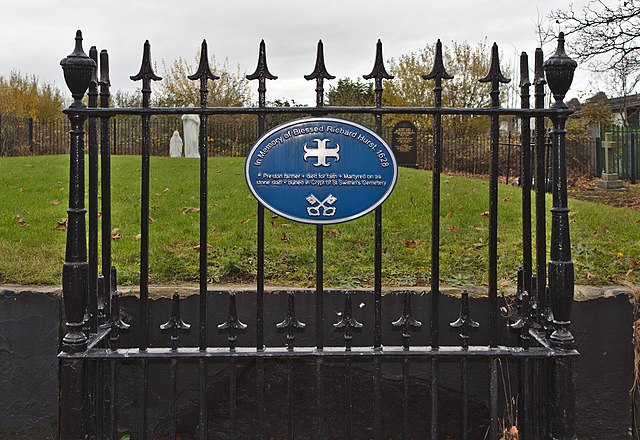
Memorial of Bl. Richard Herst, English martyr![]() St. Wilfrid's church, Preston, Lancashire, UK
Readings at MassLiturgical Colour: Green
Observe these laws and customs, that you may have lifeMoses said to the people: ‘Now, Israel, take notice of the laws and customs that I teach you today, and observe them, that you may have life and may enter and take possession of the land that the Lord the God of your fathers is giving you. You must add nothing to what I command you, and take nothing from it, but keep the commandments of the Lord your God just as I lay them down for you. Keep them, observe them, and they will demonstrate to the peoples your wisdom and understanding. When they come to know of all these laws they will exclaim, “No other people is as wise and prudent as this great nation.” And indeed, what great nation is there that has its gods so near as the Lord our God is to us whenever we call to him? And what great nation is there that has laws and customs to match this whole Law that I put before you today?’
The just will live in the presence of the Lord. Lord, who shall dwell on your holy mountain? He who walks without fault; he who acts with justice and speaks the truth from his heart; he who does not slander with his tongue. The just will live in the presence of the Lord. He who does no wrong to his brother, who casts no slur on his neighbour, who holds the godless in disdain, but honours those who fear the Lord. The just will live in the presence of the Lord. He who keeps his pledge, come what may; who takes no interest on a loan and accepts no bribes against the innocent. Such a man will stand firm for ever. The just will live in the presence of the Lord.
Accept and submit to the wordIt is all that is good, everything that is perfect, which is given us from above; it comes down from the Father of all light; with him there is no such thing as alteration, no shadow of a change. By his own choice he made us his children by the message of the truth so that we should be a sort of first-fruits of all that he had created. Accept and submit to the word which has been planted in you and can save your souls. But you must do what the word tells you, and not just listen to it and deceive yourselves. Pure, unspoilt religion, in the eyes of God our Father is this: coming to the help of orphans and widows when they need it, and keeping oneself uncontaminated by the world.
Alleluia, alleluia! Your words are spirit, Lord, and they are life; you have the message of eternal life. Alleluia!
Alleluia, alleluia! By his own choice the Father made us his children by the message of the truth, so that we should be a sort of first-fruits of all that he created. Alleluia!
You put aside the commandment of God, to cling to human traditionsThe Pharisees and some of the scribes who had come from Jerusalem gathered round Jesus, and they noticed that some of his disciples were eating with unclean hands, that is, without washing them. For the Pharisees, and the Jews in general, follow the tradition of the elders and never eat without washing their arms as far as the elbow; and on returning from the market place they never eat without first sprinkling themselves. There are also many other observances which have been handed down to them concerning the washing of cups and pots and bronze dishes. So these Pharisees and scribes asked him, ‘Why do your disciples not respect the tradition of the elders but eat their food with unclean hands?’ He answered, ‘It was of you hypocrites that Isaiah so rightly prophesied in this passage of scripture: This people honours me only with lip-service, while their hearts are far from me. The worship they offer me is worthless, the doctrines they teach are only human regulations. You put aside the commandment of God to cling to human traditions.’ He called the people to him again and said, ‘Listen to me, all of you, and understand. Nothing that goes into a man from outside can make him unclean; it is the things that come out of a man that make him unclean. For it is from within, from men’s hearts, that evil intentions emerge: fornication, theft, murder, adultery, avarice, malice, deceit, indecency, envy, slander, pride, folly. All these evil things come from within and make a man unclean.’ The readings on this page are from the Jerusalem Bible, which is used at Mass in most of the English-speaking world. The New American Bible readings, which are used at Mass in the United States, are available in the Universalis apps, programs and downloads. |
catholic,prayer,ordinarytime,mk7

1. Then came together unto him the Pharisees, and certain of the Scribes, which came from Jerusalem.
2. And when they saw some of his disciples eat bread with defiled, that is to say, with unwashen, hands, they found fault.
3. For the Pharisees, and all the Jews, except they wash their hands oft, eat not, holding the tradition of the elders.
4. And when they come from the market, except they wash, they eat not. And many other things there be, which they have received to hold, as the washing of cups, and pots, brasen vessels, and of tables.
5. Then the Pharisees and Scribes asked him, Why walk not thy disciples according to the tradition of the elders, but eat bread with unwashen hands?
6. He answered and said unto them, Well hath Esaias prophesied of you hypocrites, as it is written, This people honoureth me with their lips, but their heart is far from me.
7. Howbeit in vain do they worship me, teaching for doctrines the commandments of men.
8. For laying aside the commandment of God, ye hold the tradition of men, as the washing of pots and cups: and many other such like things ye do.
9. And he said unto them, Full well ye reject the commandment of God, that ye may keep your own tradition.
10. For Moses said, Honour thy father and thy mother; and, Whoso curseth father or mother, let him die the death:
11. But ye say, If a man shall say to his father or mother, It is Corban, that is to say, a gift, by whatsoever thou mightest be profited by me; he shall be free.
12. And ye suffer him no more to do ought for his father or his mother;
13. Making the word of God of none effect through your tradition, which ye have delivered: and many such like things do ye.
BEDE. (in Marc. 2, 29) The people of the land of Gennesareth, who seemed to be unlearned men, not only come themselves, but also bring their sick to the Lord, that they may but succeed in touching the hem of His garment. But the Pharisees and Scribes, who ought to have been the teachers of the people, run together to the Lord, not to seek for healing, but to move captious questions; wherefore it is said, Then there came together unto him the Pharisees and cerlain of the Scribes, coming from Jerusalem; and when they saw some of his disciples eat bread with common, that is, with unwashen hands, they found fault.
THEOPHYLACT. For the disciples of the Lord, who were taught only the practice of virtue, used to eat in a simple way, without washing their hands; but the Pharisees, wishing to find an occasion of blame against them, took it up; they did not indeed blame them as transgressors of the law, but for transgressing the traditions of the elders. Wherefore it goes on: For the Pharisees and all the Jews, except they wash their hands oft, eat not, holding the tradition of the elders.
BEDE. (ubi sup.) For taking the spiritual words of the Prophets in a carnal sense, they observed, by washing the body alone, commandments which concerned the chastening of the heart and deeds, saying Wash you, make you clean; (Isa. 1:16) and again, Be ye clean that bear the vessels of the Lord. (Isa. 52:11) It is therefore a superstitious human tradition, that men who are clean already, should wash oftener because they eat bread, and that they should not eat on leaving the market, without washing. But it is necessary for those who desire to partake of the bread which comes down from heaven, often to cleanse their evil deeds by alms, by tears, and the other fruits of righteousness. It is also necessary for a man to wash thoroughly away the pollutions which he has contracted from the cares of temporal business, by being afterwards intent on good thoughts and works. In vain, however, do the Jews wash their hands, and cleanse themselves after the market, so long as they refuse to be washed in the font of the Saviour; in vain do they observe the washing of their vessels, who neglect to wash away the filthy sins of their bodies and of their hearts. It goes on: Then the Scribes and Pharisees asked him, Why walk not thy disciples after the tradition of the elders, but eat bread with common hands?
JEROME. (in Matt. 15) Wonderful is the folly of the Pharisees and Scribes; they accuse the Son of God, because He keeps not the traditions and precepts of men. But common is here put for unclean; for the people of the Jews, boasting that they were the portion of God, called those meats common, which all made use of.
PSEUDO-JEROME. He beats back the vain words of the Pharisees with His arguments, as men drive back dogs with weapons, by interpreting Moses and Isaiah, that we too by the word of Scripture may conquer the heretics, who oppose us; wherefore it goes on: (Isa. 29:13) Well hath Esaias prophesied of you hypocrites; as it is written, This people honoureth me with their lips, but their heart is far from me.
PSEUDO-CHRYSOSTOM. (Vict. Ant. e Cat. in Marc.) For since they unjustly accused the disciples not of transgressing the law, but the commands of the elders, He sharply confounds them, calling them hypocrites, as looking with reverence upon what was not worthy of it. He adds, however, the words of Isaiah the prophet, as spoken of them; as though He would say, As those men, of whom it is said, that they honour God with their lips, whilst their heart is far from him, in vain pretend to observe the dictates of piety, whilst they honour the doctrines of men, so ye also neglect your soul, of which ye should take care, and blame those who live justly.
PSEUDO-JEROME. But Pharisaical tradition, as to tables and vessels, is to be cut off, and cast away. For they often make the commands of God yield to the traditions of men; wherefore it continues, For laying aside the commandments of God, ye hold to the traditions of men, as the washing of pots and cups.
PSEUDO-CHRYSOSTOM. (Vict. Ant. e Cat. in Marc.) Moreover, to convict them of neglecting the reverence due to God, for the sake of the tradition of the elders, which was opposed to the Holy Scriptures, He subjoins, For Moses said, Honour thy father and thy mother; and, Whoso curseth father or mother, let him die the death. (Exod. 21:17.)
BEDE. (ubi sup.) The sense of the word honour in Scripture is not so much the saluting and paying court to men, as alms-giving, and bestowing gifts; honour, says the Apostle, widows who are widows indeed. (1 Tim. 5:3.)
PSEUDO-CHRYSOSTOM. (Vict. Ant. e Cat. in Marc.) Notwithstanding the existence of such a divine law, and the1 threats against such as break it, ye lightly transgress the commandment of God, observing the traditions of the Elders. Wherefore there follows, But ye say, If a man shall say to his father or mother, It is Corban, that is to say, a gift, by whatsoever thou mightest be profited by me; understand, he will be freed from the observation of the foregoing command. Wherefore it continues, And ye suffer him no more to do ought for his father or his mother.
THEOPHYLACT. For the Pharisees, wishing to devour the offerings, instructed sons, when their parents asked for some of their property, to answer them, what thou hast asked of me is corban, that is, a gift, I have already offered it up to the Lord; thus the parents would not require it, as being offered up to the Lord,z (and in that way profitable for their own salvation). Thus they deceived the sons into neglecting their parents, whilst they themselves devoured the offerings; with this therefore the Lord reproaches them, as transgressing the law of God for the sake of gain. Wherefore it goes on, Making the word of God of none effect through your traditions, which ye have delivered: and many such like things do ye; transgressing, that is, the commands of God, that ye may observe the traditions of men.
PSEUDO-CHRYSOSTOM. (Vict. Ant. e Cat. in Marc.) Or else it may be said, that the Pharisees taught young persons, that if a man offered a gift in expiation of the injury done to his father or mother, he was free from sin, as having given to God the gifts which are owed to a parent; and in saying this, they did not allow parents to be honoured.
BEDE. (ubi sup. v. Hier. in Matt. 15. et Orig. in Matt. Tom. xi. 9) The passage may in a few words have this sense, Every gift which I have to make, will go to do you good; for ye compel children, it is meant, to say to their parents, that gift which I was going to offer to God, I expend on feeding you, and does you good, oh father and mother, speaking this ironically. Thus they would be afraid to accept what had been given into the hands of God, and might prefer a life of poverty to living on consecrated property.
PSEUDO-JEROME. Mystically, again, the disciples eating with unwashed hands signifies the future fellowship of the Gentiles with the Apostles. The cleansing and washing of the Pharisees is barren; but the fellowship of the Apostles, though without washing, has stretched out its branches as far as the sea.
7:14–23
14. And when he had called all the people unto him, he said unto them, Hearken unto me every one of you, and understand:
15. There is nothing from without a man, that entering into him can defile him: but the things which come out of him, those are they that defile the man.
16. If any man have ears to hear, let him hear.
17. And when he was entered into the house from the people, his disciples asked him concerning the parable.
18. And he saith unto them, Are ye so without understanding also? Do ye not perceive, that whatsoever thing from without entereth into the man, it cannot defile him;
19. Because it entereth not into his heart, but into the belly, and goeth out into the draught, purging all meats?
20. And he said, That which cometh out of the man, that defileth the man.
21. For from within, out of the heart of men, proceed evil thoughts, adulteries, fornications, murders,
22. Thefts, covetousness, wickedness, deceit, lasciviousness, an evil eye, blasphemy, pride, foolishness:
23. All these evil things come from within, and defile the man.
PSEUDO-CHRYSOSTOM. (Vict. Ant. e Cat. in Marc.) The Jews regard and murmur about only the bodily purification of the law; our Lord wishes to bring in the contrary. Wherefore it is said, And when he had called all the people unto him, he said unto them, Hearken unto me every one, and understand; there is nothing from without a man, that entering into him can defile him, but the things which come out of a man, those are they which defile a man; that is, which make him unclean. The things of Christ have relation to the inner man, but those which are of the law are visible and external, to which, as being bodily, the cross of Christ was shortly to put an end.
THEOPHYLACT. But the intention of the Lord in saying this was to teach men, that the observing of meats, which the law commands, should not be taken in a carnal sense, and from this He began to unfold to them the intent of the law.
PSEUDO-CHRYSOSTOM. (Vict. Ant. e Cat. in Marc.) Again He subjoins, If any man have ears to hear, let him hear. For He had not clearly shewn them, what those things are which proceed out of a man, and defile a man; and on account of this saying, the Apostles thought that the foregoing discourse of the Lord implied some other deep thing; wherefore there follows: And when he was entered into the house from the people, his disciples asked him concerning the parable; they called it parable, because it was not clear.
THEOPHYLACT. The Lord begins by chiding them, wherefore there follows, Are ye so without understanding also?
BEDE. (ubi sup.) For that man is a faulty hearer who considers what is obscure to be a clear speech, or what is clear to be obscurely spoken.
THEOPHYLACT. Then the Lord shews them what was hidden, saying, Do ye not perceive, that whatsoever thing from without entereth into the man, it cannot make him common?
BEDE. (ubi sup.) For the Jews, boasting themselves to be the portion of God, call common those meats which all men use, as shellfish, hares, and animals of that sort. Not even however what is offered to idols is unclean, in as far as it is food and God’s creature; it is the invocation of devils which makes it unclean; and He adds the cause of it, saying, Because it entereth not into his heart. The principal seat of the soul according to Plato is the brain, but according to Christ, it is in the heart.
GLOSS.a It says therefore into his heart, that is, into his mind, which is the principal part of his soul, on which his whole life depends; wherefore it is necessary, that according to the state of his heart a man should be called clean or unclean, and thus whatsoever does not reach the soul, cannot bring pollution to the man. Meats therefore, since they do not reach the soul, cannot in their own nature defile a man; but an inordinate use of meats, which proceeds from a want of order in the mind, makes men unclean. But that meats cannot reach the mind, He shews by that which He adds, saying, But into the belly, and goeth out into the draught, purging all meats. This however He says, without referring to what remains from the food in the body, for that which is necessary for the nourishment and growth of the body remains. But that which is superfluous goes out, and thus as it were purges the nourishment, which remains.
AUGUSTINE. (Lib. oct. Quæs. 73) For some things are joined to others in such a way as both to change and be changed, just as food, losing its former appearance, is both itself turned into our body, and we too are changed, and our strength is refreshed by it.b Further, a most subtle liquid, after the food has been prepared and digested in our veins, and other arteries, by some hidden channels, called from a Greek word, pores, passes through us, and goes into the draught.
BEDE. Thus then it is not meat that makes men unclean, but wickedness, which works in us the passions which come from within; wherefore it goes on: And he said, That which cometh out of a man, that defileth a man.
GLOSS. (non occ.) The meaning of which He points out, when He subjoins, for from within, out of the heart of men, proceed evil thoughts. And thus it appears that evil thoughts belong to the mind, which is here called the heart, and according to which a man is called good or bad, clean or unclean.
BEDE. (ubi sup.) From this passage are condemned those men who suppose that thoughts are put into them by the devil, and do not arise from their own evil will. The devil may excite and help on evil thoughts, he cannot be their author.
GLOSS. (non in Gloss. sed v. de Lyra in loc.) From evil thoughts, however, evil actions proceed to greater lengths, concerning which it is added, adulteries, that is, acts which consist in the violation of another man’s bed; fornications, which are unlawful connexions between persons, not bound by marriage; murders, by which hurt is inflicted on the person of one’s neighbour; thefts, by which his goods are taken from him; covetousness, by which things are unjustly kept; wickedness, which consists in calumniating others; deceit, in overreaching them; lasciviousness, to which belongs any corruption of mind or body.
THEOPHYLACT. An evil eye, that is, hatred and flattery, for he who hates turns an evil and envious eye on him whom he hates, and a flatterer, looking askance at his neighbour’s goods, leads him into evil; blasphemies, that is, faults committed against God; pride, that is, contempt of God, when a man ascribes the good, which he does, not to God, but to his own virtue; foolishness, that is, an injury against one’s neighbour.
GLOSS. (non occ. sed v. Summa 2, 2. Qu. 46. 1. et 1, 2. Qu. 1, 1) Or, foolishness consists in wrong thoughts concerning God; for it is opposed to wisdom, which is the knowledge of divine things. It goes on, All these evil things come from within, and defile the man. For whatsoever is in the power of a man, is imputed to him as a fault, because all such things proceed from the interior will, by which man is master of his own actions.
Please FReepmail me/annalex to get on/off the Alleluia Ping List.
Ad Majorem Dei Gloriam (To the Greater Glory of God)
From: Deuteronomy 4:1-2, 5-9
Faithfulness to the Law: God's Closeness to His People
------------------------------------------------------
(Moses said to the people:) [1] "And now, 0 Israel, give heed to the statutes and the ordinances which I teach you, and do them; that you may live, and go in and take possession of the land which the LORD, the God of your fathers, gives you. [2] You shall not add to the word which I command you, nor take from it; that you may keep the commandments of the LORD your God which I command you.
[5] Behold, I have taught you statutes and ordinances, as the Lord my God commanded me, that you should do them in the land which you are entering to take possession of it. [6] Keep them and do them; for that will be your wisdom and your understanding in the sight of the peoples, who, when they hear all these statutes will say, 'Surely this great nation is a wise and understanding people.' [7] For what great nation is there that has a god so near to it as the LORD our God is to us, whenever we call upon him? [8] And what great nation is there, that has statutes and ordinances so righteous as all this law which I set before you this day?
The Revelation at Horeb
-----------------------
[9] "Only take heed, and keep your soul diligently, lest you forget the things which your eyes have seen, and lest they depart from your heart all the days of your life; make them known to your children and your children's children."
***********************************************************************
Commentary:
4:1-8. Having recalled the main events in Israel's journey from Sinai-Horeb onwards, in which God's special providence was evident, the text now stresses the privileged position of the Hebrew people, chosen as they are by God from among all the nations of the earth, and enabled to draw near to him in a close relationship quite beyond the experience of the Gentiles.
The passage acts as an advance exhortation to fidelity to the Law, the core of which will be recorded later on (5:1-6; 6; 12:1-28:68); it may have been inserted in the course of a revision of the book. The main argument it makes in favor of keeping the Law is the fact that God is so near his people and so accessible to them (vv. 7-8).
4:6-8. The theme of these verses is typical of Wisdom writing. The very life of Israel, shaped as it is by obedience to the Law, will be an eloquent lesson for all other nations. This message, open and out-reaching, implies a universal mission for the chosen people, a message which looks far ahead and will find its fulfillment in the future spread of the Church throughout the world.
4:9-14. This section concentrates on a line of teaching found throughout holy Scripture: salvation history is based on the will of God who on his own initiative offers a Covenant, to the chosen people. The key points in this Covenant have to do with Abraham (Gen 17:1-14) and Moses (Ex 19-24) and they culminate in the futture New Covenant in Jesus Christ (Mt 26:28; Mk 14:24; Lk 22:20; 1 Cor 11:25). The promulgation of the Law on Sinai-Horeb is a product of the Covenant: God promises the people of Israel protection, a land of their own, etc. Because a covenant or pact is involved, certain things are laid down that the people must do: these are contained in the precepts of the Law. God will be true to the promises he makes, but the people never decide. whether to be faithful or unfaithful. According to this passage the Law consists in the Ten Commandments (v. 13).
The Source of Temptation
------------------------
[17] Every good endowment and every perfect gift is from above, coming down from the Father of lights with whom there is no variation or shadow due to change. [18] Of His own will He brought us forth by the word of truth that we should be a kind of first fruits of His creatures.
[21b] Receive with meekness the implanted word, which is able to save your souls. [22] But be doers of the word, and not hearers only, deceiving yourselves.
[27] Religion that is pure and undefiled before God and the Father is this: to visit the orphans and widows in their affliction, and to keep oneself unstained from the world.
***********************************************************************
Commentary:
13-18. These verses identify the source of the temptations man experiences: they cannot come from God but are, rather, the effect of human concupiscence (verses 16-18).
Sometimes temptation means putting a person's faithfulness to the test; in this sense it can be said that God "tempts" certain people, as happened in the case of Abraham (cf. Genesis 22:1 ff). However, here the reference is to temptation in the strict sense of incitement to sin: God never tempts anyone in this way, He never encourages a person to do evil (cf. Sirach 15:11-20). Therefore, we cannot attribute to God our inclination to sin, nor can it be argued that by endowing us with freedom He is the cause of our sin. On the contrary, the natural and supernatural gifts we have received are resources which help us act in a morally good way.
16-18. "The Father of lights": a reference to God as Creator of the heavenly bodies (cf. Genesis 1:14 ff; Psalm 136:7-9) and, in the symbolism of light, as the source of all good things, material and, especially, spiritual. Unlike heavenly bodies, which change position and cast shadows, there is no variation or shadow in God: no evil can be attributed to Him (cf. verse 13), but only good things.
"First fruits of His creatures": Christians, who have been recreated by God by "the word of truth" (the Gospel) already constitute the beginning of the New Heaven and the New Earth (cf. Revelation 21:1) and are a sign of hope for all mankind and for the whole of Creation (cf. Romans 9:19-23).
19-27. In the previous verse the sacred writer referred to the effectiveness of "the word of truth". Now he makes the point that although the Gospel has this effectiveness, it is not enough just to hear it: we need to listen to it with docility (verses 19-21) and put it into practice (verses 22-27). Further on he will emphasize this connection between faith and works (cf. 2:14-26).
21. "First he calls", St. Bede comments, "for the cleansing of mind and body from vice, so that those who receive the word of salvation can live in a worthy manner. A person who does not first turn his back on evil cannot do good" (Super Iac. Expositio, ad loc.).
To listen docilely to the word of God one needs to try to keep evil inclinations at bay. Otherwise, pride--deceiving itself with all sorts of false reasons--rebels against the word of God (which it sees as a continuous reproach for a habit of sin it is unwilling to give up).
22-25. Sacred Scripture frequently exhorts us to put the word of God into practice: "Everyone who hears these words of Mine and does not do them will be like a man who built his house upon the sand" (Matthew 7:26; cf., e.g., Ezekiel 33:10-11; Matthew 12:50; Romans 2:13; James 2:14-26).
The comparison of the man looking into the mirror is a very good one: the word of God is frustrated unless it leads to examination of conscience and a firm resolution to mend one's ways. Those who are doers of the word will be "blessed"; our Lord says the same thing when He describes as blessed those who "hear the word of God and keep it" (Luke 11:28).
St. James' counsels in this passage are a clear call for the consistency a Christian must seek at all times. Pope John Paul II comments: "These are very serious, very severe statements; a Christian should always be genuine, should never be content with words alone. The mission he has received is a delicate one: he should be leaven in society, light of the world, salt of the earth. As time goes by, the Christian becomes more and more aware of his commitment, and the difficulties it entails: he discovers he has to swim against the tide, he has to bear witness to truths which are absolute, yet invisible; he has to lose his earthly life in order to gain eternity; he needs to feel responsible not just for himself but also for his neighbor—for whom he should light the way, and edify and save. However, he realizes that he is not alone in all this [...]. The Christian knows that not only did Jesus Christ, the Word of God, become man to reveal saving truth and redeem mankind; He has also chosen to stay with us on earth, mysteriously renewing the sacrifice of the Cross by means of the Eucharist and becoming spiritual food for the soul and accompanying it on its journey through life" (Homily, 1 September 1979).
26-27. St. James now gives some examples of what doing "the word of truth" (verse 18), that is, the Gospel, means--controlling one's tongue, being charitable and not letting oneself be stained by the world.
The Old Testament often refers to widows and orphans as deserving of special attention (cf. Psalm 68:5; 146:9; Deuteronomy 27:19), and the first Christians made arrangements for the care of widows in the early communities (cf. Acts 6:1ff; 9:39; 1 Timothy 5:3ff). Concern for widows and orphans is included in the works of mercy ("by which the temporal or spiritual wants of our neighbor are relieved" (St. Pius X Catechism, 943), which our Lord will take into account at the Last Judgment (cf. Matthew 25:31-46).
"World" here has the pejorative meaning of "enemy of God and of Christians" (cf. also 4:4; and other passages of Scripture, e.g., John 1:10; 7:7; 16:8-11; Ephesians 2:2; 2 Peter 2:20); one needs to be constantly on the alert to avoid contamination...
"God and the Father": this is the literal meaning of the Greek. In New Testament Greek the term "God" when preceded by the definite article normally means not the divine nature but the person of the Father. In this case by adding the words "and the Father" St. James does not mean another, distinct Divine Person: he is simply making explicit the meaning of the term "the God". It could also be translated by the paraphrase "before Him who is God and Father".
The Tradition of the Elders
---------------------------
[1] Now when the Pharisees gathered together to Him (Jesus), with some of the scribes, who had come from Jerusalem, [2] they saw that some of His disciples ate with hands defiled, that is, unwashed. [3] (For the Pharisees, and all the Jews, do not eat unless they wash their hands, observing the tradition of the elders; [4] and when they come from the market place, they do not eat unless they purify themselves; and there are many other traditions which they observe, the washing of cups and pots and vessels of bronze.) [5] And the Pharisees and the scribes asked Him, "Why do Your disciples not live according to the tradition of the elders, but eat with hands defiled?" [6] And He said to them, "Well did Isaiah prophesy of you hypocrites, as it is written, `This people honors Me with their lips, but their heart is far from Me; [7] in vain do they worship Me, teaching as doctrines the precepts of men.' [8] You leave the commandment of God, and hold fast the tradition of men.
What Defiles a Man
------------------
[14] And He (Jesus) called the people to meet Him, and said to them, "Hear Me, all of you, and understand: [15] there is nothing outside a man which by going into him can defile him; but the things that come out of a man are what defile him." [21] For from within, out of the heart of man, come evil thoughts, fornication, theft, murder, adultery, [22] coveting, wickedness, deceit, licentiousness, envy, slander, pride, foolishness. [23] All these evil things come from within, and they defile a man.
***********************************************************************
Commentary:
1-2. Hands were washed not for reasons of hygiene or good manners but because the custom had religious significance: it was a rite of purification. In Exodus 30:17ff the Law of God laid down how priests should wash before offering sacrifice. Jewish tradition had extended this to all Jews before every meal, in an effort to give meals a religious significance, which was reflected in the blessings which marked the start of meals. Ritual purification was a symbol of the moral purity a person should have when approaching God (Psalm 24:3ff; 51:4 and 9); but the Pharisees had focused on the mere external rite. Therefore Jesus restores the genuine meaning of these precepts of the Law, whose purpose is to teach the right way to render homage to God (cf. John 4:24).
3-5. We can see clearly from this text that very many of those to whom St. Mark's Gospel was first addressed were Christians who had been pagans and were unfamiliar with Jewish customs. The Evangelist explains these customs in some detail, to help them realize the significance of the events and teachings reported in the Gospel story.
Similarly, Sacred Scripture needs to be preached and taught in a way which puts it within reach of its hearers. This is why Vatican II teaches that "it is for the bishops suitable to instruct the faithful [...] by giving them translations of the sacred texts which are equipped with necessary and really adequate explanations. Thus the children of the Church can familiarize themselves safely and profitably with the Sacred Scriptures, and become steeped in their spirit" (Dei Verbum, 25).
15. Some important codexes add here: "If any man has ears to hear, let him hear," which would form verse 16.
20-23. "In order to help us understand divine things, Scripture uses the _expression `heart' in its full meaning, as the summary and source, _expression and ultimate basis, of one's thoughts, words and actions" (St J. Escriva, Christ Is Passing By, 164).
The goodness or malice, the moral quality, of our actions does not depend on their spontaneous, instinctive character. The Lord Himself tells us that sinful actions can come from the human heart.
We can understand how this can happen if we realize that, after original sin, man "was changed for the worse" in both body and soul and was, therefore, prone to evil (cf. Council of Trent, De Peccato Originali). Our Lord here restores morality in all its purity and intensity.
| Mark | |||
| English: Douay-Rheims | Latin: Vulgata Clementina | Greek NT: Byzantine/Majority Text (2000) | |
| Mark 7 | |||
| 1. | AND there assembled together unto him the Pharisees and some of the scribes, coming from Jerusalem. | Et conveniunt ad eum pharisæi, et quidam de scribis, venientes ab Jerosolymis. | και συναγονται προς αυτον οι φαρισαιοι και τινες των γραμματεων ελθοντες απο ιεροσολυμων |
| 2. | And when they had seen some of his disciples eat bread with common, that is, with unwashed hands, they found fault. | Et cum vidissent quosdam ex discipulis ejus communibus manibus, id est non lotis, manducare panes, vituperaverunt. | και ιδοντες τινας των μαθητων αυτου κοιναις χερσιν τουτ εστιν ανιπτοις εσθιοντας αρτους εμεμψαντο |
| 3. | For the Pharisees, and all the Jews eat not without often washing their hands, holding the tradition of the ancients: | Pharisæi enim, et omnes Judæi, nisi crebro laverint manus, non manducant, tenentes traditionem seniorum : | οι γαρ φαρισαιοι και παντες οι ιουδαιοι εαν μη πυγμη νιψωνται τας χειρας ουκ εσθιουσιν κρατουντες την παραδοσιν των πρεσβυτερων |
| 4. | And when they come from the market, unless they be washed, they eat not: and many other things there are that have been delivered to them to observe, the washings of cups and of pots, and of brazen vessels, and of beds. | et a foro nisi baptizentur, non comedunt : et alia multa sunt, quæ tradita sunt illis servare, baptismata calicum, et urceorum, et æramentorum, et lectorum : | και απο αγορας εαν μη βαπτισωνται ουκ εσθιουσιν και αλλα πολλα εστιν α παρελαβον κρατειν βαπτισμους ποτηριων και ξεστων και χαλκιων και κλινων |
| 5. | And the Pharisees and scribes asked him: Why do not thy disciples walk according to the tradition of the ancients, but they eat bread with common hands? | et interrogabant eum pharisæi et scribæ : Quare discipuli tui non ambulant juxta traditionem seniorum, sed communibus manibus manducant panem ? | επειτα επερωτωσιν αυτον οι φαρισαιοι και οι γραμματεις δια τι οι μαθηται σου ου περιπατουσιν κατα την παραδοσιν των πρεσβυτερων αλλα ανιπτοις χερσιν εσθιουσιν τον αρτον |
| 6. | But he answering, said to them: Well did Isaias prophesy of you hypocrites, as it is written: This people honoureth me with their lips, but their heart is far from me. | At ille respondens, dixit eis : Bene prophetavit Isaias de vobis hypocritis, sicut scriptum est : Populus hic labiis me honorat, cor autem eorum longe est a me : | ο δε αποκριθεις ειπεν αυτοις οτι καλως προεφητευσεν ησαιας περι υμων των υποκριτων ως γεγραπται ουτος ο λαος τοις χειλεσιν με τιμα η δε καρδια αυτων πορρω απεχει απ εμου |
| 7. | And in vain to they worship me, teaching doctrines and precepts of men. | in vanum autem me colunt, docentes doctrinas, et præcepta hominum. | ματην δε σεβονται με διδασκοντες διδασκαλιας ενταλματα ανθρωπων |
| 8. | For leaving the commandment of God, you hold the tradition of men, the washing of pots and of cups: and many other things you do like to these. | Relinquentes enim mandatum Dei, tenetis traditionem hominum, baptismata urceorum et calicum : et alia similia his facitis multa. | αφεντες γαρ την εντολην του θεου κρατειτε την παραδοσιν των ανθρωπων βαπτισμους ξεστων και ποτηριων και αλλα παρομοια τοιαυτα πολλα ποιειτε |
| [...] | |||
| 14. | And calling again the multitude unto him, he said to them: Hear ye me all, and understand. | Et advocans iterum turbam, dicebat illis : Audite me omnes, et intelligite. | και προσκαλεσαμενος παντα τον οχλον ελεγεν αυτοις ακουετε μου παντες και συνιετε |
| 15. | There is nothing from without a man that entering into him, can defile him. But the things which come from a man, those are they that defile a man. | Nihil est extra hominem introiens in eum, quod possit eum coinquare, sed quæ de homine procedunt illa sunt quæ communicant hominem. | ουδεν εστιν εξωθεν του ανθρωπου εισπορευομενον εις αυτον ο δυναται αυτον κοινωσαι αλλα τα εκπορευομενα απ αυτου εκεινα εστιν τα κοινουντα τον ανθρωπον |
| [...] | |||
| 21. | For from within out of the heart of men proceed evil thoughts, adulteries, fornications, murders, | Ab intus enim de corde hominum malæ cogitationes procedunt, adulteria, fornicationes, homicidia, | εσωθεν γαρ εκ της καρδιας των ανθρωπων οι διαλογισμοι οι κακοι εκπορευονται μοιχειαι πορνειαι φονοι |
| 22. | Thefts, covetousness, wickedness, deceit, lasciviousness, an evil eye, blasphemy, pride, foolishness. | furta, avaritiæ, nequitiæ, dolus, impudicitiæ, oculus malus, blasphemia, superbia, stultitia. | κλοπαι πλεονεξιαι πονηριαι δολος ασελγεια οφθαλμος πονηρος βλασφημια υπερηφανια αφροσυνη |
| 23. | All these evil things come from within, and defile a man. | Omnia hæc mala ab intus procedunt, et communicant hominem. | παντα ταυτα τα πονηρα εσωθεν εκπορευεται και κοινοι τον ανθρωπον |

Layman and martyr, b. probably at Broughton, near Preston, Lancashire, England, date unknown; d. at Lancaster, 29 August, 1628. He was a well-to-do yeoman, farming his own land near Preston. As he was a recusant, Norcross, a pursuivant, was sent by the Bishop of Chester to arrest him. The pursuivants had a slight fracas with Hurst's servants, in the course of which one of the pursuivant's men, by name Dewhurst, in running over a ploughed field, fell and broke his leg; but this accident was not in any wise caused by Hurst or his servants. The wound mortified and proved fatal, but before his death Dewhurst of his own free will made a solemn oath that his injury was the result of an accident. Nevertheless Hurst was indicted for murder, as the Government wished at that time to make some severe examples of recusants. Through Hurst's friends a petition was sent to King Charles I, which petition was also supported by Queen Henrietta Maria. But the Government was successful in procuring the judicial murder of Hurst, by grossly tampering with the very palladium of English liberties. No evidence controverting that of the dying Dewhurst having been adduced, the jury were unwilling to convict; but the foreman of the jury was actually told by the judge, in the house of the latter, that the Government was determined to get a conviction, that a foul murder had been committed, and that the jury must bring in a verdict of guilty. Hurst was accordingly convicted and sentenced to death; on the next day, being commanded to hear a sermon at the Protestant church, he refused and was dragged by the legs for some distance along a rough road to the church, where he, however, put his fingers in his ears so as not to hear the sermon. At the gallows he was informed that his life would be spared if he would swear allegiance to the king, but as the oath contained passages attacking the Catholic Faith he refused and was at once executed.
Sources
GILLOW, Bibl. Dict. Eng. Cath., s.v.; IDEM, Lancashire Recusants in MS.; CHALLOWER, Memoirs, II (Edinburgh, 1878) 97-101; A true and Exact Relation of the Death of Two Catholiks at Lancaster, 1628 (London, 1737), a very rare tract; FOLEY in Stonyhurst Mag. No. XX, 112; DODD-TIERNEY, Cath. Hist.
Disclaimer: Opinions posted on Free Republic are those of the individual posters and do not necessarily represent the opinion of Free Republic or its management. All materials posted herein are protected by copyright law and the exemption for fair use of copyrighted works.