John CHAP. 10
10:11–13
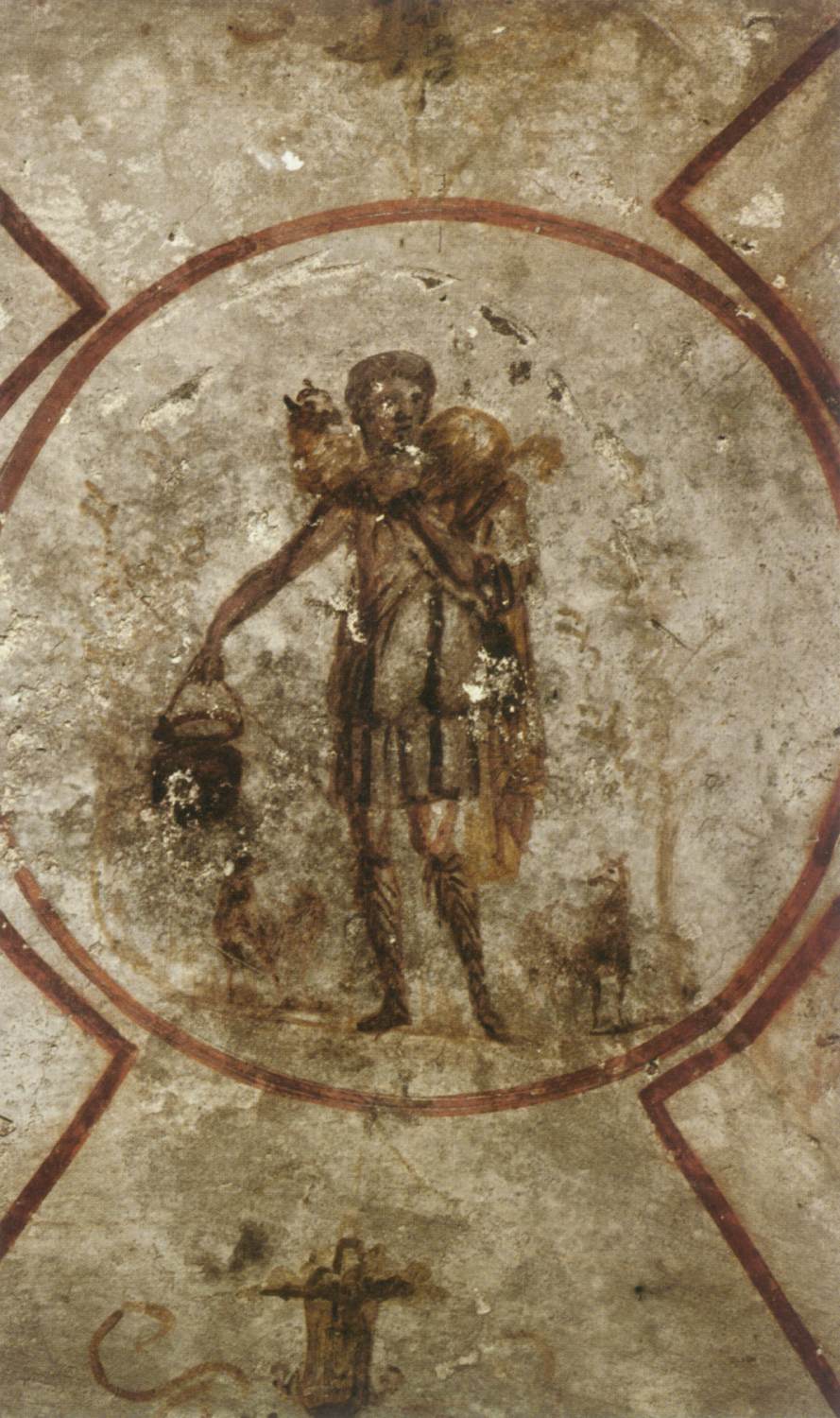
11. I am the good shepherd: the good shepherd giveth his life for the sheep.
12. But he that is an hireling, and not the shepherd, whose own the sheep are not, seeth the wolf coming, and leaveth the sheep, and fleeth: and the wolf catcheth them, and scattereth the sheep.
13. The hireling fleeth, because he is an hireling, and careth not for the sheep.
AUGUSTINE. (Tr. xlvi. 1) Our Lord has acquainted us with two things which were obscure before; first, that He is the Door; and now again, that He is the Shepherd: I am the good Shepherd. (c. xlvii. 1, 3). Above He said that the shepherd entered by the door. If He is the Door, how doth He enter by Himself? Just as He knows the Father by Himself, and we by Him; so He enters into the fold by Himself, and we by Him. We enter by the door, because we preach Christ; Christ preaches Himself. A light shews both other things, and itself too. (Tr. xlvi. 5). There is but one Shepherd. For though the rulers of the Church, those who are her sons, and not hirelings, are shepherds, they are all members of that one Shepherd. (Tr. xlvii. 3). His office of Shepherd He hath permitted His members to bear. Peter is a shepherd, and all the other Apostles: all good Bishops are shepherds. But none of us calleth himself the door. He could not have added good, if there were not bad shepherds as well. They are thieves and robbers; or at least mercenaries.
GREGORY. (Hom. xiv. in Evang.) And He adds what that goodness (forma bonitatis) is, for our imitation: The good Shepherd giveth His life for the sheep. He did what He bade, He set the example of what He commanded: He laid down His life for the sheep, that He might convert His body and blood in our Sacrament, and feed with His flesh the sheep He had redeemed. A path is shewn us wherein to walk, despising death; a stamp is applied to us, and we must submit to the impression. Our first duty is to spend our outward possessions upon the sheep; our last, if it be necessary, is to sacrifice our life for the same sheep. Whoso doth not give his substance to the sheep, how can he lay down his life for them?
AUGUSTINE. (Tr. xlvii) Christ was not the only one who did this. And yet if they who did it are members of Him, one and the same Christ did it always. He was able to do it without them; they were not without Him.
AUGUSTINE. (de Verb. Dom. Serm. 1) All these however were good shepherds, not because they shed their blood, but because they did it for the sheep. For they shed it not in pride, but in love. Should any among the heretics suffer trouble in consequence of their errors and iniquities, they forthwith boast of their martyrdom; that they may be the better able to steal under so fair a cloak: for they are in reality wolves. But not all who give their bodies to be burned, are to be thought to shed their blood for the sheep; rather against the sheep; for the Apostle saith, Though I give my body to be burned, and have not charity, it profiteth me nothing. (1 Cor. 13:3) And how hath he even the smallest charity, who does not love connexion (convictus) with Christians? to command which, our Lord did not mention many shepherds, but one, I am the good Shepherd.
CHRYSOSTOM. (Hom. lx. 5) Our Lord shews here that He did not undergo His passion unwillingly; but for the salvation of the world. He then gives the difference between the shepherd and the hireling: But he that is an hireling, and not the shepherd, whose own the sheep are not, seeth the wolf coming, and leaveth the sheep, and fleeth.
GREGORY. (Hom. in Evang. xiv.) Some there are who love earthly possessions more than the sheep, and do not deserve the name of a shepherd. He who feeds the Lord’s flock for the sake of temporal hire, and not for love, is an hireling, not a shepherd. An hireling is he who holds the place of shepherd, but seeketh not the gain of souls, who panteth after the good things of earth, and rejoices in the pride of station.
AUGUSTINE. (de Verb. Dom. Serm. xlix) He seeketh therefore in the Church, not God, but something else. If he sought God he would be chaste; for the soul hath but one lawful husband, God. Whoever seeketh from God any thing beside God, seeketh unchastely.
GREGORY. (Hom. in Evang. xiv.) But whether a man be a shepherd or an hireling, cannot be told for certain, except in a time of trial. In tranquil times, the hireling generally stands watch like the shepherd. But when the wolf comes, then every one shews with what spirit he stood watch over the flock.
AUGUSTINE. (de Verb. Dom. Serm. xlix.) The wolf is the devil, and they that follow him; according to’ Matthew, Which come to you in sheeps’ clothing, but inwardly they are ravening wolves. (Matt. 7:15)
AUGUSTINE. (Tr. xlvi. 8) Lo, the wolf hath seized a sheep by the throat, the devil hath enticed a man into adultery. The sinner must be excommunicated. But if he is excommunicated, he will be an enemy, he will plot, he will do as much harm as he can. Wherefore thou art silent, thou dost not censure, thou hast seen the wolf coming, and fled. Thy body has stood, thy mind has fled. For as joy is relaxation, sorrow contraction, desire a reaching forward of the mind; so fear is the flight of the mind.
GREGORY. (Hom. in Evang. xiv.) The wolf too cometh upon the sheep, whenever any spoiler and unjust person oppresses the humble believers. And he who seems to be shepherd, but leaves the sheep and flees, is he who dares not to resist his violence, from fear of danger to himself. He flees not by changing place, but by withholding consolation from his flock. The hireling is inflamed with no zeal against this injustice. He only looks to outward comforts, and overlooks the internal suffering of his flock. The hireling fleeth, because he is an hireling, and careth not for the sheep. The only reason that the hireling fleeth, is because he is an hireling; as if to say, He cannot stand at the approach of danger, who doth not love the sheep that he is set over, but seeketh earthly gain. Such an one dares not face danger, for fear he should lose what he so much loves.
AUGUSTINE. (Tr. xlvi. 7) But if the Apostles were shepherds, not hirelings, why did they flee in persecution? And why did our Lord say, When they persecute you in this city, flee ye into another? (Mat. 10:23) Let us knock, then will come one, who will explain.
AUGUSTINE. (ad Honor. Ep. clxxx.) A servant of Christ, and minister of His Word and Sacraments, may flee from city to city, when he is specially aimed at by the persecutors, apart from his brethren; so that his flight does not leave the Church destitute. But when all, i. e. Bishops, Clerics, and Laics, are in danger in common, let not those who need assistance be deserted by those who should give it. Let all flee together if they can, to some place of security; but, if any are obliged to stay, let them not be forsaken by those who are bound to minister to their spiritual wants. Then, under pressing persecution, may Christ’s ministers flee from the place where they are, when none of Christ’s people remain to be ministered to, or when that ministry may be fulfilled by others who have not the same cause for flight. But when the people stay, and the ministers flee, and the ministry ceases, what is this but a damnable flight of hirelings, who care not for the sheep?
AUGUSTINE. (Tr. xlvi. 1) On the good side are the door, the porter, the shepherd, and the sheep; on the bad, the thieves, the robbers, the hirelings, the wolf.
AUGUSTINE. (de Verb. Dom. s. xlix) We must love the shepherd, beware of the wolf, tolerate the hireling. For the hireling is useful so long as he sees not the wolf, the thief, and the robber. When he sees them, he flees.
AUGUSTINE. (Tr. xlvi. 5) Indeed he would not be an hireling, did he not receive wages from the hirer. (c. 6). Sons wait patiently for the eternal inheritance of their father; the hireling looks eagerly for the temporal wages from his hirer; and yet the tongues of both speak abroad the glory of Christ. The hireling hurteth, in that he doeth wrong, not in that he speaketh right: the grape bunch hangeth amid thorns; pluck the grape, avoid the thorn. Many that seek temporal advantages in the Church, preach Christ, and through them Christ’s voice is heard; and the sheep follow not the hireling, but the voice of the Shepherd heard through the hireling.
10:14–21
14. I am the good shepherd, and know my sheep, and am known of mine.
15. As the Father knoweth me, even so know I the Father: and I lay down my life for the sheep.
16. And other sheep I have, which are not of this fold: them also I must bring, and they shall hear my voice; and there shall be one fold, and one shepherd.
17. Therefore doth my Father love me, because I lay down my life, that I might take it again.
18. No man taketh it from me, but I lay it down of myself. I have power to lay it down, and I have power to take it again. This commandment have I received of my Father.
19. There was a division therefore again among the Jews for these sayings.
20. And many of them said, He hath a devil, and is mad; why hear ye him?
21. Others said, These are not the words of him that hath a devil. Can a devil open the eyes of the blind?
CHRYSOSTOM. (Hom. lx. 1) Two evil persons have been mentioned, one that kills, and robs the sheep, another that doth not hinder: the one standing for those movers of seditions; the other for the rulers of the Jews, who did not take care of the sheep committed to them. Christ distinguishes Himself from both; from the one who came to do hurt by saying, I am come that they might have life; from those who overlook the rapine of the wolves, by saying that He giveth His life for the sheep. Wherefore He saith again, as He said before, I am the good Shepherd. And as He had said above that the sheep heard the voice of the Shepherd and followed Him, that no one might have occasion to ask, What sayest Thou then of those that believe not? He adds, And I know My sheep, and am known of Mine. (Rom. 11:12) As Paul too saith, God hath not cast away His people, whom He foreknew.
GREGORY. (Hom. in Evang. xiv.) As if He said, I love My sheep, and they love and follow Me. For he who loves not the truth, is as yet very far from knowing it.
THEOPHYLACT. Hence the difference of the hireling and the Shepherd. The hireling does not know his sheep, because he sees them so little. The Shepherd knows His sheep, because He is so attractive to them.
CHRYSOSTOM. (Hom. lx. 1) Then that thou mayest not attribute to the Shepherd and the sheep the same measure of knowledge, He adds, As the Father knoweth Me, even so know I the Father: i. e. I know Him as certainly as He knoweth Me. This then is a case of like knowledge, the other is not; as He saith, No man knoweth who the Son is, but the Father. (Luke 10:23)
GREGORY. (Hom. in Evang. xiv.) And I lay down My life for My sheep. As if to say, This is why I know My Father, and am known by the Father, because I lay down My life for My sheep; i. e. by My love for My sheep, I shew how much I love My Father.
CHRYSOSTOM. (Hom. lx. 1) He gives it too as a proof of His authority. In the same way the Apostle maintains his own commission in opposition to the false Apostles, by enumerating his dangers and sufferings.
THEOPHYLACT. For the deceivers did not expose their lives for the sheep, but, like hirelings, deserted their followers. Our Lord, on the other hand, protected His disciples: Let these go their way. (infr. 18:8)
GREGORY. (Hom. xiv.) But as He came to redeem not only the Jews, but the Gentiles, He adds, And other sheep I have, which are not of this fold.
AUGUSTINE. (de Verb. Dom. s. 1) The sheep hitherto spoken of are those of the stock of Israel according to the flesh. But there were others of the stock of Israel, according to faith, Gentiles, who were as yet out of the fold; predestinated, but not yet gathered together. They are not of this fold, because they are not of the race of Israel, but they will be of this fold: Them also I must bring.
CHRYSOSTOM. (Hom. lx. 2) What wonder that these should hear My voice, and follow Me, when others are waiting to do the same. Both these flocks are dispersed, and without shepherds; for it follows, And they shall hear My voice. And then He foretells their future union: And there shall be one fold and one Shepherd.
GREGORY. (Hom. Evang. xiv.) Of two flocks He maketh one fold, uniting the Jews and Gentiles in His faith.
THEOPHYLACT. For there is one sign of baptism for all, and one Shepherd, even the Word of God. Let the Manichean mark; there is but one fold and one Shepherd set forth both in the Old and New Testaments.
AUGUSTINE. (Tr. xlvii. 4) What does He mean then when He says, I am not sent but unto the lost sheep of the house of Israel? Only, that whereas He manifested Himself personally to the Jews, He did not go Himself to the Gentiles, but sent others.
CHRYSOSTOM. (Hom. lx) The word must here (I must bring) does not signify necessity, but only that the thing would take place. Therefore doth My Father love Me, because I lay down My life, that I might take it again. They had called Him an alien from His Father.
AUGUSTINE. (Tr. xlvii. 7) i. e. Because I die, to rise again. There is great force in, I lay down. Let not the Jews, He says, boast; rage they may, but if I should not choose to lay down My life, what will they do by raging?
THEOPHYLACT. The Father does not bestow His love on the Son as a reward for the death He suffered in our behalf; but He loves Him, as beholding in the Begotten His own essence, whence proceeded such love for mankind.
CHRYSOSTOM. (Hom. lx. 2) Or He says, in condescension to our weakness, Though there were nothing else which made Me love you, this would, that ye are so loved by My Father, that, by dying for you, I shall win His love. Not that He was not loved by the Father before, or that we are the cause of such love. For the same purpose He shews that He does not come to His Passion unwillingly: No man taketh it from Me, but I lay it down of Myself.
AUGUSTINE. (iv. de Trin. c. xiii.) Wherein He shewed that His natural death was not the consequence of sin in Him, but of His own simple will, which was the why, the when, and the how: I have power to lay it down.
CHRYSOSTOM. (Hom. lx. 2) As they had often plotted to kill Him, He tells them their efforts will be useless, unless He is willing. I have such power over My own life, that no one can take it from Me, against My will. This is not true of men. We have not the power of laying down our own lives, except we put ourselves to death. Our Lord alone has this power. And this being true, it is true also that He can take it again when He pleases: And I have power to take it again: which words declare beyond a doubt a resurrection. That they might not think His death a sign that God had forsaken Him, He adds, This commandment have I received from My Father; i. e. to lay down My life, and take it again. By which we must not understand that He first waited to hear this commandment, and had to learn His work; He only shows that that work which He voluntarily undertook, was not against the Father’s will.
THEOPHYLACT. He only means His perfect agreement with His Father.
ALCUIN. For the Word doth not receive a command by word, but containeth in Himself all the Father’s commandments. When the Son is said to receive what He possesseth of Himself, His power is not lessened, but only His generation declared. The Father gave the Son every thing in begetting Him. He begat Him perfect.
THEOPHYLACT. After declaring Himself the Master of His own life and death, which was a lofty assumption, He makes a more humble confession; thus wonderfully uniting both characters; shewing that He was neither inferior to or a slave of the Father on the one hand, nor an antagonist on the other; but of the same power and will.
AUGUSTINE. (Tr. xlvii) How doth our Lord lay down His own life? Christ is the Word, and man, i. e. in soul and body. Doth the Word lay down His life, and take it again; or doth the human soul, or doth the flesh? If it was the Word of God that laid down His soul1 and took it again, that soul was at one time separated from the Word. But, though death separated the soul and body, death could not separate the Word and the soul. It is still more absurd to say that the soul laid down itself; if it could not be separated from the Word, how could it be from itself? The flesh therefore layeth down its life and taketh it again, not by its own power, but by the power of the Word which dwelleth in it. This refutes the Apollinarians, who say that Christ had not a human, rational soul.
ALCUIN. But the light shined in darkness, and the darkness comprehended it not. There was a division among the Jews for these sayings. And many of them said, He hath a devil, and is mad.
CHRYSOSTOM. (Hom. lx. 3) Because He spoke as one greater than man, they said He had a devil. But that He had not a devil, others proved from His works: Others said, These are not the words of Him that hath a devil. Can a devil open the eyes of the blind? As if to say, Not even the words themselves are those of one that hath a devil; but if the words do not convince you, be persuaded by the works. Our Lord having already given proof who He was by His works, was silent. They were unworthy of an answer. Indeed, as they disagreed amongst themselves, an answer was unnecessary. Their opposition only brought out, for our imitation, our Lord’s gentleness, and long suffering.
ALCUIN. We have heard of the patience of God, and of salvation preached amid revilings. They obstinately preferred tempting Him to obeying Him.