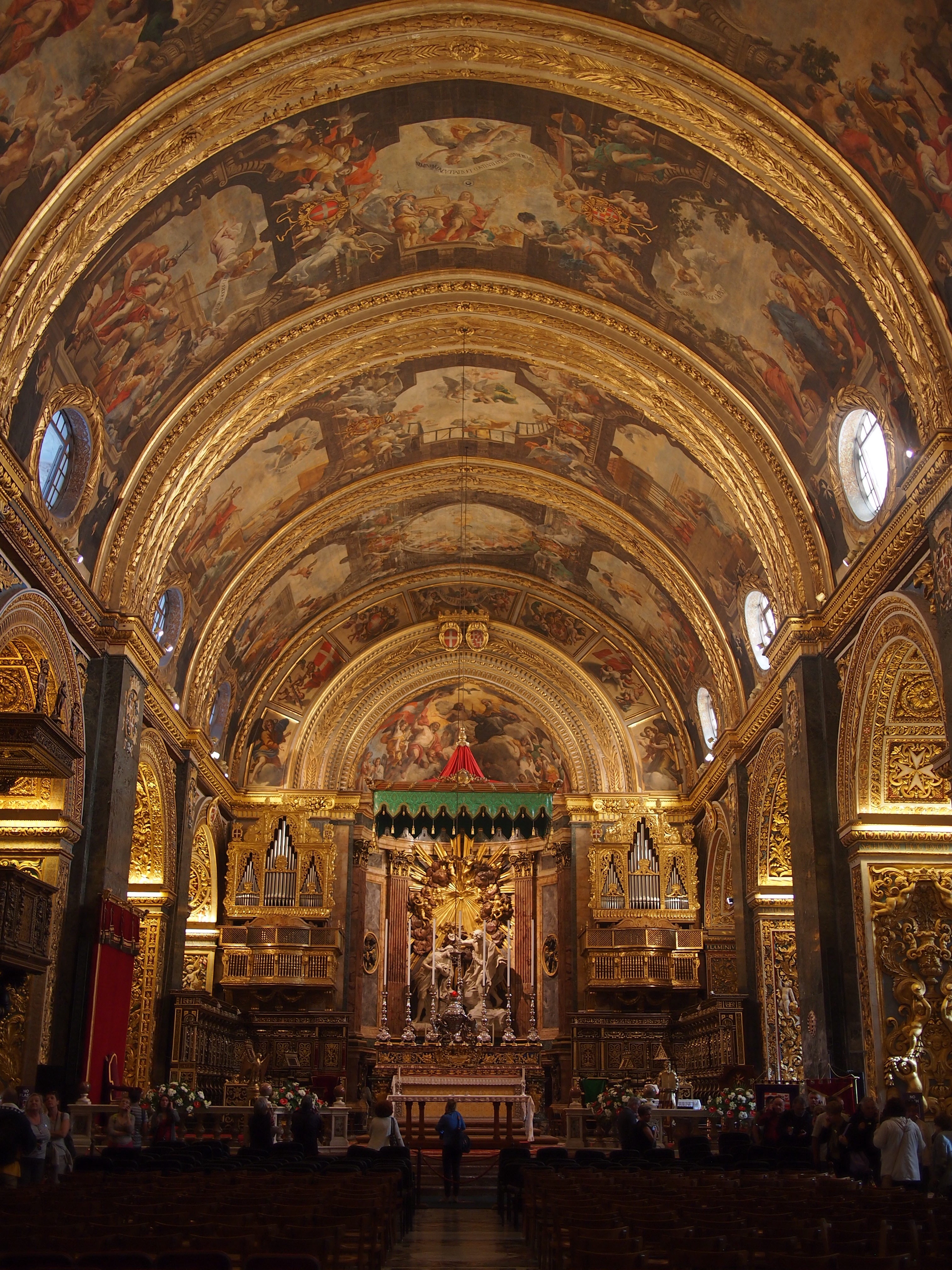
Catena Aurea by St. Thomas Aguinas
Luke CHAP. 24
24:13–24
13. And, behold, two of them went that same day to a village called Emmaus, which was from Jerusalem about threescore furlongs.
14. And they talked together of all these things which had happened.
15. And it came to pass, that, while they communed together and reasoned, Jesus himself drew near, and went with them.
16. But their eyes were holden that they should not know him.
17. And he said unto them, What manner of communications are these that ye have one to another, as ye walk, and are sad?
18. And the one of them, whose name was Cleopas, answering said unto him, Art thou only a stranger in Jerusalem, and hast not known the things which are come to pass there in these days?
19. And he said unto them, What things? And they said unto him, Concerning Jesus of Nazareth, which was a prophet mighty in deed and word before God and all the people:
20. And how the chief priests and our rulers delivered him to be condemned to death, and have crucified him.
21. But we trusted that it had been he which should have redeemed Israel: and beside all this, to day is the third day since these things were done.
22. Yea, and certain women also of our company made us astonished, which were early at the sepulchre;
23. And when they found not his body, they came, saying, that they had also seen a vision of angels, which said that he was alive.
24. And certain of them which were with us went to the sepulchre, and found it even so as the women had said: but him they saw not.
GLOSS. (non occ.) After the manifestation of Christ’s resurrection made by the Angels to the women, the same resurrection is further manifested by an appearance of Christ Himself to His disciples; as it is said, And behold two of them.
THEOPHYLACT. Some say that Luke was one of these two, and for this reason concealed his name.
AMBROSE. Or to two of the disciples by themselves our Lord shewed Himself in the evening, namely, Ammaon and Cleophas.
AUGUSTINE. (de Con. Ev. lib. iii. c. 25.) The fortress mentioned here we may not unreasonably take to have been also called according to Mark, a village, He next describes the fortress, saying, which was from Jerusalem about the space of sixty stades, called Emmaus.
BEDE. It is the same as Nicopolis, a remarkable town in Palestine, which after the taking of Judæa under the Emperor Marcus Aurelius Antonius, changed together with its condition its name also. But the stadium which, as the Greeks say, was invented by Hercules to measure the distances of roads, is the eighth part of a mile; therefore sixty stades are equal to seven miles and fifty paces. And this was the length of journey which they were walking, who were certain about our Lord’s death and burial, but doubtful concerning His resurrection. For the resurrection which took place after the seventh day of the week, no one doubts is implied in the number eight. The disciples therefore as they walk and converse about the Lord had completed the sixth mile of their journey, for they were grieving that He who had lived without blame, had come at length even to death, which He underwent on the sixth day. They had completed also the seventh mile, for they doubted not that He rested in the grave. But of the eighth mile they had only accomplished half; for the glory of His already triumphant resurrection, they did not believe perfectly.
THEOPHYLACT. But the disciples above mentioned talked to one another of the things which had happened, not as believing them, but as bewildered at events so extraordinary.
BEDE. And as they spoke of Him, the Lord comes near and joins them, that He may both influence their minds with faith in His resurrection, and fulfil that which He had promised, Where two or three are gathered together in my name, there am I in the midst of them (Mat. 18:20); as it follows, And it came to pans while they communed together and reasoned, Jesus himself drew near and went with them.
THEOPHYLACT. For having now obtained a spiritual body, distance of place is no obstacle to His being present to whom He wished, nor did He any further govern His body by natural laws, but spiritually and supernaturally. Hence as Mark says, He appeared to them in a different form, in which they were not permitted to know Him; for it follows, And their eyes were holden that they should not know him; in order truly that they may reveal their entirely doubtful conceptions, and uncovering their wound may receive a cure; and that they might know that although the same body which suffered, rose again, yet it was no longer such as to be visible to all, but only to those by whom He willed it to be seen; and that they should not wonder why henceforth He walks not among the people, seeing that His conversation was not fit for mankind, but rather divine; which is also the character of the resurrection to come, in which we shall walk as the Angels and the sons of God.
GREGORY. (23. in Ev.) Rightly also He refrained from manifesting to them a form which they might recognise, doing that outwardly in the eyes of the body, which was done by themselves inwardly in the eyes of the mind. For they in themselves inwardly both loved and doubted. Therefore to them as they talked of Him He exhibited His presence, but as they doubted of Him He concealed the appearance which they knew. He indeed conversed with them, for it follows, And he said to them, What manner of communications, &c.
GREEK EXPOSITOR. (Anonm. in Cat. Gr.) They were in truth discoursing among themselves, no longer expecting to see Christ alive, but sorrowing as concerning their Saviour slain. Hence it follows, And one of them whose name was Cleophas, answering him said, Art thou only a stranger?
THEOPHYLACT. As if he said, “Art thou a mere stranger, and one dwelling beyond the confines of Jerusalem, and therefore unacquainted with what has happened in the midst of it, that thou knowest not these things?
BEDE. Or he says this, because they thought Him a stranger, whose countenance they did not recognise. But in reality He was a stranger to them, from the infirmity of whose natures, now that He had obtained the glory of the resurrection, He was far removed, and to whose faith, as yet ignorant of His resurrection, He remained foreign. But again the Lord asks; for it follows, And he said unto them, What things? And their answer is given, Concerning Jesus of Nazareth, who was a Prophet. They confess Him to be a Prophet, but say nothing of the Son of God; either not yet perfectly believing, or fearful of falling into the hands of the persecuting Jews; either knowing not who He was, or concealing the truth which they believed. They add in praise of Him, mighty in deed and word.
THEOPHYLACT. First comes deed, then word; for no word of teaching is approved unless first he who teaches shews himself to be a doer thereof. For acting goes before sight; for unless by thy works thou hast cleansed the glass of the understanding, the desired brightness does not appear. But still further it is added, Before God and all the people. For first of all we must please God, and then have regard as far as we can to honesty before men, that placing the honour of God first, we may live without offence to mankind.
GREEK EXPOSITOR. (ut sup.) They next assign the cause of their sadness, the betrayal and passion of Christ; and add in the voice of despair, But we hoped it had been he who should have redeemed Israel. We hoped, (he says,) not we hope; as if the death of the Lord were like to the deaths of other men.
THEOPHYLACT. For they expected that Christ would redeem Israel from the evils that were rising up among them and the Roman slavery. They trusted also that He was an earthly king, whom they thought would be able to escape the sentence of death passed upon Him.
BEDE. Reason had they then for sorrow, because in some sort they blamed themselves for having hoped redemption in Him whom now they saw dead, and believed not that He would rise again, and most of all they bewailed Him put to death without a cause, whom they knew to be innocent.
THEOPHYLACT. And yet those men seem not to have been altogether without faith, by what follows, And besides all this, to day is the third day since these things were done. Whereby they seem to have a recollection of what the Lord had told them that He would rise again on the third day.
GREEK EXPOSITOR. The disciples also mention the report of the resurrection which was brought by the women; adding, Yea, and certain women also of our company made us astonished, &c. They say this indeed as if they did not believe it; wherefore they speak of themselves as frightened or astonished. For they did consider as established what was told them, or that there had been an angelic revelation, but derived from it reason for astonishment and alarm. The testimony of Peter also they did not regard as certain, since he did not say that he had seen our Lord, but conjectured His resurrection from the fact that His body was not lying in the sepulchre. Hence it follows, And certain of them that were with us went, &c.
AUGUSTINE. (ut sup.) But since Luke has said that Peter ran to the sepulchre, and has himself related the words of Cleophas, that some of them went to the sepulchre, he is understood to confirm the testimony of John, that two went to the sepulchre. He first mentioned Peter only, because to him first Mary had related the news.
Copyright ©1999-2018 e-Catholic2000.com
NAVARRE BIBLE COMMENTARY (RSV) Ad Majorem Dei Gloriam (To the Greater Glory of God) From: Acts 2:36-41
The Baptism
-----------------
[36] "Let all the house of Israel therefore know assuredly that God has made Him both Lord and Christ, this Jesus whom you crucified." [37] Now when they heard this they were cut to the heart, and said to Peter and the rest of the Apostles, "Brethren, what shall we do?" [38] And Peter said to them, "Repent, and be baptized every one of you in the name of Jesus Christ for the forgiveness of your sins; and you shall receive the gift of the Holy Spirit. [39] For the promise is to you and to your children and to all that are far off, every one whom the Lord our God calls to Him." [40] And he testified with many other words and exhorted them, saying, "Save yourselves from this crooked generation." [41] So those who received his word were baptized, and there were added that day about three thousand souls.
***********************************************************************
Commentary:
14-36. Even as the Church takes its first steps St. Peter can be seen to occupy the position of main spokesman. In his address we can distinguish an introduction and two parts: in the first part (verses 16-21) he is explaining that the messianic times foretold by Joel have now arrived; in the second (verses 22-36) he proclaims that Jesus of Nazareth, whom the Jews crucified, is the Messiah promised by God and eagerly awaited by the righteous of the Old Testament; it is He who has effected God's saving plan for mankind.
36. During His life on earth Jesus had often presented Himself as the Messiah and Son of God. His resurrection and ascension into Heaven reveal Him as such to the people at large.
In Peter's address we can see an outline of the content of the apostolic proclamation ("kerygma"), the content of Christian preaching, the object of faith. This proclamation bears witness to Christ's death and resurrection and subsequent exaltation; it recalls the main points of Jesus' mission, announced by John the Baptist, confirmed by miracles and brought to fulfillment by the appearances of the risen Lord and the outpouring of the Holy Spirit; it declares that the messianic time predicted by the prophets have arrived, and calls all men to conversion, in preparation for the Parousia or second coming of Christ in glory.
37. St. Peter's words were the instrument used by God's grace to move the hearts of his listeners: they are so impressed that they ask in all simplicity what they should do. Peter exhorts them to be converted, to repent (cf. note on 3:19). The St. Pius V Catechism explains that in order to receive Baptism adults "need to repent the sins they have committed and their evil past life and to be resolved not to commit sin henceforth [...], for nothing is more opposed to grace and power of Baptism than the outlook and disposition of those who never decide to abjure sin" (II, 2, 4).
38. "Be baptized in the name of Jesus Christ": this does not necessarily mean that this was the form of words the Apostles normally used in the liturgy, rather than Trinitarian formula prescribed by Jesus. In the "Didache" (written around the year 100) it is stated that Baptism should be given in the name of the Father and of the Son and of the Holy Spirit, but this does not prevent it, in other passages, from referring to "those baptized in the name of the Lord." The expression "baptized in the name of Christ" means, therefore, becoming a member of Christ, becoming a Christian (cf. Didache, VII, 1; IX, 5).
"Like the men and women who came up to Peter on Pentecost, we too have been baptized. In baptism, our Father God has taken possession of our lives, has made us share in the life of Christ, and has given us the Holy Spirit" ([St] J. Escriva, "Christ Is Passing By", 128). From this point onwards, the Trinity begins to act in the soul of the baptized person. "In the same way as transparent bodies, enlightened by the Holy Spirit become spiritual too and lead others to the light of grace. From the Holy Spirit comes knowledge of future events, understanding of mysteries and of hidden truths, an outpouring of gifts, Heavenly citizenship, conversation with angels. From Him comes never-ending joy, perseverance in good, likeness to God and--the most sublime thing imaginable--becoming God" (St. Basil, On the Holy Spirit, IX, 23).
This divinization which occurs in the baptized person shows how important it is for Christians to cultivate the Holy Spirit who has been infused into their souls, where He dwells as long as He is not driven out by sin. "Love the Third Person of the Blessed Trinity. Listen in the intimacy of your being to the divine motions of encouragement or reproach you receive from Him. Walk through the earth in the light that is poured out in your soul. [...] We can apply to ourselves the question asked by the Apostle: 'Do you not know that you are God's temple and that God's Spirit dwells in you?' (1 Corinthians 3:16). And we can understand it as an invitation to deal with God in a more personal and direct manner. For some, unfortunately, the Paraclete is the Great Stranger. He is merely a name that is mentioned, but not Someone--not one of the three Persons in the one God--with whom we can talk and with whose life we can live. No: we have to deal with Him simply and trustingly, as we are taught by the Church in its liturgy. Then we will come to know our Lord better, and at the same time, we will realize more fully the great favor that was granted us when we became Christians. We will see the greatness and truth of this divinization, which is a sharing in God's own life" ([St] J. Escriva, "Christ Is Passing By", 133-134).
39. The "promise" of the Holy Spirit applies to both Jews and Gentiles, but in the first instance it concerns the Jews: it is they to whom God entrusted His oracles; theirs was the privilege to receive the Old Testament and to be preached to directly by Jesus Himself. St. Peter makes it clear that this promise is also made "to all that are far off"--a reference to the Gentiles, as St. Paul explains (cf. Ephesians 2:13-17) and in line with Isaiah's announcement, "Peace, peace to the far and to the near" (Isaiah 57:19). Cf. Acts 22:21.
40. "This crooked generation" is not only that part of the Jewish people who rejected Christ and His teaching, but everyone who is estranged from God (cf. Deuteronomy 32:5; Philippians 2:5).
41. St. Luke here concludes his account of the events of the day of Pentecost and prepares to move on to a new topic. Before he does so he adds a note, as it were, to say that "about three thousand souls" became Christians as a result of Peter's address.
St. Luke often makes reference to the numerical growth of the Church (2:47; 4:4; 5:14; 6:1, 7; 9:31; 11:21, 24; 16:5). Interesting in itself, this growth clearly shows the effectiveness of the Gospel message boldly proclaimed by the Apostles. It proves that if the Gospel is preached with constancy and clarity it can take root in any setting and will always find men and women ready to receive it and put it into practice.
"It is not true that everyone today--in general--is closed or indifferent to what our Christian faith teaches about man's being and destiny. It is not true that men in our time are turned only toward the things of this earth and have forgotten to look up to Heaven. There is no lack of narrow ideologies, it is true, or of persons who maintain them. But in our time we find both great desires and base attitudes, heroism and cowardice, zeal and disenchantment--people who dream of a new world, more just and more human, and others who, discouraged perhaps by the failure of their youthful idealism, take refuge in the selfishness of seeking only their own security or remaining immersed in their errors.
"To all those men and women, wherever they may be, in their more exalted moments of in their crises and defeats, we have to bring the solemn and unequivocal message of St. Peter in the days that followed Pentecost: Jesus is the cornerstone, the Redeemer, the hope of our lives. 'For there is no other name under Heaven given among men by which we must be saved' (Acts 4:12)" (St J. Escriva, Christ Is Passing By, 132).
11. But Mary stood without at the sepulchre weeping: and as she wept, she stooped down, and looked into the sepulchre,
12. And seeth two angels in white sitting, the one at the head, and the other at the feet, where the body of Jesus had lain.
13. And they say unto her, Woman, why weepest thou? She saith unto them, Because they have taken away my Lord, and I know not where they have laid him.
14. And when she had thus said, she turned herself back, and saw Jesus standing, and knew not that it was Jesus.
15. Jesus saith unto her, Woman, why weepest thou? whom seekest thou? She, supposing him to be the gardener, saith unto him, Sir, if thou have borne him hence, tell me where thou hast laid him, and I will take him away.
16. Jesus saith unto her, Mary. She turned, herself, and saith unto him, Rabboni; which is to say, Master.
17. Jesus saith unto her, Touch me not; for I am not yet ascended to my Father: but go to my brethren, and say unto them, I ascend unto my Father, and your Father; and to my God, and your God.
18. Mary Magdalene came and told the disciples that she had seen the Lord, and that he had spoken these things unto her.
GREGORY. (Hom. xxv. in Evang.) Mary Magdalene, who had been the sinner in the city, and who had washed out the spots of her sins by her tears, whose soul burned with love, did not retire from the sepulchre when the others did: Then the disciples went away again unto their own home.
AUGUSTINE. (Tr. cxxi. 1) i. e. To the place where they were lodging, and from which they had ran to the sepulchre. But though the men returned, the stronger love of the woman fixed her to the spot. But Mary stood without at the sepulchre weeping.
AUGUSTINE. (de Con. Ev. iii. xxiv. 69) i. e. Outside of the place where the stone sepulchre was, but yet within the garden.
CHRYSOSTOM. (Hom. lxxxvi) Be not astonished that Mary wept for love at the sepulchre, and Peter did not; for the female sex is naturally tender, and inclined to weep.
AUGUSTINE. (Tr. cxxi. 1) The eyes then which had sought our Lord, and found Him not, now wept without interruption; more for grief that our Lord had been removed, than for His death upon the cross. For now even all memorial of Him was taken away.
AUGUSTINE. (de Con. Ev. iii. xxiv. 69) She then saw, with the other women, the Angel sitting on the right, on the stone which had been rolled away from the sepulchre, at whose words it was that she looked into the sepulchre. (Mat. 28:5.)
CHRYSOSTOM. (Hom. lxxxvi) The sight of the sepulchre itself was some consolation. Nay, behold her, to console herself still more, stooping down, to see the very place where the body lay: And as she wept, she stooped down, and looked into the sepulchre.
GREGORY. (Hom. xxv. ut supr.) For to have looked once is not enough for love. Love makes one desire to look over and over again.
AUGUSTINE. (Tr. cxxi) In her too great grief she could believe neither her own eyes, nor the disciples’. Or was it a divine impulse which caused her to look in?
GREGORY. (Hom. xxv.) She sought the body, and found it not; she persevered in seeking; and so it came to pass that she found. Her longings, growing the stronger, the more they were disappointed, at last found and laid hold on their object. For holy longings ever gain strength by delay; did they not, they would not be longings. Mary so loved, that not content with seeing the sepulchre, she stooped down and looked in: let us see the fruit which came of this persevering love: And seeth two Angels in white sitting, the one at the head, and the other at the feet, where the body of Jesus had lain.
CHRYSOSTOM. (Hom. lxxxvi. 1) As her understanding was not so raised as to be able to gather from the napkins the fact of the resurrection, she is given the sight of Angels in bright apparel, who sooth her sorrow.
AUGUSTINE. (Tr. cxxi) But why did one sit at the head, the other at the feet? To signify that the glad tidings of Christ’s Gospel was to be delivered from the head to the feet, from the beginning to the end. The Greek word Angel means one who delivers news.
GREGORY. (Hom. xxv. in Evang. c. 1, 14) The Angel sits at the head when the Apostles preach that in the beginning was the Word: he sits, as it were, at the feet, when it is said, The Word was made flesh. By the two Angels too we may understand the two testaments; both of which proclaim alike the incarnation, death, and resurrection of our Lord. The Old seems to sit at the head, the New at the feet.
CHRYSOSTOM. (Hom. lxxxvi) The Angels who appear say nothing about the resurrection; but by degrees the subject is entered on. First of all they address her compassionately, to prevent her from being overpowered by a spectacle of such extraordinary brightness: And they say unto her, Woman, why weepest thou? The Angels forbad tears, and announced, as it were, the joy that was at hand: Why weepest thou? As if to say, Weep not.
GREGORY. (Hom. fin.) The very declarations of Scripture which excite our tears of love, wipe away those very tears, by promising us the sight of our Redeemer again.
AUGUSTINE. (Tr. cxxi) But she, thinking that they wanted to know why she wept, tells them the reason: She saith unto them, Because they have taken away my Lord. The lifeless body of her Lord, she calls her Lord, putting the part for the whole; just as we confess that Jesus Christ the Son of God was buried, when only His flesh was buried. And I know not where they have placed Him: it was a still greater grief, that she did not know where to go to console her grief.
CHRYSOSTOM. (Hom. lxxxvi) As yet she knew nothing of the resurrection, but thought the body had been taken away.
AUGUSTINE. (de Con. Evang. iii. xxiv) Here the Angels must be understood to rise up, for Luke describes them as seen standing.
AUGUSTINE. (Tr. cxxi) The hour was now come, which the Angels announced, when sorrow should be succeeded by joy: And when she had thus said, she turned herself back.
CHRYSOSTOM. (Hom. l) But why, when she is talking to the Angels, and before she has heard any thing from them, does she turn back? It seems to me that while she was speaking, Christ appeared behind her, and that the Angels by their posture, look, and motion, shewed that they saw our Lord, and that thus it was that she turned back.
GREGORY. (Hom. xxv.) We must observe that Mary, who as yet doubted our Lord’s resurrection, turned back to see Jesus. By her doubting she turned her back, as it were, upon our Lord. Yet inasmuch as she loved, she saw Him. She loved and doubted: she saw, and did not recognise Him: And saw Jesus standing, and knew not that it was Jesus.
CHRYSOSTOM. (Hom. lxxxvi) To the Angels He appeared as their Lord, but not so to the woman, for the sight coming upon her all at once, would have stupified her. She was not to be lifted suddenly, but gradually to high things.
GREGORY. (Hom. xxv.) Jesus saith unto her, Woman, why weepest thou? He asks the cause of her grief, to set her longing still more. For the mere mentioning His name whom she sought would inflame her love for Him.
CHRYSOSTOM. (Hom. lxxxvi 1) Because He appeared as a common person, she thought Him the gardener: She, supposing Him to be the gardener, saith unto Him, Sir, if Thou have borne Him hence, tell me where Thou hast laid Him, and I will take Him away. i. e. If thou hast taken Him away from fear of the Jews, tell me, and I will take Him again.
THEOPHYLACT. She was afraid that the Jews might vent their rage even on the lifeless body, and therefore wished to remove it to some secret place.
GREGORY. (Hom. xxv.) Perhaps, however, the woman was right in believing Jesus to be the gardener. Was not He the spiritual Gardener, who by the power of His love had sown strong seeds of virtue in her breast? But how is it that, as soon as she sees the gardener, as she supposes Him to be, she says, without having told Him who it was she was seeking, Sir, if Thou hast borne Him hence? It arises from her love; when one loves a person, one never thinks that any one else can be ignorant of him. Our Lord, after calling her by the common name of her sex, and not being recognised, calls her by her own name: Jesus saith unto her, Mary; as if to say, Recognise Him, who recognises thee. Mary, being called by name, recognises Him; that it was He whom she sought externally, and He who taught her internally to seek: She turned herself, and saith unto Him, Rabboni; which is to say, Master.
CHRYSOSTOM. (Hom. lxxxvi. 1) Just as He was sometimes in the midst of the Jews, and they did not know Him till He pleased to make Himself known. But why does she turn herself, when she had turned herself before? It seems to me that when she said, Where thou hast laid Him, she turned to the Angels, to ask why they were astonished. Then Christ, calling her, discovered Himself by His voice, and made her turn to Him again.
AUGUSTINE. (Tr. cxxi) Or she first turned her body, but thought Him what He was not; now she was turned in heart, and knew who He was. Let no one however blame her, because she called the gardener, Lord, and Jesus, Master. The one was a title of courtesy to a person from whom she was asking a favour; the other of respect to a Teacher from whom she was used to learn to distinguish the divine from the human. The word Lord is used in different senses, when she says, They have taken away my Lord, and when she says, Lord, if Thou have borne Him away.
GREGORY. (Hom. xxv.) The Evangelist does not add what she did upon recognising Him, but we know from what our Lord said to her: Jesus saith unto her, Touch Me not. Mary then had tried to embrace His feet, but was not allowed. Why not? The reason follows: For I am not yet ascended to My Father.
AUGUSTINE. (Tr. cxxi. 3) But if standing upon the earth, He is not touched, how shall He be touched sitting in heaven? And did He not before His ascension offer Himself to the touch of the disciples: Handle Me and see, for a spirit hath not flesh and bones? (Luke 24:39) Who can be so absurd as to suppose that He was willing that disciples should touch Him before He ascended to His Father, and unwilling that women should till after? Nay, we read of women after the resurrection, and before He ascended to His Father, touching Him, one of whom was Mary Magdalene herself, according to Matthew. Either then Mary here is a type of the Gentile Church, which did not believe in Christ till after His ascension: or the meaning is that Jesus is to be believed in, i. e. spiritually touched, in no other way, but as being one with the Father. He ascends to the Father mystically, as it were, in the mind of him who hath so far advanced as to acknowledge that He is equal to the Father. But how could Mary believe in Him otherwise than carnally, when she wept for Him as a man?
AUGUSTINE. (i. de Trin) Touch is as it were the end of knowledge1; and He was unwilling that a soul intent upon Him should have its end, in thinking Him only what He seemed to be.
CHRYSOSTOM. (Hom. lxxxvi. 2) Mary wished to be as familiar with Christ now, as she was before His Passion; forgetting, in her joy, that His body was made much more holy by its resurrection. So, Touch Me not, He says, to remind her of this, and make her feel awe in talking with Him. For which reason too He no longer keeps company with His disciples, viz. that they might look upon Him with the greater awe. Again, by saying I have not yet ascended, He shews that He is hastening there. And He who was going to depart and live no more with men, ought not to be regarded with the same feeling that He was before: But go to My brethren, and say unto them, I ascend unto My Father, and your Father; and to My God, and your God.
HILARY. (de Trin.) Heretics, among their other impieties, misinterpret these words of our Lord’s, and say, that if His Father is their Father, His God their God, He cannot be God Himself. But though He remained in the form of God, He took upon Him the form of a servant; and Christ says this in the form of a servant to men. And we cannot doubt that in so far as He is man, the Father is His Father in the same sense in which He is of other men, and God His God in like manner. Indeed He begins with saying, Go to My brethren. But God can only have brethren according to the flesh; the Only-Begotten God, being Only-Begotten, is without brethren.
AUGUSTINE. (Tr. cxxi) He does not say, Our Father, but, My Father and your Father: Mine therefore and yours in a different sense; Mine by nature, yours by grace. Nor does He say, Our God, but, My God—under Him I am man—and your God; between you and Him I am Mediator.
AUGUSTINE. (de Con. Evang. iii. xxiv. 69) She then went away from the sepulchre, i. e. from that part of the garden before the rock which had been hollowed out, and with her the other women. But these, according to Mark, were seized with trembling and amazement, and said nothing to any man: Mary Magdalene came and told the disciples that she had seen the Lord, and that He had spoken these things unto her.
GREGORY. (Hom. xxv.) So the sin of mankind is buried in the very place whence it came forth. For whereas in Paradise the woman gave the man the deadly fruit, a woman from the sepulchre announced life to men; a woman delivers the message of Him who raises us from the dead, as a woman had delivered the words of the serpent who slew us.
AUGUSTINE. (de Con. Evang. iii. 25) While she was going with the other women, according to Matthew, Jesus met them, saying, All hail. (Matt 28:9) So we gather that there were two visions of Angels; and that our Lord too was seen twice, once when Mary took Him for the gardener, and again, when He met them by the way, and by this repeating His presence confirmed their faith. And so Mary Magdalen came and told the disciples, not alone, but with the other women whom Luke mentions.
BEDE. Mystically, Mary, which name signifies, mistress, enlightened, enlightener, star of the sea, stands for the Church, which is also Magdalen, i. e. towered, (Magdalen being Greek for tower,) as we read in the Psalms, Thou hast been a strong tower for me. (Ps. 61:3) In that she announced Christ’s resurrection to the disciples, all, especially those to whom the office of preaching is committed, are admonished to be zealous in setting forth to others whatever is revealed from above.