
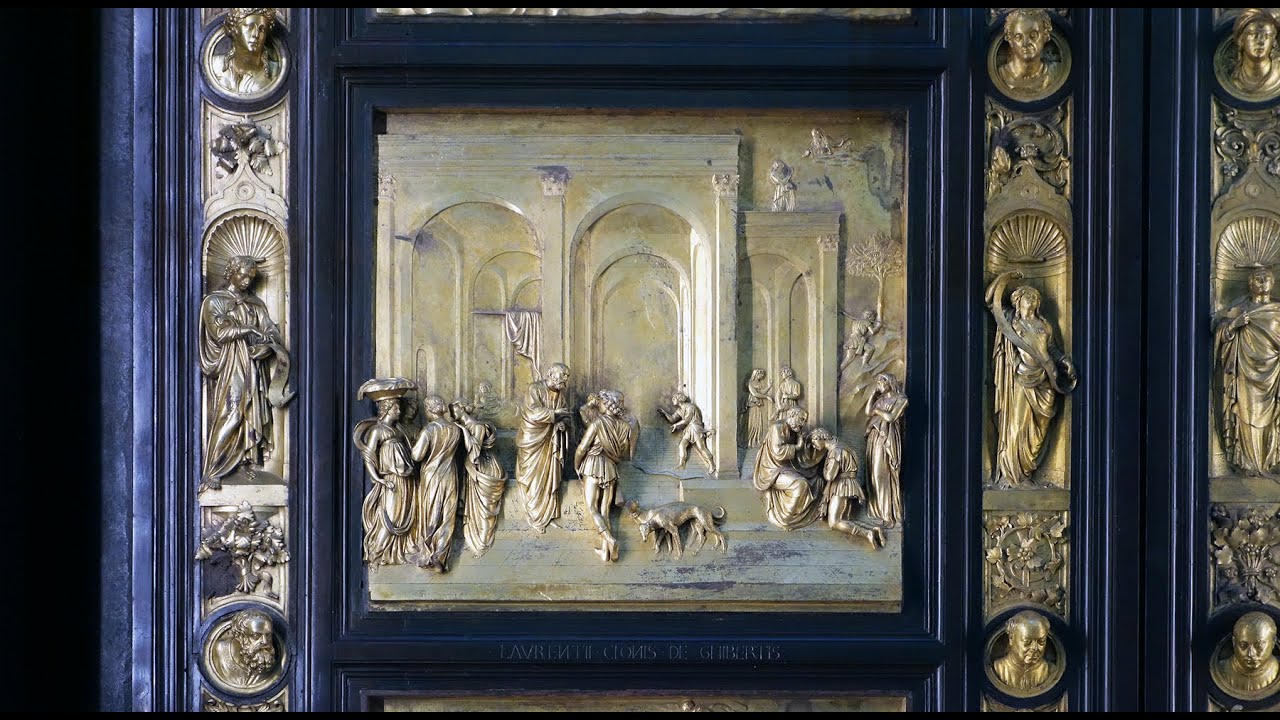
Christ in majesty, Florence Baptisery,

Visit Florence
Posted on 01/10/2021 3:32:19 AM PST by Cronos
Visit Florence
Liturgical Colour: White.
| First reading | Isaiah 55:1-11 © |
|---|
| Responsorial Psalm | Isaiah 12 © |
|---|
| Second reading | 1 John 5:1-9 © |
|---|
| Gospel Acclamation | cf.Jn1:29 |
|---|
| Gospel | Mark 1:7-11 © |
|---|
The readings on this page are from the Jerusalem Bible, which is used at Mass in most of the English-speaking world. The New American Bible readings, which are used at Mass in the United States, are available in the Universalis apps, programs and downloads.
You can also view this page with the Gospel in Greek and English.
catholic; mk1; ordinarytime; prayer
Please FReepmail me to get on/off the Alleluia Ping List.
Prayer thread for Salvation's recovery
Please also remember lastchance's husband in your prayers, he passed away on Christmas eve.
| Mark | |||||
| English: Douay-Rheims | Latin: Vulgata Clementina | Greek NT: Byzantine/Majority Text (2000) | Aramaic NT: Peshitta | ||
| 7. | And he preached, saying: There cometh after me one mightier than I, the latchet of whose shoes I am not worthy to stoop down and loose. | Et prædicabat dicens : Venit fortior post me, cujus non sum dignus procumbens solvere corrigiam calceamentorum ejus. | και εκηρυσσεν λεγων ερχεται ο ισχυροτερος μου οπισω μου ου ουκ ειμι ικανος κυψας λυσαι τον ιμαντα των υποδηματων αυτου | ܘܡܟܪܙ ܗܘܐ ܘܐܡܪ ܗܐ ܐܬܐ ܒܬܪܝ ܕܚܝܠܬܢ ܡܢܝ ܗܘ ܕܠܐ ܫܘܐ ܐܢܐ ܕܐܓܗܢ ܐܫܪܐ ܥܪܩܐ ܕܡܤܢܘܗܝ ܀ | .7 |
| 8. | I have baptized you with water; but he shall baptize you with the Holy Ghost. | Ego baptizavi vos aqua, ille vero baptizabit vos Spiritu Sancto. | εγω μεν εβαπτισα υμας εν υδατι αυτος δε βαπτισει υμας εν πνευματι αγιω | ܐܢܐ ܐܥܡܕܬܟܘܢ ܒܡܝܐ ܗܘ ܕܝܢ ܢܥܡܕܟܘܢ ܒܪܘܚܐ ܕܩܘܕܫܐ ܀ | .8 |
| 9. | And it came to pass, in those days, Jesus came from Nazareth of Galilee, and was baptized by John in the Jordan. | Et factum est : in diebus illis venit Jesus a Nazareth Galilææ : et baptizatus est a Joanne in Jordane. | και εγενετο εν εκειναις ταις ημεραις ηλθεν ιησους απο ναζαρετ της γαλιλαιας και εβαπτισθη υπο ιωαννου εις τον ιορδανην | ܘܗܘܐ ܒܝܘܡܬܐ ܗܢܘܢ ܐܬܐ ܝܫܘܥ ܡܢ ܢܨܪܬ ܕܓܠܝܠܐ ܘܐܬܥܡܕ ܒܝܘܪܕܢܢ ܡܢ ܝܘܚܢܢ ܀ | .9 |
| 10. | And forthwith coming up out of he water, he saw the heavens opened, and the Spirit as a dove descending, and remaining on him. | Et statim ascendens de aqua, vidit cælos apertos, et Spiritum tamquam columbam descendentem, et manentem in ipso. | και ευθεως αναβαινων απο του υδατος ειδεν σχιζομενους τους ουρανους και το πνευμα ωσει περιστεραν καταβαινον επ αυτον | ܘܡܚܕܐ ܕܤܠܩ ܡܢ ܡܝܐ ܚܙܐ ܕܐܤܬܕܩܘ ܫܡܝܐ ܘܪܘܚܐ ܐܝܟ ܝܘܢܐ ܕܢܚܬܬ ܥܠܘܗܝ ܀ | .10 |
| 11. | And there came a voice from heaven: Thou art my beloved Son; in thee I am well pleased. | Et vox facta est de cælis : Tu es Filius meus dilectus, in te complacui. | και φωνη εγενετο εκ των ουρανων συ ει ο υιος μου ο αγαπητος εν ω ευδοκησα | ܘܩܠܐ ܗܘܐ ܡܢ ܫܡܝܐ ܐܢܬ ܗܘ ܒܪܝ ܚܒܝܒܐ ܒܟ ܐܨܛܒܝܬ ܀ | .11 |

1:4–8
4. John did baptize in the wilderness, and preach the baptism of repentance for the remission of sins.
5. And there went out unto him all the land of Judæa, and they of Jerusalem, and were all baptized of him in the river of Jordan, confessing their sins.
6. And John was clothed with camel’s hair, and with a girdle of a skin about his loins; and he did eat locusts and wild honey;
7. And preached, saying, There cometh one mightier than I after me, the latchet of whose shoes I am not worthy to stoop down and unloose.
8. I indeed have baptized you with water: but he shall baptize you with the Holy Ghost.
PSEUDO-JEROME. According to the above-mentioned prophecy of Isaiah, the way of the Lord is prepared by John, through faith, baptism, and penitence; the paths are made straight by the rough marks of the hair-cloth garment, the girdle of skin, the feeding on locusts and wild honey, and the most lowly voice; whence it is said, John was in the wilderness. For John and Jesus seek what is lost in the wilderness; where the devil conquered, there he is conquered; where man fell, there he rises up. But the name John means the grace of God, and the narrative begins with grace. For it goes on to say, baptizing. For by baptism grace is given, seeing that by baptism sins are freely remitted. But what is brought to perfection by the bridegroom, is introduced by the friend of the bridegroom. Thus catechumens, (which word means persons instructed,) begin by the ministry of the priest, receive the chrismb from the bishop. And to shew this, it is subjoined, And preaching the baptism of repentance, &c.
BEDE. (in Marc. i. 2) It is evident that John not only preached, but also gave to some the baptism of repentance; but he could not give baptism for the remission of sinsc. For remission of sins is only given to us by the baptism of Christ. It is therefore only said, Preaching the baptism of repentance for the remission of sins; for he preached a baptism which could remit sins, since he could not give it. Wherefore as he was the forerunner of the Incarnate Word of the Father, by the word of his preaching, so by his baptism, which could not remit sins, he preceded that baptism, of penitence, by which sins are remitted.
THEOPHYLACT. The baptism of John had not remission of sins, but only brought men to penitence. He preached therefore the baptism of repentance, that is, he preached that to which the baptism of penitence led, namely, remission of sins, that they who in penitence received Christ, might receive Him to the remission of their sins.
PSEUDO-JEROME. Now by John as by the bride-groom’s friend, the bride is brought to Christ, as by a servant Rebecca was brought to Isaac; wherefore there follows, And there went out to him all, (Gen. 24:61) &c. For confession and beauty are in his presence, (Ps. 95:6. Vulg.) that is, the presence of the bridegroom. And the bride leaping down from her camel signifies the Church, who humbles herself on seeing her husband Isaac, that is, Christ. But the interpretation of Jordan, where sins are washed away, is ‘an alien descent.’ For we heretofore aliens to God by pride, are by the sign (symbolum) of Baptism made lowly, and thus exalted on highd.
BEDE. (ubi sup.) An example of confessing their sins and of promising to lead a new life, is held out to those who desire to be baptized, by those words which follow, confessing their sins.
CHRYSOSTOM. Because indeed John preached repentance, he wore the marks of repentance in his garment and in his food, wherefore there follows, And John was clothed in camel’s hair.
BEDE. It says, clothed in a garment of hair, not in woollen clothes; the former is the mark of an austere garb, the latter of effeminate luxury. But the girdle of skins, with which he was girt, like Elias, is a mark of mortification. And this meat, locusts and wild honey, is suited to a dweller in the wilderness, so that his object in eating was not the deliciousness of meats, but the satisfying of the necessity of human flesh.
PSEUDO-JEROME. The dress of John, his food, and employment, signifies the austere life of preachers, and that future nations are to be joined to the grace of God, which is John, both in their minds and in externals. For by camel’s hair, is meant the rich among the nations; and by the girdle of skin, the poor, dead to the world; and by the wandering locusts, the wise men of this world; who, leaving the dry stalks to the Jews, draw off with their legs the mystic grain, and in the warmth of their faith leap up towards heaven; and the faithful, being inspired by the wild honey, are full-fed from the untilled wood.
THEOPHYLACT. Or else; The garment of camel’s hair was significative of grief, for John pointed out, that he who repented should mourn. For sackcloth signifies grief; but the girdle of skins shews the dead state of the Jewish people. The food also of John not only denotes abstinence, but also shews forth the intellectual food, which the people then were eating, without understanding any thing lofty, but continually raising themselves on high, and again sinking to the earth. For such is the nature of locusts, leaping on high and again falling. In the same way the people ate honey, which had come from bees, that is, from the prophets; it was not however domestic, but wild, for the Jews had the Scriptures, which are as honey, but did not rightly understand them.
GREGORY. (Moral. xxxi. 25) Or, by the kind itself of his food he pointed out the Lord, of whom he was the forerunner; for in that our Lord took to Himself the sweetness of the barren Gentiles, he ate wild honey. In that He in His own person partly converted the Jews, He received locusts for His food, which suddenly leaping up, at once fall to the ground. For the Jews leaped up when they promised to fulfil the precepts of the Lord; but they fell to the ground, when by their evil works they affirmed that they had not heard them. They made therefore a leap upwards in words, and fell down by their actions.
BEDE. (ubi sup.) The dress and food of John may also express of what kind was his inward walk. For he used a dress more austere than was usual, because he did not encourage the life of sinners by flattery, but chid them by the vigour of his rough rebuke; he had a girdle of skin round his loins, for he was one, who crucified his flesh with the affections and lusts. (Gal. 5:24) He used to cat locusts and wild honey, because his preaching had some sweetness for the multitude, whilst the people debated whether he was the Christ himself or not; but this soon came to an end, when his hearers understood that he was not the Christ, but the forerunner and prophet of Christ. For in honey there is sweetness, in locusts swiftness of flight; whence there follows, And he preached, saying, there cometh one mightier than I after me.
GLOSS. (non occ.) He said this to do away with the opinion of the crowd, who thought that he was the Christ; but he announces that Christ is mightier than he, who was to remit sins, which he himself could not do.
PSEUDO-JEROME. Who again is mightier than the grace, by which sins are washed away, which John signifies? He who seven times and seventy times seven remits sin. Grace indeed comes first, but remits sins once only by baptism, but mercy reaches to the wretched from Adam up to Christ through seventy-seven generations, and up to one hundred and forty-four thousand. (Mat. 18:22)
PSEUDO-CHRYSOSTOM. (Vict. Ant. e Cat. in Marc.) But lest he should be thought to say this by way of comparing himself to Christ, he subjoins, Of whom I am not worthy, &c. It is not however the same thing to loose the shoe-latchet, which Mark here says, and to carry his shoes, which Matthew says. And indeed the Evangelists following the order of the narrative, and not able to err in any thing, say that John spoke each of these sayings in a different sense. But commentators on this passage have expounded each in a different way. For he means by the latchet, the tie of the shoe. (non occ.). He says this therefore to extol the excellence of the power of Christ, and the greatness of His divinity; as if he said, Not even in the station of his servant am I worthy to be reckoned. For it is a great thing to contemplate, as it were stooping down, those things which belong to the body of Christ, and to see from below the image of things above, and to untie each of those mysteries, about the Incarnation of Christ, which cannot be unravelled.
PSEUDO-JEROME. The shoe is in the extremity of the body; for in the end the Incarnate Saviour is coming for justice, whence it is said by the prophet, Over Edom will I cast out my shoe. (Ps. 60:9)
GREGORY. (Hom. in Evan. vii.) Shoes also are made from the skins of dead animals. The Lord, therefore, coming incarnate, appeared us it were with shoes on His feet, for He assumed in His divinity the dead skins of our corruption. Or else; it was a custom among the ancients, that if a man refused to take as his wife the woman whom he ought to take, he who offered himself as her husband by right of kindred took off that man’s shoe. Rightly then does he proclaim himself unworthy to loose his shoe-latchet, as if he said openly, I cannot make bare the feet of the Redeemer, for I usurp not the name of the Bridegroom, a thing which is above my deserts.
THEOPHYLACT. Some persons also understand it thus; all who came to John, and were baptized, through penitence were loosed from the bands of their sins by believing in Christ. John then in this way loosed the shoe-latchet of all the others, that is, the bands of sin. But Christ’s shoe-latchet he was not able to unloose, because he found no sin in Him.
BEDE. (ubi sup.) Thus then John proclaims the Lord not yet as God, or the Son of God, but only as a man mightier than himself. For his ignorant hearers were not yet capable of receiving the hidden things of so great a Sacrament, that the eternal Son of God, having taken upon Him the nature of man, had been lately born into the world of a virgin; but gradually by the acknowledgment of His glorified lowliness, they were to be introduced to the belief of His Divine Eternity. To these words, however, he subjoins, as if covertly declaring that he was the true God, I baptize you with water, but he shall baptize you with the Holy Ghost. For who can doubt, that none other but God can give the grace of the Holy Ghost.
JEROME. For what is the difference between water and the Holy Ghost, who was borne over the face of the waters? Water is the ministry of man; but the Spirit is ministered by God.
BEDE. (ubi sup.) Now we are baptized by the Lord in the Holy Ghost, not only when in the day of our baptism, we are washed in the fount of life, to the remission of our sins, but also daily by the grace of the same Spirit we are inflamed, to do those things which please God.
1:9–11
9. And it came to pass in those days, that Jesus came from Nazareth of Galilee, and was baptized of John in Jordan.
10. And straightway coming up out of the water, he saw the heavens opened, and the Spirit like a dove descending upon him:
11. And there came a voice from heaven, saying, Thou art my beloved Son, in whom I am well pleased.
PSEUDO-JEROME. Mark the Evangelist, like a hart, longing after the fountains of water, leaps forward over places, smooth and steep; and, as a bee laden with honey, he sips the tops of the flowers. Wherefore he hath shewn us in his narrative Jesus coming from Nazareth, saying, And it came to pass in those days, &c.
PSEUDO-CHRYSOSTOM. (Vict. Ant. e Cat. in Marc.) Forasmuch as He was ordaining a new baptism, He came to the baptism of John, which, in respect of His own baptism, was incomplete, but different from the Jewish baptism, as being between both. He did this that He might shew, by the nature of His baptism, that He was not baptized for the remission of sins, nor as wanting the reception of the Holy Ghost: for the baptism of John was destitute of both these. But He was baptized that He might be made known to all, that they might believe on Him and fulfil all righteousness, which is keeping of the commandments: for it had been commanded to men that they should submit to the Prophet’s baptism.
BEDE. (in Marc. i. 4) He was baptized, that by being baptized Himself He might shew His approval of John’s baptisme, and that, by sanctifying the waters of Jordan through the descent of the dove, He might shew the coming of the Holy Ghost in the laver of believers; whence there follows, And straightway coming up out of the water, he saw the heavens opened, and the Holy Spirit like a dove descending, and resting upon him. But the heavens are opened, not by the unclosing of the elements, but to the eyes of the spirit, to which Ezekiel in the beginning of his book relates that they were opened; (Ezek. 1.) or this His seeing the heavens opened after baptism was done for our sakes, to whom the door of the kingdom of heaven is opened by the laver of regeneration.
PSEUDO-CHRYSOSTOM. (Vict. Ant. e Cat. in Marc.) Or else, that from heaven sanctification might be given to men, and earthly things be joined to heavenly. But the Holy Spirit is said to have descended upon Him, not as if He then first came to Him, for He never had left Him; but that He might shew forth the Christ, Who was preached by John, and point Him out to all, as it were by the finger of faith.
BEDE. (ubi sup.) This event also, in which the Holy Ghost was seen to come down upon baptism, was a sign of spiritual grace to be given to us in baptism.
PSEUDO-JEROME. But this is the anointing of Christ according to the flesh, namely, the Holy Ghost, of which anointing it is said, God, even thy God, hath anointed thee with the oil of gladness above thy fellows. (Ps. 45:8)
BEDE. (ubi sup.) Well indeed in the shape of a dove did the Holy Ghost come down, for it is an animal of great simplicity, and far removed from the malice of gall, that in a figure He might shew us that He looks out for simple hearts, and deigns not to dwell in the minds of the wicked.
PSEUDO-JEROME. Again, the Holy Ghost came down in the shape of a dove, because in the Canticles it is sung of the Church: (Cant. passim.) My bride, my love, my beloved, my dove. Bride in the Patriarchs, love in the Prophets, near of kin in Joseph and Mary, beloved in John the Baptist, dove in Christ and His Apostles: to whom it is said, Be ye wise as serpents, and harmless as doves. (Mat. 10:16)
BEDE. (ubi sup.) Now the Dove sat on the head of Jesus, lest any one should think that the voice of the Father was addressed to John and not to Christ. And well did he add, abiding on Him; for this is peculiar to Christ, that the Holy Ghost once filling Him should never leave Him. For sometimes to His faithful disciples the grace of the Spirit is conferred for signs of virtue, and for the working of miracles, sometimes it is taken away; though for the working of piety and righteousness, for the preservation of love to God and to one’s neighbour, the grace of the Spirit is never absent. But the voice of the Father shewed, that He Himself, who came to John to be baptized with the others, was the very Son of God, willing to baptize with the Holy Spirit, whence there follows, And there came a voice from heaven, Thou art my beloved Son, in thee I am well pleased. Not that this informed the Son Himself of a thing of which He was ignorant, but it shews to us what we ought to believe.
AUGUSTINE. (de Cons. Ev. ii. 14) Wherefore Matthew relates that the voice said, This is my beloved Son; for he wished to shew that the words, This is My Son, were in fact said, that thus the persons who heard it might know that He, and not another, was the Son of God. But, if you ask, which of these two sounded forth in that voice, take which you will, only remember, that the Evangelists, though not relating the same form of speaking, relate the same meaning. And that God delighted Himself in His Son, we are reminded in these words, In thee I am well pleased.
BEDE. (ubi sup.) The same voice has taught us, that we also, by the water of cleansing, and by the Spirit of sanctification, may be made the sons of God. The mystery of the Trinity also is shewn forth in the baptism; the Son is baptized, the Spirit comes down in the shape of a dove, the voice of the Father bearing witness to the Son is heard.
PSEUDO-JEROME. Morally also it may be interpreted; we also, drawn aside from the fleeting world by the smell and purity of flowers, run with the young maidens after the bridegroom, (v. Cant. 1:2. 3.) and are washed in the sacrament of baptism, from the two fountains of the love of God, and of our neighbour, by the grace of remission, and mounting up by hope gaze upon heavenly mysteries with the eyes of a clean heart. Then we receive in a contrite and lowly spirit, with simplicity of heart, the Holy Spirit, who comes down to the meek, and abides in us, by a never-failing charity. And the voice of the Lord from heaven is directed to us the beloved of God; Blessed are the peacemakers, for they shall be called the sons of God; (Matt. 5:9) and then the Father, with the Son and the Holy Spirit, is well-pleased with us, when we are made one spirit with God.



For: Sunday, January 10, 2021
Feast: Baptism of the Lord
From: Isaiah 55:1-11
Epilogue: Invitation to partake of the banquet of the Lord's Covenant
-------------------------------------------------------------------------------------------------
[1] “Ho, every one who thirsts,
come to the waters;
and he who has no money,
come, buy and eat!
Come, buy wine and milk
without money and without price.
[2] Why do you spend your money for
that which is not bread,
and your labour for that which does
not satisfy?
Hearken diligently to me, and eat
what is good,
and delight yourselves in fatness.
[3] lncline your ear, and come to me;
hear, that your soul may live;
and I will make with you an everlasting covenant,
my steadfast, sure love for David.
[4] Behold, I made him a witness to the peoples,
a leader and commander for the peoples.
[5] Behold, you shall call nations that
you know not,
and nations that knew you not shall
run to you,
because of the LORD your God,
and of the Holy One of Israel,
for he has glorified you.
[6] “Seek the LORD while he may be found,
call upon him while he is near;
[7] let the wicked forsake his way,
and the unrighteous man his thoughts;
let him return to the Lord, that he
may have mercy on him,
and to our God, for he will abundantly
pardon.
[8] For my thoughts are not your
thoughts,
neither are your ways my ways,
says the LORD.
[9] For as the heavens are higher than the earth,
so are my ways higher than your ways
and my thoughts than your thoughts.
[10] For as the rain and the snow come
down from heaven,
and return not thither but water
the earth,
making it bring forth and sprout,
giving seed to the sower and bread
to the eater,
[11] so shall my word be that goes forth
from my mouth;
it shall not return to me empty,
but it shall accomplish that which
I purpose,
and prosper in the thing for which
I sent it.
***************************************************
Commentary:
55:1-13. The invitation to the Covenant banquet acts as the epilogue to the second part of the book of Isaiah, and picks up on themes in chapter 40, which is its prologue. The two chapters help to give literary and thematic unity to this part of the book. The oracle in chapter 55 sums up in a way the teachings contained in the preceding chapters -- the invitation to the Covenant banquet (vv. 1-3), reminiscent of that celebrated by Moses at Mount Sinai (Ex 24:5, 11); the renewal of the Covenant with David on Zion (vv. 4-5); the transcendence of God, who is unaffected by the sins of men (vv. 8-9); the power of the word of God (vv. 10-11); and, as a final synthesis, the promise of a new exodus, a sign of God’s everlasting salvation.
These oracles are a call for conversion, a call to take advantage of the salvific gifts so generously offered: “Come to the waters” (v. 1), “Come to me” (v. 3), “Seek the Lord” (v. 6), “Let the wicked forsake his way” (v. 7). Originally, it was a call to those exiled in Babylon to return to Jerusalem; but it is a call that is made at all times, to everyone. The reference to an everlasting Covenant, in keeping with promises made to David (cf. v. 3), can be read by Christians as an invitation to share in the new and eternal Covenant sealed with the Blood of our Lord Jesus Christ, a pledge of salvation for all mankind. In the Eucharist, the banquet of the New Testament, the words of the prophet come true in the complete sense in the words spoken by our Lord when he instituted that sacrament: “Take and eat” (cf. v. 1) the true bread of life, the very finest food, which money cannot buy (vv. 1-3). Therefore, the invitation extended by the prophet is a call to Christians to partake of the Blessed Eucharist. Paul VI, urging the faithful to take part in the Sunday celebration of the Eucharist, wrote: “How could we fail to take part in this encounter, to partake of the banquet that Christ has lovingly prepared for us? Our participation should be dignified and filled with joy. Christ, crucified and glorified, comes among his disciples to draw them all into the power of his resurrection. It is the pinnacle, here on earth, of the Covenant of love between God and his people: the sign and source of Christian joy, the preparation for the eternal banquet in heaven” (Gaudete in Domino, 322). Verses 1-11, like 54:5-14, are read in the liturgy of the Easter Vigil, which celebrates Christ’s victory over sin and which invites the faithful to partake of the banquet of the Covenant sealed by his death and resurrection: “On the feasts of the Lord, when the faithful receive the Body of the Son, they proclaim to one another the Good News that the first fruits of life have been given, as when the angel said to Mary Magdalene, ‘Christ is risen!’ Now too are life and resurrection conferred on whoever receives Christ” (Fanqith, Brevarium iuxta ritum Ecclesiae Antiochenae Syrorum, in Catechism of the Catholic Church, 1391).
6-9. The Israelites are called to conversion. In order to return to their homeland, they must return to God, must “seek” him (vv. 6-7). And the Lord, who allows himself to be found and who does not judge in the way that men do, is willing and able to grant forgiveness (vv. 8-9). In other words, the call to repentance is grounded on the goodness of God who “will abundantly pardon” (v. 7). Man, for his part, should grasp this opportunity that God offers him. So, the words in this passage are a constant encouragement to begin and begin again in the pursuit of virtue: “To be converted means to ask for forgiveness and to seek out the strength of God in the Sacrament of reconciliation, and thus begin again, advancing step by step every day, learning to overcome ourselves, to win the spiritual battles that we face, and to give of ourselves joyfully, ‘for God loves a cheerful giver’ (2 Cor 9:7)” (John Paul II, Novo incipiente, 8 April 1979). And St Augustine, apropos of conversion, wrote: “Do not say: ‘Tomorrow, I will he converted; tomorrow, I will give thanks to God; and all my sins, today’s and yesterday’s, will be forgiven’. It is true that God promises forgiveness for your conversion; but He does not promise tomorrow for your delays” (Enarrationes in Psalmos, 144, 11).
The words of v. 8 are echoed by St Paul in Romans 11:33, and are a reminder to us of just how narrow-minded we can be and how we can fail even to imagine the great things that God has in store for us.
10-11. The prophet uses comparisons that are particularly meaningful to those who live in the arid countries of the East, to describe how very powerful the word of God is: it actually delivers the salvation that it promises. The personified word of God (cf. 'Ms 8:4; 9:9-10; 18:14-15) is a figure of the incarnation of Jesus Christ, the eternal Word of the Father, who comes down to save mankind. "The Word of God, he says, will not return to him empty and barren; rather, it will flourish in all things, nourished by the good deeds of those who obey and fulfill his teachings. The word is fulfilled when it is put into practice; if it is not put into practice, it remains barren and withered and starved. Listen carefully, then, when he tells of the food that nourishes him: 'My food is to do the will of him who sent me' (Jn 4:34)" (St Bernard, In Cantica Canticorum, 71, 12-13).
Everyone Who Believes in Jesus Overcomes the World
--------------------------------------------------------------------------------
[1] Every one who believes that Jesus is the Christ is a child of God, and every one who loves the parent loves the child. [2] By this we know that we love the children of God, when we love God and obey his commandments. [3] For this is the love of God, that we keep his commandments. And his commandments are not burdensome. [4] For whatever is born of God overcomes the world; and this is the victory that overcomes the world, our faith. [5] Who is it that overcomes the world but he who believes that Jesus is the Son of God?
Testimony Borne to Christ
--------------------------------------
[6] This is he who came by water and blood, Jesus Christ, not with the water only but with the water and the blood. [7] And the Spirit is the witness, because the Spirit is the truth. [8] There are three witnesses, the Spirit, the water, and the blood; and these three agree. [9] If we receive the testimony of men, the testimony of God is greater, for this is the testimony of God that he has borne witness to his Son.
***********************************************************************
Commentary:
1-5. The fifth chapter is a summary of the entire letter, focusing on faith in Jesus Christ (vv. 6-12) and the confidence that faith gives (vv. 13-21).
In the opening verses (vv. 1-5) St John points to some consequences of faith: he who believes in Christ is a child of God (v. 1); he loves God and men, his brothers (v. 2); he keeps the commandments (v. 3) and shares in Christ's victory over the world (vv. 4-5).
1. "He who loves the parent...": it is axiomatic that one who loves his father also loves his brothers and sisters, because they share the same parent. The New Vulgate clarifies the scope of this maxim in this letter by adding the word Deum: "He who loves God his father..." loves him who is born of God; Christian fraternity is a consequence of divine filiation.
4. "This is our victory that overcomes the world, our faith": faith in Jesus Christ is of crucial importance because through it every baptized person is given a share in Christ's victory. Jesus has overcome the world (cf. Jn 16:33) by his death and resurrection, and the Christian (who through faith becomes a member of Christ) has access to all the graces necessary for coping with temptations and sharing in Christ's own glory. In this passage the word "world" has the pejorative meaning of everything opposed to the redemptive work of Christ and the salvation of man that flows from it.
6. The "water" and the "blood" have been interpreted in different ways, depending on whether they apply (following the more literal meaning) to events in the life of Christ, or are regarded as symbols of particular sacraments. The water, if referred to the life of Christ, would be an allusion to our Lord's baptism (cf. Mt 3:13-17 and par.), where the Father and the Holy Spirit bore witness to Christ's divinity; the blood would refer to the Cross, where Christ, God and true man, shed his blood to bring Redemption. According to this interpretation, St John is answering the Gnostics, who said that Jesus of Nazareth became the Son of God through baptism and ceased to be the Son of God prior to his passion: therefore, only the man Jesus, devoid of divinity, died on the Cross; which would be a denial of the redemptive value of Christ's death.
Understood as symbols of the sacraments, the water would refer to Baptism (cf. Jn 3:5), where we receive the Holy Spirit and the life of grace (cf. Jn 7:37-39); the blood would apply to the Eucharist, where we partake of the blood of Christ in order to have life in us (cf. Jn 6:53, 55, 56). Jesus came on earth to give his life for men (cf. Jn 10:10); we obtain that life in the first instance by means of the living water of Baptism (cf. Jn 4:14; 7:37ff); and also by the application of the blood of Christ, which cleanses us from all sin (cf. 1 Jn 1:7; 2:2; 4:10).
The two interpretations are compatible with one another, given that sacraments are sensible signs of the supernatural effects of Christ's redemptive death. Referring to Baptism, Tertullian wrote: "We have also a second laving, and it too is unique--the baptism with blood. The Lord spoke of this when he said, 'I have a baptism to be baptized with' (Lk 12:50), having had already been baptized once. So, he did come 'by water and blood' (1 In 5:6), as John writes, in order to be bathed by the water and glorified by the blood, in order to make us (who are called by water) chosen ones through blood. These two baptisms spring from the wound in his pierced side; so it is that those who believed in his blood would be washed by the water; those who were washed in the water would also drink of the blood" (De Baptismo, XVI).
7-8. The Sistine-Clementine edition of the Vulgate included an addition which left the text reading as follows: "There are three who give witness [in heaven: the Father, the Word, and the Holy Spirit; and these three are one. And there are three who give witness on earth]: the Spirit, the water, and the blood; and these three agree." The words shown in bracketed italics (known as the Johannine "comma" or addition) were the subject of heated debate (around the end of the nineteenth century) as to their authenticity. The Holy Office (as was) left theologians free to research the matter (cf. Declaration, 2 June 1927) and in fact it has been shown that the "comma" was introduced in Spain around the fourth century AD in a text attributed to Priscillian, and therefore does not belong to the original inspired text. The "comma"makes express mention of the Blessed Trinity; however, even with- out it the text proclaims that mystery of faith fairly clearly: it makes mention of Jesus Christ, the Son of God (vv. 5-6), and of the Holy Spirit (v. 7) and of the Father, both of whom bear witness to the Son (v. 9).
According to the legal prescriptions of the Old Testament, the testimony of one witness was insufficient at trials (Deut 17:6; cf. Jn 8:17). St John points to three witnesses (the Holy Spirit, water and blood), thereby refuting the Gnostic teaching; he is saying that the water and the blood, that is, Christ's baptism and his death on the Cross, are a manifestation of his divinity. Clearly the word "witness" is used here in a broad sense: namely, in the sense that at those two important moments in his life, Christ makes known to us that he is true God.
The Fathers who interpreted these words as referring to the sacraments usually comment on the fact that in the sacraments the grace of God is communicated internally and is signaled externally. St Bede writes along those lines: "The Holy Spirit makes us adoptive sons of God; the water of the sacred fount cleanses us; the blood of the Lord redeems us: the spiritual sacrament gives us a dual witness, one visible, one invisible" (In I Epist. S. Ioannis, ad loc.).
The Ministry of John the Baptist
----------------------------------------------
[7] And he (John the Baptist) preached, saying, "After me comes he who is mightier than I, the thong of whose sandals I am not worthy to stoop down and untie. [8] I have baptized you with water, but he will baptize you with the Holy Spirit."
Jesus Is Baptized
--------------------------
[9] In those days Jesus came from Nazareth of Galilee and was baptized by John in the Jordan. [10] And when he came up out of the water, immediately he saw the heavens opened and the Spirit descending upon him like a dove; [11] and a voice came from heaven, "Thou art my beloved Son; with thee I am well pleased."
*****************************************************************
Commentary:
8. "Baptizing with the Holy Spirit" refers to the Baptism Jesus will institute and shows how it differs from the baptism of John. In John's baptism, as in the other rites of the Old Testament, grace was only signified, symbolized. "By the baptism of the New Law, men are baptized inwardly by the Holy Spirit, and this is accomplished by God alone. But by the baptism of John the body alone was cleansed by the water" (St. Thomas Aquinas, Summa Theologiae, III, q. 38, art. 2 ad 1). In Christian Baptism, instituted by our Lord, the baptismal rite not only signifies grace but is the effective cause of grace, i.e. it confers grace. "Baptism confers the first sanctifying grace and the supernatural virtues, taking away Original Sin and also personal sins if there are any, together with the entire debt of punishment which the baptized person owes for sin. In addition, Baptism impresses the Christian character in the soul and makes it able to receive the other sacraments" (St. Pius X Catechism, 295). The effects of Christian Baptism, like everything to do with the sanctification of souls, are attributed to the Holy Spirit, the "Sanctifier". It should be pointed out, however, that like all the ad extra actions of God (i.e. actions external to the intimate life of the Blessed Trinity), the sanctification of souls is the work of all three Divine Persons.
9. Our Lord's hidden life takes place (apart form his birth at Bethlehem and the time he was in Egypt) in Nazareth of Galilee from where he comes to receive John's baptism.
Jesus has no need to receive this baptism of conversion. However, it was appropriate that he who was going to establish the New Alliance should recognize and accept the mission of his Precursor by being baptized with his baptism: this would encourage people to prepare to receive the Baptism which was necessary. The Fathers comment that our Lord went to receive John's baptism in order to fulfill all righteousness (cf. Mt 3:15), to give us an example of humility, to become widely known, to have people believe in Him and to give life-giving strength to the waters of Baptism.
"Ever since the Baptism of Christ in the water, Baptism removes the sins of all" (St Augustine, Sermon 135).
"There are two different periods of time which relate to Baptism--one the period of its institution by the Redeemer; the other the establishment of the law regarding its reception. [...] The second period to be distinguished, that is, the time when the law of Baptism was made, also admits of no doubt. Holy writers are unanimous in saying that after the Resurrection of our Lord, when he gave to his Apostles the command to go and 'make disciples of all nations, baptizing them in the name of the Father and of the Son and of the Holy Ghost' (Mt 28:19) the law of Baptism became obligatory on all who were to be saved" (St. Pius V Catechism, Part II).
10. The visible presence of the Holy Spirit in the form of a dove marks the beginning of Christ's public ministry. The Holy Spirit will also appear, in the form of tongues of fire, on the occasion when the Church begins its mission to all the world on the day of Pentecost (cf. Acts 2:3-21).
The Fathers usually interpret the dove as a symbol of peace and reconciliation between God and men. It first appears in the account of the flood (Gen 8:10-11) as a sign that God's punishment of mankind has come to an end. Its presence at the beginning of Christ's public ministry symbolizes the peace and reconciliation he will bring.
11. At the very beginning of his public life the mystery of the Holy Trinity is made manifest: "The Son is baptized, the Holy Spirit descends in the form of a dove and the voice of the Father is heard" (St Bede, In Marci Evangelium expositio, in loc.). "The Holy Spirit dwells in him," the same author goes on, "but not from the moment of his Baptism, but from the moment he became man." In other words, Jesus did not become God's son at his Baptism; he is the Son of God from all eternity. Nor did he become the Messiah at this point; he was the Messiah from the moment he became man.
Baptism is the public manifestation of Jesus as Son of God and as Messiah, ratified by the presence of the Blessed Trinity.
"The Holy Spirit descended visibly in bodily form upon Christ when he was baptized so that we may believe him to descend invisibly upon all those who are baptized afterwards" (St Thomas Aquinas, Summa Theologiae, III, q. 39, a. 6 and 3)..

Disclaimer: Opinions posted on Free Republic are those of the individual posters and do not necessarily represent the opinion of Free Republic or its management. All materials posted herein are protected by copyright law and the exemption for fair use of copyrighted works.