Free Republic
Browse · Search
Religion
Topics · Post Article

Skip to comments.

Catholic Caucus: Daily Mass Readings, 12-15-2020, Tuesday of the Third Week of Advent
USCCB/RNAB ^ | 15 December 2020 | USCCB/RNAB

Posted on 12/15/2020 12:28:36 AM PST by Cronos

December 15 2020

Tuesday of the Third Week of Advent


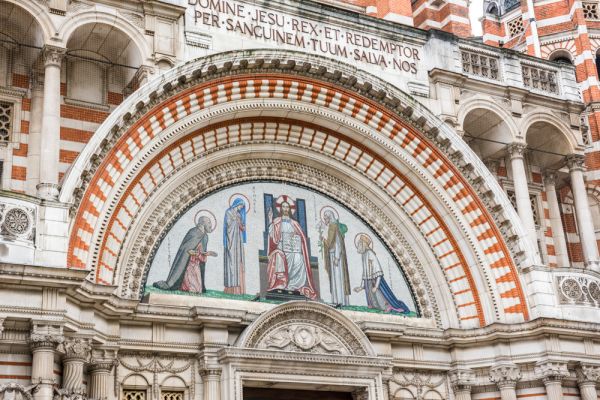
Christ the King, Above the entrance door to the Westminster Cathedral, London, UK

Lectionary 188

Reading 1

Thus says the LORD:
Woe to the city, rebellious and polluted,
to the tyrannical city!
She hears no voice,
accepts no correction;
In the LORD she has not trusted,
to her God she has not drawn near.

For then I will change and purify
the lips of the peoples,
That they all may call upon the name of the LORD,
to serve him with one accord;
From beyond the rivers of Ethiopia
and as far as the recesses of the North,
they shall bring me offerings.

On that day
You need not be ashamed
of all your deeds,
your rebellious actions against me;
For then will I remove from your midst
the proud braggarts,
And you shall no longer exalt yourself
on my holy mountain.
But I will leave as a remnant in your midst
a people humble and lowly,
Who shall take refuge in the name of the LORD:
the remnant of Israel.
They shall do no wrong
and speak no lies;
Nor shall there be found in their mouths
a deceitful tongue;
They shall pasture and couch their flocks
with none to disturb them..

R. (7a) The Lord hears the cry of the poor.
I will bless the LORD at all times;
his praise shall be ever in my mouth.
Let my soul glory in the LORD;
the lowly will hear me and be glad.
R. The Lord hears the cry of the poor.
Look to him that you may be radiant with joy,
and your faces may not blush with shame.
When the poor one called out, the LORD heard,
and from all his distress he saved him.
R. The Lord hears the cry of the poor.
The LORD confronts the evildoers,
to destroy remembrance of them from the earth.
When the just cry out, the LORD hears them,
and from all their distress he rescues them.
R. The Lord hears the cry of the poor.
The LORD is close to the brokenhearted;
and those who are crushed in spirit he saves.
The LORD redeems the lives of his servants;
no one incurs guilt who takes refuge in him.
R. The Lord hears the cry of the poor.

Alleluia

R. Alleluia, alleluia.
Come, O Lord, do not delay;
forgive the sins of your people.
R. Alleluia, alleluia.
Jesus said to the chief priests and the elders of the people:
“What is your opinion?
A man had two sons.
He came to the first and said,
‘Son, go out and work in the vineyard today.’
The son said in reply, ‘I will not,’
but afterwards he changed his mind and went.
The man came to the other son and gave the same order.
He said in reply, ‘Yes, sir,’ but did not go.
Which of the two did his father’s will?”
They answered, “The first.”
Jesus said to them, “Amen, I say to you,
tax collectors and prostitutes
are entering the Kingdom of God before you.
When John came to you in the way of righteousness,
you did not believe him;
but tax collectors and prostitutes did.
Yet even when you saw that,
you did not later change your minds and believe him.”


TOPICS: Catholic; General Discusssion; Prayer; Worship
KEYWORDS: advent; catholic; mt21; prayer
For your reading, reflection, faith-sharing, comments, questions, discussion.

1 posted on 12/15/2020 12:28:36 AM PST by Cronos
[ Post Reply | Private Reply | View Replies]

To: All

advent; catholic; mt21; prayer;


2 posted on 12/15/2020 12:28:52 AM PST by Cronos ( )
[ Post Reply | Private Reply | To 1 | View Replies]

To: nickcarraway; NYer; ELS; Pyro7480; livius; ArrogantBustard; Catholicguy; RobbyS; marshmallow; ...
Alleluia Ping

Please FReepmail me to get on/off the Alleluia Ping List.


3 posted on 12/15/2020 12:29:12 AM PST by Cronos ( )
[ Post Reply | Private Reply | To 2 | View Replies]

To: All
Matthew
 English: Douay-RheimsLatin: Vulgata ClementinaGreek NT: Byzantine/Majority Text (2000)
28But what think you? A certain man had two sons; and coming to the first, he said: Son, go work to day in my vineyard. Quid autem vobis videtur ? Homo quidam habebat duos filios, et accedens ad primum, dixit : Fili, vade hodie, operare in vinea mea.τι δε υμιν δοκει ανθρωπος ειχεν τεκνα δυο και προσελθων τω πρωτω ειπεν τεκνον υπαγε σημερον εργαζου εν τω αμπελωνι μου
29And he answering, said: I will not. But afterwards, being moved with repentance, he went. Ille autem respondens, ait : Nolo. Postea autem, pœnitentia motus, abiit.ο δε αποκριθεις ειπεν ου θελω υστερον δε μεταμεληθεις απηλθεν
30And coming to the other, he said in like manner. And he answering, said: I go, Sir; and he went not. Accedens autem ad alterum, dixit similiter. At ille respondens, ait : Eo, domine, et non ivit :και προσελθων τω δευτερω ειπεν ωσαυτως ο δε αποκριθεις ειπεν εγω κυριε και ουκ απηλθεν
31Which of the two did the father's will? They say to him: The first. Jesus saith to them: Amen I say to you, that the publicans and the harlots shall go into the kingdom of God before you. quis ex duobus fecit voluntatem patris ? Dicunt ei : Primus. Dicit illis Jesus : Amen dico vobis, quia publicani et meretrices præcedent vos in regnum Dei.τις εκ των δυο εποιησεν το θελημα του πατρος λεγουσιν αυτω ο πρωτος λεγει αυτοις ο ιησους αμην λεγω υμιν οτι οι τελωναι και αι πορναι προαγουσιν υμας εις την βασιλειαν του θεου
32For John came to you in the way of justice, and you did not believe him. But the publicans and the harlots believed him: but you, seeing it, did not even afterwards repent, that you might believe him. Venit enim ad vos Joannes in via justitiæ, et non credidistis ei : publicani autem et meretrices crediderunt ei : vos autem videntes nec pœnitentiam habuistis postea, ut crederetis ei.ηλθεν γαρ προς υμας ιωαννης εν οδω δικαιοσυνης και ουκ επιστευσατε αυτω οι δε τελωναι και αι πορναι επιστευσαν αυτω υμεις δε ιδοντες ου μετεμεληθητε υστερον του πιστευσαι αυτω

4 posted on 12/15/2020 12:42:05 AM PST by Cronos ( )
[ Post Reply | Private Reply | To 3 | View Replies]

To: All

Catena Aurea by St. Thomas Aguinas

21:28–32

28. But what think ye? A certain man had two sons; and he came to the first, and said, Son, go work to day in my vineyard.

29. He answered and said, I will not: but afterward he repented, and went.

30. And he came to the second, and said likewise. And he answered and said, I go, sir: and went not.

31. Whether of them twain did the will of his father? They say unto him, The first. Jesus saith unto them, Verily I say unto you, That the Publicans and the harlots go into the kingdom of God before you.

32. For John came unto you in the way of righteousness, and ye believed him not: but the Publicans and the harlots believed him: and ye, when ye had seen it, repented not afterward, that ye might believe him.

JEROME. Thus much prefaced, the Lord brings forward a parable, to convict them of their irreligion, and shew them that the kingdom of God should be transferred to the Gentiles.

PSEUDO-CHRYSOSTOM. Those who are to be judged in this cause, He applies to as judges, that condemning themselves they might be shewn to be unworthy to be acquitted by any other. It is high confidence of the justness of a cause, that will entrust it to the decision of an adversary. But He veils the allusion to them in a parable, that they might not perceive that they were passing sentence upon themselves; A certain man had two sons. Who is he but God, who created all men, who being by nature Lord of all, yet would rather be loved as a father, than feared as a Lord. The elder son was the Gentile people, the younger the Jews, since from the time of Noah there had been Gentiles. And he came to the first, and said, Son, go work to day in my vineyard. To day, i. e. during this age. He spoke with him, not face to face as man, but to his heart as God, instilling understanding through the senses. To work in the vineyard is to do righteousness; for to cultivate the whole thereof, I know not that any one man is sufficient.

JEROME. He speaks to the Gentile people first, through their knowledge of the law of nature; Go and work in my vineyard; i. e. What you would not have done to you, that do not you to others. (Tobit 4:16.) He answers haughtily, I will not.

PSEUDO-CHRYSOSTOM. For the Gentiles from the beginning leaving God and his righteousness, and going over to idols and sins, seem to make answer in their thoughts, We will not do the righteousness of God.

JEROME. But when, at the coming of the Saviour, the Gentile people, having done penitence, laboured in God’s vineyard, and atoned by their labour for the obstinacy of their refusal, this is what is said, But afterward he repented, and went. The second son is the Jewish people who made answer to Moses, All that the Lord hath said unto us we will do. (Exod. 24:3.)

PSEUDO-CHRYSOSTOM. But afterwards turning their backs, they lied unto God, according to that in the Psalms, The sons of the strangers have lied unto me. (Ps. 18:44.) This is what is said, But he went not. The Lord accordingly asks which of them twain did the will of his father? They say unto him, The first. See how they have first sentence upon themselves, saying, that the elder son, that is, the Gentile people, did the will of his father. For it is better not to promise righteousness before God, and to do it, than to promise, and to fail.

ORIGEN. Whence we may gather, that in this parable the Lord spoke to such as promise little or nothing, but in their works shine forth; and against those who promise great things but do none of these things that they have promised.

JEROME. It should be known that in the correct copies it is read not The last, but The first, that they might be condemned by their own sentence. But should we prefer to read, as some have it, The last, the explanation is obvious, to say that the Jews understood the truth, but dissembled, and would not say what they thought; just as though they knew that the baptism of John was from heaven, they would not say so.

PSEUDO-CHRYSOSTOM. The Lord abundantly confirms their decision, whence it follows, Jesus said unto them, Verily I say unto you, that the publicans and harlots shall go before you in the kingdom of God; as much as to say, Not only the Gentiles are before you, but even the publicans and the harlots.

RABANUS. Yet the kingdom of God may be understood of the Gentiles, or of the present Church, in which the Gentiles go before the Jews, because they were more ready to believe.

ORIGEN. Notwithstanding, the Jews are not shut out that they should never enter into the kingdom of God; but, when the fulness of the Gentiles shall have entered in, then all Israel shall be saved. (Rom. 11:25.)

PSEUDO-CHRYSOSTOM. I suppose that the publicans here are to represent all sinful men, and the harlots all sinful women; because avarice is found the most prevailing vice among men, and fornication among women. For a woman’s life is passed in idleness and seclusion, which are great temptations to that sin, while a man, constantly occupied in various active duties, falls readily into the snare of covetousness, and not so commonly into fornication, as the anxieties of manly cares preclude thoughts of pleasure, which engage rather the young and idle. Then follows the reason of what He had said, For John came unto you in the way of righteousness, and ye believed him not.

RABANUS. John came preaching the way of righteousness, because he pointed to Christ, who is the fulfilling of the Law.

PSEUDO-CHRYSOSTOM. Or, because his venerable conversation smote the hearts of sinners, as it follows, But the Publicans and harlots believed on him. Mark how the good life of the preacher gives its force to his preaching, so as to subdue unsubdued hearts. And ye, when ye had seen it, repented not afterward, that ye might believe him; as much as to say, They have done that which is more by believing on Him, ye have not even repented, which is less. But in this exposition which we have set forth according to the mind of many interpreters, there seems to me something inconsistent. For if by the two sons are to be understood the Jews and Gentiles, as soon as the Priests had answered that it was the first son that did his father’s will, then Christ should have concluded His parable with these words, Verily I say unto you, that the Gentiles shall go into the kingdom of God before you. But He says, The Publicans and harlots, a class rather of Jews than of Gentiles. Unless this is to be taken as was said above; So much rather the Gentile people please God than you, that even the Publicans and harlots are more acceptable to Him than you.

JEROME. Whence others think that the parable does not relate to Gentiles and Jews, but simply to the righteous and to sinners. These by their evil deeds had rejected God’s service, but after received from John the baptism of repentance; while the Pharisees who made a shew of righteousness, and boasted that they did the law of God, despising John’s baptism, did not follow his precepts.

PSEUDO-CHRYSOSTOM. This He brings in because the Priests had asked not in order to learn, but to tempt Him. But of the common folk many had believed; and for that reason He brings forward the parable of the two sons, shewing them therein that the common sort, who from the first professed secular lives, were better than the Priests who from the first professed the service of God, inasmuch as the people at length turned repentant to God, but the Priests impenitent, never left off to sin against God. And the elder son represents the people; because the people is not for the sake of the Priests, but the Priests are for the sake of the people.



Copyright ©1999-2018 e-Catholic2000.com


5 posted on 12/15/2020 1:49:12 AM PST by Cronos ( )
[ Post Reply | Private Reply | To 4 | View Replies]

To: Cronos


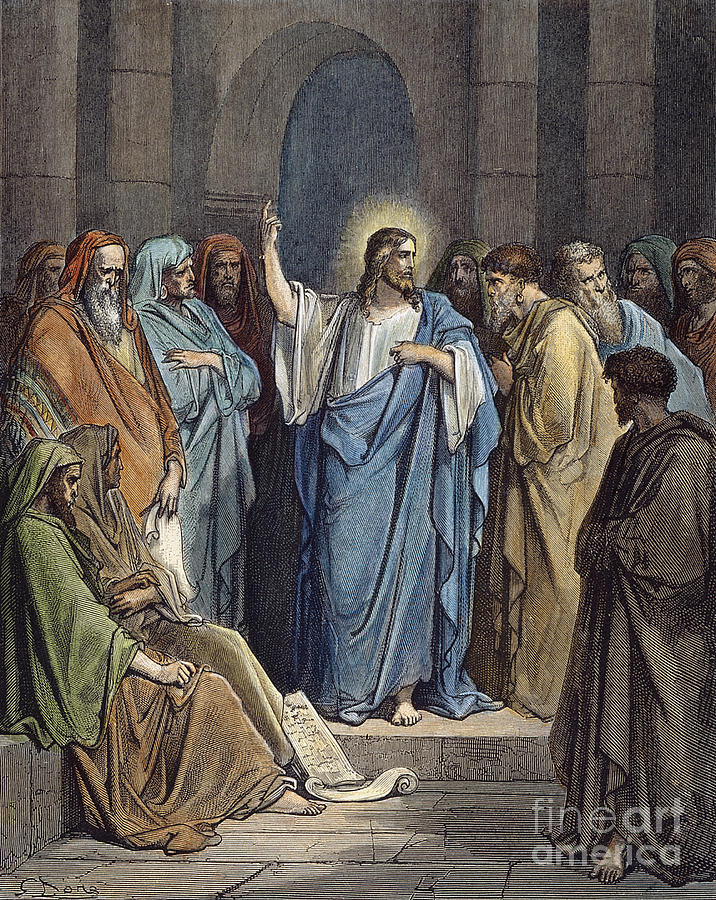
Christ Preaching

Gustave Dore (1832-1883)

Wood engraving

6 posted on 12/15/2020 6:03:07 AM PST by annalex (fear them not)
[ Post Reply | Private Reply | To 5 | View Replies]

To: annalex
NAVARRE BIBLE COMMENTARY (RSV)

For: Tuesday, December 15, 2020
3rd Week of Advent

From: Zephaniah 3:1-2, 9-13

Salvation of the remnant of Israel
------------------------------------------------
Thus says the LORD:
[1] Woe to her that is rebellious and defiled,
the oppressing city!
[2] She listens to no voice,
she accepts no correction.
She does not trust in the LORD,
she does not draw near to her God.

[9] "Yea, at that time I will change
the speech of the peoples
to a pure speech,
that all of them may call
on the name of the LORD
and serve him with one accord.
[10] From beyond the rivers of Ethiopia
my suppliants, the daughter
of my dispersed ones,
shall bring my offering.

[11] "On that day you shall not be put to shame
because of the deeds
by which you have rebelled against me;
for then I will remove from your midst
your proudly exultant ones,
and you shall no longer be haughty
in my holy mountain.
[12] For I will leave in the midst of you
a people humble and lowly.
They shall seek refuge in the name of the Lord,
[13] those who are left in Israel;
they shall do no wrong
and utter no lies,
nor shall there be found in their mouth
a deceitful tongue.
For they shall pasture and lie down,
and none shall make them afraid."

***************************************************************
Commentary:

3:1-5. The oracles against the nations are followed by this one against Jerusalem. It is similar to Amos 1-2, and Isaiah 1:21-26, in the sense that both diatribes are directed against community leaders -- officials, judges, prophets and priests (vv. 3-4). Where once Nineveh, the capital of Assyria, was called an "exultant city", a city full of pride, now Jerusalem is accused of being "rebellious", "oppressing", and of having rejected four graces -- not listening to the voice of the Lord, not accepting conversion, not trusting in the Lord, not drawing near to her God (v. 2). But unlike the Nineveh oracle, the one about Jerusalem ends on a note of hope, for in spite of everything, "the Lord within her is righteous" and he will put things right (v. 5).

3:9-20. The Lord is still speaking here, but there is a total change of focus – from destruction to salvation, which is the intention behind divine punishment. The opening verses proclaim the purification of the nations (vv. 9-10), in a reversal of what happened to Babel of old (Gen 11:1-9). Those scattered abroad after God confused the language of the sons of men (Gen 11:8-9) -- they are called "the daughter of my dispersed ones" in v. 10 -- will return, bringing offerings with them. Then the text speaks of the purification of Judah (vv. 11-13), of the survival of a "humble" remnant, who will hope in the Lord, will act rightly and will live in peace. As a consequence of the conversion of Judah and Israel, great will be the joy of Zion (vv. 14-18a). The faithful remnant is called "daughter of Zion" and "daughter of Jerusalem" (v. 14), somewhat paralleling the "daughter of my dispersed ones" (v. 10). In v. 14 there are four calls to rejoice -- "sing aloud", "shout", "rejoice", "ex- ult". The source of all this joy is the Lord's presence in their midst (v. 17), which brings with it all kinds of advantages (vv. 17-18). At the end of the passage (vv. 18-20), Zion's joy is made complete by the return of the exiles and Israel's prestige among the nations.

3:11-13 The oracle becomes very tender at this point. The prophet is able to see a "remnant" of Israel who will be saved and become the core of the great restoration. Through the prophet, God describes this remnant as "a people humble and lowly", but the catalogue of their qualities (vv. 12-13) shows that poverty and humility here do not refer to social status but to the people's inner attitude towards God. In fact, these terms ("humble and lowly"), through the Greek of the Septuagint, which translates them as praiis (meek) and tapeinos (humble), will become part of the vocabulary of Jesus preaching: "learn from me; for I am gentle and lowly in heart" (Mt 11:29; cf. Mt 5:3, 5; 21:5).

7 posted on 12/15/2020 6:34:28 AM PST by fidelis (Zonie and USAF Cold Warrior)
[ Post Reply | Private Reply | To 6 | View Replies]

To: fidelis
From: Matthew 21:28-32

The Parable of the Two Sons
------------------------------------------
(Jesus told the chief priests and the elders,) [28] "What do you think? A man had two sons; and he went to the first and said, 'Son, go and work in the vineyard today.' [29] And he answered, 'I will not'; but afterwards he repented and went. [30] And he went to the second and said the same; and he answered, 'I go, sir,' but did not go. [31] Which of the two did the will of his father?" They said, "The first." Jesus said to them, "Truly, I say to you, the tax collectors and the harlots go into the kingdom of God before you. [32] For John came to you in the way of righteousness, and you did not believe him, but the tax collectors and the harlots believed him; and even when you saw it, you did not afterward repent and believe him."

********************************************************************
Commentary:

32. St. John the Baptist had shown the way to sanctification by proclaiming the imminence of the Kingdom of God and by preaching conversion. The scribes and Pharisees would not believe him, yet they boasted of their faithfulness to God's teaching. They were like the son who says "I will go" and then does not go; the tax collectors and prostitutes who repented and corrected the course of their lives will enter the Kingdom before them: they are like the other son who says "I will not", but then does go. Our Lord stresses that penance and conversion can set people on the road to holiness even if they have been living apart from God for a long time.

Daily Word For Reflection—Navarre Bible Commentary

8 posted on 12/15/2020 6:34:44 AM PST by fidelis (Zonie and USAF Cold Warrior)
[ Post Reply | Private Reply | To 7 | View Replies]

Disclaimer: Opinions posted on Free Republic are those of the individual posters and do not necessarily represent the opinion of Free Republic or its management. All materials posted herein are protected by copyright law and the exemption for fair use of copyrighted works.

Free Republic
Browse · Search
Religion
Topics · Post Article

FreeRepublic, LLC, PO BOX 9771, FRESNO, CA 93794
FreeRepublic.com is powered by software copyright 2000-2008 John Robinson