Posted on 12/10/2020 6:25:38 PM PST by Cronos

Jesus said to the crowds:
“To what shall I compare this generation?
It is like children who sit in marketplaces and call to one another,
‘We played the flute for you, but you did not dance,
we sang a dirge but you did not mourn.’
For John came neither eating nor drinking, and they said,
‘He is possessed by a demon.’
The Son of Man came eating and drinking and they said,
‘Look, he is a glutton and a drunkard,
a friend of tax collectors and sinners.’
But wisdom is vindicated by her works.”
advent; catholic; mt11; prayer;
Please FReepmail me to get on/off the Alleluia Ping List.
| Matthew | |||
| English: Douay-Rheims | Latin: Vulgata Clementina | Greek NT: Byzantine/Majority Text (2000) | |
| 16. | But whereunto shall I esteem this generation to be like? It is like to children sitting in the market place. | Cui autem similem æstimabo generationem istam ? Similis est pueris sedentibus in foro : qui clamantes coæqualibus | τινι δε ομοιωσω την γενεαν ταυτην ομοια εστιν παιδιοις εν αγοραις καθημενοις και προσφωνουσιν τοις εταιροις αυτων |
| 17. | Who crying to their companions say: We have piped to you, and you have not danced: we have lamented, and you have not mourned. | dicunt : Cecinimus vobis, et non saltastis : lamentavimus, et non planxistis. | και λεγουσιν ηυλησαμεν υμιν και ουκ ωρχησασθε εθρηνησαμεν υμιν και ουκ εκοψασθε |
| 18. | For John came neither eating nor drinking; and they say: He hath a devil. | Venit enim Joannes neque manducans, neque bibens, et dicunt : Dæmonium habet. | ηλθεν γαρ ιωαννης μητε εσθιων μητε πινων και λεγουσιν δαιμονιον εχει |
| 19. | The Son of man came eating and drinking, and they say: Behold a man that is a glutton and a wine drinker, a friend of publicans and sinners. And wisdom is justified by her children. | Venit Filius hominis manducans, et bibens, et dicunt : Ecce homo vorax, et potator vini, publicanorum et peccatorum amicus. Et justificata est sapientia a filiis suis. | ηλθεν ο υιος του ανθρωπου εσθιων και πινων και λεγουσιν ιδου ανθρωπος φαγος και οινοποτης τελωνων φιλος και αμαρτωλων και εδικαιωθη η σοφια απο των τεκνων αυτης |

16. But whereunto shall I liken this generation? It is like unto children sitting in the markets, and calling unto their fellows,
17. And saying, We have piped unto you, and ye have not danced; we have mourned unto you, and ye have not lamented.
18. For John came neither eating nor drinking, and they say, He hath a devil.
19. The Son of man came eating and drinking, and they say, Behold a man gluttonous, and a winebibber, a friend of Publicans and sinners. But wisdom is justified of her children.
HILARY. The whole of this speech is a reproach of unbelief, and arises out of the foregoing complaint; that the stiff-necked people had not learned by two different modes of teaching.
CHRYSOSTOM. Whence He puts this question, shewing that nothing had been omitted that ought to be done for their salvation, saying, To whom shall I liken this generation?
GLOSS. (ap. Anselm.) By this generation He means the Jews together with Himself and John. As though He had said; John is thus great; but ye would believe neither him nor Me, and therefore to whom shall I liken you?
REMIGIUS. And straightway He answers Himself, saying, It is like unto children sitting in the market-place, crying unto their fellows, and saying, We have played music to you, and ye have not danced; we have mourned, and ye have not lamented.
HILARY. By the children are meant the Prophets, who preached as children in singleness of meaning, and in the midst of the synagogue, that is in the market-place, reprove them, that when they played to those to whom they had devoted the service of their body, they had not obeyed their words, as the movement of the dancers are regulated by the measures of the music. For the Prophets invited them to make confession by song to God, as it is contained in the song of Moses, of Isaiah, or of David.
JEROME. They say therefore, We have flayed music to you, and ye have not danced; i. e. We have called on you to work good works to our songs, and ye would not. We have lamented and called you to repentance, and this ye would not, rejecting both preaching, as well of exhortation to virtue, as of repentance for sin.
REMIGIUS. What is that He says, To their fellows? Were the unbelieving Jews then fellows of the Prophets? He speaks thus only because they were sprung of one stock.
JEROME. The children are they of whom Isaiah speaks, Behold I, and the children whom the Lord has given me. (Is. 8:18) These children then sit in the market-place, where are many things for sale, and say,
CHRYSOSTOM. We have played music to you, and ye have not danced; that is, I have shewed you an unrestricted life, and ye are not convinced; We have mourned unto you, and ye have not lamented; that is, John lived a hard life, and ye heeded him not. Yet does not he speak one thing, and I another, but both speak the same thing, because both have one and the same object. For John came neither eating nor drinking, and they say, He hath a dæmon. The Son of man came &c.
AUGUSTINE. (Cont. Faust. xvi. 31.) I would that the Manichæans would tell me what Christ ate and drank, who here speaks of Himself as eating and drinking in comparison of John, who did neither. Not indeed that John drank nothing at all, but that he drank neither wine nor strong drink—but water only. Not that he dispensed altogether with food, but that he ate only locusts and wild honey. Whence then is it said of him that he came neither eating nor drinking, except that he used not that food which the Jews used? Unless therefore the Lord had used this food, He would not have been said to have been, in comparison of John, eating and drinking. It would be strange that he who ate locusts and honey, should be said to come neither eating nor drinking, and that he who ate only bread and herbs, should be said to come eating and drinking.
CHRYSOSTOM. He says therefore, Jesus came, as much as to say, I and John came opposite ways, to do the same thing; as two hunters chasing the same animal from opposite sides, so that it might fall into the hands of one of them. But all mankind admire fasting and severity of life; and for this reason it was ordained from his infancy that John should be so brought up, that the things that he should say should receive credit. The Lord also walked in this way when He fasted forty days; but He had other means of teaching men to have confidence in Him; for it was a much greater thing that John who had walked in this way should bear witness to Him, than that He Himself should walk in that way. Again, John had nothing to shew besides his life, and his righteousness; whereas Christ had also the witness of His miracles. Leaving therefore to John the representation of fasting, He Himself walked in a contrary way, entering to the table of the publicans, and eating and drinking with them.
JEROME. If fasting then pleases you, why were you not satisfied with John? If fulness, why not with the Son of man? Yet one of these ye said had a dæmon, the other ye called a gluttonous man, and drunkard.
CHRYSOSTOM. What excuse then shall be given for them? Therefore He adds, And wisdom is justified of her children; that is, though ye were not convinced, yet have ye nothing whereof to accuse me, as also of the Father the Prophet speaks, That thou mightest be justified in thy sayings. (Ps. 51:4.) For though nought be effected in you by that goodness which is extended to you, yet He fulfils all His part that you may not have the shadow of excuse for your ungrateful doubt.
JEROME. Wisdom is justified of her children, i. e. The dispensation or doctrine of God, or Christ Himself who is the power and wisdom of God, is proved by the Apostles, who are His children, to have done righteously.
HILARY. He is wisdom itself not by His acts, but by His nature. Many indeed evade that saying of the Apostle’s, Christ is the wisdom and power of God, (1 Cor. 1:24) by saying, that truly in creating Him of a Virgin the Wisdom and Power of God were shewn mightily. (e.g. Paul of Samosata, &c.) Therefore that this might not be so explained, He calls Himself the Wisdom of God, shewing that it was verily He, and not the deeds relating to Him, of whom this was meant. For the power itself, and the effect of that power, are not the same thing; the efficient is known from the act.
AUGUSTINE. (Quæst. Ev. ii. 11.) Or, Wisdom is justified of her children, because the holy Apostles understood that the kingdom of God was not in meat and drink, but in patient enduring; such persons neither does abundance lift up, nor want cast down, but as Paul spoke, I know how to abound, and to suffer want. (Phil. 4:12)
JEROME. Some copies read, Wisdom is justified of her works, for wisdom does not seek the witness of words, but of works.
CHRYSOSTOM. You should not be surprised at His using trite instances, such as that respecting the children; for He spoke to the weakness of His hearers; as Ezekiel spoke many things adapted to the Jews, but unworthy of the greatness of God.
HILARY. Mystically; Neither did the preaching of John bend the Jews, to whom the law seemed burdensome in prescribing meats and drinks, difficult and grievous, having in it sin which He calls having a dæmon—for from the difficulty of keeping it they must sin under the Law. Nor again did the preaching of the Gospel with freedom of life in Christ please them—by which the hardships and burdens of the Law were remitted, and publicans and sinners only believed in it. Thus, then, so many and so great warnings of all kinds having been offered them in vain, they are neither justified by the Law, and they are cast off from grace; Wisdom, therefore, is justified of her children, by those, that is, who seize the kingdom of heaven by the justification of faith, confessing the work of wisdom to be just, that it has transferred its gift from the rebellious to the faithful.
For: Friday, December 11, 2020
2nd Week of Advent
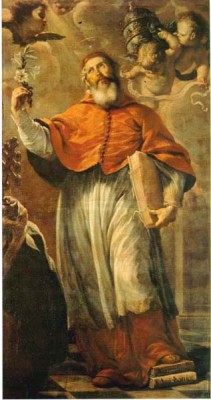
Optional Memorial: St Damasus I, Pope
From: Isaiah 48:17-19
A Lesson About History
-----------------------------------
[17] Thus says the LORD,
your Redeemer, the Holy One of Israel:
"I am the LORD your God,
who teaches you to profit,
who leads you in the way you should go.
[18] O that you had hearkened to my commandments!
Then your peace would have been like a river,
and your righteousness like the waves of the sea;
[19] your offspring would have been like the sand,
and your descendants like its grains;
their name would never be cut off
or destroyed from before me."
***************************************************************
Commentary:
48:17-19. Now, by way of conclusion, the text deals with a theme closely connected with listening to the Lord's message (cf. 48:16). It is the theme of divine instruction: the Lord "teaches you to profit," that is, for your benefit, and "leads you in the way you should go" (v. 17) -- words reminiscent of Deuteronomy 8:2. Divine "teaching" is not something purely abstract: it is based on real-life experience, on salvific events in the history of the chosen people, especially from the exodus from Egypt onwards. Just as liberation from Egypt carries a message for Israel, so too does this new exodus from Babylon.
The passage goes on to warn Judah that its punishment was due to its having closed its ears to the Lord (vv. 18-19). Leaving aside the historical context of the exile, this oracle is a "teaching" that applies in every age, and is valid for all nations and every individual: everyone must be converted and follow the way of the Lord.
Jesus Reproaches People for their Unbelief
---------------------------------------------------------------
(Jesus spoke to the crowds), [16] "But to what shall I compare this generation? It is like children sitting in the market places and calling to their playmates.
[17] 'We piped to you, and you did not dance,
we wailed and you did not mourn.'
[18] For John came neither eating nor drinking, and they say, 'He has a demon'; [19] the Son of Man came eating and drinking, and they say, 'Behold, a glutton and a drunkard, a friend of tax collectors and sinners!' Yet wisdom is justified by her deeds."
*****************************************************************
Commentary:
16-19. Making reference to a popular song or a child's game of His time, Jesus reproaches those who offer groundless excuses for not recognizing Him. From the beginning of human history the Lord has striven to attract all men to Himself: "What more was there to do for My vineyard, that I have not done in it?" (Isaiah 5:4), and often He has been rejected: "When I looked for it to yield grapes, why did it yield wild grapes?" (Isaiah 5:4).
Our Lord also condemns calumny: some people do try to justify their own behavior by seeing sin where there is only virtue. "When they find something which is quite obviously good," St. Gregory the Great says, "they pry into it to see if there is not also some badness hidden in it" (Moralia, 6, 22). The Baptist's fasting they interpret as the work of the devil; whereas they accuse Jesus of being a glutton. The evangelist has to report these calumnies and accusations spoken against our Lord; otherwise, we would have no notion of the extent of the malice of those who show such furious opposition to Him who went about doing good (Acts 10:38). On other occasions Jesus warned His disciples that they would be treated the same as He was (cf. John 15:20).
The works of Jesus and John the Baptist, each in their own way, lead to the accomplishment of God's plan for man's salvation: the fact that some people do not recognize Him does not prevent God's plan being carried into effect.

To his secretary Saint Jerome, Damasus was “an incomparable person, learned in the Scriptures, a virgin doctor of the virgin Church, who loved chastity and heard its praises with pleasure.” Damasus seldom heard such unrestrained praise. Internal political struggles, doctrinal heresies, uneasy relations with his fellow bishops and those of the Eastern Church marred the peace of his pontificate.
The son of a Roman priest, possibly of Spanish extraction, Damasus started as a deacon in his father’s church, and served as a priest in what later became the basilica of San Lorenzo in Rome. He served Pope Liberius (352-366) and followed him into exile.
When Liberius died, Damasus was elected bishop of Rome; but a minority elected and consecrated another deacon, Ursinus, as pope. The controversy between Damasus and the antipope resulted in violent battles in two basilicas, scandalizing the bishops of Italy. At the synod that Damasus called on the occasion of his birthday, he asked them to approve his actions. The bishops’ reply was curt: “We assembled for a birthday, not to condemn a man unheard.” Supporters of the antipope even managed to get Damasus accused of a grave crime—probably sexual—as late as A.D. 378. He had to clear himself before both a civil court and a Church synod.
As pope, his lifestyle was simple in contrast to other ecclesiastics of Rome, and he was fierce in his denunciation of Arianism and other heresies. A misunderstanding of the Trinitarian terminology used by Rome threatened amicable relations with the Eastern Church, and Damasus was only moderately successful in dealing with that challenge.
During his pontificate, Christianity was declared the official religion of the Roman state, and Latin became the principal liturgical language as part of the pope’s reforms. His encouragement of Saint Jerome’s biblical studies led to the Vulgate, the Latin translation of Scripture which 12 centuries later the Council of Trent declared to be “authentic in public readings, disputations, preaching.”
Reflection
The history of the papacy and the Church is inextricably mixed with the personal biography of Damasus. In a troubled and pivotal period of Church history, he stands forth as a zealous defender of the faith who knew when to be progressive and when to entrench.
Damasus makes us aware of two qualities of good leadership: alertness to the promptings of the Spirit, and service. His struggles are a reminder that Jesus never promised his Rock protection from hurricane winds nor his followers immunity from difficulties. His only guarantee is final victory.

Disclaimer: Opinions posted on Free Republic are those of the individual posters and do not necessarily represent the opinion of Free Republic or its management. All materials posted herein are protected by copyright law and the exemption for fair use of copyrighted works.