Free Republic
Browse · Search
Religion
Topics · Post Article

Skip to comments.

Catholic Caucus: Daily Mass Readings, 12-06-2020,Second Sunday of Advent
USCCB/RNAB ^ | 6 December 2020 | USCCB/RNAB

Posted on 12/06/2020 6:13:35 AM PST by Cronos

December 6 2020

Second Sunday of Advent


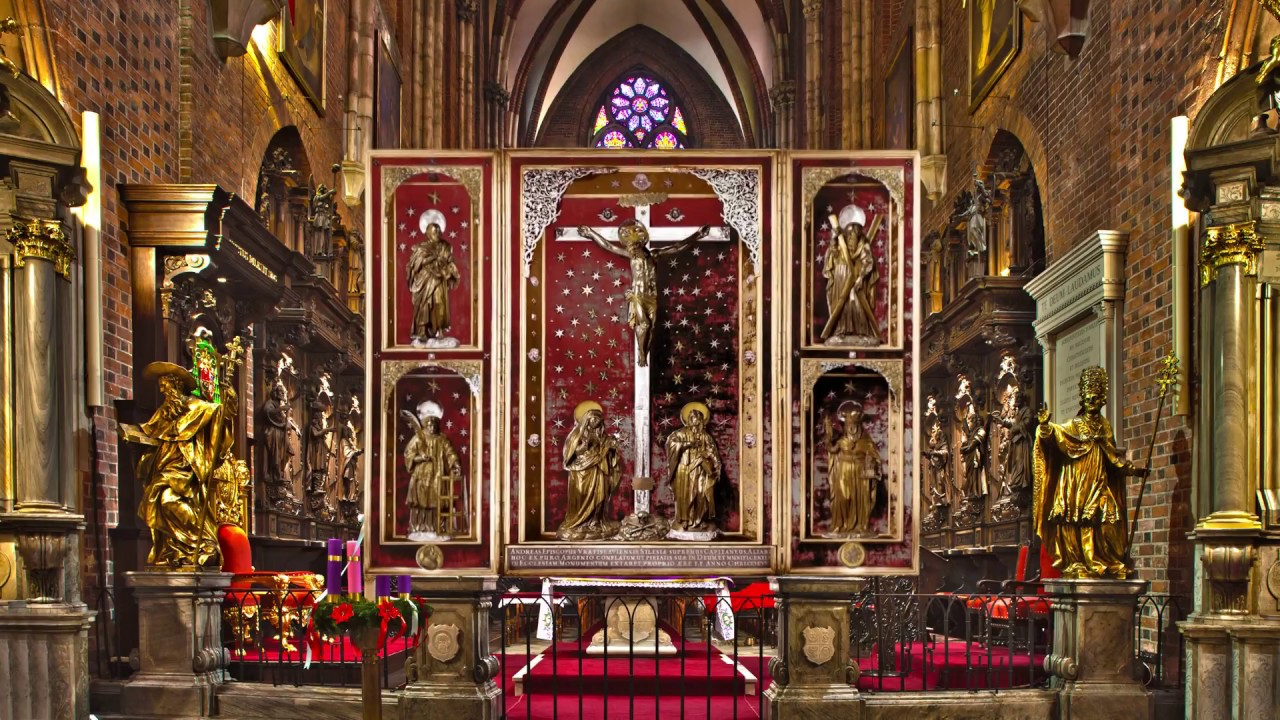
Cathedral of St. John the Baptist in Wrocław, Poland

Lectionary 5

Reading 1

Comfort, give comfort to my people,
says your God.
Speak tenderly to Jerusalem, and proclaim to her
that her service is at an end,
her guilt is expiated;
indeed, she has received from the hand of the LORD
double for all her sins.

A voice cries out:
In the desert prepare the way of the LORD!
Make straight in the wasteland a highway for our God!
Every valley shall be filled in,
every mountain and hill shall be made low;
the rugged land shall be made a plain,
the rough country, a broad valley.
Then the glory of the LORD shall be revealed,
and all people shall see it together;
for the mouth of the LORD has spoken.

Go up on to a high mountain,
Zion, herald of glad tidings;
cry out at the top of your voice,
Jerusalem, herald of good news!
Fear not to cry out
and say to the cities of Judah:
Here is your God!
Here comes with power
the Lord GOD,
who rules by his strong arm;
here is his reward with him,
his recompense before him.
Like a shepherd he feeds his flock;
in his arms he gathers the lambs,
carrying them in his bosom,
and leading the ewes with care.

Responsorial Psalm

R. (8) Lord, let us see your kindness, and grant us your salvation.
I will hear what God proclaims;
the LORD—for he proclaims peace to his people.
Near indeed is his salvation to those who fear him,
glory dwelling in our land.
R. Lord, let us see your kindness, and grant us your salvation.
Kindness and truth shall meet;
justice and peace shall kiss.
Truth shall spring out of the earth,
and justice shall look down from heaven.
R. Lord, let us see your kindness, and grant us your salvation.
The LORD himself will give his benefits;
our land shall yield its increase.
Justice shall walk before him,
and prepare the way of his steps.
R. Lord, let us see your kindness, and grant us your salvation.

Reading 2

Do not ignore this one fact, beloved,
that with the Lord one day is like a thousand years
and a thousand years like one day.
The Lord does not delay his promise, as some regard “delay,”
but he is patient with you,
not wishing that any should perish
but that all should come to repentance.
But the day of the Lord will come like a thief,
and then the heavens will pass away with a mighty roar
and the elements will be dissolved by fire,
and the earth and everything done on it will be found out.

Since everything is to be dissolved in this way,
what sort of persons ought you to be,
conducting yourselves in holiness and devotion,
waiting for and hastening the coming of the day of God,
because of which the heavens will be dissolved in flames
and the elements melted by fire.
But according to his promise
we await new heavens and a new earth
in which righteousness dwells.
Therefore, beloved, since you await these things,
be eager to be found without spot or blemish before him, at peace.

Alleluia

R. Alleluia, alleluia.
Prepare the way of the Lord, make straight his paths:
All flesh shall see the salvation of God.
R. Alleluia, alleluia.

Gospel

The beginning of the gospel of Jesus Christ the Son of God.

As it is written in Isaiah the prophet:
Behold, I am sending my messenger ahead of you;
he will prepare your way.
A voice of one crying out in the desert:
“Prepare the way of the Lord,
make straight his paths.”

John the Baptist appeared in the desert
proclaiming a baptism of repentance for the forgiveness of sins.
People of the whole Judean countryside
and all the inhabitants of Jerusalem
were going out to him
and were being baptized by him in the Jordan River
as they acknowledged their sins.
John was clothed in camel’s hair,
with a leather belt around his waist.
He fed on locusts and wild honey.
And this is what he proclaimed:
“One mightier than I is coming after me.
I am not worthy to stoop and loosen the thongs of his sandals.
I have baptized you with water;
he will baptize you with the Holy Spirit.”


TOPICS: Catholic; General Discusssion; Prayer; Worship
KEYWORDS: advent; catholic; mk1; prayer
For your reading, reflection, faith-sharing, comments, questions, discussion.

1 posted on 12/06/2020 6:13:36 AM PST by Cronos
[ Post Reply | Private Reply | View Replies]

To: All

advent; catholic; mk1; prayer;


2 posted on 12/06/2020 6:13:51 AM PST by Cronos
[ Post Reply | Private Reply | To 1 | View Replies]

To: nickcarraway; NYer; ELS; Pyro7480; livius; ArrogantBustard; Catholicguy; RobbyS; marshmallow; ...
Alleluia Ping

Please FReepmail me to get on/off the Alleluia Ping List.


3 posted on 12/06/2020 6:15:10 AM PST by Cronos
[ Post Reply | Private Reply | To 2 | View Replies]

To: All
Mark
 English: Douay-RheimsEnglish: New Revised Standard VersionLatin: Vulgata ClementinaGreek NT: Byzantine/Majority Text (2000)
1THE beginning of the gospel of Jesus Christ, the Son of God. The beginning of the good news of Jesus Christ, the Son of God. Initium Evangelii Jesu Christi, Filii Dei.αρχη του ευαγγελιου ιησου χριστου υιου του θεου
2As it is written in Isaias the prophet: Behold I send my angel before thy face, who shall prepare the way before thee. As it is written in the prophet Isaiah, "See, I am sending my messenger ahead of you, who will prepare your way; Sicut scriptum est in Isaia propheta : Ecce ego mitto angelum meum ante faciem tuam, qui præparabit viam tuam ante te.ως γεγραπται εν τοις προφηταις ιδου εγω αποστελλω τον αγγελον μου προ προσωπου σου ος κατασκευασει την οδον σου εμπροσθεν σου
3A voice of one crying in the desert: Prepare ye the way of the Lord, make straight his paths. the voice of one crying out in the wilderness: 'Prepare the way of the Lord, make his paths straight,'"Vox clamantis in deserto : Parate viam Domini, rectas facite semitas ejus.φωνη βοωντος εν τη ερημω ετοιμασατε την οδον κυριου ευθειας ποιειτε τας τριβους αυτου
4John was in the desert baptizing, and preaching the baptism of penance, unto remission of sins. John the baptizer appeared in the wilderness, proclaiming a baptism of repentance for the forgiveness of sins. Fuit Joannes in deserto baptizans, et prædicans baptismum pœnitentiæ in remissionem peccatorum.εγενετο ιωαννης βαπτιζων εν τη ερημω και κηρυσσων βαπτισμα μετανοιας εις αφεσιν αμαρτιων
5And there went out to him all the country of Judea, and all they of Jerusalem, and were baptized by him in the river of Jordan, confessing their sins. And people from the whole Judean countryside and all the people of Jerusalem were going out to him, and were baptized by him in the river Jordan, confessing their sins.Et egrediebatur ad eum omnis Judææ regio, et Jerosolymitæ universi, et baptizabantur ab illo in Jordanis flumine, confitentes peccata sua.και εξεπορευετο προς αυτον πασα η ιουδαια χωρα και οι ιεροσολυμιται και εβαπτιζοντο παντες εν τω ιορδανη ποταμω υπ αυτου εξομολογουμενοι τας αμαρτιας αυτων
6And John was clothed with camel's hair, and a leathern girdle about his loins; and he ate locusts and wild honey. Now John was clothed with camel's hair, with a leather belt around his waist, and he ate locusts and wild honey.Et erat Joannes vestitus pilis cameli, et zona pellicea circa lumbos ejus, et locustas et mel silvestre edebat.ην δε ο ιωαννης ενδεδυμενος τριχας καμηλου και ζωνην δερματινην περι την οσφυν αυτου και εσθιων ακριδας και μελι αγριον
7And he preached, saying: There cometh after me one mightier than I, the latchet of whose shoes I am not worthy to stoop down and loose. He proclaimed, "The one who is more powerful than I is coming after me; I am not worthy to stoop down and untie the thong of his sandals.Et prædicabat dicens : Venit fortior post me, cujus non sum dignus procumbens solvere corrigiam calceamentorum ejus.και εκηρυσσεν λεγων ερχεται ο ισχυροτερος μου οπισω μου ου ουκ ειμι ικανος κυψας λυσαι τον ιμαντα των υποδηματων αυτου
8I have baptized you with water; but he shall baptize you with the Holy Ghost. I have baptized you with water; but he will baptize you with the Holy Spirit." Ego baptizavi vos aqua, ille vero baptizabit vos Spiritu Sancto.εγω μεν εβαπτισα υμας εν υδατι αυτος δε βαπτισει υμας εν πνευματι αγιω

4 posted on 12/06/2020 6:16:50 AM PST by Cronos
[ Post Reply | Private Reply | To 3 | View Replies]

To: All

Catena Aurea by St. Thomas Aguinas

1:1

Ver. 1. The beginning of the Gospel of Jesus Christ, the Son of God.

JEROME. (in Prolog.) Mark the Evangelist, who served the priesthood in Israel, according to the flesh a Levite, having been converted to the Lord, wrote his Gospel in Italy, shewing in it how even his family benefited Christ. For, commencing his Gospel with the voice of the prophetic cry, he shews the order of the election of Levi, declaring that John the son of Zachariah was sent forth by the voice of an angel, and saying, The beginning of the Gospel of Jesus Christ, the Son of God.

PSEUDO-JEROME. The Greek word ‘Evangelium’ means good tidings, in Latin it is explained, ‘bona annunciatio,’ or, the good news; these terms properly belong to the kingdom of God and to the remission of sins; for the Gospel is that, by which comes the redemption of the faithful and the beatitude of the saints. But the four Gospels are one, and one Gospel is four. In Hebrew, His name is Jesus, in Greek, Soter, in Latin, Salvator; but men say Christus in Greek, Messias in Hebrew, Unctus in Latin, that is, King and Priest.

BEDE. (in Marc. i. 1) The beginning of this Gospel should be compared with that of Matthew, in which it is said, The book of the generation of Jesus Christ, the Son of David, the Son of Abraham. But here He is called the Son of God. Now from both we must understand one Lord Jesus Christ, Son of God, and of man. And fitly the first Evangelist names Him Son of man, the second, Son of God, that from less things our sense may by degrees mount up to greater, and by faith and the sacraments of the human nature assumed, rise to the acknowledgment of His divine eternity. Fitly also did He, who was about to describe His human generation, begin with a son of man, namely, David or Abraham. Fitly again, he who was beginning his book with the first preaching of the Gospel, chose rather to call Jesus Christ, the Son of God; for it belonged to the human nature to take upon Him the reality of our flesh, of the race of the patriarchs, and it was the work of Divine power to preach the Gospel to the world.

HILARY. (de Trin. iii. 11) He has testified, that Christ was the Son of God, not in name only, but by His own proper nature. We are the sons of God, but He is not a son as we are; for He is the very and proper Son, by origin, not by adoption; in truth, not in name; by birth, not by creation.

1:2–3

2. (Mal. 3:1) As it is written in the Prophets, Behold, I send my messenger before thy face, which shall prepare thy way before thee.

3. The voice of one crying in the wilderness, (Isa. 40:3) Prepare ye the way of the Lord, make his paths straight.

BEDE. (ubi sup.) Being about to write his Gospel, Mark rightly puts first the testimonies of the Prophets, that he might notify to all, that what he should write was to be received without scruple of doubt, in that he shewed that these things were beforehand foretold by the Prophets. At once, by one and the same beginning of his Gospel, he prepared the Jews, who had received the Law and the Prophets, for receiving the grace of the Gospel, and those sacraments, which their own prophecies had foretold; and he also calls upon the Gentiles, who came to the Lord by publishing of the Gospel, to receive and venerate the authority of the Law and the Prophets; whence he says, As it is written in the prophet Isaiah, Behold, &c.

JEROME. (ad Pammach. Epist. 57) But this is not written in Isaiah, but in Malachi, the last of the twelve prophets.

PSEUDO-CHRYSOSTOM. (Vict. Ant. c. Cat. in Marc.) But it may be said that it is a mistake of the writer. Otherwise it may be said, that he has compressed into one, two prophecies delivered in different places by two prophets; for in the prophet Isaiah it is written after the story of Hezekiah, The voice of one crying in the wilderness; but in Malachi, Behold, I send mine angel. The Evangelist therefore, taking parts of two prophecies, has put them down as spoken by Isaiah, and refers them here to one passage, without mentioning, however, by whom it is said, Behold, I send mine angel.

PSEUDO-AUGUSTINE. (Quæst. nov. et vet. Test. lvii.) For knowing that all things are to be referred to their author, he has brought these sayings back to Isaiah, who was the first to intimate the sense. Lastly, after the words of Malachi, he immediately subjoins, The voice of one crying in the wilderness, in order to connect the words of each prophet, belonging as they do to one meaning, under the person of the elder prophet.

BEDE. (ubi sup.) Or otherwise, we must understand, that, although these words are not found in Isaiah, still the sense of them is found in many other places, and most clearly in this which he has subjoined, The voice of one crying in the wilderness. For that which Malachi has called, the angel to be sent before the face of the Lord, to prepare His way, is the same thing as Isaiah has said is to be heard, the voice of one crying in the wilderness, saying, Prepare ye the way of the Lord. But in each sentence alike, the way of the Lord to be prepared is proclaimed. It may be, too, that Isaiah occurred to the mind of Mark, in writing his Gospel, instead of Malachi, as often happens; which he would, however, without doubt correct, at least when reminded by other persons, who might read his work whilst he was yet in the flesh; unless he thought, that, since his memory was then ruled by the Holy Spirit, it was not without a purpose, that the name of one prophet had occurred to him instead of another. For thus whatsoever things the Holy Spirit spoke by the prophets, are implied each to have belonged to all, and all to each.

JEROME. By Malachi, therefore, the voice Πνεύμκτος Ἅγιου of the Holy Spirit resounds to the Father concerning the Son, who is the countenance of the Father by which He has been known.

BEDE. (ubi sup.) But John is called an angel not by community of nature, according to the heresy of Origena, but by the dignity of his office; for angel in Greek is in Latin, nuntius, (messenger,) by which name that man is rightly called, who was sent by God, that he might bear witness of the light, and announce to the world the Lord, coming in the flesh: since it is evident that all who are priests may by their office of preaching the Gospel be called angels, as the prophet Malachi says, The lips of the priest keep knowledge, and they seek the law at his mouth, because he is the Angel of the Lord of hosts. (Mal. 2:7)

THEOPHYLACT. The Forerunner of Christ, therefore, is called an angel, on account of his angelic life and lofty reverence. Again, where he says, Before thy face, it is as if he said, Thy messenger is near thee: whence is shewn the intimate connection of the Forerunner with Christ; for those walk next to kings, who are their greatest friends. There follows, Who will prepare thy way before thee. For by baptism he prepared the minds of the Jews to receive Christ.

PSEUDO-JEROME. Or, the way of the Lord, by which He comes into men, is penitence, by which God comes down to us, and we mount up to Him. And for this reason the beginning of John’s preaching was, Repent ye.

BEDE. (ubi sup.) But as John might be called an angel, because he went before the face of the Lord by his preaching, so he might also be rightly called a voice, because, by his sound, he preceded the Word of the Lord. Wherefore there follows, The voice of one crying, &c. For it is an acknowledged thing that the Only-Begotten Son is called the Word of the Father, and even we, from having uttered words ourselves, know that the voice sounds first, in order that the word may afterwards be heard.

PSEUDO-JEROME. But it is called the voice of one crying, for we are wont to use a cry to deaf persons, and to those afar off, or when we are indignant, all which things we know applied to the Jews; for salvation is far from the wicked, and they stopped their ears like deaf adders, and deserved to hear indignation, and wrath, and tribulation from Christ.

PSEUDO-CHRYSOSTOM. (Vict. Ant. e. Cat. in Marc.) But the prophecy, by saying, In the wilderness, plainly shews that the divine teaching was not in Jerusalem, but in the wilderness, which was fulfilled to the letter by John the Baptist in the wilderness of Jordan, preaching the healthful appearing of the Word of God. (non occ.). The word of prophecy also shews, that besides the wilderness, which was pointed out by Moses, where he made paths, there was another wilderness, in which it proclaimed that the salvation of Christ was present.

PSEUDO-JEROME. Or else the voice and the cry is in the desert, because they were deserted by the Spirit of God, as a house empty, and swept out; deserted also by prophet, priest, and king.

BEDE. (ubi sup.) What he cried is revealed, in that which is subjoined, Prepare ye the way of the Lord, make his paths straight. For whosoever preaches a right faith and good works, what else does he but prepare the way for the Lord’s coming to the hearts of His hearers, that the power of grace might penetrate these hearts, and the light of truth shine in them? And the paths he makes straight, when he forms pure thoughts in the soul by the word of preaching.

PSEUDO-JEROME. Or else, Prepare ye the way of the Lord, that is, act out repentance and preach it; make his paths straight, that walking in the royal road, we may love our neighbours as ourselves, and ourselves as our neighbours. For he who loves himself, and loves not his neighbour, turns aside to the right; for many act well, and do not correct their neighbour well, as Eli. He, on the other hand, who, hating himself, loves his neighbour, turns aside to the left; for many, for instance, rebuke well, but act not well themselves, as did the Scribes and Pharisees. Paths are mentioned after the way, because moral commands are laid open after penitence.

THEOPHYLACT. Or, the way is the New Testament, and the paths are the Old, because it is a trodden path. For it was necessary to be prepared for the way, that is, for the New Testament; but it was right that the paths of the Old Testament should be straightened.

1:4–8

4. John did baptize in the wilderness, and preach the baptism of repentance for the remission of sins.

5. And there went out unto him all the land of Judæa, and they of Jerusalem, and were all baptized of him in the river of Jordan, confessing their sins.

6. And John was clothed with camel’s hair, and with a girdle of a skin about his loins; and he did eat locusts and wild honey;

7. And preached, saying, There cometh one mightier than I after me, the latchet of whose shoes I am not worthy to stoop down and unloose.

8. I indeed have baptized you with water: but he shall baptize you with the Holy Ghost.

PSEUDO-JEROME. According to the above-mentioned prophecy of Isaiah, the way of the Lord is prepared by John, through faith, baptism, and penitence; the paths are made straight by the rough marks of the hair-cloth garment, the girdle of skin, the feeding on locusts and wild honey, and the most lowly voice; whence it is said, John was in the wilderness. For John and Jesus seek what is lost in the wilderness; where the devil conquered, there he is conquered; where man fell, there he rises up. But the name John means the grace of God, and the narrative begins with grace. For it goes on to say, baptizing. For by baptism grace is given, seeing that by baptism sins are freely remitted. But what is brought to perfection by the bridegroom, is introduced by the friend of the bridegroom. Thus catechumens, (which word means persons instructed,) begin by the ministry of the priest, receive the chrismb from the bishop. And to shew this, it is subjoined, And preaching the baptism of repentance, &c.

BEDE. (in Marc. i. 2) It is evident that John not only preached, but also gave to some the baptism of repentance; but he could not give baptism for the remission of sinsc. For remission of sins is only given to us by the baptism of Christ. It is therefore only said, Preaching the baptism of repentance for the remission of sins; for he preached a baptism which could remit sins, since he could not give it. Wherefore as he was the forerunner of the Incarnate Word of the Father, by the word of his preaching, so by his baptism, which could not remit sins, he preceded that baptism, of penitence, by which sins are remitted.

THEOPHYLACT. The baptism of John had not remission of sins, but only brought men to penitence. He preached therefore the baptism of repentance, that is, he preached that to which the baptism of penitence led, namely, remission of sins, that they who in penitence received Christ, might receive Him to the remission of their sins.

PSEUDO-JEROME. Now by John as by the bride-groom’s friend, the bride is brought to Christ, as by a servant Rebecca was brought to Isaac; wherefore there follows, And there went out to him all, (Gen. 24:61) &c. For confession and beauty are in his presence, (Ps. 95:6. Vulg.) that is, the presence of the bridegroom. And the bride leaping down from her camel signifies the Church, who humbles herself on seeing her husband Isaac, that is, Christ. But the interpretation of Jordan, where sins are washed away, is ‘an alien descent.’ For we heretofore aliens to God by pride, are by the sign (symbolum) of Baptism made lowly, and thus exalted on highd.

BEDE. (ubi sup.) An example of confessing their sins and of promising to lead a new life, is held out to those who desire to be baptized, by those words which follow, confessing their sins.

CHRYSOSTOM. Because indeed John preached repentance, he wore the marks of repentance in his garment and in his food, wherefore there follows, And John was clothed in camel’s hair.

BEDE. It says, clothed in a garment of hair, not in woollen clothes; the former is the mark of an austere garb, the latter of effeminate luxury. But the girdle of skins, with which he was girt, like Elias, is a mark of mortification. And this meat, locusts and wild honey, is suited to a dweller in the wilderness, so that his object in eating was not the deliciousness of meats, but the satisfying of the necessity of human flesh.

PSEUDO-JEROME. The dress of John, his food, and employment, signifies the austere life of preachers, and that future nations are to be joined to the grace of God, which is John, both in their minds and in externals. For by camel’s hair, is meant the rich among the nations; and by the girdle of skin, the poor, dead to the world; and by the wandering locusts, the wise men of this world; who, leaving the dry stalks to the Jews, draw off with their legs the mystic grain, and in the warmth of their faith leap up towards heaven; and the faithful, being inspired by the wild honey, are full-fed from the untilled wood.

THEOPHYLACT. Or else; The garment of camel’s hair was significative of grief, for John pointed out, that he who repented should mourn. For sackcloth signifies grief; but the girdle of skins shews the dead state of the Jewish people. The food also of John not only denotes abstinence, but also shews forth the intellectual food, which the people then were eating, without understanding any thing lofty, but continually raising themselves on high, and again sinking to the earth. For such is the nature of locusts, leaping on high and again falling. In the same way the people ate honey, which had come from bees, that is, from the prophets; it was not however domestic, but wild, for the Jews had the Scriptures, which are as honey, but did not rightly understand them.

GREGORY. (Moral. xxxi. 25) Or, by the kind itself of his food he pointed out the Lord, of whom he was the forerunner; for in that our Lord took to Himself the sweetness of the barren Gentiles, he ate wild honey. In that He in His own person partly converted the Jews, He received locusts for His food, which suddenly leaping up, at once fall to the ground. For the Jews leaped up when they promised to fulfil the precepts of the Lord; but they fell to the ground, when by their evil works they affirmed that they had not heard them. They made therefore a leap upwards in words, and fell down by their actions.

BEDE. (ubi sup.) The dress and food of John may also express of what kind was his inward walk. For he used a dress more austere than was usual, because he did not encourage the life of sinners by flattery, but chid them by the vigour of his rough rebuke; he had a girdle of skin round his loins, for he was one, who crucified his flesh with the affections and lusts. (Gal. 5:24) He used to cat locusts and wild honey, because his preaching had some sweetness for the multitude, whilst the people debated whether he was the Christ himself or not; but this soon came to an end, when his hearers understood that he was not the Christ, but the forerunner and prophet of Christ. For in honey there is sweetness, in locusts swiftness of flight; whence there follows, And he preached, saying, there cometh one mightier than I after me.

GLOSS. (non occ.) He said this to do away with the opinion of the crowd, who thought that he was the Christ; but he announces that Christ is mightier than he, who was to remit sins, which he himself could not do.

PSEUDO-JEROME. Who again is mightier than the grace, by which sins are washed away, which John signifies? He who seven times and seventy times seven remits sin. Grace indeed comes first, but remits sins once only by baptism, but mercy reaches to the wretched from Adam up to Christ through seventy-seven generations, and up to one hundred and forty-four thousand. (Mat. 18:22)

PSEUDO-CHRYSOSTOM. (Vict. Ant. e Cat. in Marc.) But lest he should be thought to say this by way of comparing himself to Christ, he subjoins, Of whom I am not worthy, &c. It is not however the same thing to loose the shoe-latchet, which Mark here says, and to carry his shoes, which Matthew says. And indeed the Evangelists following the order of the narrative, and not able to err in any thing, say that John spoke each of these sayings in a different sense. But commentators on this passage have expounded each in a different way. For he means by the latchet, the tie of the shoe. (non occ.). He says this therefore to extol the excellence of the power of Christ, and the greatness of His divinity; as if he said, Not even in the station of his servant am I worthy to be reckoned. For it is a great thing to contemplate, as it were stooping down, those things which belong to the body of Christ, and to see from below the image of things above, and to untie each of those mysteries, about the Incarnation of Christ, which cannot be unravelled.

PSEUDO-JEROME. The shoe is in the extremity of the body; for in the end the Incarnate Saviour is coming for justice, whence it is said by the prophet, Over Edom will I cast out my shoe. (Ps. 60:9)

GREGORY. (Hom. in Evan. vii.) Shoes also are made from the skins of dead animals. The Lord, therefore, coming incarnate, appeared us it were with shoes on His feet, for He assumed in His divinity the dead skins of our corruption. Or else; it was a custom among the ancients, that if a man refused to take as his wife the woman whom he ought to take, he who offered himself as her husband by right of kindred took off that man’s shoe. Rightly then does he proclaim himself unworthy to loose his shoe-latchet, as if he said openly, I cannot make bare the feet of the Redeemer, for I usurp not the name of the Bridegroom, a thing which is above my deserts.

THEOPHYLACT. Some persons also understand it thus; all who came to John, and were baptized, through penitence were loosed from the bands of their sins by believing in Christ. John then in this way loosed the shoe-latchet of all the others, that is, the bands of sin. But Christ’s shoe-latchet he was not able to unloose, because he found no sin in Him.

BEDE. (ubi sup.) Thus then John proclaims the Lord not yet as God, or the Son of God, but only as a man mightier than himself. For his ignorant hearers were not yet capable of receiving the hidden things of so great a Sacrament, that the eternal Son of God, having taken upon Him the nature of man, had been lately born into the world of a virgin; but gradually by the acknowledgment of His glorified lowliness, they were to be introduced to the belief of His Divine Eternity. To these words, however, he subjoins, as if covertly declaring that he was the true God, I baptize you with water, but he shall baptize you with the Holy Ghost. For who can doubt, that none other but God can give the grace of the Holy Ghost.

JEROME. For what is the difference between water and the Holy Ghost, who was borne over the face of the waters? Water is the ministry of man; but the Spirit is ministered by God.

BEDE. (ubi sup.) Now we are baptized by the Lord in the Holy Ghost, not only when in the day of our baptism, we are washed in the fount of life, to the remission of our sins, but also daily by the grace of the same Spirit we are inflamed, to do those things which please God.



Copyright ©1999-2018 e-Catholic2000.com


5 posted on 12/06/2020 6:18:21 AM PST by Cronos
[ Post Reply | Private Reply | To 4 | View Replies]

To: Cronos
NAVARRE BIBLE COMMENTARY (RSV)

For: Sunday, December 6, 2020
2nd Sunday of Advent

From: Isaiah 40:1-5, 9-11

Prologue: Promise of Deliverance
------------------------------------------------
[1] Comfort, comfort my people,
says your God.
[2] Speak tenderly to Jerusalem,
and cry to her
that her warfare is ended,
that her iniquity is pardoned,
that she has received from the Lord's hand
double for all her sins.
[3] A voice cries:
"In the wilderness prepare the way of the Lord,
make straight in the desert a highway for our God.
[4] Every valley shall be lifted up,
and every mountain and hill be made low;
the uneven ground shall become level,
and the rough places a plain.
[5] And the glory of the Lord shall be revealed,
and all flesh shall see it together,
for the mouth of the Lord has spoken."

[9] Get you up to a high mountain,
O Zion, herald of good tidings;
lift up your voice with strength,
O Jerusalem, herald of good tidings,
lift it up, fear not;
say to the cities of Judah,
"Behold your God!"
[10] Behold, the Lord God comes with might,
and his arm rules for him;
behold, his reward is with him,
and his recompense before him.
[11] He will feed his flock like a shepherd,
he will gather the lambs in his arms,
he will carry them in his bosom,
and gently lead those that are with young.

***************************************************************
Commentary:

40:1-55:13. These chapters make up the second part of the book of Isaiah, also known as "Second Isaiah" or "Deutero-Isaiah". Almost everything here refers to a period of history one or two centuries later than that of "First Isaiah". The oppressor is no longer Assyria but Babylon, which conquered Jerusalem in 587-586 BC, and then began a series of deportations that sent the upper classes of Jerusalem and Judah into exile. Many years later (539 BC), Cyrus, king of the Persians, conquered the Babylonians and issued a decree allowing those deportees who so wished to return home. These events are echoed in Second Isaiah's oracles, songs, lamentations and denunciations, and the prophetic visions of the final, enduring deliverance and restoration of the chosen people and the city of Zion.

The various literary units in this part of the book are grouped into two Is 52:7-11 sections more or less by subject. The first (40:1-48:22) implies that the Jews are still held against their will in Babylon. Their deliverance is announced, thanks to the power of the Lord, who rules the world and determines the course of human affairs; he has chosen Cyrus, king of Persia, called here his "anointed", his messiah, to redeem Israel from exile (44:24-45:25).

This section, too, contains the announcement that God will choose a "servant", whom he will send empowered by the Spirit to establish law and justice (42:1-9, the first "song of the Servant").

The second section celebrates the glorious restoration of the people of God on Zion; in this, too, the "Servant of the Lord" will play the key role; the section contains the last three "songs of the Servant" (49:1-6; 50:4-9; 52:13-53:12).

40:1-48:22. The historical background to these chapters is the time immediately after the return of the exiles from Babylon, which is depicted as a "new exodus". The exodus from Egypt was the prototype of all God's interventions on his people's behalf: now we hear of another one, "new" because the power with which God, the Creator of all things, acts now surpasses that to be seen in the exodus. The news that deliverance is at hand greatly consoles the people: we are told this at the start, and it is repeated in the oracles that follow. For this reason, this part of the book of Isaiah is usually called the "Book of Consolation", and it has been interpreted as an anticipation of the consolation that Christ will bring: "The true consolation, balm and release from all human ills is the Incarnation of our God and Saviour" (Theodoret of Cyrus, Commentaria In Isaiam, 40, 3).

The section opens with a song of joy over the imminent release of the exiles (40:1-11). After this a number of oracles are grouped together which describe the reason why the people should hope in the Lord who is mighty and desires to save, who is ready to do so (42:1-25), to manifest himself as the Redeemer of Israel (43:1-44:23) and bring salvation to Jerusalem (44:24-48:19). The section ends with a prophecy of the redemption of his people and a call to leave Babylon (48:20-22).

40:1-11. The section begins on a formal note with an anonymous voice proclaiming the Lord's consolation (vv 1-5) The same voice calls on the prophet himself to proclaim that the word of God and his message of salvation will endure forever (vv. 6-11). The oracles are addressed to those people of Jerusalem who have been deported to Babylon. When they were first spoken, many decades had passed since these people and the previous generation were forced to leave the holy city.

Those years of suffering and exile have more than atoned for their sins. The time comes for them, with the Lord's help, to set out on the return journey. That journey is mentioned throughout this section. The voice speaking in the name of the Lord boosts their morale: it won't be a difficult journey; they will find a way opened up for them which will bring them to the glory of the Lord. As in the exodus from Egypt, on the "way" from Babylon to Jerusalem they will see wonderful evidence of the power of God.

The words spoken by the mysterious voice, inviting them to set out, fills the returnees with hope. The four Gospels see these words fulfilled in the ministry of John the Baptist, who is the voice crying in the wilderness "Prepare the way of the Lord" (cf. v. 3). And, indeed, John, with his call to personal conversion and his baptism of repentance, does prepare the way for people to find Jesus (cf. Mt 3:3; Mk 1:3; Lk 3:4; Jn 1:23), whom the Gospels confess to be "the Lord" (cf. v. 3). John the Baptist is his herald, the "precursor": "The voice commands that a way be opened for the Word of God, the path smoothed and all obstacles removed: when our God comes, he will be able to walk without hindrance. Prepare the way of the Lord: this means to preach the gospel and to offer consolation to his people, with the desire that the salvation of God embrace all mankind" (Eusebius of Caesarea, Commentana In Isaiam, 40, 366). Hence, in Christian tradition, "John the Baptist is 'more than a prophet' (Lk 7:26). In him, the Holy Spirit concludes his speaking through the prophets. John completes the cycle of prophets begun by Elijah (cf. Mt 11: 13-14). He proclaims the imminence of the consolation of Israel; he is the 'voice' of the Consoler who is coming (Jn 1:23; cf. Is 40:1-3)" (Catechism of the Catholic Church, 719).

In the second part of the oracle, the anonymous voice asks the prophet to speak in the name of the Lord (vv. 6-8). Merely human plans can only go so far; but the word of God stands forever. In the things that the voice says there must be an allusion to the might of Babylon, which withers like the flower of the field when the "breath of the Lord blows upon it", because it challenged the goodness of God. The message to be given to the people speaks of trusting in the power of God, who comes not to lay waste but to protect and recompense those in his care (vv. 9-11). Here we find for the first time the simile of the "flock" being applied to the people of God, one of a number of figures of speech used in Holy Scripture to describe God's tender care of his people (cf. Jer 23:3; Ezek 34:1ff; Ps 23:4) and which Christian tradition uses to explain the mystery of the Church: "The Church is a sheepfold whose one and indispensable door is Christ (Jn 10:1-10). It is a flock of which God himself foretold he would be the shepherd (Is 40:11; Ezek 34:11-31), and whose sheep, although ruled by human shepherds, are nevertheless continuously led and nourished by Christ himself, the Good Shepherd and the Prince of the shepherds (cf. Jn 10:11; 1 Pet 5:4), who gave his life for the sheep (cf. Jn 10:11-15)" (Vatican II, Lumen Gentium, 6).

The words of vv. 6-8 will later be used in the First Letter of St Peter to confirm the validity of the precept of brotherly love (1 Pet 1:

6 posted on 12/06/2020 6:46:17 AM PST by fidelis (Zonie and USAF Cold Warrior)
[ Post Reply | Private Reply | To 5 | View Replies]

To: fidelis
From: 2 Peter 3:8-14

True Teaching
---------------------
[8] But do not ignore this one fact, beloved, that with the Lord one day is as a thousand years, and a thousand years as one day. [9] The Lord is not slow about his promise as some count slowness, but is forbearing toward you, not wishing that any should perish, but that all should reach repentance. [10] But the day of the Lord will come like a thief, and then the heavens will pass away with a loud noise, and the elements will be dissolved with fire, and the earth and the works that are upon it will be burned up.

Moral Lessons to be Drawn
----------------------------------------
[11] Since all these things are thus to be dissolved, what sort of persons ought you to be in lives of holiness and godliness awaiting for and hastening the coming of the day of God, because of which the heavens will be kindled and dissolved, and the elements will melt with fire! [13] But according to his promise we wait for new heavens and a new earth in which righteousness dwells.

[14] Therefore, beloved, since you wait for these, be zealous to be found by him without spot or blemish, and at peace.

*************************************************************************
Commentary:

8. This passage from v. 4 of Psalm 90 was often cited by Jewish rabbis in their calculations about how long the messianic times would last and when the end of the world would be; later on, millenarists would use it as a basis for their far-fetched theories about Christ and his saints bearing temporal rule for a thousand years over an earthly kingdom prior to the End. The author of the letter cites the psalm as an authority for the view that time is a function of Creation and has no connection with the eternity of God: the fact that the Parousia has not happened is no reason to deny that it will happen.

9-10. In this passage we are reminded that God, in his great mercy, does not seek our condemnation but, rather, wants all men to be saved (cf. 1 Tim 2:4; Rom 11:22) and shows wonderful patience towards them. The fact that the Parousia has not yet come about is quite compatible with the certainty that it will happen, and happen all of a sudden; therefore, far from being an excuse for making Christian life less demanding, the Parousia is a spur to stay vigilant (the Master himself used the simile of the thief: cf. Mt 24:43 44; Lk 12:39). "Since we know neither the day nor the hour, we should follow the advice of the Lord and watch constantly so that, when the single course of our earthly life is completed (cf. Heb 9:27), we may merit to enter with him into the marriage feast and be numbered among the blessed (cf. Mt 25:31-46) and not, like the wicked and slothful servants (cf. Mt 25: 26), be ordered to depart into the eternal fire (cf. Mt 25:41)" (Vatican II, Lumen Gentium, 48).

"The earth and the works that are upon it": there are so many variants in the Greek manuscripts that it is almost impossible to reconstruct the original text: but they all convey the idea that the earth will be affected by this universal cataclysm.

11-16. The writer now follows up these considerations with a moral exhortation, based on the conviction that the old world will disappear (v. 12) producing new heavens and a new earth (v. 13), and that men living in the period prior to this cataclysm will not know when it is going to happen (v. 15).

All this should not make Christians afraid; in fact, it should bolster their hope (vv.12-14). God will keep his promise to grant heaven to those who persevere in good; but this hope of future reward should not lead one to neglect temporal affairs: "Far from diminishing our concern to develop the earth, the expectancy of a new earth should spur us on, for it is here that the body of a new human family grows, foreshadowing in some way the age which is to come" (Vatican II, Gaudium Et Spes, 39).

Hope opens the way to upright conduct (v. 11) of an even higher standard (v. 14). Christians should realize that they have a pressing duty to grow in virtue as long as they live in this world (v. 15): "God may have given us just one more year in which to serve him. Don't think of five, or even two. Just concentrate on this one year, that has just started. Give it to God, don't bury it! This is the resolution we ought to make" (St. J. Escriva, Friends of God, 47).

The practice of virtue leads to holiness and enduring union with God (v. 14; cf. 1 Thess 3:13). "'While we are at home in the body we are away from the Lord' (2 Cor 5:6) and, although we have the first fruits of the Spirit, we groan inwardly (cf. Rom 8:23) in our anxiety to be with Christ (cf. Phil 1:23). The same love urges us to live more for Him who died for us and who rose again (cf. 2 Cor 5:15). We make it our aim, then, to please the Lord in all things (cf. 2 Cor 5:9) and we put on the armor of God that we may be able to stand against the wiles of the devil and resist the evil day (cf. Eph 6:13)" (Lumen Gentium, 48).

12. "Waiting for and hastening": these two verbs convey the idea that Christian hope is something dynamic; it is in no way passive. Contrary to a view quite widespread among the Jews of the time, it does not mean that the Parousia will come sooner, the more meritorious men are; what it means is that the more closely united to Christ they are, the nearer they are to his glory. Therefore, it is urgent that all should embrace faith in Christ. We who have this faith pray in the Our Father, "Thy kingdom come." The first Christians made the same petition in their ejaculatory prayer, Marana tha, "Come, Lord" (1 Cor 16:22; Rev 22:20), referring to the second coming of the Lord.

"The day of God": the usual expression in the New Testament is "the day of the Lord" (1 Cor 1:8; 5:5; 1 Thess 5:2; 2 Thess 2:2; 2 Pet 3: 10); both expressions refer to the point at which Christ will come to judge the living and the dead.

13. "New heavens and a new earth": one of things promised for the End is that creation will be renewed, re-fashioned: the prophets proclaimed this (cf. Is 65:17), and the New Testament speaks of drinking new wine at the heavenly banquet (cf. Mt 14:25), being given a new name (cf. Rev 2:17), singing a new song (cf. Rev 5:9), living in a new Jerusalem (Rev 21:3). All this imagery conveys the idea that the whole universe will be transformed, man included (cf. Rom 8:19-22). "We know neither the moment of the consummation of the earth and of man (cf. Acts 1:7) nor the way the universe will be transformed. The form of this world, distorted by sin, is passing away (cf. 1 Cor 7:31), and we are taught that God is preparing a new dwelling and a new earth in which righteousness dwells (cf. 2 Cor 5:2; 2 Pet 3:13), whose happiness will fill and surpass all the desires of peace arising in the hearts of men" (Gaudium Et Spes, 39).

7 posted on 12/06/2020 6:47:04 AM PST by fidelis (Zonie and USAF Cold Warrior)
[ Post Reply | Private Reply | To 6 | View Replies]

To: fidelis
From: Mark 1:1-8

The Ministry of John the Baptist
----------------------------------------------
[1] The beginning of the gospel of Jesus Christ, the Son of God.

[2] As it is written in Isaiah the prophet, "Behold, I send my messenger before thy face, who shall prepare the way; [3] the voice of one crying in the wilderness: Prepare the way of the Lord, make his paths straight."

[4] John the baptizer appeared in the wilderness, preaching a baptism of repentance for the forgiveness of sins. [5] And there went out to him all the country of Judea, and all the people of Jerusalem; and they were baptized by him in the river Jordan, confessing their sins. [6] Now John was clothed in camel's hair, and had a leather girdle around his waist, and ate locusts and wild honey. [7] And he preached, saying, "After me comes he who is mightier than I, the thong of whose sandals I am not worthy to stoop down and untie. [8] I have baptized you with water, but he will baptize you with the Holy Spirit."

*****************************************************************
Commentary:

1. With these words St Mark gives us the title of his book and emphasizes that Jesus is the Messiah foretold by the prophets and that he is the only Son of the Father, whose nature he shares. The title summarizes the content of the Second Gospel: Jesus Christ, true God and true Man.

The word "gospel" means good tidings, the good news God sends to mankind through his Son. The content of this good news is, in the first place, Jesus Christ himself, his words and his actions. "During the Synod [1974 Synod of Bishops], the Bishops very frequently referred to this truth: Jesus himself, the Good News of God (Mk 1:1, Rom 1:13), was the very first and the greatest evangelizer: he was so through and through, to perfection and to the point of the sacrifice of his earthly life" (Paul VI, Evangelii Nuntiandi, 7). The Apostles, who were chosen by our Lord to be the basis of his Church, fulfilled his commandment to present to Jews and Gentiles, by means of oral preaching, the witness of what they had seen and heard--the fulfillment in Jesus Christ of the prophecies of the Old Testament, and the forgiveness of sins, adoptive sonship and inheritance of heaven offered by God to all men. For this reason the word "gospel" can also be used in the case of the Apostles' preaching.

Later, the evangelists, inspired by the Holy Spirit, wrote down part of this oral teaching; and thus, through Sacred Scripture and apostolic Tradition, the voice of Christ is perpetuated throughout the centuries to reach all generations and all nations.

The Church, which carries on the mission of the Apostles, must make the "gospel" known. This it does, for example, by means of catechesis: "The primary and essential object of catechesis is, to use an expression dear to St Paul and also to contemporary theology, 'the mystery of Christ.' [...] It is therefore to reveal in the Person of Christ the whole of God's eternal design reaching fulfillment in that Person. It is to seek to understand the meaning of Christ's actions and words and of the signs worked by him, for they simultaneously hide and reveal his mystery. Accordingly, the definitive aim of catechesis is to put people not only in touch but in communion, in intimacy, with Jesus Christ: only he can lead us to the love of the Father in the Spirit and make us share in the life of the Holy Trinity" (Bl. John Paul II, Catechesi Tradendae, 5).

2-3. The Gospel quotes Isaiah in particular perhaps because he was the most important of the prophets who foretold the coming of the Messiah: that is why St Jerome called Isaiah the "Evangelist of the Old Testament".

4. St John the Baptist presents himself to the people after spending five years in the desert. He invites the Israelites to prepare for the coming of the Messiah by doing penance. The figure of St John points to the continuity between the Old and New Testaments: he is the last of the prophets and the first of the witnesses to Jesus. Whereas the other prophets announced Jesus from afar, John the Baptist was given the special privilege of actually pointing him out (cf. Jn 1:29; Mt 11:9-11).

The baptism given by the Precursor was not Christian Baptism: it was a penitential rite; but it prefigured the dispositions needed for Christian Baptism -- faith in Christ, the Messiah, the source of grace, and voluntary detachment from sin.

5. "Confessing their sins": by seeking John's baptism a person showed that he realized he was a sinner: the rite which John performed announced forgiveness of sins through a change of heart and helped remove obstacles in the way of a person's acceptance of the Kingdom (Lk 3:10-14).

This confessing of sin was not the same as the Christian sacrament of Penance. But it was pleasing to God because it was a sign of interior repentance and the people performed genuine penitential acts (Mt 3:7-10; Lk 3:7-9). In the Sacrament of Penance, in order to obtain God's forgiveness one must confess one's sins orally. In this connection Bl. John Paul II has said: "And keep in mind that the teaching of the Council of Trent on the need for confession of all mortal sins still holds and will always hold (Sess. XIV, Chap. 5 and Can. 7). The norm taught by St Paul and by the same Council of Trent, according to which the worthy reception of the Eucharist must be preceded by the confession of sins when one is conscious of mortal sin, is and always will be in force in the Church (Sess. XIII, Chap. 7 and Can. 11) (Address to Penitentiaries of the Four Major Basilicas in Rome, 30 January 1981).

8. "Baptizing with the Holy Spirit" refers to the Baptism Jesus will institute and shows how it differs from the baptism of John. In John's baptism, as in the other rites of the Old Testament, grace was only signified, symbolized. "By the baptism of the New Law, men are baptized inwardly by the Holy Spirit, and this is accomplished by God alone. But by the baptism of John the body alone was cleansed by the water" (St. Thomas Aquinas, Summa Theologiae, III, q. 38, art. 2 ad 1). In Christian Baptism, instituted by our Lord, the baptismal rite not only signifies grace but is the effective cause of grace, i.e. it confers grace. "Baptism confers the first sanctifying grace and the supernatural virtues, taking away Original Sin and also personal sins if there are any, together with the entire debt of punishment which the baptized person owes for sin. In addition, Baptism impresses the Christian character in the soul and makes it able to receive the other sacraments" (St. Pius X Catechism, 295). The effects of Christian Baptism, like everything to do with the sanctification of souls, are attributed to the Holy Spirit, the "Sanctifier". It should be pointed out, however, that like all the ad extra actions of God (i.e. actions external to the intimate life of the Blessed Trinity), the sanctification of souls is the work of all three Divine Persons.

Daily Word For Reflection—Navarre Bible Commentary

8 posted on 12/06/2020 6:47:34 AM PST by fidelis (Zonie and USAF Cold Warrior)
[ Post Reply | Private Reply | To 7 | View Replies]

To: fidelis

It is so fascinating. I’m re-reading Tom Holland book, and it is incredible that that the Sassanid empire forgot about the Assyrians and the Babylonians already by 600 AD


9 posted on 12/06/2020 7:55:26 AM PST by Cronos
[ Post Reply | Private Reply | To 6 | View Replies]

To: fidelis


The Preaching of St John the Baptist

Baciccio
c. 1690
Oil on canvas, 181 x 172 cm
Musée du Louvre, Paris

10 posted on 12/06/2020 8:34:37 AM PST by annalex (fear them not)
[ Post Reply | Private Reply | To 8 | View Replies]

To: Cronos

Which book?


11 posted on 12/06/2020 11:31:03 AM PST by fidelis (Zonie and USAF Cold Warrior)
[ Post Reply | Private Reply | To 9 | View Replies]

To: fidelis

The shadow of the sword


12 posted on 12/06/2020 8:58:15 PM PST by Cronos
[ Post Reply | Private Reply | To 11 | View Replies]

To: annalex
Saint Nicholas’ Story

The absence of the “hard facts” of history is not necessarily an obstacle to the popularity of saints, as the devotion to Saint Nicholas shows. Both the Eastern and Western Churches honor him, and it is claimed that after the Blessed Virgin, he is the saint most pictured by Christian artists. And yet historically, we can pinpoint only the fact that Nicholas was the fourth-century bishop of Myra, a city in Lycia, a province of Asia Minor.

As with many of the saints, however, we are able to capture the relationship which Nicholas had with God through the admiration which Christians have had for him—an admiration expressed in the colorful stories which have been told and retold through the centuries.

Perhaps the best-known story about Nicholas concerns his charity toward a poor man who was unable to provide dowries for his three daughters of marriageable age. Rather than see them forced into prostitution, Nicholas secretly tossed a bag of gold through the poor man’s window on three separate occasions, thus enabling the daughters to be married. Over the centuries, this particular legend evolved into the custom of gift-giving on the saint’s feast. In the English-speaking countries, Saint Nicholas became, by a twist of the tongue, Santa Claus—further expanding the example of generosity portrayed by this holy bishop.


Reflection

The critical eye of modern history makes us take a deeper look at the legends surrounding Saint Nicholas. But perhaps we can utilize the lesson taught by his legendary charity, look deeper at our approach to material goods in the Christmas season, and seek ways to extend our sharing to those in real need.


Saint Nicholas is the Patron Saint of:

Bakers
Brides
Grooms
Children
Greece
Pawnbrokers
Travelers


franciscanmedia.org
A larger list from Patron Archive Patronage: Children, coopers, sailors, fishermen, merchants, broadcasters, the falsely accused, repentant thieves, brewers, pharmacists, archers, pawnbrokers, Aberdeen, Galway, Russia, Greece, Hellenic Navy, Liverpool, Bari, Siggiewi, Moscow, Amsterdam, Lorraine, Royal School of Church Music and Duchy of Lorraine, students in various cities and countries around Europe
13 posted on 12/07/2020 5:04:55 AM PST by annalex (fear them not)
[ Post Reply | Private Reply | To 10 | View Replies]

To: annalex


The dowry for the three virgins

Gentile da Fabriano

c. 1425
Pinacoteca Vaticana, Rome

14 posted on 12/07/2020 5:07:37 AM PST by annalex (fear them not)
[ Post Reply | Private Reply | To 13 | View Replies]

Disclaimer: Opinions posted on Free Republic are those of the individual posters and do not necessarily represent the opinion of Free Republic or its management. All materials posted herein are protected by copyright law and the exemption for fair use of copyrighted works.

Free Republic
Browse · Search
Religion
Topics · Post Article

FreeRepublic, LLC, PO BOX 9771, FRESNO, CA 93794
FreeRepublic.com is powered by software copyright 2000-2008 John Robinson