Skip to comments.
Catholic Caucus: Daily Mass Readings, 11-23-2020, Memorial of Blessed Miguel Agustín Pro, priest and martyr; of Saint Columban, abbot; of Saint Clement I, pope and martyr
USCCB/RNAB ^
| 23 November 2020
| USCCB/RNAB
Posted on 11/22/2020 11:14:40 PM PST by Cronos
November 23 2020 Memorial of Blessed Miguel Agustín Pro, priest and martyr; of Saint Columban, abbot; of Saint Clement I, pope and martyr

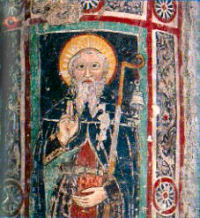
Pilgrimage church of St. Colomba in Schwangau, Germany, near Neuschwanstein castle

Thirty Fourth Monday in Ordinary Time
I, John, looked and there was the Lamb standing on Mount Zion,
and with him a hundred and forty-four thousand
who had his name and his Father’s name written on their foreheads.
I heard a sound from heaven
like the sound of rushing water or a loud peal of thunder.
The sound I heard was like that of harpists playing their harps.
They were singing what seemed to be a new hymn before the throne,
before the four living creatures and the elders.
No one could learn this hymn except the hundred and forty-four thousand
who had been ransomed from the earth.
These are the ones who follow the Lamb wherever he goes.
They have been ransomed as the first fruits
of the human race for God and the Lamb.
On their lips no deceit has been found; they are unblemished.
R. (see 6) Lord, this is the people that longs to see your face.
The LORD’s are the earth and its fullness;
the world and those who dwell in it.
For he founded it upon the seas
and established it upon the rivers.
R. Lord, this is the people that longs to see your face.
Who can ascend the mountain of the LORD?
or who may stand in his holy place?
He whose hands are sinless, whose heart is clean,
who desires not what is vain.
R. Lord, this is the people that longs to see your face.
He shall receive a blessing from the LORD,
a reward from God his savior.
Such is the race that seeks for him, that seeks the face of the God of Jacob.
R. Lord, this is the people that longs to see your face.
R. Alleluia, alleluia.
Stay awake!
For you do not know when the Son of Man will come.
R. Alleluia, alleluia.
When Jesus looked up he saw some wealthy people
putting their offerings into the treasury
and he noticed a poor widow putting in two small coins.
He said, “I tell you truly,
this poor widow put in more than all the rest;
for those others have all made offerings from their surplus wealth,
but she, from her poverty, has offered her whole livelihood.”
TOPICS: Catholic; General Discusssion; Prayer; Worship
KEYWORDS: catholic; lk21; ordinarytime; prayer
For your reading, reflection, faith-sharing, comments, questions, discussion.
1
posted on
11/22/2020 11:14:40 PM PST
by
Cronos
To: All
catholic; lk21; ordinarytime; prayer;
2
posted on
11/22/2020 11:14:54 PM PST
by
Cronos
To: nickcarraway; NYer; ELS; Pyro7480; livius; ArrogantBustard; Catholicguy; RobbyS; marshmallow; ...
Alleluia Ping Please FReepmail me to get on/off the Alleluia Ping List.
3
posted on
11/22/2020 11:17:14 PM PST
by
Cronos
To: All
| Luke |
| | English: Douay-Rheims | English: New American Standard Bible | Latin: Vulgata Clementina | Greek NT: Byzantine/Majority Text (2000) |
| 1. | AND looking on, he saw the rich men cast their gifts into the treasury. | And He looked up and saw the rich putting their gifts into the treasury. | Respiciens autem, vidit eos qui mittebant munera sua in gazophylacium, divites. | αναβλεψας δε ειδεν τους βαλλοντας τα δωρα αυτων εις το γαζοφυλακιον πλουσιους |
| 2. | And he saw also a certain poor widow casting in two brass mites. | And He saw a poor widow putting in two small copper coins. | Vidit autem et quamdam viduam pauperculam mittentem æra minuta duo. | ειδεν δε τινα και χηραν πενιχραν βαλλουσαν εκει δυο λεπτα |
| 3. | And he said: Verily I say to you, that this poor widow hath cast in more than they all: | And He said, "Truly I say to you, this poor widow put in more than all of them; | Et dixit : Vere dico vobis, quia vidua hæc pauper plus quam omnes misit. | και ειπεν αληθως λεγω υμιν οτι η χηρα η πτωχη αυτη πλειον παντων εβαλεν |
| 4. | For all these have of their abundance cast into the offerings of God: but she of her want, hath cast in all the living that she had. | for they all out of their surplus put into the offering; but she out of her poverty put in all that she had to live on." | Nam omnes hi ex abundanti sibi miserunt in munera Dei : hæc autem ex eo quod deest illi, omnem victum suum quem habuit, misit. | απαντες γαρ ουτοι εκ του περισσευοντος αυτοις εβαλον εις τα δωρα του θεου αυτη δε εκ του υστερηματος αυτης απαντα τον βιον ον ειχεν εβαλεν |
4
posted on
11/22/2020 11:19:10 PM PST
by
Cronos
To: All

Catena Aurea by St. Thomas Aguinas
Luke CHAP. 21
21:1–41. And he looked up, and saw the rich men casting their gifts into the treasury.
2. And he saw also a certain poor widow casting in thither two mites.
3. And he said, Of a truth I say unto you, that this poor widow hath cast in more than they all:
4. For all these have of their abundance cast in unto the offerings of God: but she of her penury hath cast in all the living that she had.
GLOSS. (non occ.) Our Lord having rebuked the covetousness of the Scribes who devoured widows’ houses, commends the almsgiving of a widow; as it is said, And he looked up, and saw the rich men casting into the treasury, & c.
BEDE. In the Greek language, φυλάξαι signifies to keep, and gaza in Persian means riches, hence gazophylacium is used for the name of the place in which money is kept. Now there was a chest with an opening at the top placed near the altar, on the right hand of those entering the house of God, into which the Priests cast all the money, which was given for the Lord’s temple. But our Lord as He overthrows those who trade in His house, so also He remarks those who bring gifts, giving praise to the deserving, but condemning the bad. Hence it follows, And he saw also a certain poor widow casting in thither two mites.
CYRIL OF ALEXANDRIA. She offered two oboli, which with the sweat of her brow she had earned for her daily living, or what she daily begs for at the hands of others she gives to God, shewing that her poverty is fruitful to her. Therefore does she surpass the others, and by a just award receives a crown from God; as it follows, Of a truth I say unto you, that this poor widow hath cast in more, &c.
BEDE. For whatever we offer with an honest heart is well pleasing to God, who hath respect unto the heart, not the substance, nor does He weigh the amount of that which is given in sacrifice, but of that from which it is taken; as it follows, For all these have cast in of their abundance, but she all that she had.
CHRYSOSTOM. (Hom. 1. in Ep. ad Heb., Hom. 28.) For God regarded not the scantiness of the offering, but the overflowing of the affection. Almsgiving is not the bestowing a few things out of many, but it is that of the widow emptying, herself of her whole substance. But if you cannot offer as much as the widow, at least give all that remains over.
BEDE. Now mystically, the rich men who cast their gifts into the treasury signify the Jews puffed up with the righteousness of the law; the poor widow, the simplicity of the Church which is called poor, because it has either cast away the spirit of pride, or its sins, as if they were worldly riches. But the Church is a widow, because her Husband endured death for her. She cast two mites into the treasury, because in God’s sight, in whose keeping are all the offerings of our works, she presents her gifts, whether of love to God and her neighbour, or of faith and prayer. And these excel all the works of the proud Jews, for they of their abundance cast into the offerings of God, in that they presume on their righteousness, but the Church casts in all her living, for every thing that hath life she believes to be the gift of God.
THEOPHYLACT. Or the widow may be taken to mean any soul bereft as it were of her first husband, the ancient law, and not worthy to be united to the Word of God. Who brings to God instead of a dowry faith and a good conscience, and so seems to offer more than those who are rich in words, and abound in the moral virtues of the Gentiles.
Copyright ©1999-2018 e-Catholic2000.com
5
posted on
11/22/2020 11:21:00 PM PST
by
Cronos
To: All

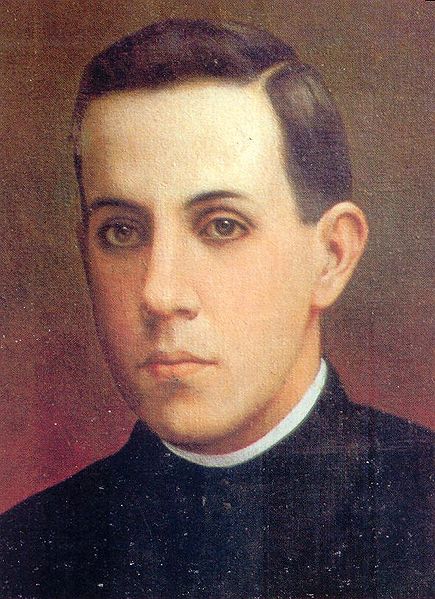
Blessed Miguel Agustin
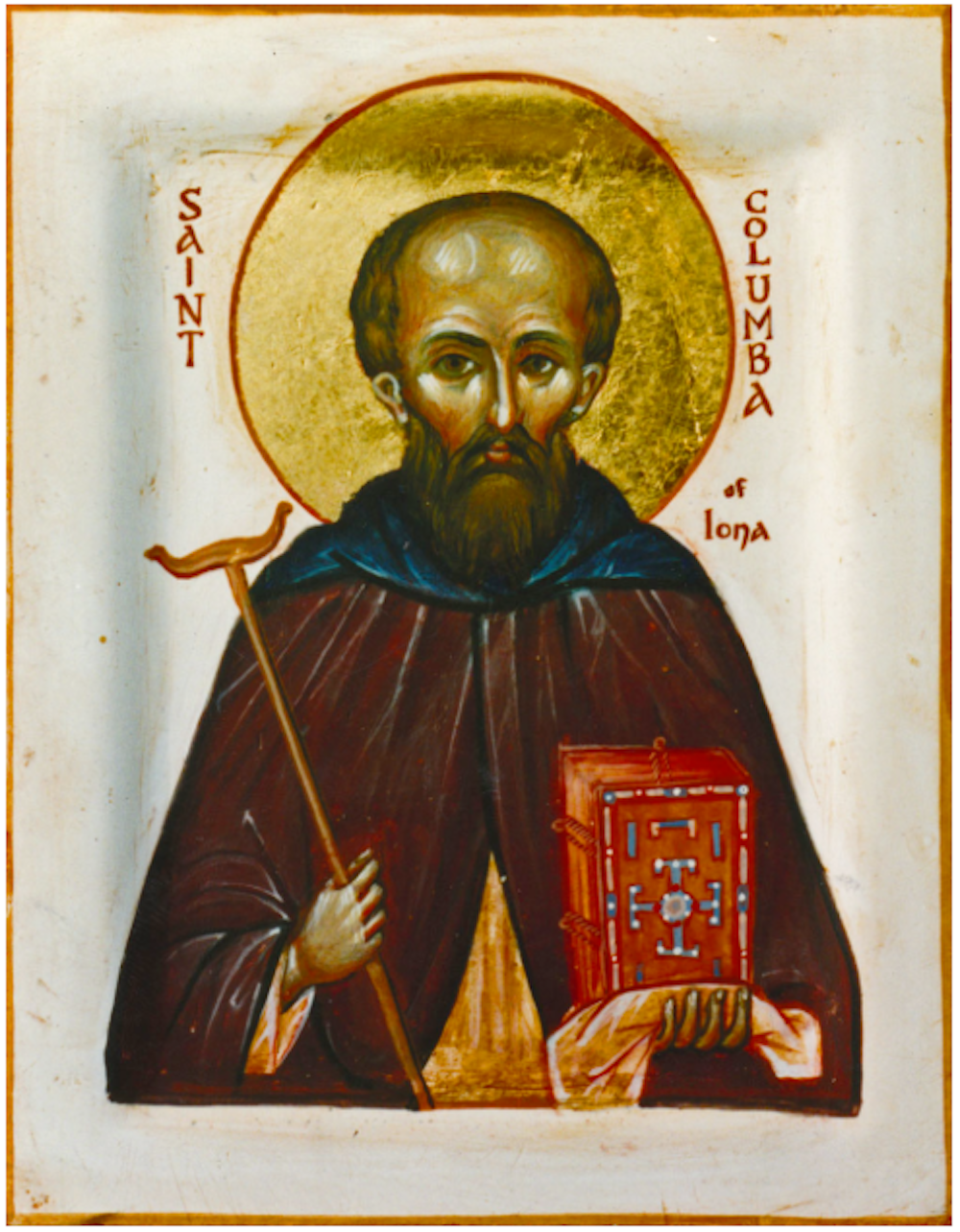
St. Colomba

St. Clement I
6
posted on
11/22/2020 11:25:36 PM PST
by
Cronos
To: Cronos

The Widow's Mite
Basilica of Sant'Apollinare Nuovo
6th C.
Ravenna
7
posted on
11/23/2020 6:18:17 AM PST
by
annalex
(fear them not)
To: annalex
Blessed Miguel Agustín Pro’s Story“¡Viva Cristo Rey!”—Long live Christ the King!—were the last words Pro uttered before he was executed for being a Catholic priest and serving his flock.
Born into a prosperous, devout family in Guadalupe de Zacatecas, Mexico, Miguel entered the Jesuits in 1911, but three years later fled to Granada, Spain, because of religious persecution in Mexico. He was ordained in Belgium in 1925.
Father Pro immediately returned to Mexico, where he served a Church forced to go “underground.” He celebrated the Eucharist clandestinely and ministered the other sacraments to small groups of Catholics.
He and his brother Roberto were arrested on trumped-up charges of attempting to assassinate Mexico’s president. Roberto was spared, but Miguel was sentenced to face a firing squad on November 23, 1927. His funeral became a public demonstration of faith. Miguel Pro was beatified in 1988.
Reflection
When Fr. Miguel Pro was executed in 1927, no one could have predicted that 52 years later the bishop of Rome would visit Mexico, be welcomed by its president, and celebrate open-air Masses before thousands of people. Pope John Paul II made additional trips to Mexico in 1990, 1993, 1999, and 2002. Those who outlawed the Catholic Church in Mexico did not count on the deeply rooted faith of its people, and the willingness of many of them, like Miguel Pro, to die as martyrs.
8
posted on
11/23/2020 6:19:58 AM PST
by
annalex
(fear them not)
To: annalex
9
posted on
11/23/2020 6:21:10 AM PST
by
annalex
(fear them not)
To: annalex
Saint Columban’s StoryColumban was the greatest of the Irish missionaries who worked on the European continent. As a young man who was greatly tormented by temptations of the flesh, he sought the advice of a religious woman who had lived a hermit’s life for years. He saw in her answer a call to leave the world. He went first to a monk on an island in Lough Erne, then to the great monastic seat of learning at Bangor.
After many years of seclusion and prayer, he traveled to Gaul with 12 companion missionaries. They won wide respect for the rigor of their discipline, their preaching, and their commitment to charity and religious life in a time characterized by clerical laxity and civil strife. Columban established several monasteries in Europe which became centers of religion and culture.
Like all saints, he met opposition. Ultimately he had to appeal to the pope against complaints of Frankish bishops, for vindication of his orthodoxy and approval of Irish customs. He reproved the king for his licentious life, insisting that he marry. Since this threatened the power of the queen mother, Columban was deported back to Ireland. His ship ran aground in a storm, and he continued his work in Europe, ultimately arriving in Italy, where he found favor with the king of the Lombards. In his last years he established the famous monastery of Bobbio, where he died. His writings include a treatise on penance and against Arianism, sermons, poetry, and his monastic rule. The Liturgical Feast of Saint Columban is November 23.
Reflection
Now that public sexual license is becoming extreme, we need the Church’s memory of a young man as concerned about chastity as Columban. And now that the comfort-captured Western world stands in tragic contrast to starving millions, we need the challenge to austerity and discipline of a group of Irish monks. They were too strict, we say; they went too far. How far shall we go?
10
posted on
11/23/2020 6:22:37 AM PST
by
annalex
(fear them not)
To: annalex
11
posted on
11/23/2020 6:24:09 AM PST
by
annalex
(fear them not)
To: annalex
Saint Clement’s StoryClement of Rome was the third successor of Saint Peter, reigning as pope during the last decade of the first century. He’s known as one of the Church’s five “Apostolic Fathers,” those who provided a direct link between the Apostles and later generations of Church Fathers.
Clement’s First Epistle to the Corinthians was preserved and widely read in the early Church. This letter from the bishop of Rome to the Church in Corinth concerns a split that alienated a large number of the laity from the clergy. Deploring the unauthorized and unjustifiable division in the Corinthian community, Clement urged charity to heal the rift.
Reflection
Today many in the Church experience polarization regarding worship, how we speak of God, and other issues. We’d do well to take to heart the exhortation from Clement’s Epistle: “Charity unites us to God. It knows no schism, does not rebel, does all things in concord. In charity all the elect of God have been made perfect.”
Rome’s Basilica of St. Clement, one of the city’s earliest parish churches, is probably built on the site of Clement’s home. History tells us that Pope Clement was martyred either in the year 99 or in 101. The Liturgical Feast of Saint Clement is November 23.
Saint Clement is the Patron Saint of:
Marble Workers
Mariners
Tanners
franciscanmedia.org Additionally, patron of Angono, Rizal, Philippines.
12
posted on
11/23/2020 6:28:22 AM PST
by
annalex
(fear them not)
To: annalex

Vision of St. Clement
Giovanni Battista Tiepolo (1696–1770)
13
posted on
11/23/2020 6:33:12 AM PST
by
annalex
(fear them not)
To: annalex
NAVARRE BIBLE COMMENTARY (RSV)
From: Revelation 14:1-3, 4b-5
The Lamb and His Companions
----------------------------------------------
[1] Then I looked, and lo, on Mount Zion stood the Lamb, and with him a hundred and forty-four thousand who had his name and his Father's name written on their foreheads. [2] And I heard a voice from heaven like the sound of many waters and like the sound of loud thunder; the voice I heard was like the sound of harpers playing on their harps, [3] and they sing a new song before the throne and before the four living creatures and before the elders. No one could learn that song except the hundred and forty-four thousand who had been redeemed from the earth. [4] It is these who follow the Lamb wherever he goes; these have been redeemed from mankind as first fruits for God and the Lamb, [5] and in their mouth no lie was found, for they are spotless.
*********************************************************************
Commentary:
14:1-16:21 The book now turns to the Lamb and to divine judgment (anticipating the victory of the Lamb). It stays with this theme up to chapter 17 at which point the powers of evil appear again (in various symbolic forms) and are subjected to the judgment of God. First we are shown the Lamb and his entourage (cf. 14:1-5); immediately after this the Last Judgment is proclaimed and a preliminary description given (14:6-20); the glory of the Lamb is again extolled (cf. 15:1-4) and the unleashing of the wrath of God is further described in terms of the pouring out of the seven bowls (cf. 15:5-16:21).
In opposition to the powers of evil and the active hostility to God and the Church caused by the machinations of Satan stand the risen Christ and his followers, who sing in praise of his glory and triumph. These followers are those who have attained redemption; the salvation will reach its climax when the Kingdom of God is fully established (the marriage of the Lamb, and the heavenly Jerusalem: chaps. 21-22). In the meantime, although the Church has to do battle with the forces of evil, it can contemplate Christ "as an innocent lamb (who) merited life for us by his blood which he freely shed. In him God reconciled us to himself and to one another, freeing us from the bondage of the devil and of sin, so that each one of us could say with the Apostle: the Son of God 'loved me and gave himself for me' (Gal 2:20)" (Vatican II, Gaudium Et Spes, 22).
1-3. It is highly significant that the Lamb stands on Mount Zion, in Jerusalem, which was where God dwelt among men according to the Old Testament (cf. Ps 74:1; 132:14; etc.) and where, according to certain Jewish traditions, the Messiah would appear, to join all his followers. The assembly, then, is an idealization of the Church, protected by Christ and gathered about him. It includes all those who belong to Christ and to the Father and who therefore bear his mark, which shows them to be children of God. They are so many that it is impossible to count them, but their number is complete: they are given a symbolic number which is 12 (the tribes of Israel) by 12 (the Apostles) by 1000 (a number indicating a huge scale): cf. Rev 7:3ff.
The one hundred and forty-four thousand are not yet in heaven (for the loud noise comes from heaven); they are on earth, but they have been rescued from the power of the beast (cf. 13:13-14). The verse from heaven symbolizes the strength and power of God; and the heavenly voice speaks with the gentleness of liturgical music. It is a new song, for it now sings of the salvation wrought by Christ (cf. 15: 34) in the same style as the Old Testament chants the praises of God (cf., e.g., Ps 33:3; 40:2; 96:1). Only those who belong to Christ can join in this song and be associated with the heavenly liturgy: "It is especially in the sacred liturgy that our union with the heavenly Church is best realized; in the liturgy, through the sacramental signs, the power of the Holy Spirit acts on us, and with community rejoicing we celebrate together the praise of the divine majesty; when all those of every tribe and tongue and people and nation (cf. Rev 5:9) who have been redeemed by the blood of Christ and gathered together into one Church glorify, in one common song of praise, the one and triune God" (Lumen Gentium, 50).
4-5. The text refers to those who are properly disposed to take part in the marriage supper of the Lamb (cf. 19:9; 21:2) because they have not been stained by idolatry but have kept themselves undefiled for him. St Paul compares every Christian to a chaste virgin (cf. 2 Cor 11:2) and describes the Church as the spouse of Christ (cf. Eph 5:21-32). The author of the Apocalypse is referring to all the members of the Church insofar as they are holy, that is, called to holiness; but the symbolism he uses also draws attention to the fact that virginity and celibacy for the sake of the Kingdom of heaven is a special expression and clear sign of the Church as Bride of Christ. Referring to the chastity practiced by religious, the Second Vatican Council teaches that in this way they "recall that wonderful marriage made by God, which will be fully manifested in the future age, and in which the Church has Christ for her only spouse" (Perfectae Caritatis, 12).
The one hundred and forty-four thousand are also those who have identified themselves fully with Christ, dead and risen, by denying themselves and devoting all their energies to apostolate (cf. Mt 10:38). They also stand for those whom Christ, by the shedding of his blood, has made his own and his Father's property (like Israel, the first fruits of Yahweh: cf. Jer 2:3), that is, those who constitute a holy people like that remnant of Israel described in Zephaniah 3:13: "they shall do no wrong and utter no lies, nor shall there be found in their mouth a deceitful tongue." The prophet's words refer to people who have not invoked false gods, but the Apocalypse applies them to those who are fully committed to Christ.
14
posted on
11/23/2020 7:47:03 AM PST
by
fidelis
(Zonie and USAF Cold Warrior)
To: fidelis
From: Luke 21:1-4The Widow's Mite
--------------------------
[1] He (Jesus) looked up and saw the rich putting their gifts into the treasury; [2] and He saw a poor widow put in two copper coins. [3] And He said, "Truly I tell you, this poor widow has put in more than all of them; [4] for they all contributed out of their abundance, but she out of her poverty put in all the living she had."
*********************************************************************
Commentary:
1-4. Our Lord, surrounded by His disciples, watches people putting offerings into the treasury. This was a place in the women's courtyard, where there were various collection boxes for the offerings of the faithful. Just then, something happens whose significance Jesus wants His disciples to notice: a poor widow puts in two small coins, of very little value. He describes this as the greatest offering of all, praising the generosity of giving alms for this purpose, particularly that of those people who give part of what they need. Our Lord is moved by this tiny offering because in her case it implies a big sacrifice. "The Lord does not look", St. John Chrysostom comments, "at the amount offered but at the affection with which it is offered" ("Hom. on Heb", 1). Generosity is of the essence of almsgiving. This woman teaches us that we can move God's heart if we give Him all we can, which will always amount to very little even if we give our very lives. "How lit- tle a life is to offer to God!" (St. J. Escriva, The Way, 42).
15
posted on
11/23/2020 7:54:03 AM PST
by
fidelis
(Zonie and USAF Cold Warrior)
Disclaimer:
Opinions posted on Free Republic are those of the individual
posters and do not necessarily represent the opinion of Free Republic or its
management. All materials posted herein are protected by copyright law and the
exemption for fair use of copyrighted works.
FreeRepublic.com is powered by software copyright 2000-2008 John Robinson