Brothers and sisters:
Have among yourselves the same attitude
that is also yours in Christ Jesus,
Who, though he was in the form of God,
did not regard equality with God
something to be grasped.
Rather, he emptied himself,
taking the form of a slave,
coming in human likeness;
and, found human in appearance,
he humbled himself,
becoming obedient to death,
even death on a cross.
Because of this, God greatly exalted him
and bestowed on him the name
that is above every name,
that at the name of Jesus
every knee should bend,
of those in heaven and on earth and under the earth,
and every tongue confess that
Jesus Christ is Lord,
to the glory of God the Father.

Catena Aurea by St. Thomas Aguinas
CHAP. 14
14:12–14
12. Then said he also to him that bade him, When thou makest a dinner or a supper, call not thy friends, nor thy brethren, neither thy kinsmen, nor thy rich neighbours; lest they also bid thee again, and a recompence be made thee.
13. But when thou makest a feast, call the poor, the maimed, the lame, the blind:
14. And thou shalt be blessed; for they cannot recompense thee: for thou shalt be recompensed at the resurrection of the just.
THEOPHYLACT. The supper being composed of two parties, the invited and the inviter, and having already exhorted the invited to humility, He next rewards by His advice the inviter, guarding him against making a feast to gain the favour of men. Hence it is said, Then said he also to him that bade him, When thou makest a dinner or a supper, call not thy friends.
CHRYSOSTOM. (Hom. 1, 3. in ep. Col.) Many are the sources from which friendships are made. Leaving out all unlawful ones, we shall speak only of those which are natural and moral; the natural are, for instance, between father and son, brother and brother, and such like; which He meant, saying, Nor thy brethren, nor thy kinsmen; the moral, when a man has become your guest or neighbour; and with reference to these He says, nor thy neighbours.
BEDE. Brothers then, and friends, and the rich, are not forbidden, as though it were a crime to entertain one another, but this, like all the other necessary intercourse among men, is shewn to fail in meriting the reward of everlasting life; as it follows, Lest perchance they also bid thee again, and a recompense be made thee. He says not, “and sin be committed against thee.” And the like to this He speaks in another place, And if ye do good to those who do good to you, what thank have ye? (Luke 6:33.) There are however certain mutual feastings of brothers and neighbours, which not only incur a retribution in this life, but also condemnation hereafter. And these are celebrated by the general gathering together of all, or the hospitality in turn of each one of the company; and they meet together that they may perpetrate foul deeds, and through excess of wine be provoked to all kinds of lustful pleasure.
CHRYSOSTOM. Let us not then bestow kindness on others under the hope of return. For this is a cold motive, and hence it is that such a friendship soon vanishes. But if you invite the poor, God, who never forgets, will be your debtor, as it follows, But when ye make a feast, call the poor, the maimed, the lame, and the blind.
CHRYSOSTOM. (Hom. 45. in Act.) For the humbler our brother is, so much the more does Christ come through him and visit us. For he who entertains a great man does it often from vainglory. And elsewhere, But very often interest is his object, that through such a one he may gain promotion. I could indeed mention many who for this pay court to the most distinguished of the nobles, that through their assistance they may obtain the greater favour from the prince. Let us not then ask those who can recompense us, as it follows, And thou shalt be blessed, for they cannot recompense thee. And let us not be troubled when we receive no return of a kindness, but when we do; for if we have received it we shall receive nothing more, but if man does not repay us, God will. As it follows, For thou shall be recompensed at the resurrection of the just.
BEDE. And though all rise again, yet it is called the resurrection of the just, because in the resurrection they doubt not that they are blessed. Whoever then bids the poor to his feast shall receive a reward hereafter. But he who invites his friends, brothers, and the rich, has received his reward. But if he does this for God’s sake after the example of the sons of Job, God, who Himself commanded all the duties of brotherly love, will reward him.
CHRYSOSTOM. But thou sayest, the poor are unclean and filthy. Wash him, and make him to sit with thee at table. If he has dirty garments, give him clean ones. Christ comes to thee through him, and dost thou stand trifling?
GREGORY OF NYSSA. Do not then let them lie as though they were nothing worth. Reflect who they are, and thou wilt discover their preciousness. They have put on the image of the Saviour. Heirs of future blessings, bearing the keys of the kingdom, able accusers and excusers, not speaking themselves, but examined by the judge.
CHRYSOSTOM. (Hom. 45. in Act.) It would become thee then to receive them above in the best chamber, but if thou shrinkest, at least admit Christ below, where are the menials and servants. Let the poor man be at least thy door keeper. For where there is alms, the devil durst not enter. And if thou sittest not down with them, at any rate send them the dishes from thy table.
ORIGEN. But mystically, he who shuns vain-glory calls to a spiritual banquet the poor, that is, the ignorant, that he may enrich them; the weak, that is, those with offended consciences, that he may heal them; the lame, that is, those who have wandered from reason, that he may make their paths straight; the blind, that is, those who discern not the truth, that they may behold the true light. But it is said, They cannot recompense thee, i. e. they know not how to return an answer.
14:15–24
15. And when one of them that sat at meat with him heard these things, he said unto him, Blessed is he that shall eat bread in the kingdom of God.
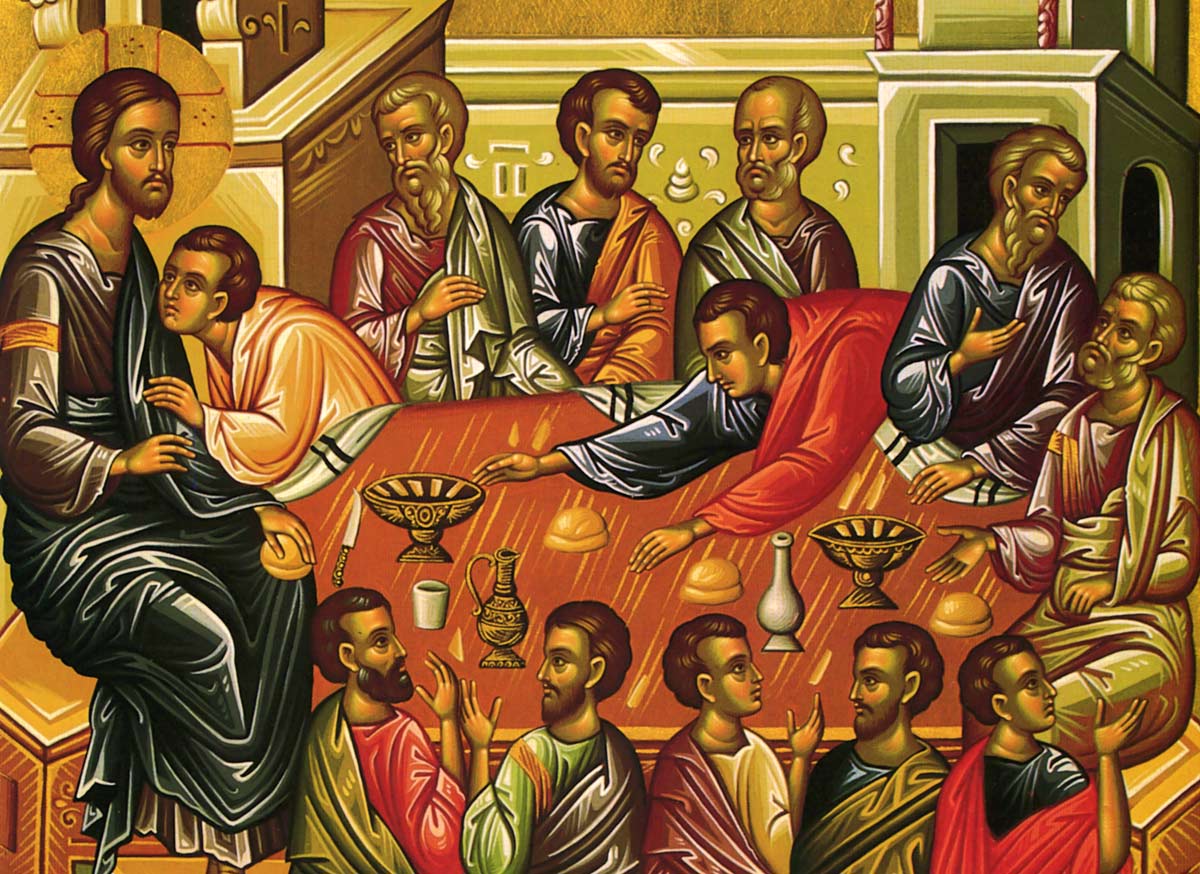
16. Then said he unto him, A certain man made a great supper, and bade many:
17. And sent his servant at supper time to say to them that were bidden, Come; for all things are now ready.
18. And they all with one consent began to make excuse. The first said unto him, I have bought a piece of ground, and I must needs go and see it: I pray thee have me excused.
19. And another said, I have bought five yoke of oxen, and I go to prove them: I pray thee have me excused.
20. And another said, I have married a wife, and therefore I cannot come.
21. So that servant came, and shewed his lord these things. Then the master of the house being angry said to his servant, Go out quickly into the streets and lanes of the city, and bring in hither the poor, and the maimed, and the halt, and the blind.
22. And the servant said, Lord, it is done as thou hast commanded, and yet there is room.
23. And the lord said unto the servant, Go out into the highways and hedges, and compel them to come in, that my house may be filled.
24. For I say unto you, That none of those men which were bidden shall taste of my supper.
EUSEBIUS. Our Lord had just before taught us to prepare our feasts for those who cannot repay, seeing that we shall have our reward at the resurrection of the just. Some one then, supposing the resurrection of the just to be one and the same with the kingdom of God, commends the above-mentioned recompense; for it follows, When one of them that sat at meat with him heard these things, he said unto him, Blessed is he that shall eat bread in the kingdom of God.
CYRIL OF ALEXANDRIA. That man was carnal, and a careless hearer of the things which Christ delivered, for he thought the reward of the saints was to be bodily.
AUGUSTINE. (Serm. 112.) Or because he sighed for something afar off, and that bread which he desired lay before him. For who is that Bread of the kingdom of God but He who says, I am the living bread which came down from heaven? (John 6:51.) Open not thy mouth, but thy heart.
BEDE. But because some receive this bread by faith merely, as if by smelling, but its sweetness they loathe to really touch with their mouths, our Lord by the following parable condemns the dulness of those men to be unworthy of the heavenly banquet. For it follows, But he said unto him, A certain man made a great supper, and bade many.
CYRIL OF ALEXANDRIA. This man represents God the Father just as images are formed to give the resemblance of power. For as often as God wishes to declare His avenging power, He is called by the names of bear, leopard, lion, and others of the same kind; but when He wishes to express mercy, by the name of man. The Maker of all things, therefore, and Father of Glory, or the Lord, prepared the great supper which was finished in Christ.
For in these latter times, and as it were the setting of our world, the Son of God has shone upon us, and enduring death for our sakes, has given us His own body to eat. Hence also the lamb was sacrificed in the evening according to the Mosaic law. Rightly then was the banquet which was prepared in Christ called a supper.
GREGORY. (Hom. 36. in Evan.) Or he made a great supper, as having prepared for us the full enjoyment of eternal sweetness. He bade many, but few came, because sometimes they who themselves are subject to him by faith, by their lives oppose his eternal banquet. And this is generally the difference between the delights of the body and the soul, that fleshly delights when not possessed provoke a longing desire for them, but when possessed and devoured, the eater soon turns from satiety to loathing; spiritual delights, on the other hand, when not possessed are loathed, when possessed the more desired. But heavenly mercy recalls those despised delights to the eyes of our memory, and in order that we should drive away our disgust, bids us to the feast. Hence it follows, And he sent his servant, &c.
CYRIL OF ALEXANDRIA. That servant who was sent is Christ Himself, who being by nature God and the true Son of God, emptied Himself, and took upon Him the form of a servant. But He was sent at supper time. For not in the beginning did the Word take upon Him our nature, but in the last time; and he adds, For all things are ready. For the Father prepared in Christ the good things bestowed upon the world through Him, the removal of sins, the participation of the Holy Spirit, the glory of adoption. To these Christ bade men by the teaching of the Gospel.
AUGUSTINE. (ubi sup.) Or else, the Man is the Mediator between God and man, Christ Jesus; He sent that they who were bidden might come, i. e. those who were called by the prophets whom He had sent; who in the former times invited to the supper of Christ, were often sent to the people of Israel, often bade them to come at supper time. They received the inviters, refused the supper. They received the prophets and killed Christ, and thus ignorantly prepared for us the supper. The supper being now ready, i. e. Christ being sacrificed, the Apostles were sent to those, to whom prophets had been sent before.
GREGORY. By this servant then who is sent by the master of the family to bid to supper, the order of preachers is signified. But it is often the case that a powerful person has a despised servant, and when his Lord orders any thing through him, the servant speaking is not despised, because respect for the master who sends him is still kept up in the heart. Our Lord then offers what he ought to be asked for, not ask others to receive. He wishes to give what could scarcely be hoped for; yet all begin at once to make excuse, for it follows, And they all began with one consent to make excuse. Behold a rich man invites, and the poor hasten to come. We are invited to the banquet of God, and we make excuse.
AUGUSTINE. (ubi sup.) Now there were three excuses, of which it is added, The first said unto him, I have bought a piece of ground, and I must needs go and see it. The bought piece of ground denotes government. Therefore pride is the first vice reproved. For the first man wished to rule, not willing to have a master.
GREGORY. (ubi sup.) Or by the piece of ground is meant worldly substance. Therefore he goes out to see it who thinks only of outward things for the sake of his living.
AMBROSE. Thus it is that the worn out soldier is appointed to serve degraded offices, as he who intent upon things below buys for himself earthly possessions, can not enter into the kingdom of heaven. Our Lord says, Sell all that thou hast, and follow me.
It follows, And another said, I have bought five yoke of oxen, and I go to prove them.
AUGUSTINE. (Serm. 112.) The five yoke of oxen are taken to be the five senses of the flesh; in the eyes sight, in the ears hearing, in the nostrils smelling, in the mouth taste, in all the members touch. But the yoke is more easily apparent in the three first senses; two eyes, two ears, two nostrils. Here are three yoke. And in the mouth is the sense of taste which is found to be a kind of double, in that nothing is sensible to the taste, which is not touched both by the tongue and palate. The pleasure of the flesh which belongs to the touch is secretly doubled. It is both outward and inward. But they are called yoke of oxen, because through those senses of the flesh earthly things are pursued. For the oxen till the ground, but men at a distance from faith, given up to earthly things, refuse to believe in any thing, but what they arrive at by means of the five-fold sense of the body. “I believe nothing but what I see.” If such were our thoughts, we should be hindered from the supper by those five yoke of oxen. But that you may understand that it is not the delight of the five senses which charms and conveys pleasure, but that a certain curiosity is denoted, he says not, I have bought five yoke of oxen, and go to feed them, but go to prove them.
GREGORY. (in Hom. 36. in Ev.) By the bodily senses also because they cannot comprehend things within, but take cognizance only of what is without, curiosity is rightly represented, which while it seeks to shake off a life which is strange to it, not knowing its own secret life, desires to dwell upon things without. But we must observe, that the one who for his farm, and the other who to prove his five yoke of oxen, excuse themselves from the supper of their Inviter, mix up with their excuse the words of humility. For when they say, I pray thee, and then disdain to come, the word sounds of humility, but the action is pride. It follows, And this said, I have married a wife, and therefore I cannot come.
AUGUSTINE. (ubi sup.) That is, the delight of the flesh which hinders many, I wish it were outward and not inward. For he who said, I have married a wife, taking pleasure in the delights of the flesh, excuses himself from the supper; let such a one take heed lest he die from inward hunger.
BASIL. But he says, I cannot come, because that the human mind when it is degenerating to worldly pleasures, is feeble in attending to the things of God.
GREGORY. (Hom. 36.) But although marriage is good, and appointed by Divine Providence for the propagation of children, some seek therein not fruitfulness of offspring, but the lust of pleasure. And so by means of a righteous thing may not unfitly an unrighteous thing be represented.
AMBROSE. Or marriage is not blamed; but purity is held up to greater honour, since the unmarried woman careth for the things of the Lord, that she may be holy in body and spirit, but she that is married careth for the things of the world. (1 Cor. 7:34.)
AUGUSTINE. (ubi sup.) Now John when he said, all that is in the world is the lust of the flesh, and the lust of the eyes, and the pride of life, (1 John 2:16.) began from the point where the Gospel ended. The lust of the flesh, I have married a wife; the lust of the eyes, I have bought fire yoke of oxen; the pride of life, I have bought a farm. But proceeding from a part to the whole, the five senses have been spoken of under the eyes alone, which hold the chief place among the five senses. Because though properly the sight belongs to the eyes, we are in the habit of ascribing the act of seeing to all the five senses.
CYRIL OF ALEXANDRIA. But whom can we suppose these to be who refused to come for the reason just mentioned, but the rulers of the Jews, whom throughout the sacred history we find to have been often reproved for these things?
ORIGEN. Or else, they who have bought a piece of ground and reject or refuse the supper, are they who have taken other doctrines of divinity, but have despised the word which they possessed. But he who has bought five yoke of oxen is he who neglects his intellectual nature, and follows the things of sense, therefore he cannot comprehend a spiritual nature. But he who has married a wife is he who is joined to the flesh, a lover of pleasure rather than of God. (1 Tim. 3:4.)
AMBROSE. Or let us suppose that three classes of men are excluded from partaking of that supper, Gentiles, Jews, Heretics. The Jews by their fleshly service impose upon themselves the yoke of the law, for the five yoke are the yoke of the Ten Commandments, of which it is said, And he declared unto you his covenant, which he commanded you to perform, even ten commandments; and he wrote them upon two tables of stone. (Deut. 4:13.) That is, the commands of the Decalogue. Or the five yoke are the five books of the old law. But heresy indeed, like Eve with a woman’s obstinacy, tries the affection of faith. And the Apostle says that we must flee from covetousness, lest entangled in the customs of the Gentiles we be unable to come to the kingdom of Christ. (Eph. 5:3, Col. 3:5, Heb. 13:5, 1 Tim. 6:11.) Therefore both he who has bought a farm is a stranger to the kingdom, and he who has chosen the yoke of the law rather than the gift of grace, and he also who excuses himself because he has married a wife.
It follows, And the servant returned, and told these things to his Lord.
AUGUSTINE. (in Gen. ad lit. c. 19.) Not for the sake of knowing inferior beings does God require messengers, as though He gained aught from them, for He knows all things stedfastly and unchangeably. But he has messengers for oursakes and their own, because to be present with God, and stand before Him so as to consult Him about His subjects, and obey His heavenly commandments, is good for them in the order of their own nature.
CYRIL OF ALEXANDRIA. But with the rulers of the Jews who refused their call, as they themselves confessed, Have any of the rulers believed on him? (John 7:48.) the Master of the household was wroth, as with them that deserved His indignation and anger; whence it follows, Then the master of the house being angry, &c.
PSEUDO-BASIL. (app. Hom. in Ps. 37.) Not that the passion of anger belongs to the Divine substance, but an operation such as in us is caused by anger, is called the anger and indignation of God.
CYRIL OF ALEXANDRIA. Thus it was that the master of the house is said to have been enraged with the chiefs of the Jews, and in their stead were called men taken from out of the Jewish multitude, and of weak and impotent minds. For at Peter’s preaching, first indeed three thousand, then five thousand believed, and afterwards much people; whence it follows, He said unto his servant, Go out straightway into the streets and lanes of the city, and bring in hither the poor, and the maimed, and the halt, and the blind. (Acts 2:41, 44.
AMBROSE. He invites the poor, the weak, and the blind, to shew that weakness of body shuts out no one from the kingdom of heaven, and that he is guilty of fewer sins who lacks the incitement to sin; or that the infirmities of sin are forgiven through the mercy of God. Therefore he sends to the streets, that from the broader ways they may come to the narrow way.
Because then the proud refuse to come, the poor (Greg. Hom. 36.) are chosen, since they are called weak and poor who are weak in their own judgment of themselves, for there are poor, and yet as it were strong, who though lying in poverty are proud; the blind are they who have no brightness of understanding; the lame are they who have walked not uprightly in their works. But since the faults of these are expressed in the weakness of their members, as those were sinners who when bidden refused to come, so also are these who are invited and come; but the proud sinners are rejected, the humble are chosen. God then chooses those whom the world despises, because for the most part the very act of contempt recals a man to himself. And men so much the sooner hear the voice of God, as they have nothing in this world to take pleasure in. When then the Lord calls certain from the streets and lanes to supper, He denotes that people who had learnt to observe in the city the constant practice of the law. But the multitude who believed of the people of Israel did not fill the places of the upper feast room. Hence it follows, And the servant said, Lord, it is done as thou hast commanded, and yet there is room. For already had great numbers of the Jews entered, but yet there was room in the kingdom for the abundance of the Gentiles to be received. Therefore it is added, And the Lord said unto the servant, Go out into the highways and hedges, and compel them to come in, that my house may be filled. When He commanded His guests to be collected from the wayside and the hedges, He sought for a rural people, that is, the Gentiles.
AMBROSE. Or, He sends to the highways and about the hedges, because they are fit for the kingdom of God, who, not absorbed in the desire for present goods, are hastening on to the future, set in a certain fixed path of good will. And who like a hedge which separates the cultivated ground from the uncultivated, and keeps off the incursion of the cattle, know how to distinguish good and evil, and to hold up the shield of faith against the temptations of spiritual wickedness.
AUGUSTINE. (Serm. 112.) The Gentiles came from the streets and lanes, the heretics come from the hedges. For they who make a hedge seek for a division; let them be drawn away from the hedges, plucked asunder from the thorns. But they are unwilling to be compelled. By our own will, say they, will we enter. Compel them to enter, He says. Let necessity be used from without, thence arises a will.
GREGORY. (in Hom. 36.) They then who, broken down by the calamities of this world, return to the love of God, are compelled to enter. But very terrible is the sentence which comes next. For I say unto you, That none of those men which were bidden shall taste of my supper. Let no one then despise the call, lest if when bidden he make excuse, when he wishes to enter he shall not be able.