
Posted on 03/02/2020 9:43:46 AM PST by Salvation
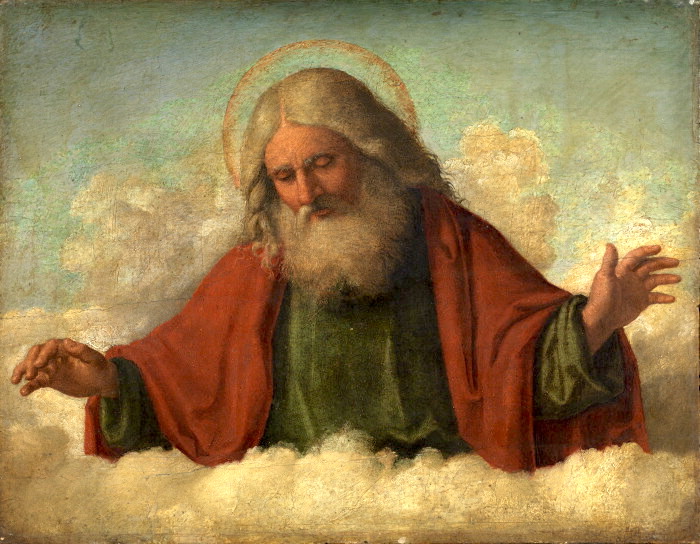
In Monday’s first reading (Monday of the First Week of Lent) there is a recitation of the law that features the refrain “I am the Lord.” What does this expression mean and why is it appended to each command?
When we think of God’s law, there is a danger that we might think of it as we do of any secular law: as a sort of impersonal code written by nameless legislators or bureaucrats. We have not met them; we do not love, trust, or even know them. They are an abstraction we call “the government,” or just “they,” as in, “They don’t let you park here,” or “They’ll arrest you for that.”
If we have faith, God’s Law is personal, for it is given by someone we do love, trust, and know. Further, we believe that He loves us and wants what is best for us.
God’s law is not the equivalent of a no-parking sign put up by some nameless, faceless government agency. Rather, it is a personal exhortation, an instruction and command given by someone we know and who knows and loves us.
Consider this example: Suppose you pull in front of my church to park and you see a no-parking sign. Now suppose further that you decide to ignore it. You have broken a law—not a big one, but a law nonetheless. You’ve chosen to ignore a sign put there by “the government.” Now consider a slightly different scenario: You pull in front of my church to park and I, your beloved blogger and the pastor of the church you are attending, am standing out there by the curb and I say to you, “Please don’t park here.” This situation is different in that I, someone you know and love 🙂 , am personally requesting that you leave the space open for some reason unknown to you.
An old rabbinic saying makes this same point:
You want to know why so many of God’s laws end by saying “I am the Lord”? I will tell you! When God says, “I am the Lord,” he is saying, “Now look, I am the one who fished you out of the mud, so come over here and listen to me.”
When you experience the law in this personal way, you are far more likely to follow it, because someone you know and trust is asking and/or directing you. Now what if, despite this, you still choose to ignore the instruction not to park there. In this case, the law is personal, so your refusal to follow it becomes personal and is a far more serious situation.
Here are two (of many) examples of the “I am the Lord” phrase from Scripture:
You shall not defraud or rob your neighbor.
You shall not withhold overnight the wages of your day laborer.
You shall not curse the deaf,
or put a stumbling block in front of the blind,
but you shall fear your God.
I am the LORD.
You shall not act dishonestly in rendering judgment.
Show neither partiality to the weak nor deference to the mighty,
but judge your fellow men justly.
You shall not go about spreading slander among your kin;
nor shall you stand by idly when your neighbor’s life is at stake.
I am the LORD (Lev 19:11-14).
Note how each ends with, “I am the Lord.” On the one hand, it lends solemnity to the pronouncement, but on the other, God is saying, “Hey, this is God talking! It is I, your Father, who speak to you; I who created you, led you out of slavery, parted the Red Sea for you, dispatched your enemies, fed you in the desert, and gave you drink from the rock. It is I; I who love and care for you; I who have given you everything you have; I who want what is best for you; I who have earned your trust. It is I, your Father, speaking to you and giving you this command.”
God’s law is personal. Do we see and experience it this way? This will happen only if we come to know the Lord personally. Otherwise, the danger is that we see the Law of God as merely an impersonal code, an abstract set of rules to follow. They might as well have been issued by the deity, the godhead, or even just the religious leaders of the day.
A gift to pray for in terms of keeping God’s Law is a closer walk with the Lord and an experience of His love for us. Such an experience is a great help in loving the Law of the Lord, for when we love the Lord we love His Law, seeing it not as an imposition, but as a personal code of love meant to protect us. When we offend against it, either willfully or through weakness, we are able to repent with a more perfect contrition, for we understand that we have offended someone we love and who is deserving of all our love.
Abba – St. Paul indicates that one of the gifts of the Holy Spirit is to be able to experience God as Abba. Abba is the Hebrew and Aramaic family word for father. It is translated by some as “Papa,” or “Dad,” but regardless of how it is translated, it indicates a deep love and tender affection. He is not merely “the Father” in some abstract or titular sense. He is someone I experience as my own dear Father, as someone who loves me. It is a personal, familial relationship that the Holy Spirit wants to grant us.
This personal relationship brings God’s law alive, makes it personal. And so God says, as He reminds of His Law, “I am the Lord. It is I speaking; I, the one who loves you.”
I might add that we also need to experience this with regard to the Church. Many see the Church in an impersonal way, as an institution. The real gift is to see the Church as Christ’s beloved bride and our Mother. In this sense, we love the Church and grow daily in affection for her, not seeing her “rules” as impersonal, but rather as the guidance and direction of a loving mother.
In this video, Fr. Francis Martin beautifully describes the gift of loving the Father with deep affection:
Monsignor Pope Ping!
Linkie no workie
On today’s radio show Morning Glory, Gloria Purvis and Deacon Harold Burke-Sivers discussed today’s topic with Msgr. Pope.
The Deacon said if our God were truly just the same as his own earthly father, he would have been an atheist. A bad combination with his father. I never read up on the details of his childhood.
Msgr. Pope went over the loving aspects as in the post above, which obviously do not limit God to any of the earthly human faults.
I read and was slightly disturbed by the book Naming God: Avinu Malkeinu —(”Our Father, Our King”)edited by Rabbi Lawrence A.Hoffman. About the Old Testament (Hebrew Holy Scriptures) names for God as in the High Holy Days prayers.
He presents essays that seem to represent an attempt to be diverse in a PC manner—such as the feminist who can’t pray if she has to think of God a man or a father-—both repugnant to her feminist perspective. There is even mention of males as predators and child abusers, thus making “He” and “Him” negative pronouns for God.
Essays mention that in ancient times one way to get people of that day to understand some parables and historical incidents was to say God is a “king”. In those days that was quickly accepted. Today it would create a negative reaction in many.
To me, the essayists need to see God in a far more elevated way than in the attempts to force our current language to make Him understandable to our limited minds. Trends come and go and are not eternal. Just my opinion.
How many times on these forums have Roman Catholics derided Christians for having a personal relationship with Christ?
Now the Msgr says it and it's all ok.
https://www.catholic.com/magazine/online-edition/jesus-isnt-your-buddy
But what does Scripture say:
"No longer do I call you slaves, for the slave does not know what his master is doing; but I have called you friends, for all things that I have heard from My Father I have made known to you. John 15:15 NASB
23and the Scripture was fulfilled which says, “AND ABRAHAM BELIEVED GOD, AND IT WAS RECKONED TO HIM AS RIGHTEOUSNESS,” and he was called the friend of God. James 2:23 NASB
Nice video.
Disclaimer: Opinions posted on Free Republic are those of the individual posters and do not necessarily represent the opinion of Free Republic or its management. All materials posted herein are protected by copyright law and the exemption for fair use of copyrighted works.