Skip to comments.
Catholic Caucus: Daily Mass Readings, 03-06-19, Ash Wednesday
USCCB.org/RNAB ^
| 03-06-19
| Revised New American Bible
Posted on 03/05/2019 9:35:44 PM PST by Salvation
March 6 2019
Ash Wednesday
Even now, says the LORD,
return to me with your whole heart,
with fasting, and weeping, and mourning;
Rend your hearts, not your garments,
and return to the LORD, your God.
For gracious and merciful is he,
slow to anger, rich in kindness,
and relenting in punishment.
Perhaps he will again relent
and leave behind him a blessing,
Offerings and libations
for the LORD, your God.
Blow the trumpet in Zion!
proclaim a fast,
call an assembly;
Gather the people,
notify the congregation;
Assemble the elders,
gather the children
and the infants at the breast;
Let the bridegroom quit his room
and the bride her chamber.
Between the porch and the altar
let the priests, the ministers of the LORD, weep,
And say, "Spare, O LORD, your people,
and make not your heritage a reproach,
with the nations ruling over them!
Why should they say among the peoples,
'Where is their God?'"
Then the LORD was stirred to concern for his land
and took pity on his people.
R. (see 3a) Be merciful, O Lord, for we have sinned.
Have mercy on me, O God, in your goodness;
in the greatness of your compassion wipe out my offense.
Thoroughly wash me from my guilt
and of my sin cleanse me.
R. Be merciful, O Lord, for we have sinned.
For I acknowledge my offense,
and my sin is before me always:
"Against you only have I sinned,
and done what is evil in your sight."
R. Be merciful, O Lord, for we have sinned.
A clean heart create for me, O God,
and a steadfast spirit renew within me.
Cast me not out from your presence,
and your Holy Spirit take not from me.
R. Be merciful, O Lord, for we have sinned.
Give me back the joy of your salvation,
and a willing spirit sustain in me.
O Lord, open my lips,
and my mouth shall proclaim your praise.
R. Be merciful, O Lord, for we have sinned.
Brothers and sisters:
We are ambassadors for Christ,
as if God were appealing through us.
We implore you on behalf of Christ,
be reconciled to God.
For our sake he made him to be sin who did not know sin,
so that we might become the righteousness of God in him.
Working together, then,
we appeal to you not to receive the grace of God in vain.
For he says:
In an acceptable time I heard you,
and on the day of salvation I helped you.
Behold, now is a very acceptable time;
behold, now is the day of salvation.
Verse Before the Gospel See Ps 95:8
If today you hear his voice,
harden not your hearts.
Jesus said to his disciples:
"Take care not to perform righteous deeds
in order that people may see them;
otherwise, you will have no recompense from your heavenly Father.
When you give alms,
do not blow a trumpet before you,
as the hypocrites do in the synagogues and in the streets
to win the praise of others.
Amen, I say to you,
they have received their reward.
But when you give alms,
do not let your left hand know what your right is doing,
so that your almsgiving may be secret.
And your Father who sees in secret will repay you.
"When you pray,
do not be like the hypocrites,
who love to stand and pray in the synagogues and on street corners
so that others may see them.
Amen, I say to you,
they have received their reward.
But when you pray, go to your inner room,
close the door, and pray to your Father in secret.
And your Father who sees in secret will repay you.
"When you fast,
do not look gloomy like the hypocrites.
They neglect their appearance,
so that they may appear to others to be fasting.
Amen, I say to you, they have received their reward.
But when you fast,
anoint your head and wash your face,
so that you may not appear to be fasting,
except to your Father who is hidden.
And your Father who sees what is hidden will repay you."
TOPICS: Catholic; General Discusssion; Prayer; Worship
KEYWORDS: catholic; lent; mt6; prayer
Navigation: use the links below to view more comments.
first 1-20, 21-35 next last
Comment #1 Removed by Moderator
To: All
KEYWORDS: catholic; lent; mt6; prayer;
2
posted on
03/05/2019 9:37:03 PM PST
by
Salvation
("With God all things are possible." Matthew 19:26)
To: All
From: Joel 2:12-18
An Urgent Call to Repentance
[12] “Yet even now,” says the LORD, “return to me with all your heart, with fas-
ting, with weeping, and with mourning; [13] and rend your hearts and not your
garments.” Return to the LORD, your God, for he is gracious and merciful, slow
to anger, and abounding in steadfast love, and repents of evil. [14] Who knows
whether he will not turn and repent, and leave a blessing behind him, a cereal
offering and a drink offering for the LORD, your God?
[15] Blow the trumpet in Zion; sanctify a fast; call a solemn assembly; [16] ga-
ther the people. Sanctify the congregation; assemble the elders; gather the chil-
dren, even nursing infants. Let the bridegroom leave his room, and the bride her
chamber.
The Priests Entreat the Lord
[17] Between the vestibule and the altar let the priests, the ministers of the
LORD, weep and say, “Spare thy people, O LORD, and make not thy heritage a
reproach, a byword among the nations. Why should they say among the peoples,
‘Where is their God?’”
[18] Then the LORD became jealous for his land, and had pity on his people.
*********************************************************************************************
Commentary:
2:12-17. The first part of the book ends with a general exhortation to conversion:
there is an oracle of the Lord (”says the Lord”: v. 12), where the prophet makes
an appeal on behalf of God; and then he specifically mentions the priests’ duty
to do penance and offer prayers. Central to these words of warning is v. 13,
which spells out what makes conversion last—God’s compassion and man’s
sincere determination. St Jerome comments: “’Return to me with all your heart’:
show your repentance and inner conversion through fasting, mourning and tears.
By fasting now, your hunger will be satisfied later; mourning now, one day you
will laugh; weeping now, you shall be consoled. The custom of rending one’s gar-
ments at times of sorrow or adversity is well-established: the high priest tore his
robes to show the gravity of the Savior’s crime; and, according to the Acts of the
Apostles, Paul and Barnabas ripped their tunics when they heard blasphemous
words being spoken. But I tell you to rend not your garments, but your hearts
that are filled with sin. The heart, like wineskins, does not tear of its own accord:
it must be deliberately torn. When you have rent your heart in this way, return to
the Lord, your God, from whom you have strayed by your sins. Never doubt his
forgiveness, for no matter how many and grave your past sins have been, he will
pardon you from the abundance of his mercy” (”Commentarii in Ioelem”, 2, 12ff).
2:17. This verse (which the liturgy of the Church uses as a call to penance on
Ash Wednesday) acts as a conclusion to the first part of the book: a change of
heart, backed up by sincere acts of penance, can cause God to stay his hand
and spare his people any more affliction. The words that open the second part
of the book (v. 18) tell us of the Lord’s response; from then on, hope is on the ho-
rizon: “God does not let himself be outdone in generosity. Be sure that he grants
faithfulness to those who give themselves to him” (St Josemaria Escrivá, “The
Forge”, 623).
*********************************************************************************************
Source: “The Navarre Bible: Text and Commentaries”. Biblical text from the
Revised Standard Version and New Vulgate. Commentaries by members of
the Faculty of Theology, University of Navarre, Spain.
Published by Four Courts Press, Kill Lane, Blackrock, Co. Dublin, Ireland, and
by Scepter Publishers in the United States.
3
posted on
03/05/2019 9:38:08 PM PST
by
Salvation
("With God all things are possible." Matthew 19:26)
To: All
From: 2 Corinthians 5:20-6:2
The Ministry of Reconciliation (Continuation)
[20] So we are ambassadors for Christ, God making his appeal through us. We
beseech you on behalf of Christ, be reconciled to God. [21] For our sake he
made him to be sin who knew no sin, so that in him we might become the righ-
teousness of God.
St Paul, a True Servant of Christ
[1] Working together with him, then, we entreat you not to accept the grace of
God in vain. [2] For he says, “At the acceptable time I have listened to you, and
helped you on the day of salvation.” Behold, now is the acceptable time; behold,
now is the day of salvation.
*********************************************************************************************
Commentary:
18-21. The reconciliation of mankind with God—whose friendship we lost through
original sin—has been brought about by Christ’s death on the cross. Jesus, who
is like men in all things “yet without sinning” (Heb 4:14), bore the sins of men (cf.
Is 53:4-12) and offered himself on the cross as an atoning sacrifice for all those
sins (cf. 1 Pet 2:22-25), thereby reconciling men to God; through this sacrifice
we became the righteousness of God, that is, we are justified, made just in
God’s sight (cf. Rom 1:17; 3:24-26 and notes). The Church reminds us of this
in the rite of sacramental absolution: “God, the Father of mercies, through the
death and resurrection of his son has reconciled the world to himself [...].”
Our Lord entrusted the Apostles with this ministry of reconciliation (v. 18), this
“message of reconciliation” (v. 19), to pass it on to all men: elsewhere in the
New Testament it is described as the “message of salvation” (Acts 13:26), the
“word of grace” (Acts 14:3; 20:32), the “word of life” ( 1 Jn 1: 1). Thus, the Apos-
tles were our Lord’s ambassadors to men, to whom St Paul addresses a pres-
sing call: “be reconciled to God”, that is, apply to yourselves the reconciliation
obtained by Jesus Christ—which is done mainly through the sacraments of Bap-
tism and Penance. “The Lord Jesus instituted in his Church the sacrament of
Penance, so that those who have committed sins after Baptism might be recon-
ciled with God, whom they have offended, and with the Church itself whom they
have injured” (Bl. John Paul II, “Aperite Portas”, 5).
21. “He made him to be sin”: obviously St Paul does not mean that Christ was
guilty of sin; he does not say “to be a sinner” but “to be sin”. “Christ had no sin,”
St Augustine says; “he bore sins, but he did not commit them” (”Enarrationes
in Psalmos”, 68, 1, 10).
According to the rite of atoning sacrifices (cf. Lev 4:24; 5:9; Num 19:9; Mic 6:7;
Ps 40:7) the word “sin”, corresponding to the Hebrew “asam”, refers to the ac-
tual act of sacrifice or to the victim being offered. Therefore, this phrase means
“he made him a victim for sin” or “a sacrifice for sin”. It should be remembered
that in the Old Testament nothing unclean or blemished could be offered to God;
the offering of an unblemished animal obtained God’s pardon for the transgres-
sion which one wanted to expiate. Since Jesus was the most perfect of victims
offered for us, he made full atonement for all sins. In the Letter to the Hebrews,
when comparing Christ’s sacrifice with that of the priests of the Old Testament,
it is expressly stated that “every priest stands daily at his service, offering re-
peatedly the same sacrifices, which can never take away sins. But when Christ
had offered for all time a single sacrifice for sins, he sat down at the right hand
of God, then to wait until his enemies should be made a stool for his feet. For
by a single offering he has perfected for all time those who are sanctified” (Heb
10:11-14).
This concentrated sentence also echoes the Isaiah prophecy about the sacrifice
of the Servant of Yahweh; Christ, the head of the human race, makes men sha-
rers in the grace and glory he achieved through his sufferings: “upon him was the
chastisement that made us whole, and with his stripes we are healed” (Is 53:5).
Jesus Christ, burdened with our sins and offering himself on the cross as a sacri-
fice for them, brought about the Redemption: the Redemption is the supreme ex-
ample both of God’s justice—which requires atonement befitting the offense—and
of his mercy, that mercy which makes him love the world so much that “he gave
his only Son” (Jn 3:16). “In the Passion and Death of Christ—in the fact that the
Father did not spare his own Son, but ‘for our sake made him sin’—absolute jus-
tice is expressed, for Christ undergoes the Passion and Cross because of the
sins of humanity. This constitutes even a ‘superabundance’ of justice, for the sins
of man are ‘compensated for’ by the sacrifice of the Man-God. Nevertheless, this
justice, which is properly justice ‘to God’s measure’, springs completely from love,
from the love of the Father and of the Son, and completely bears fruit in love. Pre-
cisely for this reason the divine justice revealed in the Cross of Christ is ‘to God’s
measure’, because it springs from love and is accomplished in love, producing
fruits of salvation. The divine dimension of redemption is put into effect not only
by bringing justice to bear upon sin, but also by restoring to love that creative po-
wer in man thanks to which he once more has access to the fullness of life and
holiness that come from God. In this way, redemption involves the revelation of
mercy in its fullness” (Bl. John Paul II, “Dives In Misericordia”, 7).
1-10. St Paul concludes his long defense of his apostolic ministry (cf. 3:1-6:10)
by saying that he has always tried to act as a worthy servant of God. First he
calls on the Corinthians to have a sense of responsibility so that the grace of
God be not ineffective in them (vv. 1-2), and then he briefly describes the afflic-
tions this ministry has meant for him. Earlier, he touched on this subject (cf. 4:
7-12), and he will deal with it again in 11:23-33.
1-2. St Paul exhorts the faithful not to accept the grace of God in vain, which
would happen if they did not cultivate the faith and initial grace they received in
Baptism and if they neglected the graces which God continues to send them.
This exhortation is valid for all Christians: “We receive the grace of God in vain”,
St Francis de Sales points out, “when we receive it at the gate of our heart,
without allowing it to enter: we receive it without receiving it; we receive it with-
out fruit, since there is no use in feeling the inspiration if one does not consent
unto it. And just as the sick man who has the medicine in his hands, if he takes
only part of it, will only partially benefit from it, so too, when God sends a great
and mighty inspiration to move us to embrace his love, if we do not avail of it in
its entirety, we shall benefit from it only partially” (”Treatise on the Love of God”,
book 2, chap. 11).
The Apostle urges them to cultivate the grace they have been given, using a quo-
tation from Isaiah (49:8): the right time has come, the day of salvation. His words
recall our Lord’s preaching in the synagogue of Nazareth (cf. Lk 4:16-21).
The “acceptable time” will last until Christ comes in glory at the end of the world
(in the life of the individual, it will last until the hour of his death); until then, every
day is “the day of salvation”: “’Ecce none dies salutis’, the day of salvation is
here before us. The call of the good shepherd has reached us: ‘”ego vocavi te no-
mine too”, I have called you by name’ (Is 43:1). Since love repays love, we must
reply: ‘”ecce ego quia vocasti me”, Here I am, for you called me’ (1 Sam 3:5) [...].
I will be converted, I will turn again to the Lord and love him as he wants to be
loved” (St. J. Escriva, “Christ Is Passing By”, 59).
*********************************************************************************************
Source: “The Navarre Bible: Text and Commentaries”. Biblical text from the
Revised Standard Version and New Vulgate. Commentaries by members of
the Faculty of Theology, University of Navarre, Spain.
Published by Four Courts Press, Kill Lane, Blackrock, Co. Dublin, Ireland, and
by Scepter Publishers in the United States.
4
posted on
03/05/2019 9:39:06 PM PST
by
Salvation
("With God all things are possible." Matthew 19:26)
To: All
From: Matthew 6:1-6, 16-18
An Upright Intention in Almsgiving, Prayer and Fasting
[Jesus said to His disciples,] [1] “Beware of practising your piety before men in
order to be seen by them; for then you will have no reward from your Father who
is in Heaven.
[2] “Thus, when you give alms, sound no trumpet before you, as the hypocrites
do in the synagogues and in the streets, that they may be praised by men. Tru-
ly, I say to you, they have their reward. [3] But when you give alms, do not let
your left hand know what your right hand is doing, [4] so that your alms may be
in secret; and your Father who sees in secret will reward you.
[5] “And when you pray, you must not be like the hypocrites; for they love to
stand and pray in the synagogues and at the street corners, that they may be
seen by men. Truly, I say to you, they have their reward. [6] But when you pray,
go into your room and shut the door and pray to your Father who is in secret;
and your Father who sees in secret will reward you.
[16] “And when you fast, do not look dismal, like the hypocrites, for they disfi-
gure their faces that their fasting may be seen by men. Truly, I say to you, they
have their reward. [17] But when you fast, anoint your head and wash your face,
[18] that your fasting may not be seen by men but by your Father who is in se-
cret; and your Father who sees in secret will reward you.”
*********************************************************************************************
Commentary:
1-18. “Piety”, here, means good works (cf. note on Matthew 5:6). Our Lord is
indicating the kind of spirit in which we should do acts of personal piety. Alms-
giving, fasting and prayer were the basic forms taken by personal piety among
the chosen people—which is why Jesus refers to these three subjects. With com-
plete authority He teaches that true piety must be practiced with an upright inten-
tion, in the presence of God and without any ostentation. Piety practiced in this
way implies exercising our faith in God who sees us—and also in the safe know-
ledge that He will reward those who are sincerely devout.
5-6. Following the teaching of Jesus, the Church has always taught us to pray
even when we were infants. By saying “you” (singular) our Lord is stating quite
unequivocally the need for personal prayer—relating as child to Father, alone
with God.
Public prayer, for which Christ’s faithful assemble together, is something neces-
sary and holy; but it should never displace obedience to this clear command-
ment of our Lord: “When you pray, go into your room and shut the door and pray
to your Father”.
The Second Vatican Council reminds us of the teaching and practice of the
Church in its liturgy, which is “the summit toward which the activity of the
Church is directed; it is also the fount from which all her power flows [...]. The
spiritual life, however, is not limited solely to participation in the liturgy. The Chris-
tian is indeed called to pray with others, but he must also enter into his bedroom
to pray to his Father in secret; furthermore, according to the teaching of the Apo-
stle, he must pray without ceasing (1 Thessalonians 5:17)” (”Sacrosanctum Con-
cilium”, 10 and 12).
A soul who really puts his Christian faith into practice realizes that he needs fre-
quently to get away and pray alone to his Father, God. Jesus, who gives us this
teaching about prayer, practiced it during His own life on earth: the holy Gospel
reports that He often went apart to pray on His own: “At times He spent the
whole night in an intimate conversation with His Father. The Apostles were filled
with love when they saw Christ pray” (St. J. Escriva, “Christ Is Passing By”, 119;
cf. Matthew 14:23; Mark 1:35; Luke 5:16; etc.). The Apostles followed the Mas-
ter’s example, and so we see Peter going up to the rooftop of the house to pray
in private, and receiving a revelation (cf. Acts 10:9-16). “Our life of prayer should
also be based on some moments that are dedicated exclusively to our conversa-
tion with God, moments of silent dialogue” (”ibid”, 119).
16-18. Starting from the traditional practice of fasting, our Lord tells us the spirit
in which we should exercise mortification of our senses: we should do so without
ostentation, avoiding praise, discreetly; that way Jesus’ words will not apply to
us: “they have their reward”; it would have been a very bad deal. “The world ad-
mires only spectacular sacrifice, because it does not realize the value of sacri-
fice that is hidden and silent” (St. J. Escriva, “The Way”, 185).
*********************************************************************************************
Source: “The Navarre Bible: Text and Commentaries”. Biblical text from the
Revised Standard Version and New Vulgate. Commentaries by members of
the Faculty of Theology, University of Navarre, Spain.
Published by Four Courts Press, Kill Lane, Blackrock, Co. Dublin, Ireland, and
by Scepter Publishers in the United States.
5
posted on
03/05/2019 9:39:44 PM PST
by
Salvation
("With God all things are possible." Matthew 19:26)
To: All
Scripture readings from the Jerusalem Bible by Darton, Longman & Todd
Readings at Mass
Liturgical Colour: Violet.
| First reading |
Joel 2:12-18 © |
| Let your hearts be broken, not your garments torn |
‘Now, now – it is the Lord who speaks –
come back to me with all your heart,
fasting, weeping, mourning.’
Let your hearts be broken, not your garments torn,
turn to the Lord your God again,
for he is all tenderness and compassion,
slow to anger, rich in graciousness,
and ready to relent.
Who knows if he will not turn again, will not relent,
will not leave a blessing as he passes,
oblation and libation
for the Lord your God?
Sound the trumpet in Zion!
Order a fast,
proclaim a solemn assembly,
call the people together,
summon the community,
assemble the elders,
gather the children,
even the infants at the breast.
Let the bridegroom leave his bedroom
and the bride her alcove.
Between vestibule and altar let the priests,
the ministers of the Lord, lament.
Let them say,
‘Spare your people, Lord!
Do not make your heritage a thing of shame,
a byword for the nations.
Why should it be said among the nations,
“Where is their God?”’
Then the Lord, jealous on behalf of his land,
took pity on his people.
| Responsorial Psalm |
| Psalm 50(51):3-6,12-14,17 © |
Have mercy on us, O Lord, for we have sinned.
Have mercy on me, God, in your kindness.
In your compassion blot out my offence.
O wash me more and more from my guilt
and cleanse me from my sin.
Have mercy on us, O Lord, for we have sinned.
My offences truly I know them;
my sin is always before me
Against you, you alone, have I sinned;
what is evil in your sight I have done.
Have mercy on us, O Lord, for we have sinned.
A pure heart create for me, O God,
put a steadfast spirit within me.
Do not cast me away from your presence,
nor deprive me of your holy spirit.
Have mercy on us, O Lord, for we have sinned.
Give me again the joy of your help;
with a spirit of fervour sustain me,
O Lord, open my lips
and my mouth shall declare your praise.
Have mercy on us, O Lord, for we have sinned.
| Second reading |
| 2 Corinthians 5:20-6:2 © |
We are ambassadors for Christ; it is as though God were appealing through us, and the appeal that we make in Christ’s name is: be reconciled to God. For our sake God made the sinless one into sin, so that in him we might become the goodness of God. As his fellow workers, we beg you once again not to neglect the grace of God that you have received. For he says: At the favourable time, I have listened to you; on the day of salvation I came to your help. Well, now is the favourable time; this is the day of salvation.
| Gospel Acclamation |
Ps50:12,14 |
Praise to you, O Christ, king of eternal glory!
A pure heart create for me, O God,
and give me again the joy of your help.
Praise to you, O Christ, king of eternal glory!
Praise to you, O Christ, king of eternal glory!
Harden not your hearts today,
but listen to the voice of the Lord.
Praise to you, O Christ, king of eternal glory!
| Gospel |
| Matthew 6:1-6,16-18 © |
| Your Father who sees all that is done in secret will reward you |
Jesus said to his disciples: ‘Be careful not to parade your good deeds before men to attract their notice; by doing this you will lose all reward from your Father in heaven. So when you give alms, do not have it trumpeted before you; this is what the hypocrites do in the synagogues and in the streets to win men’s admiration. I tell you solemnly, they have had their reward. But when you give alms, your left hand must not know what your right is doing; your almsgiving must be secret, and your Father who sees all that is done in secret will reward you.
‘And when you pray, do not imitate the hypocrites: they love to say their prayers standing up in the synagogues and at the street corners for people to see them; I tell you solemnly, they have had their reward. But when you pray, go to your private room and, when you have shut your door, pray to your Father who is in that secret place, and your Father who sees all that is done in secret will reward you.
‘When you fast do not put on a gloomy look as the hypocrites do: they pull long faces to let men know they are fasting. I tell you solemnly, they have had their reward. But when you fast, put oil on your head and wash your face, so that no one will know you are fasting except your Father who sees all that is done in secret; and your Father who sees all that is done in secret will reward you.’
6
posted on
03/05/2019 9:45:02 PM PST
by
Salvation
("With God all things are possible." Matthew 19:26)
To: nickcarraway; NYer; ELS; Pyro7480; livius; ArrogantBustard; Catholicguy; RobbyS; marshmallow; ...
Praise to you, Lord Jesus Christ PingPlease FReepmail me to get on/off the Lenten Ping List.
7
posted on
03/05/2019 9:46:41 PM PST
by
Salvation
("With God all things are possible." Matthew 19:26)
To: Salvation
| Matthew |
| |
English: Douay-Rheims |
Latin: Vulgata Clementina |
Greek NT: Byzantine/Majority Text (2000) |
| |
Matthew 6
|
| 1. |
TAKE heed that you do not your justice before men, to be seen by them: otherwise you shall not have a reward of your Father who is in heaven. |
Attendite ne justitiam vestram faciatis coram hominibus, ut videamini ab eis : alioquin mercedem non habebitis apud Patrem vestrum qui in cælis est. |
προσεχετε την ελεημοσυνην υμων μη ποιειν εμπροσθεν των ανθρωπων προς το θεαθηναι αυτοις ει δε μηγε μισθον ουκ εχετε παρα τω πατρι υμων τω εν τοις ουρανοις |
| 2. |
Therefore when thou dost an almsdeed, sound not a trumpet before thee, as the hypocrites do in the synagogues and in the streets, that they may be honoured by men. Amen I say to you, they have received their reward. |
Cum ergo facis eleemosynam, noli tuba canere ante te, sicut hypocritæ faciunt in synagogis, et in vicis, ut honorificentur ab hominibus. Amen dico vobis, receperunt mercedem suam. |
οταν ουν ποιης ελεημοσυνην μη σαλπισης εμπροσθεν σου ωσπερ οι υποκριται ποιουσιν εν ταις συναγωγαις και εν ταις ρυμαις οπως δοξασθωσιν υπο των ανθρωπων αμην λεγω υμιν απεχουσιν τον μισθον αυτων |
| 3. |
But when thou dost alms, let not thy left hand know what thy right hand doth. |
Te autem faciente eleemosynam, nesciat sinistra tua quid faciat dextera tua : |
σου δε ποιουντος ελεημοσυνην μη γνωτω η αριστερα σου τι ποιει η δεξια σου |
| 4. |
That thy alms may be in secret, and thy Father who seeth in secret will repay thee. |
ut sit eleemosyna tua in abscondito, et Pater tuus, qui videt in abscondito, reddet tibi. |
οπως η σου η ελεημοσυνη εν τω κρυπτω και ο πατηρ σου ο βλεπων εν τω κρυπτω αυτος αποδωσει σοι εν τω φανερω |
| 5. |
And when ye pray, you shall not be as the hypocrites, that love to stand and pray in the synagogues and corners of the streets, that they may be seen by men: Amen I say to you, they have received their reward. |
Et cum oratis, non eritis sicut hypocritæ qui amant in synagogis et in angulis platearum stantes orare, ut videantur ab hominibus : amen dico vobis, receperunt mercedem suam. |
και οταν προσευχη ουκ εση ωσπερ οι υποκριται οτι φιλουσιν εν ταις συναγωγαις και εν ταις γωνιαις των πλατειων εστωτες προσευχεσθαι οπως αν φανωσιν τοις ανθρωποις αμην λεγω υμιν οτι απεχουσιν τον μισθον αυτων |
| 6. |
But thou when thou shalt pray, enter into thy chamber, and having shut the door, pray to thy Father in secret: and thy Father who seeth in secret will repay thee. |
Tu autem cum oraveris, intra in cubiculum tuum, et clauso ostio, ora Patrem tuum in abscondito : et Pater tuus, qui videt in abscondito, reddet tibi. |
συ δε οταν προσευχη εισελθε εις το ταμιειον σου και κλεισας την θυραν σου προσευξαι τω πατρι σου τω εν τω κρυπτω και ο πατηρ σου ο βλεπων εν τω κρυπτω αποδωσει σοι εν τω φανερω |
| [...] |
| 16. |
And when you fast, be not as the hypocrites, sad. For they disfigure their faces, that they may appear unto men to fast. Amen I say to you, they have received their reward. |
Cum autem jejunatis, nolite fieri sicut hypocritæ, tristes. Exterminant enim facies suas, ut appareant hominibus jejunantes. Amen dico vobis, quia receperunt mercedem suam. |
οταν δε νηστευητε μη γινεσθε ωσπερ οι υποκριται σκυθρωποι αφανιζουσιν γαρ τα προσωπα αυτων οπως φανωσιν τοις ανθρωποις νηστευοντες αμην λεγω υμιν οτι απεχουσιν τον μισθον αυτων |
| 17. |
But thou, when thou fastest anoint thy head, and wash thy face; |
Tu autem, cum jejunas, unge caput tuum, et faciem tuam lava, |
συ δε νηστευων αλειψαι σου την κεφαλην και το προσωπον σου νιψαι |
| 18. |
That thou appear not to men to fast, but to thy Father who is in secret: and thy Father who seeth in secret, will repay thee. |
ne videaris hominibus jejunans, sed Patri tuo, qui est in abscondito : et Pater tuus, qui videt in abscondito, reddet tibi. |
οπως μη φανης τοις ανθρωποις νηστευων αλλα τω πατρι σου τω εν τω κρυπτω και ο πατηρ σου ο βλεπων εν τω κρυπτω αποδωσει σοι |
8
posted on
03/06/2019 5:00:38 AM PST
by
annalex
(fear them not)
To: annalex
1. Take heed that you do not your alms before men, to be seen of them; otherwise you have no reward of your Father which is in Heaven.
GLOSS. Christ having now fulfilled the Law in respect of commandments, begins to fulfill it in respect of promises, that we may do God's commandments for heavenly wages, not for the earthly which the Law held out. All earthly things are reduced to two main heads, viz. human glory, and abundance of earthly goods, both of which seem to be promised in the Law. Concerning the first is that spoken in Deuteronomy, The Lord shall make thee higher than all the nations who dwell on the face of the earth (Deut 28:1). And in the same place it is added of earthly wealth, The Lord shall make thee abound in all good things. Therefore the Lord now forbids these two things, glory and wealth, to the attention of believers.
CHRYS.Yet be it known that the desire of fame is near a kin to virtue.
PSEUDO-CHRYS For when anything truly glorious is done, there ostentation has its readiest occasion; so the Lord first shuts out all intention of seeking glory, as He knows that this is of all fleshly vices the most dangerous to man. The servants of the devil are tormented by all kinds of vices; but it is the desire of empty glory that torments the servants of the Lord more than the servants of the devil.
AUG. How great strength the love of human glory has, none feels, but he who has proclaimed war against it. For though it is easy for any not to wish for praise when it is denied him, it is difficult not to be pleased with it when it is offered.
CHRYS. Observe how He has begun as it were describing some beast hard to be discerned, and ready to steal upon him who is not greatly on his guard against it; it enters in secretly, and carries off insensibly all those things that are within.
PSEUDO-CHRYS. And therefore He enjoins this to be more carefully avoided, Take heed that you do not your righteousness before men. It is our heart we must watch, for it is an invisible serpent that we have to guard against, which secretly enters in and seduces; but if the heart be pure into which the enemy has succeeded in entering in, the righteous man soon feels that he is prompted by a strange spirit; but if his heart were full of wickedness, he does not readily perceive the suggestion of the devil, and therefore He first taught us, Be not angry, Lust not, for that he who is under the yoke of these evils cannot attend to his own heart. But how can it be that we should not do our alms before men. Or if this may be, how can they be so done that we should not know of it. For if a poor man come before us in the presence of anyone, how shall we be able to give him alms in secret? If we lead him aside, it must be seen that he shall give him. Observe then that He said not simply, Do not before men, but added, to be seen of them. He then who does righteousness not from this motive, even if he does it before the eyes of men, is not to be thought to be herein condemned; for he who does any thing for God's sake sees nothing in his heart but God, for whose sake he does it, as a workman has always before his eyes him who has entrusted him with the work to do.
GREG. If then we seek the fame of giving, we make even our public deeds to be hidden in His sight; for if herein we seek our own glory, then they are already cast out of His sight, even though there be many by whom they are yet unknown. It belongs only to the thoroughly perfect, to suffer their deeds to be seen, and to receive the praise of doing them in such sort that they are lifted up with no secret exultation; whereas they that are weak, because they cannot attain to this perfect contempt of their own fame, must needs hide those good deeds that they do.
AUG. In saying only, That you be seen of men, without any addition, He seems to have forbidden that we should make that the end of our actions. For the Apostle who declared, If I yet pleased men, I should not be the servant of Christ (Gal 1:10); says in another place, I please all men in all things (1 Cor 10:33). This he did not that he might please men, but God, to the love of whom he desires to turn the hearts of men by pleasing them. As we should not think that he spoke absurdly, who should say, In this my pains in seeking a ship, it is not the ship I seek, but my country.
ID.He says this, that you be seen by men, because there are some who so do their righteousness before men that themselves may not be seen, but that the works themselves may be seen, and their Father who is in Heaven may be glorified; for they reckon not their own righteousness, but His, in the faith of Whom they live.
ID.That He adds, Otherwise you shall not have your reward before your Father who is in heaven, signifies no more than that we ought to take heed that we seek not praise of men in reward of our works.
PSEUDO-CHRYS. What shall you receive from God, who have given God nothing? What is done for God's sake is given to God, and received by Him; but what is done because of men is cast to the winds. But what wisdom is it, to bestow our goods, to reap empty words, and to have despised the reward of God? Nay, you deceive the very man for whose good word you look; for he thinks you do it for God's sake, otherwise he would rather reproach than commend you. Yet we must think him only to have done his work because of men, who does it with his whole will and intention governed by the thought of them. But if an idle thought, seeking to be seen of men, mount up in any one's heart, but is resisted by the understanding spirit, he is not thereupon to be condemned of man-pleasing; for that the thought came to him was the passion of the flesh, what he chose was the judgment of his soul.
2. Therefore when you do your alms, do not sound a trumpet before yourself, as the hypocrites do in the Synagogues and in the streets, that they may have glory of men. Verily I say to you, They have their reward.
3. But when you do alms, let not your left hand know what your right hand is doing,
4. That your alms may be in secret; and your Father who sees in Secret Himself shall reward you openly.
AUG. Above the Lord had spoken of righteousness in general. He now pursues it through its different parts.
PSEUDO-CHRYS. He opposes three chief virtues - alms, prayer, and fasting - to three evil things against which the Lord undertook the war of temptation. For He fought for us in the wilderness against gluttony, against covetousness on the mount, against false glory on the temple. It is alms that scatter abroad against covetousness which heaps up, fasting against gluttony which is its contrary, prayer against false glory, seeing that all other evil things come out of evil, this alone comes out of good; and therefore it is not overthrown but rather nourished of good, and has no remedy that may avail against it but prayer only.
AMBROSIASTER; The sum of all Christian discipline is comprehended in mercy and piety, for which reason He begins with almsgiving.
PSEUDO-CHRYS. The trumpet stands for every act or word that tends to a display of our works; for instance, to do alms if we know that some other person is looking on, or at the request of another, or to a person of such condition that he may make us return; and unless in such cases not to do them. Yea, even if in some secret place they are done with intent to be thought praiseworthy, then is the trumpet sounded.
AUG. Thus what He says, Do not sound a trumpet before yourself, refers to what He had said above, Take heed that you do not your righteousness before men.
JEROME; He who sounds a trumpet before himself when he does alms is a hypocrite. Whence he adds, as the hypocrites do.
ISID. The name 'hypocrite' is derived from the appearance of those who in the shows are disguised in masks, variously colored according to the character they represent, sometimes male, sometimes female, to impose on the spectators while they act in the games.
AUG. As then the hypocrites (a word meaning 'one who feigns'), as impersonating the characters of other men, act parts which are not naturally their own; for he who impersonates Agamemnon, is not really Agamemnon, but feigns to be so; so likewise in the Churches, whoever in his whole conduct desires to seem what he is not, is a hypocrite; he feigns himself righteous and is not really so, seeing his only motive is praise of men.
GLOSS. In the words, in the streets and villages, he marks the public places which they selected; and in those, that they may receive honor of men, he marks their motive.
GREG. It should be known, that there are some who wear the dress of sanctity, and are not able to work out the merit of perfection, yet who must in no wise be numbered among the hypocrites, because it is one thing to sin from weakness, another from crafty affectation.
AUG. And such sinners receive from God the Searcher of hearts none other reward than punishment of their deceitfulness; Verily I say to you, they have their reward.
JEROME; A reward not of God, but of themselves, for they receive praise of men for the sake of which it was that they practiced their virtues.
AUG. This refers to what He had said above, otherwise you shall have no reward of your Father which is in heaven; and He goes on to show them that they should not do their alms as the hypocrites, but teaches them how they should do them.
CHRYS. Let not your left hand know what your right hand is doing, is said as an extreme expression, as much as to say, If it were possible, that you should not know yourself, and that your very hands should he hidden from your sight, that is what you should most strive after.
PSEUDO-CHRYS. The Apostles in the book of the Constitutions interpret thus: The right hand is the Christian people which is at Christ's right hand; the left hand is all the people who are on His left hand. He means then, that when a Christian does alms, the unbeliever should not see it.
AUG. But according to this interpretation, it will be no fault to have a respect to pleasing the faithful; and yet we are forbidden to propose as the end of any good work the pleasing of any kind of men. Yet if you would have men to imitate your actions which may be pleasing to them, they must be done before unbelievers as well as believers. If again, according to another interpretation, we take the left hand to mean our enemy, and that our enemy should not know when we do our alms, why did the Lord Himself mercifully heal men when the Jews were standing round Him? And how too must we deal with our enemy himself according to that precept, If your enemy hunger, feed him (Prov. 25:21). A third interpretation is ridiculous; that the left hand signifies the wife, and that because women are wont to be more close in the matter of expense out of the family purse, therefore the charities of the husband should be secret from the wife, for the avoiding of domestic strife. But this command is addressed to women as well as to men, what then is the left hand, from which women are bid to conceal their alms? Is the husband also the left hand of the wife? And when it is commanded such that they enrich each other with good works, it is clear that they ought not to hide their good deeds; nor is a theft to be committed to do God service. But if in any case something must needs be done covertly, from respect to the weakness of the other, though it is not unlawful, yet that we cannot suppose the wife to be intended by the left hand here is clear from the purport of the whole paragraph; no, not even such a one as he might well call left. But that which is blamed in hypocrites, namely, that they seek praise of men, this you are forbidden to do; the left hand therefore seems to signify the delight in men's praise; the right hand denotes the purpose of fulfilling the divine commands. Whenever then a desire to gain honor from men mingles itself with the conscience of him that does alms, it is then the left hand knowing what the right hand, the right conscience, does, Let not the left hand know, therefore, what the right hand is doing, means, let not the desire of men's praise mingle with your conscience. But our Lord does yet more strongly forbid the left hand alone to work in us, than its mingling in the works of the right hand. The intent with which He said all this is shown in that He adds, that your alms may be in secret; that is, in that your good conscience only, which human eye cannot see, nor words discover, though many things are said falsely of many. But your good conscience itself is enough for you towards deserving your reward, if you look for your reward from Him who alone can see your conscience. This is that He adds, And your Father who sees shall reward you. Many Latin copies have, openly.
PSEUDO-CHRYS. For it is impossible that God should leave in obscurity any good work of man; but He makes it manifest in this world, and glorifies it in the next world, because it is the glory of God, as likewise the Devil manifests evil, in which is shown the strength of his great wickedness. But God properly makes public every good deed only in that world the goods of which are not common to the righteous and the wicked; therefore to whomever God shall there show favor, it will be manifest that it was as reward of his righteousness. But the reward of virtue is not manifested in this world, in which both bad and good are alike in their fortunes.
AUG. But in the Greek copies, which are earlier, we have not the word, openly.
CHRYS.If therefore you desire spectators of your good deeds, behold you have not merely Angels and Archangels, but the God of the universe.
5. And when you pray, you shall not be as the hypocrites are; for they love to pray standing in the synagogues and in the corners of the streets, that they may be seen of men. Verily I say to you, They have their reward.
6. But you, when you pray, enter into your closet, and when you have shut your door, pray to your Father which is in secret; and your Father which sees in secret shall reward you openly.
PSEUDO-CHRYS. Solomon says, Before prayer, prepare your soul (Sir 18:23). This he does who comes to prayer doing alms; for good works stir up the faith of the heart, and give the soul confidence in prayer to God. Alms then are a preparation for prayer, and therefore the Lord after speaking of alms proceeds accordingly to instruct us concerning prayer.
AUG. He does not now bid us pray, but instructs us how we should pray as above He did not command us to do alms but showed the manner of doing them.
PSEUDO-CHRYS.Prayer is as it were a spiritual tribute which the soul offers of its own bowels. Wherefore the more glorious it is, the more watchfully ought we to guard that it is not made vile by being done to be seen of men.
CHRYS. He calls them hypocrites, because feigning that they are praying to God, they are looking round to men; and, He adds, they love to pray in the synagogues.
PSEUDO-CHRYS But I suppose that it is not the place here that the Lord refers to, but the motive of him that prays; for it is praiseworthy to pray in the congregation of the faithful, as it is said, In your churches bless God (Ps 63:26). Whoever then so prays as to be seen of men does not look to God but to man, and so far as his purpose is concerned he prays in the synagogue. But he, whose mind in prayer is wholly fixed on God, though he pray in the synagogue, yet seems to pray with himself in secret. In the corners of the streets, namely, that they may seem to be praying retiredly and thus earn a twofold praise: that they pray, and that they pray in retirement.
GLOSS. Or, the corners of the streets, are the places where one way crosses another, and makes four cross-ways.
PSEUDO-CHRYS.He forbids us to pray in an assembly with the intent of being seen of that assembly, as He adds, that they may be seen of men. He that prays therefore should do nothing singular that might attract notice; as crying out, striking his breast, or reaching forth his hands.
AUG. Not that the mere being seen of men is an impiety, but the doing this, in order to be seen of men.
CHRYS.It is a good thing to be drawn away from the thought of empty glory, but especially in prayer. For our thoughts are apt to stray of themselves; if then we address ourselves to prayer with this disease upon us, how shall we understand those things that are said by us?
AUG. The privity of other men is to be so far shunned by us, as it leads us to do anything with this mind that we look for the fruit of their applause.
PSEUDO-CHRYS.Verily I say to you, they have received their reward, for every man where he sows, there he reaps, therefore they who pray because of men, not because of God, receive praise of men, not of God.
CHRYS. He says, have received, because God was ready to give them that reward which comes from Himself, but they prefer rather that which comes from men. He then goes on to teach how we should pray.
JEROME; This if taken in its plain sense teaches the hearer to shun all desire of vain honor in praying.
PSEUDO-CHRYS. That none should be there present save he only who is praying, for a witness impedes rather than forwards prayer.
CYPRIAN; The Lord has bid us in His instructions to pray secretly in remote and withdrawn places, as best suited to faith, that we may be assured that God who is present everywhere hears and sees all, and in the fullness of His Majesty penetrates even hidden places.
PSEUDO-CHRYS. We may also understand by the door of the chamber, the mouth of the body; so that we should not pray to God with loudness of tone, but with silent heart, for three reasons. First, because God is not to be gained by vehement crying, but by a right conscience, seeing He is a hearer of the heart; secondly, because none but myself and God should be privy to your secret prayers; thirdly, because if you pray aloud, you hinder any other from praying near you.
CASSIAN. Also we should observe close silence in our prayers, that our enemies, who are ever most watchful to ensnare us at that time, may not know the purport of our petition.
AUG. Or, by our chambers are to be understood our hearts of which it is spoken in the fourth Psalm: What things you utter in your hearts, and wherewith you are pricked in your chambers (Ps 4:4). The door is the bodily senses; without are all worldly things, which enter into our thoughts through the senses, and that crowd of vain imaginings which beset us in prayer.
CYPRIAN. What insensibility is it to be snatched wandering off by light and profane imaginings, when you are presenting your entreaty to the Lord as if there were anything else you ought rather to consider than that your converse is with God! How can you claim of God to attend to you, when you do not attend to yourself? This is altogether to make no provision against the enemy; this is when praying to God, to offend God's Magesty by the neglectfulness of your prayer.
AUG. The door then must be shut, that as we must resist the bodily sense, that we may address our Father in such spiritual prayer as is made in the inmost spirit where we pray to Him truly in secret.
REMIG. Let it be enough for you that He alone know your petitions, who knows the secrets of all hearts; for He Who sees all things, the same shall listen to you.
CHRYS.He said not 'shall freely give you,' but, shall reward you; thus He constitutes Himself your debtor.
5. And when you pray, you shall not be as the hypocrites are; for they love to pray standing in the synagogues and in the corners of the streets, that they may be seen of men. Verily I say to you, They have their reward.
6. But you, when you pray, enter into your closet, and when you have shut your door, pray to your Father which is in secret; and your Father which sees in secret shall reward you openly.
PSEUDO-CHRYS. Solomon says, Before prayer, prepare your soul (Sir 18:23). This he does who comes to prayer doing alms; for good works stir up the faith of the heart, and give the soul confidence in prayer to God. Alms then are a preparation for prayer, and therefore the Lord after speaking of alms proceeds accordingly to instruct us concerning prayer.
AUG. He does not now bid us pray, but instructs us how we should pray as above He did not command us to do alms but showed the manner of doing them.
PSEUDO-CHRYS.Prayer is as it were a spiritual tribute which the soul offers of its own bowels. Wherefore the more glorious it is, the more watchfully ought we to guard that it is not made vile by being done to be seen of men.
CHRYS. He calls them hypocrites, because feigning that they are praying to God, they are looking round to men; and, He adds, they love to pray in the synagogues.
PSEUDO-CHRYS But I suppose that it is not the place here that the Lord refers to, but the motive of him that prays; for it is praiseworthy to pray in the congregation of the faithful, as it is said, In your churches bless God (Ps 63:26). Whoever then so prays as to be seen of men does not look to God but to man, and so far as his purpose is concerned he prays in the synagogue. But he, whose mind in prayer is wholly fixed on God, though he pray in the synagogue, yet seems to pray with himself in secret. In the corners of the streets, namely, that they may seem to be praying retiredly and thus earn a twofold praise: that they pray, and that they pray in retirement.
GLOSS. Or, the corners of the streets, are the places where one way crosses another, and makes four cross-ways.
PSEUDO-CHRYS.He forbids us to pray in an assembly with the intent of being seen of that assembly, as He adds, that they may be seen of men. He that prays therefore should do nothing singular that might attract notice; as crying out, striking his breast, or reaching forth his hands.
AUG. Not that the mere being seen of men is an impiety, but the doing this, in order to be seen of men.
CHRYS.It is a good thing to be drawn away from the thought of empty glory, but especially in prayer. For our thoughts are apt to stray of themselves; if then we address ourselves to prayer with this disease upon us, how shall we understand those things that are said by us?
AUG. The privity of other men is to be so far shunned by us, as it leads us to do anything with this mind that we look for the fruit of their applause.
PSEUDO-CHRYS.Verily I say to you, they have received their reward, for every man where he sows, there he reaps, therefore they who pray because of men, not because of God, receive praise of men, not of God.
CHRYS. He says, have received, because God was ready to give them that reward which comes from Himself, but they prefer rather that which comes from men. He then goes on to teach how we should pray.
JEROME; This if taken in its plain sense teaches the hearer to shun all desire of vain honor in praying.
PSEUDO-CHRYS. That none should be there present save he only who is praying, for a witness impedes rather than forwards prayer.
CYPRIAN; The Lord has bid us in His instructions to pray secretly in remote and withdrawn places, as best suited to faith, that we may be assured that God who is present everywhere hears and sees all, and in the fullness of His Majesty penetrates even hidden places.
PSEUDO-CHRYS. We may also understand by the door of the chamber, the mouth of the body; so that we should not pray to God with loudness of tone, but with silent heart, for three reasons. First, because God is not to be gained by vehement crying, but by a right conscience, seeing He is a hearer of the heart; secondly, because none but myself and God should be privy to your secret prayers; thirdly, because if you pray aloud, you hinder any other from praying near you.
CASSIAN. Also we should observe close silence in our prayers, that our enemies, who are ever most watchful to ensnare us at that time, may not know the purport of our petition.
AUG. Or, by our chambers are to be understood our hearts of which it is spoken in the fourth Psalm: What things you utter in your hearts, and wherewith you are pricked in your chambers (Ps 4:4). The door is the bodily senses; without are all worldly things, which enter into our thoughts through the senses, and that crowd of vain imaginings which beset us in prayer.
CYPRIAN. What insensibility is it to be snatched wandering off by light and profane imaginings, when you are presenting your entreaty to the Lord as if there were anything else you ought rather to consider than that your converse is with God! How can you claim of God to attend to you, when you do not attend to yourself? This is altogether to make no provision against the enemy; this is when praying to God, to offend God's Magesty by the neglectfulness of your prayer.
AUG. The door then must be shut, that as we must resist the bodily sense, that we may address our Father in such spiritual prayer as is made in the inmost spirit where we pray to Him truly in secret.
REMIG. Let it be enough for you that He alone know your petitions, who knows the secrets of all hearts; for He Who sees all things, the same shall listen to you.
CHRYS.He said not 'shall freely give you,' but, shall reward you; thus He constitutes Himself your debtor.
16. Moreover when you fast, be not, as the hypocrites, of a sad countenance: for they disfigure their faces, that they may appear to men to fast. Verily I say to you, they have their reward.
PSEUD-CHRYS. Forasmuch as that prayer which is offered in a humble spirit and contrite heart, shows a mind already strong and disciplined; whereas he who is sunk in self-indulgence cannot have a humble spirit and contrite heart; it is plain that without fasting prayer must be faint and feeble; therefore, when any would pray for any need in which they might be, they joined fasting with prayer, because it is an aid thereof. Accordingly the Lord, after His doctrine respecting prayer, adds doctrine concerning fasting, saying, When you fast, be not you as the hypocrites, of sad countenance. The Lord knew that vanity may spring from every good thing, and therefore bids us root out the bramble of vain-gloriousness which springs in the good soil, that it choke out the fruit of fasting. For though it cannot be that fasting should not be discovered in any one, yet is it better that fasting should show you, than that you should show your fasting. But it is impossible that any in fasting should be gay, therefore He said not, Be not sad, but Be not made sad; for they who discover themselves by any false displays of their affliction, they are not sad, but make themselves; but he who is naturally sad in consequence of continued fasting, does not make himself sad, but is so.
JEROME; The word exterminare, so often used in the ecclesiastical Scriptures through a blunder of the translators, has a quite different meaning from that in which it is commonly understood. It is properly said of exiles who are sent beyond the boundary of their country. Instead of this word, it would seem better to use the word demoliri, 'to destroy,' in translating the Greek. The hypocrite destroys his face, in order that he may feign sorrow, and with a heart full of joy wears sorrow in his countenance.
GREG. For by the pale countenance, the trembling limbs, and the bursting sighs, and by all so great toil and trouble, nothing is in the mind but the esteem of men.
LEO; But that fasting is not pure, that comes not of reasons of continence, but of the arts of deceit.
PSEUD-CHRYS. If then he who fasts, and makes himself of sad countenance, is a hypocrite, how much more wicked is he who does not fast, yet assumes a fictitious paleness of face as a token of fasting.
AUG. On this paragraph it is to be specially noted, that not only in outward splendor and pomp, but even in the dress of sorrow and mourning, is their room for display, and that the more dangerous, inasmuch as it deceives under the name of God's services. For he who by inordinate pains taken with his person, or his apparel, or by the glitter of his other equipage, is distinguished, is easily proved by these very circumstances to be a follower of the pomps of this world, and no mean is deceived by any semblance of a feigned sanctity in him. But when any time in the profession of Christianity draws men's eyes upon Him by unwonted beggary and slovenliness in dress, if this be voluntary and not compulsory, then by his other conduct may be seen whether he does this to be seen of men, or from contempt of the refinements of dress.
REMIG. The reward of the hypocrites' fast is shown, when it is added, That they may seem to men to fast; verily I say to you, They have their reward; that is, that reward for which they looked.
17. But you, when you fast, anoint your head and wash your face;
18. That you appear not to men to fast, but to your Father which is in secret: and your Father, which sees in secret, shall reward you openly.
GLOSS. The Lord having taught us what we ought not to do, now proceeds to teach us what we ought to do, saying, When you fast, anoint your head, and wash your face.
AUG. A question is here wont to be raised; for none surely would literally enjoin, that, as we wash our faces from daily habit, so we should have our deeds anointed when we fast; a thing which all allow to be most disgraceful.
PSEUD-CHRYS. Also if He bade us not to be of sad countenance that we might not seem to men to fast, yet if anointing of the head and washing of the face are always observed in fasting, they will become tokens of fasting.
JEROME; But He speaks in accordance with the manners of the province of Palestine, where it is the custom on festival days to anoint the head. What He enjoins then is, that when we are fasting we should wear the appearance of joy and gladness.
PSEUD-CHRYS. Therefore the simple interpretation of this is, that is added as an hyperbolical explanation of the command; as though He had said, Yea, so far should you be from any display of your fasting, that if it might be (which yet it may not be) so done, you should even do such things as are tokens of luxury and feasting.
CHRYS. In alms-giving indeed, He did not say simply, 'Do not your alms before men,' but added,' to be seen of them.' But in fasting and prayer He added nothing of this sort; because alms cannot be so done as to be altogether hid, fasting and prayer can be so done. The contempt of men's praise is no small fruit, for thereby we are freed from the heavy slavery of human opinion, and become properly workers of virtue, loving it for itself and not for others. For as we esteem it an affront if we are loved not for ourselves but for others' sake, so ought we not to follow virtue on the account of these men, nor to obey God for men's sake but for His own. Therefore it follows here, But to your Father which sees in secret.
GLOSS. That is, to your heavenly Father, who is unseen, or who dwells in the heart through faith. He fasts to God who afflicts himself for the love of God, and bestows on others what he denies himself.
REMIG. For it is enough for you that He who sees your conscience should be your rewarder.
PSEUD-CHRYS. Spiritually interpreted - the face may be understood to mean the mental conscience. And as in the eyes of man a fair face has grace, so in the eyes of God a pure conscience has favor. This face the hypocrites, fasting on man's account, disfigure, seeking thereby to cheat both God and man; for the conscience of the sinner is always wounded. If then you have cast out all wickedness from your heart, you have washed your conscience, and fast well.
LEO; Fasting ought to be fulfilled not in abstinence of food only, but much more in cutting off vices . For when we submit ourselves to that discipline in order to withdraw that which is the nurse of carnal desires, there is no sort of good conscience more to be sought than that we should keep ourselves sober from unjust will, and abstinent from dishonorable action. This is an act of religion from which the sick are not excluded, seeing integrity of heart may be found in an infirm body.
PSEUD-CHRYS. Spiritually again, your head denotes Christ. Give the thirsty drink and feed the hungry, and therein you have anointed your head, that is, Christ, who cries out in the Gospel, In that you have done this to one of the least of these my brethren, you have done it to me.
GREG. For God approves that fasting, which before His eyes opens the hands of alms. This then that you deny yourself, bestow on another, that wherein your flesh is afflicted, that of your needy neighbor may be refreshed.
AUG. Or; by the head we rightly understand the reason, because it is preeminent in the soul, and rules the other members of the man. Now anointing the head has some reference to rejoicing. Let him therefore joy within himself because of his fasting, who in fasting turns himself from doing the will of the world, that he may be subject to Christ.
GLOSS. Behold how everything in the New Testament is not to be taken literally. It were ridiculous to be smeared with of when fasting; but it is behoveful for the mind to be anointed with the spirit of His love, in whose sufferings we ought to partake by afflicting ourselves.
PSEUD-CHRYS. And truly we ought to wash our face, but to anoint, and not to wash, our head. For as long as we are in the body, our conscience is foul with sin. But Christ who is our head has done no sin.
Catena Aurea Matthew 6
9
posted on
03/06/2019 5:01:21 AM PST
by
annalex
(fear them not)
To: annalex
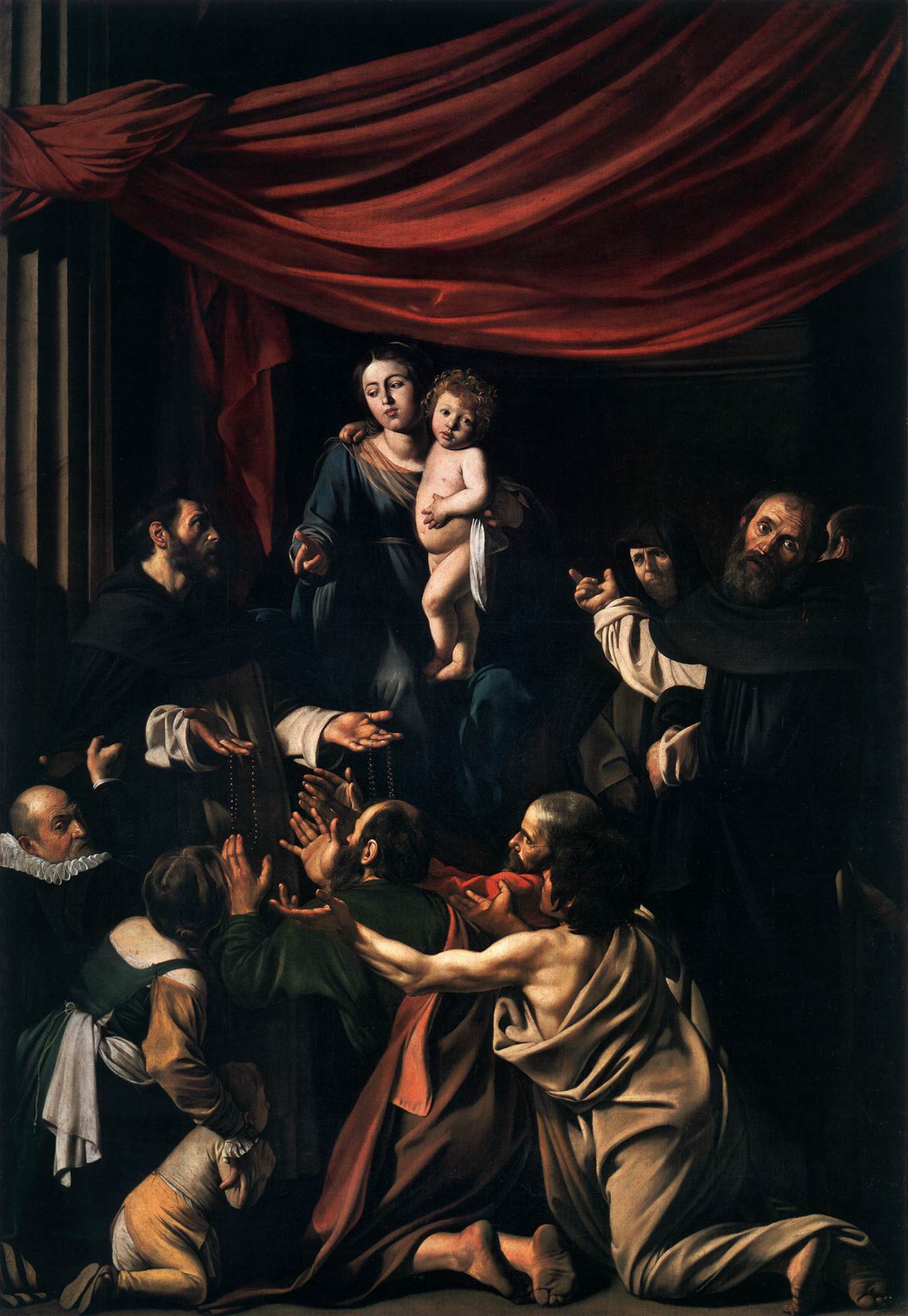
Madonna del Rosario
Caravaggio
1607
Oil on canvas, 364,5 x 249,5 cm
Kunsthistorisches Museum, Vienna
10
posted on
03/06/2019 5:02:18 AM PST
by
annalex
(fear them not)
To: All
11
posted on
03/06/2019 4:19:17 PM PST
by
Salvation
("With God all things are possible." Matthew 19:26)
To: All
12
posted on
03/06/2019 4:22:58 PM PST
by
Salvation
("With God all things are possible." Matthew 19:26)
To: All
13
posted on
03/06/2019 4:23:24 PM PST
by
Salvation
("With God all things are possible." Matthew 19:26)
To: All
14
posted on
03/06/2019 4:23:56 PM PST
by
Salvation
("With God all things are possible." Matthew 19:26)
To: All
15
posted on
03/06/2019 4:24:24 PM PST
by
Salvation
("With God all things are possible." Matthew 19:26)
To: All
16
posted on
03/06/2019 4:24:55 PM PST
by
Salvation
("With God all things are possible." Matthew 19:26)
To: All
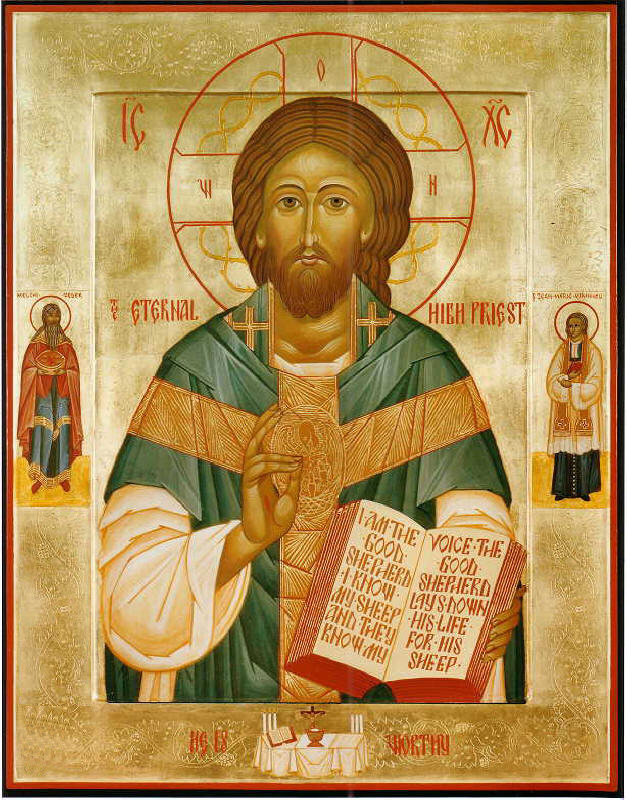
Jesus, High Priest
We thank you, God our Father, for those who have responded to your call to priestly ministry.
Accept this prayer we offer on their behalf: Fill your priests with the sure knowledge of your love.
Open their hearts to the power and consolation of the Holy Spirit.
Lead them to new depths of union with your Son.
Increase in them profound faith in the Sacraments they celebrate as they nourish, strengthen and heal us.
Lord Jesus Christ, grant that these, your priests, may inspire us to strive for holiness by the power of their example, as men of prayer who ponder your word and follow your will.
O Mary, Mother of Christ and our mother, guard with your maternal care these chosen ones, so dear to the Heart of your Son.
Intercede for our priests, that offering the Sacrifice of your Son, they may be conformed more each day to the image of your Son, our Lord and Savior, Jesus Christ. Amen.
Saint John Vianney, universal patron of priests, pray for us and our priests
This icon shows Jesus Christ, our eternal high priest.
The gold pelican over His heart represents self-sacrifice.
The border contains an altar and grapevines, representing the Mass, and icons of Melchizedek and St. Jean-Baptiste Vianney.
Melchizedek: king of righteousness (left icon) was priest and king of Jerusalem. He blessed Abraham and has been considered an ideal priest-king.
St. Jean-Baptiste Vianney is the patron saint of parish priests.
17
posted on
03/06/2019 6:04:41 PM PST
by
Salvation
("With God all things are possible." Matthew 19:26)
To: All
Pray a Rosary each day for our nation.
1. Sign of the Cross: In the name of the Father, and of the Son, and of the Holy Spirit. Amen.
2. The Apostles Creed: I BELIEVE in God, the Father almighty, Creator of heaven and earth, and in Jesus Christ, His only Son, our Lord, who was conceived by the Holy Spirit, born of the Virgin Mary, suffered under Pontius Pilate, was crucified, died, and was buried. He descended into hell; on the third day he rose again from the dead; he ascended into heaven, and is seated at the right hand of God, the Father Almighty; from there He shall come to judge the living and the dead.
I believe in the Holy Spirit, the holy catholic Church, the communion of saints, the forgiveness of sins, the resurrection of the body, and the life everlasting. Amen.
3. The Lord's Prayer: OUR Father, who art in heaven, hallowed be Thy name. Thy kingdom come. Thy will be done on earth as it is in heaven. Give us this day our daily bread and forgive us our trespasses as we forgive those who trespass against us. And lead us not into temptation, but deliver us from evil. Amen.
4. (3) Hail Mary: HAIL Mary, full of grace, the Lord is with thee. Blessed art thou amongst women and blessed is the fruit of thy womb, Jesus. Holy Mary, Mother of God, pray for us sinners, now, and in the hour of our death. Amen. (Three times)
5. Glory Be: GLORY be to the Father, and to the Son, and to the Holy Spirit. As it was in the beginning, is now, and ever shall be, world without end. Amen.
6. Fatima Prayer: Oh, my Jesus, forgive us our sins, save us from the fires of hell, lead all souls to heaven, especially those in most need of your mercy.
Announce each mystery, then say 1 Our Father, 10 Hail Marys, 1 Glory Be and 1 Fatima prayer. Repeat the process with each mystery.
End with the Hail Holy Queen:
Hail, Holy Queen, Mother of Mercy, our life, our sweetness and our hope! To thee do we cry, poor banished children of Eve! To thee do we send up our sighs, mourning and weeping in this vale of tears! Turn then, most gracious advocate, thine eyes of mercy towards us; and after this, our exile, show unto us the blessed fruit of thy womb, Jesus!
O clement, O loving, O sweet Virgin Mary! Pray for us, O holy Mother of God, that we may be made worthy of the promises of Christ.
Final step -- The Sign of the Cross
The Mysteries of the Rosary By tradition, Catholics meditate on these Mysteries during prayers of the Rosary. The biblical references follow each of the Mysteries below.
The Glorious Mysteries
(Wednesdays and Sundays)
1.The Resurrection (Matthew 28:1-8, Mark 16:1-18, Luke 24:1-12, John 20:1-29) [Spiritual fruit - Faith]
2. The Ascension (Mark 16:19-20, Luke 24:50-53, Acts 1:6-11) [Spiritual fruit - Christian Hope]
3. The Descent of the Holy Spirit (Acts 2:1-13) [Spiritual fruit - Gifts of the Holy Spirit]
4. The Assumption [Spiritual fruit - To Jesus through Mary]
5. The Coronation [Spiritual fruit - Grace of Final Perseverance]
18
posted on
03/06/2019 6:05:09 PM PST
by
Salvation
("With God all things are possible." Matthew 19:26)
To: Salvation
Or --
Pray a Rosary each day for our nation.
1. Sign of the Cross: In the name of the Father, and of the Son, and of the Holy Spirit. Amen.
2. The Apostles Creed: I BELIEVE in God, the Father almighty, Creator of heaven and earth, and in Jesus Christ, His only Son, our Lord, who was conceived by the Holy Spirit, born of the Virgin Mary, suffered under Pontius Pilate, was crucified, died, and was buried. He descended into hell; on the third day he rose again from the dead; he ascended into heaven, and is seated at the right hand of God, the Father Almighty; from there He shall come to judge the living and the dead.
I believe in the Holy Spirit, the holy catholic Church, the communion of saints, the forgiveness of sins, the resurrection of the body, and the life everlasting. Amen.
3. The Lord's Prayer: OUR Father, who art in heaven, hallowed be Thy name. Thy kingdom come. Thy will be done on earth as it is in heaven. Give us this day our daily bread and forgive us our trespasses as we forgive those who trespass against us. And lead us not into temptation, but deliver us from evil. Amen.
4. (3) Hail Mary: HAIL Mary, full of grace, the Lord is with thee. Blessed art thou amongst women and blessed is the fruit of thy womb, Jesus. Holy Mary, Mother of God, pray for us sinners, now, and in the hour of our death. Amen. (Three times)
5. Glory Be: GLORY be to the Father, and to the Son, and to the Holy Spirit. As it was in the beginning, is now, and ever shall be, world without end. Amen.
6. Fatima Prayer: Oh, my Jesus, forgive us our sins, save us from the fires of hell, lead all souls to heaven, especially those in most need of your mercy.
Announce each mystery, then say 1 Our Father, 10 Hail Marys, 1 Glory Be and 1 Fatima prayer. Repeat the process with each mystery.
End with the Hail Holy Queen:
Hail, Holy Queen, Mother of Mercy, our life, our sweetness and our hope! To thee do we cry, poor banished children of Eve! To thee do we send up our sighs, mourning and weeping in this vale of tears! Turn then, most gracious advocate, thine eyes of mercy towards us; and after this, our exile, show unto us the blessed fruit of thy womb, Jesus!
O clement, O loving, O sweet Virgin Mary! Pray for us, O holy Mother of God, that we may be made worthy of the promises of Christ.
Final step -- The Sign of the Cross
The Mysteries of the Rosary By tradition, Catholics meditate on these Mysteries during prayers of the Rosary. The biblical references follow each of the Mysteries below.
The Sorrowful Mysteries
(Tuesdays and Fridays)
1. The Agony in the Garden (Matthew 26:36-46, Luke 22:39-46) [Spiritual fruit - God's will be done]
2. The Scourging at the Pillar (Matthew 27:26, Mark 15:15, John 19:1) [Spiritual fruit - Mortification of the senses]
3. The Crowning with Thorns (Matthew 27:27-30, Mark 15:16-20, John 19:2) [Spiritual fruit - Reign of Christ in our heart]
4. The Carrying of the Cross (Matthew 27:31-32, Mark 15:21, Luke 23:26-32, John 19:17) [Spiritual fruit - Patient bearing of trials]
5. The Crucifixion (Matthew 27:33-56, Mark 15:22-39, Luke 23:33-49, John 19:17-37) [Spiritual fruit - Pardoning of Injuries]
19
posted on
03/06/2019 6:05:44 PM PST
by
Salvation
("With God all things are possible." Matthew 19:26)
To: All

St. Michael the Archangel
~ PRAYER ~
St. Michael, the Archangel, defend us in battle
Be our protection against the wickedness
and snares of the devil;
May God rebuke him, we humbly pray,
and do thou, O Prince of the heavenly host,
by the power of God,
Cast into hell Satan and all the evil spirits
who prowl through the world seeking the ruin of souls.
Amen
+
20
posted on
03/06/2019 6:06:37 PM PST
by
Salvation
("With God all things are possible." Matthew 19:26)
Navigation: use the links below to view more comments.
first 1-20, 21-35 next last
Disclaimer:
Opinions posted on Free Republic are those of the individual
posters and do not necessarily represent the opinion of Free Republic or its
management. All materials posted herein are protected by copyright law and the
exemption for fair use of copyrighted works.
FreeRepublic.com is powered by software copyright 2000-2008 John Robinson