
Posted on 03/04/2019 5:18:17 PM PST by marshmallow
A theologian said it is difficult to store wheat bread in the Amazon climate, however there are doubts over the validity of such a move
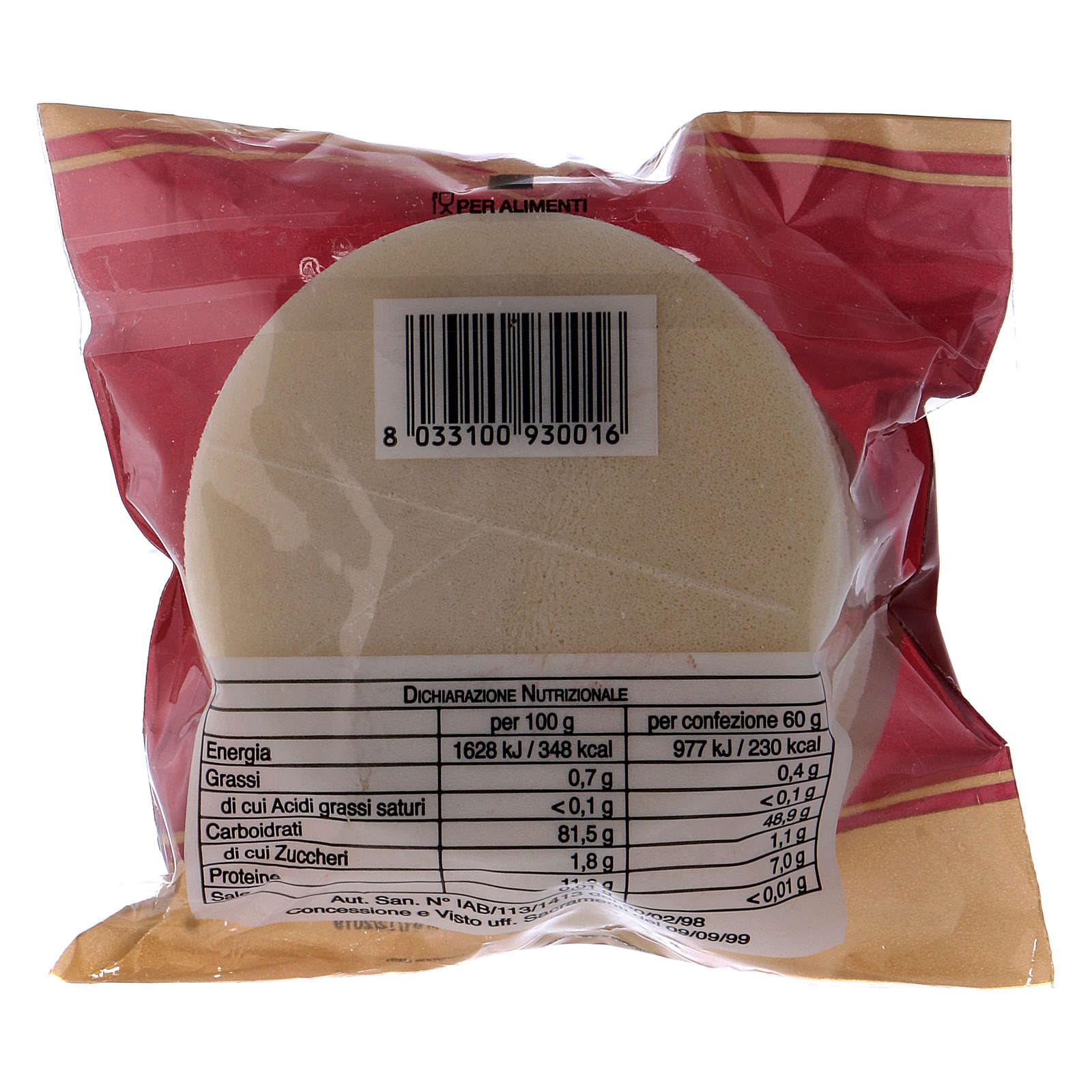
A leading South American theologian has said October’s Amazon Synod will discuss replacing bread used in the consecration of the Eucharist with yuca, a shrub native to the region.
Jesuit Fr Francisco Taborda said traditional bread usually used in the Mass often turns to mush in the extreme humidity of the Amazon, meaning “it’s not bread, and if it’s not bread, it’s not the Eucharist.”
The priest, a professor of theology at the Jesuit university in Belo Horizonte, Brazil, told Crux that bread in the region is most commonly made out of yuca.
While changing the type of bread used in the Eucharist is “a very complex questions”, Fr Taborda said the question will almost certainly arise in the Synod, and that it should be decided by local bishops.
However, there are doubts over the validity of such a move. On his blog, Fr John Zuhlsdorf said: “For the Eucharist to be confected validly, only bread of wheat may be used. In the Latin Church we use only unleavened bread, as Christ used at the Last Supper.”
“No wheat… no Eucharist,” he added.
Fr Taborda also said that the ordination of married men to the priesthood will be on the agenda for the Synod.
“There is a shortage of priests,” he said which requires a “re-thinking of how it can be done so that every community…can have the Sunday Eucharist.”
(Excerpt) Read more at catholicherald.co.uk ...
“On the night when he was betrayed, our Lord Jesus took BREAD-”
Bread and wine for the body and blood of Jesus. Not pizza and soda; not cake and coffee.
It’s a seemingly small thing compared to all the wickedness in the world today, but compromising on small things is how we ended up giving in on big things.
What would you suggest that the faithful should do in an area, or under circumstances, where ‘wheat’ was simply not available - forego the Eucharist?
Your approach seems very materialistic, to me.
Wait. So there has never been a location where wheat was not available nor preferable in 2000 years ... until now??
Yuca = Cassava
the plant from which tapioca is derived.
|where is wheat not available and where is it impossible to store dry wheat wafers of wheat in bumidity proof containers?
The Jesuit is being duplicitous I fear.
Brazil has been Catholic for almost 600 years. Why is it a problem all of a sudden?
What you eat is symbolic. If your local priest can turn bread into the flesh of the Savior, then he can also turn whatever is available into the flesh of the Savior. That’s also not actual blood your drinking afterwards. In most churches, you even get to choose your non-blood of choice, be it Kool-aid or grape juice or wine or water.
I can imagine occurrences of natural or man-made disaster where the wheat wafers may not be available or accessible - at a moment when people most need their faith and the rituals of faith.
It seems wrong and materialistic to me that the ‘body and blood’ of Jesus reside latently in particular man-manipulated material substances - and ONLY those substances; so I must assume that the human mind, heart, soul and faith are the real source of transubstantiation.
Otherwise, it seems to me like faith in some kind of ‘magic’ or ‘wizardry’, instead of a faith in something that transcends the material.
Any bread....and juice...any interpretation of the bible...it’s all good...? That’s not the true church of Christ.
Finally in our postmodern world....we can’t keep wheat safe from humidity. Maybe NASA can help.
“On the night when he was betrayed, our Lord Jesus took BREAD”
Indeed. As it was in a latitude which readily supports the natural growth of wheat. And because of humidity levels in that particular area where the last supper was partaken, levoning takes around 4 hours before dough is no longer considered uncorrupted according to scriptures. Which means that unleavened bread is fairly easy to accomplish. I would guess that really wouldn’t be the case in the Amazonian region which is very high in humidity and the naturally occurring yeasts in that Amazonion area are abundent (rife) in both quantity of bacteria present and diversity in yeast producing bacteria as well.
So I think the goal is to have a uncorrupted element for the sacriment rather than an element which could be easily corrupted given the weather conditions in that Amazonian region.
Another consideration is how would one get around that? Flying in wafers? Why can’t the locals produce their own elements that are not easily corrupted?
It’s an interesting discussion that is being developed within the synod for submission up the chain of command which will result in a final decision.
And which of the dozens of versions is the "true" Christian version? It must be terribly convenient for you to be able to declare who is the "true" Christian.
Pretty much every religious division and squabble and war in history has been pretty much based on exactly what you're asserting, as another of the same faith says the exact same words, but has a different idea of what the "true" believer believes.
I guess this comes down to the question of who (or Who) does the changing?
Oh, and Jesus also never once said the word "bread" in his life. He likely said "lachma", the Aramaic word, and the Jews of the day took that word to mean matzo, as used in the Passover Seder. So, if you're not eating matzo at Communion, you're disobeying Jesus. Right?
If it’s the human Priest, there’s a problem here...
Some thoughts on this subject - from one of our greatest American thinkers - that may be interesting to some:
http://transcendentalism-legacy.tamu.edu/authors/emerson/essays/lordsupper.html
Hardtack.
CC
Brazil has been Catholic for almost 600 years. Why is it a problem all of a sudden?
Man made climate change. Obviously.
Freegards
Disclaimer: Opinions posted on Free Republic are those of the individual posters and do not necessarily represent the opinion of Free Republic or its management. All materials posted herein are protected by copyright law and the exemption for fair use of copyrighted works.