Posted on 03/16/2018 8:48:38 AM PDT by Salvation
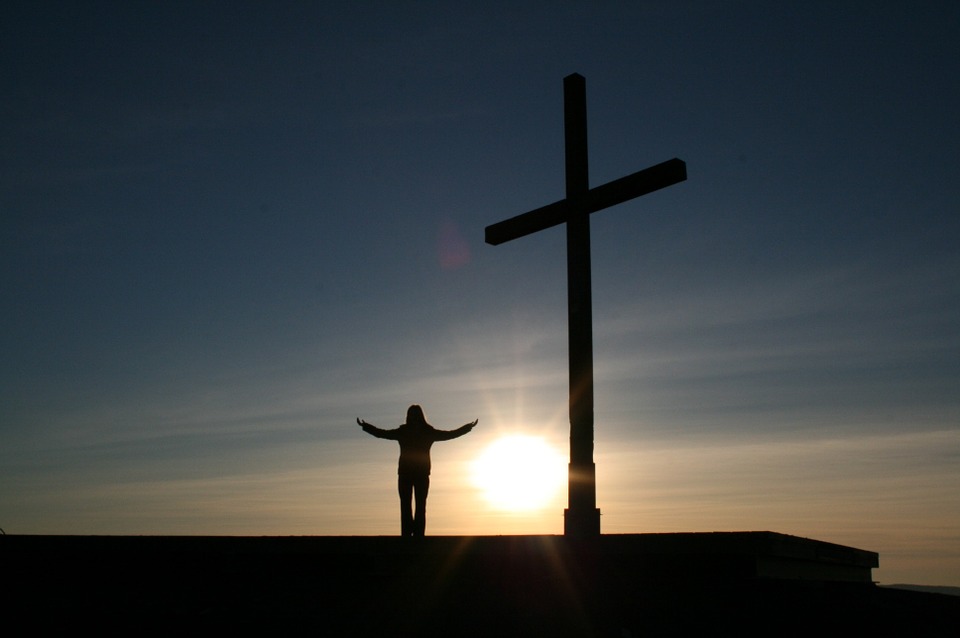
When I was young and throughout my seminary years, I usually contemplated the crucifix and Jesus’ suffering on the Cross somberly. It was my sin that had put Him there, that had made Him suffer. The Cross was something that compelled a silent reverence in me, and suggested that I meditate deeply on what Jesus had to endure. I would often think of John, Mary, and the other women beneath the Cross, mournfully beholding Jesus’ slow, painful death.
These were heavy and somber notes, but deeply moving themes.
In addition, the crucifix made me think about the fact that I would have to carry a cross and go through the Fridays of my life. I needed to learn the meaning of sacrifice.
Liturgically, I saw the crucifix as a way of restoring greater reverence in the Mass. Through the 1970s and 1980s, most parishes had removed crucifixes, quite often replacing them with “resurrection crosses,” or just an image of Jesus floating in mid-air. I used to call this image “touchdown Jesus” since it so closely resembled a football referee indicating a score. In those years we had moved away from the understanding of the Mass as a sacrifice; we were more into “meal theology.” The removal of the crucifix from the sanctuary was a powerful indicator of this shift. Many priests and liturgists saw the Cross as too somber a theme for their vision of a new and more welcoming Church, upbeat and positive.
This Cross-less Christianity often led to what I thought was a rather silly, celebratory style of Mass in those years, and I came to see the restoration of the crucifix as necessary to bring back proper balance. I was delighted when, through the mid-1980s and later, the Vatican began insisting in new liturgical norms that a crucifix (not just a cross) be prominent in the sanctuary and visible to all, and further, that the processional cross had to bear the image of the crucified.
Balance Restored – I was (and still am) very happy about these new norms because they restore the proper balance. The Mass is a making-present of the once-for-all, perfect sacrifice of Jesus on the Cross; it is also a sacred meal, whose power comes from that sacrifice. I also believed that such a move would help restore proper solemnity to the Mass, and to some extent that has occurred.
All of this background is just to say that I saw the cross — the crucifix — in somber, serious tones. The theme was meant to instill solemnity and encourage meditation on the awful reality of sin and on our need to repent.
But the Lord wasn’t finished with me yet; He wanted me to see another understanding of the Cross.
He wanted me to also experience the “good” in Good Friday, for the Cross is also a place of victory and love, of God’s faithfulness and our deliverance. There’s a lot to celebrate at the foot of the Cross.
It happened one Sunday during Lent of 1994, one of my first in an African-American Catholic parish. It being Lent, I expected the typically celebratory quality of Mass in the parish to be scaled back a bit. Much to my surprise, though, the opening song began with an upbeat, toe-tapping gospel riff. At first I frowned, but then the choir began to sing:
Down at the Cross where my Savior died,
Down where for cleansing from sin I cried,
There to my heart was the blood applied;
Glory to His name!
Ah, so this was a Lenten theme! It was odd to me to hear the Cross being sung of so joyfully.
This was quite new for me. Perhaps it shouldn’t have been, but it was. The Catholicism of the 1970s and 1980s with which I was familiar found it necessary to remove the cross in order to celebrate, but here was celebration with and in the Cross!
The choir continued,
I am so wondrously saved from sin,
Jesus so sweetly abides within;
There at the Cross where He took me in;
Glory to His name!
The congregation and choir were stepping in time and clapping, rejoicing in the Cross, seeing it in the Resurrection light of its saving power and as a glorious reflection of God’s love for us. Up the aisle the procession wound. The last verse was transposed a half-step up to an even brighter key:
Oh, precious fountain that saves from sin,
I am so glad I have entered in;
There Jesus saves me and keeps me clean;
Glory to His name!
Yes, indeed, glory to His name! A lot of dots were connected for me that day. The Cross indeed was a place of great pain, but also of great love. There was grief, but there was also glory; there was suffering, but there was also victory.
Please do not misunderstand my point. There is a place and time for quiet, somber reflection at the foot of the Cross, but one of the glories of the human person is that we can have more than one feeling at a time, even conflicting ones.
Balance – Some in the Church of the 1970s and 1980s rejected the Cross as too somber a theme, too negative. They wanted to be more upbeat, less focused on sin; and so, out went the Cross. There was no need to do this, and it was an overreaction. At the Cross, the vertical, upward pillar of man’s pride and sin is transected by the horizontal, outstretched arms of God’s love. With strong hand and outstretched arms, the Lord has won the victory for us: there at the Cross where he took me in, glory to his name!
The balance is both for the individual and for the Church. Some prefer a more somber meditation on the Cross to prevail, while others feel moved by the Spirit to celebrate joyfully at the foot of the Cross. The Church needs both. I suppose we all need some of both experiences. Yes, it is right to weep at the Cross, to behold the awful reality of sin, to remember Christ’s sacrifice; but we should rejoice, too, for the Lord has won the victory for us, right there: Down at the Cross. There’s a lot of good in Good Friday.
Here is the song I heard that Sunday in 1994, sung in very much the style I remember.
Monsignor Pope Ping!
A further illustration of how Roman Catholicism differs from NT Christianity.
Roman Catholicism keeps Christ on the cross which jives with their false view of the Mass where Christ is re-sacrificed over and over and over again.
The NT teaches that Christ has been sacrificed once for all sin and that sacrifice is not repeated.
24For Christ did not enter a holy place made with hands, a mere copy of the true one, but into heaven itself, now to appear in the presence of God for us; 25nor was it that He would offer Himself often, as the high priest enters the holy place year by year with blood that is not his own. 26Otherwise, He would have needed to suffer often since the foundation of the world; but now once at the consummation of the ages He has been manifested to put away sin by the sacrifice of Himself. 27And inasmuch as it is appointed for men to die once and after this comes judgment, 28so Christ also, having been offered once to bear the sins of many, will appear a second time for salvation without reference to sin, to those who eagerly await Him. Hebrews 9:24-28 NASB
12but He, having offered one sacrifice for sins for all time, SAT DOWN AT THE RIGHT HAND OF GOD, 13waiting from that time onward UNTIL HIS ENEMIES BE MADE A FOOTSTOOL FOR HIS FEET. 14For by one offering He has perfected for all time those who are sanctified. Hebrews 10:12-14 NASB
Is "Thou shalt not bear false witness against thy neighbor" still in your Bible? You're breaking that commandment right now, today, right here. When are you going to repent?
Roman All of Catholicism keeps Christ on the cross which jives offers them with their false a view of the Cross with whom they can unite their own personal sufferings with that of Jesus, and the Mass where Christ is
re-presented in a reverent, participatory and meaningful way. re-sacrificed over and over and over again.
I’ve been Protestant and I’ve been Catholic.
What Vatican II decided to make accommodations to Protestantism - they took the wrong stuff.
Stick to Jesus, body, blood, soul, word and divinity - and you can’t screw up, whatever you are.
The title “The Naked Bible” was offensive to me. I listened for about two minutes until he got into bashing the Catholic Church.
**Stick to Jesus, body, blood, soul, word and divinity
Amen
Ah yes, play word games to obfuscate. Catholicism claims the Priest offers a ‘continuing sacrifice’ of the flesh and blood of Jesus. But that contradicts what The Word of God declares. Is that why you play word games?
I do not agree with all Michael Heiser teaches, but his teaching on the Communion is spot on correct, IMHO. How can we know if it agrees with your opinion if you never hear what he has to say.
You confessed, “The title “The Naked Bible” was offensive to me.” In your oh so holy air did it occur to you that there was no reference to naked flesh? The title refers to Michael’s method of focusing on the actual texts of the Bible in the original languages (yes, he is a scholar in Greek, Hebrew, etc.), seeking to comprehend what the actual words say based on the perspective of the culture at the time the words were written, thus removing the coverings of preconceived notions which color texts beyond the intended meaning. I would say that is the fundamental problem with people who refuse to even hear a perspective different from the ‘priestly orders herding denominations, like in catholiciism.
Because one of your noted Roman Catholic priests says this is what happens.
When the priest pronounces the tremendous words of consecration, he reaches up into the heavens, brings Christ down from His throne, and places Him upon our altar to be offered up again as the Victim for the sins of man.
It is a power greater than that of monarchs and emperors: it is greater than that of saints and angels, greater than that of Seraphim and Cherubim. Indeed it is greater even than the power of the Virgin Mary. While the Blessed Virgin was the human agency by which Christ became incarnate a single time, the priest brings Christ down from heaven, and renders Him present on our altar as the eternal Victim for the sins of man—not once but a thousand times! The priest speaks and lo! Christ, the eternal and omnipotent God, bows His head in humble obedience to the priest’s command. John O'Brien, The Faith of Millions.
You can try and spin it anyway you want...one of your own Roman Catholic priests, and yes, you have to say Roman Catholic to differentiate between the other Catholic denominations, says otherwise.
Christ is literally brought down from Heaven in contradiction of Hebrews and other places, and placed on the altar to be offered up again as the Victim for the sins of man.
"When the priest pronounces the tremendous words of consecration, he reaches up into the heavens, brings Christ down from His throne, and places Him upon our altar to be offered up again as the Victim for the sins of man." John O'Brien...Roman Catholic priest in the Faith of Millions.
And to try and compare our sufferings with that of Christ is...well, I'm not sure. There is no way we can compare our sufferings to His when He took on the sin of the world on our behalf and was forsaken from the Father.
Wow....are all Roman Catholics so thin skinned??
Thank you for this link. Very clear, very plainliteral discussion of the figurative-literal sense as defined by Paul. Yeaterday my attention had been drawn to Romans 14, which is related to this theme.
As long as it is maintained that the Body and Blood of Jesus actually and plainly literally constitute what the formerly flour cake and grape juice truly are, as supernaturally changed by invocation of a priest, then your denial is at odds with Romanist doctrine, and that must be a resacrifice, no matter how the verbal means of communicating a concept is twisted. Ealgeone is right and you are not, so confess and repent, and make amends for the false "representation."
Salvation, Post #7: . . . the Mass where Christ is re-presented in a reverent, participatory and meaningful way.
Now, your words here are trying to present the concept of representing (which absolutely means symbolic, not real and tangible) the Body and Blood of Christ ("re-" means over, and in the Roman sense, millions and millions of times), without abandoning the position of transformation, which in itself is not chemically nor visibly occurring. To say otherwise is nonsense, is as your mis-representation of what ealgeone jotted down accurately and unquestionably.
Even the hymn verses quoted by Abp. Pope are clearly figurative in sense, but have spiritual significance though they do not portray a plain-literal action of the hymn-writer no its effect on him.
It confounds me that you are so blind in your commitment to a false doctrine, though you cannot justify it in any way.
The Naked Bible: Biblical theology stripped bare of denominational confessions and theological systems.
You can show them time and again and they will still deny that’s what Catholicism teaches.
Good thing they all agree in unity on their doctrine, isn’t it?
Disclaimer: Opinions posted on Free Republic are those of the individual posters and do not necessarily represent the opinion of Free Republic or its management. All materials posted herein are protected by copyright law and the exemption for fair use of copyrighted works.