Posted on 10/28/2016 7:50:49 AM PDT by Salvation
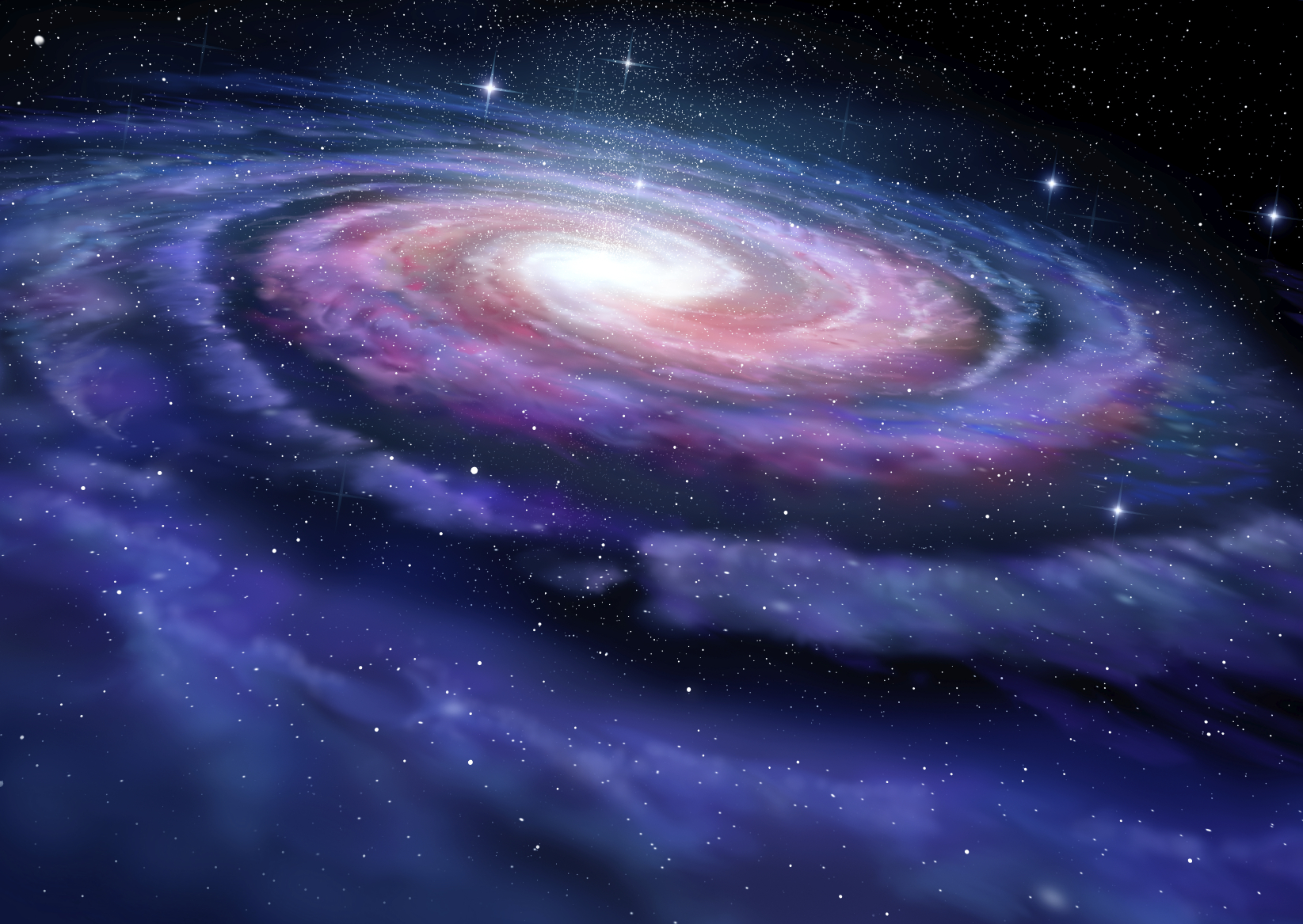
The Mass for today’s feast of Saints Simon and Jude, like that for almost all of the Apostles, contains passages from Psalm 19. This has always intrigued me because this psalm is not a reference to human preaching or witness at all, but rather a reference to the wordless witness of creation.
The heavens declare the glory of God, and the sky above proclaims his handiwork. Day to day pours out speech, and night to night reveals knowledge. There is no speech, nor are there words, whose voice is not heard. Their voice goes out through all the earth, and their words to the end of the world (Psalm 19:2-3; 4-5).
And while it is true that the voice of the Apostles has gone out to all the earth, that is not what this psalm is really about. There is a kind of daring and glorious transposition of meaning. The witness through the words of the Apostles is joined to the wordless witness of creation. Why? Well, are not the Apostles—indeed all humans—part of creation? And if the lower parts of creation proclaim the glory of God, do not we as well?
Here, then, is a beautiful reminder of the two books of revelation: Scripture and Creation. It is also a reminder that we are part of that creation. Yes, creation is revelation, as St. Paul reminds: For God’s invisible attributes, namely, his eternal power and divine nature, have been clearly perceived, ever since the creation of the world, in the things that have been made (Romans 1:20).
Yes, the whole universe shouts Order! Consistency! Intelligibility! Our bodies and all of the delicately functioning systems on this planet echo back this refrain. And while I do not ask scientists (as scientists) to specifically affirm the biblical and Christian God, the existence of consistent order in the universe is obvious and serves as the basis of the whole scientific method.
If things were truly random, scientists could not propose theories, test results, or verify them; repeated experiments would not turn out similar results. The scientific method presupposes order and consistency within a verifiable range. Thus, while scientists need not draw conclusions as to how this order came about, it is wholly inappropriate for them to be dismissive of believers who conclude from this order that someone must have ordered it so.
Yes, what a glorious and magnificent thing creation is! To this believer, it loudly proclaims the existence of God, who made it.
The beautiful hymn “The Spacious Firmament on High,” which I have seldom heard in Catholic parishes, takes up the voice of creation—especially that part of creation we call the heavens or the sky. It is based on Psalm 19, and to me it is a minor masterpiece of English poetry. It was written by Joseph Addison in 1712.
The hymn was written before skeptical agnosticism and hostility to the very notion (let alone existence) of God had taken deep root in our culture. And, frankly, it also comes from a more sober time, when it was accepted as obvious that creation is ordered and therefore ordered by someone in a purposeful and intelligent manner. We believers call that “someone” God.
Consider the beautiful words of this song, and its reasoned conclusion that creation shouts the existence of its Creator.
The spacious firmament on high,
with all the blue ethereal sky,
and spangled heavens, a shining frame,
their great Original proclaim.
The unwearied sun from day to day
does his Creator’s power display;
and publishes to every land
the work of an almighty hand.Soon as the evening shades prevail,
the moon takes up the wondrous tale,
and nightly to the listening earth
repeats the story of her birth:
whilst all the stars that round her burn,
and all the planets in their turn,
confirm the tidings, as they roll
and spread the truth from pole to pole.What though in solemn silence all
move round the dark terrestrial ball?
What though no real voice nor sound
amid their radiant orbs be found?
In reason’s ear they all rejoice,
and utter forth a glorious voice;
forever singing as they shine,
“The hand that made us is divine.”
Yes, the hand that made us is divine, and He has done a marvelous thing!
Here is a performance of this wonderful hymn:
Monsignor Pope Ping!
This hymn is in an evangelical hymnal that I’ve used too.
Allowing for poetic license, it might be a bit pessimistic to say they have “no real voice or sound.” They can’t vibrate air to make themselves heard in the sense humans do, but they do produce characteristic light. Again an evangelical view: http://www.reasons.org
Lewis gives the correct analysis of the Psalm. The first part gives one half of the comparison: All around us the things that God has made proclaim and reveal him. The sun especially, because it enlightens everything, universally declares God's active word.
The second part gives the other half. Torah also is utterly pervasive, close and far reaching. Indeed, it reaches further than the sun, which only lights surfaces. Torah reaches inward, deep within, even to our “secret faults. And, touched with that inner enlightening, we acknowledge, repent, beg for help, and offer our inmost selves to God, hoping for acceptance.
Of course Monsignor Pope is right that the Apostles, like the sun, are “catholic,” reaching everywhere. And where they reach they reveal. The second half of the psalm develops and explains the extent of the reach and the proper response: May the words of my mouth and the meditations of my heart be always acceptable in thy sight, O Lord my strength and my redeemer.
Disclaimer: Opinions posted on Free Republic are those of the individual posters and do not necessarily represent the opinion of Free Republic or its management. All materials posted herein are protected by copyright law and the exemption for fair use of copyrighted works.