 When the parents of a newborn child stand on the threshold of the church before the little one’s baptism, the priest puts this question to them: What do you want for your child? The parents respond: Faith. Faith is the key that opens the door of the kingdom of God, but one is not born with the key of faith in one’s pocket. One cannot produce faith nor can one earn it. One receives the key of faith humbly; it is a divine gift.
God does not refuse faith to one who asks for it, but one must ask for it every day. There are hours in life when one must ask for faith ceaselessly for fear of losing altogether a spark of light in the darkness of the world. For this, there is nothing better than the beautiful prayer of the centurion: Lord, I believe, but help thou my unbelief of. (Mk 9:23) Credo, Domine; adjuva incredulitatem meam.
As faith matures, it becomes an encounter with the faithfulness of God, that is to say with His merciful goodness, with that strong love of His upon which we can rely in all circumstances, even in the crucible of suffering. Faith is a child’s tiny hand outstretched to grasp the strong and faithful hand that God never tires of holding out to the little and the weak. It is when one encounters the faithfulness of God that one discovers what a living faith really is: a letting–go, an unconditional surrender to the faithfulness of God. There is a point at which one begins to say, «No matter what I do, no matter how low I fall, no matter how unfaithful I am, God will be faithful to me». One begins to know the faithfulness of God, as opposed to just knowing about it. Then, do the words of the psalmist come to life:
Him thy refuge, Him thy stronghold thou mayst call, thy own God, in whom is all thy trust. (Psalm 90:2)
Dom Léhodey, an abbot of the last century, called this surrender of one’s self to the faithfulness of God «holy abandonment», and Blessed Abbot Marmion called it «filial abandonment». Abandonment to the faithfulness of God is the necessary expression of faith in every soul’s spiritual autobiography.
One who asks faith of God has already received it. Prayer presupposes faith; faith inexorably pushes one to prayer. One cannot penetrate the mystery of prayer without the light of faith, but one who does not pray deprives himself of the light. It becomes impossible to advance. One remains immobilised. One’s relationship with God is retarded; it languishes in a state of immaturity. Faith only matures into abandonment to the faithfulness of God by much praying and by praying with perseverance.
I should like to say something about faith and that unique invitation, sometimes called a vocation, by which God says to a soul, «Come now, stake your very life on my faithfulness». God calls. One hears talk of this often enough, but to what does He call? God calls every soul to life in abundance (Jn 1:10); He calls us out of darkness into His marvelous light (1 Peter 2: 9); He calls us to holiness (1 Peter 1:16); He calls us to communion in the Body of Christ (1 John 1: 2-3). Within these calls addressed to everyone, there are specific calls by which God invites one to embrace a particular way of life, in a given place, and in relationship to one or several persons who have heard the same call and responded to it.
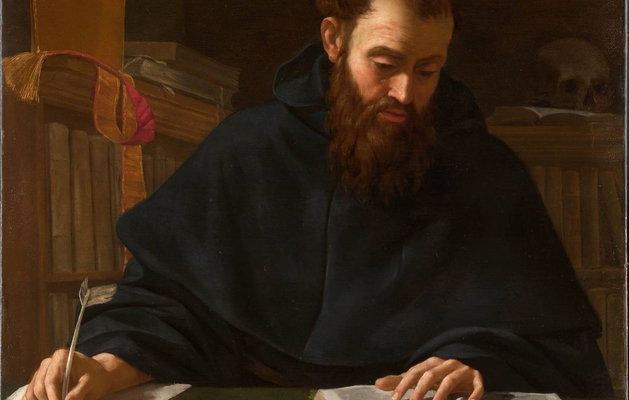
The call addressed to the young Antony of Egypt in about the year 268 A.D. comes to mind; it happened at the Divine Liturgy during the singing of the Gospel. By grace, Antony’s ear was opened to the words of Jesus. Quickly, he left the church, eager to put into practice what he heard from the mouth of Christ. Antony’s response generated in the Church a way of life that, after eighteen centuries has not yet grown old. Thus did St. Antony of Egypt become the father of a great multitude of monks and nuns in East and West.
Every man is the recipient of a particular invitation: a plan conceived in the heart of God. For this plan to be carried out, the tremulous little hand of faith must reach out and grasp the strong and faithful hand of God. This is what happened at the Annunciation to the Virgin Mary. «Be it unto me according to thy word» (Luke 1:38). The price of becoming one’s true self is one’s trusting yes to God. «Give me your yes of faith, says God, and trust my faithfulness to do the rest».
The world’s current craze for self–realisation dismisses even the possibility of one freely submitting to a divine plan and of cooperation with divine grace. The delusional slogans of modern be–yourselfism admit of no encounter in faith with the faithfulness of a God who, as the liturgy sings, orders all things, from end to end, mightily and sweetly. Self–determination, dazzling achievements, and the world’s much–marketed techniques of enlightenment do not, in the end, produce the saint that God had in view in creating each man. «What do they do», asks David, «but lay up fresh store of sorrows, that betake themselves to alien gods?» (Psalm 15:4).
This is not to say that one’s physical, mental, and spiritual pre–dispositions are irrelevant. It is not to say that, in all of this, personal choices and attractions play no part. In His Providence, God causes a man to desire, even obscurely and from a very early age, the things that will make for his happiness. He allows a man to become fascinated by creatures good, and true, and beautiful and, by means of these things, draws a man progressively to Himself. One brings all of these elements to the yes of faith in God’s faithfulness and to a persevering prayer of abandonment to His grace. Mother Yvonne–Aimée of Malestroit (1901-1951) used to pray:
Do Thou in me, O Jesus, whatsoever it is that Thou desirest to find in me, so as to draw out of my nothingness all of the love and all of the glory that Thou hadst in view in creating me.