Posted on 10/10/2014 3:25:39 AM PDT by CharlesOConnell
I'm a Catholic who is doing some print layout work for my friend who is faithful at the World Assemblies of God.
We are each convinced that Jesus Christ has given us Faith in our own particular creed.
I don't know if I can speak exactly for my World Assemblies of God friend—I assume he is like me in this—but if I were convinced that the World Assemblies of God presented the fullness of Jesus Christ's Truth—which is Himself—I would go there.
However, I'm convinced that the Catholic Church presents the fullness of Truth, as my friend is convinced that World Assemblies of God presents the fullness of Truth.
(Of course, there is a limit, not to God's Truth, but to how we regard it: If I were convinced that Islam is the fullness of God's truth, and that I should decapitate any and all non-Muslims, there would be a serious limitation to my understanding.)
Be that as it may, my friend believes in Sola Scriptura: that Truth is conveyed by the Bible Alone. Although I believe that the Bible doesn't say that the totality of God's Truth is conveyed in the Bible, I can heartily endorse the effect my friend's belief:
However, I learned from a preacher, who happens to be a Catholic priest, that we can't twist Jesus Christ's words to suit our own preferences, hard as this may seem.
Jesus, The Truth, said
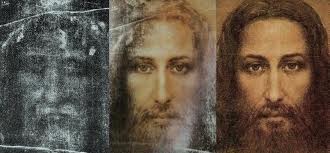
We can't twist the Image of Jesus to suit our preferences any more than the image of woman can be distorted into that of a baboon.
Would that my friend's desire would be fulfilled, that all people listen to God's Word and follow it faithfully.

Ping for later.
Mormons are the prime example of this. They claim the book of Mormon is a "help" to the Bible.
Set aside your catholic background and honestly ask yourself, "How is this any different than the catholic claim regarding "tradition", that is, those teachings not found in the Bible?"
Substitute book of Mormon for catholic tradition.
Not sure which one of you got it wrong, but you got it wrong:
For many Protestants today, the story ends here. But the story is far from over. Reformers like Luther, Zwingli, and Calvin did not pose a strict either/or dilemma: Scripture or tradition. The reformers may have rejected Rome's understanding of tradition and upheld the supremacy and final authority of Scripture over tradition. But we would be mistaken to think the reformers did not value tradition or see it as a subordinate authority in some sense. Indeed, the reformers believed tradition was on their side!Therefore, the reformers became frustrated when certain radicals sought to discard tradition altogether. These radicals did not defend and practice sola scriptura, but instead turned to nuda scriptura or solo scriptura. Perhaps this disregard for tradition is best captured in the bombast of Sebastian Franck: "Foolish Ambrose, Augustine, Jerome, Gregory—of whom not one even knew the Lord, so help me God, nor was sent by God to teach. Rather, they were all apostles of Antichrist." No wonder Alister McGrath concludes, "In the hands of such radical thinkers, the sola scriptura principle became radicalized."
I wish I could say that all evangelicals today have a crisp, accurate grasp of sola scriptura. I am hopeful that many understand how a Protestant view of Scripture and tradition differs from Rome's position. However, I am less confident that evangelicals understand the difference between sola and solo scriptura, for in some cases the latter is assumed to be the identity of the former.
Consequently, some evangelicals, intentionally or unintentionally, have followed in the footsteps of Alexander Campbell (1788-1866) who said, "I have endeavored to read the Scriptures as though no one had read them before me, and I am as much on my guard against reading them today, through the medium of my own views yesterday, or a week ago, as I am against being influenced by any foreign name, authority, or system whatever."
Ironically, such a view cannot preserve sola scriptura. Sure, tradition is not being elevated to the level of Scripture. But the individual is!
-- Matthew Barrett, Sola Scriptura Radicalized and Abandoned, at The Gospel Coalition
Albert Einstein is quoted as saying “A problem is not solved at the level of consciousness at which it was created.”
With prayer we can raise our consciousness to a higher level of understanding where the differences of opinion are gone.
Perhaps you support the oral tradition of ‘sola scriptura’. That tradition is exactly that - an oral tradition that is not found in the Bible anywhere. I’m Catholic simply because it is the oldest Christian church, and it requires us to adhere to the entire New Testament. Even John 6 (the entire chapter) and Matthew 26:26-29. No quibbling there about what is said and meant. And then Luke 1 regarding Mary, mother of Jesus. Jesus taught from oral tradition as well as written (see Matt 23:2-3). Further, the oral tradition of sola scriptura seems to reject what Jesus said about being with us always, and with the gifts of the Holy Spirit. When a person (minister, priest, layman) speaks with the Holy Spirit, are the words being quoted out of the Bible, or directly from the Holy Spirit? Sola scriptura (given the many, many translations of the Bible) is a tradition that can’t be defended in total. Peace.
Here are a few questions which might help clarify the issue - both in your own mind and in discussion with your friend:
- Is God capable of communicating with man?
- Is He able to do so through the written word?
- Is He capable of preserving His Scriptures through the centuries?
- Has He done these things?
- If so, do we today have access to this communication from God?
**oral tradition of ‘sola scriptura’**
Isn’t that an oxymoron?
Another question.
In Paul, he writes that 500 saw Jesus at the same time. Where did he get that info? It’s not in any of the Gospels? He got it from someone telling him face to face — Holy Tradition.
The Bible is God's revealed Word to mankind.
When you get outside of the Bible you open up the door to false teachings as we see in the book of mormon and others.
It also allows false doctrines to be established under the heading of "tradition" and this is where the problem with catholicism begins.
Many teachings have evolved over the centuries with catholicism that have departed from the Word or cannot be supported by the Word.
The view of Mary as espoused by the catholic church is a prime example of this. The appeal to the ECFs, who were not in 100% agreement on Mary, is a clear warning against allowing man-made ideas to enter the teachings of Christianity.
This is why we should measure/test every teaching against the Bible. It is the only source inspired by God. If it doesn't measure up against the Word, the teaching must be discarded.
To your point regarding preaching/teaching...are all of the words spoken by the preacher in the Bible? No. No one is claiming that. However, the context of the message is solidly grounded (hopefully) in the Word.
If the preacher begins to appeal to another source the Holy Spirit will move within the believer to alert them the teaching they are hearing is false.
When the Catholic Church put the Bible together, there were serious discussions about which books belonged in the Bible and which could not be fully trusted. The Church fathers included several texts that were referenced by Jesus in the Gospels. Yet Luther tossed those same books out. Who was right: Jesus, or Luther? Sola scriptura claims Luther is. As for me, I’ll side with Jesus. Peace.
Need names of the books.
But it is in the Bible, so God must have thought we needed to be sure it was true. If it weren't in the Bible, it would have no divine authority. "Holy Tradition" that is truly holy is not known or defined outside of Scripture. Many things are true, but not that important. Only Scripture is God-breathed, thus only what is in Scripture is can claim our supreme allegiance.
Peace,
SR
But how did Paul find out about it? He wasn’t present.
Mat 23:2 Saying, The scribes and the Pharisees sit in Moses' seat:
Mat 23:3 All therefore whatsoever they bid you observe, that observe and do; but do not ye after their works: for they say, and do not.
You should study those verses more intently, because they say the exact opposite of what you think they do. And with that, the entirety of the rest of your post is brought directly into question.
Freep-mail me to get on or off my pro-life and Catholic List:
Please ping me to note-worthy Pro-Life or Catholic threads, or other threads of general interest.
2Ti 3:14-17 But continue thou in the things which thou hast learned and hast been assured of, knowing of whom thou hast learned them; (15) And that from a child thou hast known the holy scriptures, which are able to make thee wise unto salvation through faith which is in Christ Jesus. (16) All scripture is given by inspiration of God, and is profitable for doctrine, for reproof, for correction, for instruction in righteousness: (17) That the man of God may be perfect, throughly furnished unto all good works.Sufficient? Yes, sufficient.
Mat 26:26-29 And as they were eating, Jesus took bread, and blessed it, and brake it, and gave it to the disciples, and said, Take, eat; this is my body. (27) And he took the cup, and gave thanks, and gave it to them, saying, Drink ye all of it; (28) For this is my blood of the new testament, which is shed for many for the remission of sins. (29) But I say unto you, I will not drink henceforth of this fruit of the vine, until that day when I drink it new with you in my Father's kingdom.As with John 6, this is a metaphor. What is more, it is metaphor in it's standard form, A is B. There is no talk of the elements becoming His body and blood. That would take it out of metaphor. Besides, if these elements were truly the effective cause of gaining eternal life, if that were the purpose of the meal, you would think Jesus would mention that purpose. But what purpose does He mention? Only one, to remember Him by it. It is a memorial, because He said so. That is the only position that actually takes Jesus explicitly at His word.
Luk 22:19 And he took bread, and gave thanks, and brake it, and gave unto them, saying, This is my body which is given for you: this do in remembrance of me.
Mat 23:2-3 Saying, The scribes and the Pharisees sit in Moses' seat: (3) All therefore whatsoever they bid you observe, that observe and do; but do not ye after their works: for they say, and do not.This passage does not endorse anything but the teaching authority of the Jewish magisterium, which they did have by virtue of being in the "seat of Moses," but which would be superseded by the coming of the Holy Spirit to the apostolic church. Yet even this passage fails to teach or sanction anything from the commandments of men that conflict with the word of God, nor does it in any way suggest devaluing the God-breathed Scriptures to where they are on a par with the commandments of men. Quite the opposite, Jesus would often rebuke them for nullifying the commandments of God by instituting their clever dodges of the law as if they were the law. Corban, for example.
And you both have objective evidence for your beliefs?
Doesn't have any relevance to the theory of a sacred tradition. Paul spoke directly with Jesus more than once. He spoke directly with the apostles. They probably told him many things that didn't make it into Scripture. Once you start making a way for non-Biblical information to slither its way into becoming equal with Scripture, you can make up anything. Canon means law or rule. We make a fence around Scripture when we define it as canonical because it's important to keep the riff raff out. Lots of people, good people, said lots of things. God only wants us to honor as God-breathed that which made it into Scripture.
Peace,
SR
The Holy Spirit given to believers changed the way man would be taught and receive Christ. It changed the Old Order of having to have the Temple Priest intercede for persons because it had become corrupted by the Temple leaders.
It's by Spirit we are lead and learn. Before the time of The Pentecost The Holy Spirit had been poured out in limited circumstances to limited persons throughout time. At Pentecost the believers as a whole began receiving in such as Stephen. Christ left all believers with The Holy Spirit as our teacher and our intercessor whom translates even our groans. The Apostles and Disciples began preaching The Gospel and ministering rather than following traditions of The Temple though some like Peter had trouble letting go..
Disclaimer: Opinions posted on Free Republic are those of the individual posters and do not necessarily represent the opinion of Free Republic or its management. All materials posted herein are protected by copyright law and the exemption for fair use of copyrighted works.