Free Republic
Browse · Search
Religion
Topics · Post Article

Skip to comments.

Catholic Caucus: Sunday Mass Readings, 09-28-14, Twenty-sixth Sunday in Ordinary Time
USCCB.org/RNAB ^ | 09-28-14 | Revised New American Bible

Posted on 09/27/2014 9:11:13 PM PDT by Salvation

September 28, 2014

Twenty-sixth Sunday in Ordinary Time


Reading 1 Ez 18:25-28

Thus says the LORD:
You say, "The LORD's way is not fair!"
Hear now, house of Israel:
Is it my way that is unfair, or rather, are not your ways unfair?
When someone virtuous turns away from virtue to commit iniquity, and dies,
it is because of the iniquity he committed that he must die.
But if he turns from the wickedness he has committed,
he does what is right and just,
he shall preserve his life;
since he has turned away from all the sins that he has committed,
he shall surely live, he shall not die.

Responsorial Psalm Ps 25:4-5, 8-9, 10, 14

R/ (6a) Remember your mercies, O Lord.
Your ways, O LORD, make known to me;
teach me your paths,
guide me in your truth and teach me,
for you are God my savior.
R/ Remember your mercies, O Lord.
Remember that your compassion, O LORD,
and your love are from of old.
The sins of my youth and my frailties remember not;
in your kindness remember me,
because of your goodness, O LORD.
R/ Remember your mercies, O Lord.
Good and upright is the LORD;
thus he shows sinners the way.
He guides the humble to justice,
and teaches the humble his way.
R/ Remember your mercies, O Lord.

Reading 2 Phil 2:1-11

Brothers and sisters:
If there is any encouragement in Christ,
any solace in love,
any participation in the Spirit,
any compassion and mercy,
complete my joy by being of the same mind, with the same love,
united in heart, thinking one thing.
Do nothing out of selfishness or out of vainglory;
rather, humbly regard others as more important than yourselves,
each looking out not for his own interests,
but also for those of others.

Have in you the same attitude
that is also in Christ Jesus,
Who, though he was in the form of God,
did not regard equality with God
something to be grasped.
Rather, he emptied himself,
taking the form of a slave,
coming in human likeness;
and found human in appearance,
he humbled himself,
becoming obedient to the point of death,
even death on a cross.
Because of this, God greatly exalted him
and bestowed on him the name
which is above every name,
that at the name of Jesus
every knee should bend,
of those in heaven and on earth and under the earth,
and every tongue confess that
Jesus Christ is Lord,
to the glory of God the Father.

or Phil 2:1-5

Brothers and sisters:
If there is any encouragement in Christ,
any solace in love,
any participation in the Spirit,
any compassion and mercy,
complete my joy by being of the same mind, with the same love,
united in heart, thinking one thing.
Do nothing out of selfishness or out of vainglory;
rather, humbly regard others as more important than yourselves,
each looking out not for his own interests,
but also for those of others.

Have in you the same attitude
that is also in Christ Jesus.

Gospel Mt 21:28-32

Jesus said to the chief priests and elders of the people:
"What is your opinion?
A man had two sons.
He came to the first and said,
'Son, go out and work in the vineyard today.'
He said in reply, 'I will not, '
but afterwards changed his mind and went.
The man came to the other son and gave the same order.
He said in reply, 'Yes, sir, ‘but did not go.
Which of the two did his father's will?"
They answered, "The first."
Jesus said to them, "Amen, I say to you,
tax collectors and prostitutes
are entering the kingdom of God before you.
When John came to you in the way of righteousness,
you did not believe him;
but tax collectors and prostitutes did.
Yet even when you saw that,
you did not later change your minds and believe him."


TOPICS: Catholic; General Discusssion; Prayer; Worship
KEYWORDS: catholic; mt21; ordinarytime; prayer
Navigation: use the links below to view more comments.
first 1-2021-4041-51 next last
For your reading, reflection, faith-sharing, comments, questions, discussion.

1 posted on 09/27/2014 9:11:13 PM PDT by Salvation
[ Post Reply | Private Reply | View Replies]

To: nickcarraway; NYer; ELS; Pyro7480; livius; ArrogantBustard; Catholicguy; RobbyS; marshmallow; ...
Alleluia Ping

Please FReepmail me to get on/off the Alleluia Ping List.


2 posted on 09/27/2014 9:12:37 PM PDT by Salvation ("With God all things are possible." Matthew 19:26)
[ Post Reply | Private Reply | To 1 | View Replies]

To: All

From: Ezekiel 18:25-28

The Good Effects of Conversion


[25] †Yet you say, ‘The way of the Lord is not just.’ Hear now, O house of Israel:
Is my way not just? Is it not your ways that are not just? [26] When a righteous
man turns away from his righteousness and commits iniquity, he shall die for it;
for the iniquity which he has committed he shall die. [27] Again, when a wicked
man turns away from the wickedness he has committed and does what is lawful
and right, he shall save his life. [28] Because he considered and turned away
from all the transgressions which he had committed, he shall surely live, he
shall not die.”

*********************************************************************************************
Commentary:

18:21-32. These verses reply to a question that may arise from the doctrine of
personal retribution: If the sinner must live with the consequences of his sins,
what is the purpose of repentance? Ezekiel takes the question very much to
heart, and his reply includes one of the most beautiful summaries of divine
mercy: “Have I any pleasure in the death of the wicked..., and not rather that
he should turn from his way and live?’ (v. 23; cf. 33:11). It is true that the ex-
planation of divine justice and punishment develops over a long period until the
New Testament is reached; even so, from the very beginning of divine Revelation,
there is never any doubt but that God is always ready to forgive. Over the cen-
turies, Christian spirituality has written beautiful pages filled to overflowing with
heartfelt trust in God’s mercy. As an example, we will quote a prayer by a Chris-
tian writer of the Armenian Church: “You are the Lord of Mercy. Have mercy on
me, a sinner, who beseeches you with sighs and tears. [...] O kind and merciful
Lord! You are patient with sinners, for you have said: “if a wicked man turns a-
way from all his sins which he has committed none of the transgressions which
he has committed shall be remembered against him” (Ezek 18:21-22). Look, see
how I have come before you and fallen at your feet: your guilty servant pleads for
your mercy. Do not recall my sins, nor spurn me because of my wickedness [...]
You are the Lord of goodness and mercy; you forgive all sin†(John Mandakuni,
“Oratio”, 2-3).

Of course, God’s forgiveness is closely interwoven with personal conversion.
Therefore, it is not surprising to find these verses of Ezekiel being quoted in con-
nection with the need for the sacrament of penance: “at all times, the practice of
penance in order to obtain grace and attain righteousness was necessary for all
those who fell into mortal sin, even those who sought to be washed clean by the
waters of baptism, so that, when sinfulness had been purged and set to rights,
they would detest any offense against God through their hatred of sin and the
sorrow of their souls. Thus says the Prophet: ‘Repent and turn from all your trans-
gressions, lest iniquity be your ruin’ (Ezek 18:30)†(Council of Trent, Session 14,
1). There is also a need for genuine contrition: “Contrition, which is the most im-
portant element of penance, is a sorrow of the soul, a hatred of all the sins that
have been committed, and a desire not to sin again in the future. This sense of
contrition has always been a fundamental condition of forgiveness; the man who
falls into sin after his baptism can only receive pardon if he is contrite, trusts in
the mercy of God, and fulfills all the other conditions that are binding in this sac-
rament. This Council declares that contrition encompasses not only the end of
sin and the beginning of new life, but the reparation of the old, sinful life, as it
was written: ‘Cast away from you all the transgressions which you have commit-
ted against me, and get yourselves a new heart and a new spirit!’” (Ezek 18:31)
(Council of Trent Session 14, 4).

*********************************************************************************************
Source: “The Navarre Bible: Text and Commentaries”. Biblical text from the
Revised Standard Version and New Vulgate. Commentaries by members of
the Faculty of Theology, University of Navarre, Spain.

Published by Four Courts Press, Kill Lane, Blackrock, Co. Dublin, Ireland, and
by Scepter Publishers in the United States.

3 posted on 09/27/2014 9:13:30 PM PDT by Salvation ("With God all things are possible." Matthew 19:26)
[ Post Reply | Private Reply | To 2 | View Replies]

To: All

From: Philippians 2:1-11

Unity and Humility


[1] So if there is any encouragement in Christ, any incentive of love, any partici-
pation in the Spirit, any affection and sympathy, [2] complete my joy by being of
the same mind, having the same love, being in full accord and of one mind. [3]
Do nothing from selfishness or conceit, but in humility count others better than
yourselves. [4] Let each of you look not only to his own interests, but also to the
interests of others.

Hymn in Praise of Christ’s Self-emptying


[5] Have this mind among yourselves, which was in Christ Jesus, [6] who, though
He was in the form of God, did not count equality with God a thing to be grasped,
[7] but emptied Himself, taking the form of a servant, being born in the likeness
of men. [8] And being found in human form He humbled Himself and became
obedient unto death, even death on a cross. [9] Therefore God has highly exalted
Him and bestowed on Him the name which is above every name, [10] that at the
name of Jesus every knee should bow, in Heaven and on earth and under the
earth, [11] and every tongue confess that Jesus Christ is Lord, to the glory of
God the Father.

*********************************************************************************************
Commentary:

1-4. Verse 1 begins with a very awkwardly constructed clause, which the New
Vulgate and the RSV translate literally. It is a conditional, rhetorical clause,
rather than an affirmative statement, and its meaning is clarified by the rest of
the sentence.

St Paul is making an affectionate appeal to the Christian good sense of the faith-
ful; he seems to be saying: “If you want to console me in Christ, complete my
joy by paying attention to the advice I am now going to give you” (cf. St Thomas
Aquinas, “Commentary on Phil, ad loc.”).

The Apostle recommends that they should always act humbly and with an upright
intention (vv. 3-4) if they want charity to reign among them (v. 2). In their work and
social life ordinary Christians should be upright in all their dealings. They should
go about everything, even apparently unimportant things, in a humble way, doing
them for God. But they should also remember that their behavior has an effect on
others. “Don’t forget that you are also in the presence of men, and that they ex-
pect from you, from you personally, a Christian witness. Thus, as regards the
human dimension of our job, we must work in such a way that we will not feel a-
shamed when those who know us and love us see us at our work, nor give them
cause to feel embarrassed” (St. J. Escriva, “Friends of God”, 66).

This fact that our behavior can encourage others and set a headline for them
means that we need to act very responsibly: “Let us try therefore, brethren,” St
Augustine says, “not only to be good but to conduct ourselves well in the eyes
of others. Let us try to see that there is nothing that our conscience upbraids us
for, and also, bearing in mind our weakness, do all that we can, to avoid disedi-
fying our less mature brother” (”Sermon 47”, 14).

3-11. Verse 3 exhorts us to see others as better than ourselves. Our Lord, al-
though he was our superior in all respects, did not see his divinity as something
to boast about before men (v. 6). In fact, he humbled himself and emptied himself
(vv. 7-8), was not motivated by conceit or selfishness (cf. v. 3), did not look to his
own interests (cf. v. 4), and “became obedient unto death” (v. 8), thereby carrying
out the Father’s plan for man’s salvation. By reflecting on his example we shall
come to see that suffering for Christ is a sign of salvation (cf. 1:28-29): after under-
going the sufferings of his passion and death, Christ was publicly exalted above
all creation (cf. vv. 9-11).

Our Lord offers us a perfect example of humility. “The coming of our Lord Jesus
Christ, the Scepter of God’s Majesty, was in no pomp of pride and haughtiness—
as it could so well have been—but in self-abasement [...]. You see, dear friends,
what an example we have been given. If the Lord humbled himself in this way,
what ought we to do, who through him have come under the yoke of his gui-
dance?” (St Clement of Rome, “Letter to the Corinthians”, 13).

3-4. “’In every man,’ writes St Thomas Aquinas, ‘there are some grounds for
others to look on him as superior, according to the Apostle’s words, “Each of
us must have the humility to think others better men than himself” (Phil 2:3). It
is in this spirit that all men are bound to honor one another’ (”Summa Theologiae”,
II-II, q. 103, a. 2). Humility is the virtue that teaches us that signs of respect for
others—their good name, their good faith, their privacy—are not external conven-
tions, but the first expressions of charity and justice.

“Christian charity cannot confine itself to giving things or money to the needy. It
seeks, above all, to respect and understand each person for what he is, in his
intrinsic dignity as a man and child of God” (St. J. Escriva, “Christ Is Passing
By”, 72).

5. The Apostle’s recommendation, “’Have this mind among yourselves, which
was in Christ Jesus’, requires all Christians, so far as human power allows, to
reproduce in themselves the sentiments that Christ had when he was offering
himself in sacrifice—sentiments of humility, of adoration, praise, and thanksgiving
to the divine majesty. It requires them also to become victims, as it were; cultiva-
ting a spirit of self-denial according to the precepts of the Gospel, willingly doing
works of penance, detesting and expiating their sins. It requires us all, in a word,
to die mystically with Christ on the Cross, so that we may say with the same
Apostle: ‘I have been crucified with Christ’ (Gal 2:19)” (Pius XII, “Mediator Dei”,
22).

6-11. In what he says about Jesus Christ, the Apostle is not simply proposing
Him as a model for us to follow. Possibly transcribing an early liturgical hymn
(and) adding some touches of his own, he is—under the inspiration of the Holy
Spirit—giving a very profound exposition of the nature of Christ and using the
most sublime truths of faith to show the way Christian virtues should be prac-
tised.

This is one of the earliest New Testament texts to reveal the divinity of Christ.
The epistle was written around the year 62 (or perhaps before that, around 55)
and if we remember that the hymn of Philippians 2:6-11 may well have been in
use prior to that date, the passage clearly bears witness to the fact that Chris-
tians were proclaiming, even in those very early years, that Jesus, born in Beth-
lehem, crucified, died and buried, and risen from the dead, was truly both God
and man.

The hymn can be divided into three parts. The first (verses 6 and the beginning
of 7) refers to Christ’s humbling Himself by becoming man. The second (the end
of verse 7 and verse 8) is the center of the whole passage and proclaims the ex-
treme to which His humility brought Him: as man He obediently accepted death
on the cross. The third part (verses 9-11) describes His exaltation in glory.
Throughout St. Paul is conscious of Jesus’ divinity: He exists from all eternity.
But he centers his attention on His death on the cross as the supreme example
of humility. Christ’s humiliation lay not in His becoming a man like us and cloa-
king the glory of His divinity in His sacred humanity: it also brought Him to lead
a life of sacrifice and suffering which reached its climax on the cross, where He
was stripped of everything He had, like a slave. However, now that He has ful-
filled His mission, He is made manifest again, clothed in all the glory that befits
His divine nature and which His human nature has merited.

The man-God, Jesus Christ, makes the cross the climax of His earthly life;
through it He enters into His glory as Lord and Messiah. The Crucifixion puts
the whole universe on the way to salvation.

Jesus Christ gives us a wonderful example of humility and obedience. “We should
learn from Jesus’ attitude in these trials,” St. Escriva reminds us. “During His life
on earth He did not even want the glory that belonged to Him. Though He had the
right to be treated as God, He took the form of a servant, a slave (cf. Philippians
2:6-7). And so the Christian knows that all glory is due God and that he must not
use the sublimity and greatness of the Gospel to further his own interests or hu-
man ambitions.

“We should learn from Jesus. His attitude in rejecting all human glory is in per-
fect balance with the greatness of His unique mission as the beloved Son of God
who becomes incarnate to save men” (”Christ Is Passing By”, 62).

6-7. “Though He was in the form of God” or “subsisting in the form of God”: “form”
is the external aspect of something and manifests what it is. When referring to
God, who is invisible, His “form” cannot refer to things visible to the senses; the
“form of God” is a way of referring to Godhead. The first thing that St. Paul
makes clear is that Jesus Christ is God, and was God before the Incarnation.
As the “Nicene-Constantinopolitan Creed” professes it, “the only-begotten Son
of God, born of the Father before time began, light from light, true God from true
God.”

“He did not count equality with God as something to be grasped”: the Greek word
translated as “equality” does not directly refer to equality of nature but rather the
equality of rights and status. Christ was God and He could not stop being God;
therefore, He had a right to be treated as God and to appear in all His glory. How-
ever, He did not insist on this dignity of His as if it were a treasure which He pos-
sessed and which was legally His: it was not something He clung to and boasted
about. And so He took “the form of a servant”. He could have become man with-
out setting His glory aside—He could have appeared as He did, momentarily, as
the Transfiguration (cf. Matthew 17:1ff); instead He chose to be like men, in all
things but sin (cf. verse 7). By becoming man in the way He did, He was able, as
Isaiah prophesied in the Song of the Servant of Yahweh, to bear our sorrows and
to be stricken (cf. Isaiah 53:4).

“He emptied Himself”, He despoiled Himself: this is literally what the Greek verb
means. But Christ did not shed His divine nature; He simply shed its glory, its
aura; if He had not done so it would have shone out through His human nature.
From all eternity He exists as God and from the moment of the Incarnation He
began to be man. His self-emptying lay not only in the fact that the Godhead
united to Himself (that is, to the person of the Son) something which was corpo-
real and finite (a human nature), but also in the fact that this nature did not itself
manifest the divine glory, as it “ought” to have done. Christ could not cease to
be God, but He could temporarily renounce the exercise of rights that belonged
to Him as God—which was what He did.

Verses 6-8 bring the Christian’s mind the contrast between Jesus and Adam.
The devil tempted Adam, a mere man, to “be like God” (Genesis 3:5). By trying
to indulge this evil desire (pride is a disordered desire for self-advancement) and
by committing the sin of disobeying God (cf. Genesis 3:6), Adam drew down the
gravest misfortunes upon himself and on his whole line (present potentially in him):
this is symbolized in the Genesis passage by his expulsion from Paradise and
by the physical world’s rebellion against his lordship (cf. Genesis 3:16-24). Jesus
Christ, on the contrary, who enjoyed divine glory from all eternity, “emptied Him-
self”: He chooses the way of humility, the opposite way to Adam’s (opposite, too,
to the way previously taken by the devil). Christ’s obedience thereby makes up
for the disobedience of the first man; it puts mankind in a position to more than
recover the natural and supernatural gifts with which God endowed human nature
at the Creation. And so, after focusing on the amazing mystery of Christ’s humi-
liation or self-emptying (”kenosis” in Greek), this hymn goes on joyously to
celebrate Christ’s exaltation after death.

Christ’s attitude in becoming man is, then, a wonderful example of humility.
“What is more humble”, St. Gregory of Nyssa asks, “than the King of all creation
entering into communion with our poor nature? The King of kings and Lord of lords
clothes Himself with the form of our enslavement; the Judge of the universe comes
to pay tribute to the princes of this world; the Lord of creation is born in a cave; He
who encompasses the world cannot find room in the inn...; the pure and incorrupt
one puts on the filthiness of our nature and experiences all our needs, experien-
ces even death itself” (”Oratio I In Beatitudinibus”).

This self-emptying is an example of God’s infinite goodness in taking the initiative
to meet man: “Fill yourselves with wonder and gratitude at such a mystery and
learn from it. All the power, all the majesty, all the beauty, all the infinite har-
mony of God, all His great and immeasurable riches. God whole and entire was
hidden for our benefit in the humanity of Christ. The Almighty appears determined
to eclipse His glory for a time, so as to make it easy for His creatures to approach
their Redeemer.” (St. J. Escriva, “Friends of God”, 111).

8. Jesus Christ became man “for us men and for our salvation”, we profess in the
Creed. Everything He did in the course of His life had a salvific value; His death
on the cross represents the climax of His redemptive work for, as St. Gregory of
Nyssa says, “He did not experience death due to the fact of being born; rather,
He took birth upon Himself in order to die” (”Oratio Catechetica Magna”, 32).

Our Lord’s obedience to the Father’s saving plan, involving as it did death on the
cross, gives us the best of all lessons in humility. For, in the words of St. Thomas
Aquinas, “obedience is the sign of true humility” (”Commentary on Phil., ad loc.”).
In St. Paul’s time death by crucifixion was the most demeaning form of death, for
it was inflicted only on criminals. By becoming obedient “unto death, even death
on a cross”, Jesus was being humble in the extreme. He was perfectly within His
rights to manifest Himself in all His divine glory, but He chose instead the route
leading to the most ignominious of deaths.

His obedience, moreover, was not simply a matter of submitting to the Father’s
will, for, as St. Paul points out, He made Himself obedient: His obedience was
active; He made the Father’s salvific plans His own. He chose voluntarily to give
Himself up to crucifixion in order to redeem mankind. “Debasing oneself when
one is forced to do so is not humility”, St. John Chrysostom explains; “humility
is present when one debases oneself without being obliged to do so” (”Hom. on
Phil., ad loc.”).

Christ’s self-abasement and his obedience unto death reveals His love for us, for
“greater love has no man than this, that a man lay down his life for his friends”
(John 15:13). His loving initiative merits a loving response on our part: we should
show that we desire to be one with Him, for love “seeks union, identification with
the beloved. United to Christ, we will be drawn to imitate His life of dedication,
His unlimited love and His sacrifice unto death. Christ brings us face to face with
the ultimate choice: either we spend our life in selfish isolation, or we devote our-
selves and all our energies to the service of others” (St. J. Escriva, “Friends of
God”, 236).

9-11. “God highly exalted Him”: the Greek compounds the notion of exaltation,
to indicate the immensity of His glorification. Our Lord Himself foretold this when
He said, “He who humbles himself will be exalted” (Luke 14:11).

Christ’s sacred humanity was glorified as a reward for His humiliation. The
Church’s Magisterium teaches that Christ’s glorification affects his human nature
only, for “in the form of God the Son was equal to the Father, and between the
Begetter and the Only-begotten there was no difference in essence, no difference
in majesty; nor did the Word, through the mystery of incarnation, lose anything
which the Father might later return to Him as a gift” (St. Leo the Great, “Promi-
sisse Me Memini”, Chapter 8). Exaltation is public manifestation of the glory
which belongs to Christ’s humanity by virtue of its being joined to the divine per-
son of the Word. This union to the “form of a servant” (cf. verse 7) meant an im-
mense act of humility on the part of the Son, but it led to the exaltation of the
human nature He took on.

For the Jews the “name that is above every name” is the name of God (Yahweh),
which the Mosaic Law required to be held in particular awe. Also, they regarded
a name given to someone, especially if given by God, as not just a way of refer-
ring to a person but as expressing something that belonged to the very core of
his personality. Therefore, the statement that God “bestowed on Him the name
which is above every name” means that God the Father gave Christ’s human na-
ture the capacity to manifest the glory of divinity which was His by virtue of the
hypostatic union: therefore, it is to be worshipped by the entire universe.

St. Paul describes the glorification of Jesus Christ in terms similar to those used
by the prophet Daniel of the Son of Man: “To Him was given dominion and glory
and kingdom, that all peoples, nations and languages should serve His Kingdom,
one that shall not be destroyed” (Daniel 7:14). Christ’s lordship extends to all
created things. Sacred Scripture usually speaks of “heaven and earth” when re-
ferring to the entire created universe; by mentioning here the underworld it is
emphasizing that nothing escapes His dominion. Jesus Christ can here be seen
as the fulfillment of Isaiah’s prophecy about the universal sovereignty of Yahweh:
“To Me every knee shall bow, every tongue shall swear” (Isaiah 45:23). All cre-
ated things come under His sway, and men are duty-bound to accept the basic
truth of Christian teaching: “Jesus Christ is Lord.” The Greek word “Kyrios” used
here by St. Paul is the word used by the Septuagint, the early Greek version of
the Old Testament, to translate the name of God (”Yahweh”). Therefore, this
sentence means “Jesus Christ is God.”

The Christ proclaimed here as having been raised on high is the man-God who
was born and died for our sake, attaining the glory of His exaltation after under-
going the humiliation of the cross. In this also Christ sets us an example: we
cannot attain the glory of Heaven unless we understand the supernatural value
of difficulties, ill-health and suffering: these are manifestations of Christ’s cross
present in our ordinary life. “We have to die to ourselves and be born again to
a new life. Jesus Christ obeyed in this way, even unto death on a cross (Phil-
ippians 2:18); that is why God exalted Him. If we obey God’s will, the cross
will mean our own resurrection and exaltation. Christ’s life will be fulfilled step
by step in our own lives. It will be said of us that we have tried to be good chil-
dren of God, who went about doing good in spite of our weakness and personal
shortcomings, no matter how many” (St. J. Escriva, “Christ Is Passing By”, 21).

*********************************************************************************************
Source: “The Navarre Bible: Text and Commentaries”. Biblical text from the
Revised Standard Version and New Vulgate. Commentaries by members of
the Faculty of Theology, University of Navarre, Spain.

Published by Four Courts Press, Kill Lane, Blackrock, Co. Dublin, Ireland, and
by Scepter Publishers in the United States.


4 posted on 09/27/2014 9:14:10 PM PDT by Salvation ("With God all things are possible." Matthew 19:26)
[ Post Reply | Private Reply | To 3 | View Replies]

To: All

From: Matthew 21:28-32

The Parable of the Two Sons


(Jesus told the chief priests and the elders,) [28] “What do you think? A man had
two sons; and he went to the first and said, ‘Son, go and work in the vineyard to-
day.’ [29] And he answered, ‘I will not’; but afterwards he repented and went. [30]
And he went to the second and said the same; and he answered, ‘I go, sir,’ but
did not go. [31] Which of the two did the will of his father?” They said, “The first.”
Jesus said to them, “Truly, I say to you, the tax collectors and the harlots go in-
to the kingdom of God before you. [32] For John came to you in the way of righ-
teousness, and you did not believe him, but the tax collectors and the harlots be-
lieved him; and even when you saw it, you did not afterward repent and believe
him.”

*********************************************************************************************
Commentary:

32. St. John the Baptist had shown the way to sanctification by proclaiming the
imminence of the Kingdom of God and by preaching conversion. The scribes and
Pharisees would not believe him, yet they boasted of their faithfulness to God’s
teaching. They were like the son who says “I will go” and then does not go; the
tax collectors and prostitutes who repented and corrected the course of their
lives will enter the Kingdom before them: they are like the other son who says “I
will not”, but then does go. Our Lord stresses that penance and conversion can
set people on the road to holiness even if they have been living apart from God
for a long time.

*********************************************************************************************
Source: “The Navarre Bible: Text and Commentaries”. Biblical text from the
Revised Standard Version and New Vulgate. Commentaries by members of
the Faculty of Theology, University of Navarre, Spain.

Published by Four Courts Press, Kill Lane, Blackrock, Co. Dublin, Ireland, and
by Scepter Publishers in the United States.


5 posted on 09/27/2014 9:14:56 PM PDT by Salvation ("With God all things are possible." Matthew 19:26)
[ Post Reply | Private Reply | To 4 | View Replies]

To: All
Scripture readings taken from the Jerusalem Bible, published and copyright © 1966, 1967 and 1968 by Darton, Longman & Todd

Readings at Mass


First reading

Ezekiel 18:25-28 ©

The word of the Lord was addressed to me as follows: ‘You object, “What the Lord does is unjust.” Listen, you House of Israel: is what I do unjust? Is it not what you do that is unjust? When the upright man renounces his integrity to commit sin and dies because of this, he dies because of the evil that he himself has committed. When the sinner renounces sin to become law-abiding and honest, he deserves to live. He has chosen to renounce all his previous sins; he shall certainly live; he shall not die.’


Psalm

Psalm 24:4-9 ©

Remember your mercy, Lord.

Lord, make me know your ways.

  Lord, teach me your paths.

Make me walk in your truth, and teach me:

  for you are God my saviour.

Remember your mercy, Lord.

In you I hope all day long

  because of your goodness, O Lord.

Remember your mercy, Lord,

  and the love you have shown from of old.

Do not remember the sins of my youth.

  In your love remember me.

Remember your mercy, Lord.

The Lord is good and upright.

  He shows the path to those who stray,

He guides the humble in the right path,

  He teaches his way to the poor.

Remember your mercy, Lord.

EITHER:

Second reading

Philippians 2:1-11 ©

If our life in Christ means anything to you, if love can persuade at all, or the Spirit that we have in common, or any tenderness and sympathy, then be united in your convictions and united in your love, with a common purpose and a common mind. That is the one thing which would make me completely happy. There must be no competition among you, no conceit; but everybody is to be self-effacing. Always consider the other person to be better than yourself, So that nobody thinks of his own interests first but everybody thinks of other people’s interests instead. In your minds you must be the same as Christ Jesus:

His state was divine,

yet he did not cling

to his equality with God

but emptied himself

to assume the condition of a slave,

and became as men are;

and being as all men are,

he was humbler yet,

even to accepting death,

death on a cross.

But God raised him high

and gave him the name

which is above all other names

so that all beings in the heavens,

on earth and in the underworld,

should bend the knee at the name of Jesus

and that every tongue should acclaim

Jesus Christ as Lord,

to the glory of God the Father.

OR:

Alternative Second reading

Philippians 2:1-5 ©

If our life in Christ means anything to you, if love can persuade at all, or the Spirit that we have in common, or any tenderness and sympathy, then be united in your convictions and united in your love, with a common purpose and a common mind. That is the one thing which would make me completely happy. There must be no competition among you, no conceit; but everybody is to be self-effacing. Always consider the other person to be better than yourself, So that nobody thinks of his own interests first but everybody thinks of other people’s interests instead. In your minds you must be the same as Christ Jesus.


Gospel Acclamation

Jn14:23

Alleluia, alleluia!

If anyone loves me he will keep my word,

and my Father will love him,

and we shall come to him.

Alleluia!

Or

Jn10:27

Alleluia, alleluia!

The sheep that belong to me listen to my voice,

says the Lord,

I know them and they follow me.

Alleluia!


Gospel

Matthew 21:28-32 ©

Jesus said to the chief priests and elders of the people, ‘What is your opinion? A man had two sons. He went and said to the first, “My boy, you go and work in the vineyard today.” He answered, “I will not go,” but afterwards thought better of it and went. The man then went and said the same thing to the second who answered, “Certainly, sir,” but did not go. Which of the two did the father’s will?’ ‘The first’ they said. Jesus said to them, ‘I tell you solemnly, tax collectors and prostitutes are making their way into the kingdom of God before you. For John came to you, a pattern of true righteousness, but you did not believe him, and yet the tax collectors and prostitutes did. Even after seeing that, you refused to think better of it and believe in him.’


6 posted on 09/27/2014 9:33:00 PM PDT by Salvation ("With God all things are possible." Matthew 19:26)
[ Post Reply | Private Reply | To 5 | View Replies]

To: All
Perpetual Novena for the Nation (Ecumenical)
7 posted on 09/27/2014 9:39:37 PM PDT by Salvation ("With God all things are possible." Matthew 19:26)
[ Post Reply | Private Reply | To 6 | View Replies]

To: Salvation
Prayers for The Religion Forum (Ecumenical)
8 posted on 09/27/2014 9:40:06 PM PDT by Salvation ("With God all things are possible." Matthew 19:26)
[ Post Reply | Private Reply | To 7 | View Replies]

To: All
7 Powerful Ways to Pray for Christians Suffering in the Middle East
9 posted on 09/27/2014 9:42:20 PM PDT by Salvation ("With God all things are possible." Matthew 19:26)
[ Post Reply | Private Reply | To 8 | View Replies]

To: All
The Beginning of the End of Abortion -- 40 Days for Life, September 24 -- November 2
10 posted on 09/27/2014 9:42:47 PM PDT by Salvation ("With God all things are possible." Matthew 19:26)
[ Post Reply | Private Reply | To 9 | View Replies]

To: All

 
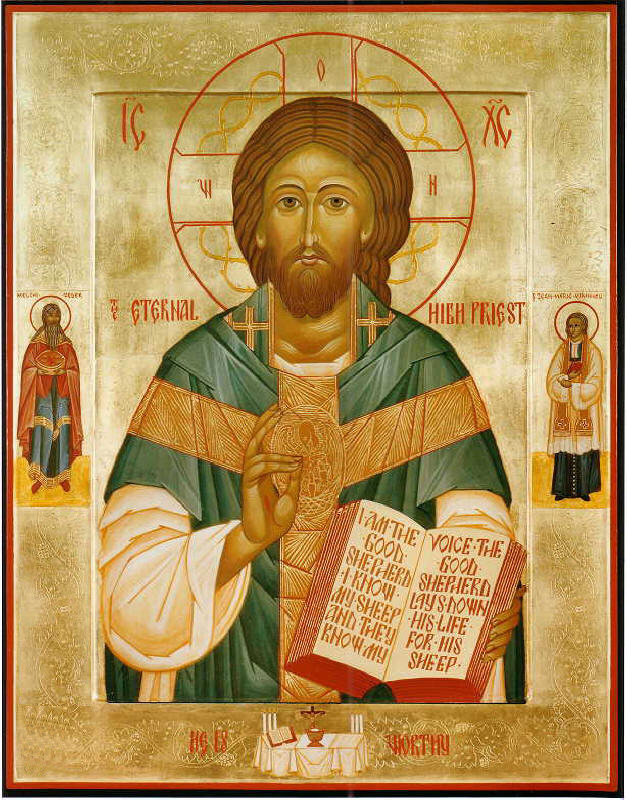
Jesus, High Priest
 

We thank you, God our Father, for those who have responded to your call to priestly ministry.

Accept this prayer we offer on their behalf: Fill your priests with the sure knowledge of your love.

Open their hearts to the power and consolation of the Holy Spirit.

Lead them to new depths of union with your Son.

Increase in them profound faith in the Sacraments they celebrate as they nourish, strengthen and heal us.

Lord Jesus Christ, grant that these, your priests, may inspire us to strive for holiness by the power of their example, as men of prayer who ponder your word and follow your will.

O Mary, Mother of Christ and our mother, guard with your maternal care these chosen ones, so dear to the Heart of your Son.

Intercede for our priests, that offering the Sacrifice of your Son, they may be conformed more each day to the image of your Son, our Lord and Savior, Jesus Christ. Amen.

Saint John Vianney, universal patron of priests, pray for us and our priests

This icon shows Jesus Christ, our eternal high priest.

The gold pelican over His heart represents self-sacrifice.

The border contains an altar and grapevines, representing the Mass, and icons of Melchizedek and St. Jean-Baptiste Vianney.

Melchizedek: king of righteousness (left icon) was priest and king of Jerusalem.  He blessed Abraham and has been considered an ideal priest-king.

St. Jean-Baptiste Vianney is the patron saint of parish priests.

11 posted on 09/27/2014 9:49:42 PM PDT by Salvation ("With God all things are possible." Matthew 19:26)
[ Post Reply | Private Reply | To 10 | View Replies]

To: All
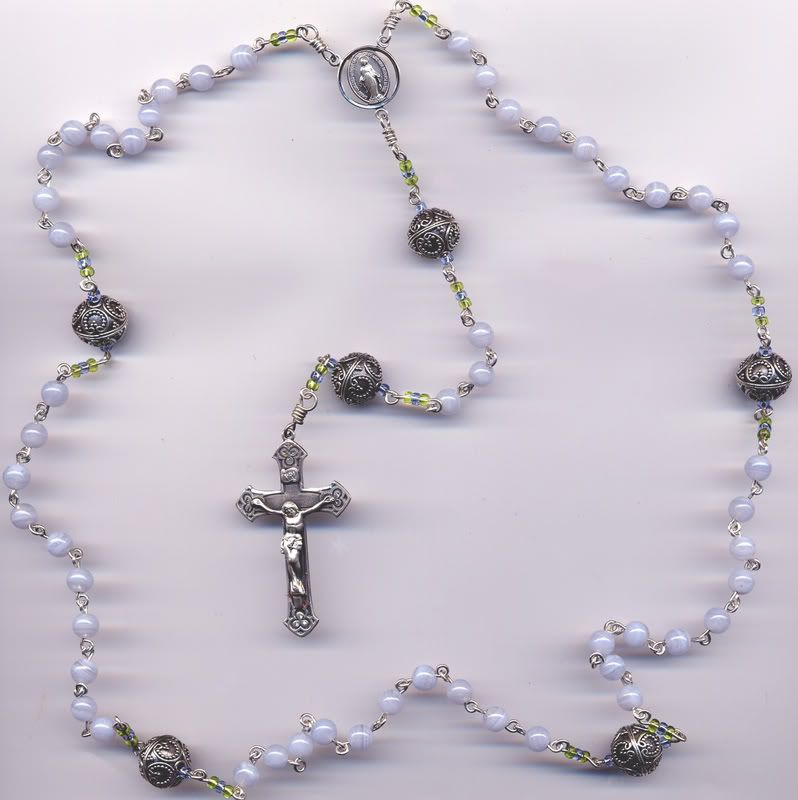
Pray a Rosary each day for our nation.

Pray the Rosary

1.  Sign of the Cross:  In the name of the Father, and of the Son, and of the Holy Spirit.  Amen.

2.  The Apostles Creed:  I BELIEVE in God, the Father almighty, Creator of heaven and earth, and in Jesus Christ, His only Son, our Lord, who was conceived by the Holy Spirit, born of the Virgin Mary, suffered under Pontius Pilate, was crucified, died, and was buried. He descended into hell; on the third day he rose again from the dead; he ascended into heaven, and is seated at the right hand of God, the Father Almighty; from there He shall come to judge the living and the dead.

I believe in the Holy Spirit, the holy catholic Church, the communion of saints, the forgiveness of sins, the resurrection of the body, and the life everlasting. Amen.

3.  The Lord's Prayer:  OUR Father, who art in heaven, hallowed be Thy name. Thy kingdom come. Thy will be done on earth as it is in heaven. Give us this day our daily bread and forgive us our trespasses as we forgive those who trespass against us. And lead us not into temptation, but deliver us from evil. Amen.

4. (3) Hail Mary:  HAIL Mary, full of grace, the Lord is with thee. Blessed art thou amongst women and blessed is the fruit of thy womb, Jesus. Holy Mary, Mother of God, pray for us sinners, now, and in the hour of our death. Amen. (Three times)

5. Glory Be:  GLORY be to the Father, and to the Son, and to the Holy Spirit. As it was in the beginning, is now, and ever shall be, world without end. Amen.

Fatima Prayer: Oh, my Jesus, forgive us our sins, save us from the fires of hell, lead all souls to heaven, especially those in most need of your mercy.

Announce each mystery, then say 1 Our Father, 10 Hail Marys, 1 Glory Be and 1 Fatima prayer.  Repeat the process with each mystery.

End with the Hail Holy Queen:

Hail, Holy Queen, Mother of Mercy, our life, our sweetness and our hope! To thee do we cry, poor banished children of Eve! To thee do we send up our sighs, mourning and weeping in this vale of tears! Turn then, most gracious advocate, thine eyes of mercy towards us; and after this, our exile, show unto us the blessed fruit of thy womb, Jesus!

O clement, O loving, O sweet Virgin Mary! Pray for us, O holy Mother of God, that we may be made worthy of the promises of Christ.

Final step -- The Sign of the Cross


The Mysteries of the Rosary

By tradition, Catholics meditate on these Mysteries during prayers of the Rosary.
The biblical references follow each of the Mysteries below.


The Glorious Mysteries
(Wednesdays and Sundays)
1.The Resurrection (Matthew 28:1-8, Mark 16:1-18, Luke 24:1-12, John 20:1-29) [Spiritual fruit - Faith]
2. The Ascension (Mark 16:19-20, Luke 24:50-53, Acts 1:6-11) [Spiritual fruit - Christian Hope]
3. The Descent of the Holy Spirit (Acts 2:1-13) [Spiritual fruit - Gifts of the Holy Spirit]
4. The Assumption [Spiritual fruit - To Jesus through Mary]
5. The Coronation [Spiritual fruit - Grace of Final Perseverance]


12 posted on 09/27/2014 9:50:19 PM PDT by Salvation ("With God all things are possible." Matthew 19:26)
[ Post Reply | Private Reply | To 11 | View Replies]

To: All


~ PRAYER ~

St. Michael, the Archangel, defend us in battle
 Be our protection against the wickedness
and snares of the devil;
May God rebuke him, we  humbly pray,
 and do thou, O Prince of the heavenly host,
 by the power of God,
 Cast into hell Satan and all the evil spirits
who prowl through the world seeking the ruin of souls.
 Amen
+

13 posted on 09/27/2014 9:51:08 PM PDT by Salvation ("With God all things are possible." Matthew 19:26)
[ Post Reply | Private Reply | To 12 | View Replies]

To: All

A Prayer for our Free Nation Under God
God Save Our Country web site (prayer warriors)
Prayer Chain Request for the United States of America
Pray for Nancy Pelosi
Prayer and fasting will help defeat health care reform (Freeper Prayer Thread)
Prayer Campaign Started to Convert Pro-Abortion Catholic Politicians to Pro-Life
[Catholic Caucus] One Million Rosaries
Non-stop Rosary vigil to defeat ObamaCare

From an Obama bumper sticker on a car:

"Pray for Obama.  Psalm 109:8"


PLEASE JOIN US -

Evening Prayer
Someone has said that if people really understood the full extent of the power we have available through prayer, we might be speechless.
Did you know that during WWII there was an advisor to Churchill who organized a group of people who dropped what they were doing every day at a prescribed hour for one minute to collectively pray for the safety of England, its people and peace?  


There is now a group of people organizing the same thing here in America. If you would like to participate: Every evening at 9:00 PM Eastern Time (8:00 PM Central) (7:00 PM Mountain) (6:00 PM Pacific), stop whatever you are doing and spend one minute praying for the safety of the United States, our troops, our citizens, and for a return to a Godly nation. If you know anyone else who would like to participate, please pass this along. Our prayers are the most powerful asset we have.    Please forward this to your praying friends.


14 posted on 09/27/2014 9:51:40 PM PDT by Salvation ("With God all things are possible." Matthew 19:26)
[ Post Reply | Private Reply | To 13 | View Replies]

To: All

Our Blessed Lady's Sorrows

Sea of Sorrow

Oh! on what a sea of sorrow
Was the Virgin-Mother cast,
When her eyes with tears o'erflowing
Gazed upon her Son aghast,
From the bloodstained gibbet taken,
Dying in her arms at last.

In her bitter desolation,
His sweet mouth, His bosom too,
Then His riven side beloved,
Then each hand, both wounded through,
Then His feet, with blood encrimsoned,
Her maternal tears bedew.

She, a hundred times and over,
Strains Him closely to her breast
Heart to Heart, arms arms enfolding,
Are His wounds on her impressed:
Thus, in sorrow's very kisses,
Melts her anguished soul to rest.

Oh, dear Mother! we beseech thee,
By the tears thine eyes have shed,
By the cruel death of Jesus
And His wounds' right royal red,
Make our hearts o'erflow with sorrow
From thy heart's deep fountainhead.

To the Father, Son, and Spirit,
Now we bend on equal knee:
Glory, sempiternal glory,
To the Most High Trinity;
Yea! perpetual praise and honor
Now and through all ages be.

Novena Prayer To Our Sorrowful Mother

Most Blessed and afflicted Virgin, Queen of Martyrs, who didst stand generously beneath the cross, beholding the agony of thy dying Son; by the sword of sorrow which then pierced thy soul, by the sufferings of thy sorrowful life, by the unutterable joy which now more than repays thee for them; look down with a mother's pity and tenderness, as I kneel before thee to compassionate thy sorrows, and to lay my petition with childlike confidence in thy wounded heart. I beg of thee, O my Mother, to plead continually for me with thy Son, since He can refuse thee nothing, and through the merits of His most sacred Passion and Death, together with thy own sufferings at the foot of the cross, so to touch His Sacred Heart, that I may obtain my request,
For to whom shall I fly in my wants and miseries, if not to thee, O Mother of mercy, who, having so deeply drunk the chalice of thy Son, canst most pity us poor exiles, still doomed to sigh in this vale of tears? Offer to Jesus but one drop of His Precious Blood, but one pang of His adorable Heart; remind Him that thou art our life, our sweetness, and our hope, and thou wilt obtain what I ask, through Jesus Christ our Lord. Amen.

Hail Mary
Virgin Most Sorrowful, pray for us
(Seven times each)

Mary, most holy Virgin and Queen of Martyrs, accept the sincere homage of my filial affection. Into thy Heart, pierced by so many swords, do thou welcome my poor soul. Receive it as the companion of thy sorrows at the foot of the Cross, on which Jesus died for the redemption of the world. With thee, O sorrowful Virgin, I will gladly suffer all the trials, contradictions, and infirmities which it shall please Our Lord to send me. I offer them all to thee in memory of thy sorrows, so that: every thought of my mind and every beat of my heart may be an act of compassion and of love for thee. And do thou, sweet Mother, have pity on me, reconcile me to thy Divine Son, Jesus; keep me in His grace and assist me in my last agony, so that I may be able to meet thee in Heaven and sing thy glories.

Most holy Virgin and Mother, whose soul was pierced by a sword of sorrow in the Passion of thy Divine Son, and who in His glorious Resurrection wast filled with never ending joy at His triumph, obtain for us who call upon thee, so to be partakers in the adversities of Holy Church and the Sorrows of the Sovereign Pontiff, as to be found worthy to rejoice with them in the consolations for which we pray, in the charity and peace of the same Christ our Lord. Amen.

Litany of the Seven Sorrows

For private use only.

Lord, have mercy on us.
Christ, have mercy on us.
Lord, have mercy on us.
Christ, hear us.
Christ, graciously hear us.

God the Father of Heaven,
Have mercy on us.
God the Son, Redeemer of the world,
Have mercy on us.
God the Holy Spirit,
Have mercy on us.
Holy Trinity, One God,
Have mercy on us.

Holy Mary,
Pray for us.
Holy Mother of God,
Pray for us.
Holy Virgin of virgins, etc.
Mother crucified,
Mother sorrowful,
Mother tearful,
Mother afflicted,
Mother forsaken,
Mother desolate,
Mother bereft of thy Child,
Mother transfixed with the sword,
Mother consumed with grief,
Mother filled with anguish,
Mother crucified in heart,
Mother most sad,
Fountain of tears,
Abyss of suffering,
Mirror of patience,
Rock of constancy,
Anchor of confidence,
Refuge of the forsaken,
Shield of the oppressed,
Subduer of the unbelieving,
Comfort of the afflicted,
Medicine of the sick,
Strength of the weak,
Harbor of the wrecked,
Allayer of tempests,
Resource of mourners,
Terror of the treacherous,
Treasure of the faithful,
Eye of the Prophets,
Staff of the Apostles,
Crown of Martyrs,
Light of confessors,
Pearl of virgins,
Consolation of widows,
Joy of all Saints,

Lamb of God, Who takest away the sins of the world,
Spare us, O Lord.
Lamb of God, Who takest away the sins of the world,
Graciously hear us, O Lord.
Lamb of God, Who takest away the sins of the world,
Have mercy on us.

Look down upon us, deliver us, and save us from all trouble,
in the power of Jesus Christ. Amen.

Let Us Pray.
Imprint, O Lady, thy wounds upon my heart, that I may read therein sorrow and love
--- sorrow to endure every sorrow for thee, love to despise every love for thee. Amen.

Conclude with the Apostles Creed, Hail Holy Queen, and three Hail Marys,
in honor of the Most Holy Heart of Mary.

Stabat Mater Dolorosa

Stabat mater dolorosa
iuxta Crucem lacrimosa,
dum pendebat Filius.

Cuius animam gementem,
contristatam et dolentem
pertransivit gladius.

O quam tristis et afflicta
fuit illa benedicta,
mater Unigeniti!

Quae maerebat et dolebat,
pia Mater, dum videbat
nati poenas inclyti.

Quis est homo qui non fleret,
matrem Christi si videret
in tanto supplicio?

Quis non posset contristari
Christi Matrem contemplari
dolentem cum Filio?

Pro peccatis suae gentis
vidit Iesum in tormentis,
et flagellis subditum.

Vidit suum dulcem Natum
moriendo desolatum,
dum emisit spiritum.

Eia, Mater, fons amoris
me sentire vim doloris
fac, ut tecum lugeam.

Fac, ut ardeat cor meum
in amando Christum Deum
ut sibi complaceam.

Sancta Mater, istud agas,
crucifixi fige plagas
cordi meo valide.

Tui Nati vulnerati,
tam dignati pro me pati,
poenas mecum divide.

Fac me tecum pie flere,
crucifixo condolere,
donec ego vixero.

Iuxta Crucem tecum stare,
et me tibi sociare
in planctu desidero.

Virgo virginum praeclara,
mihi iam non sis amara,
fac me tecum plangere.

Fac, ut portem Christi mortem,
passionis fac consortem,
et plagas recolere.

Fac me plagis vulnerari,
fac me Cruce inebriari,
et cruore Filii.

Flammis ne urar succensus,
per te, Virgo, sim defensus
in die iudicii.

Christe, cum sit hinc exire,
da per Matrem me venire
ad palmam victoriae.

Quando corpus morietur,
fac, ut animae donetur
paradisi gloria. Amen.

Prayer To Our Lady of Sorrows, by St. Bridget

O Blessed Virgin Mary, Immaculate Mother of God, who didst endure a martyrdom of love and grief beholding the sufferings and sorrows of Jesus! Thou didst cooperate in the benefit of my redemption by thine innumerable afflictions and by offering to the Eternal Father His only begotten Son as a holocaust and victim of propitiation for my sins. I thank thee for the unspeakable love which led thee to deprive thyself of the Fruit of thy womb, Jesus, true God and true Man, to save me, a sinner. Oh, make use of the unfailing intercession of thy sorrows with the Father and the Son, that I may steadfastly amend my life and never again crucify my loving Redeemer by new sins, and that, persevering till death in His grace. I may obtain eternal life through the merits of His Cross and Passion. Amen.

Mother of love, of sorrow and of mercy, pray for us.

Saint Alphonsus Liguori's Prayer To The Mother Of Sorrows

O, my Blessed Mother, it is not one sword only with which I have pierced thy heart, but I have done so with as many as are the sins which I have committed. O, Lady, it is not to thee, who art innocent, that sufferings are due, but to me, who am guilty of so many crimes. But since thou hast been pleased to suffer so much for me, by thy merits, obtain me great sorrow for my sins, and patience under the trials of this life, which will always be light in comparison with my demerits; for I have often deserved Hell.
Amen.


Lists Every Catholic Should be Familiar With: The 7 Sorrows (Dolours) and 7 Joys of Our Lady
The Seven Dolors (Sorrows) of Mary [Catholic/Orthodox Devotional]
Apparition in Africa: Our Lady of Sorrows [Catholic/Orthodox Caucus]
Feast of the Seven Sorrows of the Blessed Virgin Mary [Catholic Caucus Devotional]
Feast of Our Lady/Mother of Sorrows
Homilies on Our Lady of Sorrows
Starkenburg:Pilgrimage to Our Lady of Sorrows Shrine
Our Mother of Sorrows
ST. ALPHONSUS LIGUORI, OF THE DOLOURS OF MARY, The Glories [Sorrows] of Mary
Our Lady of Sorrows - Sep 15


15 posted on 09/27/2014 9:52:18 PM PDT by Salvation ("With God all things are possible." Matthew 19:26)
[ Post Reply | Private Reply | To 14 | View Replies]

To: All
September 2014

Pope's Intentions

Universal:
That the mentally disabled may receive the love and help they need for a dignified life.

For Evangelization:
That Christians, inspired by the Word of God, may serve the poor and suffering.

16 posted on 09/27/2014 9:52:45 PM PDT by Salvation ("With God all things are possible." Matthew 19:26)
[ Post Reply | Private Reply | To 15 | View Replies]

To: All
Daily Gospel Commentary

Twenty-sixth Sunday in Ordinary Time - Year A

Commentary of the day
Saint Clement of Alexandria (150- c.215), theologian
Homily “How can the rich be saved?”, 39-40 (©Friends of Henry Ashworth)

"Tax collectors and prostitutes are entering the kingdom of God before you"

The doors are open for all who sincerely and wholeheartedly return to God; indeed, the Father is most willing to welcome back a truly repentant son or daughter. The result of true repentance, however, is that you do not fall into the same faults again, but utterly uproot from your souls the sins for which you consider yourself worthy of death. When these have been destroyed God will again dwell within you, since Scripture says that for the Father and his angels in heaven the festal joy and gladness at the return of one repentant sinner is great beyond compare (Lk 15,10). That is why the Lord cried out: “It is love that I desire, not sacrifice,” (Hos 6,6; Mt 9,13). “I take no pleasure in the death of a wicked man, but rather in the wicked man's conversion” (Ez 33,11). “Though your sins be like scarlet, they shall be white as snow; though they be crimson red, they shall be white as wool” (Is 1,18).

Although only God has power to forgive sins and cancel transgressions, the Lord commands us also to forgive our repentant brothers and sisters every day. So if we who are evil know how to give good gifts (Mt 7,11), how much more generous must be “the Father of mercies” (2Cor 1,3), the good Father of all consolation, who is full of compassion and mercy, and whose nature it is to be patient and await our conversion! Genuine conversion, however, means ceasing to sin without any backward glances... By repenting we condemn our past misdeeds and beg forgiveness of the Father, the only one who can in his mercy undo what has been done, and wipe away our past sins with the dew of his Spirit.


17 posted on 09/27/2014 10:08:36 PM PDT by Salvation ("With God all things are possible." Matthew 19:26)
[ Post Reply | Private Reply | To 16 | View Replies]

To: All
Zenit.org

Sunday Homily: Son, Go Out and Work in the Vineyard

26th Sunday in Ordinary Time, Year Two

Rome, September 28, 2014 (Zenit.org) Fr. Jason Mitchell LC | 178 hits

Ezekiel 18:25-28
Psalm 25:4-5,6-7,8-9
Philippians 2:1-11
Matthew 21:28-32

Both Ezekiel and Jesus present two types of people for our consideration. For Ezekiel, just as the virtuous man can turn from a life of virtue and commit iniquity, so also can the wicked man turn from a life of evil and do what is right and just. Very simply, turning to sin leads to death, while turning away from sin leads to life.

Jesus tells us something similar. We are sons and daughters of the Father, who sends us out to work in his vineyard. One son first says "yes", but then does not go. The other son first says "no" but then changes his mind and goes. Which of the two, Jesus asks, did the Father's will?

Conversion is at the heart of both stories. This means a radical reorientation of our entire life away from sin and evil, and toward God. This change of heart brings with it contrition: sorrow and hatred for the sin committed, together with a resolution not to sin again.

As we learned last week, whether we respond early in life to the Father's call to work in the vineyard, or late in life, we will receive our pay and heavenly inheritance. Mary of Nazareth is a model for us, for she said "yes" from the beginning and worked in the Lord's vineyard the entire day.

We can read today's Second Reading as an exhortation of how to work in the vineyard. We work with Christ at our side, we are consoled in love, we are filled with the Holy Spirit. We are merciful with those who respond to the Father's call as well as with those who refuse to enter into the vineyard. Those who work rejoice since that are of the same mind, have the same love, and are united in heart. They don't work for selfish gain, but rather to please the Father. They called to be humble and look out for God's interests as well as the interests of others.

Saint Paul encourages us to imitate Jesus Christ, who responded to the Father's call to work in the vineyard and invite men and women to join him. He took the form of a slave and humbled himself and became obedient. The work and passion of the Son led to his glorification and exaltation.

Each of us, then, hear the Father's call: "Go out and work in my vineyard". If we have been idle all day, then we need a change of heart: we need to believe in Jesus, set out toward the vineyard and work with love and humility. When our labors are finished, we hope to hear the invitation of our Father: "Come, you who are weary and find rest"; "Welcome into my Kingdom, good and faithful servant".


18 posted on 09/27/2014 10:27:27 PM PDT by Salvation ("With God all things are possible." Matthew 19:26)
[ Post Reply | Private Reply | To 17 | View Replies]

To: All
Arlington Catholic Herald

GOSPEL COMMENTARY MT 21: 28-32

Modern morality chitchat

FR. JERRY J. POKORSKY

In Sunday’s Gospel we read that Jesus said to the chief priests and elders of the people, "Amen, I say to you, tax collectors and prostitutes are entering the kingdom of God before you. When John came to you in the way of righteousness, you did not believe him; but tax collectors and prostitutes did. Yet even when you saw that, you did not later change your minds and believe him." It’s a biting rebuke for those who, as we say today, “talk the talk” of religion but don’t “walk the walk.” But aren’t we always looking for increasingly creative ways to circumvent God’s prophets and law?

Recently there has been a lot of chitchat inside and outside the church about a “new springtime” and “inclusion” of contemporary cultural expectations with respect to the Sixth Commandment. In time, we are to expect a re-examination of divorce and remarriage with new and improved “pastoral solutions”; relaxing and redefining the church’s teaching on contraception; and openness to same-sex unions. The narrative template is familiar to those who lived through the post-Conciliar years leading up to the release of “Humanae Vitae” in 1968. The presumption was that the church’s authority was not that of prophetic witness, but legislative and creative — issuing and revoking rules and regulations like those of a tax code. In this view, Catholic moral teaching is merely juridical and positivistic.

The facile suggestion that the church can somehow change its teaching — like a new president changing political policy positions — reveals a pattern of moral thinking that fits nicely into the relativism of modern culture. But it isn't Christian. It's really a demand for priests, bishops and popes to exercise a new form of the ugly clericalism that Vatican II was supposed to call out, identify and suppress. Priests, bishops and popes are not masters of life and God’s commandments; they are but His ministers and should be faithful witnesses. It’s the stuff of true humility.

The culture presumptuously holds that husbands and wives (or "domestic partners") are really the masters of life, rather than the ministers of life God created them to be. There are those who seem to believe that the time has come for the church to recognize that it’s not her role to “intrude” on the private lives of her members with “sex-obsessed” rules. Of course, this has been the anti-Catholic mantra since the sexual revolution of the 1960s, but turn on the television or surf the Internet. Is it the church that’s “obsessed with sex,” or is it the culture at large? So it’s said the time has come for the church to “get out of the bedroom” and, presumably, move on to socially relevant stands, such as preaching against global warming and unrestrained volcanic activity. The scepter of moral teaching authority has passed to the prevailing culture, that is, to the “world,” as St. John understood that term.

What many observers (even within the church) may not realize is that adultery, contraception and homosexual behavior aren’t wrong because the Bible and the church teaches they’re wrong. They’re wrong because these actions truly violate God's law — the actions are immoral even before the church wraps words around the teaching for clarification. The Church teaches the difference between good and bad morality as a witness — or in terms of shedding light and amplification — not as some kind of religious government agency presuming to be a “master of morality.” Only God is the master of morality as He is the master of life. And the church is His witness.

Priests working in the trenches of the confessional know that many flawed but good people are fighting the good fight of sanctity. St. Paul, in his own prophetic way, echoes the words of Christ when he acknowledges the same, “… do you not know that wrongdoers will not inherit the kingdom of God? Do not be deceived: Neither the sexually immoral nor idolaters nor adulterers nor men who have sex with men nor thieves nor the greedy nor drunkards nor slanderers nor swindlers will inherit the kingdom of God. And that is what some of you were. But you were washed, you were sanctified, you were justified in the name of the Lord Jesus Christ and by the Spirit of our God” (1 Cor 6:9-12).

The church’s traditional moral teaching regarding sexuality is said to be irrelevant today and needs to be brought into the 21st century. But if the church is irrelevant, how would changing its teaching to coincide with mainstream cultural practices make it more “relevant”? Could it actually be that her countercultural teaching is truly relevant precisely because it is prophetic and it stings consciences? Could it be the secular media and the culture and many of us in the church are like spoiled children who do not want to hear the authoritative voice of Christ in rebuke? Could it be that tax collectors and prostitutes are entering the kingdom of God before us because they are responding with repentance, not merely paying religious lip service the Lord condemns?

The hard teachings of the church have never been “popular” for the same reason that Christ’s hard teachings led to his rejection and to the cross for execution. There is never a need to reinvent or explain away the Ten Commandments. It’s always relevant to rediscover and live them with God’s grace.

Fr. Pokorsky is pastor of St. Michael Church in Annandale.


19 posted on 09/27/2014 10:44:26 PM PDT by Salvation ("With God all things are possible." Matthew 19:26)
[ Post Reply | Private Reply | To 18 | View Replies]

To: All
The Work of God

Year A  -  26th Sunday in ordinary time

The obedient son

Matthew 21:28-32

28 "What do you think? A man had two sons; he went to the first and said, 'Son, go and work in the vineyard today.'
29 He answered, 'I will not'; but later he changed his mind and went.
30 The father went to the second and said the same; and he answered, 'I go, sir'; but he did not go.
31 Which of the two did the will of his father?" They said, "The first." Jesus said to them, "Truly I tell you, the tax collectors and the prostitutes are going into the kingdom of God ahead of you.
32 For John came to you in the way of righteousness and you did not believe him, but the tax collectors and the prostitutes believed him; and even after you saw it, you did not change your minds and believe him. (NRSV)

Inspiration of the Holy Spirit - From the Sacred Heart of Jesus

There will be more joy in heaven over one sinner who repents than over ninety-nine righteous persons who need no repentance. I call everyone to follow the commandments, to repent, and to become a witness of my word.

All human beings have to struggle against the powers of sin. Sin works as a dark invisible cloud that menaces the purity of every soul and if nothing is done, it destroys and causes eternal death.

The commandments have brought back many souls from eternal damnation, they have inspired repentance and change, they have kept spiritual order throughout the ages.

Some people cover themselves with their false religiosity pretending to be clean on the outside, while their interior is full of darkness and death. I am offended by hypocrisy because I read the heart of every person.

In the spiritual life, you do not need to be seen by others doing your spiritual works; you do not need to impress any one except God, since the Eternal One is the only one who can give eternal rewards to you. Therefore work silently doing your good works, admit your sinfulness and present yourself humbly before me every day, do not count your spiritual riches, empty yourself and bring your offering to me.

My immediate reward to you will be my peace, which is not like the peace you receive from men; it is that joy that only comes from me.

I am the God of sinners. How fortunate you are when you admit to be a sinner and repent, how fortunate you are to come to me in your needs. I receive you with great joy because you are mine, you have cost me so much, I have died for your sins and I am glorified when you accept me as your Savior and Lord.

Author: Joseph of Jesus and Mary


20 posted on 09/27/2014 10:48:43 PM PDT by Salvation ("With God all things are possible." Matthew 19:26)
[ Post Reply | Private Reply | To 19 | View Replies]


Navigation: use the links below to view more comments.
first 1-2021-4041-51 next last

Disclaimer: Opinions posted on Free Republic are those of the individual posters and do not necessarily represent the opinion of Free Republic or its management. All materials posted herein are protected by copyright law and the exemption for fair use of copyrighted works.

Free Republic
Browse · Search
Religion
Topics · Post Article

FreeRepublic, LLC, PO BOX 9771, FRESNO, CA 93794
FreeRepublic.com is powered by software copyright 2000-2008 John Robinson