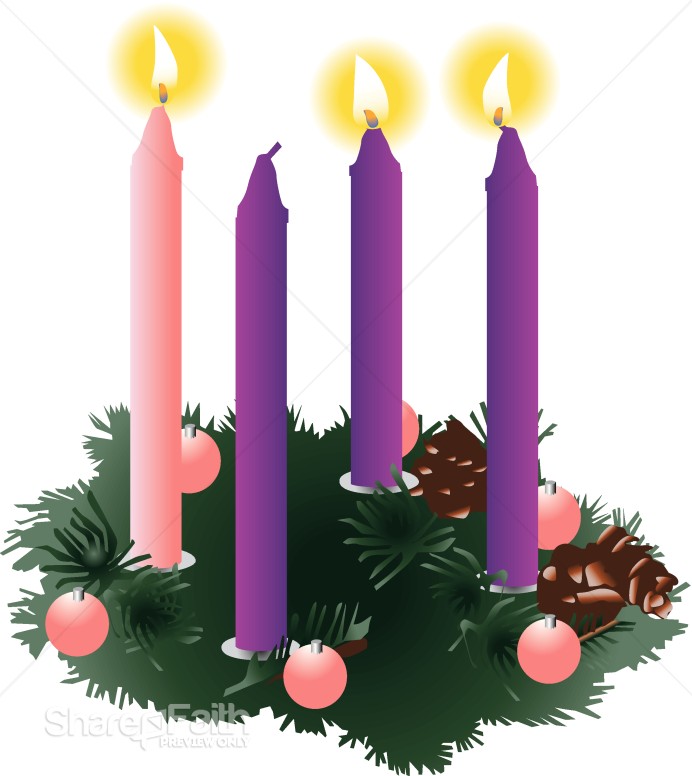
Posted on 12/14/2013 8:24:22 PM PST by Salvation
December 15, 2013
Reading 1 Is 35:1-6a, 10
The desert and the parched land will exult;
the steppe will rejoice and bloom.
They will bloom with abundant flowers,
and rejoice with joyful song.
The glory of Lebanon will be given to them,
the splendor of Carmel and Sharon;
they will see the glory of the LORD,
the splendor of our God.
Strengthen the hands that are feeble,
make firm the knees that are weak,
say to those whose hearts are frightened:
Be strong, fear not!
Here is your God,
he comes with vindication;
with divine recompense
he comes to save you.
Then will the eyes of the blind be opened,
the ears of the deaf be cleared;
then will the lame leap like a stag,
then the tongue of the mute will sing.
Those whom the LORD has ransomed will return
and enter Zion singing,
crowned with everlasting joy;
they will meet with joy and gladness,
sorrow and mourning will flee.
Responsorial Psalm Ps 146:6-7, 8-9, 9-10
R. (cf. Is 35:4) Lord, come and save us.
or:
R. Alleluia.
The LORD God keeps faith forever,
secures justice for the oppressed,
gives food to the hungry.
The LORD sets captives free.
R. Lord, come and save us.
or:
R. Alleluia.
The LORD gives sight to the blind;
the LORD raises up those who were bowed down.
The LORD loves the just;
the LORD protects strangers.
R. Lord, come and save us.
or:
R. Alleluia.
The fatherless and the widow he sustains,
but the way of the wicked he thwarts.
The LORD shall reign forever;
your God, O Zion, through all generations.
R. Lord, come and save us.
or:
R. Alleluia.
Reading 2 Jas 5:7-10
Be patient, brothers and sisters,
until the coming of the Lord.
See how the farmer waits for the precious fruit of the earth,
being patient with it
until it receives the early and the late rains.
You too must be patient.
Make your hearts firm,
because the coming of the Lord is at hand.
Do not complain, brothers and sisters, about one another,
that you may not be judged.
Behold, the Judge is standing before the gates.
Take as an example of hardship and patience, brothers and sisters,
the prophets who spoke in the name of the Lord.
Gospel Mt 11:2-11
When John the Baptist heard in prison of the works of the Christ,
he sent his disciples to Jesus with this question,
“Are you the one who is to come,
or should we look for another?”
Jesus said to them in reply,
“Go and tell John what you hear and see:
the blind regain their sight,
the lame walk,
lepers are cleansed,
the deaf hear,
the dead are raised,
and the poor have the good news proclaimed to them.
And blessed is the one who takes no offense at me.”
As they were going off,
Jesus began to speak to the crowds about John,
“What did you go out to the desert to see?
A reed swayed by the wind?
Then what did you go out to see?
Someone dressed in fine clothing?
Those who wear fine clothing are in royal palaces.
Then why did you go out? To see a prophet?
Yes, I tell you, and more than a prophet.
This is the one about whom it is written:
Behold, I am sending my messenger ahead of you;
he will prepare your way before you.
Amen, I say to you,
among those born of women
there has been none greater than John the Baptist;
yet the least in the kingdom of heaven is greater than he.”
Please FReepmail me to get on/off the Alleluia Ping List.
From: Isaiah 35:1-6a;10
Promise of Redemption
[3] Strengthen the weak hands,
and make firm the feeble knees.
[4] Say to those who are of a fearful heart,
“Be strong, fear not!
Behold, your God
will come with vengeance,
with the recompense of God.
He will come and save you.”
[5] Then the eyes of the blind shall be opened,
and the ears of the deaf unstopped;
[6a]then shall the lame man leap like a hart,
and the tongue of the dumb sing for joy.
[10] And the ransomed of the Lord shall return,
and come to Zion with singing;
everlasting joy shall be upon their heads;
they shall obtain joy and gladness,
and sorrow and sighing shall flee away.
*********************************************************************************************
Commentary:
35:1-10. The focus now changes with this hymn celebrating Zion, the holy city.
It presents a picture of the restored Jerusalem in language reminiscent of that of
chapters 11 and 12. God who manifested his presence and protection during the
exodus, when Israel came up out of Egypt, will do so again in wonderful ways as
the redeemed flock back home to Zion. He will show them the route and give them
a highway and be with them in a sort of solemn procession to where he dwells (v.
8). Just as in Babylon there was a “Holy Way” lined with statues of lions and dra-
gons that led to the temple of Marduk, the redeemed will have a truly “Holy Way”
to take them to the house of the Lord in Jerusalem. The joy of the returnees is
compounded by the instant cure of the blind, deaf and lame (cf. 29:18-19), which
is an anticipation of what will happen in the messianic era.
The miracles worked by Jesus demonstrate that the moment of true redemption
foreseen indistinctly by the prophets has come to pass (cf. Mt 11:2-6). St Jus-
tin, showing the Jew Tryphon that this prophecy found fulfillment in Christ, points
out: “Christ is the stream of living water that flows from God; he sprang up in the
desert wastes of ignorance of God; that is, in the parched earth of all the nations.
He, who was born among your people, cured those who were blind from birth, and
the deaf and the lame: by his word alone, they leapt and heard and saw once
more. He raised the dead and gave them new life, and by all his good works prom-
pted men to see Him for who he is. [...] He did all these things to convince those
who were to believe in him, whatever bodily defects they might have, that if they
obeyed the teachings that he gave them, he would raise them up again at his Se-
cond Coming and make them whole and perfect and immortal as He is” (”Dialo-
gus Cum Tryphone”, 69, 6).
The Church uses this passage from Isaiah in the Advent liturgy (3rd Sunday, Cy-
cle A) to encourage the faithful in joyous hope that God will come and bring sal-
vation.
*********************************************************************************************
Source: “The Navarre Bible: Text and Commentaries”. Biblical text from the
Revised Standard Version and New Vulgate. Commentaries by members of
the Faculty of Theology, University of Navarre, Spain.
Published by Four Courts Press, Kill Lane, Blackrock, Co. Dublin, Ireland, and
by Scepter Publishers in the United States.
From: James 5:7-10
A Call for Constancy
*********************************************************************************************
Commentary:
7-11. Just before he ends his letter, St James again (cf. 1:2-4, 12) exhorts his
readers to be patient, perhaps in case some are tempted to avenge themselves:
on the rich. He uses the simile of the farmer, who patiently waits for the earth;
to yield the fruits of his work: in the same kind of way the oppressed will be re-
warded for all their afflictions when the Lord comes. St James encourages them
also by reminding them of the patience and long-suffering of the prophets and of
Job.
Christian hope, and the patience it induces, enables people to put up with injus-
tice in this present life; but it is not an easy way out of one’s responsibilities nor
an invitation to be passive. A Christian should strive to make this world a place
of justice and peace, but should realize it is a transient place, and not make
these temporal ideals an absolute goal. “God did not create us to build a lasting
city here on earth. [...]. Nevertheless, we children of God ought not to remain a-
loof from earthly endeavors, for God has placed us here to sanctify them and
make them fruitful with our blessed faith, which alone is capable of bringing true
peace and joy to all men wherever they may be [...]. We urgently need to chris-
tianize society. We must imbue all levels of mankind with a supernatural outlook,
and each of us must strive to raise his daily duties, his job or profession, to the
order of supernatural grace. In this way all human occupations will be lit up by a
new hope that transcends time and the inherent transience of earthly realities”
(St. J. Escriva, “Friends of God”, 210).
7-9. St James’ words show how vividly the early Christians realized that the Chris-
tian life should be a time for watchfulness and for looking forward to the Parousia
of the Lord, when our redemption will be finally sealed (cf. Lk 21:28). Jesus did
not choose to reveal the precise moment of his coming (cf. Mt 24:36); he stres-
sed, rather, the need to be watchful, to make sure it found us ready (cf. Mt 24:42,
44; 25:13). Therefore, every Christian should live in the expectation of that event
which surely will come, though he knows not when. This is also what the Apostle
means when he says “the coming of the Lord is at hand” and “the Judge is stan-
ding at the doors”, for he may come at any moment.
10-11. The lives of the prophets are a very good model of patience and endu-
rance in the adversity. Some of them in particular (Elijah, Isaiah, Jeremiah) un-
derwent great suffering on account of their obedience to God. “You have seen
the purpose of the Lord “: this is the interpretation of St Bede and St Augustine,
referring to the example of patience set by Jesus in his passion and death on the
cross. Most commentators prefer the other possible translation, “You have seen
the outcome the Lord gave him”, referring to Job, who bore patiently the trials
God sent to him (cf. Job 42:10ff), because, for one thing, it avoids having to give
the term “Lord”, which appears twice in the same verse (v.11), two different mea-
nings — Jesus Christ and God one and three.
*********************************************************************************************
Source: “The Navarre Bible: Text and Commentaries”. Biblical text from the
Revised Standard Version and New Vulgate. Commentaries by members of
the Faculty of Theology, University of Navarre, Spain.
Published by Four Courts Press, Kill Lane, Blackrock, Co. Dublin, Ireland, and
by Scepter Publishers in the United States.
From: Matthew 11:2-11
The Mission of John the Baptist. Jesus’ Reply
[7] As they went away, Jesus began to speak to the crowds concerning John:
“What did you go out into the wilderness to behold? A reed shaken by the wind?
[8] Why then did you go out? To see a man clothed in soft raiment? Behold,
those who wear soft raiment are in kings’ houses. [9] Why then did you go out?
To see a prophet? Yes, I tell you, and more than a prophet. [10] This is he of
whom it is written,
‘Behold, I send my messenger before thy face,
who shall prepare thy way before thee.’
[11] “Truly, I say to you, among those born of women there has risen no one grea-
ter than John the Baptist; yet he who is least in the kingdom of heaven is greater
than he.”
*********************************************************************************************
Commentary:
2. John knew that Jesus was the Messiah (cf. Mt 3:13-17). He sent his disciples
to Jesus so that they could shed their mistaken notions about the kind of
Messiah to expect, and come to recognize Jesus.
3-6. Jesus replies to the Baptist’s disciples by pointing to the fact that they are
witnessing the signs which the ancient prophecies said would mark the advent of
the Messiah and his Kingdom (cf. Is 35:5, 61:1; etc). He says, in effect, that he
is the prophet who “was to come”.
The miracles reported in the Gospel (chapters 8 and 9) and the teaching given to
the people (chapters 5-7) prove that Jesus of Nazareth is the expected Messiah.
6. Jesus here corrects the mistaken idea which many Jews had of the Messiah,
casting him in the role of a powerful earthly ruler — a far cry from the humble atti-
tude of Jesus. It is not surprising that he was a stumbling block to Jews (cf. Is 8:
14-15; 1 Cor 1:23).
11. With John the Old Testament is brought to a close and we are on the thres-
hold of the New. The Precursor had the honor of ushering Christ in, making him
known to men. God had assigned him the exalted mission of preparing his con-
temporaries to hear the Gospel. The Baptist’s faithfulness is recognized and
proclaimed by Jesus. The praise he receives is a reward for his humility: John,
realizing what his role was, had said, “He must increase, but I must decrease”
(Jn 3:30).
St John the Baptist was the greatest in the sense that he had received a mission
unique and incomparable in the context of the Old Testament. However, in the
Kingdom of heaven (the New Testament) inaugurated by ‘Christ, the divine gift of
grace makes the least of those who faithfully receive it greater than the greatest
in the earlier dispensation. Once the work of our redemption is accomplished,
God’s grace will also be extended to the just of the Old Alliance. Thus, the great-
ness of John the Baptist, the Precursor and the last of the prophets, will be en-
hanced by the dignity of being made a son of God.
*********************************************************************************************
Source: “The Navarre Bible: Text and Commentaries”. Biblical text from the
Revised Standard Version and New Vulgate. Commentaries by members of
the Faculty of Theology, University of Navarre, Spain.
Published by Four Courts Press, Kill Lane, Blackrock, Co. Dublin, Ireland, and
by Scepter Publishers in the United States.
|
First reading |
|
Isaiah 35:1-6,10 © |
Let the wilderness and the dry-lands exult,
let the wasteland rejoice and bloom,
let it bring forth flowers like the jonquil,
let it rejoice and sing for joy.
The glory of Lebanon is bestowed on it,
the splendour of Carmel and Sharon;
they shall see the glory of the Lord,
the splendour of our God.
Strengthen all weary hands,
steady all trembling knees
and say to all faint hearts,
‘Courage! Do not be afraid.
‘Look, your God is coming,
vengeance is coming,
the retribution of God;
he is coming to save you.’
Then the eyes of the blind shall be opened,
the ears of the deaf unsealed,
then the lame shall leap like a deer
and the tongues of the dumb sing for joy
for those the Lord has ransomed shall return.
They will come to Zion shouting for joy,
everlasting joy on their faces;
joy and gladness will go with them
and sorrow and lament be ended.
|
Psalm |
Psalm 145:6-10 © |
Come, Lord, and save us.
or
Alleluia!
It is the Lord who keeps faith for ever,
who is just to those who are oppressed.
It is he who gives bread to the hungry,
the Lord, who sets prisoners free,
Come, Lord, and save us.
or
Alleluia!
It is the Lord who gives sight to the blind,
who raises up those who are bowed down,
the Lord, who protects the stranger
and upholds the widow and orphan.
Come, Lord, and save us.
or
Alleluia!
It is the Lord who loves the just
but thwarts the path of the wicked.
The Lord will reign for ever,
Zion’s God, from age to age.
Come, Lord, and save us.
or
Alleluia!
|
Second reading |
James 5:7-10 © |
Be patient, brothers, until the Lord’s coming. Think of a farmer: how patiently he waits for the precious fruit of the ground until it has had the autumn rains and the spring rains! You too have to be patient; do not lose heart, because the Lord’s coming will be soon. Do not make complaints against one another, brothers, so as not to be brought to judgement yourselves; the Judge is already to be seen waiting at the gates. For your example, brothers, in submitting with patience, take the prophets who spoke in the name of the Lord.
|
Gospel Acclamation |
Is61:1(Lk4:18) |
Alleluia, alleluia!
The spirit of the Lord has been given to me.
He has sent me to bring the good news to the poor.
Alleluia!
|
Gospel |
Matthew 11:2-11 © |
John in his prison had heard what Christ was doing and he sent his disciples to ask him, ‘Are you the one who is to come, or have we got to wait for someone else?’ Jesus answered, ‘Go back and tell John what you hear and see; the blind see again, and the lame walk, lepers are cleansed, and the deaf hear, and the dead are raised to life and the Good News is proclaimed to the poor; and happy is the man who does not lose faith in me.’
As the messengers were leaving, Jesus began to talk to the people about John: ‘What did you go out into the wilderness to see? A reed swaying in the breeze? No? Then what did you go out to see? A man wearing fine clothes? Oh no, those who wear fine clothes are to be found in palaces. Then what did you go out for? To see a prophet? Yes, I tell you, and much more than a prophet: he is the one of whom scripture says:
‘Look, I am going to send my messenger before you;
he will prepare your way before you.
‘I tell you solemnly, of all the children born of women, a greater than John the Baptist has never been seen; yet the least in the kingdom of heaven is greater than he is.’
WDTPRS 1st Sunday of Advent: true Advent preparation
A Recipe for Readiness – A Sermon for the Frist Sunday of Advent
Advent Series: A Look at the Infancy Narratives of Matthew and Luke [Ecumenical] Following the Truth: Avoiding Advent Pitfalls
The Awkwardness of Advent
Cloistered Benedictines top charts with Advent album
Advent: Jesus is Coming!
Why Do Catholics Celebrate Advent? The Call to Begin Again (Ecumenical Caucus)
Resources for Liturgy and Prayer for the Seasons of Advent and Christmas [Catholic Caucus]
New prayers for Advent season [Catholic Caucus[ (Read and Rejoice!)
Father Cantalamessa's 3rd Advent Homily, "The Christian Response to Rationalism"
Father Cantalamessa's 2nd Advent Sermon, "The Christian Response to Secularism"
Evangelization Needs Belief in Eternity, Says Preacher, Father Cantalamessa Gives Advent Sermon to Pope and Curia
Father Corapi: How Do We Prepare Well for the Coming of the Lord
Father Cantalamessa's 1st Advent Sermon: "The Christian Answer to Atheist Scientism"
A Simple Way to Pray around the Advent Wreath: Prayers for Every Day During Advent
Advent 2010 -- Day by Day
History, Customs and Folklore of Advent [Catholic/Orthodox Caucus]
Ready or Not: Here Advent Comes
The Journey To Bethlehem is Not Comfortable! (Last week of Advent)
Humble Praise and Joyful Anticipation: Fourth Sunday of Advent
Celebrating Advent in a Culture of Fear
Grave of the Craving (Do We Embrace our Dependence on God during Advent?)
Advent -- A Season of Hope
A New Holiday Tradition -- Construct a Jesse Tree with your family during Advent
Pope on Advent: With Jesus, there is no life without meaning
Advent: Awaiting God's Justice -- Pope Benedict XVI
St. Andrew: Lighting the way for Advent
Advent Reflections for 2008
Bringing our fallen-away relations back to Church during Advent
History and Symbolism of the Advent Wreath
Rediscovering Advent in the (St.) Nick of Time
Catholic Traditions for Advent and Christmas
Mary's Gift of Self Points the Way, "The Blessed Mother and Advent", Part 1 of 4
The Perfect Faith of the Blessed Virgin "The Blessed Mother and Advent", Part 2 of 4
Theotokos sums up all that Mary is: "The Blessed Mother and Advent", Part 3 of 4
Reclaiming the Mystery of Advent, Part One: The Meaning of Advent
Renewing the Mystery of Advent, Part Two: The Witness of John the Baptist
Why “Gaudete?”, Part Three (Third Sunday of Advent)
Sunday before Nativity
Holy Mary and the Death of Sin - "The Blessed Mother and Advent", Part 4 of 4
Catholic Liturgy - Rose-Colored Vestments on Gaudete Sunday
Advent through Christmas -- 2007
Immaculate Conception Novena -- starts November 30th [Catholic/Orthodox Caucus]
Advent 2007 -- Day by Day
Making Advent a Reality (the seasons are out of whack)
The Advent Workshop -- lots of information and activities
Jesse Trees (genealogy of Jesus activity for families)
Advent Wreath & Candles (Prayers for the Family)
Advent Overview
Reclaiming the Mystery of Advent, Part One: The Meaning of Advent
Celebrating Christ’s Advent [Archbishop Raymond Burke]
Praying through Advent -- 2006
The Paradox of Advent
Experience the Joy of Advent
Advent: the Reason for the Season
The Advent Wreath
Advent Activity - The Jesse Tree
That incredible shrinking Advent-Christmas season (Christmas should start, not end, Dec. 25)
Advent Thoughts: Some of the Church Fathers on the Divinity of Christ
The Relationship Between Advent and the Change in the Seasons (Dom Guéranger)
We thank you, God our Father, for those who have responded to your call to priestly ministry.
Accept this prayer we offer on their behalf: Fill your priests with the sure knowledge of your love.
Open their hearts to the power and consolation of the Holy Spirit.
Lead them to new depths of union with your Son.
Increase in them profound faith in the Sacraments they celebrate as they nourish, strengthen and heal us.
Lord Jesus Christ, grant that these, your priests, may inspire us to strive for holiness by the power of their example, as men of prayer who ponder your word and follow your will.
O Mary, Mother of Christ and our mother, guard with your maternal care these chosen ones, so dear to the Heart of your Son.
Intercede for our priests, that offering the Sacrifice of your Son, they may be conformed more each day to the image of your Son, our Lord and Savior, Jesus Christ. Amen.
Saint John Vianney, universal patron of priests, pray for us and our priests
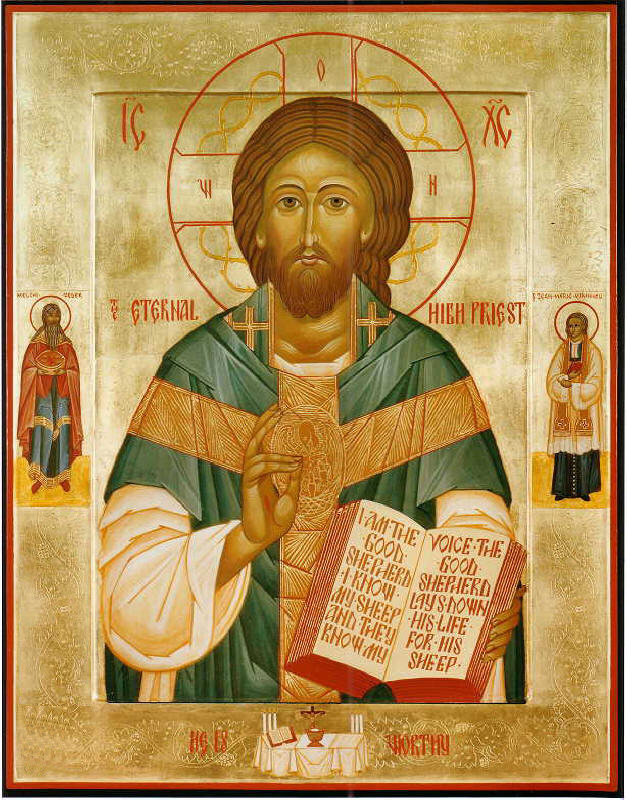
This icon shows Jesus Christ, our eternal high priest.
The gold pelican over His heart represents self-sacrifice.
The border contains an altar and grapevines, representing the Mass, and icons of Melchizedek and St. Jean-Baptiste Vianney.
Melchizedek: king of righteousness (left icon) was priest and king of Jerusalem. He blessed Abraham and has been considered an ideal priest-king.
St. Jean-Baptiste Vianney is the patron saint of parish priests.
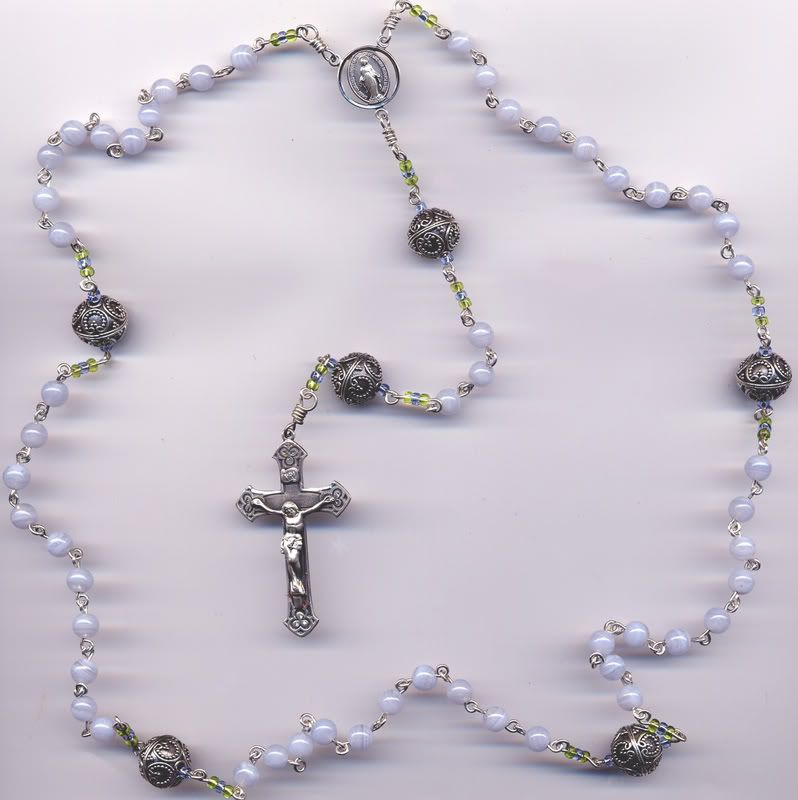
1. Sign of the Cross: In the name of the Father, and of the Son, and of the Holy Spirit. Amen.
2. The Apostles Creed: I BELIEVE in God, the Father almighty, Creator of heaven and earth, and in Jesus Christ, His only Son, our Lord, who was conceived by the Holy Spirit, born of the Virgin Mary, suffered under Pontius Pilate, was crucified, died, and was buried. He descended into hell; on the third day he rose again from the dead; he ascended into heaven, and is seated at the right hand of God, the Father Almighty; from there He shall come to judge the living and the dead.
I believe in the Holy Spirit, the holy catholic Church, the communion of saints, the forgiveness of sins, the resurrection of the body, and the life everlasting. Amen.
3. The Lord's Prayer: OUR Father, who art in heaven, hallowed be Thy name. Thy kingdom come. Thy will be done on earth as it is in heaven. Give us this day our daily bread and forgive us our trespasses as we forgive those who trespass against us. And lead us not into temptation, but deliver us from evil. Amen.
4. (3) Hail Mary: HAIL Mary, full of grace, the Lord is with thee. Blessed art thou amongst women and blessed is the fruit of thy womb, Jesus. Holy Mary, Mother of God, pray for us sinners, now, and in the hour of our death. Amen. (Three times)
5. Glory Be: GLORY be to the Father, and to the Son, and to the Holy Spirit. As it was in the beginning, is now, and ever shall be, world without end. Amen.
Fatima Prayer: Oh, my Jesus, forgive us our sins, save us from the fires of hell, lead all souls to heaven, especially those in most need of your mercy.
Announce each mystery, then say 1 Our Father, 10 Hail Marys, 1 Glory Be and 1 Fatima prayer. Repeat the process with each mystery.
End with the Hail Holy Queen:
Hail, Holy Queen, Mother of Mercy, our life, our sweetness and our hope! To thee do we cry, poor banished children of Eve! To thee do we send up our sighs, mourning and weeping in this vale of tears! Turn then, most gracious advocate, thine eyes of mercy towards us; and after this, our exile, show unto us the blessed fruit of thy womb, Jesus!
O clement, O loving, O sweet Virgin Mary! Pray for us, O holy Mother of God, that we may be made worthy of the promises of Christ.
Final step -- The Sign of the Cross
The Mysteries of the Rosary
By tradition, Catholics meditate on these Mysteries during prayers of the Rosary.
The biblical references follow each of the Mysteries below.
The Glorious Mysteries
(Wednesdays and Sundays)
1.The Resurrection (Matthew 28:1-8, Mark 16:1-18, Luke 24:1-12, John 20:1-29) [Spiritual fruit - Faith]
2. The Ascension (Mark 16:19-20, Luke 24:50-53, Acts 1:6-11) [Spiritual fruit - Christian Hope]
3. The Descent of the Holy Spirit (Acts 2:1-13) [Spiritual fruit - Gifts of the Holy Spirit]
4. The Assumption [Spiritual fruit - To Jesus through Mary]
5. The Coronation [Spiritual fruit - Grace of Final Perseverance]

St. Michael, the Archangel, defend us in battle
Be our protection against the wickedness
and snares of the devil;
May God rebuke him, we humbly pray,
and do thou, O Prince of the heavenly host,
by the power of God,
Cast into hell Satan and all the evil spirits
who prowl through the world seeking the ruin of souls.
Amen
+
From an Obama bumper sticker on a car:
"Pray for Obama. Psalm 109:8"
PLEASE JOIN US -
|

December Devotion: The Immaculate Conception
Since the 16th century Catholic piety has assigned entire months to special devotions. The month of December is traditionally dedicated to the Immaculate Conception. The Blessed Virgin Mary, in the first moment of her conception, by a singular privilege of Almighty God, and in view of the merits of Jesus Christ, our Savior and hers, was preserved from all stain of original sin. This age-old belief of the Church was defined by Pope Pius IX in 1854 as an article of revealed truth.
Mary was in need of redemption and she was indeed redeemed by the Precious Blood of Jesus Christ. The manner of Mary's redemption, however, was unique. Instead of being freed from original sin after having contracted it, she was preserved from contracting it. This was a most fitting favor for the Mother of the Redeemer.
INVOCATION
O Mary, conceived without sin, pray for us who have recourse to thee.

The Immaculate Conception from the Catechism of the Catholic Church
To become the mother of the Savior, Mary “was enriched by God with gifts appropriate to such a role.” The angel Gabriel at the moment of the annunciation salutes her as “full of grace”. In fact, in order for Mary to be able to give the free assent of her faith to the announcement of her vocation, it was necessary that she be wholly borne by God’s grace.
Through the centuries the Church has become ever more aware that Mary, “full of grace” through God, was redeemed from the moment of her conception. That is what the dogma of the Immaculate Conception confesses, as Pope Pius IX proclaimed in 1854:
The most Blessed Virgin Mary was, from the first moment of her conception, by a singular grace and privilege of almighty God and by virtue of the merits of Jesus Christ, Savior of the human race, preserved immune from all stain of original sin.
The “splendor of an entirely unique holiness” by which Mary is “enriched from the first instant of her conception” comes wholly from Christ: she is “redeemed, in a more exalted fashion, by reason of the merits of her Son”. The Father blessed Mary more than any other created person “in Christ with every spiritual blessing in the heavenly places” and chose her “in Christ before the foundation of the world, to be holy and blameless before him in love”.
The Fathers of the Eastern tradition call the Mother of God “the All-Holy” (Panagia), and celebrate her as “free from any stain of sin, as though fashioned by the Holy Spirit and formed as a new creature”. By the grace of God Mary remained free of every personal sin her whole life long.
PRAYER OF POPE PIUS XII
This prayer, dedicated to Mary Immaculate, was composed by the Pope for the Marian Year (December 8, 1953-December 8, 1954), which was proclaimed to mark the centenary of the definition of the dogma of the Immaculate Conception.
Enraptured by the splendor of your heavenly beauty, and impelled by the anxieties of the world, we cast ourselves into your arms, 0 Immacuate Mother of Jesus and our Mother, Mary, confident of finding in your most loving heart appeasement of our ardent desires, and a safe harbor from the tempests which beset us on every side.
Though degraded by our faults and overwhelmed by infinite misery, we admire and praise the peerless richness of sublime gifts with which God has filled you, above every other mere creature, from the first moment of your conception until the day on which, after your assumption into heaven, He crowned you Queen of the Universe.
O crystal fountain of faith, bathe our minds with the eternal truths! O fragrant Lily of all holiness, captivate our hearts with your heavenly perfume! 0 Conqueress of evil and death, inspire in us a deep horror of sin, which makes the soul detestable to God and a slave of hell!
O well-beloved of God, hear the ardent cry which rises up from every heart. Bend tenderly over our aching wounds. Convert the wicked, dry the tears of the afflicted and oppressed, comfort the poor and humble, quench hatreds, sweeten harshness, safeguard the flower of purity in youth, protect the holy Church, make all men feel the attraction of Christian goodness. In your name, resounding harmoniously in heaven, may they recognize that they are brothers, and that the nations are members of one family, upon which may there shine forth the sun of a universal and sincere peace.
Receive, O most sweet Mother, our humble supplications, and above all obtain for us that, one day, happy with you, we may repeat before your throne that hymn which today is sung on earth around your altars: You are all-beautiful, O Mary! You are the glory, you are the joy, you are the honor of our people! Amen.
Prayer Source: Prayer Book, The by Reverend John P. O'Connell, M.A., S.T.D. and Jex Martin, M.A., The Catholic Press, Inc., Chicago, Illinois, 1954

|
Lord, have mercy on us |
Why Catholics Believe in the Immaculate Conception
IMMACULATE CONCEPTION NOVENA [Prayer]
Essays for Lent: The Immaculate Conception
"I Am The Immaculate Conception"
The Corona of the Immaculate Conception [Catholic Caucus]
Catholic Caucus: Immaculate Conception Novena Prayer Thread
New chapel dedicated to Our Lady of Lebanon at National Shrine of the Immaculate Conception
Feast of the The Conception by St. Anna of the Most Holy Theotokos December 9th
On the Immaculate Conception
Immaculate Mary: "Trust Jesus, he will save you" (Catholic Caucus)
I Love that Woman! My Unworthy Reflections on The Immaculate Conception
LAND OF MARY IMMACULATE [Ecumenical]
Mary as the New Eve - St. Irenaeus
Mary - the Immaculate Ark of the New Covenant [Catholic Caucus]
THE LIFE OF BLESSED JOHN DUNS SCOTUS, Defender of the Immaculate Conception [Catholic Caucus]
An Unfathomable Marian Richness [Catholic Caucus]
Catholic Biblical Apologetics: The Immaculate Conception of Mary
History of the Feast of the Immaculate Conception - December 8 [Catholic Caucus]
Preserved Sinless from the Moment of Humanity (Dogma of the Immaculate Conception) [Catholic Caucus]
I Love that Woman! My Unworthy Reflections on The Immaculate Conception [Catholic Caucus]
Father Marquette's Devotion to the Immaculate Conception (Catholic Caucus)
St. John Neumann and the Doctrine of the Immaculate Conception (Catholic Caucus)
Our Jewish Roots: The Immaculate Conception [Ecumenical]
And It Was Night. The Real Story of Original Sin [Ecumenical]
I Love that Woman! My Unworthy Reflections on The Immaculate Conception
Mary Immaculate: Patroness of the United States [Catholic/Orthodox Caucus]
Catholic/Orthodox Caucus: The Immaculate Conception: A Marvelous Theme - Novena Starts Nov. 30
THE IMMACULATE CONCEPTION - Satan's Mighty Foe(Catholic Caucus)
Ark of the new covenant
Historian reveals how Pius IX decided to proclaim dogma of Immaculate Conception (Catholic Caucus)
The Immaculate Vs. the Proud
Immaculate Conception Novena -- starts November 30th [Catholic/Orthodox Caucus]
Blessed John Duns Scotus Champion Of Mary's Immaculate Conception (CATHOLIC CAUCUS)
The Crusade of Mary Immaculate - St. Maximilian Kolbe (Catholic Caucus)
The Early Church Fathers on the Immaculate Conception - Catholic/Orthodox Caucus
Three Reasons the Church’s ... The Immaculate Conception
Her saving grace - the origins of the Immaculate Conception
Mary Is a Model Who Works With Us and in Us
U.S. Catholic bishops to renew consecration of nation to Immaculate Conception
Catholic Meditation: To the Immaculate Conception on this Election Day
Saint Bernadette of Lourdes (Sermon from 1934)
My visit to the National Shrine of the Immaculate Conception
On Solemnity of Immaculate Conception - "In Mary Shines the Eternal Goodness of the Creator"
The Belief of Catholics concerning the Blessed Virgin: the Second Eve
Pope makes pilgrimage to Mary statue in Rome, marking the feast of the Immaculate Conception
Pope: Mary the Immaculate Conception... (text of BXVI speech)
"Tota pulchra es, Maria, et macula originalis non est in te" (The Immaculate Conception)
The Immaculate Conception — Essential to the Faith
"Who Are You, Immaculate Conception?"
TURKEY Ephesus: The Feast of the Immaculate Conception at Mary’s House
Coming Dec 8th. Feast of the "Immaculate Conception"
Why the Immaculate Conception?
Catholic Encyclopedia: Immaculate Conception (The Doctrine and Its Roots)
The Immaculate Conception of Our Lady December 8
Mary's Immaculate Conception: A Memorable Anniversary
Ineffabilis Deus: 8 December 1854 (Dogma of the Immaculate Conception)
Why do we believe in the Immaculate Conception?
John Paul II goes to Lourdes; reflections on the Immaculate Conception
Your Praises We Sing--on the Dogma of the Proclamation of the Immaculate Conception, Dec. 8th
Eastern Christianity and the Immaculate Conception (Q&A From EWTN)
Memorandum on the Immaculate Conception [Newman]
Victimized Children That children who are victims of abandonment or violence may find the love and protection they need.
Prepare the Savior's Coming That Christians, enlightened by the Word incarnate, may prepare humanity for the Savior's coming.
Third Sunday of Advent - Year A
Commentary of the day
Saint Gertrude of Helfta (1256-1301), Benedictine nun
The Exercises, no.3 ; SC 127 (trans. ©Cistercian publications Inc., 1989)
« Be strong! Fear not! Here is your God...: he comes to save you » (Is 35,4)
The voice of the soul offering itself to God: “I am an orphan without a mother, needy and poor. Except for Jesus, I have no consolation. Only he himself can quench my soul's thirst. He himself is the one chosen above all and the only friend of my heart. He himself is “King of kings and Lord of lords” (Rv 19,16)... He has my body and soul in his hand. He himself may do with me whatever seems right to his loving-kindness. Oh, who will grant me to become a human being after his own heart so that he might have his desire in me equally with his best gracious purpose? This alone could gladden and console me.
“Ah Jesus, the one and only cherished of my heart..., cherished above all that has ever been cherished. For you, 0 flowering spring day filled with life, the amorous desire of my heart sighs and languishes. Oh, if only it happened to me to become more closely united with you to the end that then the flowers and fruit of my spiritual growth might sprout under you, the true sun. 'Expectantly, I have waited, waited for you' (Ps 40[39],2)... Ah friend, friend, friend, fulfill your desire and mine effectively.”
Christ's voice: “I will espouse you in my Holy Spirit; I will draw you close in inseparable union with me. You will be my guest, and I will shut you up in my lively cherishing-love. I will make you a robe of the noble purple of my precious blood. I will crown you with the choice gold of my bitter death. I will fill up your desire with myself and thus I will bring gladness to you forever.”
Here is a translation of the second Advent sermon by Capuchin Father Raniero Cantalamessa, preacher of the pontifical household. Father Cantalamessa gave the sermon today, continuing with last week's reflection on St. Francis of Assisi. Today's reflection is titled "Humility as Truth and Service in Francis of Assisi."
* * *
Objective and Subjective Humility
Last time we saw that Francis of Assisi is a living demonstration that the most useful reform of the Church is that of the way of holiness, which always consists in a courageous return to the Gospel and which must begin from oneself. In this second meditation I would like to reflect further on an aspect of the return to the Gospel, a virtue of Francis. According to Dante Alighieri, all the glory of Francis depends on his “having made himself little,”[1] namely, on his humility. However, in what did Saint Francis’ proverbial humility consist?
In all the languages the Bible has gone through to reach us, namely Hebrew, Greek, Latin and English, the word “humility” has two fundamental meanings: one objective, which indicates in fact lowliness, littleness or poverty and one subjective, which indicates the feelingand recognition that one has of one’s own littleness. The latter is what we understand by the virtue of humility.
When Mary says in the Magnificat: “He has regarded the humility (tapeinosis) of his handmaid,” she means humility in the objective sense, not the subjective! Because of this, very appropriately the term is translated in many languages as “littleness”, not as humility. Moreover, how can one think that Mary exalts her humility and attributes God’s choice to it without by that fact alone destroying Mary’s humility? And yet at times it has been written rashly that Mary does not recognize in herself any virtue other than that of humility, as if, in this way, she did herself a great honor, and not instead a great wrong to this virtue.
The virtue of humility has an altogether special statute: it is possessed by those who think they do not have it, and it is not possessed by those who think they have it. Jesus alone can declare himself “lowly of heart” and truly be so; this, we will see, is the unique and unrepeatable characteristic of the humility of the Man-God. Did Mary, therefore, not have the virtue of humility? She certainly did have it, and to the highest degree, but only God knew this, she did not. Precisely this, in fact, constitutes the unequaled merit, of true humility: that its perfume is received only by God, not by the one who emanates it. Saint Bernard wrote: “The true humble person wants to be regarded as vile, not proclaimed humble.”[2]
Francis’ humility is in this line. In this regard, The Little Flowers refer to a significant episode and, in its core, certainly historical.
“Once when Saint Francis was returning from the forest and from prayer, being on the way out of the forest, the one called Friar Masseo wanted to test how humble he was, and encountering him he said almost provocatively: “Why to you, why to you, why to you?” Saint Francis answered: “What is it that you want to say?” Friar Masseo said: “I say why does the whole world follow you, and every person seems to want to see you, to hear you, and to obey you? You are not a good looking man in body, you are not of great learning, you are not noble, why then does everyone want to follow you?” Hearing this, Saint Francis, altogether overjoyed in spirit […] turned to Friar Masseo and said: “Do you want to know why me? Do you want to know why me? Do you want to know why the whole world follows me? This I learned that the most holy eyes of God did not see among sinners any one more vile, more insufficient, or a greater sinner than me.”[3]
Humility as Truth
Francis’ humility has two sources of illumination, one of a theological nature and one of a Christological nature. Let us reflect on the first. We find in the Bible acts of humility that do not come from man, from the consideration of his misery or his own sin, but which have as their sole reason God and his holiness. Such is Isaiah’s exclamation, “I am a man of unclean lips,” in face of the sudden manifestation of the glory and holiness of God in the Temple (Isaiah 6:5 f); such, also is Peter’s cry to Jesus after the miraculous catch: “Depart from me, for I am a sinful man!” (Luke 5:8).
We are before essential humility, that of the creature who becomes conscious of himself in the presence of God. As long as a person measures himself with himself, with others or with society, he will never have the exact idea of what he is; he is lacking the measure. “What an infinite accent,” wrote Kierkegaard, “falls on the I the moment it obtains God as measure!”[4] Francis had this humility in an eminent way. A saying that he repeated often was: “What a man is before God, that he is, and nothing more.”[5]
The Little Flowers recount that one night Friar Leo wanted to watch from afar what Francis was doing during his night prayer in the forest of La Verna and from a distance he heard him murmur some words for a long time. The next day the Saint called him and, after having reproved him courteously for having contravened his order, revealed to him the content of his prayer:
“You know, friar sheep of Jesus Christ, that when I was saying those words that you heard, my soul was shown two lights, one of information and knowledge of myself, the other of information and knowledge of the Creator. When I said: Who are you, O most sweet God of mine? Then I was in a light of contemplation, in which I saw the abyss of the infinite goodness and wisdom and power of God; and when I said: Who am I? I was in the light of contemplation, in which I saw the sad depth of my vileness and misery?”[6]
It was what Saint Augustine asked God and which he considered the height of all wisdom: “Noverim me, noverim te. Let me know myself and let me know You; let me know myself to humble myself and let me know You to love You.”[7]
Friar Leo’s episode is certainly embellished, as always in The Little Flowers, but the content corresponds perfectly with the idea that Francis had of himself and of God. Proof of it is the beginning of the Canticle of creatures with the infinite distance that he puts between God, “Most High, Omnipotent, Good Lord,” to whom is owed praise, glory, honor and blessing, and the miserable mortal who is not even worthy of “mentioning,” that is of pronouncing his name.
In this light, which I have called theological, humility appears to us essentially as truth. “I asked myself one day,” wrote Saint Teresa of Avila, “why the Lord so loves humility and suddenly there came to my mind, without any reflection on my part, that it must be because he is total Truth, and humility is truth.”[8]
It is a light that does not humiliate but, on the contrary, gives immense joy and exalts. To be humble in fact does not mean to be unhappy with oneself or to recognize one’s own misery, or even one’s littleness. It is to look at God before oneself and to measure the abyss that separates the finite from the infinite. The more one realizes this, the more one becomes humble. Then one begins to enjoy one’s own nothingness, because it is thanks to it that a face can be offered to God whose littleness and misery has fascinated the heart of the Trinity from eternity.
Angela of Foligno, a great disciple of the Poverello, whom Pope Francis has recently proclaimed Saint, exclaimed when close to death: “O nothingness unknown, O nothingness unknown. The soul cannot have a better vision in this world than to contemplate its nothingness and dwell in it as in a prison cell.”[9] There is a secret in this counsel, a truth that is experienced by testing it. One then discovers that this cell really exists and that one can really enter it every time one wishes. It consists in the quiet and tranquil sentiment of being nothing before God, but a nothing loved by Him!
When one is inside the cell of this luminous prison, one no longer sees one’s neighbor’s defects, or they are seen in another light. One understands that it is possible, with grace and exercise, to realize what the Apostle says, which at first glance seems excessive, namely, to “consider all others better than oneself” (cf. Philippians 2:3), or at least one understands how this was possible for the saints.
To be locked in that prison is, therefore, altogether different from being locked in oneself; instead, it is to open oneself to others, to being, to the objectivity of things, the opposite of what the enemies of Christian humility have always thought. It is to close oneself to egoism, not in egoism. It is the victory over one of the evils that modern psychology also judges ruinous for the human person: narcissism. In that cell, moreover, the enemy does not come in. One day Anthony the Great had a vision; he saw in an instant all the infinite snares of the enemy spread out over the earth and, moaning, he said: “Who then will be able to avoid all these snares?” And he heard a voice answer him: “Anthony, humility!”[10]. “Nothing, writes the author of the Imitation of Christ, will succeed in puffing up one who is firmly fixed in God.”[11]
Humility as Service of Love
We have talked about humility as the truth of the creature before God. Paradoxically, however, what most fills Francis’ soul with wonder is not God’s greatness but his humility. In the Praises of God Most High, which are handwritten by him and kept in Assisi, among God’s perfections– “You are Holy, You are Strong. You are Triune and One. You are Love, Charity. You are Wisdom …” -- at a certain point Francis inserts an unheard of: “You are humility!” It is not a title put there by mistake. Francis grasped a most profound truth about God which should also fill us with wonder.
God is humility because He is love. In face of human creatures, God finds himself lacking in every capacity not only constrictive but also defensive. If human beings choose, as they have done, to reject his love, He cannot intervene with authority to impose Himself on them. He can do nothing other than respect the free choice of men. One can reject Him, eliminate Him: He will not defend Himself, He will let them do it. Or better, his way of defending himself and of defending men against their very annihilation, will be that of loving again and always, eternally. By its nature love creates dependence and dependence creates humility. So it is, also, mysteriously, in God.
Love furnishes, therefore, the key to understand God’s humility: one needs little power to show off, instead one needs a lot to put oneself aside, to cancel oneself. God is this unlimited power of concealment of himself and as such He reveals himself in the Incarnation. One has the visible manifestation of God’s humility by contemplating Christ who kneels before his disciples to wash their feet – and they were, we can imagine it, dirty feet -- and even more so, when, reduced to the most radical impotence on the cross, He continues to love, without ever condemning.
Francis grasped this very close connection between God’s humility and the Incarnation. Here are some of his fiery words:
“Look, he humbles himself every day, as when from the royal seat he descended into the womb of the Virgin; every day He himself comes to us in humble appearance; every day He descends from the bosom of the Father on the altar in the hands of the priest.”[12] “O sublime humility! O humble sublimity, that the Lord of the universe, God and Son of God, so humiliates himself as to hide himself for our salvation, under the little appearance of bread! Look, brothers, at the humility of God and open your hearts before Him.”[13]
Thus we have discovered the second reason for Francis’ humility: the example of Christ. It is the same reason that Paul indicated to the Philippians when he recommended that they have the same sentiments of Christ Jesus who “humbled himself and became obedient unto death” (Philippians 2:5.8). Before Paul, it was Jesus himself who invited the disciples to imitate his humility: “Learn from me, who am gentle and humble in heart!” (Matthew 11:29).
In what thing, we could ask ourselves, does Jesus tell us to imitate his humility? In what was Jesus humble? Running through the Gospels we do not find even the most minimal admission of fault on Jesus’ lips, not when he converses with men, or when he converses with the Father. This – said incidentally -- in one of the most hidden but also most convincing proofs, of the divinity of Christ and of the absolute unicity of his conscience. In no saint, in no great one in history and in no founder of religion, does one find such an innocent conscience.
All acknowledge, more or less, having committed some error or of having something to be forgiven, at least by God. Gandhi, for instance, had a very acute awareness of having on some occasions taken erroneous positions; he also had his regrets. Jesus never did. He could say addressing his adversaries: “Which of you convicts me of sin?” (John 8:46). Jesus proclaims he is “Teacher and Lord” (cf. John 13:13), to be more than Abraham, than Moses, than Jonah, than Solomon. Where, then, is Jesus’ humility to be able to say: “learn from me who am humble?”
Here we discover something important. Humility does not consist principally in being little -- one can be little without being humble; nor does it consist principally in feeling that oneself is little, because one can feel oneself little and be so really and this would be objectivity, but not yet humility -- without counting that feeling oneself little and insignificant could stem from an inferiority complex and lead to withdrawal into oneself and to despair, rather than to humility. Therefore humility, per se, in the most perfect degree, is not in being little, it is not in feeling that oneself is little or proclaiming oneself little. It is in making oneself little, and not out of some necessity or personal utility, but out of love, to “raise” others.
Thus was Jesus’ humility; He made himself so little, in fact, to the point of “annulling” himself for us. Jesus’ humility is the humility that descends from God and that has its supreme model in God, not in man. In the position in which He finds himself, God cannot “elevate himself”; nothing exists above Him. If God comes out of Himself and does something outside the Trinity, this cannot be but a lowering of himself and a making himself little; in other words, He will only be able to be humility, or as some Greek Fathers said, synkatabasis, that is, condescendence.
Saint Francis makes of “Sister Water” the symbol of humility, describing it as “useful, humble, precious and chaste.” Water, in fact, never “elevates” itself, never “ascends,” but always “descends,” until it has reached the lowest point. Steam rises and that is why it is the traditional symbol of pride and vanity; water descends and is, therefore, the symbol of humility.
Now we know what Jesus’ word means: “Learn from me who am humble.” It is an invitation to make oneself little out of love, to wash, as he did, the feet of our brothers. However, in Jesus we also see the seriousness of this choice. It is not in fact about descending and making oneself little every now and then, as a king who, in his generosity, every so often deigns to come down among the people and perhaps, also, to serve them in something. Jesus makes himself “little,” as “he made himself flesh,” that is permanently, to the end. He chooses to belong to the category of the little ones and the humble.
This new face of humility is summarized in one word: service. One day – we read in the Gospel – the disciples discussed among themselves who was “the greatest”; then Jesus, “sat down” (so as to give greater solemnity to the lesson he was about to impart) called the Twelve to himself and said to them: “If any one would be first, he must be last of all and servant of all” (Mark 9:35). He who wishes to be “first” must be “last,” that is, must descend, must lower himself. But then he explains immediately what he intends by the last: he must be the “servant” of all. The humility proclaimed by Jesus is, therefore, service. In Matthew’s Gospel, this lesson of Jesus is corroborated with an example: “even as the Son of man came not to be served but to serve” (Matthew 20:28).
A Humble Church
Let us draw some practical considerations on the virtue of humility in all its manifestations, whether in relations with God or in relations with men. We must not be deluded thinking we have attained humility just because the word of God has led us to discover our nothingness and has shown us that it must be translated into fraternal service. The point to which we have attained humility is seen when the initiative passes from us to others, namely when it is no longer we who recognize our defects and wrongs, but others who do so; when we are not only capable of telling ourselves the truth, but also of gladly letting others do so. Prior to acknowledging himself before Friar Matteo as the vilest of men, Francis had accepted, gladly and for a long time, to be derided, held by friends, relatives and the whole country of Assisi as being ungrateful, exalted, one who would never have done anything good in life.
The point we are at in the struggle against pride is seen, in other words, by the way we react, externally or internally, when we are contradicted, corrected, criticized or left aside. To pretend to kill one’s pride by striking it oneself, without anyone intervening from outside, is like using one’s arm to punish oneself: one will never do oneself harm. It is as if a doctor wished to remove a tumor from himself on his own.
When I seek to receive glory from a man for something I say or do, it is almost certain that he who is before me seeks to receive glory from me because of the way he listens and the way he responds. And thus it is that everyone seeks his own glory and no one obtains it and if, perchance, he obtains it, it is nothing but “vainglory,” that is, empty glory, destined to be dissolved in smoke with death. However, the effect is equally terrible; in fact Jesus attributed the impossibility of believing to the search for one’s glory. He said to the Pharisees: “How can you believe, who receive glory from one another, and do not seek the glory that comes from the one God?” (John 5:44).
When we find ourselves snared again in thoughts and aspirations of human glory, we must throw into the mixture of such thoughts, as a burning torch, the word that Jesus himself used and that he left us: “I do not seek my own glory!” (John 8:50). The struggle for humility lasts the whole of life and extends to every aspect of it. Pride is able to nourish itself, be it of evil or good; in fact, as opposed to what happens with every other vice, the good, not the evil, is the preferred terrain of cultivation for this terrible “virus.” The philosopher Pascal wrote wittily:
“Vanity has such deep roots in man’s heart that a soldier, a servant of armies, a cook, a porter, boasts and pretends he has his admirers and the philosophers themselves desire him. And those who write against vainglory aspire to boast of having written well, and those who read them, boast of having read them; and I, who write this, nourish perhaps the same desire; and also, perhaps, those who read me.”[14]
So that man “will not rise up in pride,” God often fixes him to the ground with a sort of anchor; He puts beside him, as He did to Paul, a “messenger of Satan to harass him,” “a thorn in the flesh” (2 Corinthians 12:7). We do not know exactly what this “thorn in the flesh” was for the Apostle, but we know well what it is for us! Everyone who wants to follow the Lord and serve the Church has it. They are humiliating situations through which one is recalled constantly, sometimes night and day, to the harsh reality of what we are. It can be a defect, a sickness, a weakness, an impotence, which the Lord leaves us, despite all our supplications; a persistent and humiliating temptation, perhaps, in fact, a temptation of pride; a person with whom one is constrained to live and that, despite the rectitude of both parties, has the power to expose our fragility, to demolish our presumption.
However, humility is not a private virtue. There is a humility that must shine in the Church as institution and people of God. If God is humility, the Church must also be humility; if Christ served, the Church must also serve, and serve out of love. For too long the Church as a whole has represented before the world the truth of Christ, but perhaps she has not represented sufficiently the humility of Christ. Yet it is with humility, better than with any apologetics, that hostilities and prejudices are placated in her confrontations and the way is smoothed for the reception of the Gospel.
There is an episode of Manzoni’s The Betrothed which contains a profound psychological and evangelical truth. Friar Christopher, having finished his novitiate, decided to ask forgiveness publicly to the parents of the man that, before he became a friar, he killed in a duel. The family aligns itself, forming a sort of Caudine Forks, so that the gesture would be the most humiliating possible for the friar and of greatest satisfaction for the family’s pride. But when they saw the young friar proceed with his head bowed, kneeling before the brother of the man killed and asking for forgiveness, the arrogance fell, they were the ones who felt embarrassed and asked for pardon, so that in the end all crowded around the friar to kiss his hand and to commend themselves to his prayers.[15] These are the miracles of humility.
In the prophet Zephaniah God says: “I will leave in the midst of you a people humble and lowly. They shall seek refuge in the name of the Lord” (Zephaniah 3:12). This word is still timely and perhaps the success of the evangelization in which the Church is committed will depend on it.
Now it is I who, before ending, must remind myself of a saying that was dear to Saint Francis. He usually repeated: “Charles emperor, Orlando, Oliviero, all the paladins reported a glorious and memorable victory … However, there are now many that, only with the telling of their feat, want to receive honors and glory from other men.”[16] He used this example to say that the saints practiced the virtues and that others seek glory only by recounting them.[17]
So that I will not also be of their number, I make an effort to put into practice the counsel given by an ancient desert Father, Isaac of Nineveh, to one who was constrained by the duty to speak of spiritual things, which he had not yet attained in his own life: “Speak, he said, as one who belongs to the class of disciples and not with authority, after having humiliated your soul and making yourself smaller than any of your listeners.” With this spirit, Holy Father, Venerable Fathers, brothers and sisters, I have dared to speak to you of humility.
[Translation by ZENIT]
---
1 Paradiso XI, 111.
2 St. Bernard of Clairvaux, Sermons on the Canticle, XVI, 10 (PL 183, 853).
3 Little Flowers, chapter X.
4 S. Kierkegaard, The Mortal Sickness, II, chapter 1, in Works, published by C. Fabro, Sansoni, Florence1972, pp. 662 f.
5 Admonitions, XIX (FF 169); cf. also St. Bonaventure, Major Legend, VI, 1 (FF 1103).
6 Considerations of the Sacred Stigmata, III (FF 1916).
7 St. Augustine, Soliloquies, I. 1, 3; II, 1, 1 (PL 32, 870.885).
8 St. Teresa of Avila, Interior Castle, VI dim., chapter 10.
9 The Book of Blessed Angela of Foligno, Quaracchi, 1985, p. 737.
10 Apophtegmata Patrum, Antonio 7: PG 65, 77.
11 Imitation of Christ, II, chapter 10.
12 Admonitions, I (FF 144).e
13 Letter to the Whole Order (FF 221).
14 B. Pascal, Pensees, n. 150 Br.
15 A. Manzoni, The Betrothed, chapter IV.
16 Admonitions VI (FF 155).
17 Celano, Second Life, 72 (FF 1626).
(December 13, 2013) © Innovative Media Inc.
1) The joy of the gift of charity
The aim of Advent is to prepare the Christians for Christmas because Jesus comes where He is waited, desired and loved.
This waiting that must be lived with ”vigilance” and ”discernment” (see the previous Sundays of Advent) ,must be done with ”joy” because the coming of the God of Everlasting Joy never ends.
With Christmas approaching this Sunday’s liturgy invites us to joy: the images and the descriptions of the first reading engage all (and us as well) in the waiting for something beautiful by the Lord who is the leading character and intervenes in history to become the Way that his people can and must follow to return home.
God never leaves us alone, delivers us from fear, anxiety and doubts, enters into our history, comes to our home carrying peace and becomes safe journey for our steps. Men’s life is healed by Him: the blinds see, the mutes speak, the desert blooms and the road will be called holy (see the first reading is 35:8).
In this we find the key to understanding Christmas: Christmas is hope and joy. Take example from our children that wait for the gifts with joyful hope. They are the symbol of the waiting that is satisfied and fills with joy: it is the joy that comes from the knowledge to be loved because Christ is given to us.
This gift allows us to understand that joy is not just human and terrestrial, it is a spiritual one as we are remembered by the antiphony of the Introit of today’s liturgy: Gaudete in Domino ( let’s rejoice in the Lord). If we rejoice in the Lord we’ll find true joy. There is a spiritual joy that has as object the love not of created things, but of God. This spiritual joy comes not from us, but from the Holy Spirit. This level of joy is a supernatural one, deep and lasting. The spiritual joy depends on God’s love and divine charity. This kind of joy is not fragile like the human joy but it is strong, sure, always reliable and steadfast.
The liturgy of the 3rdSunday of Advent in the Roman Rite offers us the possibility to experiment supernatural joy. How? Saint Paul says: “Rejoice in the Lord because the Lord is near.” As we experiment joy when we are with the loved one, we can rejoice now because in two week’s time the “beloved of my heart” will come, as the spouse in the Song of Songs proclaims. He will exit as spouse from the thalamus, the bridal chamber, and will come to live among us.
There is another reason for spiritual joy: our participation to divine goodness. No participation would be possible if God did not take the initiative building a bridge to fill the abyss that separates man from God. In the Incarnation, the Son of God took upon our human nature to allow us to participate in his life of divine charity now and forever. This is the reason for the greatest joy: the Beloved of our heart is near; he comes to live with us and allows us to be with him now and for the eternity.
It is beautiful indeed when there is human joy but sometimes it is accompanied by sadness too. The Lord’s joy lasts forever.
2) Precursor and martyr of Joy
True joy, the one of the heart, the one which lasts forever is the encounter with the Lord. John the Baptist has come to the complete and everlasting encounter with the Lord through the great love of martyrdom. For this reason the liturgy of the 3rd Sunday of Advent proposes the figure and the example of the Precursor of Love.
When Jesus went on the banks of the Jordan River to be baptized, this man who had voluntarily exiled himself to the desert where he could hear the Voice of the Word, recognized Christ and said: “Behold the Lamb of God, who takes away the sins of the world.” He was full of joy because his Friend had arrived. In prison, the involuntary desert where he has been confined, John wants to know if Jesus is the long awaited Friend and asks his disciple to enquire by Christ: “Are you the one who is to come, or should we look for another?” Jesus said to them in reply “Go and tell John what you hear and see: the blind regain their sight, the lame walk,
lepers are cleansed, the deaf hear, the dead are raised, and the poor have the good news proclaimed to them. And blessed is the one who takes no offense at me.” And the Baptist, the one that in his mother’s womb had jumped with joy for the presence of Jesus in Mary’s womb, the one who went ahead (Precursor) of Christ to prepare the road for the Way, didn’t take offense at Him, accepted martyrdom and became the first martyr(= the first witness) of the charity of the Redeemer. As in the reading from Isaiah, Jesus tells about something that is happening or has already happened: the blinds that see, the mutes that speak, the sick persons that are healed are the sign that the kingdom of God is already among us and not something that has still to come. It is a fact that is present. In the darkness of a prison John the Baptist saw the Light and his death was the dramatic crevice through which he could come into Light.
We are called to participate to this event with the perseverance that comforts the heart. In the second reading taken from Saint James’ letter, we found the invitation to be of the same mood as the farmer that doesn’t look at what he is doing but why he does it. The farmer is confident that the seed that has been buried and looked after with perseverance, when the time comes, will bear fruit. We too must wait for the right time and take care with the perspective of a good greater but not immediate, and get ready for it.
In his prison John the Baptist got a proof of faith that purified him and took him closer to God’s heart. Inspired by God he had announced the coming of the Messiah. The Messiah had indeed come into the world. However God as always had reserved a space for novelty and freedom that John did not know: actually the Messiah was not precisely as John was expecting. For this reason John asks, “Are you the one who is coming or should we waiting for someone else?” Jesus’ answer creates a new space for John’s faith: “the poor have the good news proclaimed to them and blessed be the one who takes no offense at me.” John did not take offense at him but bent his head, gave it up because God’s thoughts are not man’s thoughts (“For my thoughts are not your thoughts, nor are your ways my ways” Isaiah 55:8), and believed.
The one who starts his journey in search of God is in for some surprise: God will never be as we expect him to be. This is why God can be met only in the humility of faith, letting us to be guided by Him along roads that we cannot imagine. This was for John, this is for us. He was a martyr who lived in joy because he was sure of the presence of the Redeemer in his and his people’s life.
The consecrated Virgins - through their vocation to virginity - are called to a martyrdom (testimony) that is similar to the one of the Precursor who knew how to become little to let Christ grow (see Jh 3; 30). Their complete belonging to Christ through undivided love testifies that life is happy and fecund (see Rite of the Consecration of the Virgins) when all our being, body and soul, is at the service of the love that nothing wants for him and that all donates in joy. With spousal attitude they remain caste beside Christ and with him they live the passion to attract to truth their brothers and sisters in humanity.
---
Roman Rite 3rdSunday of Advent – Year A – “Gaudete” Sunday, December 15th, 2013
Is 35: 1-6A, 10; PS 146; Jas 5:7-10; Mt 11:2-11
Disclaimer: Opinions posted on Free Republic are those of the individual posters and do not necessarily represent the opinion of Free Republic or its management. All materials posted herein are protected by copyright law and the exemption for fair use of copyrighted works.
