
By Father George Rutler
Last week the Church celebrated the feast of the Martyrs of Uganda. In the late nineteenth century, French and English missionaries were welcomed by King Mutesa I of Buganda in the southern part of modern Uganda. His successor, Mwanga II, however, was a youth who became a persecutor of Christians and all foreigners. He especially opposed Christian morality, as it contradicted his affinity for unnatural vice which was abhorred by the local Buganda culture, but which he is said to have learned from Arab tradesmen.
The young male pages of Mwanga’s court were Christian converts and refused the king’s attempts at seduction. This disobedience to the king was considered treasonous, and Mwanga exercised what he considered his right to destroy any life at will, according to the saying, Namunswa alya kunswaze — meaning “the queen ant feeds on her subjects.” Mwanga soon decreed the execution of converts Yusufu Rugarama, Makko Kakumba and Nuwa Sserwanga on January 31, 1885. A senior advisor to the king, Joseph Mukasa Balikuddembe, was beheaded on November 15, 1885, and there were many martyrdoms in the following year, climaxing on June 3, 1886, with the torture and burning alive of twenty-six at Namugongo, including their leader, Charles Lwanga, a recent convert himself and majordomo of the royal household. Pope Paul VI canonized them in 1964. An icon of St. Charles Lwanga is in our sanctuary.
When Pope Paul went to Uganda as the first pope to make an apostolic journey to sub-Saharan Africa, he said, “The infamous crime by which these young men were put to death was so unspeakable and so expressive of the times. It shows us clearly that a new people needs a moral foundation, needs new spiritual customs firmly planted, to be handed down to posterity. Symbolically, this crime also reveals that a simple and rough way of life — enriched by many fine human qualities yet enslaved by its own weakness and corruption — must give way to a more civilized life wherein the higher expressions of the mind and better social conditions prevail.”
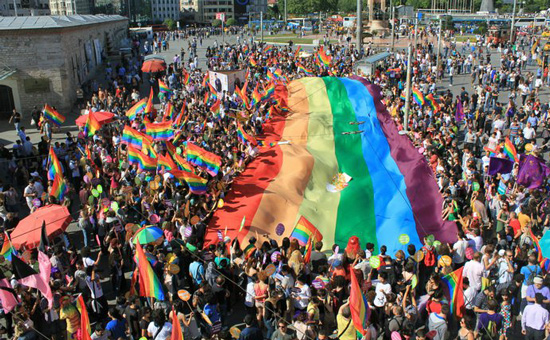
Alas, the infamous crime of which the Holy Father spoke is now paraded as a civil right in our decaying culture, and some states are making it quasi-sacramental. Our current president promotes it, along with his defense of infanticide, which even King Mwanga II would have found degrading. Pope Francis recently said that one cannot be a Christian if one is not willing to be a martyr. In New York today, Catholics may not face beheading or burning, but their political incorrectness could subject them to the subtle ignominy of social scorn and discrimination. Ours has become a neo-pagan culture, and that can be even worse than a simple pagan culture. Pagans did not know about Christ, while neo-pagans do know about him and reject him, so their defense is the malice of a cynic.
Father Rutler is Pastor of the Church of Our Saviour in New York City.