Skip to comments.
"No genuine Catholic ever denies he is a sinner"
Insight Scoop ^
| June 13, 2010
| Carl E. Olsen
Posted on 06/13/2010 12:14:31 PM PDT by Desdemona
Readings: • 2 Sam. 12:7-10, 13 • Psa. 32:1-2, 5, 7, 11 • Gal. 2:16, 19-21 • Lk 7:36—8:3 or 7:36-50
“A Catholic may sin and sin as badly as anyone else,” wrote Archbishop Fulton Sheen, “but no genuine Catholic ever denies he is a sinner. A Catholic wants his sins forgiven—not excused or sublimated.” One of Sheen’s heroes, G. K. Chesterton, put it very directly when asked why he became Catholic: “To get my sins forgiven.”
Man’s need for forgiveness of sins is an essential tenet of Christianity that is sometimes pushed to the side, as though it might prove embarrassing. Or that it might damage a man’s delicate self-esteem to admit his need for God’s saving mercy. Such avoidance of any talk of sin and forgiveness is evident in the Cross-less, Christ-less “Christianity” peddled by many false preachers and prophets. Yes, such charlatans do refer to this or that passage in the Bible, but they usually avoid the sort of verses we hear in today’s readings.
Take, for example, the reading from the Old Testament, which describes how the great king David, who was described by the prophet Samuel as “a man after [God’s] own heart” (1 Sam. 13:14), chose willingly to commit adultery and murder, and thereby become a man after his own sinful desires. In doing so, David not only sinned against Uriah—whose wife he took before sending him to certain death in battle—but against God, as he admits to the prophet Nathaniel.
A significant, if unpleasant, part of the job description of each of God’s prophets, as Nathaniel’s actions demonstrate, was to identify sin, confront sinners, and exhort those sinners to seek forgiveness. Moses, Elijah, Isaiah, Jeremiah, and many others—each of them identified specific sins and informed the people that if they did not repent and return to the covenant, they would be cut off from the favor of God.
This was also an essential aspect in the ministry of the greatest prophet, Jesus of Nazareth, who, as John the Baptist declared, would burn the chaff “with unquenchable fire” (Lk. 3:17). Immediately prior to today’s Gospel reading, Jesus praised his cousin for being a true prophet who was rejected by many of the religious leaders for his ascetic lifestyle and message of repentance.
Jesus also noted the hypocrisy of those who condemned Him for eating and drinking with sinners (Lk. 7:24-35). Of course, it wasn’t as though John the Baptist avoided contact with sinners, especially since his prophetic mission was to call sinners to repent of their sins and prepare for the coming Messiah. And Jesus, in dining with sinners, never apologized for revealing sin or for forgiving the sins of those who admitted their failings and placed their faith in Him.
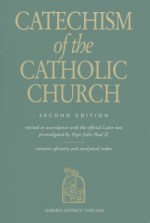
“Jesus invites sinners,” the Catechism states, “to the table of the kingdom: ‘I came not to call the righteous, but sinners.’ He invites them to that conversion without which one cannot enter the kingdom, but shows them in word and deed his Father's boundless mercy for them and the vast ‘joy in heaven over one sinner who repents’. The supreme proof of his love will be the sacrifice of his own life ‘for the forgiveness of sins’” (CCC 545). The forgiveness of sins, in fact, is the greatest demonstration of God’s power (CCC 277). Jesus’ host, a Pharisee, was aghast that a prophet would touch and speak to a known sinner; it was equally upsetting that Jesus forgave the woman’s sins. Who is this man? What the Pharisee and his companions failed to comprehend was that the prophet Jesus not only confronted sinners, but also forgave and comforted them as well.
Throughout his letter to the Galatians, the Apostle Paul emphasized that the Law (just like the prophets prior to Jesus) could identify and condemn sin, but could not forgive sin and free the sinner from the clutches of death. It is faith in Jesus Christ—“faith working through love” (Gal. 5:6)—that saves us from sin, by God’s grace. There’s no denying it: that’s a very good reason to be Catholic.
(This "Opening the Word" column originally appeared in the July 17, 2007, issue of Our Sunday Visitor newspaper.)
TOPICS: Catholic; Moral Issues; Religion & Culture; Theology
KEYWORDS: catholic; forgiven; romancatholicism; sins
Navigation: use the links below to view more comments.
first 1-20, 21-29 next last
Commentary on today's readings.
1
posted on
06/13/2010 12:14:31 PM PDT
by
Desdemona
To: Desdemona; Religion Moderator
oops. Can that be published today, June 13, 2010. Sorry about that.
2
posted on
06/13/2010 12:15:19 PM PDT
by
Desdemona
To: Desdemona
Well not QUITE forgiven.. til ya do some burn time .
The law was to show us the holiness of God and our own inability to be as holy as God ..The purpose of the law is to show us our sin and our inability and lead us to Christ, the only one that could keep the law perfectly
3
posted on
06/13/2010 12:37:12 PM PDT
by
RnMomof7
To: RnMomof7
Well not QUITE forgiven.. til ya do some burn time . Purification only happens if one dies in a state of sin. This is why frequent Penance is recommended - keep yourself in a state of grace and Purgatory won't take as long.
The law was to show us the holiness of God and our own inability to be as holy as God ..The purpose of the law is to show us our sin and our inability and lead us to Christ, the only one that could keep the law perfectly
We are supposed to strive for perfection. Christ didn't object to the law itself, necessarily, but how it was used by those who condemned others who didn't stick to it.
4
posted on
06/13/2010 12:46:31 PM PDT
by
Desdemona
To: RnMomof7
Then you must believe that Jesus' suffering wasn't sufficient and he didn't quite take on ALL our sins.
til ya do some burn time .
5
posted on
06/13/2010 1:52:04 PM PDT
by
DManA
To: DManA
Thats not what I believe ... that is what THEY believe
6
posted on
06/13/2010 1:52:55 PM PDT
by
RnMomof7
To: Desdemona
We are ALL sinners. Even the Protestants who call each other “Saints.” I always wondered about that.
7
posted on
06/13/2010 2:34:33 PM PDT
by
Salvation
("With God all things are possible." Matthew 19:26)
To: RnMomof7
And you don’t believe in Purgatory — where all the people know they are going to heaven? They just aren’t pure enough to enter heaven yet?
Hmmmm....only two choices for you then. Heaven or Hell.
8
posted on
06/13/2010 2:38:29 PM PDT
by
Salvation
("With God all things are possible." Matthew 19:26)
To: Desdemona
Purification only happens if one dies in a state of sin. This is why frequent Penance is recommended - keep yourself in a state of grace and Purgatory won't take as long.Where is penance for your own sin taught in the NT after the death of Christ?
We are supposed to strive for perfection. Christ didn't object to the law itself, necessarily, but how it was used by those who condemned others who didn't stick to it
Scripture tells us no one can keep the law.. The only purpose of the law was to reveal the character and nature of God and how far short we fall from that .Christ came to fulfill the law.He came to do what no man could do , keep it perfectly
9
posted on
06/13/2010 2:40:42 PM PDT
by
RnMomof7
To: Desdemona
“A Catholic may sin and sin as badly as anyone else,” wrote Archbishop Fulton Sheen, “but no genuine Catholic ever denies he is a sinner. A Catholic wants his sins forgiven—not excused or sublimated.” One of Sheen’s heroes, G. K. Chesterton, put it very directly when asked why he became Catholic: “To get my sins forgiven.”************************
Heh. So true. :)
10
posted on
06/13/2010 2:40:51 PM PDT
by
trisham
(Zen is not easy. It takes effort to attain nothingness. And then what do you have? Bupkis.)
To: Salvation
I believe that the sacrifice of Christ was sufficient ..we are washed clean in His blood
Douay-Rheims Bible
Rev1:5 And from Jesus Christ, who is the faithful witness, the first begotten of the dead, and the prince of the kings of the earth, who hath loved us, and washed us from our sins in his own blood,
Douay-Rheims Bible
Rev22:14 Blessed are they that wash their robes in the blood of the Lamb: that they may have a right to the tree of life, and may enter in by the gates into the city.
To believe that a non biblical cleansing of our own sin by purging diminishes the sacrifice of Christ.
I am saved, and sanctified and will be glorified by the grace of God..not one bit of it my own work or suffering..
11
posted on
06/13/2010 2:57:20 PM PDT
by
RnMomof7
To: RnMomof7
**To believe that a non biblical cleansing of our own sin by purging diminishes the sacrifice of Christ.**
Not so because God forgives the sins. How can that diminish Christ?
12
posted on
06/13/2010 2:59:58 PM PDT
by
Salvation
("With God all things are possible." Matthew 19:26)
To: Salvation
***We are ALL sinners. Even the Protestants who call each other “Saints.” I always wondered about that.***
ans. “With God all things are possible.” Matthew 19:26
13
posted on
06/13/2010 3:01:32 PM PDT
by
ThomasThomas
(I wonder therefore I wander.)
To: Salvation
No when God forgives a sin THROUGH Christ.. scripture says He does not see it anymore..
That means a forgiven sin is completely covered . We are clean and justified and made righteous before God
14
posted on
06/13/2010 3:07:20 PM PDT
by
RnMomof7
To: Salvation
We are ALL sinners. Even the Protestants who call each other “Saints.” I always wondered about that.One does not make oneself a "saint," a church does not make one a "saint " God makes one a saint
Eph 1:1 — Paul, an apostle of Jesus Christ by the will of God, to the saints which are at Ephesus, and to the faithful in Christ Jesus:
hagios
1) most holy thing, a saint
The word is sometimes translated Holy ...the saved are holy just as the vessels in the temple were holy and set aside for Gods glory.
They are not holy in themselves but because of who it was that set the aside
15
posted on
06/13/2010 3:13:02 PM PDT
by
RnMomof7
To: RnMomof7
**No when God forgives a sin THROUGH Christ.. scripture says He does not see it anymore..
That means a forgiven sin is completely covered . We are clean and justified and made righteous before God**
Spoken correctly as pertaining to the Sacrament of Reconciliation.
BTW — on this page — you forget to say that you are a baptized Catholic http://www.freerepublic.com/~rnmomof7/
16
posted on
06/13/2010 3:13:06 PM PDT
by
Salvation
("With God all things are possible." Matthew 19:26)
To: RnMomof7
I'm sure you know about the words of absolution, but for those who do not know -- please notice that God forgives the sins.
1449 The formula of absolution used in the Latin Church expresses the essential elements of this sacrament: the Father of mercies is the source of all forgiveness. He effects the reconciliation of sinners through the Passover of his Son and the gift of his Spirit, through the prayer and ministry of the Church:
- God, the Father of mercies,
through the death and the resurrection of his Son
has reconciled the world to himself
and sent the Holy Spirit among us
for the forgiveness of sins;
through the ministry of the Church
may God give you pardon and peace,
and I absolve you from your sins in the name of the Father, and of the Son and of the Holy Spirit. |
17
posted on
06/13/2010 3:14:11 PM PDT
by
Salvation
("With God all things are possible." Matthew 19:26)
To: Desdemona
I never seen one with a stone in their hands either.
18
posted on
06/13/2010 3:15:07 PM PDT
by
bmwcyle
(Communism has arrived in Washington)
To: Salvation
Spoken correctly as pertaining to the Sacrament of Reconciliation.No because the Catholic church teaches that even after the sin is "forgiven" in confession, one still must do some purgatory time for that... that means that God still sees the sin
BTW — on this page — you forget to say that you are a baptized Catholic http://www.freerepublic.com/~rnmomof7/
LOL I love ya Sal !
I was baptized as an adult in the Niagara river ..that was a baptism of my own desire and not of my parents.. but if you want..I will add my testimony to my home page :)
19
posted on
06/13/2010 3:17:22 PM PDT
by
RnMomof7
To: RnMomof7
You are mistaken on your concept of the Sacrament of Reconciliation/Penance.
When God forgives the sin — He forgets the sin.
This is why I said you spoke truthfully above. It’s exactly what Catholic believe.
I think maybe you are hinging your words on the fact that their is a Penance given for repentance. Better to do the repentance here on earth than in Purgatory, no??
Or worse yet, be doomed to hell because we did not repnet and do reparation for our sins while on earth.
20
posted on
06/13/2010 3:22:42 PM PDT
by
Salvation
("With God all things are possible." Matthew 19:26)
Navigation: use the links below to view more comments.
first 1-20, 21-29 next last
Disclaimer:
Opinions posted on Free Republic are those of the individual
posters and do not necessarily represent the opinion of Free Republic or its
management. All materials posted herein are protected by copyright law and the
exemption for fair use of copyrighted works.
FreeRepublic.com is powered by software copyright 2000-2008 John Robinson