
Posted on 09/03/2009 8:19:00 PM PDT by Salvation
|
Friday of the Twenty-second Week
in Ordinary Time
|
|
Reading 1
Col 1:15-20
Brothers and sisters:
Christ Jesus is the image of the invisible God,
the firstborn of all creation.
For in him were created all things in heaven and on earth,
the visible and the invisible,
whether thrones or dominions or principalities or powers;
all things were created through him and for him.
He is before all things,
and in him all things hold together.
He is the head of the Body, the Church.
He is the beginning, the firstborn from the dead,
that in all things he himself might be preeminent.
For in him all the fullness was pleased to dwell,
and through him to reconcile all things for him,
making peace by the Blood of his cross
through him, whether those on earth or those in heaven.
Responsorial Psalm
Ps 100:1b-2, 3, 4, 5
R. (2b) Come with joy into the presence of the Lord.
Sing joyfully to the LORD, all you lands;
serve the LORD with gladness;
come before him with joyful song.
R. Come with joy into the presence of the Lord.
Know that the LORD is God;
he made us, his we are;
his people, the flock he tends.
R. Come with joy into the presence of the Lord.
Enter his gates with thanksgiving,
his courts with praise;
Give thanks to him; bless his name.
R. Come with joy into the presence of the Lord.
For he is good,
the LORD, whose kindness endures forever,
and his faithfulness, to all generations.
R. Come with joy into the presence of the Lord.
Gospel
Lk 5:33-39
The scribes and Pharisees said to Jesus,
“The disciples of John the Baptist fast often and offer prayers,
and the disciples of the Pharisees do the same;
but yours eat and drink.”
Jesus answered them, “Can you make the wedding guests fast
while the bridegroom is with them?
But the days will come, and when the bridegroom is taken away from them,
then they will fast in those days.”
And he also told them a parable.
“No one tears a piece from a new cloak to patch an old one.
Otherwise, he will tear the new
and the piece from it will not match the old cloak.
Likewise, no one pours new wine into old wineskins.
Otherwise, the new wine will burst the skins,
and it will be spilled, and the skins will be ruined.
Rather, new wine must be poured into fresh wineskins.
And no one who has been drinking old wine desires new,
for he says, ‘The old is good.’”
Please notify me via FReepmail if you would like to be added to or taken off the Alleluia Ping List.

The best, the surest , and the most effective way of establishing everlasting peace on the face of the earth is through the great power of perpetual adoration of the Blessed Sacrament." -- Pope John Paul II
Adoration with no end: 24-hour Eucharistic ritual returns to Boston [Catholic Caucus]
Kansas parish opens adoration chapel
Perpetual adoration returns to Boston after 40 year absence [Catholic Caucus]
I Fall To My Knees (A Reflection on Eucharistic Adoration)
A Chinese Girl-True Story That Inspired Bishop Fulton Sheen- Eucharist Adoration (Catholic Caucus)
Eucharistic Adoration increases prayer, vocations in Uganda(Catholic Caucus)
Catholic Caucus: The Hour That Makes My Day | Archbishop Fulton J. Sheen
Ancient Roman Catholic ritual making a comeback in Minnesota
Adoration for Vocations to be Promoted Worldwide
New Plenary Indulgence to Mark Year of the Eucharist
POPE GRANTS PLENARY INDULGENCE FOR YEAR OF THE EUCHARIST
2.2 Million hours of prayer, and counting
In The Presence Of The Lord
The Adoration of the Name of Jesus (El Greco)
Adoration Tally Presented to Pope by Vocation.com
Eucharistic Adoration or Abortion?
Bishop Calls for Perpetual Adoration of Eucharist
What I learned From a Muslim about Eucharistic Adoration
PERPETUAL ADORATION
In The Presence Of The Lord
Adoration for Vocations to be Promoted Worldwide
St. Francis of Assisi and Eucharistic Adoration
The Gaze [Adoration of the Blessed Sacrament]
Eucharistic adoration: Intimacy with Christ
Eucharistic adoration is key, but also has drawbacks, bishops say
Pope Backs Perpetual Eucharistic Adoration
The Eucharistic Mystery Calls For Our Response
Spend Some Time With Jesus Tonight...
Catholic Meditation and Devotion: The Holy Hour
Eucharistic Adoration: The Early Years
The Cease-Fire of Prayer and Fasting
Perpetual Eucharistic Adoration: a Parish's Fuel
The History of Eucharistic Adoration Development of Doctrine in the Catholic Church
The Core of Monasticism Is Adoration [Catholic Caucus](Homily of Pope Benedict XVI on Sunday
Why Eucharistic Adoration?(Catholic/Orthodox Caucus)
The Real Presence and Perpetual Adoration(Catholic Caucus)
A Shepherd Speaks (Eucharistic Adoration) -- Bishop Edward J. Slattery [Catholic Caucus]
Faithful Invited to Follow Pope, Adore Eucharist [Catholic Caucus]
Catholic Devotional: On Visiting Jesus Christ In the Blessed Sacrament
Benedict reflects on Mary and the priesthood [Catholic Caucus]
The Priesthood — A Priceless Gift
Forming Those Who Form Priests: The Gift of Purity of Heart
Spiritual Mothers of Priests: Your Questions [Year of the Priest]
Eucharistic Season in the Year of the Priesthood
Pope's Address at Audience With New Archbishops: "Carry Deeply in Your Hearts Your Priests"
No Matter What, He Always "Acts Like a Priest" [Ecumenical]
On Priestly Identity
What Can I Do For the Year of the Priest?
The Rosary for the Year of the Priest [Catholic Caucus]
Pope Notes His Goal for Year for Priests
On the Year for Priests
WHY A YEAR FOR PRIESTS?
Curé d'Ars: Model Priest [Year of the Priest]
ZENIT Launches Column on Priesthood
[Justin] Cardinal Rigali on the Year for Priests
Church Being Given Chance to Rediscover Priesthood [Year of the Priest]
Celebrating the Year of the Priesthood
St. John Vianney's Pastoral Plan
LETTER OF HIS HOLINESS POPE BENEDICT XVI PROCLAIMING A YEAR FOR PRIESTS [Catholic Caucus]
Year of the Priest Letter (Media immediately scrutinize its contents for controversy)
Year of the Priest [Catholic Caucus]
The Year for Priests [Catholic Caucus]
Year of the Priest Begins Friday
U.S. bishops launch website for Year for Priests

The Year of the Priest
We thank you, God our Father, for those who have responded to your call to priestly ministry.
Accept this prayer we offer on their behalf: Fill your priests with the sure knowledge of your love.
Open their hearts to the power and consolation of the Holy Spirit.
Lead them to new depths of union with your Son.
Increase in them profound faith in the Sacraments they celebrate as they nourish, strengthen and heal us.
Lord Jesus Christ, grant that these, your priests, may inspire us to strive for holiness by the power of their example, as men of prayer who ponder your word and follow your will.
O Mary, Mother of Christ and our mother, guard with your maternal care these chosen ones, so dear to the Heart of your Son.
Intercede for our priests, that offering the Sacrifice of your Son, they may be conformed more each day to the image of your Son, our Lord and Savior, Jesus Christ. Amen.
Saint John Vianney, universal patron of priests, pray for us and our priests
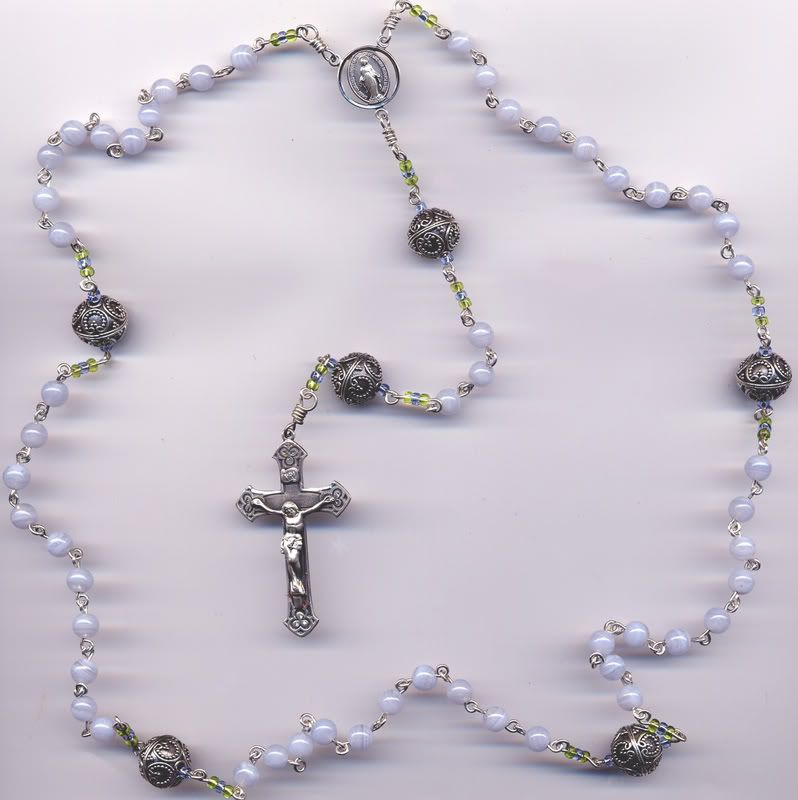
1. Sign of the Cross: In the name of the Father, and of the Son, and of the Holy Spirit. Amen.
2. The Apostles Creed: I BELIEVE in God, the Father almighty, Creator of heaven and earth. I believe in Jesus Christ, His only Son, our Lord. He was conceived by the power of the Holy Spirit and born of the Virgin Mary. He suffered under Pontius Pilate, was crucified, died, and was buried. He descended to the dead. On the third day He rose again. He ascended into heaven and sits at the right hand of God, the Father Almighty. From thence He shall come to judge the living and the dead. I believe in the Holy Spirit, the holy catholic Church, the communion of saints, the forgiveness of sins, the resurrection of the body, and the life everlasting. Amen.
3. The Lord's Prayer: OUR Father, who art in heaven, hallowed be Thy name. Thy kingdom come. Thy will be done on earth as it is in heaven. Give us this day our daily bread and forgive us our trespasses as we forgive those who trespass against us. And lead us not into temptation, but deliver us from evil. Amen.
4. (3) Hail Mary: HAIL Mary, full of grace, the Lord is with thee. Blessed art thou amongst women and blessed is the fruit of thy womb, Jesus. Holy Mary, Mother of God, pray for us sinners, now, and in the hour of our death. Amen. (Three times)
5. Glory Be: GLORY be to the Father, and to the Son, and to the Holy Spirit. As it was in the beginning, is now, and will be forever. Amen.
Fatima Prayer: Oh, my Jesus, forgive us our sins, save us from the fires of hell, lead all souls to heaven, especially those in most need of your mercy.
Announce each mystery, then say 1 Our Father, 10 Hail Marys, 1 Glory Be and 1 Fatima prayer. Repeat the process with each mystery.
End with the Hail Holy Queen:
Hail, Holy Queen, Mother of Mercy, our life, our sweetness and our hope! To thee do we cry, poor banished children of Eve! To thee do we send up our sighs, mourning and weeping in this vale of tears! Turn then, most gracious advocate, thine eyes of mercy towards us; and after this, our exile, show unto us the blessed fruit of thy womb, Jesus!
O clement, O loving, O sweet Virgin Mary! Pray for us, O holy Mother of God, that we may be made worthy of the promises of Christ.
Final step -- The Sign of the Cross
The Mysteries of the Rosary
By tradition, Catholics meditate on these Mysteries during prayers of the Rosary.
The biblical references follow each of the Mysteries below.
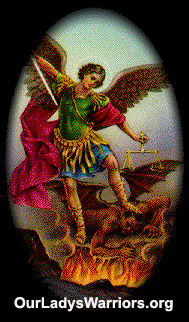
St. Michael, the Archangel, defend us in battle
Be our protection against the wickedness
and snares of the devil;
May God rebuke him, we humbly pray,
and do thou, O Prince of the heavenly host,
by the power of God,
Cast into hell Satan and all evil spirits
who prowl through the world seeking the ruin of souls.
Amen
+

Since the 16th century Catholic piety has assigned entire months to special devotions. Due to her feast day on September 15, the month of September has traditionally been set aside to honor Our Lady of Sorrows. All the sorrows of Mary (the prophecy of Simeon, the three days' loss, etc.) are merged in the supreme suffering at the Passion. In the Passion, Mary suffered a martyrdom of the heart because of Our Lord's torments and the greatness of her love for Him. "She it was," says Pope Pius XII, "who immune from all sin, personal or inherited, and ever more closely united with her Son, offered Him on Golgotha to the Eternal Father together with the holocaust of her maternal rights and motherly love. As a new Eve, she made this offering for all the children of Adam contaminated through his unhappy fall. Thus she, who was the mother of our Head according to the flesh, became by a new title of sorrow and glory the spiritual mother of all His members."
INVOCATIONS
Mary most sorrowful, Mother of Christians, pray for us.
Virgin most sorrowful, pray for us.
TO THE QUEEN OF MARTYRS
Mary, most holy Virgin and Queen of Martyrs, accept the sincere homage of my filial affection. Into thy heart, pierced by so many swords, do thou welcome my poor soul. Receive it as the companion of thy sorrows at the foot of the Cross, on which Jesus died for the redemption of the world. With thee, O sorrowful Virgin, I will gladly suffer all the trials, contradictions, and infirmities which it shall please our Lord to send me. I offer them all to thee in memory of thy sorrows, so that every thought of my mind, and every beat of my heart may be an act of compassion and of love for thee. And do thou, sweet Mother, have pity on me, reconcile me to thy divine Son Jesus, keep me in His grace, and assist me in my last agony, so that I may be able to meet thee in heaven and sing thy glories. Amen.
TO THE MOTHER OF SORROWS
Most holy Virgin. and Mother, whose soul was pierced by a sword of sorrow in the Passion of thy divine Son, and who in His glorious Resurrection wast filled with never-ending joy at His triumph; obtain for us who call upon thee, so to be partakers in the adversities of Holy Church and the sorrows of the Sovereign Pontiff, as to be found worthy to rejoice with them in the consolations for which we pray, in the charity and peace of the same Christ our Lord. Amen.
IN HONOR OF THE SORROWS OF THE BLESSED VIRGIN MARY
O most holy and afflicted Virgin! Queen of Martyrs! thou who didst stand motionless beneath the Cross, witnessing the agony of thy expiring Son--through the unceasing sufferings of thy life of sorrow, and the bliss which now more than amply repays thee for thy past trials, look down with a mother's tenderness and pity on me, who kneel before thee to venerate thy dolors, and place my requests, with filial confidence, in the sanctuary of thy wounded heart; present them, I beseech thee, on my behalf, to Jesus Christ, through the merits of His own most sacred death and passion, together with thy sufferings at the foot of the cross, and through the united efficacy of both obtain the grant of my present petition. To whom shall I resort in my wants and miseries if not to thee, O Mother of Mercy, who, having so deeply drunk of the chalice of thy Son, canst compassionate the woes of those who still sigh in the land of exile? Offer for me to my Savior one drop of the Blood which flowed from His sacred veins, one of the tears which trickled from His divine eyes, one of the sighs which rent His adorable Heart. O refuge of the universe and hope of the whole world, do not reject my humble prayer, but graciously obtain the grant of my petition.
TO OUR LADY OF SORROWS
O most holy Virgin, Mother of our Lord Jesus Christ: by the overwhelming grief you experienced when you witnessed the martyrdom, the crucifixion, and the death of your divine Son, look upon me with eyes of compassion, and awaken in my heart a tender commiseration for those sufferings, as well as a sincere detestation of my sins, in order that, being disengaged from all undue affection for the passing joys of this earth, I may sigh after the eternal Jerusalem, and that henceforward all my thoughts and all my actions may be directed towards this one most desirable object. Honor, glory, and love to our divine Lord Jesus, and to the holy and immaculate Mother of God. Amen. --Saint Bonaventure
|
Prayer Source: Prayer Book, The by Reverend John P. O'Connell, M.A., S.T.D. and Jex Martin, M.A., The Catholic Press, Inc., Chicago, Illinois, 1954
|
|
| The Seven Sorrows of Our Lady 1. The Prophecy of Simeon 2. The Flight into Egypt . 3. The Loss of Jesus in the Temple 4. Mary meets Jesus Carrying the Cross 5. The Crucifixion 6. Mary Receives the Dead Body of Her Son 7. The Burial of Her Son and Closing of the Tomb. |
|
| Consecration to Our Lady of Sorrows Most holy Virgin and Queen of Martyrs, Mary, would that I could be in Heaven, there to contemplate the honors rendered to thee by the Most Holy Trinity and by the whole Heavenly Court! But since I am still a pilgrim in this vale of tears, receive from me, thy unworthy servant and a poor sinner, the most sincere homage and the most perfect act of vassalage a human creature can offer thee. In thy Immaculate Heart, pierced with so many swords of sorrow, I place today my poor soul forever; receive me as a partaker in thy dolors, and never suffer that I should depart from that Cross on which thy only begotten Son expired for me. With thee, O Mary, I will endure all the sufferings, contradictions, infirmities, with which it will please thy Divine Son to visit me in this life. All of them I offer to thee, in memory of the Dolors which thou didst suffer during thy life, that every thought of my mind, every beating of my heart may henceforward be an act of compassion to thy Sorrows, and of complacency for the glory thou now enjoyest in Heaven. Since then, O Dear Mother, I now compassionate thy Dolors, and rejoice in seeing thee glorified, do thou also have compassion on me, and reconcile me to thy Son Jesus, that I may become thy true and loyal son (daughter); come on my last day and assist me in my last agony, even as thou wert present at the Agony of thy Divine Son Jesus, that from this painful exile I may go to Heaven, there to be made partaker of thy glory. Amen. |
|
Our Lady of Sorrows: Sorrowful Mother

to At the Cross Her Station Keeping
The Rosary of the Seven Sorrows consists of 7 groups of 7 beads, with 3 additional beads and a Crucifix. Say each of the sorrow below followed by 7 Hail Mary's. The 7 groups of 7 Hail Mary's are recited in remembrance of
the 7 Sorrows of Mary:
1. The prophecy of Simeon.
2. The flight into Egypt.
3. The loss of the Child Jesus in the Temple.
4. Mary meets Jesus carrying His cross.
5. The Crucifixion
6. Mary received the Body of Jesus from the cross
7. The Body of Jesus is placed in a tomb.
3 Hail Mary's are added in remembrance of the tears Mary shed because of the suffering of her Divine Son. These are said to obtain true sorrow for our sins.
The concluding prayer follows:
V/. Pray for us, O most sorrowful Virgin.
R/. That we may be made worthy of the promises of Christ.
Let us pray:
Lord Jesus, we now implore, both for the present and for the hour of our death, the intercession of the most Blessed Virgin Mary, Thy Mother, whose holy soul was pierced at the time of Thy passion by a sword of grief. Grant us this favor, O Saviour of the world, Who livest and reignest with the Father and the Holy Spirit, forever and ever. Amen.

The Blessed Virgin Mary grants 7 special graces to the souls who honor her daily by saying 7 Hail Mary's
and meditating on her tears and dolors. This devotion was passed on by St. Bridget of Sweden.
Here are the 7 special graces:
1. I will grant peace to their families.
2. They will be enlightened about the divine mysteries.
3. I will console them in their pains, and I will accompany them in their work.
4. I will give them as much as they ask for as long as it does not oppose the adorable will of my divine Son or the sanctification of their souls.
5. I will defend them in their spiritual battles with the infernal enemy, and I will protect them at every instant of their lives.
6. I will visibly help them at the moment of their death; they will see the face of their mother.
7. I have obtained (this grace) from my divine Son, that those who propagate this devotion to my tears and dolors, will be taken directly from this earthly life to eternal happiness since all their sins will be forgiven and my Son and I will be their eternal consolation and joy.
The Chaplet to Our Lady of Sorrows
(Jesus said, "The Chaplet is to be a Devotion for the Time of Darkness, and is being given
as a spiritual weapon against the Seven deadly sins.")
First Sorrow of Mary, the Prophecy of Simeon:
"This was My Mother's 'Agony in the Garden' in which She said yes to the coming pain that acceptance of the Divine Will of God would bring."
PRAYER: "I pray for the gift of surrender to the will of God to overcome the temptation to envy."
Pray 1 Our Father, 1 Hail Mary, 1 Glory Be and the following Litany:
Litany
Our Lady of the Seven Sorrows, pray for us.
Our Lady of Perpetual Help, pray for us.
Mother of the Sorrowful Heart, pray for us.
Immaculate Heart of Mary, pray for us.
Maria, Rosa Mystica, pray for us.
House of God, pray for us.
Queen of Peace, pray for us.
Our Lady of Guadalupe, pray for us.
Our Lady of Fatima, pray for us.
Our Lady of the Roses, pray for us.
Queen of Mercy, pray for us.
Our Lady of the Blessed Sacrament, pray for us.
Second Sorrow of Mary, The Flight Into Egypt:
"The hatred and fear which led to the slaughter of the innocents was on of the most painful aspects of this sorrow. My Mother and I continue to weep today over the slaughter of innocents in the womb caused by the hatred and fear which still fills the hearts of mankind."
PRAYER: "I pray for the gift of respect for life to overcome the temptation to anger."
Pray 1 Our Father, 1 Hail Mary, 1 Glory Be, and the Litany
Third Sorrow of Mary, The Loss of Jesus in the Temple:
"My Mother did not look in the Temple for Me, and so lost Me for three days (like My three days in the tomb). My Priests are failing today to look for Me in the 'Temple,' in obedience to My Pope and to the authority I have placed in My Church. My Church is in its THREE DAYS OF DARKNESS and has much to suffer for its disobedience. Offer the pain in My Mother's Hearts that My priests might return to MY TEMPLE and find me again." (There was an interior Knowledge that Jesus was Not saying this was true of all His priests, but rather He was mourning over those priests who were doing this, plus asking for prayer for them.)
PRAYER: "I pray for the gift of obedience to overcome the temptation to Pride."
Pray 1 Our Father, 1 Hail Mary, 1 Glory Be, and the Litany
Fourth Sorrow of Mary, Mary Meets Jesus on the Road to Calvary:
"My priests will no longer accept the pain of the WAY OF THE CROSS. They no longer walk with Me as My Mother did. They especially refuse the pain and sacrifice of their vow of celibacy. Sexual sins are destroying My Church." (Again, as above, Jesus was not saying this was true of all priests, but was grieving over those who were doing this.)
PRAYER: "I pray for the gift of chastity to overcome the temptation to lust."
Pray 1 Our Father, 1 Hail Mary, 1 Glory Be, and the Litany
Fifth Sorrow of Mary,Jesus is Nailed to the Cross:
"Offer your pain as Mary did, in union with My Cross. All pain, united to My Pasion, has power to redeem. My Church, more than ever, has need of sacrificial offerings."
PRAYER: "I pray for the gift of sacrifice to overcome the temptation to gluttony."
Pray 1 Our Father, 1 Hail Mary, 1 Glory Be, and the Litany
Sixth Sorrow of Mary, Jesus is Taken Down from the Cross and Laid in His Mother's Arms:
"My priests and My people are no longer willing to hold My broken body. They will not minister to the brokenness they see around them. They will not help Me bring salvation to those in need. They will not let Me put in their hearts the gift I would give them of a thirst for souls. Pray that they will return to a willingness to do penance and offer sacrifices for their brothers and sisters in need, who still constitute My broken body."
PRAYER: "I pray for the gift of compassion to overcome the temptation to sloth.
Pray 1 Our Father, 1 Hail Mary, 1 Glory Be, and the Litany
Seventh Sorrow of Mary, Jesus is Laid in the Tomb:
"My Church, My chosen ones, must lay all attachments in the TOMB, especially the attachment to their own way, their will, their plans. They must die and accept the death of al lthey would hold dear to allow God's Will and His Plan to replace their own."
PRAYER: "I pray for the gift of detachment to overcome the temptation to greed."
Pray 1 Our Father, 1 Hail Mary, 1 Glory Be, and the Litany
Prayer To Our Lady of Sorrows
I compassionate thee, O most sorrowful Mother! Thy heart was pierced with a sword of grief when Simeon foretold to thee in the Temple the ignominious death and the desolation of thy divine and most dear Son, which thou west destined one day to witness. By the great anguish of thy suffering heart, O gracious Queen of the universe, impress upon my mind, in life and in death, the sacred Passion of Jesus and shine own sorrows. Amen.
~~ by Saint Alphonsus Maria de Liguori

Most holy and afflicted Virgin, Queen of Martyrs, you stood beneath the cross, witnessing the agony of your dying Son. Look with a mother's tenderness and pity on me, who kneel before you. I venerate your sorrows and I place my requests with filial confidence in the sanctuary of your wounded heart.
Present them, I beseech you, on my behalf to Jesus Christ, through the merits of His own most sacred passion and death, together with your sufferings at the foot of the cross. Through the united efficacy of both, obtain the granting of my petition. To whom shall I have recourse in my wants and miseries if not to you, Mother of Mercy? You have drunk so deeply of the chalice of your Son, you can compassionate our sorrows.
Holy Mary, your soul was pierced by a sword of sorrow at the sight of the passion of your divine Son. Intercede for me and obtain for me from Jesus (mention your petition) if it be for His honor and glory and for my good. Amen.
Lenten Prayer to the Sorrowful Mother
Remember, O Virgin Mother of God, when you stand in the sight of the Lord, to speak good things for us and to turn away His indignation from us.
Holy Mother, pierce me through,
In my heart each wound renew,
Of my Savior crucified.
Let me to my latest breath,
In my body bear the death,
Of that dying Son of thine.
Be to me, O Virgin, nigh
Lest in flames I burn and die.
In that awful judgment day.
Christ, when Thou shall call me hence,
Be Thy Mother my defense.
Be Thy Cross my victory.
While my body here decays,
May my soul Thy goodness praise,
Safe in paradise with Thee. Amen.
V. Pray for us, O most sorrowful Virgin,
R. That we may be made worthy of the promises of Christ.
Let us pray: Let intercession be made for us, we beseech You, O Lord Jesus Christ, now and at the hour of our death, before the throne of Your mercy, by the Blessed Virgin Mary, Your Mother, whose most holy soul was pierced by a sword of sorrow, in the hour of Your bitter Passion. Through You, Jesus Christ, Savior of the world, Who lives and reigns with the Father and the Holy Spirit, world without end. Amen.
Our Lady of a happy Death, pray for us.
Saint Joseph, pray for us.

Most holy Mother of Sorrows, by that soul-piercing martyrdom that you experienced at the foot of the Cross during the three hours of agony of your Son, Jesus, assist me in my time of need. I am a a child of sorrows and when I am faced with my agony, intercede on my behalf so that I may be found worthy to pass from my deathbed to the blessed paradise of the Kingdom of God. Amen.
V. >From a sudden and unprovided death,
R. Deliver me, O Lord.
V. >From the snares of the devil,
R. Deliver me, O Lord.
V. From everlasting death,
R. Deliver me, O Lord.
The Sorrowful Hail Mary
Hail Mary, full of sorrows, the Crucified is with thee; thou art pitiable amongst women, and pitiable is the Fruit of thy womb, Jesus. Holy Mary, Mother of the Crucified, implore for us, the crucifiers of thy Son, tears of contrition, now and at the hour of our death. Amen.
~~approved by Pope Pius IX in 1847
Stabat Mater
At the cross her station keeping, stood the mournful Mother weeping, close to Jesus to the last.
Through her heart, His sorrow sharing, all His bitter anguish bearing, now at length the sword had passed.
Oh, how sad and sore distressed was that Mother highly blest, of the sole begotten One!
Christ above in torment hangs; she beneath beholds the pangs of her dying, glorious Son.
Is there one who would not weep, 'whelmed in miseries so deep Christ's dear Mother to behold?
Can the human heart refrain from partaking in her pain, in that Mother's pain untold?
Bruised, derided, cursed, defiled, she beheld her tender Child all with bloody scourges rent;
For the sins of His own nation saw Him hang in desolation, till His Spirit forth He sent.
O thou Mother, fount of love! Touch my spirit from above, make my heart with thine accord;
Make me feel as thou hast felt; make my soul to glow and melt with the love of Christ, my Lord.
Holy Mother! Pierce me through, in my heart each wound renew of my Saviour Crucified;
Let me share with thee His pain, Who for all my sins was slain, Who for me in torments died.
Let me mingle tears with thee, mourning Him Who mourned for me, all the days that I may live.
By the Cross with thee to stay, there with thee to weep and pray, is all I ask of thee to give.
Virgin of all virgins blest! Listen to my fond request: Let me share thy grief divine;
Let me to my latest breath, in my body bear the death of that dying Son of thine.
Be to me, O Virgin, nigh, lest in flames I burn and die, in His awful Judgment Day.
Christ, when Thou shalt call me hence, be Thy Mother my defense, be Thy Cross my victory;
While my body here decays, may my soul Thy goodness praise, safe in paradise with Thee. Amen.
~(Cf Raccolta, No. 378)
Offering
Eternal Father, we offer Thee the Blood, the Passion, and the Death of Jesus Christ, the sorrows of Mary most holy, and of St. Joseph, in satisfaction for our sins, in aid of the holy souls in Purgatory, for the needs of holy Mother Church, and for the conversion of sinners.
Virgin most sorrowful, pray for us!
Prayer Before an Image of the Mother of Sorrows
O most compassionate Mother, what bitterness filled thy heart when thou didst embrace the lacerated Body of thy Son with thy virginal arms, press Him lovingly to thy maternal heart, and cover Him with tenderest kisses. I remind thee of this inexpressible bitterness, in virtue of which I beseech thee to obtain for me forgiveness of my sins.
O Mary, pray for me, a poor sinner, to thy Jesus Whom thou didst hold in thy arms. Take the wounded Body of thy Son into thy maternal arms, and offer Him in this condition to the Heavenly Father for me. Offer His pierced Heart, His Passion and Death, and all thy own immeasurable sorrows to obtain grace and mercy for me, particularly (mention the favor you desire here). Amen.
Holy Mother, pierce me though; in my heart each wound renew of my Saviour Crucified.
O Mary, our hope, have pity on us!
A Precious Offering
O Mary, Mother of Sorrows, I beseech thee, by the inexpressible tortures thou didst endure at the death of thy Son, offer to the Eternal Father, in my stead, thy beloved Son all covered with Blood and Wounds, for the grace of (mention your intention). Amen.
~ St. John Vianney, the Curé of Ars
Prayer to Our Lady, Comforter of the Afflicted
Immaculate Virgin Mary, Mother of God and our most compassionate Mother, we present ourselves in thy sight in all humility, and with full confidence we implore thee for thy maternal patronage.
Thou hast been proclaimed by Holy Church the Comforter of the Afflicted, and to thee constant recourse is had by the sorrowful in their afflictions, the sick in their maladies, the dying in their agony, the poor in their straitened circumstances, those who stand in all manner of need in both public and private calamities; and from thee they all receive consolation and strength.
Our dearest Mother, turn upon us also, wretched sinners that we are, thy merciful eyes, and graciously accept our humble and confident prayers. Aid us in all our spiritual and temporal necessities; deliver us from all evil, and especially from sin, which is the greatest evil, and from all danger of falling into it; obtain for us from thy Son Jesus every blessing of which thou seest we stand in need, both in soul and in body, and especially the greatest blessing of all, which is Divine grace. Comfort our spirits, troubled and afflicted in the midst of the many dangers that threaten us and in the countless miseries and misfortunes that beset us on every side. This we ask through that immense joy which filled thy pure soul in the glorious Resurrection of thy Divine Son.
Obtain tranquility for Holy Church, help and comfort for her visible Head, the Roman Pontiff, peace for Christian princes, refreshment in their pains for the Holy Souls in Purgatory; for sinners, the forgiveness of their sins, and for the just, perseverance in well-doing. Receive us all, our most tender Mother, under thy loving and mighty protection, that we may be enabled to live virtuously, die holily and attain to everlasting happiness in heaven. Amen.
~~ (Rac., No. 419)
Prayer to the Mother of Sorrow
O Mother of Sorrows, by the anguish and love with which thou didst stand at the cross of Jesus, stand by me in my last agony. To thy maternal heart I commend the last three hours of my life. Offer these hours to the Eternal Father in union with the agony of our dearest Lord in atonement for my sins. Offer to the Eternal Father the most Precious Blood of Jesus, mingled with your tears on Calvary, that I may obtain the grace of receiving Holy Communion with the most perfect love and contrition before my death, and that I may breathe forth my soul in the adorable Presence of Jesus.
Dearest Mother, when the moment of my death has at length come, present me as your child to Jesus. Ask Him to forgive me for having offended Him for I know not what I did. Beg Him to receive me into His kingdom of glory to be united with Him forever. Amen.
Prayer to Our Lady of Sorrows, by St. Bridget
O Blessed Virgin Mary, Immaculate Mother of God, who didst endure a martyrdom of love and grief beholding the sufferings and sorrows of Jesus! Thou didst cooperate in the benefit of my redemption by thine innumerable afflictions and by offering to the Eternal Father His only begotten Son as a holocaust and victim of propitiation for my sins. I thank thee for the unspeakable love which led thee to deprive thyself of the Fruit of thy womb, Jesus, true God and true Man, to save me, a sinner. Oh, make use of the unfailing intercession of thy sorrows with the Father and the Son, that I may steadfastly amend my life and never again crucify my loving Redeemer by new sins, and that, persevering till death in His grace. I may obtain eternal life through the merits of His Cross and Passion. Amen.
Mother of love, of sorrow and of mercy, pray for us.
PRAYER TO OUR SORROWFUL MOTHER
O Mother of Sorrows, thou, who beneath the Cross of Jesus were given to us as our Mother, look down with pity on us, thy children, who weep and mourn in this valley of tears. By that sword of sorrow which pierced thy Heart when thou looked upon the Face of thy dead Son, obtain for us that comfort we so sorely need in our sufferings.
Thou were given to us our Mother in the hour of thy greatest grief that thou might be mindful of our frailty and the evils that press upon us. Without thy aid, O Sorrowful Mother, we cannot gain the victory in this struggle against flesh and blood. Therefore, we seek thy help, O Queen of Sorrows, lest we fall prey to the wiles of the enemy. We are orphans in need of the guiding hand of our Mother amid the dangers that threaten our destruction. Thou whose grief was boundless as the sea, grant us by the memory of those sorrows the strength to be victorious.
Intercede further, O Mother of Sorrows, for us and all who are near and dear to us, that we may ever do the Will of thy Son, and may direct all our actions to His honor, and to the furtherance of devotion to thy sorrows. Amen.
Virgin Most Sorrowful, pray for us.
Pray 1 Our Father, 1 Hail Mary, 1 Glory Be....
Mary, most holy Virgin and Queen of Martyrs, accept the sincere homage of my filial affection. Into thy Heart, pierced by so many swords, do thou welcome my poor soul. Receive it as the companion of thy sorrows at the foot of the Cross, on which Jesus died for the redemption of the world. With thee, O sorrowful Virgin, I will gladly suffer all the trials, contradictions, and infirmities which it shall please Our Lord to send me. I offer them all to thee in memory of thy sorrows, so that: every thought of my mind and every beat of my heart may be an act of compassion and of love for thee. And do thou, sweet Mother, have pity on me, reconcile me to thy Divine Son, Jesus; keep me in His grace and assist me in my last agony, so that I may be able to meet thee in Heaven and sing thy glories.
Most holy Virgin and Mother, whose soul was pierced by a sword of sorrow in the Passion of thy Divine Son, and who in His glorious Resurrection wast filled with never ending joy at His triumph, obtain for us who call upon thee, so to be partakers in the adversities of Holy Church and the Sorrows of the Sovereign Pontiff, as to be found worthy to rejoice with them in the consolations for which we pray, in the charity and peace of the same Christ our Lord. Amen.
Daily Recommendation:
Pray 1 Hail Mary for each of the 7 Sorrows Our Lady experienced. This is easy and can be done anywhere, anytime, without having to have your prayerbook with you. You just have to memorize the 7 Sorrows, and you're set! This will at least show Our Lady that you acknowledge her sorrows, and remember them in appreciation. I'm sure she will be happy with you, and shower you with her special blessings.
Apparition in Africa: Our Lady of Sorrows [Catholic/Orthodox Caucus]
Feast of the Seven Sorrows of the Blessed Virgin Mary [Catholic Caucus Devotional]
Feast of Our Lady/Mother of Sorrows
Homilies on Our Lady of Sorrows
Starkenburg:Pilgrimage to Our Lady of Sorrows Shrine
Our Mother of Sorrows
ST. ALPHONSUS LIGUORI, OF THE DOLOURS OF MARY, The Glories [Sorrows] of Mary
Our Lady of Sorrows - Sep 15
Holy Father's Prayer Intentions For September 2009
General: That the word of God may be better known, welcomed and lived as the source of freedom and joy.
Mission: That Christians in Laos, Cambodia, and Myanmar, who often meet with great difficulties, may not be discouraged from announcing the Gospel to their brothers, trusting in the strength of the Holy Spirit.
From: Colossians 1:15-20
Hymn in Praise of Christ as Head of All Creation
*********************************************************************************************
Commentary:
15-20. Now we come to a very beautiful hymn in praise of Christ’s sublime dignity
as God and as man. This was a truth deserving emphasis in view of the danger to
the faith which the false apostles’ teaching represented (cf. note on vv. 7-8). How-
ever, quite apart from the particular situation in Colossae, the sublime teaching
contained in this canticle holds good for all times; it is one of the most important
Christological texts in St Paul’s writings.
The real protagonist of this passage is the Son of God made man, whose two na-
tures, divine and human, are always linked in the divine person of the Word. How-
ever, at some points St Paul stresses his divinity (vv. 16, 17, 18b and 19) and at
others his humanity (vv. 15, 18a, 18c and 20). The underlying theme of the hymn
is Christ’s total pre-eminence over all creation.
We can distinguish two stanzas in the hymn. In the first (vv. 15-17) Christ’s do-
minion is stated to embrace the entire cosmos, stemming as it does from his
action as Creator: “in him all things were created” (v. 16). This same statement
is made in the prologue to the fourth Gospel (cf. Jn 1:3), and it is implied in the
Book of Genesis, which tells us that creation was effected by God’s word (cf.
Gen 1:3, 6, 9, etc.). Since Christ is the Word of God, he is above all things, and
therefore St Paul stresses that all angels—irrespective of their hierarchy or order
— come under his sway.
Christ’s pre-eminence over natural creation is followed by his primacy in the eco-
nomy of supernatural salvation, a second creation worked by God through grace.
The second stanza (vv. 18-20) refers to this further primacy of Christ: by his death
on the cross, Christ has restored peace and has reconciled all things—the world
and mankind—to God. Jews and Gentiles both are called to form part of one body,
the Church, of which Christ is the head; and all the celestial powers are subject
to his authority.
This passage is, then, a sublime canticle celebrating Christ, the head by virtue
of his surpassing excellence and his salvific action. “The Son of God and of the
Blessed Virgin”, Pius XII teaches, “must be called the head of the Church for the
special reason of his preeminence. For the head holds the highest place. But
none holds a higher place than Christ as God for he is the Word of the Eternal
Father and is therefore justly called ‘the first-born of all creation’. None holds a
higher place than Christ as man, for he, born of the immaculate Virgin, is the
true and natural Son of God, and by reason of his miraculous and glorious resur-
rection by which he triumphed over death he is ‘the first-born from the dead’. And
none stands higher than he who, being the ‘one mediator between God and man’
(1 Tim 2:5), admirably unites earth with heaven; who, exalted on the Cross as
on his throne of mercy, has drawn all things to himself” (”Mystici Corporis”, 15).
15. By the unaided use of reason man can work out that God exists, but he
could never, on his own, have grasped the essence of God: in this sense God is
said to be invisible (cf. St Thomas, “Commentary on Col, ad loc.”). This is why it
is said in St John’s Gospel that “no one has ever seen God” (Jn 1:18).
In Sacred Scripture we are told that man was created “in the image of God” (Gen
1:26). However, only the second person of the Blessed Trinity, the Son, is the per-
fect image and likeness of the Father. “The image [likeness] of a thing may be
found in something else in two ways; in one way it is found in something of the
same specific nature—as the image of the king is found in his son; in another way
it is found in something of a different nature, as the king’s image on the coin. In
the first sense the Son is the image of the Father; in the second sense man is
called the image of God; and therefore in order to express the imperfect character
of the divine image in man, man is not simply called ‘the image’ but is referred to
as being ‘according to the image’, whereby is expressed a certain movement or
tendency to perfection. But it cannot be said that the Son of God is ‘according to
the image’, because he is the perfect image of the Father” (”Summa Theologiae”,
I, q. 35, a. 2 ad 3). And so, “for something to be truly an image, it has to proceed
from another as similar to it in species, or at least in some aspect of the species”
(”Summa Theologiae”, I, q. 35, a. 1, c.) To say that the Son is “image of the invi-
sible God” means that the Father and the Son are one-in-substance — that is,
both possess the same divine nature — with the nuance that the Son proceeds
from the Father. It also conveys the fact that they are two distinct persons, for
no one is the image of himself.
The supreme revelation of God is that effected by the Son of God through his In-
carnation. He is the only one who can say, “He who has seen me has seen the
Father” (Jn 14:9). His sacred humanity, therefore, reflects the perfections of God,
which he possesses by virtue of the hypostatic union—the union of divine nature
and human nature which occurs in his person, which is divine. The second Per-
son of the Trinity restored man to his original dignity. The image of God, imper-
fect though it be, which there is in every man and woman, was blurred by Adam’s
sin; but it was restored in Christ: God’s true self-image takes on a nature the
same as ours, and thanks to the redemption wrought by his death, we obtain
forgiveness of sins (v. 14).
Jesus Christ is the “first-born of all creation” by virtue of the hypostatic union.
He is, of course, prior to all creation, for he proceeds eternally from the Father
by generation. This the Church has always believed, and it proclaims it in the
Creed: “born of the Father before time began ..., begotten, not made, of one
being [consubstantial] with the Father” (”Nicene-Constantinopolitan Creed”).
In Jewish culture, the first-born was first in honor and in law. When the Apostle
calls Jesus “the first-born of all creation”, he is referring to the fact that Christ
has pre-eminence and headship over all created things, because not only does
he pre-date them but they were all created “through him” and “for him” (v. 16).
16-17. Jesus Christ is God; this is why he has pre-eminence over all created
things. The relationships between Christ and creation are spelled out by three
prepositions. “In him all things were created”: in Christ: he is their source, their
center and their model or exemplary cause. “All things were created through him
and for him”: through him, in other words, God the Father, through God the Son,
creates all things; and for him, because he is the last end, the purpose or goal
of everything.
St Paul goes on to say that “in him all things hold together”; “the Son of God
has not only created everything: he conserves everything in being; thus, if his
sovereign will were to cease to operate for even an instant, everything would re-
turn into the nothingness from which he drew everything that exists” (Chrysos-
tom, “Hom. on Col, ad loc.”).
All created things, then, continue in existence because they share, albeit in a
limited way, in Christ’s infinite fullness of existence or perfection. His dominion
extends not only over celestial things but also over all material things, however
insignificant they may seem: it embraces everything in heaven and in the physi-
cal universe.
The sacred text also points to Christ’s supremacy over invisible creation, that is,
over the angels and celestial hierarchies (cf. Heb 1:5). If St Paul stresses this
fact, it is to expose the errors of those who were depicting Jesus as a creature
intermediary between corporeal beings and spiritual created beings, and, there-
fore, lower than the angels.
18. “He is the head of the body, the church”: this image shows the relationship
of Christ with the Church, to which he sends his grace in abundance, bearing life
to all its members. ‘The head,” St Augustine says, “is our very Savior, who suf-
fered under Pontius Pilate and now, after rising from the dead, is seated at the
right hand of the Father. And his body is the Church [...] For the whole Church,
made up of the assembly of the faithful—for all the faithful are Christ’s members
— has Christ, as its head, who rules his body from on high” (”Enarrationes in
Psalmos”, 56, 1).
St Paul unequivocally teaches that the Church is a body. “Now if the Church is a
body it must be something one and undivided, according to the statement of St
Paul: ‘We, though many, are one body in Christ’ (Rom 12:5). And not only must
it be one and undivided, it must also be something concrete and visible, as our
Predecessor of happy memory, Leo XIII, says in his Encyclical “Satis Cognitum”:
‘By the very fact of being a body the Church is visible.’ It is therefore an aberra-
tion from divine truth to represent the Church as something intangible and invisi-
ble, as a mere ‘pneumatic’ entity joining together by an invisible link a number
of communities of Christians in spite of their difference in faith.
“But a body requires a number of members so connected that they help one ano-
ther. And, in fact, as in our mortal organism when one member suffers the others
suffer with it, and the healthy members come to the assistance of those who are
ailing, so in the Church individual members do not live only for themselves but
also help one another, alleviating their suffering and helping to build up the entire
body” (Pius XII, “Mystici Corporis”, 7).
“He is the beginning, the first-born from the dead”: this can be said because he
was the first man to rise from the dead, never again to die (cf. 1 Cor 15:20; Rev
1:5), and also because thanks to him it enabled men to experience resurrection
in glory (cf. 1 Cor 15:22; Rom 8:11), because they are justified through him (cf.
Rom 4:25).
So, just as the previous verses looked to Christ’s pre-eminent role in creations
the hymn now focuses on his primacy in a new creation—the rebirth of mankind,
and all creation in its train, in the supernatural order of grace and glory. Christ
rose from the dead to enable us also to walk in newness of life (cf. Rom 6:4).
Therefore, in every way Jesus Christ is “pre-eminent.”
19. The word “pleroma” translated here as “fullness”, has two meanings in Greek:
one, an active meaning, describes something that “fills” or “completes”; for exam-
ple, a ship’s full load can be referred to as its pleroma. The other meaning is pas-
sive, “that which is filled” or “that which is complete”, so that a ship can be said
to be “pleroma” when it is fully loaded. In this passage St Paul is using the word
in both senses: Christ is the fullness (passive sense) of the Godhead (cf. Col 2:9),
because he is full of all the perfections of the divine essence; and he is the full-
ness (active sense), because he fills the Church and all creation.
St John Chrysostom suggests that “the word ‘fullness’ is to be taken to mean
the divinity of Jesus Christ [...]. This term has been chosen the better to show
that the very essence of the godhead resides in Jesus Christ” (”Hom. on Col,
ad loc.”).
Since Christ possesses the divine nature, he also possesses the fullness of the
supernatural gifts, for himself and for all mankind. Hence St Thomas’ comment
that pleroma “reveals the dignity of the head in so far as it has the fullness of all
grace” (Commentary on Col, ad loc.). In this sense, Christ is the fullness of the
Church, for as its head he vivifies his body with all kinds of unmerited gifts. Final-
ly, the entire created universe can be termed the “fullness” (”pleroma”) of Christ,
because everything that exists in heaven and on earth has been created and is
maintained in existence by him (cf. vv. 16-17); they are ever-present to him and
are ruled by him (cf. Is 6:3; Ps 139:8; Wis 1:7; etc.). Thus, the world, which was
created good (cf. Gen 1:31) tends towards its fulfillment insofar as it clearly re-
flects the imprint God gave it at the start of creation.
20. Since Christ is pre-eminent over all creation, the Father chose to reconcile
all things to himself through him. Sin had cut man off from God, rupturing the per-
fect order which originally reigned in the created world. By shedding his blood on
the cross, Christ obtained peace for us; nothing in the universe falls outside the
scope of his peace-giving influence. He who in the beginning created all things in
heaven and on earth has reestablished peace throughout creation.
This reconciliation of all things, ushered in by Christ, is fostered by the Holy
Spirit who enables the Church to continue the process of reconciliation. However,
we will not attain the fullness of this reconciliation until we reach heaven, when
the entire created universe, along with mankind, will be perfectly renewed in
Christ (cf. “Lumen Gentium”, 48).
“The history of salvation — the salvation of the whole of humanity, as well as of
every human being of whatever period—is the wonderful history of a reconciliation;
the reconciliation whereby God, as Father, in the Blood and the Cross of his Son
made man, reconciles the world to himself and thus brings into being a new fa-
mily of those who have been reconciled.
“Reconciliation becomes necessary because there has been the break of sin
from which derive all the other forms of break within man and about him. Recon-
ciliation therefore, in order to be complete, necessarily requires liberation from
sin, which is to be rejected in its deepest roots. Thus a close internal link unites
“conversion” and “reconciliation”. It is impossible to split these two realities or to
speak of one and say nothing of the other (John Paul II, “Reconciliatio Et Paeni-
tentia”, 13).
Jesus Christ also counts on the cooperation of every individual Christian to apply
his work of redemption and peace to all creation. The founder of Opus Dei says,
in this connection: “We must love the world and work and all human things. For
the world is good. Adam’s sin destroyed the divine balance of creation; but God
the Father sent his only Son to reestablish peace, so that we his children by
adoption, might free creation from disorder and reconcile all things to God”
(”Christ Is Passing By”, 112).
*********************************************************************************************
Source: “The Navarre Bible: Text and Commentaries”. Biblical text from the
Revised Standard Version and New Vulgate. Commentaries by members of
the Faculty of Theology, University of Navarre, Spain.
Published by Four Courts Press, Kill Lane, Blackrock, Co. Dublin, Ireland, and
by Scepter Publishers in the United States.
From: Luke 5:33-39
A Discussion on Fasting
*********************************************************************************************
Commentary:
33-35. In the Old Testament God established certain days as days of fasting —
the main one being the “day of atonement” (Numbers 29:7; Acts 27:9). Fasting
implied total or partial abstinence from food or drink. Moses and Elijah fasted
(Exodus 34:28; 1 Kings 19:8) and our Lord Himself fasted in the desert for forty
days before beginning His public ministry. In the present passage Jesus gives
a deeper meaning to the word “fasting”—the deprivation of His physical presence
which His Apostles would experience after His death. All through His public life
Jesus is trying to prepare His disciples for the final parting. At first the Apostles
were not very robust and Christ’s physical presence did them more good than
the practice of fasting.
Christians should sometimes abstain from food. “Fast and abstain from flesh
meat when Holy Mother Church so ordains” (”St. Pius X Catechism”, 495). That
is the purpose of the fourth commandment of the Church, but it has a deeper
meaning, as St. Leo the Great tells us: “The merit of our fasts does not consist
only in abstinence from food; there is no use depriving the body of nourishment
if the soul does not cut itself off from iniquity and if the tongue does not cease
to speak evil” (”Sermo IV in Quadragesima”).
*********************************************************************************************
Source: “The Navarre Bible: Text and Commentaries”. Biblical text from the
Revised Standard Version and New Vulgate. Commentaries by members of
the Faculty of Theology, University of Navarre, Spain.
Published by Four Courts Press, Kill Lane, Blackrock, Co. Dublin, Ireland, and
by Scepter Publishers in the United States.
| First reading | Colossians 1:15-20 © |
|---|---|
|
Christ Jesus is the image of the unseen God
and the first-born of all creation,
for in him were created
all things in heaven and on earth:
everything visible and everything invisible,
Thrones, Dominations, Sovereignties, Powers –
all things were created through him and for him.
Before anything was created, he existed,
and he holds all things in unity.
Now the Church is his body,
he is its head.
As he is the Beginning,
he was first to be born from the dead,
so that he should be first in every way;
because God wanted all perfection
to be found in him
and all things to be reconciled through him and for him,
everything in heaven and everything on earth,
when he made peace
by his death on the cross.
|
|
| Psalm or canticle: Psalm 99:2-5 |
| Gospel | Luke 5:33-39 © |
|---|---|
|
The Pharisees and scribes said to Jesus, ‘John’s disciples are always fasting and saying prayers, and the disciples of the Pharisees too, but yours go on eating and drinking.’ Jesus replied, ‘Surely you cannot make the bridegroom’s attendants fast while the bridegroom is still with them? But the time will come, the time for the bridegroom to be taken away from them; that will be the time when they will fast.’
He also told them this parable, ‘No one tears a piece from a new cloak to put it on an old cloak; if he does, not only will he have torn the new one, but the piece taken from the new will not match the old.
‘And nobody puts new wine into old skins; if he does, the new wine will burst the skins and then run out, and the skins will be lost. No; new wine must be put into fresh skins. And nobody who has been drinking old wine wants new. “The old is good” he says.’
|
|
| Friday, September 4, 2009 Votive Mass of the Sacred Heart |
||
|
|
|
|
The Angel of the Lord declared to Mary:
Behold the handmaid of the Lord: Be it done unto me according to Thy word.
And the Word was made Flesh: And dwelt among us.
Amen. |

If this is the first Hour that you are reciting today, you should precede it with the Invitatory Psalm.
A suitable hymn may be inserted at this point.
| Psalm 37 (38) |
|---|
| The plea of a sinner in great peril |
|
Lord, do not ruin me in your anger.
|
|
Lord, do not rebuke me in your wrath,
do not ruin me in your anger:
for I am pierced by your arrows
and crushed beneath your hand.
In the face of your anger
there is no health in my body.
There is no peace for my bones,
no rest from my sins.
My transgressions rise higher than my head:
a heavy burden, they weigh me down.
Glory be to the Father and to the Son and to the Holy Spirit,
as it was in the beginning, is now, and ever shall be,
world without end.
Amen.
|
|
Lord, do not ruin me in your anger.
|
| Psalm 37 (38) |
|---|
|
Lord, all that I desire is known to you.
|
|
My wounds are corruption and decay
because of my foolishness.
I am bowed down and bent,
bent under grief all day long.
For a fire burns up my loins,
and there is no health in my body.
I am afflicted, utterly cast down,
I cry out from the sadness of my heart.
Lord, all that I desire is known to you;
my sighs are not hidden from you.
My heart grows weak, my strength leaves me,
and the light of my eyes – even that has gone.
My friends and my neighbours
keep far from my wounds.
Those closest to me keep far away,
while those who would kill me set traps,
those who would harm me make their plots:
they plan mischief all through the day.
Glory be to the Father and to the Son and to the Holy Spirit,
as it was in the beginning, is now, and ever shall be,
world without end.
Amen.
|
|
Lord, all that I desire is known to you.
|
| Psalm 37 (38) |
|---|
|
I shall proclaim my wrongdoing. Do not abandon me, Lord, my saviour.
|
|
But I, like a deaf man, do not hear;
like one who is dumb, I do not open my mouth.
I am like someone who cannot hear,
in whose mouth there is no reply.
For in you, Lord, I put my trust:
you will listen to me, Lord, my God.
For I have said, “Let them never triumph over me:
if my feet stumble, they will gloat.”
For I am ready to fall:
my suffering is before me always.
For I shall proclaim my wrongdoing:
I am anxious because of my sins.
All the time my enemies live and grow stronger;
they are so many, those who hate me without cause.
Returning evil for good they dragged me down,
because I followed the way of goodness.
Do not abandon me, Lord:
my God, do not leave me.
Hurry to my aid,
O Lord, my saviour.
Glory be to the Father and to the Son and to the Holy Spirit,
as it was in the beginning, is now, and ever shall be,
world without end.
Amen.
|
|
I shall proclaim my wrongdoing. Do not abandon me, Lord, my saviour.
|
|
My eyes are weary with longing for your salvation
– and for your words of justice.
|
| Reading | Jeremiah 30:18-31:9 © |
|---|---|
|
The Lord says this:
Now I will restore the tents of Jacob,
and take pity on his dwellings:
the city shall be rebuilt on its ruins,
the citadel restored on its site.
From them will come thanksgiving
and shouts of joy.
I will make them increase, and not diminish them,
make them honoured, and not disdained.
Their sons shall be as once they were,
their community fixed firm in my presence,
and I will punish all their oppressors.
Their prince will be one of their own,
their ruler come from their own people.
I will let him come freely into my presence and he can come close to me;
who else, indeed, would risk his life
by coming close to me? – it is the Lord who speaks.
And you shall be my people and I will be your God.
Now a storm of the Lord breaks,
a tempest whirls,
it bursts over the head of the wicked;
the anger of the Lord will not turn aside
until he has performed and carried out,
the decision of his heart.
You will understand this in the days to come.
When that time comes – it is the Lord who speaks – I will be the God of all the clans of Israel: they shall be my people.
The Lord says this:
They have found pardon in the wilderness,
those who have survived the sword.
Israel is marching to his rest.
The Lord has appeared to him from afar:
I have loved you with an everlasting love,
so I am constant in my affection for you.
I build you once more; you shall be rebuilt,
virgin of Israel.
Adorned once more, and with your tambourines,
you will go out dancing gaily.
You will plant vineyards once more
on the mountains of Samaria
the planters have done their planting: they will gather the fruit.
Yes, a day will come when the watchmen shout
on the mountains of Ephraim,
‘Up! Let us go up to Zion,
to the Lord our God!’
For the Lord says this:
Shout with joy for Jacob!
Hail the chief of nations!
Proclaim! Praise! Shout:
‘The Lord has saved his people,
the remnant of Israel!’
See, I will bring them back
from the land of the North
and gather them from the far ends of earth;
all of them: the blind and the lame,
women with child, women in labour:
a great company returning here.
They had left in tears,
I will comfort them as I lead them back;
I will guide them to streams of water,
by a smooth path where they will not stumble.
For I am a father to Israel,
and Ephraim is my first-born son.
|
|
| Reading | St Leo the Great on the Beatitudes |
|---|---|
| Blessed are the poor in spirit | |
|
There is no doubt that the poor find it easier than the rich to receive the blessing of humility; for gentleness goes with poverty just as pride more commonly goes with riches. Nevertheless, very many rich people find that their wealth does not swell them up with pride: rather, they do good and benevolent things with it. For these people the greatest treasure is what they spend in relieving the distress and hardship of others.
In the virtue of humility men of every kind and every standing meet together, because though they differ in their means they share a common purpose. Their inequality of wealth makes no difference if they are equal in spiritual blessings.
What kind of poverty, then, is blessed? The kind that is not in love with earthly things and does not seek worldly riches: the kind that longs to be filled with the blessings of heaven.
After our Lord himself, the Apostles have given us the best example of this greatness of heart in poverty. When their Master called, they instantly left behind all that they possessed, and from catching fish they turned swiftly to fishing for men. Their example inspired many to emulate their faith and so become like them: it was at this time that these first sons of the Church were of one heart and there was one spirit among believers. With all their possessions stripped away they received the riches of eternal blessings, and through the Apostles’ preaching they rejoiced at having nothing that the world could give and possessing all things with Christ.
So it was that when the blessed apostle Peter was going up into the Temple and the cripple begged him for alms, he replied I have neither silver nor gold, but I will give you what I have: in the name of Jesus Christ the Nazarene, walk! What could be higher than this lowliness? What could be richer than this poverty? He cannot give the support of money but he can give the gift of a restored nature. From the womb his mother brought him forth a cripple; by a word Peter raises him up to health. He did not give the image of Caesar stamped on a coin but he restored the image of Christ in the man himself.
The man who was given the power to walk was not the only one to receive help from this rich treasure. From the same act of miraculous healing Five thousand men received the gift of faith in the Apostle’s teaching. The poor man who could give nothing of what he was asked for restored one lame man to his feet but also healed the hearts of thousands: he found them lame and brought them to be lithe and agile in Christ.
|
|
| Concluding Prayer |
|---|
|
God of power and might, all that is perfect belongs to you.
Fill us with love of your name:
increase our zeal and nourish what is good in us;
watch over us and preserve what you have nourished.
Through our Lord Jesus Christ, your Son,
who lives and reigns with you in the unity of the Holy Spirit,
God for ever and ever.
Amen.
|
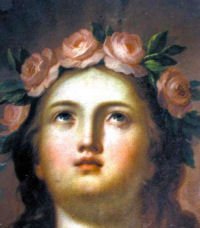
Collect: Almighty God, every good thing comes from you. Fill our hearts with love for you, increase our faith, and by your constant care protect the good you have given us. We ask this through our Lord Jesus Christ, your Son, who lives and reigns with you and the Holy Spirit, one God, for ever and ever. Amen. Friday of the Twenty-Second Week of Ordinary Time Saint Rosalia, born in 1130 at Palermo in Sicily, was the daughter of a noble family descended from Charlemagne. While still very young she despised worldly vanities. When her remarkable beauty caused her to be sought in marriage by several lords of Sicily, the Blessed Virgin appeared to her and advised her to leave the world. She obeyed, taking with her only a crucifix and her instruments of penance; and guided by Angels, she made her first dwelling in a nearby grotto, which the snows of winter concealed. Then, when she began to be the object of searches instigated all over Sicily by her desolate family, she was advised by Angels to move to a low cave on Mount Pellegrino, three miles from Palermo. There, during sixteen years’ time, she completed the sacrifice of her heart to God by austere penance and manual labor, sanctified by assiduous prayer and the constant union of her soul with God. She died in 1160. — Little Pictorial Lives of the Saints St. Rosalia's feast is included in the Roman Martyrology. Historically it is also the feast of St. Rose of Viterbo, a member of the Third Order of St. Francis.
The saint of Palermo thus honoured, seems to have delivered her country from the plague in 1625 and, since then, to have brought about innumerable cures. Her legend states that she was born around 1130 at the court of Roger II, king of Sicily, of a father called Sinibald, who was descended from Charlemagne. As her beauty constituted a danger to her soul, the Virgin appeared to her to urge her to leave the world. Rosalia was just fourteen. She took her crucifix, her discipline, and a few books and left her father's castle by night. Two angels, one armed like a knight, the other disguised as a pilgrim, were waiting to escort her to the summit of Mount Quisquita. There they left her at the entrance of a grotto hidden among the trees, buried under the snow. The young girl remained hidden there several months, after which the angels came to warn her that she was sought by her parents and had better flee elsewhere. They led her to the top of Mount Pellegrino. There, it is said, Rosalia, devoting herself to penances and miraculously nourished by the Host, passed the last sixteen years of her life. She died at the age of thirty; her body, long sought in vain, was found in the 17th century encased in a sheath of rock crystal; and it is the recovery of this relic which is commemorated by the procession mentioned above. — Excerpted from Lives of the Saints, Omer Englebert Patron: Isola delle Femine; Palermo; Sicily. Symbols: A young girl with a wreath of roses; receiving the wreath from the Blessed Virgin and Christ Child as angels bring roses and with a skull near her; with a distaff, book, and palm; holding a double Greek cross, distaff and book or palm; or writing her name on the wall of the cave. Things to Do: At the age of seven she wished to enter a monastery of nuns; but God had other designs for her, and she resolved to create a solitude in her father’s house, where she would forever spend all her days. Her mortifications there seem incredible to our time of laxity; she gave herself the discipline three times a day until she fainted from fatigue and loss of blood, and she scarcely ate at all. To those who urged her to mitigate her austerities, she explained so perfectly that happiness consists in suffering for God, that no one could doubt this was so for her. Nonetheless she fell ill and nearly died of consumption. She was close to the final agony when suddenly she beheld the Mother of God, and said to those attending her: “All of you here, why do you not greet the Queen of the world? Do you not see Mary, the August Mother of my God, coming forward? Let us go to meet Her, and prostrate ourselves before Her majesty!” Everyone turned toward the door and knelt down, and the Mother of God spoke to Rose, telling her she must enter the Third Order of Saint Francis, then go out to “reprove, convince, exhort and bring back the erring to the paths of salvation. If your endeavors bring upon you sarcasm and mockery, persecution and labor, you must bear them patiently... Those who assist you will be enriched with all the graces of the Lord.” To defend the Church’s rights was already Rose’s burning wish. When hardly ten years old, she arose after her reception into the Franciscan habit, went down to the public square at Viterbo, called upon the inhabitants to be faithful to the Sovereign Pontiff, and vehemently denounced all his opponents. She returned to her house only to redouble her flagellations and macerations; she saw her Saviour on the Cross and nothing could arrest her ardor thereafter. So great was the power of her word and of the miracles which accompanied it, that at the end of several months the Imperial party, after threatening her in vain to stop her preaching, in fear and anger drove her from the city. Saint Rose and her parents moved to Soriano, a fortified city, where she continued to do as she had been told by the Mother of God. Then Rose went on by herself to Vitorchiano, where she had understood there was need for her, and continued to win souls by her aspect as much as by her words. She went barefoot and wore a poor tunic at all times, until after some eighteen months, when the emperor had died, she and her parents returned to Viterbo. Innocent IV was brought back in triumph to Rome and the cause of God was won. A number of young girls came to her for instruction at Viterbo, and she taught them the principles of modest prudence and faithful love of God. Rose fell ill again and recognized that her end was approaching; she prepared, rejoicing, in solitude for her glorious destiny, and died in her eighteenth year. Not long afterward, she appeared in glory to Alexander IV, and bade him to translate her intact body. He found it fragrant and beautiful, as if still in life. For more than 700 years it has remained supple and unchanged, save for its color, darkened after a fire in the chapel where it reposed. Excerpted from Les Petits Bollandistes: Vies des Saints, by Msgr. Paul Guérin (Bloud et Barral: Paris, 1882), Vol. 10; Little Pictorial Lives of the Saints, a compilation based on Butler’s Lives of the Saints and other sources by John Gilmary Shea (Benziger Brothers: New York, 1894)


Old Calendar: Saint Rosalia, virgin (Hist); St. Rose of Viterbo, virgin (Hist)
#cal_links li {
padding: 0px;
}
St. Rosalia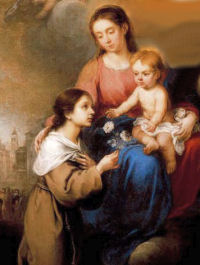 St. Rosalia is the patroness of Palermo, and the citizens of that place annually celebrate two feasts in her honour. One of these was raised to the rank of a holy day of obligation by Pius XI in 1927. It is celebrated by a procession of unequalled magnificence, heralded by cannon fire. The saint's shrine, atop a gigantic carriage filled with musicians, is drawn through the town by forty mules, accompanied by prayers, hymns, and acclamations. The top of the carriage is level with the roofs of the houses; fireworks are set off everywhere; the musicians blow ceaselessly on their trumpets; and for the five days during which this celebration lasts, enthusiasm mounts to an increasingly high pitch.
St. Rose of Viterbo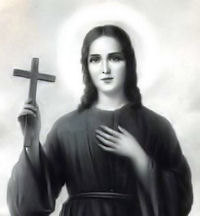 Saint Rose was born in the spring of 1235 at Viterbo, capital of the patrimony of Saint Peter. In those days the emperor Frederick II was oppressing the Church, and many were faithless to the Holy See. But this infant at once seemed filled with grace; she never cried; with tottering steps she sought Jesus in His tabernacle; she knelt before sacred images and listened to sermons and pious conversation, retaining all she heard, and this when she was scarcely three years old. One coarse habit covered her flesh; fasts and disciplines were her delight.
Disclaimer: Opinions posted on Free Republic are those of the individual posters and do not necessarily represent the opinion of Free Republic or its management. All materials posted herein are protected by copyright law and the exemption for fair use of copyrighted works.


