Skip to comments.
Catholic Caucus: Daily Mass Readings, 05-01-09, Opt. Mem. St. Joseph the Worker
USCCB.org/New American Bible ^
| 05-01-09
| New American Bible
Posted on 04/30/2009 9:55:10 PM PDT by Salvation
May 1, 2009
Acts 9:1-20
Saul, still breathing murderous threats against the disciples of the Lord,
went to the high priest and asked him
for letters to the synagogues in Damascus, that,
if he should find any men or women who belonged to the Way,
he might bring them back to Jerusalem in chains.
On his journey, as he was nearing Damascus,
a light from the sky suddenly flashed around him.
He fell to the ground and heard a voice saying to him,
"Saul, Saul, why are you persecuting me?"
He said, "Who are you, sir?"
The reply came, "I am Jesus, whom you are persecuting.
Now get up and go into the city and you will be told what you must do."
The men who were traveling with him stood speechless,
for they heard the voice but could see no one.
Saul got up from the ground,
but when he opened his eyes he could see nothing;
so they led him by the hand and brought him to Damascus.
For three days he was unable to see, and he neither ate nor drank.
There was a disciple in Damascus named Ananias,
and the Lord said to him in a vision, "Ananias."
He answered, "Here I am, Lord."
The Lord said to him, "Get up and go to the street called Straight
and ask at the house of Judas for a man from Tarsus named Saul.
He is there praying,
and in a vision he has seen a man named Ananias
come in and lay his hands on him,
that he may regain his sight."
But Ananias replied,
"Lord, I have heard from many sources about this man,
what evil things he has done to your holy ones in Jerusalem.
And here he has authority from the chief priests
to imprison all who call upon your name."
But the Lord said to him,
"Go, for this man is a chosen instrument of mine
to carry my name before Gentiles, kings, and children of Israel,
and I will show him what he will have to suffer for my name."
So Ananias went and entered the house;
laying his hands on him, he said,
"Saul, my brother, the Lord has sent me,
Jesus who appeared to you on the way by which you came,
that you may regain your sight and be filled with the Holy Spirit."
Immediately things like scales fell from his eyes
and he regained his sight.
He got up and was baptized,
and when he had eaten, he recovered his strength.
He stayed some days with the disciples in Damascus,
and he began at once to proclaim Jesus in the synagogues,
that he is the Son of God.
Ps 117:1bc, 2
R. (Mark 16:15) Go out to all the world and tell the Good News.
or:
R. Alleluia.
Praise the LORD, all you nations;
glorify him, all you peoples!
R. Go out to all the world and tell the Good News.
or:
R. Alleluia.
For steadfast is his kindness toward us,
and the fidelity of the LORD endures forever.
R. Go out to all the world and tell the Good News.
or:
R. Alleluia.
Jn 6:52-59
The Jews quarreled among themselves, saying,
"How can this man give us his Flesh to eat?"
Jesus said to them,
"Amen, amen, I say to you,
unless you eat the Flesh of the Son of Man and drink his Blood,
you do not have life within you.
Whoever eats my Flesh and drinks my Blood
has eternal life,
and I will raise him on the last day.
For my Flesh is true food,
and my Blood is true drink.
Whoever eats my Flesh and drinks my Blood
remains in me and I in him.
Just as the living Father sent me
and I have life because of the Father,
so also the one who feeds on me will have life because of me.
This is the bread that came down from heaven.
Unlike your ancestors who ate and still died,
whoever eats this bread will live forever."
These things he said while teaching in the synagogue in Capernaum.
TOPICS: Catholic; General Discusssion; Prayer; Worship
KEYWORDS: catholic; catholiclist; saints
Navigation: use the links below to view more comments.
first 1-20, 21-40, 41-48 next last
For your reading, reflection, faith-sharing, comments, questions, discussion.
1
posted on
04/30/2009 9:55:10 PM PDT
by
Salvation
To: nickcarraway; Lady In Blue; NYer; ELS; Pyro7480; livius; Catholicguy; RobbyS; markomalley; ...
Alleluia Ping!
Please notify me via FReepmail if you would like to be added to or taken off the Alleluia Ping List.
2
posted on
04/30/2009 9:57:03 PM PDT
by
Salvation
( †With God all things are possible.†)
To: All
3
posted on
04/30/2009 9:57:53 PM PDT
by
Salvation
( †With God all things are possible.†)
To: All
4
posted on
04/30/2009 9:59:40 PM PDT
by
Salvation
( †With God all things are possible.†)
To: All
The best, the surest , and the most effective way of establishing everlasting peace on the face of the earth is through the great power of perpetual adoration of the Blessed Sacrament." -- Pope John Paul II
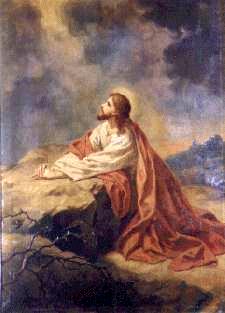
"Could you not watch one hour?" -- Mark 14:37
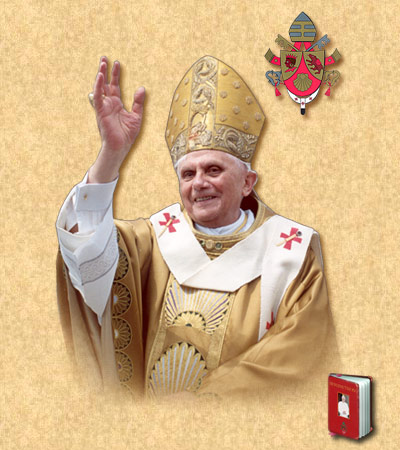
I am happy to testify that many young people are discovering the beauty of adoration, whether personal or in community. I invite priests to encourage youth groups in this, but also to accompany them to ensure that the forms of adoration are appropriate and dignified, with sufficient times for silence and listening to the word of God. In life today, which is often noisy and scattered, it is more important than ever to recover the capacity for interior silence and recollection: Eucharistic adoration permits one to do this not only within one's "I" but rather in the company of that "You" full of love who is Jesus Christ, "the God who is near us."
~Pope Benedict XVI
5
posted on
04/30/2009 10:00:45 PM PDT
by
Salvation
( †With God all things are possible.†)
To: All
6
posted on
04/30/2009 10:01:32 PM PDT
by
Salvation
( †With God all things are possible.†)
To: All
7
posted on
04/30/2009 10:03:35 PM PDT
by
Salvation
( †With God all things are possible.†)
To: All
Pray a Rosary each day for our nation.

1. Sign of the Cross: In the name of the Father, and of the Son, and of the Holy Spirit. Amen.
2. The Apostles Creed: I BELIEVE in God, the Father almighty, Creator of heaven and earth. I believe in Jesus Christ, His only Son, our Lord. He was conceived by the power of the Holy Spirit and born of the Virgin Mary. He suffered under Pontius Pilate, was crucified, died, and was buried. He descended to the dead. On the third day He rose again. He ascended into heaven and sits at the right hand of God, the Father Almighty. From thence He shall come to judge the living and the dead. I believe in the Holy Spirit, the holy catholic Church, the communion of saints, the forgiveness of sins, the resurrection of the body, and the life everlasting. Amen.
3. The Lord's Prayer: OUR Father, who art in heaven, hallowed be Thy name. Thy kingdom come. Thy will be done on earth as it is in heaven. Give us this day our daily bread and forgive us our trespasses as we forgive those who trespass against us. And lead us not into temptation, but deliver us from evil. Amen.
4. (3) Hail Mary: HAIL Mary, full of grace, the Lord is with thee. Blessed art thou amongst women and blessed is the fruit of thy womb, Jesus. Holy Mary, Mother of God, pray for us sinners, now, and in the hour of our death. Amen. (Three times)
5. Glory Be: GLORY be to the Father, and to the Son, and to the Holy Spirit. As it was in the beginning, is now, and will be forever. Amen.
Fatima Prayer: Oh, my Jesus, forgive us our sins, save us from the fires of hell, lead all souls to heaven, especially those in most need of your mercy.
Announce each mystery, then say 1 Our Father, 10 Hail Marys, 1 Glory Be and 1 Fatima prayer. Repeat the process with each mystery.
End with the Hail Holy Queen:
Hail, Holy Queen, Mother of Mercy, our life, our sweetness and our hope! To thee do we cry, poor banished children of Eve! To thee do we send up our sighs, mourning and weeping in this vale of tears! Turn then, most gracious advocate, thine eyes of mercy towards us; and after this, our exile, show unto us the blessed fruit of thy womb, Jesus!
O clement, O loving, O sweet Virgin Mary! Pray for us, O holy Mother of God, that we may be made worthy of the promises of Christ.
Final step -- The Sign of the Cross
The Mysteries of the Rosary
By tradition, Catholics meditate on these Mysteries during prayers of the Rosary.
The biblical references follow each of the Mysteries below.
The Sorrowful Mysteries
(Tuesdays and Fridays)
1. The Agony in the Garden (Matthew 26:36-46, Luke 22:39-46) [Spiritual fruit - God's will be done]
2. The Scourging at the Pillar (Matthew 27:26, Mark 15:15, John 19:1) [Spiritual fruit - Mortification of the senses]
3. The Crowning with Thorns (Matthew 27:27-30, Mark 15:16-20, John 19:2) [Spiritual fruit - Reign of Christ in our heart]
4. The Carrying of the Cross (Matthew 27:31-32, Mark 15:21, Luke 23:26-32, John 19:17) [Spiritual fruit - Patient bearing of trials]
5. The Crucifixion (Matthew 27:33-56, Mark 15:22-39, Luke 23:33-49, John 19:17-37) [Spiritual fruit - Pardoning of Injuries]
8
posted on
04/30/2009 10:05:40 PM PDT
by
Salvation
( †With God all things are possible.†)
To: All

~ PRAYER ~

St. Michael, the Archangel, defend us in battle
Be our protection against the wickedness
and snares of the devil;
May God rebuke him, we humbly pray,
and do thou, O Prince of the heavenly host,
by the power of God,
Cast into hell Satan and all evil spirits
who prowl through the world seeking the ruin of souls.
Amen
+
9
posted on
04/30/2009 10:07:27 PM PDT
by
Salvation
( †With God all things are possible.†)
To: All
10
posted on
04/30/2009 10:08:05 PM PDT
by
Salvation
( †With God all things are possible.†)
To: All
|
|
May Devotion: Blessed Virgin Mary
|
Since the 16th century Catholic piety has assigned entire months to special devotions. Toward the end of the eighteenth century a zealous Jesuit priest, Father Lalomia, started among the students of the Roman college of his Society the practice of dedicating May to Our Lady. The devotion, which others had promoted in a small way, soon spread to other Jesuit Colleges and to the entire Latin church and since that time it has been a regular feature of Catholic life.
INVOCATIONS
Thou who wast a virgin before thy delivery, pray for us. Hail Mary, etc.
Thou who wast a virgin in thy delivery, pray for us. Hail Mary, etc.
Thou who wast a virgin after thy delivery, pray for us. Hail Mary, etc.
My Mother, deliver me from mortal sin.
Hail Mary (three times).
Mother of love, of sorrow and of mercy, pray for us.
Remember, O Virgin Mother of God, when thou shalt stand before the face of the Lord, that thou speak favorable things in our behalf and that He may turn away His indignation from us.
Roman Missal
Thou art my Mother, O Virgin Mary: keep me safe lest I ever offend thy dear Son, and obtain for me the grace to please Him always and in all things.
FOR THE HELP OF THE BLESSED VIRGIN MARY
May we be assisted, we beseech Thee, 0 Lord, by the worshipful intercession of Thy glorious Mother, the ever-Virgin Mary; that we, who have been enriched by her perpetual blessings, may be delivered from all dangers, and through her loving kindness made to be of one heart and mind: who livest and reignest world without end. Amen.
Roman Missal
THE SALVE REGINA
Hail, holy Queen, Mother of mercy, hail, our life, our sweetness, and our hope! To thee do we cry, poor banished children of Eve! To thee do we send up our sighs, mourning and weeping in this vale of tears! Turn then, most gracious advocate, thine eyes of mercy towards us; and after this, our exile, show unto us the blessed fruit of thy womb, Jesus! O clement, O loving, O sweet Virgin Mary!
Roman Breviary
PRAYER TO THE BLESSED VIRGIN MARY
O blessed Virgin Mary, who can worthily repay thee thy just dues of praise and thanksgiving, thou who by the wondrous assent of thy will didst rescue a fallen world? What songs of praise can our weak human nature recite in thy honor, since it is by thy intervention alone that it has found
the way to restoration? Accept, then, such poor thanks as we have here to offer, though they be unequal to thy merits; and, receiving our vows, obtain by thy prayers the remission of our offenses. Carry thou our prayers within the sanctuary of the heavenly audience, and bring forth from it the antidote of our reconciliation. May the sins we bring before Almighty God through thee, become pardonable through thee; may what we ask for with sure confidence, through thee be granted. Take our offering, grant us our requests, obtain pardon for what we fear, for thou art the sole hope of sinners. Through thee we hope for the remission of our sins, and in thee, 0 blessed Lady, is our hope of reward. Holy Mary, succour the miserable, help the fainthearted, comfort the sorrowful, pray for thy people, plead for the clergy, intercede for all women consecrated to God; may all who keep thy holy commemoration feel now thy help and protection. Be thou ever ready to assist us when we pray, and bring back to us the answers to our prayers. Make it thy continual care to pray for the people of God, thou who, blessed by God, didst merit to bear the Redeemer of the world, who liveth and reigneth, world without end. Amen.
Saint Augustine
PETITION TO MARY
Most holy Virgin Immaculate, my Mother Mary, to thee who art the Mother of my Lord, the queen of the universe, the advocate, the hope, the refuge of sinners, I who am the most miserable of all sinners, have recourse this day. I venerate thee, great queen, and I thank thee for the many graces thou hast bestowed upon me even unto this day; in particular for having delivered me from the hell which I have so often deserved by my sins. I love thee, most dear Lady; and for the love I bear thee, I promise to serve thee willingly for ever and to do what I can to make thee loved by others also. I place in thee all my hopes for salvation; accept me as thy servant and shelter me under thy mantle, thou who art the Mother of mercy. And since thou art so powerful with God, deliver me from all temptations, or at least obtain for me the strength to overcome them until death. From thee I implore a true love for Jesus Christ. Through thee I hope to die a holy death. My dear Mother, by the love thou bearest to Almighty God, I pray thee to assist me always, but most of all at the last moment of my life. Forsake me not then, until thou shalt see me safe in heaven, there to bless thee and sing of thy mercies through all eternity. Such is my hope. Amen.
Saint Alphonsus Liguori
 |
Magnificat Prayer
My being proclaims the greatness of the Lord, my spirit finds joy in God my savior,
For he has looked upon his servant in her lowliness; all ages to come shall call me blessed.
God who is mighty has done great things for me,
holy is his name; His mercy is from age to age on those who fear him. He has shown might with his arm; he has confused the proud in their inmost thoughts. He has deposed the mighty from their thrones and raised the lowly to high places. The hungry he has given every good thing, while the rich he has sent empty away. He has upheld Israel his servant, ever mindful of his mercy; Even as he promised our fathers, promised Abraham and his descendants forever.
(Lk 1:46-55) |
Seen above is the Blessed Virgin Mary, portrayed as Our Lady of Perpetual Help.
It was she who was chosen by God, to provide His Son with His Sacred Humanity.
She did so in humble and total cooperation with the Holy Spirit and the Divine will of the Holy Trinity; providing God's Son with the Blood He shed for us on the Cross.
TO MARY, REFUGE OF SINNERS
Hail, most gracious Mother of mercy, hail, Mary, for whom we fondly yearn, through whom we obtain forgiveness! Who would not love thee? Thou art our light in uncertainty, our comfort in sorrow, our solace in the time of trial, our refuge from every peril and temptation. Thou art our sure hope of salvation, second only to thy only-begotten Son; blessed are they who love thee, our Lady! Incline, I beseech thee, thy ears of pity to the entreaties of this thy servant, a miserable sinner; dissipate the darkness of my sins by the bright beams of thy holiness, in order that I may be acceptable in thy sight.
FOR THE GRACE OF LOVE
O Mary, my dear Mother, how much I love thee! And yet in reality how little! Thou dost teach me what I ought to know, for thou teachest me what Jesus is to me and what I ought to be for Jesus. Dearly beloved Mother, how close to God thou art, and how utterly filled with Him! In the measure that we know God, we remind ourselves of thee. Mother of God, obtain for me the grace of loving my Jesus; obtain for me the grace of loving thee!
Cardinal Merry del Val
TO THE BLESSED VIRGIN MARY FOR MAY
O most august and blessed Virgin Mary! Holy Mother of God! glorious Queen of heaven and earth! powerful protectress of those who love thee, and unfailing advocate of all who invoke thee! look down, I beseech thee, from thy throne of glory on thy devoted child; accept the solemn offering I present thee of this month, specially dedicated to thee, and receive my ardent, humble desire, that by my love and fervor I could worthily honor thee, who, next to God, art deserving of all honor. Receive me, 0 Mother of Mercy, among thy best beloved children; extend to me thy maternal tenderness and solicitude; obtain for me a place in the Heart of Jesus, and a special share in the gifts of His grace. 0 deign, I beseech thee, to recognize my claims on thy protection, to watch over my spiritual and temporal interests, as well as those of all who are dear to me; to infuse into my soul the spirit of Christ, and to teach me thyself to become meek, humble, charitable, patient, and submissive to the will of God.
May my heart bum with the love of thy Divine Son, and of thee, His blessed Mother, not for a month alone, but for time and eternity; may I thirst for the promotion of His honor and thine, and contribute, as far as I can, to its extension. Receive me, 0 Mary, the refuge of sinners! Grant me a Mother's blessing and a Mother's care, now, and at the hour of my death. Amen.
TO OUR LADY
Saint John Vianney, better known as the Cure of Ars, when asked how long he had loved Mary, said: "I loved her almost before I could know her." In this prayer he expresses that love.
O thou most holy virgin Mary, who dost evermore stand before the most holy Trinity, and to whom it is granted at all times to pray for us to thy most beloved Son; pray for me in all my necessities; help me, combat for me, and obtain for me the pardon of all my sins. Help me especially at my last hour; and when I can no longer give any sign of the use of reason, then do thou encourage me, make the sign of the cross for me, and fight for me against the enemy. Make in my name a profession of faith; favor me with a testimony of my salvation, and never let me despair of the mercy of God. Help me to overthrow the wicked enemy. When I can no longer say: "Jesus, Mary, and Joseph, I place my soul in your hands," do thou say it for me; when I can no longer hear human words of consolation, do thou comfort me. Leave me not before I have been judged; and if I have to expiate my sins in purgatory, oh! pray for me earnestly; and admonish my friends to procure for me a speedy enjoyment of the blessed sight of God. Lessen my sufferings, deliver me speedily, and lead my soul into heaven with thee: that, united with all the elect, I may there bless and praise my God and thee for all eternity. Amen.
Saint John Vianney
ACT OF REPARATION
O blessed Virgin, Mother of God, look down in mercy from heaven, where thou art enthroned as Queen, upon me, a miserable sinner, thine unworthy servant. Although I know full well my own unworthiness, yet in order to atone for the offenses that are done to thee by impious and blasphemous
tongues, from the depths of my heart I praise and extol thee as the purest, the fairest, the holiest creature of all God's handiwork. I bless thy holy name, I praise thine exalted privilege of being truly Mother of God, ever virgin, conceived without stain of sin, co-redemptrix of the human race. I bless the Eternal Father who chose thee in an especial way for His daughter; I bless the Word Incarnate who took upon Himself our nature in thy bosom and so made thee His Mother; I bless the Holy Spirit who took thee as His bride. All honor, praise and thanksgiving to the ever-blessed Trinity, who predestined thee and loved thee so exceedingly from all eternity as to exalt thee above all creatures to the most sublime heights. 0 Virgin, holy and merciful, obtain for all who offend thee the grace of repentance, and graciously accept this poor act of homage from me thy servant, obtaining likewise for me from thy divine Son the pardon and remission of all my sins. Amen.
Prayer Source: Prayer Book, The by Reverend John P. O'Connell, M.A., S.T.D. and Jex Martin, M.A., The Catholic Press, Inc., Chicago, Illinois, 1954
| Memorare of the Blessed Virgin Mary |
|

Remember O Most Gracious Virgin Mary! That never was it known
That anyone who fled to thy protection,
Implored thy help or sought thy intercession
Was left unaided. Inspired by this confidence, I fly unto Thee!
O Virgin of virgins, My Mother! To Thee I come before Thee I stand,
Sinful and Sorrowful,
Oh Mother of the Word Incarnate,
Despise not my petitions, but in thy mercy,
Hear and answer me.
Amen
|
May Devotion: Blessed Virgin Mary
11
posted on
04/30/2009 10:10:09 PM PDT
by
Salvation
( †With God all things are possible.†)
To: All
There are two many various topics about the Blessed Virgin Mary topost with the May Devotion. If you click on the May Devotion link above, I am posting the links on that thread.
God bless you all for your patience because I am only about halfway done with all the BVM links. I keep working at reorganizing them and should be finished in the next few days.
12
posted on
04/30/2009 10:12:27 PM PDT
by
Salvation
( †With God all things are possible.†)
To: All
Holy Father's Prayer Intentions For May 2009
General: That the laity and the Christian communities may be responsible promoters of priestly and religious vocations.
Mission: That the recently founded Catholic Churches, grateful to the Lord for the gift of faith, may be ready to share in the universal mission of the Church, offering their availability to preach the Gospel throughout the world.
13
posted on
04/30/2009 10:13:57 PM PDT
by
Salvation
( †With God all things are possible.†)
To: Salvation
I’ll keep working at reorganizing them and should be finished in the next few days.
14
posted on
04/30/2009 10:14:37 PM PDT
by
Salvation
( †With God all things are possible.†)
To: All
From: Acts 9:1-20
Saul on His Way to Damascus
[1] But Saul, still breathing threats and murder against the disciples of the Lord,
went to the high priest [2] and asked him for letters to the synagogues at Damas-
cus, so that if he found any belonging to the Way, men or women, he might bring
them bound to Jerusalem. [3] Now a he journeyed he approached Damascus, and
suddenly a light from Heaven flashed about him. [4] And he fell to the ground and
heard a voice saying to him, “Saul, Saul, why do you persecute Me?” [5] And he
said, “Who are you, Lord?” And He said, “I am Jesus whom you are persecuting;
[6] but rise and enter the city, and you will be told what you are to do.” [7] The
men who were travelling with him stood speechless, hearing the voice but seeing
no one. [8] Saul arose from the ground; and when his eyes were opened, he could
see nothing; so they led him by the hand and brought him into Damascus. [9]
And for three days he was without sight, and neither ate nor drank.
Ananias Baptizes Saul
[10] Now there was a disciple at Damascus called Ananias. The Lord said to him
in a vision, “Ananias.” And he said, “Here I am, Lord.” [11] And the Lord said to
him, “Rise and go to the street called Straight, and inquire in the house of Judas
for a man of Tarsus named Saul; for behold, he is praying, [12] and he has seen
a man named Ananias come in and lay his hands on him so that he might regain
his sight.” [13] But Ananias answered, “Lord, I have heard from many about this
man, how much evil he has done to Thy saints at Jerusalem; [14] and here he has
authority from the chief priests to bind all who call upon Thy name.” [15] But the
Lord said to him, “Go for he is a chosen instrument of mine to carry My name
before the Gentiles and kings and the sons of Israel; [16] for I will show him how
much he must suffer for the sake of My name.” [17] So Ananias departed and
entered the house. And laying his hands on him he said, “Brother Saul, the Lord
Jesus who appeared to you on the road by which you came, has sent me that
you may regain your sight and be filled with the Holy Spirit.” [18] And immediately
something like scales fell from his eyes and he regained his sight. Then he rose
and was baptized, [19] and took food and was strengthened.
For several days he was with the disciples at Damascus.
Paul Begins His Apostolate
[20] And in the synagogues immediately he proclaimed Jesus, saying, “He is the
Son of God.”
*********************************************************************************************
Commentary:
1-3. Roman authorities recognized the moral authority of the Sanhedrin and even
permitted it to exercise a certain jurisdiction over members of Jewish communities
outside Palestine—as was the case with Damascus. The Sanhedrin even had the
right to extradite Jews to Palestine (cf. I Maccabees 15:21).
Damascus was about 230-250 kilometers (150 miles) from Jerusalem, depending
on which route one took. Saul and his associates, who would probably have been
mounted, would have had no difficulty in doing the journey in under a week. This
apparition took place towards the end of the journey, when they were near Damas-
cus.
2. “The Way”: the corresponding word in Hebrew also means religious behavior.
Here it refers to both Christian lifestyle and the Gospel itself; indirectly it means
all the early followers of Jesus (cf. Acts 18:25ff; 19:9, 23; 22:4) and all those who
come after them and are on the way to Heaven; it reminds us of Jesus’ words,
“The gate is narrow and the way is hard, that leads to life, and those who find it
are few” (Matthew 7:14).
3-19. This is the first of the three accounts of the calling of Saul—occurring pro-
bably between the years 34 and 36—that are given in the Acts of the Apostles (cf.
Acts 22:5-16; 26:10-18); where important events are concerned, St. Luke does
not mind repeating himself. Once again the Light shines in the darkness (cf.
John 1:5). It does so here in a spectacular way and, as in every conversion, it
makes the convert see God, himself and others in a new way.
However, the episode on the road to Damascus is not only a conversion. It marks
the beginning of St. Paul’s vocation: “What amazes you seems natural to me: that
God has sought you out in the practice of your profession!
“This is how He sought the first, Peter and Andrew, James and John, beside their
nets, and Matthew, sitting in the custom-house.
“And—wonder of wonders!—Paul, in his eagerness to destroy the seed of the
Christians” (St. J. Escriva, “The Way”, 799).
The background to St. Luke’s concise account is easy to fill in. There would have
been no Hellenist Christians left in Jerusalem: they had fled the city, some going
as far afield as Phoenicia, Cyprus and Antioch. Many had sought refuge in
Damascus, and Saul must have realized that their evangelizing zeal would win
many converts among faithful Jews in that city. Saul genuinely wanted to serve
God, which explains his readiness to respond to grace. Like most Jews of his
time, he saw the Messiah as a political liberator, a warrior-king, a half-Heavenly,
half-earthly figure such as described in the apocryphal “Book of Enoch”, 46: “It is
impossible to imagine how even his glance terrifies his enemies. Wherever he
turns, everything trembles; wherever his voice reaches everything is overwhelmed
and those who hear it are dissolved as wax in fire.” A hero of this type does not
fall into the power of his enemies, much less let them crucify him; on the contrary,
he is a victor, he annihilates his enemies and establishes an everlasting kingdom
of peace and justice. For Saul, Jesus’ death on a cross was a clear proof that He
was a false messiah; and the whole notion of a brotherhood of Jews and Gentiles
was inconceivable.
He has almost reached Damascus when a light flashes; he is thrown onto the
ground and hears a voice from Heaven calling his name twice, in a tone of sad
complaint.
Saul surrenders unconditionally and places himself at the Lord’s service. He
does not bemoan his past life; he is ready to start anew. No longer is the Cross
a “scandal”: it has become for him a sign of salvation, the “power of God”, a throne
of victory, whose praises he will sing in his epistles. Soon St. Paul will learn more
about this Way and about all that Jesus did and taught, but from this moment on-
wards, the moment of his calling, he realizes that Jesus is the risen Messiah, in
whom the prophecies find fulfillment; he believes in the divinity of Christ: he sees
how different his idea of the Messiah was from the glorified, pre-existing and eternal
Son of God; he understands Christ’s mystical presence in His followers: “Why do
you persecute me?” In other words, he realizes that he has been chosen by God,
called by God, and immediately places himself at his service.
4. This identification of Christ and Christians is something which the Apostle will
later elaborate on when he speaks of the Mystical Body of Christ (cf. Colossians
1:18; Ephesians 1:22f).
St. Bede comments as follows: “Jesus does not say, ‘Why do you persecute My
members?’, but, ‘Why do you persecute Me?’, because He Himself still suffers
affronts in His body, which is the Church. Similarly Christ will take account of the
good actions done to His members, for He said, ‘I was hungry and you gave Me
food...’ (Matthew 25:35), and explaining these words He added ‘As you did it to
one of the least of these My brethren, you did it to Me’ (Matthew 25:40)” (”Super
Act. Expositio, ad loc.”).
5-6. In the Vulgate and in many other translations these words are added between
the end of verse 5 and the start of verse 6: “It is hard for thee to kick against the
goad. And he, trembling and astonished, said: “Lord, what will Thou have me to
do? And the Lord said to him”. These words do not seem to be part of the original
sacred text but rather a later explanatory gloss; for this reason the New Vulgate
omits them. (The first part of the addition comes from Paul’s address in Acts
26:14).
6. The calling of Saul was exceptional as regards the manner in which God called
him; but the effect it had on him was the same as what happens when God gives
a specific calling to the apostolate to certain individual Christians, inviting them to
follow Him more closely. Paul’s immediate response is a model of how those who
receive these specific callings should act (all Christians, of course, have a common
calling to holiness and apostolate that comes with Baptism).
[Pope] Paul VI describes in this way the effects of this specific kind of vocation
in a person’s soul: “The apostolate is [...] an inner voice, which makes one both
restless and serene, a voice that is both gentle and imperious, troublesome and
affectionate, a voice which comes unexpectedly and with great events and then,
at a particular point, exercises a strong attraction, as it were revealing to us our
life and our destiny. It speaks prophetically and almost in a tone of victory, which
eventually dispels all uncertainty, all timidity and all fear, and which facilitates—
making it easy, desirable and pleasant—the response of our whole personality,
when we pronounce that word which reveals the supreme secret of love: Yes;
Yes, Lord, tell what I must do and I will try to do it, I will do it. Like St. Paul,
thrown to the ground at the gates of Damascus: What would You have me do?
“The roots of the apostolate run deep: the apostolate is vocation, election, interior
encounter with Christ, abandonment of one’s personal autonomy to His will, to His
invisible presence; it is a kind of substitution of our poor, restless heart, inconstant
and at times unfaithful yet hungry for love, for His heart, the heart of Christ which
is beginning to pulsate in the one who has been chosen. And then comes the
second act in the psychological drama of the apostolate: the need to spread, to
do, to give, to speak, to pass on to others one’s own treasure, one’s own fire. [...]
“The apostolate becomes a continuous expansion of one’s soul, the exuberance
of a personality taken over by Christ and animated by HisSpirit; it becomes a
need to hasten, to work, to do everything one can to spread the Kingdom of God,
to save other souls, to save all souls” (”Homily”, 14 October 1968).
8-11. Straight Street runs through Damascus from east to west and can still be
identified today.
13. Ananias refers to Christ’s followers as “saints”; this was the word normally
used to describe the disciples, first in Palestine and then in the world at large.
God is THE Holy One (cf. Isaiah 6:3); as the Old Testament repeatedly says,
those who approach God and keep His commandments share in this holiness:
“The Lord said to Moses, ‘Say to all the congregation of the people of Israel,
You shall be holy; for I the Lord your God am holy’” (Leviticus 19:1-2).
The use of this term is an example of the spiritual sensitivity of our first brothers
and sisters in the faith: “What a moving name—saints! —the early Christians used
to address each other!...
“Learn to be a brother to your brothers” (St. J. Escriva, “The Way”, 469).
15-16. Our Lord calls St. Paul His “vessel of election”, which is a Hebraicism
equivalent to “chosen instrument”, and He tells Ananias how much the Apostle
will have to suffer on His account. A Christian called to the apostolate is also,
by virtue of this divine vocation, an instrument in the hands of God; to be effective
he must be docile: he must let God use him and must do what God tells him.
The task God has given him is far beyond Paul’s ability—”to carry My name be-
fore the Gentiles and kings and sons of Israel”. In Acts we will see how Paul
fulfills his mission, with the help of God’s grace and suffering a great deal on
account of His name. Down through the centuries, in diverse circumstance,
those whom the Lord elects to carry out specific missions will also be able to
perform them if they are good instruments who allow grace to act in them and
who are ready to suffer for their ideals.
19. In spite of the exceptional manner in which God called St. Paul, He desired
him to mature in the normal way—to be instructed by others and learn God’s will
through them. In this case he chose Ananias to confer Baptism on Paul and
teach him the basics of the Christian faith.
In Ananias we can see a trace of the role of the spiritual director or guide in
Christian asceticism. There is a principle which states that “no one can be a
good judge in his own case, because everyone judges according to his own incli-
nations” (cf. Cassian, “Collationes”, XVI, 11). A person guiding a soul has a
special “grace of state” to make God’s will known to him; and even if the guide
makes a mistake, the person who is being guided will—if obedient—always do the
right thing, always do God’s will. In this connection St. Vincent Ferrer says: “Our
Lord Jesus Christ, without whom we can do nothing, will not give His grace to him
who, though he has access to an expert guide, rejects this precious means of
sanctification, thinking that he can look after on his own everything that touches
on his salvation. He who has a director, whom he obeys in everything, will reach
his goal more easily and more quickly than if he had acted as his own guide,
even if he be very intelligent and have the very best of spiritual books” (”Treatise
on the Spiritual Life”, 2, 1).
On the spiritual guidance of ordinary Christians, who seek holiness and carry out
apostolate in the context of everyday life, St Escriva, writes: “A Director. You
need one. So that you can give yourself to God, and give yourself fully...by
obedience. A director who understands your apostolate, who knows what God
wants: that way he will second the work of the Holy Spirit in your soul, without
taking you from your place, filling you with peace, and teaching you how to make
your work fruitful” (”The Way”, 62).
20-23. In his letter to the Galatians (cf. Galatians 1:16f) St. Paul tells of how he
went into Arabia after his conversion and then returned to Damascus. He spent
almost three years away, and it was on his return that he preached the divinity of
Jesus, using all his energy and learning, now placed at the service of Christ. This
surprised and confounded the Jews, who immediately began to take action against
him.
*********************************************************************************************
Source: “The Navarre Bible: Text and Commentaries”. Biblical text from the
Revised Standard Version and New Vulgate. Commentaries by members of
the Faculty of Theology, University of Navarre, Spain.
Published by Four Courts Press, Kill Lane, Blackrock, Co. Dublin, Ireland, and
by Scepter Publishers in the United States.
15
posted on
04/30/2009 10:15:55 PM PDT
by
Salvation
( †With God all things are possible.†)
To: All
From: John 6:52-59
The Discourse on the Bread of Life (Continuation)
(Jesus said to the Jews,) [52] The Jews disputed among themselves, saying,
“How can this Man give us His flesh to eat?” [53] So Jesus said to them,
“Truly, truly, I say to you, unless you eat the flesh of the Son of Man and drink
His blood, you have no life in you; [54] he who eats My flesh and drinks My blood
has eternal life, and I will raise him up on the last day. [55] For My flesh is food
indeed, and My blood is drink indeed. [56] He who eats My flesh and drinks My
blood abides in Me, and I in him. [57] As the living Father sent Me, and I live
because of the Father, so he who eats Me will live because of Me. [58] This is
the bread which came from Heaven, not such as the fathers ate and died; he
who eats this bread will live for ever.” This He said in the synagogue, as He
taught in Capernaum.
*********************************************************************************************
Commentary:
49-51. The manna during the Exodus was a figure of this bread—Christ himself—
which nourishes Christians on their pilgrimage through this world. Communion
is the wonderful banquet at which Christ gives Himself to us: “the bread which I
shall give for the life of the world is My flesh”. These words promise the manifes-
tation of the Eucharist at the Last Supper: “This is My body which is for you” (1
Corinthians 11:24). The words “for the life of the world” and “for you” refer to the
redemptive value of the sacrifice of Christ on the cross. In some sacrifices of the
Old Testament, which were a figure of the sacrifice of Christ, part of the animal
offered up was later used for food, signifying participation in the sacred rite (cf.
Exodus 11:3-4). So, by receiving Holy Communion, we are sharing in the sacri-
fice of Christ: which is why the Church sings in the Liturgy of the Hours on the
Feast of Corpus Christi: “O sacred feast in which we partake of Christ: His suf-
ferings are remembered, our minds are filled with His grace and we receive a
pledge of the glory that is to be ours” (”Magnificat Antiphon”, Evening Prayer II).
52. Christ’s hearers understand perfectly well that He means exactly what He
says; but they cannot believe that what He says could be true; if they had under-
stood Him in a metaphorical, figurative or symbolic sense there would be no
reason for them to be surprised and nothing to cause an argument. Later, Jesus
reaffirms what He has said—confirming what they have understood Him to say
(cf. verses 54-56).
53. Once again Jesus stresses very forcefully that it is necessary to receive Him
in the Blessed Eucharist in order to share in divine life and develop the life of grace
received in Baptism. No parent is content to bring children into the world: they
have to be nourished and looked after to enable them to reach maturity. “We
receive Jesus Christ in Holy Communion to nourish our souls and to give us an
increase of grace and the gift of eternal life” (”St. Pius X Catechism”, 289).
54. Jesus clearly states that His body and blood are a pledge of eternal life and
a guarantee of the resurrection of the body. St. Thomas Aquinas gives this
explanation: “The Word gives life to our souls, but the Word made flesh nourishes
our bodies. In this Sacrament is contained the Word not only in His divinity but
also in His humanity; therefore, it is the cause not only of the glorification of our
souls but also of that of our bodies” (”Commentary on St. John, in loc.”).
Our Lord uses a stronger word than just “eating” (the original verb could be trans-
lated as “chewing”) which shows that Communion is a real meal. There is no
room for saying that He was speaking only symbolically, which would mean that
Communion was only a metaphor and not really eating and drinking the Body and
Blood of Christ. “All these invitations, promises and threats sprang from the great
desire which (Jesus) had of giving us Himself in the holy Sacrament of the altar.
But why should Jesus so ardently desire us to receive Him in Holy Communion?
It is because love always sighs for, and tends to a union with, the object beloved.
True friends wish to be united in such a manner as to become only one. The love
of God for us being immense, He destined us to possess Him not only in Heaven,
but also here below, by the most intimate union, under the appearance of bread in
the Eucharist. It is true we do not see Him; but He beholds us, and is really
present; yes, He is present in order that we may possess Him and He conceals
Himself, that we may desire Him, and until we reach our true homeland Jesus
Christ wishes in this way to be entirely ours, and to be perfectly united to us”
(St. Alphonsus Liguori, “The Love of Our Lord Jesus Christ Reduced to Practice”,
Chapter 2).
55. In the same way as bodily food is necessary for life on earth, Holy Commu-
.nion is necessary for maintaining the life of the soul, which is why the Church
exhorts us to receive this Sacrament frequently: “Every day, as is desirable,
and in the greatest possible numbers, the faithful must take an active part in
the sacrifice of the Mass, avail themselves of the pure, holy refreshment of Holy
Communion and make a suitable thanksgiving in return for this great gift of Christ
the Lord. Here are the words they should keep in mind: ‘Jesus Christ and the
Church desire all Christ’s faithful to approach the sacred banquet every day.
The basis of this desire is that they should be united to God by the sacrament
and draw strength from it to restrain lust, to wash away the slight faults of daily
occurrence and to take precautions against the more serious sins to which
human frailty is liable’ (Decree of the S.C. of the Council, 20 December 1905)”
(Paul VI, “Mysterium Fidei”).
“The Savior has instituted the most august sacrament of the Eucharist, which
truly contains His flesh and His blood, so that he who eats this bread may live
forever; whosoever, therefore, makes use of it often with devotion so strengthens
the health and the life of his soul, that it is almost impossible for him to be poi-
soned by any kind of evil affection. We cannot be nourished with this flesh of life,
and live with the affections of death. [...]. Christians who are damned will be
unable to make any reply when the just Judge shows them how much they are
to blame for dying spiritually, since it was so easy for them to maintain them-
selves in life and in health by eating His Body which He had left them for this
purpose. Unhappy souls, He will say, why did you die, seeing that you had at
your command the fruit and the food of life?” (St. Francis de Sales, “Introduction
to the Devout Life”, II, 20, 1).
56. The most important effect of the Blessed Eucharist is intimate union with
Jesus Christ. The very word “communion” suggests sharing in the life of our Lord
and becoming one with Him; if our union with Jesus is promoted by all the sacra-
ments through the grace which they give us, this happens more intensely in the
Eucharist, for in it we receive not only grace but the very Author of grace: “Really
sharing in the body of the Lord in the breaking of the eucharistic bread, we are
taken up into communion with Him and with one another. ‘Because the bread is
one, we, though many, are one body, all of us who partake of the one bread’ (1
Corinthians 10:17)” (Vatican II, “Lumen Gentium”, 7). Precisely because the
Eucharist is the sacrament which best signifies and effects our union with Christ,
it is there that the whole Church manifests and effects its unity: Jesus Christ
“instituted in His Church the wonderful sacrament of the Eucharist, by which the
unity of the Church is both signified and brought about” (Vatican II, “Unitatis
Redintegratio”, 2).
57. In Christ, the Incarnate Word sent to mankind, “the whole fullness of deity,
dwells bodily (Colossians 2:9) through the ineffable union of His human nature
and His divine nature in the Person of the Word. By receiving in this sacrament
the body and blood of Christ indissolubly united to His divinity, we share in the
divine life of the second Person of the Blessed Trinity. We will never be able to
appreciate enough the intimacy with God Himself—Father, Son and Holy Spirit—
that we are offered in the eucharistic banquet.
“We can therefore do nothing more agreeable to Jesus Christ than to go to Com-
munion with the dispositions suitable to so great an action, since we are then
united to Jesus Christ, according to the desire of this all-loving God. I have said
with ‘suitable’ and not ‘worthy’ disposition, for who could communicate if it was
necessary to be worthy of so great a Savior? No one but a God would be worthy
to receive a God. But by this word suitable, or convenient, I mean such a dispo-
sition as becomes a miserable creature, who is clothed with the unhappy flesh
of Adam. Ordinarily speaking, it is sufficient that we communicate in a state of
grace and with an anxious desire of advancing in the love of Jesus Christ” (St.
Alphonsus Liguori, “The Love of Our Lord Jesus Christ Reduced to Practice”,
Chapter 2).
8. For the third time (cf. 6:31-32 and 6:49) Jesus compares the true bread of life,
His own body, with the manna God used to feed the Israelites every day during
their forty years in the wilderness—thereby inviting us to nourish our soul fre-
quently with the food of His body.
“Going to Communion every day for so many years! Anybody else would be a
saint by now, you told me, and I...I’m always the same!’ Son, I replied, keep up
your daily Communion, and think: what would I be if I had not gone’” (St J. Es-
criva, “The Way”, 534).
*********************************************************************************************
Source: “The Navarre Bible: Text and Commentaries”. Biblical text from the
Revised Standard Version and New Vulgate. Commentaries by members of
the Faculty of Theology, University of Navarre, Spain.
Published by Four Courts Press, Kill Lane, Blackrock, Co. Dublin, Ireland, and
by Scepter Publishers in the United States.
16
posted on
04/30/2009 10:17:20 PM PDT
by
Salvation
( †With God all things are possible.†)
To: All
Scripture readings taken from the Jerusalem Bible, published and copyright © 1966, 1967 and 1968 by Darton, Longman & Todd
Mass Readings
| First reading |
Acts 9:1-20 © |
|
Saul was still breathing threats to slaughter the Lord’s disciples. He had gone to the high priest and asked for letters addressed to the synagogues in Damascus, that would authorise him to arrest and take to Jerusalem any followers of the Way, men or women, that he could find.
Suddenly, while he was travelling to Damascus and just before he reached the city, there came a light from heaven all round him. He fell to the ground, and then he heard a voice saying, ‘Saul, Saul, why are you persecuting me?’ ‘Who are you, Lord?’ he asked, and the voice answered, ‘I am Jesus, and you are persecuting me. Get up now and go into the city, and you will be told what you have to do.’ The men travelling with Saul stood there speechless, for though they heard the voice they could see no one. Saul got up from the ground, but even with his eyes wide open he could see nothing at all, and they had to lead him into Damascus by the hand. For three days he was without his sight, and took neither food nor drink.
A disciple called Ananias who lived in Damascus had a vision in which he heard the Lord say to him, ‘Ananias!’ When he replied, ‘Here I am, Lord’, the Lord said, ‘You must go to Straight Street and ask the house of Judas for someone called Saul, who comes from Tarsus. At this moment he is praying, having had a vision of a man called Ananias coming in and laying hands on him to give him back his sight.’
When he heard that, Ananias said, ‘Lord, several people have told me about this man and all the harm he has been doing to your saints in Jerusalem. He has only come here because he holds a warrant from the chief priests to arrest everybody who invokes your name.’ The Lord replied, ‘You must go all the same, because this man is my chosen instrument to bring my name before pagans and pagan kings and before the people of Israel; I myself will show him how much he himself must suffer for my name.’ Then Ananias went. He entered the house, and at once laid his hands on Saul and said, ‘Brother Saul, I have been sent by the Lord Jesus who appeared to you on your way here so that you may recover your sight and be filled with the Holy Spirit.’ Immediately it was as though scales fell away from Saul’s eyes and he could see again. So he was baptised there and then, and after taking some food he regained his strength.
He began preaching in the synagogues, ‘Jesus is the Son of God.’
|
| Psalm or canticle: Psalm 116:1-2 |
| Gospel |
John 6:52-59 © |
|
The Jews started arguing with one another: ‘How can this man give us his flesh to eat?’ they said. Jesus replied:
‘I tell you most solemnly,
if you do not eat the flesh of the Son of Man and drink his blood,
you will not have life in you.
Anyone who does eat my flesh and drink my blood
has eternal life,
and I shall raise him up on the last day.
For my flesh is real food
and my blood is real drink.
He who eats my flesh and drinks my blood
lives in me
and I live in him.
As I, who am sent by the living Father,
myself draw life from the Father,
so whoever eats me will draw life from me.
This is the bread come down from heaven;
not like the bread our ancestors ate:
they are dead,
but anyone who eats this bread will live for ever.’
He taught this doctrine at Capernaum, in the synagogue.
|
17
posted on
04/30/2009 10:20:12 PM PDT
by
Salvation
( †With God all things are possible.†)
To: Salvation
Prayers offered up to the Lord for favors received. Thanks offered up for my safe return from a trip.
18
posted on
04/30/2009 10:22:22 PM PDT
by
Ciexyz
(I heard Joe the Plumber speak 03-30-2009.)
To: All
Friday, May 1, 2009
St. Joseph the Worker (Optional Memorial) |
|
|
19
posted on
04/30/2009 10:24:43 PM PDT
by
Salvation
( †With God all things are possible.†)
To: All

|
|
Lord, have mercy.
Christ, have mercy.
Lord, have mercy.Jesus, hear us. God, the Father of Heaven,
God, the Son, Redeemer of the world,
God, the Holy Spirit,
Holy Trinity, One God,
Holy Mary,
St. Joseph,
Renowned offspring of David,
Light of Patriarchs,
Spouse of the Mother of God,
Chaste guardian of the Virgin,
Foster father of the Son of God,
Diligent protector of Christ,
Head of the Holy Family,
Joseph most just,
Joseph most chaste,
Joseph most prudent,
Joseph most strong,
Joseph most obedient,
Joseph most faithful,
Mirror of patience,
Lover of poverty,
Model of artisans,
Glory of home life,
Guardian of virgins,
Pillar of families,
Solace of the wretched,
Hope of the sick,
Patron of the dying,
Terror of demons,
Protector of Holy Church, Lamb of God, who take away the sins of the world,
Lamb of God, who take away the sins of the world, Lamb of God, who take away the sins of the world. He made him the lord of his household.
|
Lord, have mercy.
Christ, have mercy.
Lord, have mercy.
Jesus, graciously hear us.
Have mercy on us.
Have mercy on us.
Have mercy on us.
Have mercy on us
pray for us.
pray for us.
pray for us.
pray for us.
pray for us.
pray for us.
pray for us.
pray for us.
pray for us.
pray for us.
pray for us.
pray for us.
pray for us.
pray for us.
pray for us.
pray for us.
pray for us.
pray for us.
pray for us.
pray for us.
pray for us.
pray for us.
pray for us.
pray for us.
pray for us.
pray for us.
spare us, O Lord.
graciously hear us, O Lord.
And prince over all his possessions.
|
|
Let us pray, --- O God, in your ineffable providence you were pleased to choose Blessed Joseph to be the spouse of your most holy Mother; grant, we beg you, that we may be worthy to have him for our intercessor in heaven whom on earth we venerate as our Protector: You who live and reign forever and ever.
Saint Joseph, pray for us.
|
20
posted on
04/30/2009 10:32:58 PM PDT
by
Salvation
( †With God all things are possible.†)
Navigation: use the links below to view more comments.
first 1-20, 21-40, 41-48 next last
Disclaimer:
Opinions posted on Free Republic are those of the individual
posters and do not necessarily represent the opinion of Free Republic or its
management. All materials posted herein are protected by copyright law and the
exemption for fair use of copyrighted works.
FreeRepublic.com is powered by software copyright 2000-2008 John Robinson