Skip to comments.
Catholic Caucus: Sunday Mass Readings, 04-19-09, Divine Mercy Sunday
USCCB.org/New American Bible ^
| 04-19-09
| New American Bible
Posted on 04/18/2009 8:54:09 PM PDT by Salvation
April 19, 2009
Acts 4:32-35
The community of believers was of one heart and mind,
and no one claimed that any of his possessions was his own,
but they had everything in common.
With great power the apostles bore witness
to the resurrection of the Lord Jesus,
and great favor was accorded them all.
There was no needy person among them,
for those who owned property or houses would sell them,
bring the proceeds of the sale,
and put them at the feet of the apostles,
and they were distributed to each according to need.
Ps 118:2-4, 13-15, 22-24
R. (1) Give thanks to the LORD, for he is good, his love is everlasting.
or:
R. Alleluia.
Let the house of Israel say,
"His mercy endures forever."
Let the house of Aaron say,
"His mercy endures forever."
Let those who fear the LORD say,
"His mercy endures forever."
R. Give thanks to the LORD, for he is good, his love is everlasting.
or:
R. Alleluia.
I was hard pressed and was falling,
but the LORD helped me.
My strength and my courage is the LORD,
and he has been my savior.
The joyful shout of victory
in the tents of the just:
R. Give thanks to the LORD, for he is good, his love is everlasting.
or:
R. Alleluia.
The stone which the builders rejected
has become the cornerstone.
By the LORD has this been done;
it is wonderful in our eyes.
This is the day the LORD has made;
let us be glad and rejoice in it.
R. Give thanks to the LORD, for he is good, his love is everlasting.
or:
R. Alleluia.
1 Jn 5:1-6
Beloved:
Everyone who believes that Jesus is the Christ is begotten by God,
and everyone who loves the Father
loves also the one begotten by him.
In this way we know that we love the children of God
when we love God and obey his commandments.
For the love of God is this,
that we keep his commandments.
And his commandments are not burdensome,
for whoever is begotten by God conquers the world.
And the victory that conquers the world is our faith.
Who indeed is the victor over the world
but the one who believes that Jesus is the Son of God?
This is the one who came through water and blood, Jesus Christ,
not by water alone, but by water and blood.
The Spirit is the one that testifies,
and the Spirit is truth.
Jn 20:19-31
On the evening of that first day of the week,
when the doors were locked, where the disciples were,
for fear of the Jews,
Jesus came and stood in their midst
and said to them, "Peace be with you."
When he had said this, he showed them his hands and his side.
The disciples rejoiced when they saw the Lord.
Jesus said to them again, "Peace be with you.
As the Father has sent me, so I send you."
And when he had said this, he breathed on them and said to them,
"Receive the Holy Spirit.
Whose sins you forgive are forgiven them,
and whose sins you retain are retained."
Thomas, called Didymus, one of the Twelve,
was not with them when Jesus came.
So the other disciples said to him, "We have seen the Lord."
But he said to them,
"Unless I see the mark of the nails in his hands
and put my finger into the nailmarks
and put my hand into his side, I will not believe."
Now a week later his disciples were again inside
and Thomas was with them.
Jesus came, although the doors were locked,
and stood in their midst and said, "Peace be with you."
Then he said to Thomas, "Put your finger here and see my hands,
and bring your hand and put it into my side,
and do not be unbelieving, but believe."
Thomas answered and said to him, "My Lord and my God!"
Jesus said to him, "Have you come to believe because you have seen me?
Blessed are those who have not seen and have believed."
Now Jesus did many other signs in the presence of his disciples
that are not written in this book.
But these are written that you may come to believe
that Jesus is the Christ, the Son of God,
and that through this belief you may have life in his name.
TOPICS: Catholic; General Discusssion; Prayer; Worship
KEYWORDS: catholic; catholiclist; easter
Navigation: use the links below to view more comments.
first 1-20, 21-39 next last
For your reading, reflection, faith-sharing, comments, questions, discussion. Also the end of the Octave of Easter.
1
posted on
04/18/2009 8:54:09 PM PDT
by
Salvation
To: nickcarraway; Lady In Blue; NYer; ELS; Pyro7480; livius; Catholicguy; RobbyS; markomalley; ...
Alleluia Ping!
Please notify me via FReepmail if you would like to be added to or taken off the Alleluia Ping List.
2
posted on
04/18/2009 8:56:10 PM PDT
by
Salvation
( †With God all things are possible.†)
To: All
3
posted on
04/18/2009 9:13:05 PM PDT
by
Salvation
( †With God all things are possible.†)
To: All
4
posted on
04/18/2009 9:13:54 PM PDT
by
Salvation
( †With God all things are possible.†)
To: All
Pray a Rosary each day for our nation.
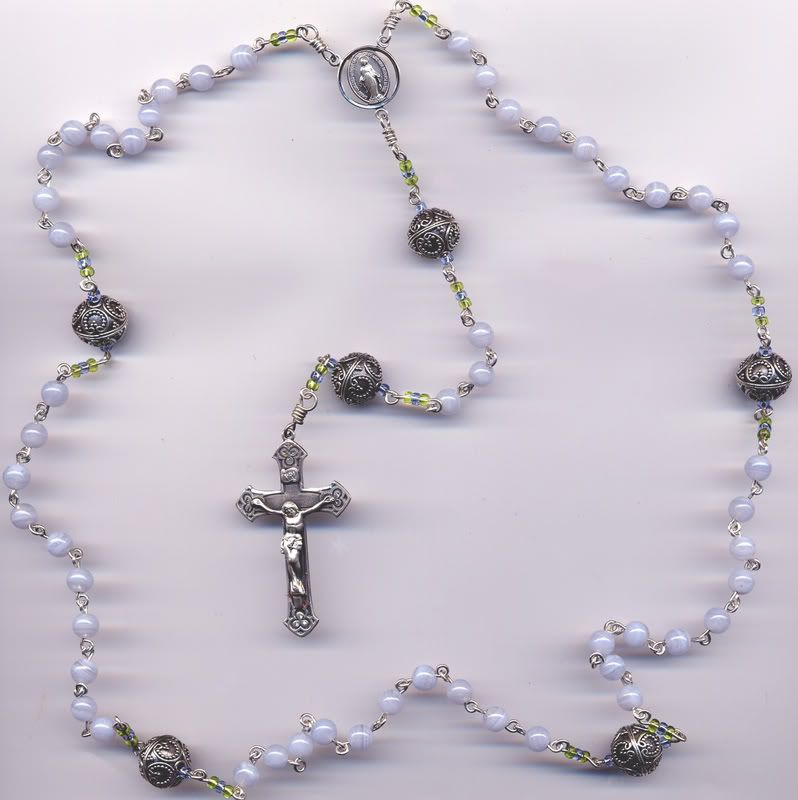
1. Sign of the Cross: In the name of the Father, and of the Son, and of the Holy Spirit. Amen.
2. The Apostles Creed: I BELIEVE in God, the Father almighty, Creator of heaven and earth. I believe in Jesus Christ, His only Son, our Lord. He was conceived by the power of the Holy Spirit and born of the Virgin Mary. He suffered under Pontius Pilate, was crucified, died, and was buried. He descended to the dead. On the third day He rose again. He ascended into heaven and sits at the right hand of God, the Father Almighty. From thence He shall come to judge the living and the dead. I believe in the Holy Spirit, the holy catholic Church, the communion of saints, the forgiveness of sins, the resurrection of the body, and the life everlasting. Amen.
3. The Lord's Prayer: OUR Father, who art in heaven, hallowed be Thy name. Thy kingdom come. Thy will be done on earth as it is in heaven. Give us this day our daily bread and forgive us our trespasses as we forgive those who trespass against us. And lead us not into temptation, but deliver us from evil. Amen.
4. (3) Hail Mary: HAIL Mary, full of grace, the Lord is with thee. Blessed art thou amongst women and blessed is the fruit of thy womb, Jesus. Holy Mary, Mother of God, pray for us sinners, now, and in the hour of our death. Amen. (Three times)
5. Glory Be: GLORY be to the Father, and to the Son, and to the Holy Spirit. As it was in the beginning, is now, and will be forever. Amen.
Fatima Prayer: Oh, my Jesus, forgive us our sins, save us from the fires of hell, lead all souls to heaven, especially those in most need of your mercy.
Announce each mystery, then say 1 Our Father, 10 Hail Marys, 1 Glory Be and 1 Fatima prayer. Repeat the process with each mystery.
End with the Hail Holy Queen:
Hail, Holy Queen, Mother of Mercy, our life, our sweetness and our hope! To thee do we cry, poor banished children of Eve! To thee do we send up our sighs, mourning and weeping in this vale of tears! Turn then, most gracious advocate, thine eyes of mercy towards us; and after this, our exile, show unto us the blessed fruit of thy womb, Jesus!
O clement, O loving, O sweet Virgin Mary! Pray for us, O holy Mother of God, that we may be made worthy of the promises of Christ.
Final step -- The Sign of the Cross
The Mysteries of the Rosary
By tradition, Catholics meditate on these Mysteries during prayers of the Rosary.
The biblical references follow each of the Mysteries below.
The Glorious Mysteries
(Wednesdays and Sundays)
1.The Resurrection (Matthew 28:1-8, Mark 16:1-18, Luke 24:1-12, John 20:1-29) [Spiritual fruit - Faith]
2. The Ascension (Mark 16:19-20, Luke 24:50-53, Acts 1:6-11) [Spiritual fruit - Christian Hope]
3. The Descent of the Holy Ghost (Acts 2:1-13) [Spiritual fruit - Gifts of the Holy Spirit]
4. The Assumption [Spiritual fruit - To Jesus through Mary]
5. The Coronation [Spiritual fruit - Grace of Final Perseverance]
5
posted on
04/18/2009 9:16:38 PM PDT
by
Salvation
( †With God all things are possible.†)
To: All
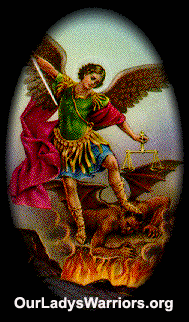
~ PRAYER ~

St. Michael, the Archangel, defend us in battle
Be our protection against the wickedness
and snares of the devil;
May God rebuke him, we humbly pray,
and do thou, O Prince of the heavenly host,
by the power of God,
Cast into hell Satan and all evil spirits
who prowl through the world seeking the ruin of souls.
Amen
+
6
posted on
04/18/2009 9:17:59 PM PDT
by
Salvation
( †With God all things are possible.†)
To: All
7
posted on
04/18/2009 9:19:07 PM PDT
by
Salvation
( †With God all things are possible.†)
To: All
April Devotion: The Blessed Sacrament
Since the 16th century Catholic piety has assigned entire months to special devotions. The Church traditionally encouraged the month of April for increased devotion to Jesus in the Holy Eucharist. "The Church in the course of the centuries has introduced various forms of this Eucharistic worship which are ever increasing in beauty and helpfulness; as, for example, visits of devotion to the tabernacles, even every day; Benediction of the Blessed Sacrament; solemn processions, especially at the time of Eucharistic Congresses, which pass through cities and villages; and adoration of the Blessed Sacrament publicly exposed . . . These exercises of piety have brought a wonderful increase in faith and supernatural life to the Church militant upon earth and they are re-echoed to a certain extent by the Church triumphant in heaven, which sings continually a hymn of praise to God and to the Lamb 'Who was slain.'" --Pope Pius XII ACT OF ADORATION
I adore Thee, 0 Jesus, true God and true Man, here present in the Holy Eucharist, humbly kneeling before Thee and united in spirit with all the faithful on earth and all the blessed in heaven. In deepest gratitude for so great a blessing, I love Thee, my Jesus, with my whole heart, for Thou art all perfect and all worthy of love.
Give me grace nevermore in any way to offend Thee, and grant that I, being refreshed by Thy Eucharistic presence here on earth, may be found worthy to come to the enjoyment with Mary of Thine eternal and everblessed presence in heaven. Amen.
FAITH IN THE EUCHARIST
O my God, I firmly believe that Thou art really and corporally present in the Blessed Sacrament of the altar. I adore Thee here present from the very depths of my heart, and I worship Thy sacred presence with all possible humility. O my soul, what joy to have Jesus Christ always with us, and to be able to speak to Him, heart to heart, with all confidence. Grant, O Lord, that I, having adored Thy divine Majesty here on earth in this wonderful Sacrament, may be able to adore it eternally in Heaven. Amen.
PETITION
Believing that Thou, my God, hast in any way revealed to us--grieving for all my sins, offenses and negligences--hoping in Thee, O Lord, who wilt never let me be confounded--thanking Thee for this supreme gift, and for all the gifts of Thy goodness--loving Thee, above all in this sacrament of Thy love--adoring Thee in this deepest mystery of Thy condescension: I lay before Thee all the wounds and wants of my poor soul, and ask for all that I need and desire. But I need only Thyself, O Lord; I desire none but Thee--Thy grace, and the grace to use well Thy graces, the possession of Thee by grace in this life, and the possession of Thee forever in the eternal kingdom of Thy glory.
FOR THE PEACE OF CHRIST
O most sacred, most loving heart of Jesus, Thou art concealed in the Holy Eucharist, and Thou beatest for us still. Now as then Thou sayest, "With desire I have desired." I worship Thee, then, with all my best love and awe, with my fervent affection, with my most subdued, most resolved will. O make my heart beat with Thy heart. Purify it of all that is earthly, all that is proud and sensual, all that is hard and cruel, of all perversity, of all disorder, of all deadness. So fill it with Thee, that neither the events of the day nor the circumstances of the time may have power to ruffle it; but that in Thy love and Thy fear it may have peace. --Cardinal Newman
ACT OF LOVE
I believe Thou art present in the Blessed Sacrament, O Jesus. I love Thee and desire Thee. Come into my heart. I embrace Thee, O never leave me. I beseech Thee, O Lord Jesus, may the burning and most sweet power of Thy love absorb my mind, that I may die through love of Thy love, who wast graciously pleased to die through love of my love. --St. Francis of Assisi
ACT OF REPARATION
Saint Margaret Mary Alacoque, well known in connection with devotion to the Sacred Herat of Jesus, led the way in making reparation to Jesus in the Blessed Sacrament for the coldness and ingratitude of men. This prayer of hers can become our own as we attempt to make amends for our own and others' neglect of the great Sacrament of His love, the Eucharist.
O kind and merciful savior, from my heart I earnestly desire to return Thee love for love. My greatest sorrow is that Thou art not loved by men, and, in particular, that my own heart is so cold, so selfish, so ungrateful. Keenly aware of my own weakness and poverty, I trust that Thy own grace will enable me to offer Thee an act of pure love. And I wish to offer Thee this act of love in reparation for the coldness and neglect that are shown to Thee in the sacrament of Thy love by Thy creatures. O Jesus, my supreme good, I love Thee, not for the sake of the reward which Thou hast promised to those who love Thee, but purely for Thyself. I love Thee above all things that can be loved, above all pleasures, and above myself and all that is not Thee, promising in the presence of heaven and earth that I will live and die purely and simply in Thy holy love, and that if to love Thee thus I must endure persecution and suffering I am completely satisfied, and I will ever say with Saint Paul: Nothing "will be able to separate us from the love of God." 0 Jesus, supreme master of all hearts, I love Thee, I adore Thee, I praise Thee, I thank Thee, because I am now all Thine own. Rule over me, and transform my soul into the likeness of Thyself, so that it may bless and glorify Thee forever in the abode of the saints.
--Saint Margaret Mary Alacoque
OFFERING
My Lord, I offer Thee myself in turn as a sacrifice of thanksgiving. Thou hast died for me, and I in turn make myself over to Thee. I am not my own. Thou hast bought me; I will by my own act and deed complete the purchase. My wish is to be separated from everything of this world; to cleanse myself simply from sin; to put away from me even what is innocent, if used for its own sake, and not for Thine. I put away reputation and honor, and influence, and power, for my praise and strength shall be in Thee. Enable me to carry out what I profess. Amen. --Cardinal Newman
Prayer Source: Prayer Book, The by Reverend John P. O'Connell, M.A., S.T.D. and Jex Martin, M.A., The Catholic Press, Inc., Chicago, Illinois, 1954

The best, the surest , and the most effective way of establishing everlasting peace on the face of the earth is through the great power of perpetual adoration of the Blessed Sacrament." -- Pope John Paul II
"Could you not watch one hour?" -- Mark 14:37
I am happy to testify that many young people are discovering the beauty of adoration, whether personal or in community. I invite priests to encourage youth groups in this, but also to accompany them to ensure that the forms of adoration are appropriate and dignified, with sufficient times for silence and listening to the word of God. In life today, which is often noisy and scattered, it is more important than ever to recover the capacity for interior silence and recollection: Eucharistic adoration permits one to do this not only within one's "I" but rather in the company of that "You" full of love who is Jesus Christ, "the God who is near us."
~Pope Benedict XVI
Holy Communion and Non-Catholics (with a Quiz!)
Beginning Catholic: The Eucharist: In the Presence of the Lord Himself [Ecumenical]
Beginning Catholic: Receiving the Lord in Holy Communion [Ecumenical]
Faithful Invited to Follow Pope, Adore Eucharist [Catholic Caucus]
Christmas and the Eucharist(Catholic/Orthodox Caucus)
Eucharist kneeling request sparks controversy [Catholic Caucus]
Eucharist vs. the Word (which is more important in the Catholic Church)
Christ the Miracle Worker in the Eucharist(Catholic Caucus)
Imitating Christ in the Eucharist(Catholic Caucus)
The Eucharist - the Lord's Sacrifice, Banquet and Presence (OPEN)
Pope Calls Eucharist History's Greatest Revolution [OPEN]
A Brief Catechism for Adults - Lesson 22: The Sacrament of the Holy Eucharist (Holy Communion)
A series of reflections from St. Peter Julian Eymard Blessed Sacrament(Catholic Caucus)
Eucharist, Holy Meal
Imitating Christ in the Eucharist
Christmas and the Eucharist
Prayer Before the Blessed Sacrament
This is My Body, This is My Blood
THE HOLY EUCHARIST IS THE WHOLE CHRIST
Gift Of Life, Gift Eternal: The Most Holy Eucharist and the Holy Sacrifice of the Mass
Area worshipers march to celebrate Holy Eucharist
Grace of the Eucharist is secret to holy priests, says Pope
The Disposition of Priests [Valid Mass, Valid Holy Eucharist?]
The Body of Christ?
Holy Sacrifice, Living Sacrament
Knights of the Eucharist
The Banquet of Corpus Christi - "Why did Jesus give us His Body and Blood?"
The Eucharist: Eternity and Time Together
Restored Order of the Sacraments of Initiation? Confirmation and First Eucharist together? (Vanity)
Reflections of Cardinal Ratzinger on the Eucharist
THE HOLY EUCHARIST: NOURISHMENT TO FINISH OUR COURSE
The Eucharist in Scripture - Part 1 - Old Testament
LITANY OF REPARATION TO OUR LORD IN THE BLESSED SACRAMENT
Benediction of the Blessed Sacrament
POPE GRANTS PLENARY INDULGENCE FOR YEAR OF THE EUCHARIST
New Plenary Indulgence to Mark Year of the Eucharist
Kneeling and Faith in the Eucharist
The Immaculate Conception and the Eucharist, a course in Christian culture in Tashkent
The Year of the Eucharist by Bishop Donald Wuerl
"While We're At It": What can we do to show that the Eucharist is a communal activity?
CATHOLICS AND BAPTISTS WITNESSED UNUSUAL IMAGES IN BLESSED SACRAMENT
The Discipline of the Eucharist Holy See Releases Redemptionis Sacramentum...
Vatican: Matters to be observed or to be avoided regarding the Most Holy Eucharist (April 23, 2004)
Devotion to the Holy Eucharist Advances Devotion to Jesus' Person
New rules on the Holy Eucharist on Holy Thursday
The Reverence due to the Holy Eucharist
The Holy Face of Jesus Christ as appeared on the Holy Eucharist
The Fourth Cup: The Sacrament of the Eucharist [Holy Thursday] [Passover]
Holy Father stresses Need of Devotion to Holy Eucharist outside of Mass: Pope Paul VI
8
posted on
04/18/2009 9:20:04 PM PDT
by
Salvation
( †With God all things are possible.†)
To: All
Holy Father's Prayer Intentions For April 2009
General: That the Lord may bless the farmers with an abundant harvest and sensitise the richer populations to the drama of hunger in the world
Mission: That the Christians who work in areas where the conditions of the poor, the weak and the women and children are most tragic, may be signs of hope, thanks to their courageous testimony to the Gospel of solidarity and love.
9
posted on
04/18/2009 9:20:57 PM PDT
by
Salvation
( †With God all things are possible.†)
To: All
From: Acts 4:32-37
The Way of Life of the Early Christians
[32] Now the company of those who believed were one heart and soul, and no
one said that any of the things which he possessed was his own, but they had
everything in common. [33] And with great power the Apostles gave their testi-
mony to the resurrection of the Lord Jesus, and greatgrace was upon them all.
[34] There was not a needy person among them, for as many as were posses-
sors of lands or houses sold them, and brought the proceeds of what was sold
[35] and laid it at the Apostles’ feet; and distribution was made to each as any
had need.
*********************************************************************************************
Commentary:
32-37. Here we are given a second summary of the life of the first Christian
community—which, presided over by Peter and the other Apostles, was the
Church, the entire Church of Jesus Christ. The Church of God on earth was
only beginning, all contained within the Jerusalem foundation. Now every
Christian community—no matter how small it be—which is in communion of
faith and obedience with the Church of Rome is the Church.
“The Church of Christ”, Vatican II teaches, “is really present in all legitimately
organized local groups of the faithful, which, in so far as they are united to their
pastors, are also quite appropriately called churches in the New Testament.
[...] In them the faithful are gathered together through the preaching of the Gos-
pel of Christ, and the mystery of the Lord’s Supper is celebrated. [...] In each
altar community, under the sacred ministry of the bishop, a manifest symbol is
to be seen of that charity and ‘unity of the Mystical Body, without which there
can be no salvation’ (”Summa Theologiae”, III, q. 73, a. 3). In these commu-
nities, though they may often be small and poor, or existing in the diaspora,
Christ is present through whose power and influence the one, holy, catholic
and apostolic Church is constituted” (”Lumen Gentium”, 26).
32. The text stresses the importance of “being one”: solidarity, unity, is a virtue
of good Christians and one of the marks of the Church: “The Apostles bore wit-
ness to the Resurrection not only by word by also by their virtues” (Chrysostom,
“Hom. on Acts”, 11). The disciples obviously were joyful and self-sacrificing.
This disposition, which results from charity, strives to promote forgiveness and
harmony among the brethren, all sons and daughters of the same Father. The
Church realizes that this harmony is often threatened by rancor, envy, misunder-
standing and self-assertion. By asking, in prayers and hymns like “Ubi Caritas”,
for evil disputes and conflicts to cease, “so that Christ our God may dwell among
us”, it is drawing its inspiration from the example of unity and charity left it by the
first Christian community in Jerusalem.
Harmony and mutual understanding among the disciples both reflect the internal
and external unity of the Church itself and helps its practical implementation.
There is only one Church of Jesus Christ because it has only “one Lord, one
one baptism” (Ephesians 4:5), and only one visible head—the Pope—who repre-
sents Christ on earth. The model and ultimate source of this unity is the Trinity
of divine persons, that is, “the unity of one God, the Father and the son in the
Holy Spirit” (Vatican II, “Unitatis Redintegratio”, 2). This characteristic work of
the Church is visibly expressed: in confession of one and the same faith, in one
system of government, in the celebration of the same form of divine worship,
and in fraternal concord among all God’s family (cf. “ibid.”).
The Church derives its life from the Holy Spirit; a main factor in nourishing this
life and thereby reinforcing the Church’s unity is the Blessed Eucharist: it acts
in a mysterious but real way, incessantly, to build up the Mystical Body of the
Lord.
God desires all Christians separated from the Church (they have Baptism, and
the Gospel truths in varying degrees) to find their way back to the flock of Christ
— which they can do by spiritual renewal, and prayer, dialogue and study.
34-35. St. Luke comes back again to the subject of renunciation of possessions,
repeating what he says in 2:44 and going on to give two different kinds of exam-
ple — that of Barnabas (4:36f) and that of Ananias and Sapphira (5:1f).
The disciples’ detachment from material things does not only mean that they
have a caring attitude to those in need. It also shows their simplicity of heart,
their desire to pass unnoticed and the full confidence they place in the Twelve.
“They gave up their possessions and in doing so demonstrated their respect for
the Apostles. For they did not presume to give it into their hands, that is, they
did not present it ostentatiously, but left it at their feet and made the Apostles
its owners and dispensers” (Chrysostom, “Hom. on Acts”, 11).
The text suggests that the Christians in Jerusalem had an organized system for
the relief of the poor in the community. Judaism had social welfare institutions
and probably the early Church used one of these as a model. However, the
Christian system of helping each according to his need would have had charac-
teristics of its own, deriving from the charity from which it sprang and as a result
of gradual differentiation from the Jewish way of doing things.
*********************************************************************************************
Source: “The Navarre Bible: Text and Commentaries”. Biblical text from the
Revised Standard Version and New Vulgate. Commentaries by members of
the Faculty of Theology, University of Navarre, Spain.
Published by Four Courts Press, Kill Lane, Blackrock, Co. Dublin, Ireland, and
by Scepter Publishers in the United States.
10
posted on
04/18/2009 9:21:52 PM PDT
by
Salvation
( †With God all things are possible.†)
To: All
From: 1 John 5:1-6 (NAB)
1 John 5:1-7 (RSVCE)
[1] Every one who believes that Jesus is the Christ is a child of God, and every
one who loves the parent loves the child. [2] By this we know that we love the
children of God, when we love God and obey his commandments. [3] For this is
the love of God, that we keep his commandments. And his commandments are
not burdensome. [4] For whatever is born of God overcomes the world; and this
is the victory that overcomes the world, our faith. [5] Who is it that overcomes
the world but he who believes that Jesus is the Son of God?
Testimony Borne to Christ
[6] This is he who came by water and blood, Jesus Christ, not with the water
only but with the water and the blood. [7] And the Spirit is the witness, because
the Spirit is the truth.
*********************************************************************************************
Commentary:
1-5. The fifth chapter is a summary of the entire letter, focusing on faith in Jesus
Christ (vv. 6-12) and the confidence that faith gives (vv. 13-21).
In the opening verses (vv. 1-5) St John points to some consequences of faith: he
who believes in Christ is a child of God (v. 1); he loves God and men, his brothers
(v. 2); he keeps the commandments (v. 3) and shares in Christ’s victory over the
world (vv. 4-5).
1. “He who loves the parent...”: it is axiomatic that one who loves his father also
loves his brothers and sisters, because they share the same parent. The New
Vulgate clarifies the scope of this maxim in this letter by adding the word “Deum”:
“He who loves God his father...” loves him who is born of God; Christian fraternity
is a consequence of divine filiation.
4. “This is our victory that overcomes the world, our faith”: faith in Jesus Christ
is of crucial importance because through it every baptized person is given a share
in Christ’s victory. Jesus has overcome the world (cf. Jn 16:33) by his death and
resurrection, and the Christian (who through faith becomes a member of Christ)
has access to all the graces necessary for coping with temptations and sharing
in Christ’s own glory. In this passage the word “world” has the pejorative meaning
of everything opposed to the redemptive work of Christ and the salvation of man
that flows from it.
6. The “water” and the “blood” have been interpreted in different ways, depending
on whether they apply (following the more literal meaning) to events in the life of
Christ, or are regarded as symbols of particular sacraments. The water, if referred
to the life of Christ, would be an allusion to our Lord’s baptism (cf. Mt 3:13-17 and
par.), where the Father and the Holy Spirit bore witness to Christ’s divinity; the
blood would refer to the Cross, where Christ, God and true man, shed his blood
to bring Redemption. According to this interpretation, St John is answering the
Gnostics, who said that Jesus of Nazareth became the Son of God through bap-
tism and ceased to be the Son of God prior to his passion: therefore, only the
man Jesus, devoid of divinity, died on the Cross; which would be a denial of the
redemptive value of Christ’s death.
Understood as symbols of the sacraments, the water would refer to Baptism (cf.
In 3:5), where we receive the Holy Spirit and the life of grace (cf. Jn 7:37-39); the
blood would apply to the Eucharist, where we partake of the blood of Christ in
order to have life in us (cf. Jn 6:53, 55, 56). Jesus came on earth to give his life
for men (cf. Jn 10:10); we obtain that life in the first instance by means of the
living water of Baptism (cf. Jn 4:14; 7:37ff); and also by the application of the
blood of Christ, which cleanses us from all sin (cf. 1 Jn 1:7; 2:2; 4:10).
The two interpretations are compatible with one another, given that sacraments
are sensible signs of the supernatural effects of Christ’s redemptive death. Re-
ferring to Baptism, Tertullian wrote: “We have also a second laving, and it too
is unique—the baptism with blood. The Lord spoke of this when he said, ‘I have
a baptism to be baptized with’ (Lk 12:50), having had already been baptized
once. So, he did come ‘by water and blood’ (1 In 5:6), as John writes, in order
to be bathed by the water and glorified by the blood, in order to make us (who
are called by water) chosen ones through blood. These two baptisms spring
from the wound in his pierced side; so it is that those who believed in his blood
would be washed by the water; those who were washed in the water would also
drink of the blood” (”De Baptismo”, XVI).
7-8. The Sistine-Clementine edition of the Vulgate included an addition which
left the text reading as follows: “There are three who give witness [in heaven:
the Father, the Word, and the Holy Spirit; and these three are one. And there
are three who give witness on earth]: the Spirit, the water, and the blood; and
these three agree.” The words shown in bracketed italics (known as the Johan-
nine “comma” or addition) were the subject of heated debate (around the end
of the nineteenth century) as to their authenticity. The Holy Office (as was)
left theologians free to research the matter (cf. “Declaration”, 2 June 1927) and
in fact it has been shown that the “comma” was introduced in Spain around the
fourth century AD in a text attributed to Priscillian, and therefore does not be-
long to the original inspired text. The “comma”makes express mention of the
Blessed Trinity; however, even without it the text proclaims that mystery of faith
fairly clearly: it makes mention of Jesus Christ, the Son of God (vv. 5-6), and of
the Holy Spirit (v. 7) and of the Father, both of whom bear witness to the Son
(v. 9).
According to the legal prescriptions of the Old Testament, the testimony of one
witness was insufficient at trials (Deut 17:6; cf. Jn 8:17). St John points to three
witnesses (the Holy Spirit, water and blood), thereby refuting the Gnostic tea-
ching; he is saying that the water and the blood, that is, Christ’s baptism and
his death on the Cross, are a manifestation of his divinity. Clearly the word “wit-
ness” is used here in a broad sense: namely, in the sense that at those two
important moments in his life, Christ makes known to us that he is true God.
The Fathers who interpreted these words as referring to the sacraments usually
comment on the fact that in the sacraments the grace of God is communicated
internally and is signaled externally. St Bede writes along those lines: “The
Holy Spirit makes us adoptive sons of God; the water of the sacred fount clean-
ses us; the blood of the Lord redeems us: the spiritual sacrament gives us a
dual witness, one visible, one invisible” (”In I Epist. S. Ioannis, ad loc.”).
*********************************************************************************************
Source: “The Navarre Bible: Text and Commentaries”. Biblical text from the
Revised Standard Version and New Vulgate. Commentaries by members of
the Faculty of Theology, University of Navarre, Spain.
Published by Four Courts Press, Kill Lane, Blackrock, Co. Dublin, Ireland, and
by Scepter Publishers in the United States.
11
posted on
04/18/2009 9:22:52 PM PDT
by
Salvation
( †With God all things are possible.†)
To: All
From: John 20:19-31
Jesus Appears to the Disciples
[19] On the evening of that day, the first day of the week, the doors shut where
the disciples were, for fear of the Jews, Jesus came and stood among them and
said to them, “Peace be with you.” [20] When He had said this, He showed
them His hands and His side. Then the disciples were glad when they saw the
Lord. [21] Jesus said to them again, “Peace be with you. As the Father has
sent Me, even so I send you.” [22] And when He had said this, He breathed on
them, and said to them, “Receive the Holy Spirit. [23] If you forgive the sins of
any, they are forgiven; if you retain the sins of any, they are retained.”
[24] Now Thomas, one of the Twelve, called the Twin, was not with them when
Jesus came. [25] So the other disciples told him, “We have seen the Lord.”
But he said to them, “Unless I see in His hands the print of the nails, and place
my finger in the mark of the nails, and place my hand in His side, I will not
believe.”
[26] Eight days later, His disciples were again in the house, and Thomas was
with them. The doors were shut, but Jesus came and stood among them, and
said, “Peace be with you.” [27] Then He said to Thomas, “Put your finger here,
and see My hands; and put out your hand, and place it in My side; do not be
faithless, but believing.” [28] Thomas answered Him, “My Lord and my God!”
[29] Jesus said to him, “Have you believed because you have seen Me?
Blessed are those who have not seen and yet believe.”
[30] Now Jesus did many other signs in the presence of the disciples, which
are not written in this book; [31] but these are written that you may believe that
Jesus is the Christ, the Son of God, and that believing you may have life in His
name.
*********************************************************************************************
Commentary:
19-20. Jesus appears to the Apostles on the evening of the day of which He
rose. He presents Himself in their midst without any need for the doors to be
opened, by using the qualities of His glorified body; but in order to dispel any
impression that He is only a spirit He shows them His hands and His side: there
is no longer any doubt about its being Jesus Himself, about His being truly risen
from the dead. He greets them twice using the words of greeting customary
among the Jews, with the same tenderness as He previously used put into this
salutation. These friendly words dispel the fear and shame the Apostles must
have been feeling at behaving so disloyally during His passion: He has created
the normal atmosphere of intimacy, and now He will endow them with transcen-
dental powers.
21. Pope Leo XIII explained how Christ transferred His own mission to the
Apostles: “What did He wish in regard to the Church founded, or about to be
founded? This: to transmit to it the same mission and the same mandate which
He had received from the Father, that they should be perpetuated. This He
clearly resolved to do: this He actually did. ‘As the Father hath sent Me, even so
I send you’ (John 20:21). ‘As Thou didst send Me into the world, so I have sent
them into the world’ (John 17:18). [...] When about to ascend into Heaven, He
sends His Apostles in virtue of the same power by which He had been sent from
the Father; and He charges them to spread abroad and propagate His teachings
(cf. Matthew 28:18), so that those obeying the Apostles might be saved, and
those disobeying should perish (cf. Mark 16:16). [...] Hence He commands that
the teaching of the Apostles should be religiously accepted and piously kept as
if it were His own: ‘He who hears you hears Me, and he who rejects you rejects
Me’ (Luke 10:16). Wherefore the Apostles are ambassadors of Christ as He is
the ambassador of the Father” ([Pope] Leo XIII, “Satis Cognitum”). In this
mission the bishops are the successors of the Apostles: “Christ sent the Apos-
tles as He Himself had been sent by the Father, and then through the Apostles
made their successors, the bishops, sharers in His consecration and mission.
The function of the bishops’ ministry was handed over in a subordinate degree
to priests so that they might be appointed in the order of the priesthood and be
co-workers of the episcopal order for the proper fulfillment of the apostolic mis-
sion that had been entrusted to it by Christ” (Vatican II, “Presbyterorum
Ordinis”, 2).
22-23. The Church has always understood—and has in fact defined—that Jesus
Christ here conferred on the Apostles authority to forgive sins, a power which
is exercised in the Sacrament of Penance. “The Lord then especially instituted
the Sacrament of Penance when, after being risen from the dead, He breathed
upon His disciples and said: “Receive the Holy Spirit...’ The consensus of all
the Fathers has always acknowledged that by this action so sublime and words
so clear the power of forgiving and retaining sins was given to the Apostles and
their lawful successors for reconciling the faithful who have fallen after Baptism”
(Council of Trent, “De Paenitentia”, Chapter 1).
The Sacrament of Penance is the most sublime expression of God’s love and
mercy towards men, described so vividly in Jesus’ parable of the prodigal son
(cf. Luke 15:11-32). The Lord always awaits us, with His arms wide open,
waiting for us to repent—and then He will forgive us and restore us to the dignity
of being His sons.
The Popes have consistently recommended Christians to have regular recourse
to this Sacrament: “For a constant and speedy advancement in the path of virtue
we highly recommend the pious practice of frequent Confession, introduced by
the Church under the guidance of the Holy Spirit; for by this means we grow in
a true knowledge of ourselves and in Christian humility, bad habits are uprooted,
spiritual negligence and apathy are prevented, the conscience is purified and the
will strengthened, salutary spiritual direction is obtained, and grace is increased
by the efficacy of the Sacrament itself” ([Pope] Pius XII, “Mystici Corporis”).
24-28. Thomas’ doubting moves our Lord to give him special proof that His risen
body is quite real. By so doing He bolsters the faith of those who would later on
find faith in Him. “Surely you do not think”,
[Pope] St. Gregory the Great comments, “that is was a pure accident that the
chosen disciple was missing; who on his return was told about the appearance
and on hearing about it doubted; doubting, so that he might touch and believe by
touching? It was not an accident; God arranged that it should happen. His cle-
mency acted in this wonderful way so that through the doubting disciple touching
the wounds in His Master’s body, our own wounds of incredulity might be healed.
[...] And so the disciple, doubting and touching, was changed into a witness of
the truth of the Resurrection” (”In Evangelia Homiliae”, 26, 7).
Thomas’ reply is not simply an exclamation: it is an assertion, an admirable act
of faith in the divinity of Christ: “My Lord and my God!” These words are an eja-
culatory prayer often used by Christians, especially as an act of faith in the real
presence of Christ in the Blessed Eucharist.
29. [Pope] St. Gregory the Great explains these words of our Lord as follows:
“By St. Paul saying ‘faith is the assurance of things hoped for, the conviction of
things unseen’ (Hebrews 11:1), it becomes clear that faith has to do with things
which are not seen, for those which are seen are no longer the object of faith,
but rather of experience. Well then, why is Thomas told, when he saw and
touched, ‘Because you have seen, you have believed?’ Because he saw one
thing, and believed another. It is certain that mortal man cannot see divinity;
therefore, he saw the man and recognized Him as God, saying, ‘My Lord and
my God.’ In conclusion: seeing, he believed, because contemplating that real
man he exclaimed that He was God, whom he could not see” (”In Evangelia
Homiliae”, 27, 8).
Like everyone else Thomas needed the grace of God to believe, but in addition
to this grace he was given an exceptional proof; his faith would have had more
merit had he accepted the testimony of the other Apostles. Revealed truths
are normally transmitted by word, by the testimony of other people who, sent
by Christ and aided by the Holy Spirit, preach the deposit of faith (cf. Mark
16:15-16). “So faith comes from what is heard, and what is heard comes from
the preaching of Christ” (Romans 10:17). The preaching of the Gospel, there-
fore, carries with it sufficient guarantees of credibility, and by accepting that
preaching man “offers the full submission of his intellect and will to God who
reveals, willingly assenting to the revelation given” (Vatican II, “Dei Verbum”,
5).
“What follows pleases us greatly: ‘Blessed are those who have not seen and
yet believe.’ For undoubtedly it is we who are meant, who confess with our
soul Him whom we have not seen in the flesh. It refers to us, provided we live
in accordance with the faith, for only he truly believes who practices what the
believes” (”In Evangelia Homiliae”, 26, 9).
30-31. This is a kind of first epilogue or conclusion to the Gospel of St. John.
The more common opinion is that he added Chapter 21 later, which covers
such important events as the triple confession of St. Peter, confirmation of his
primacy and our Lord’s prophecy about the death of the beloved disciple.
These verses sum up the inspired writer’s whole purpose in writing his Gospel —
to have men believe that Jesus was the Messiah, the Christ announced by the
prophets in the Old Testament, the Son of God, so that by believing this saving
truth, which is the core of Revelation, they might already begin to partake of
eternal life (cf. John 1:12, 2:23; 3:18; 14:13; 15:16; 16:23-26).
*********************************************************************************************
Source: “The Navarre Bible: Text and Commentaries”. Biblical text from the
Revised Standard Version and New Vulgate. Commentaries by members of
the Faculty of Theology, University of Navarre, Spain.
Published by Four Courts Press, Kill Lane, Blackrock, Co. Dublin, Ireland, and
by Scepter Publishers in the United States.
12
posted on
04/18/2009 9:23:52 PM PDT
by
Salvation
( †With God all things are possible.†)
To: All
To Love is to Say “I’m Sorry”
April 18th, 2009 by Fr. Paul Grankauskas
The tag line for the 1970s film Love Story reads, “Being in love means never having to say you are sorry.” With all due respect, whoever wrote that was obviously never in love a day in his life.
No matter how dear our loved ones are, no matter how much we may love someone, there are times when we have to say “I’m sorry.” Love moves us to say those words when we know we have sinned against someone — be it God or neighbor — in word or action. Love moves us to acknowledge that our actions, our sins, affect our relationship with those around us: God, our neighbor, the Church. Love is the very thing that moves us to say we are sorry and seek to heal the wounds caused by our sins.
Love moved Peter to weep bitterly the night he denied even knowing Jesus. This was not just some guilty feeling to be glossed over. This was true sorrow for having denied the Master who loved him, and the recognition of his own weakness. After the resurrection, love moves Our Lord to offer Peter a chance for reconciliation. Peter seems to jump at the chance. Three times he will express his love for Jesus, once for each denial.
What does this have to do with this week’s Gospel?
Plenty.
Our Lord’s first words to the Apostles upon His appearance in the Upper Room are not words of condemnation. He does not call them worthless louts for running off on Him. He does not take back the gift of the priesthood conferred upon them on the night of the Last Supper. Rather, His first words are, “Peace be with you.” These are the words the frightened, troubled Apostles needed to hear.
Then comes a great commission: “As the Father has sent me, so I send you.” The Divine Son came into the world to establish His kingdom on earth. The work of building up that kingdom — of building up the Church — would continue with the Apostles.
He commissions them to be ministers of reconciliation: “Whose sins you forgive will be forgiven, and whose sins you retain will be retained.” Jesus Christ, whose very heart is the fount of grace and mercy, commissions the Apostles to be the ministers of those very same gifts. Who better to carry out that task than those who understood the need for mercy? One can easily imagine Peter and Thomas being patient and understanding with the faults of others because they were fully aware of their own weakness and moments of doubt. One can also imagine them being firm in correcting sinners, knowing as they did the glory and power of God revealed in Christ.
This Sunday is a fitting day to celebrate this precious gift of reconciliation, the sacrament of mercy. The second Sunday of Easter was designated by Pope John Paul II as Divine Mercy Sunday. The Holy Father had a special devotion to St. Faustina Kowalska, a Polish nun whose diary spoke of Our Lord’s desire to have a special feast established on this day celebrating and exalting God’s powerful mercy.
Our Lord said to St. Faustina: “I desire that this feast of mercy be a refuge and shelter for all souls, and especially for poor sinners. On that day the very depths of My tender mercy are open. I pour out a whole ocean of graces upon those souls who approach the fount of My mercy. The souls that will go to confession and holy Communion shall obtain complete forgiveness of sin and punishment.”
Jesus also told St. Faustina: “When you approach the confessional, know that I myself am waiting there for you. I am hidden only be the priest, but I myself act in your soul. Here the misery of the soul meets the God of mercy. Make your confession before me. The person of the priest is, for me, only a screen. Never analyze what sort of a priest it is that I am making use of; open your soul in confession as you would to me, and I will fill it with my light.”
Such is the depth of love Christ has for each of us. Nothing stands in the way of our knowing and receiving that gift except the sins of pride, which prevents us from saying things like “I’m sorry” and “I forgive you,” and despair, which keeps us from thinking we deserve such a gift. What God is willing to give, we should not be so ready to shun or ignore. We may weep bitterly for our sins as Peter did, but we must never forget that God is ready to show us His mercy. He is ready to say, “I forgive you. “ First, we need to say we’re sorry.
Fr. Paul Grankauskas is parochial vicar at St. Mary of Sorrows Parish in Fairfax, Virginia.
(This article courtesy of the Arlington Catholic Herald.)
13
posted on
04/18/2009 9:29:36 PM PDT
by
Salvation
( †With God all things are possible.†)
To: All
The Work of God

Year B - 2nd Sunday of Easter – Divine Mercy Sunday If you forgive the sins of anyone, they will be forgiven John 20:19-31 John 20:19-31 20 When it was evening on that day, the first day of the week, and the doors of the house where the disciples had met were locked for fear of the Jews, Jesus came and stood among them and said, "Peace be with you."
20 After he said this, he showed them his hands and his side. Then the disciples rejoiced when they saw the Lord.
21 Jesus said to them again, "Peace be with you. As the Father has sent me, so I send you."
22 When he had said this, he breathed on them and said to them, "Receive the Holy Spirit.
23 If you forgive the sins of any, they are forgiven them; if you retain the sins of any, they are retained."
24 But Thomas (who was called the Twin), one of the twelve, was not with them when Jesus came.
25 So the other disciples told him, "We have seen the Lord." But he said to them, "Unless I see the mark of the nails in his hands, and put my finger in the mark of the nails and my hand in his side, I will not believe."
26 A week later his disciples were again in the house, and Thomas was with them. Although the doors were shut, Jesus came and stood among them and said, "Peace be with you."
27 Then he said to Thomas, "Put your finger here and see my hands. Reach out your hand and put it in my side. Do not doubt but believe."
28 Thomas answered him, "My Lord and my God!"
29 Jesus said to him, "Have you believed because you have seen me? Blessed are those who have not seen and yet have come to believe."
30 Now Jesus did many other signs in the presence of his disciples, which are not written in this book.
31 But these are written so that you may come to believe that Jesus is the Messiah, the Son of God, and that through believing you may have life in his name.Inspiration of the Holy Spirit - From the Sacred Heart of Jesus After my resurrection I visited the apostles, they were still in a state of shock, unable to comprehend how their master had left them, they were afraid, confused and did not know what to do. After my resurrection I visited the apostles, they were still in a state of shock, unable to comprehend how their master had left them, they were afraid, confused and did not know what to do.
I stood among them and said “Peace be with you”. True peace from God did not exist in the world until that moment, since the peace from God is the fruit of the reconciliation between God and men. My peace filled their hearts and will fill the heart of any one who experiences my forgiveness.
My apostles rejoiced immensely, with a great sense of relief although they were still astounded , so I said to them, “Peace be with you. As the Father has sent me, so I send you." At this moment I delegated my heavenly authority to the apostles, so that they could continue my work in the Church.
After this “I breathed on them”, reminding the moment of the creation of man when God breathed life for the first time. I said to them “Receive the Holy Spirit, ”
If you forgive the sins of anyone, they are forgiven them; if you retain the sins of anyone, they are retained."
This was the beginning of the new creation, the children of God who share the Holy Spirit, man was redeemed now, he could share the greatest gift which is God’s presence. I empowered my apostles and their successors to forgive sins which was the main purpose of my coming to the world.
Thomas was not there when this happened, and you were not there either, because of this I said to Thomas and to you now: “do not doubt but believe.
Blessed are those who believe in me without seeing me.”
My Divine Mercy has been made available to everyone in the Sacrament of confession. When you confess your sins to the priest you are confessing them to me because my authority to forgive sins was given to the Church. Doubt no longer but believe.
My dear child, I desire for your faith to be strong. Do not question the Holy Scriptures but believe. Believe in the power that is ever present in my Church to forgive sins in the Sacrament of Confession, believe in my presence in the Sacrament of the Holy Eucharist. Come to all the sacraments, those holy encounters with me, with utter humility and contrition because you have sinned and you will be forgiven. Believe in me and my joy will be yours.
Author: Joseph of Jesus and Mary |
14
posted on
04/18/2009 9:37:33 PM PDT
by
Salvation
( †With God all things are possible.†)
To: All
Catholic Doors
How marvellous was the living faith of the early Church Christians once they knew that Jesus was the Messiah and that He had resurrected from the dead! Once Jesus had resurrected by the grace of God the Father and the power of the Holy Spirit, it did not take Him very long to firmly establish the Mystical Body of the Holy Catholic Church on earth.
During today's First Reading from The Acts of the Apostles, [Acts 4:32-35] we heard of the living faith that united the members of the early Church. They were of one heart and one soul. No one claimed private ownership of any possessions. All shared what they owned for the good of all.
The love and charity that was enjoyed by the early Church Christians is still visible today in a variety of degrees. Many of those who have been called to the religious life have made the vow of poverty in order to live their faith of one heart and soul as was seen in the early Church.
In the worldly life, many of those who are more fortunate than others contribute to charities on an ongoing basis to help the less fortunate. The oneness of heart and soul in today's Christians is seen through the ongoing fruits of the Bishop's appeal, the assistance provided to missions, the United Way Appeal, the Red Cross, special funds set up for those enduring natural disasters, the local Food Banks, and the thousands of other agencies that are managed by an endless number of volunteers who donate their endless time and efforts for the betterment of the world.
While our living faith embraces physical actions, it also requires that we testify to the Word of God. As the apostles gave their testimony to the glorious Resurrection of the Lord Jesus, as instruments of the Lord, we too are called to testify to others as to the reason for our living faith. From the understanding and knowledge of our living faith, our hope and our charity that have been firmly established in Jesus Christ, we are called to share this knowledge and understanding with our brothers and sisters for the growth and benefit of the whole Body of Christ. We are called to share it with our children so they too may establish their living faith in the righteousness of Jesus Christ.
The Second Reading from the First Letter of John [1 Jn. 5:1-6] teaches us that "Everyone who believes that Jesus is the Christ has been born of God, and everyone who loves the parent loves the child."
Through faith in Jesus and the Sacrament of Baptism, we were born again as new creations of the godly seed. As new creations, we became children of God. This qualifies us to inherit the eternal Kingdom of God if we persevere in our living faith through the sacramental life. As children of God, if we love our Heavenly Father, then we also love His children, our brothers and sisters in Christ.
How do we know if we love our brothers and sisters in Christ? It is by our love for God and by our obedience to His Commandments. The Commandments of God are not hard to obey for those who are born again. For their living faith in Christ testifies to their victory, that they have conquered the world. Their charitable actions and their testifying as to the Word of God to others is a sure sign that while they are in the world, they are not of this world. Their minds are set on what is spiritual in the hope of things to come.
Our living faith is in Jesus, the Son of God. In the Gospel of John, Jesus tells us, "Very truly, I tell you, no one can see the Kingdom of God without being born of water and Spirit." [Jn. 3:5] Through the words that were inspired upon John the Baptist, we know that through Jesus, we are baptized with the Holy Spirit and fire. [Mt. 3:11] Having received our Baptism through water, it is the Holy Spirit who purifies us as we are sanctified to become in the likeness of Christ.
When Jesus was baptized, it was not to be born again. For He is the eternal God. His baptism was an example for us to follow. The baptism of Jesus was not only a baptism by water, but also by blood. He gave His life for us as the sacrificial Lamb of God.
Who shall testify on our behalf that we have been born again through faith in Jesus and the Sacrament of Baptism? Who shall testify on our behalf that we have lived our faith in Christ? Who shall testify on our behalf that we allowed ourselves to be sanctified in Christ by the purifying fire of the Holy Spirit? Will it be our parents, our godparents or our friends?
No! It is the Holy Spirit Himself Who shall testify on our behalf. It is the indwelling Holy Spirit who bears witness that we have received the new creation of the godly seed during the Sacrament of Baptism. It is indwelling Holy Spirit who shall testify that we have walked our faith in Christ and allowed ourselves to be sanctified by His purifying fire.
Most of us, we remember today's reading from the Gospel of John. [Jn. 20:19-31] We all know the story of the doubting Thomas who said that he would not believe that Jesus had resurrected until such time as he had touched the mark of the nails and the side of the Lord. The Holy Bible does not tell us if St. Thomas ever did touch the marks on the body of Jesus. But it does tell us that once Jesus had appeared to St. Thomas, he suddenly came to believe. St. Thomas said, "My Lord and my God!" Not only did St. Thomas perceive at that moment that Jesus was His Lord and teacher, but that He was also the eternal God manifested in human form.
In response to the doubt of St. Thomas, Jesus said, "Have you believed because you have seen me? Blessed are those who have not seen and yet have come to believe." Yes, blessed are those who have not seen and who believe! Do you realize that not having seen Jesus, because of your living faith in Him, you are more blessed than the Apostle St. Thomas who doubted? What a blessing!
When Jesus appeared to His disciples, He breathed the Holy Spirit upon them. In other words, the Holy Spirit made His indwelling within the disciples and they became full of the Holy Spirit. Their minds were opened to the knowledge and understanding of the Spirit of Truth.
Having done this, Jesus authorized His Apostles to forgive the sins of others in His Name. Those who's sins are forgiven shall be forgiven. Those who sins are retained shall be retained.
This statement of Jesus testifies to the truth regarding the Sacrament of Confession. While some may want to believe that they can confess their sins directly to God the Father by bypassing those who have been appointed by Jesus to administer the Sacrament of Confession in the Holy Catholic Church, they are living a false hope. Without the Sacrament of Confession through the priests who have received the faculty to hear Confessions and who are in direct succession to the Apostles of Jesus, there is no forgiveness of sins.
Jesus did not say, "Be baptized and you are saved." He gave a number of commands. The Sacrament of Baptism through faith in Jesus Christ opens the door to our salvation. It makes us righteousness in the eyes of God through the forgiveness of the original sin and the sins committed before our Baptism. To maintain that righteousness, we must receive the Sacrament of Confession on a regular basis. The Sacrament of Confession that returns our state of grace is still insufficient for our salvation. We still need the Sacrament of the Holy Eucharist, the Living Bread that leads to the salvation to our souls.
My brothers and sisters, to live our faith in Jesus, we must receive the Sacraments of the Holy Catholic Church. To live our faith in Jesus, we must abide by the Commandments of God. By doing these things, we will have life in His Most Holy Name.
15
posted on
04/18/2009 9:40:24 PM PDT
by
Salvation
( †With God all things are possible.†)
To: All
The Road to Emmaus
First Reading – Acts 4:32-35
Responsorial Psalm – Ps. 118:2-4, 13-15, 22-24
Second Reading – 1 Jn. 5:1-6
Gospel Reading – Jn. 20:19-31
In the Gospel reading from John for the Second Sunday of Easter, otherwise known as Mercy Sunday, we have three distinct sections:
1. Jesus’ conferring of peace, the Holy Spirit and the power to forgive sins.
2. Thomas’ encounter with Jesus.
3. John tells us why he’s writing.
Jesus confers peace
On the evening of the very day of the Resurrection of Jesus, the Apostles, except Thomas, have locked themselves up because they fear the Jews (cf. Jn. 20:19). They unquestionably still think that what happened to Jesus might yet happen to them.
However, Jesus comes into this locked room and says, “Peace be with you” (Jn. 20:19). The Hebrew words Jesus uses are the standard Hebrew greeting, shalom aleichem. However, shalom has far more meaning than the English word peace.
Typically in English peace means an absence of war or conflict. Shalom, however, involves more than that. One can have shalom even in the midst of conflict.
For a deeper understanding we must recognize the meaning of what God says through the prophet Isaiah: “For the mountains may depart and the hills be removed, but my mercy shall not depart from you, and my covenant of peace shall not be removed, says the Lord who has compassion on you” (54:10).
First, there is a confirmation of what has already been said. There can be peace in the midst of conflict. The language of mountains departing and hills being removed indicates conflict. Nevertheless, peace will not be removed.
Second, there is a connection between mercy and peace, racham and shalom. The word racham can be translated as mercy or compassion. As you may already be aware, compassion means “to suffer with another.” In the context of the Gospel reading Jesus is having mercy, or compassion, on those who are locked up for fear, by greeting, and giving, them shalom.
Third, in the quotation from Isaiah we hear the language of a “covenant of peace,” which helps us understand more fully what shalom is. To be in covenant with someone is to have a God-given familial bond with another. Covenant makes family. In this case Jesus has established the new and everlasting covenant with the Apostles at the Last Supper. They are in a covenant of peace, so he says, “Peace be with you.”
Also, shalom means “to be complete or fulfilled.” How does Jesus give them this peace or fulfillment? By breathing the Holy Spirit upon them, thus giving them a taste of what is coming at Pentecost. Therefore, to have true peace is to be filled with the Holy Spirit, the Third Person of the Trinity.
Jesus confers the Holy Spirit and the power to forgive sins
Jesus then repeats, “Peace be with you” (Jn. 20:21). Then Jesus says, “As the Father has sent me, even so I send you” (Jn. 20:21). At that time, “he breathed on them, and said to them, ‘Receive the Holy Spirit. If you forgive the sins of any, they are forgiven; if you retain the sins of any, they are retained’” (Jn. 20:22-23).
Jesus has been sent by the Father to confer mercy, compassion, peace and fulfillment. So, too Jesus sends the Apostles to confer mercy, compassion, peace and fulfillment. How? Through the forgiveness of sins by the power of the Holy Spirit. (Implicit in all of this is Jesus’ forgiveness of them for abandoning him at his time of suffering and death.)
The Father sent the Son for the forgiveness of sins. The angel said to Joseph, “he will save his people from their sins” (Mt. 1:21). Now the Son sends the Apostles for the forgiveness of sins in precisely the same way the Father sent him. The Holy Spirit overshadowed Mary at the Incarnation, now the Holy Spirit is breathed upon the Apostle as a foretaste of the overshadowing of the Holy Spirit that will come upon the at Pentecost.
Jesus conferred mercy and peace upon them as they are gathered together in fear. The Apostles are to confer mercy and peace to all who come to them with humble and contrite hearts, confessing their sins.
This brings to mind the prayer of absolution after one has confessed their sins, “God, the Father of mercies, through the death and resurrection of his Son has reconciled the world to himself and sent the Holy Spirit among us for the forgiveness of sins; through the ministry of the Church may God give you pardon and peace, and I absolve you from your sins in the name of the Father, and of the Son, and of the Holy Spirit.”
The Sacrament of Reconciliation is a sacrament of mercy, compassion, peace and fulfillment.
Jesus and Thomas
When this occurred Thomas was not with them, so the other Apostles with much excitement tell him, “We have seen the Lord” (Jn. 20:25). He did not believe them. The only way he was going to believe was by seeing and touching the wounds of Christ’s crucifixion.
Pope Benedict XVI notes for our consideration, “…From these words emerges the conviction that Jesus can now be recognized by his wounds rather than by his face. Thomas holds that the signs that confirm Jesus’ identity are now above all his wounds, in which he reveals to us how much he loved us. In this the Apostle is not mistaken.”
A week later Jesus appears again, this time with Thomas present, and once again says, “Peace be with you” (Jn. 20:26). Jesus says to Thomas, “Put your finger here, and see my hands; and put out your hand, and place it in my side; do not be faithless, but believing” (Jn. 20:27). Thomas’ response is one of the clearest references to the fact that Jesus is God, he exclaims, “My Lord and my God!” (Jn. 20:28).
St. Augustine has said of this, “Thomas saw and touched the man, and acknowledged the God whom he neither saw nor touched; but by the means of what he saw and touched, he now put far away from him every doubt, and believed the other.”
Jesus responds to Thomas’ declaration of faith with a message to us all: “You have believed because you have seen me. Blessed are those who have not seen and yet believe” (Jn. 20:29). This is certainly significant for most Christians who do not see, yet believe. We don’t need to see miracles and visions for our faith to be solid. It is better for us if we don’t see these things, for this we receive a divine blessing.
Pope Benedict gives three reasons why the account of Thomas is important. He says, “First, because it comforts us in our insecurity; second, because it shows us that every doubt can lead to an outcome brighter than any uncertainty; and, lastly, because the words of Jesus addressed to him remind us of the true meaning of mature faith and encourage us to persevere, despite the difficulty, along our journey of adhesion to him.”
John’s tells us why he’s writing
John, in the last part of this Sunday’s Gospel reading, tells us why he has recounted all that he has in his Gospel. It is so that “you may believe that Jesus is the Christ, the Son of God, and believing you may have life in his name” (Jn. 20:31).
16
posted on
04/18/2009 9:46:40 PM PDT
by
Salvation
( †With God all things are possible.†)
To: All
Scripture readings taken from the Jerusalem Bible, published and copyright © 1966, 1967 and 1968 by Darton, Longman & Todd
Mass Readings
| First reading |
Acts 4:32-35 © |
|
The whole group of believers was united, heart and soul; no one claimed for his own use anything that he had, as everything they owned was held in common.
The apostles continued to testify to the resurrection of the Lord Jesus with great power, and they were all given great respect.
None of their members was ever in want, as all those who owned land or houses would sell them, and bring the money from them, to present it to the apostles; it was then distributed to any members who might be in need.
|
| Psalm or canticle: Psalm 117:2-4,15-18,22-24 |
| Second reading |
1 John 5:1-6 © |
|
Whoever believes that Jesus is the Christ
has been begotten by God;
and whoever loves the Father that begot him
loves the child whom he begets.
We can be sure that we love God’s children
if we love God himself and do what he has commanded us;
this is what loving God is –
keeping his commandments;
and his commandments are not difficult,
because anyone who has been begotten by God
has already overcome the world;
this is the victory over the world –
our faith.
Who can overcome the world?
Only the man who believes that Jesus is the Son of God:
Jesus Christ who came by water and blood,
not with water only,
but with water and blood;
with the Spirit as another witness –
since the Spirit is the truth.
|
| Gospel |
John 20:19-31 © |
|
In the evening of that same day, the first day of the week, the doors were closed in the room where the disciples were, for fear of the Jews. Jesus came and stood among them. He said to them, ‘Peace be with you’, and showed them his hands and his side. The disciples were filled with joy when they saw the Lord, and he said to them again, ‘Peace be with you.
‘As the Father sent me,
so am I sending you.’
After saying this he breathed on them and said:
‘Receive the Holy Spirit.
For those whose sins you forgive,
they are forgiven;
for those whose sins you retain,
they are retained.’
Thomas, called the Twin, who was one of the Twelve, was not with them when Jesus came. When the disciples said, ‘We have seen the Lord’, he answered, ‘Unless I see the holes that the nails made in his hands and can put my finger into the holes they made, and unless I can put my hand into his side, I refuse to believe.’ Eight days later the disciples were in the house again and Thomas was with them. The doors were closed, but Jesus came in and stood among them. ‘Peace be with you’ he said. Then he spoke to Thomas, ‘Put your finger here; look, here are my hands. Give me your hand; put it into my side. Doubt no longer but believe.’ Thomas replied, ‘My Lord and my God!’ Jesus said to him:
‘You believe because you can see me.
Happy are those who have not seen and yet believe.’
There were many other signs that Jesus worked and the disciples saw, but they are not recorded in this book. These are recorded so that you may believe that Jesus is the Christ, the Son of God, and that believing this you may have life through his name.
|
17
posted on
04/18/2009 9:49:41 PM PDT
by
Salvation
( †With God all things are possible.†)
To: All
18
posted on
04/18/2009 9:50:51 PM PDT
by
Salvation
( †With God all things are possible.†)
To: All
Sunday, April 19, 2009
Second Sunday of Easter or Divine Mercy Sunday |
First Reading:
Psalm:
Second Reading:
Gospel:
|
Acts 4:32-35
Psalm 118:2-4, 13-15, 22-24
1 John 5:1-6
John 20:19-31
It often happens that we pray God to deliver us from some dangerous temptation, and yet God does not hear us but permits the temptation to continue troubling us. In such a case, let us understand that God permits even this for our greater good. When a soul in temptation recommends itself to God, and by His aid resists, O how it then advances in perfection. -- St. Alphonsus Liguori |
|
19
posted on
04/18/2009 9:53:08 PM PDT
by
Salvation
( †With God all things are possible.†)
To: All
20
posted on
04/18/2009 9:54:33 PM PDT
by
Salvation
( †With God all things are possible.†)
Navigation: use the links below to view more comments.
first 1-20, 21-39 next last
Disclaimer:
Opinions posted on Free Republic are those of the individual
posters and do not necessarily represent the opinion of Free Republic or its
management. All materials posted herein are protected by copyright law and the
exemption for fair use of copyrighted works.
FreeRepublic.com is powered by software copyright 2000-2008 John Robinson