



 This humble quality of faith helps explain what may seem to be a rebuke from our Lord. He tells the apostles that, after a life of faithful service, they should humbly say, "We are unprofitable servants; we have done what we were obliged to do" (Lk 17:10). Obviously, our Lord uses hyperbole here, not meaning (as we know from other passages; cf. Lk 12:37) that a Christian rises to no higher status than an unprofitable servant. Nonetheless, He wants the apostles, who were somewhat prone to competition and self-promotion (cf. Mk 9:34), to understand that a faithful man seeks not his own glory but only to be true to the one who has called him.


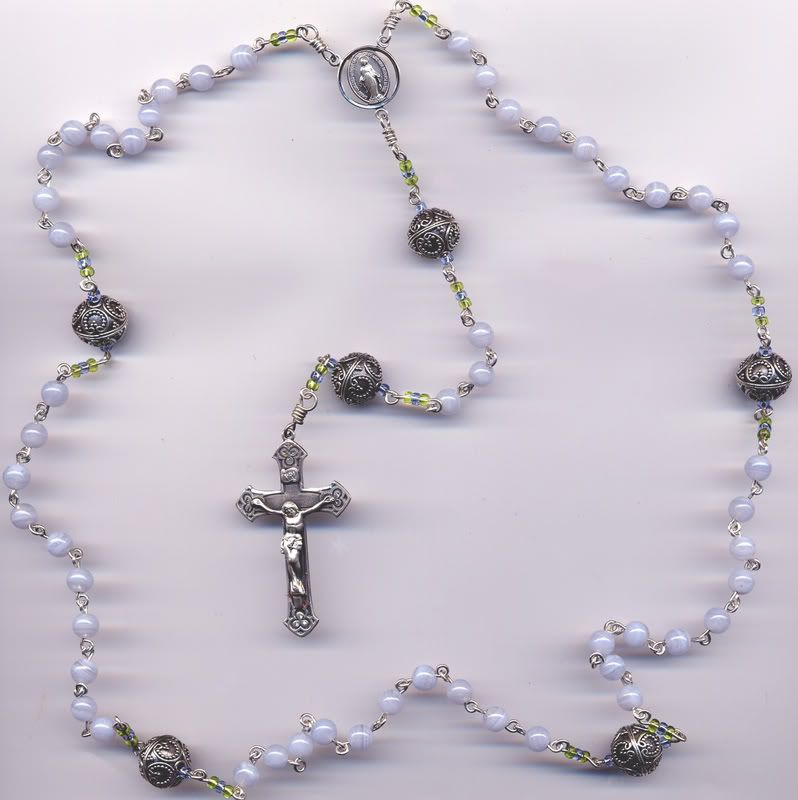
Every October, perhaps more than at any other time of the year, Catholics the world over often repeat that prayer, “Holy Mary, Mother of God, pray for us.” October is the month of the rosary, the special prayer which invites us to follow the example of Mary in bonding ourselves all the more closely with her Son’s birth, ministry, passion and glorious resurrection.
Oct. 7 is the traditional feast of Our Lady of the Rosary. This year the liturgical celebration will be of the Sunday but, as I mentioned in last week’s column, hopefully many of us will be praying the rosary on that day for the success of our Respect Life program in the Catholic community of the United States. But when this issue of the Catholic Sentinel goes to press, I shall be in Rome for the ordination of Mr. Theodore Lange, one of our seminarians at Rome’s North American College, on Oct. 4. It will be my privilege to celebrate a Mass of Thanksgiving with him, his family, friends and other visitors on the following day. Coincidentally, Theodore was the delivery man of the beautiful image of Our Lady of Guadalupe, a gift from some sisters in Mexico whom he befriended, which now adorns the west wall of St. Mary’s Cathedral in Portland. Our Lady must be pleased and hopefully so will our many Catholics who have a great devotion to Our Lady of Guadalupe.
The very same weekend, on Oct. 6, the local “Rosary Bowl” is taking place at the Keizer Volcanoes Stadium off I-5. I am grateful to all the organizers who are encouraging our people to pray the rosary this month in order to strengthen family and community ties, as well as to grant peace to the world. Father Gary Zerr, pastor of St. Edward’s Church in Keizer, serves as spiritual director for the event and Auxiliary Bishop Kenneth Steiner will represent all of us in the archdiocese who are unable to attend the event in Keizer that afternoon. It will be nightfall in Rome when they gather, but I hope to be able to be with them in spirit by praying the rosary before retiring that evening.
We all remember the Year of the Rosary back in 2002. I know that this special observance renewed in the hearts of many Catholics the practice of praying the rosary, if not daily, at least with greater frequency. Pope John Paul II at that time also gave us the gift of a new set of meditations entitled the luminous mysteries, based on the Lord’s public life and ministry. He recommended that we meditate on those mysteries every Thursday, as I have done ever since. The joyful, sorrowful and glorious mysteries continue to be an inspirational source of prayerful reflection and grace-filled encounters with Mary’s Son, our Savior and Brother.
One of my most vivid memories of the archdiocesan pilgrimage to Fatima in 2002 was joining the rosary procession at that renowned shrine on the night before Pope John Paul II died. It was a truly sacred moment because that holy ground was so precious to him. It was there that he returned to thank God for sparing him the attempt on his life back in May of 1981.
Visits to shrines of Mary always renew devotion to Mary in the hearts of pilgrims. Our Holy Father, Pope Benedict XVI, also seems to take special delight in visiting shrines of Mary. During August he visited the sanctuary of Mary at Loreto in Italy, where, according to medieval stories, angels miraculously relocated her home in Nazareth. Pope Benedict traveled there in order to spend some time with a large gathering of Italian young people at an evening prayer vigil and a Sunday morning Mass. Our Lady of Loreto has become patroness now of construction, house-hunting and aviation!
Then in early September Pope Benedict headed to Austria for a three-day pastoral visit to the town of Mariazell to mark the 850th anniversary of that country’s most famous Marian shrine. There, as was reported in the Sept. 14 issue of the Catholic Sentinel, the Holy Father made a strong pro-life appeal, speaking candidly about the problems of abortion and euthanasia. He also expressed his concerns about the low birth rate and rapidly aging population of Europe. This month in our prayers we, too, pray for a change of heart in the lives of the many young spouses who look upon children as an unnecessary burden and a distraction from their careers.
Your archbishop also enjoys visiting shrines of Mary. This coming spring I plan to lead an archdiocesan pilgrimage to Lourdes in southern France, where the Blessed Mother appeared to St. Bernadette Soubirous on Feb. 11, 1858. The Year of Jubilee commemorating the sesquicentennial of that apparition will begin on Dec. 8, the feast of the Immaculate Conception, and conclude the following December. The choice of that feast day to inaugurate the Jubilee Year is not surprising. It was at Lourdes, four years after the infallible pronouncement of Pope Pius IX, that Mary was indeed immaculately conceived, that she identified herself to St. Bernadette as the “Immaculate Conception.”
Lourdes is the Marian Shrine most frequently identified with the church’s prayers for healing and reconciliation. Many sick people come to Lourdes and bathe in the waters of the shrine with the hope of a cure, physical, spiritual or both. Undoubtedly some of the pilgrims from the archdiocese will also want to share in that experience. We are all in need of healing and reconciliation.
The principal intention of all of us pilgrims will be the healing and reconciliation needed here in our own local church as we attempt to recover from the scandal which plagued us as a result of so much child sexual abuse by some of our own clergy. Many victims and their families are still grieving, others are alienated from the church and the rest of us have been diminished in our resources, enthusiasm and energy as we try to carry out the church’s evangelizing mission. Lourdes is a natural place to turn for the help we need to recover our wits, our faith and our strength. During our pilgrimage we shall also visit Lisieux, the home of St. Therese; Ars, the home of St. John Vianney; Paray-le-Monial, the home of St. Margaret Mary to whom the Sacred Heart appeared; and many of the magnificent cathedrals of France, including Notre Dame of Paris.
Every October we Catholics join Mary in prayer through the rosary. We look to her as a model for our lives as faithful disciples in mission together. She witnessed, as the rosary reminds us, the beginnings of the Incarnation, the public ministry of her Son, his suffering and death and his glorious resurrection.
Through her we join ourselves more closely to Jesus, Mary’s Son, in this month of October. With Catholics the world over we pray, “Holy Mary, Mother of God, pray for us.”