
|
||||||||||||||||||
Posted on 07/23/2003 6:20:14 AM PDT by vannrox
|
|
|||||||||||||||||||
SPACE.com: First off, what was the Dyna-Soar designed to do specifically?
Robert Godwin:
It was originally sold as a space-based weapons platform. It had evolved from the concepts drawn up by Eugen Sänger, an Austrian rocket scientist in the 1930's. He thought that if you could deliver a bomb at Mach 20 you would get a huge increase in the destructive yield. He even drew maps showing how such a weapon would destroy a much larger area, pound-for-pound, than a bomb dropped conventionally. Of course when he was writing this he didn't know about nukes. Once the idea was on paper it was only a matter of time before it ended up in the hands of the Russians and the USA at the end of WWII. German Walter General Dornberger, a supporter of Werner von Braun during the war, subsequently sold the idea to the USAF as a true space-bomber. However once the contract moved on to Boeing the vehicle was in a state of continual redesign and went from sub-orbital, to orbital, from a spy-plane to a bomber and then to a test-bed. Because it was in a constant state of flux it never really had its mission mapped out. Attention became focussed more on how to get it back from space than on what it would do when it got there. This was the cause of its ultimate demise.The hypersonic concept seems to come right out of the pages of a James Bond novel. In the course of your research did you often feel the project was driven more by the imagination of its engineers than real defense needs?
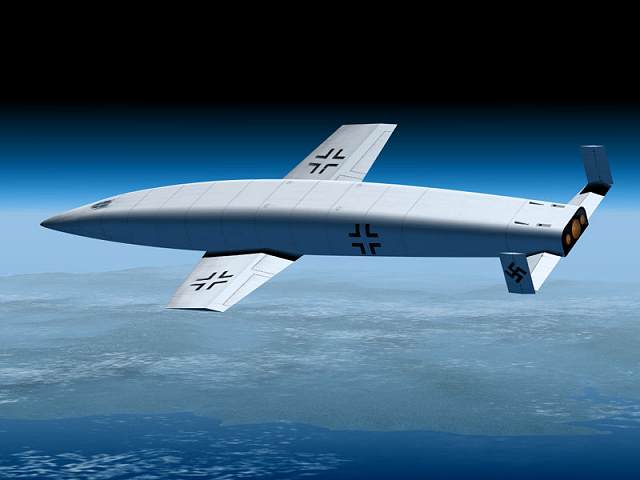
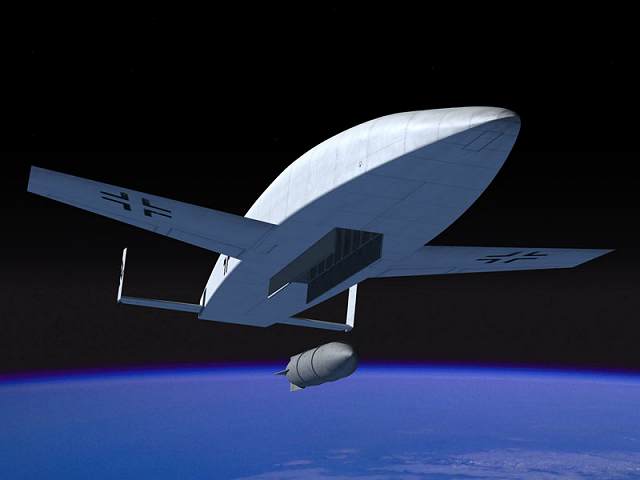
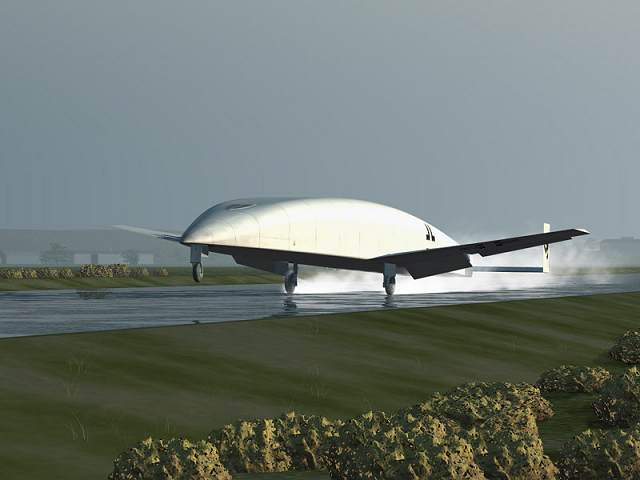
It always takes great imagination to come up with something new. The story of Dyna-Soar covers over three decades and involved hundreds of people. It takes a visionary to see it through. Unfortunately the real passion was coming from Dornberger and he (and Bell Aircraft) didn't get the contract. If it had been completed it would have been a formidable weapon so I don't think it was entirely driven by blue-sky thinking. The initial designs of Dyna-Soar pulled from the Sanger-Bredt Silverbird intercontinental skip-glide rocket bomber plans that Nazi Germany was working in during World War II. How much of that initial concept made it into the final test versions of the spacecraft?
Very little in fact, the whole concept was to be able to skip-glide across the upper atmosphere to increase range. This was to have been part of Dyna-Soar's regime but it soon became apparent that it would be possible to orbit and come home rather than having a pilot drop his payload half way around the world and then bail out, which was the original Sänger concept. Of course Dyna-Soar was to have been launched vertically while Sänger's Silverbird was to have been launched horizontally along a track. What was it about the spacecraft's design that made it so forward-thinking and innovative as opposed to the concurrent Mercury, Gemini and even Soviet spacecraft?
It was a winged aircraft. Just in the same sense that the Shuttle has advantages over a ballistic capsule. You get to fly it home and land on a runway rather than hoping for pyros to deploy parachutes. It should also be pointed out that it was to have done this without the benefit of tiles. It was an all-metal structure. Also of course it was steer-able. i.e. you could actually fly it in orbit, a capability Mercury did not have. Frankly, if Dyna-Soar had flown it would have still been in use today, or some variant would have. We know this is highly speculative, but if Dyna-Soar had been brought into service as either a strategic nuclear bomber or a surveillance craft, how far ahead in the space race would it have put the U.S.?
If it had worked it would have probably changed everything. There were designs on the drawing board that might have used von Braun's Saturn and other launchers that used huge conglomerations of boosters strapped together. It is conceivable that in its advanced form it could have flown thousands of pounds of cargo to lunar orbit. As a bomber of course it could have changed the entire geo-political climate. It might even have been a totally destabilizing influence since it would have been virtually as unstoppable as an ICBM but with a much better guidance system, i.e. a pilot. Who in the U.S. government was the biggest supporter of the program by the time it got into the vehicle production and testing phase?
Its biggest advocates were General Bernard Schriever, who was the USAF's top man for space at the time. Also General Curtis LeMay (who headed up the Manhattan Project) was a big booster since he felt the USAF had put all its eggs in one basket and if Dyna-Soar was cancelled it might signify the end of the USAF involvement in manned space-flight. Naturally Boeing wanted to see it through as they had the factory all tooled up and ready to build. After the project was canceled, how many spin-off applications ended up being used by U.S. military and/or civilian aerospace programs?
There were at least 36 complete technologies which were continued and ended up in other programs such as Apollo and the Shuttle, including Pulse Code Modulation (PCM) data-flow (a digital way to transfer analog information, e.g, human voice on a cellular phone), revolutionary inertial guidance systems and many others. The specifics are almost too hard to finger since it was such a huge program involving thousands of people working for nearly a decade. The leading edge and nose-cap research definitely led to similar technologies on the Shuttle. Did you have trouble getting any of the vehicle's engineers and would-be test pilots to speak to you about the project?
No. Though they are now hard to locate. Most of the original men selected to fly Dyna-Soar have since passed away although of course Neil Armstrong and Pete Knight are still with us. I managed to talk to the original Bell Structural engineer on the Bell Bomber Missile program which was the antecedent of Dyna-Soar before Bell lost the contract to Boeing. That was fascinating since I was talking to him only days after the demise of Columbia, so there were many insights into the advantages of metal structures over tiles. Mr. Armstrong was also kind enough to answer a few questions and pointed me in the direction of some very rare documents which are included in the book. Under the current administration, the U.S. is looking at developing Project FALCON, a military program that could deliver weapons to anywhere on the globe in less than two hours using a hypersonic vehicle. Doesn't this sound a bit like history repeating itself?
In a way, except of course FALCON will be unmanned. However the cancelled International Space Station Crew Return Vehicle and the Orbital Space Plane in some of its manifestations look a lot like Dyna-Soar and so does the Russian's Cosmopolis, the proposed civilian space plane. Combine those designs with Project FALCON's mandate and you pretty much have what Dyna-Soar would have been.
In their demonstration, traveling from west to east, in order to hit Philadelphia, the nazi pilot would have to deliver his unguided payload over Pittsburgh. Granted that is not too much of a problem today, but using only a stop watch in 1944, there would have been a lot of creators in unpopulated areas before a hit on a target actually occurred.


actually no. That was the von Braun A9/10 design The Silverbird project was a more advanced once around the earth flight returning for a conventional landing. 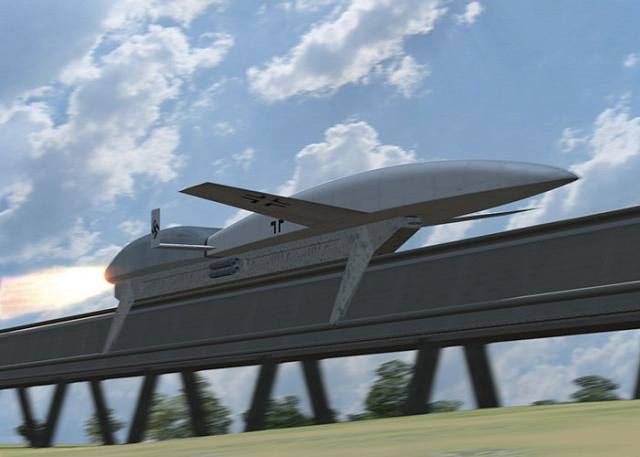
It was another McNamara victim.
Disclaimer: Opinions posted on Free Republic are those of the individual posters and do not necessarily represent the opinion of Free Republic or its management. All materials posted herein are protected by copyright law and the exemption for fair use of copyrighted works.


