Skip to comments.
NASA is reaching out to former SR-71 Blackbird staff to restart the program
Not the Bee ^
| Sep 29, 2026
| Joel Abbott
Posted on 09/29/2026 2:49:10 PM PDT by george76
This is not an easy undertaking.
...
The SR-71 program was scrapped decades ago. There are few people alive who remember how the engines were designed and built.
And yet, it seems NASA is getting the gang back together:
...
Mike Relja, a retiree in his late 70s, received an unexpected job offer from NASA about a month ago.
The assignment: Help put a former NASA-operated Lockheed SR-71A Blackbird back in the air after a nearly 27-year hiatus.
Relja, an ex-U.S. Air Force and NASA test engineer for the SR-71A, could not believe his ears. David Ash, a former U.S. Navy and Joby test pilot who was hired in June as a special projects director for NASA, asked Relja to provide his expertise for a secret effort to return a long-retired and neglected Blackbird to flight.
'I told the guy, "You know, I'm too old to be doing this,'" Relja recalls to Aviation Week. "‘I wish you well. I'd like to see you make it. It would be interesting. But I just don't think you can get there from here.'"
It appears NASA is going to try.
The SR-71 was a feat of wizardry that used new tech for the day, but ancient tech by our standards, that only a handful of people knew how to build.
Consider the special tires that were made for the plane:
...
The Blackbird was developed in the 1960s by Lockheed to fly three times the speed of sound at 85,000 feet of altitude, effectively allowing it to outrun missiles. This made it a vital tool for reconnaissance missions over the Soviet Union, Vietnam, and other contested theaters throughout the Cold War.
The SR-71 still holds the world record for quickest flight between New York and London (1 hour 54 minutes) and fastest airbreathing manned aircraft.
When the program was retired in 1989, 12 of the 34 original jets had been lost due to accidents. A handful ended up in museums. NASA used a few of them until 1999.
...
But in spring 2026, a display SR-71 at the Armstrong Flight Research Center on Edwards Air Force Base mysteriously vanished.
Now we now why.
Aviation Week confirmed that the agency approached Relja, Tim Conners, another former NASA SR-71A test engineer and others over the summer with job offers to work on the return-to-flight project for Tail No. 844.
NASA head Jared Isaacman, a pilot himself, has indicated the agency now has the goal of redeveloping "X-planes," or experimental aircraft, that push the limits of known engineering.
In the service of the first "A" in NASA, we are rebuilding our X-plane fleet,' Isaacman said. 'It will not be long before NASA is once again flying as high and as fast from decades past — and then even more.'
....
As Obi-Wan so famously reminded us, the high ground is the high ground. In an era of supersonic nuclear missiles and cheap rocket launches (thanks to SpaceX), there are new applications for high-altitude craft that can travel insanely fast. Whether for science, space travel, or national defense (just wait until U.S. Marines start dropping out of pods from suborbital craft!), there are endless applications for old tech married with the new.
An agency spokesperson declined to elaborate on Isaacman's comments or the reason for the removal of Tail No. 844 from the display position. NASA has not confirmed that the return-to-flight project exists.
....
The new plane will likely use the SR-71 as a scaffolding for an entirely new model, but that doesn't mean the plan is any less ambitious.
If they actually manage to pull it off?
It would be legendary.
TOPICS: Foreign Affairs; Government; News/Current Events; Politics/Elections; War; War on Terror
KEYWORDS: airforce; blackbird; kellyjohnson; lockheed; nasa; skunkworks; sr71; sr71blackbird; us; usairforce
Navigation: use the links below to view more comments.
first 1-20, 21-40, 41 next last
1
posted on
09/29/2026 2:49:10 PM PDT
by
george76
To: george76
2
posted on
09/29/2026 2:50:17 PM PDT
by
Texas Eagle
(If it wasn't for double-standards, Liberals would have no standards at all. )
To: All
3
posted on
09/29/2026 2:54:25 PM PDT
by
janetjanet998
(Please don’t use google products, especially YouTube )
To: Texas Eagle
It’s like trying to go back to the Saturn V rocket program, it ain’t gonna happen because those folks are close to being gone or gone already
4
posted on
09/29/2026 2:56:37 PM PDT
by
shotgun
To: george76
To: shotgun
It’s like trying to go back to the Saturn V rocket program, it ain’t gonna happen because those folks are close to being gone or gone already Might as well try to build a new Great Pyramid. Even with modern tech. Go ahead. Do it!
6
posted on
09/29/2026 3:04:27 PM PDT
by
Sirius Lee
("Never argue with a fool, onlookers may not be able to tell the difference.)
To: george76
There are few people alive who remember how the engines were designed and built.I believe I have a book with an exploded view. Will that help?
7
posted on
09/29/2026 3:10:38 PM PDT
by
Libloather
(Why do climate change hoax deniers live in mansions on the beach?)
To: Sirius Lee
The permitting would take decades alone!
8
posted on
09/29/2026 3:11:57 PM PDT
by
shotgun
To: george76
9
posted on
09/29/2026 3:14:35 PM PDT
by
yldstrk
To: george76
Unfortunately, Aviation Week does not allow direct posting of articles on FR due to copyright complaint. Here is a link to the original source story:
NASA Asked Several Former SR-71A Staffers To Help Secret Restart.
You have to wade through some cookie BS, then I got a redirect to some weird site, but the second time I was able to break through to this source story.
At some point early this year—certainly before May 17 and perhaps even before April, according to commercial satellite imagery acquired by Aviation Week—agency employees removed the SR-71A with Tail No. 844 from a display pole near the corners of Lilly and Walker Avenues at the Armstrong Flight Research Center on Edwards AFB, California. That SR-71A had stood there since about Oct. 9, 1999, the day that marked the final flight of No. 844—and of any Blackbird. NASA employees rolled the SR-71A into the hangar that once housed the Space Shuttle at Edwards...
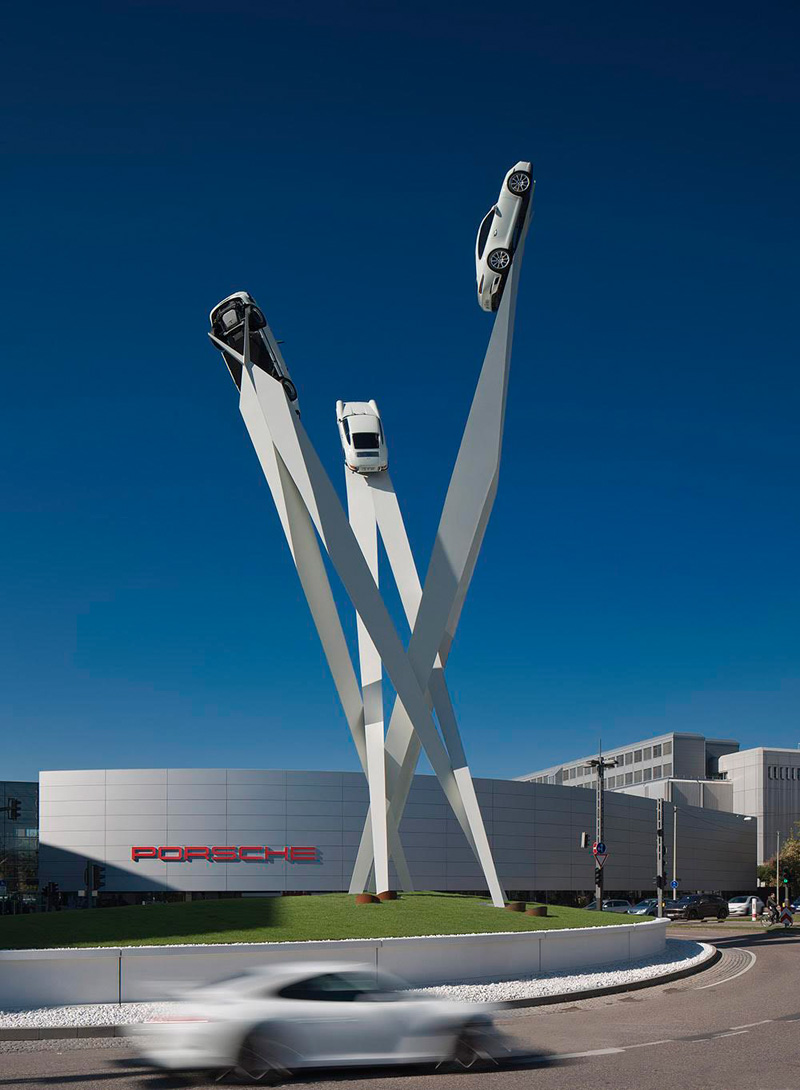
Maybe the SR-71A exhibit inspired Porsche to put three 911s on poles in Stuttgart. (we were there ten days ago -- it's really cool!)
To: Texas Eagle
I have a dumb question: Don’t we have aircraft which have already replace the SR-71?
Seems like a lot of people say “We’ve got stuff that’s decades ahead.”
11
posted on
09/29/2026 3:17:15 PM PDT
by
BenLurkin
(The above is not a statement of fact. It is opinion or satire. Or both.)
To: ProtectOurFreedom
12
posted on
09/29/2026 3:34:19 PM PDT
by
JeemBeau
To: BenLurkin
Some of the new stuff is hot garbage compared to some of the older stuff.
Why are we using B-52s and A-10’s otherwise?
13
posted on
09/29/2026 3:34:46 PM PDT
by
SPDSHDW
(A sinner saved by Jesus)
To: george76
Just sent this to a buddy who was a WSO on the Blackbird in the 70s.
14
posted on
09/29/2026 3:35:35 PM PDT
by
TangoLimaSierra
(To the left, the truth is right-wing violence.)
To: george76
NASA Asked Several Former SR-71A Staffers To Help Secret Restart.

15
posted on
09/29/2026 3:36:04 PM PDT
by
DannyTN
To: george76
16
posted on
09/29/2026 3:41:22 PM PDT
by
E. Pluribus Unum
(The right of the Democrats to embezzle elections shall not be infringed. )
To: BenLurkin
There are a couple of companies developing hypersonic multi-cycle engines. The technical problem is getting that ram cycle up to about mach 2.5 before you drop it into ran-mode. My theory is that they need an airframe with a large engine bays to accommodate these long engines. Well, the Pratt & Whitney J-58’s are already removed from that bird, and they have a heat resistant airframe for free.
17
posted on
09/29/2026 3:44:18 PM PDT
by
Tallguy
To: george76
18
posted on
09/29/2026 3:58:54 PM PDT
by
E. Pluribus Unum
(The right of the Democrats to embezzle elections shall not be infringed. )
To: george76
My money’s on them reactivating probably just one to be the chase plane for test flights of the new SR-72.
Why? Because the SR-71 was difficult to maintain, and operate. And it’s no longer anywhere near invulnerable to AAA. Today there are numerous missiles that have the range to catch it and a max velocity of up to Mach 6.
Plus, the new stuff can be fired in salvos, maybe three at a time. So if the target maneuvers to evade one, it’s simply flying into the flight path of one of the others. The SR-71 is stealthy, particularly for it’s time, but not good enough any more.
I can’t imagine any scenario under which it would be a cost-affective solution to any 21st Century problem, so my guess the use won’t be operational. It can’t keep up with the SR-72 at full suck, but it can go fast enough to monitor operation with the scramjets engaged.
To: shotgun
It’s like trying to go back to the Saturn V rocket program, it ain’t gonna happen because those folks are close to being gone or gone alreadyOr the underground nuclear test program.
Navigation: use the links below to view more comments.
first 1-20, 21-40, 41 next last
Disclaimer:
Opinions posted on Free Republic are those of the individual
posters and do not necessarily represent the opinion of Free Republic or its
management. All materials posted herein are protected by copyright law and the
exemption for fair use of copyrighted works.
FreeRepublic.com is powered by software copyright 2000-2008 John Robinson
