
Posted on 05/21/2026 3:02:56 PM PDT by SeekAndFind
When a state starts floating an exit tax, it is telling you something more important than any campaign slogan: the people running the place know their model is not working.
They may not say it that way. They will call it fairness, responsibility, or making the wealthy “pay what they owe.” But the meaning is the same.
If families, entrepreneurs, and investors are leaving, the state can either ask why its policies are pushing them out, or it can try to tax them for escaping. An exit tax chooses punishment over reform.
I understand why these proposals resonate with some people. If you are watching wealthy residents relocate while governments still face bills for schools, roads, pensions, and other commitments, it is easy to feel like the people with the most mobility are ducking the tab.
That frustration is real. It deserves a serious answer. But an exit tax is not a serious answer. It is a confession that lawmakers would rather cling to a failing fiscal model than fix the spending, regulation, and tax policies that made people want to leave in the first place.
That is why the current trend is so revealing.
In California, proposals have centered on taxing billionaire net worth, including wealth that often exists on paper rather than in cash. In New York, the push has extended to a new surcharge on high-value second homes in New York City.
In Washington, lawmakers have already enacted a “millionaires’ tax.” These policies differ in form, but not in spirit. They all send the same message: if government has made your state too expensive, too hostile, or too unpredictable, it may still try to claim part of your future anyway.
The economics are worse than the politics. Supporters talk as if wealth is a pile of idle cash sitting in a vault, just waiting to be skimmed. It is not. Wealth is usually tied up in businesses, shares, property, and future earnings.
Taxing net worth or unrealized gains means taxing value that often has not been sold, realized, or converted into cash. That can force asset sales, dilute business ownership, weaken investment, and change behavior long before the tax collector ever gets a check.
A Hoover Institution analysis of California’s proposal found that once likely migration responses are considered, the measure could leave the state with a negative net present value of about $25 billion. That is the real lesson: politicians score the tax statically, but the economy does not sit still.
And that is before you get to the broader evidence. The OECD has noted that recurring net wealth taxes have become much less common across advanced economies because they tend to raise less revenue than promised while creating large compliance costs, avoidance incentives, and economic distortions. Countries tried them. Many backed away.
A recent NBER study on Scandinavian wealth taxation found that higher top wealth-tax rates reduced the number of wealthy taxpayers and that many of those taxpayers were business owners whose departure reduced investment, employment, and value-added.
That is the part too often ignored in political talking points. When a state drives out a founder, investor, or employer, it is not just losing one tax return. It is losing future jobs, future capital formation, and future opportunity for everybody else too.
Defenders of exit taxes still fall back on one argument that sounds morally satisfying: these taxpayers benefited from state infrastructure, legal protections, and markets while they lived there, so the state deserves one final cut
But that argument quietly rewrites the relationship between citizen and government. It turns moving into a taxable offense. It says the state retains a lingering claim on your success because you once lived under its jurisdiction. That is a dangerous principle in a federal system built on mobility and competition.
Even in the international arena, exit taxes are controversial, complex, and tied to specific movements of assets or functions across borders. Importing that logic into state tax policy is not modernization. It is escalation.
The problem is not just that these taxes are bad economics. It is that they usually do not stay narrow. Politicians sell them as a tool aimed only at billionaires or luxury homeowners — policy aimed at an applause line. But when the revenue falls short, the scope expands.
One-time wealth taxes become annual property surcharges. “Billionaire” thresholds are expanded to target millionaires and eventually the middle class. “Temporary” taxes become permanent fiscal architecture. New York’s pied-à-terre proposal is a good example of how quickly the logic expands once the principle is accepted.
Frédéric Bastiat warned us to look not just at what is seen, but at what is unseen. We see the tax revenues. That’s a small, visible victory compared to the investment that never happens, the entrepreneur who builds elsewhere, jobs that never arrive — the unseen costs compound.
Exit taxes are built on ignoring all of that.
Claiming an exit tax frames mobility as theft, when it is often a rational response to bad governance. They do not restore prosperity. They steal the opportunity to prosper by doubling down on the very policies that made growth harder in the first place.
If lawmakers want to deter departures, the answer is not a fiscal trap door. It is better policy: lower taxes, lighter regulation, spending restraint, and a serious effort to make their states places where productive people want to stay.
Real economic renewal is more difficult than yet more taxation, but it is also the only approach that works. Exit taxes will not save failing states. They only confirm why people wanted to leave.
Maybe they should erect walls to keep them in. Put barbed wire and guard towers on it.
Exit taxes are vindictive, whether at the local, state, or federal level.
I do not have the twisted sense these people have. How can this possibly be constitutional?
Next they’ll have Border Guards with orders to Shoot to Kill
A common cognitive defect of the leftist is to treat other people like passive sheep just standing around waiting to be sheared. They think billionaires (the rich) are just like that. They are routinely shocked to discover otherwise.
Starting to sound like the Iron Curtain countries
NOT LEGAL
didn’t the Jews who could afford it, have to pay an exit tax to escape the Soviet Union and NAZI Germany?
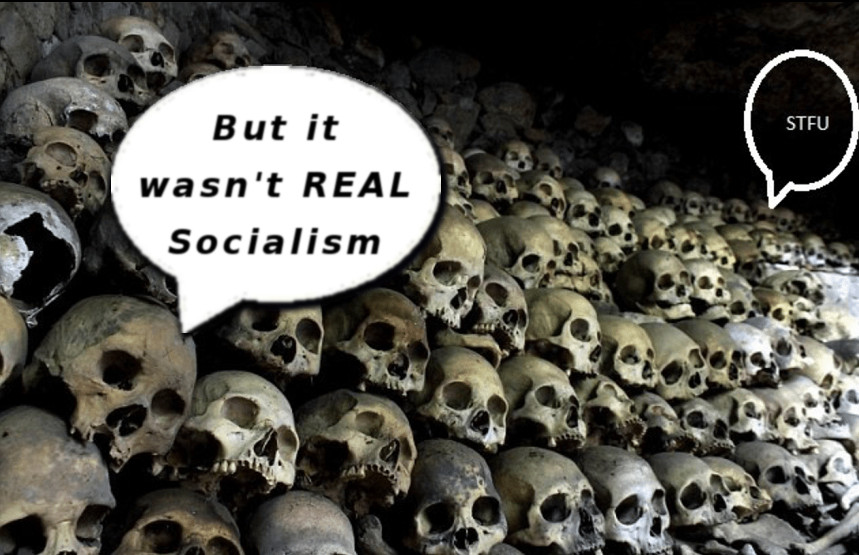
Amateurs! The REAL Communists build a wall!
wouldn’t an exit tax be a blatant violation of the US Constitution’s Interstate commerce clauses? ... or do they apply only to goods and not to actual humans?
Could someone please explain how an “exit tax” represents the people? Sounds like a scam shake down that only democrats could come up with clearly as a means of punishment. Taxes without representation is unconstitutional on its face. Don’t ever surrender your guns to government!
Once upon a time, California taxed the pensions of people who no longer lived in the state. Before a federal law changed the rules, California—along with several other states—used a “source tax” to collect state income tax on pensions earned while the retiree was a working resident of California, even if they had since moved away. The End of the Source TaxThis practice was permanently halted by the federal P.L. 104-95 (the State Taxation of Pension Income Act), which President Bill Clinton signed into law in January 1996.
Looks like interstate commence territory. A sane court won’t allow this crap.
Does Vince seriously think that one of these leftists is gonna be swayed by such argument as what he here advances?
“Maybe they should erect walls to keep them in. Put barbed wire and guard towers on it.”
It’s the natural progression of Bolshevik states. They have to trap the proles the Bolsheviks live off of when better options are available.
I don’t think an exit tax is constitutional.
How are exit taxes even legal?
But it’s just like all communist countries...they punish you for trying to leave.
Oh but let’s pretend Exit Taxes are legal...that will just prevent any new business from ever locating in that state. Who the heck would move to NY or California to start a business knowing you can never leave?
Hey it’s the hotel california :-)
Hotel California. “You can check out any time like but you can never leave.”
Disclaimer: Opinions posted on Free Republic are those of the individual posters and do not necessarily represent the opinion of Free Republic or its management. All materials posted herein are protected by copyright law and the exemption for fair use of copyrighted works.