Skip to comments.
Senate confirms Kevin Warsh as Fed governor, clears way for chair vote
CNBC ^
| 5/12/26
| Jeff Cox
Posted on 05/12/2026 9:52:16 AM PDT by CFW
Kevin Warsh took another step towards becoming Federal Reserve chair on Tuesday, clearing a key Senate vote that puts him on the central bank Board of Governors.
The upper chamber voted to approve Warsh’s nomination by a 51-45 vote, on a mostly party-line basis. Only Sen. John Fetterman, D-Pa., crossed lines to vote for President Donald Trump’s pick.
Next up for the nominee, who sat on the board previously, is the vote to be chair, which is expected Wednesday.
(Excerpt) Read more at cnbc.com ...
TOPICS: Business/Economy; Government; News/Current Events
KEYWORDS: confirmation; economy; feds; kevinwarsh; warsh
Finally! A confirmation from the Senate.
1
posted on
05/12/2026 9:52:16 AM PDT
by
CFW
To: CFW
If you look at the confirmation votes over the years, its always the Republicans who give deference and the dimocraps who vote against on party lines.
To: CFW
I'm hoping Warsh will lower interest rates. Even if that does lead to some higher inflation.
Our GDP is higher than our National Debt. That means that even if the US threw everything we earn at the National Debt, we still could not pay it off.
Right now the interest alone we throw at the debt is over a trillion dollars per year.
But actually the US is in a better economic position now than we were after World War II. And what worked then is what will work now.
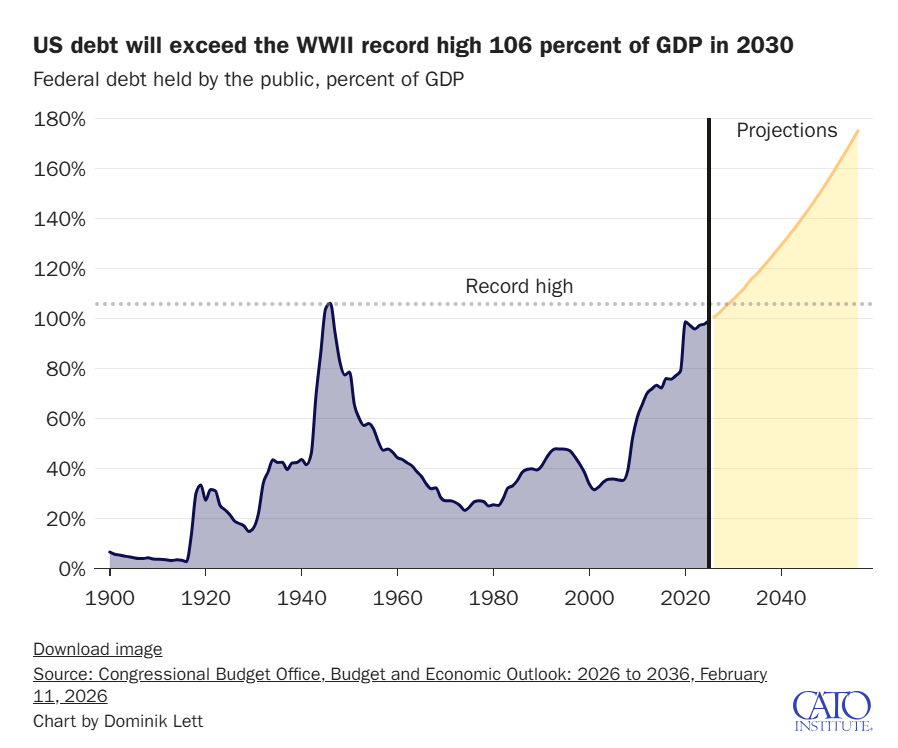 Post-WWII vs. Today
After World War II, the US debt-to-GDP ratio peaked at 106% in 1946 and fell dramatically to 23% by 1974—a reduction of 83 percentage points over 28 years. Today, the US debt has surpassed 100% of GDP for the first time since WWII, reaching approximately 123-125% in 2025-2026.
How the US Reduced Debt After WWII
The post-war debt reduction resulted from three key factors working together:
Primary budget surpluses: The US ran fiscal surpluses by collecting more in taxes than it spent on current government programs. From 1947-1974, the primary surplus averaged 1.1% of GDP annually. The government registered sizable surpluses in the late 1940s as military spending dropped, and budgets cycled near balance through the 1950s. Notably, during the Korean War, increased military outlays were matched by revenue measures to avoid additional borrowing.
Financial repression and controlled interest rates: The Federal Reserve kept interest rates artificially low on government bonds—below the rate of economic growth and inflation. From 1942-1951, the Fed pegged Treasury bond rates to help finance the debt cheaply. Even after the 1951 Treasury-Federal Reserve Accord ended this policy, unexpected inflation meant investors received lower real returns than anticipated, effectively reducing the government's debt burden.
Strong economic growth: Real GDP grew robustly after initial post-war contraction in 1946-47, providing a larger economic base against which to measure the debt. However, recent research shows this played a smaller role than commonly believed—without surpluses and interest rate suppression, the debt ratio would have fallen only from 106% to 84% by 2022, not to 23%.
3
posted on
05/12/2026 11:03:05 AM PDT
by
Responsibility2nd
(Import the third world. Become the second world.)
To: Responsibility2nd
Also:
“Trump says Makary is out as FDA commissioner, following industry and White House backlash”
https://www.cnbc.com/2026/05/12/trump-fda-commissioner-marty-makary-out.html
“Dr. Marty Makary is out as FDA commissioner, President Donald Trump said Tuesday, ending a controversial tenure.
Makary, a surgical oncologist known for criticizing the government’s handling of the Covid pandemic, had reportedly fallen out of favor with both FDA staff and the White House in recent months. He served as head of the agency responsible for regulating food, drugs and medical devices for more than a year.
His tenure was marked by internal dysfunction and leadership turmoil at the FDA, along with mounting backlash from drugmakers, physicians and patient groups on regulatory decisions, including high-profile rejections of some rare disease treatments. At the same time, the White House reportedly grew increasingly impatient with what it viewed as his slow movement on Trump’s key policy initiatives, such as legalizing flavored vapes. “
4
posted on
05/12/2026 11:15:50 AM PDT
by
CFW
To: CFW
Warsh deserved a higher vote margin than that - which just goes to prove again that Ds vote “against” if Trump is “for.” that’s the behavior of 3-yr olds - but they grow out of it as they learn to think.
5
posted on
05/12/2026 11:34:45 AM PDT
by
avital2
(I)
To: CFW
Just FYI, All Republicans voted FOR!
Even the “RINO’s”
People here do not like some of them, but they still mostly vote with the rest!
They a far better than any possible Dem.
6
posted on
05/12/2026 11:35:38 AM PDT
by
AZJeep
(sane )
To: Responsibility2nd
“But actually the US is in a better economic position now than we were after World War II. And what worked then is what will work now.”
Not really. Back then we were the world’s largest creditor nation. Now we are the biggest debtors in all of human history. We were 50% of global manufacturing and 40% of global GDP.
We are most assuredly NOT in a better economic position today than after WWII.
7
posted on
05/12/2026 12:18:07 PM PDT
by
DesertRhino
(When men on the chessboard, get up and tell you where to go…)
To: CFW
“the White House reportedly grew increasingly impatient with what it viewed as his slow movement on Trump’s key policy initiatives, such as legalizing flavored vapes.”
Good to know he is doing the important things.
8
posted on
05/12/2026 12:20:50 PM PDT
by
DesertRhino
(When men on the chessboard, get up and tell you where to go…)
Comment #9 Removed by Moderator
Disclaimer:
Opinions posted on Free Republic are those of the individual
posters and do not necessarily represent the opinion of Free Republic or its
management. All materials posted herein are protected by copyright law and the
exemption for fair use of copyrighted works.
FreeRepublic.com is powered by software copyright 2000-2008 John Robinson