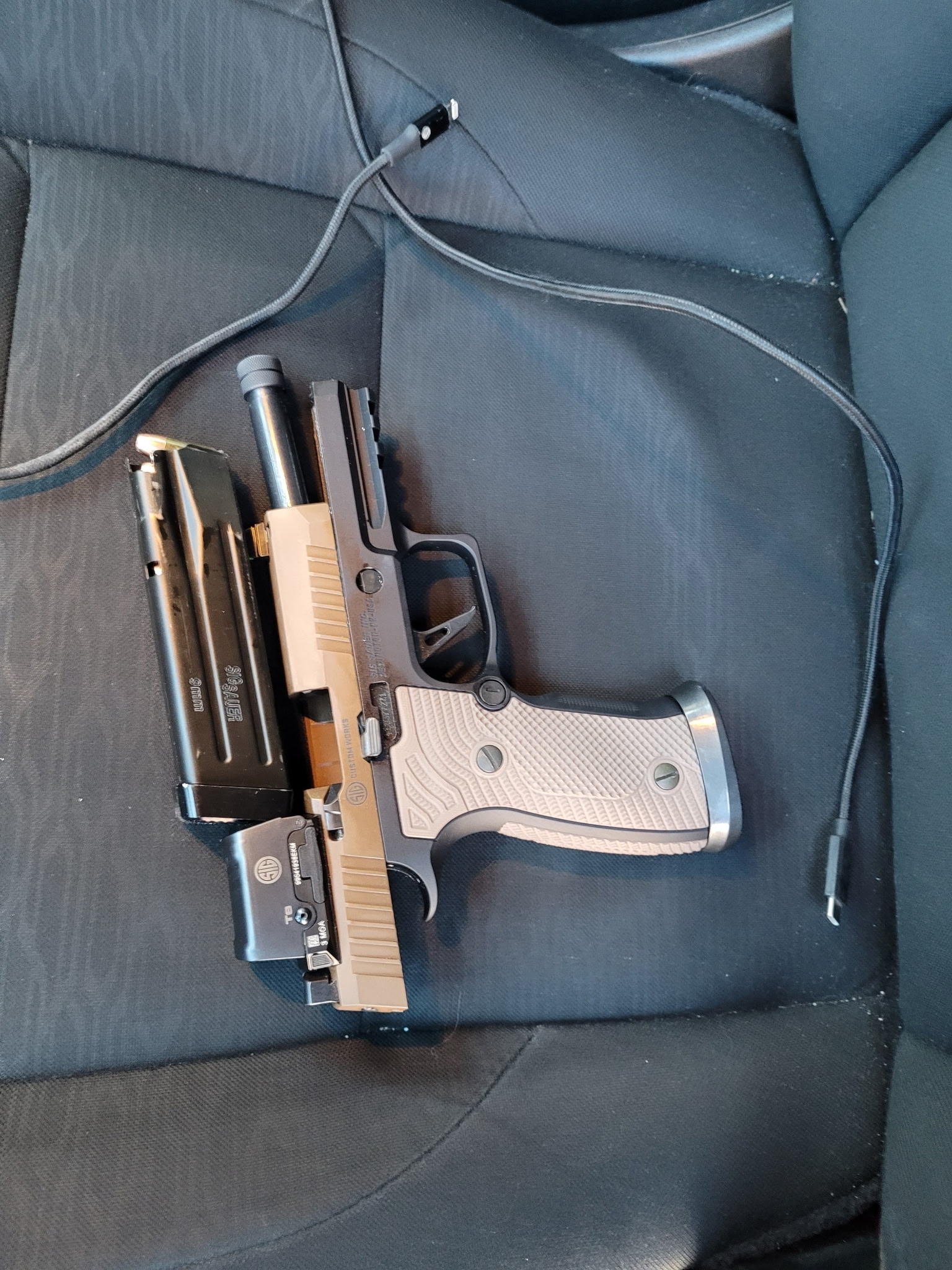
The Reverse-Commandeering Problem: Why Minnesota's Tenth Amendment Challenge to Operation Metro Surge FailsIntroduction: A Constitutional Theory Built on Self-Inflicted WoundsOn January 31, 2026, U.S. District Judge Katherine Menendez denied Minnesota's motion for a preliminary injunction against Operation Metro Surge, the federal immigration enforcement operation that deployed approximately 3,000 agents to the Twin Cities—a 37.5-fold increase over typical staffing. Minnesota, Minneapolis, and St. Paul had sued, arguing that this unprecedented surge violated the Tenth Amendment's anticommandeering doctrine by forcing resource diversion and coercing policy changes through deliberate disruption. Judge Menendez reached the correct outcome, finding Minnesota failed to demonstrate a "fair chance" of success on novel Tenth Amendment claims against executive enforcement operations. But her opinion missed the most powerful constitutional framework: Minnesota cannot invoke the Tenth Amendment against consequences that would not exist but for Minnesota's own systematic obstruction of federal immigration enforcement. This is the essence of "reverse-commandeering"—when states create enforcement obstacles that force enhanced federal presence, then claim that presence violates state sovereignty. The Causation Problem Minnesota Cannot EscapeMinnesota's legal theory alleged a straightforward causation chain: federal deployment causes community disruption, which forces state resource diversion, therefore federal action commandeers state resources. But this analysis systematically omits Minnesota's own role in necessitating the federal presence. The quantitative evidence is devastating. In 2024, ICE issued 228 detainers to Minnesota law enforcement agencies—formal requests to transfer custody of individuals with final removal orders after completing state sentences. Minnesota transferred only 14 individuals, refusing 94% of federal detainer requests. This places Minnesota among the bottom five jurisdictions nationally, clustered with Connecticut (0%), Massachusetts (1%), New York (1%), and California (2%). By comparison, South Dakota transfers 47% of detainer subjects, Montana 44%, and the national average is 21%. This detainer refusal transforms immigration enforcement from routine administrative transfers into fugitive operations requiring massive street-level deployments. If Minnesota had honored detainers at even the national average rate, ICE would have conducted approximately 48 controlled jail transfers in 2024 instead of 14. These transfers occur in secure facilities with zero community disruption, no protests, and no need for the 3,000-agent surge Minnesota now complains of. Minnesota's 94% refusal rate made Operation Metro Surge's scale both foreseeable and necessary. Judge Menendez's opinion acknowledged this dynamic only obliquely, noting federal arguments about "lack of state and local cooperation" but declining to make findings about whether state policies necessitated federal response. A more robust analysis would have applied simple but-for causation: But for Minnesota's systematic detainer refusal, would the 3,000-agent deployment have been necessary? Almost certainly not. Minneapolis's Separation Ordinance: Creating the Operational VacuumMinnesota's obstruction extended beyond detainer refusal to affirmative prohibition of basic public safety functions. Minneapolis's "separation ordinance," strengthened in December 2025 as Operation Metro Surge began, prohibited the Minneapolis Police Department from participating in immigration enforcement or providing crowd control "when members of the public are peacefully assembling and exercising First Amendment rights." This prohibition created a critical distinction Minnesota's lawsuit ignored: crowd control protecting businesses, traffic flow, and public safety is fundamentally different from assisting ICE enforcement operations. When hundreds of protesters engaged in violent obstruction—throwing rocks, bottles, and fireworks; ramming vehicles; physically interfering with arrests—this crossed the threshold from "peacefully assembling" to active violence requiring professional crowd management. MPD's crowd control in these circumstances would not "support ICE operations"—it would protect local businesses from disruption, maintain traffic flow on streets residents use daily, ensure bystander safety, and separate enforcement zones from observation areas. The ordinance's fatal flaw was prohibiting this basic public safety function merely because federal operations triggered the need. The operational consequence was predictable: federal agents trained for enforcement arrests found themselves simultaneously managing hostile crowds—a dual mission requiring riot control training and equipment they did not possess. Police1, a professional law enforcement publication, issued a stark assessment: "ICE should immediately begin aggressive training for their agents as if training were their highest operational priority. The current operational environment demands it." The professional recommendation implicitly acknowledged that federal agents were conducting crowd control missions that Minneapolis deliberately refused to provide. The Two Deaths: Causation Chains Minnesota's Policies CreatedThe deaths of Renee Good and Alex Pretti during Operation Metro Surge provide tragic case studies of how Minnesota's reverse-commandeering created conditions making violent outcomes virtually inevitable. The Renee Good Timeline: Omitted FactsInitial media coverage presented Good as a concerned observer killed by an agent who fired at her vehicle as it moved away. But surveillance video and investigative reports revealed systematically omitted evidence: Good was a trained ICE Watch activist who trained others in obstruction tactics. She positioned her vehicle perpendicular across Portland Avenue—blocking the entire road—four minutes before ICE arrived, honking her horn and "dancing in her seat" while waiting. Federal sources reported Good had been "harassing law enforcement vehicles earlier in the day." When ICE agents ordered her to move, her wife Becca Good yelled "Drive, baby, drive!" prompting Good to accelerate forward, at which point Agent Jonathan Ross fired three shots. Professional MPD traffic control would have prevented this confrontation at multiple intervention points: not permitting a four-minute roadblock, ordering Good to move through routine traffic authority, establishing operational perimeters separating observers from enforcement zones, and handling non-compliance through de-escalation rather than armed ICE confrontation. Good made deliberate choices to confront federal agents, but Minneapolis created the operational vacuum that allowed those choices to culminate in tragedy. The Alex Pretti Shooting: The Accidental Discharge TheoryMedia coverage initially presented Pretti's death as clear excessive force: federal agents shot an unarmed VA nurse documenting their operations, firing nine rounds including five at his motionless body after disarming him. But investigation revealed two critical facts the narrative omitted: First, Pretti's pattern of escalating violence: Video verified by BBC shows Pretti in a prior encounter (January 13) spitting on federal agents, yelling obscenities, and kicking an ICE vehicle, smashing the taillight. Approximately January 17, Pretti suffered a broken rib in a second physical confrontation with agents. Neither incident resulted in arrest by Minnesota authorities. Second, the accidental discharge evidence: Department of Homeland Security investigators are examining whether the first shot came from an accidental discharge of Pretti's seized Sig Sauer P320 while in a Border Patrol agent's possession. Video analysis shows a single gunshot, agents near the weapon-carrying agent flinching in surprise, then approximately 10 rounds fired in rapid succession—consistent with "contagious fire," a scientifically validated phenomenon where officers are 11 times more likely to fire after hearing peer gunfire. The P320 has a documented defect history involving striker safety failures causing discharges during normal handling. If the accidental discharge theory is confirmed, the shooting transforms from deliberate excessive force to tragic accident precipitated by weapon defect in high-stress conditions. But the causation question remains: those high-stress conditions existed because Minnesota forced federal agents into dual enforcement/crowd-control roles they weren't trained for, while declining to arrest Pretti after two prior violent confrontations that should have resulted in state charges for assault, property destruction, and obstruction. Pretti made five escalation choices during the fatal encounter: entering the street, approaching the operation, physically intervening when an agent pushed a woman, resisting arrest by four agents, and bringing a loaded gun to a confrontational protest. Each choice increased risk. But professional MPD crowd control would have prevented the confrontation by: arresting Pretti after his first two violent incidents, establishing perimeters separating protesters from operations, and handling crowd management so CBP agents could focus on their enforcement mission. Six days after Good's death and eleven days before Pretti's fatal encounter, Governor Walz delivered a prime-time address explicitly mobilizing Minnesota's citizenry against federal operations: "You have an absolute right to peacefully film ICE agents as they conduct these activities. So carry your phone with you at all times. If you see these ICE agents in your neighborhood, take out that phone and hit record. Help us create a database of the atrocities against Minnesotans, not just to establish a record for posterity, but to bank evidence for future prosecution." This speech constitutes textbook reverse-commandeering: state executive action mobilizing civilians to obstruct federal operations, threatening federal agents with state prosecution for lawful duties, and creating resource multiplication where every "citizen journalist" requires agent diversion from enforcement. Pretti's fatal January 24 encounter—during which he was recording federal agents on his cellphone—occurred eleven days after this gubernatorial incitement. The Cities Church Incident: When State-Tolerated Protest Crosses into Federal CrimeOn January 18, 2026, approximately 40 protesters invaded Cities Church in St. Paul during Sunday worship, disrupting services to protest Pastor David Easterwood, who serves as Acting Field Director of ICE's St. Paul office. St. Paul Police responded but made no arrests. No state charges were ever filed despite clear violations of Minnesota statutes criminalizing disorderly conduct, trespass, and interference with religious worship. Minnesota's silence forced the Department of Justice to invoke federal statutes: the Freedom of Access to Clinic Entrances (FACE) Act, which prohibits physical obstruction of religious worship, and 18 U.S.C. § 241, the Reconstruction-era "KKK Act" designed to prosecute conspiracies against constitutional rights when states refuse protection. The federal charges generated immediate controversy—civil liberties groups condemned "federal overreach criminalizing protest"—but the prosecutions were necessary only because Minnesota declined routine state misdemeanor charges. This incident reveals Minnesota's deliberate choice between competing First Amendment values: the ordinance prohibits disrupting abortion clinics (enforcing state FACE Act equivalents) but tolerates disrupting churches hosting federal officials. The message communicated: religious exercise protection depends on political alignment. More critically, the non-prosecution fit a broader pattern of granting protesters immunity from consequences—emboldening the escalating violence that contributed to Pretti's death six days later. Judge Menendez's Missed FrameworkJudge Menendez found Minnesota's anticommandeering theory unprecedented—applying Tenth Amendment constraints designed for congressional statutes conscripting state officials to executive enforcement operations using federal personnel. She correctly identified "intractable line-drawing problems": how many agents constitute coercion? What resource diversion level crosses constitutional thresholds? Without limiting principles, Minnesota's theory would allow states to veto federal enforcement by creating obstacles, forcing enhanced federal presence, then claiming that presence violates sovereignty. But the opinion could have articulated a more robust principle: States cannot manufacture Tenth Amendment violations by creating the very conditions that necessitate enhanced federal enforcement. The proper constitutional framework recognizes that: First, the Tenth Amendment "states but a truism that all is retained which has not been surrendered" (United States v. Darby). When Congress acts within enumerated powers—immigration enforcement under Article I, Section 8, Clause 4—states possess no immunity from ancillary costs. Second, while Printz v. United States protects states from being conscripted to assist federal enforcement, no case holds that states may actively obstruct federal operations through detainer refusal, crowd control prohibition, systematic non-prosecution of violent protesters, and gubernatorial incitement—then claim constitutional immunity from the resulting enhanced federal presence. Third, causation matters. Minnesota's "resources theory" fails because the resource diversion stems from Minnesota's own policy choices: 94% detainer refusal forcing street enforcement, separation ordinance preventing crowd control, non-prosecution emboldening violent confrontation, and gubernatorial mobilization of citizen obstruction. These costs would not exist but-for Minnesota's deliberate creation of enforcement obstacles. Fourth, the self-inflicted harm doctrine prevents parties from claiming injury from consequences they deliberately created. Minnesota cannot defer the costs of its political doctrines onto the federal government, then complain that federal actions burden the state. The disruptions requiring resource diversion are not direct impacts of federal power—they are direct impacts of Minnesota's chosen policies that incited confrontation. The Reverse-Commandeering DoctrineRecent legal scholarship provides theoretical foundation for this framework. Professor Robert Kish argues that anticommandeering logic applies bidirectionally: when states create conditions forcing the federal government to expend vastly greater resources to achieve constitutional objectives, this represents state commandeering of federal resources through obstruction. Minnesota's pattern satisfies all three elements: Element One: State-created enforcement obstacles (detainer refusal, crowd control prohibition, non-prosecution, incitement) dramatically increase federal enforcement costs. Element Two: Enhanced federal presence was predictably necessary—routine jail transfers become fugitive operations requiring 3,000 agents. Element Three: Minnesota invoked resulting federal presence as constitutional violation, seeking to immunize itself from consequences its own policies created. Conclusion: The Constitutional Architecture Minnesota InvertsThe Framers designed dual sovereignty to protect liberty through diffusion of power, not to enable states to veto federal authority in areas the Constitution delegated to federal control. Minnesota claims the right to refuse cooperation (protected under Printz) while demanding immunity from the enhanced federal enforcement that refusal necessitates (not protected). This would give states constitutional leverage to obstruct federal law: refuse assistance, force enhanced deployment, claim deployment violates sovereignty, obtain injunction shutting down enforcement. Judge Menendez correctly denied the injunction, recognizing Minnesota's theory as unprecedented and unworkable. But a stronger opinion would have articulated why: because Minnesota's resource diversion stems from Minnesota's own obstruction, not from federal overreach. The two civilian deaths during Operation Metro Surge—tragic consequences of operational conditions Minnesota's policies created—cannot support constitutional claims when professional state crowd control, detainer cooperation, and prosecution of violent protesters would have prevented the circumstances leading to those deaths. The proper principle is this: States may decline to assist federal enforcement, but they cannot actively obstruct through systematic non-cooperation, then invoke the Tenth Amendment against the natural consequences of that obstruction. Minnesota's reverse-commandeering strategy—creating enforcement obstacles, forcing enhanced federal presence, then claiming that presence violates sovereignty—fails both causation analysis and constitutional structure. The ancillary effects of properly exercised federal power, however burdensome, cannot violate the Tenth Amendment when those effects would not exist but for the state's deliberate creation of the very conditions it now complains of. ⁂ |