Posted on 12/09/2019 6:50:54 AM PST by karpov
On Tuesday the Supreme Court will consider in Maine Community Health Options v. U.S. whether Congress can limit the spending discretion it has previously granted to the executive branch.
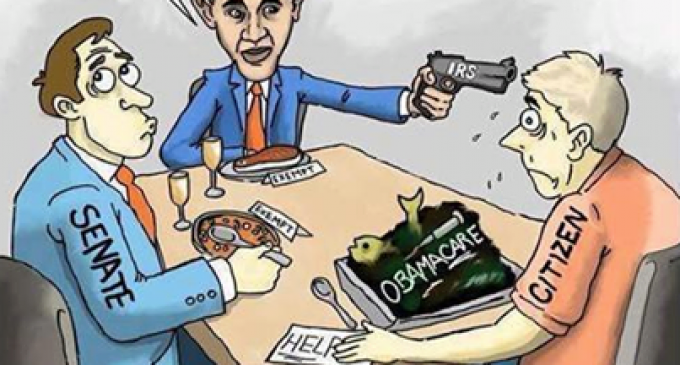
Four health insurers have sued the government for not making payments they say they are entitled to under the Affordable Care Act’s “risk corridors.” The temporary program was intended to entice insurers to join the ObamaCare exchanges by minimizing their potential losses and giving them time to calibrate premiums and risk pools.
Under a formula in the ACA, relatively profitable insurers for the first three years of the exchanges were required to pay into a program administered by the Department of Health and Human Services. Insurers that lost money could recoup losses from this program. Not surprisingly, many insurers underpriced their plans.
As a result, projected payments to insurers have exceeded corridor contributions by $12 billion. Republicans sought to stop the Obama Administration from rescuing insurers and its quarter-baked law by expressly barring HHS in a 2015 appropriations bill from spending discretionary funds for risk-corridor payments.
Essentially Congress required the risk corridors to be budget neutral even though the ACA didn’t explicitly say the program had to be. Payments to insurers were pro-rated based on funds collected. Yet insurers argue that HHS is obligated to make risk-corridor payments under the ACA formula unless Congress explicitly repeals the program. They claim Congress created an “implied contract” that it can’t revoke with an appropriations rider. But the Court has long held that legislation and regulation do not establish “the government’s intent to bind itself in a contract” absent a “clear indication to the contrary.” Insurers did not sign contracts with the government.
Unlike the Medicare Part D law, the ACA did not include an automatic appropriation for risk-corridor payments
(Excerpt) Read more at wsj.com ...
I forget, of the three branches of government, which one is the most powerful? Is it the Legislative Branch (Congress) or is it the ACA Branch? Because it looks like the central issue here is which of these two things gets to call the shots.
When Trump took office, he should have charged the Secretary of HHS and others of spending money not authorized by Congress. Instead, as I recall, he continued the payments.
My bad, it was the “cost sharing reduction” program that was that was paid until 2017.
And rightly so. Can't imagine what makes the insurers think they have the ghost of a chance; maybe it's a desperation play.
Disclaimer: Opinions posted on Free Republic are those of the individual posters and do not necessarily represent the opinion of Free Republic or its management. All materials posted herein are protected by copyright law and the exemption for fair use of copyrighted works.