Posted on 08/02/2017 9:00:46 AM PDT by Oldeconomybuyer
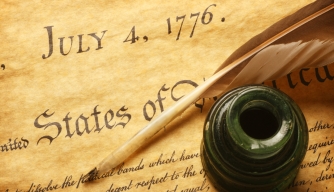
On this day in 1776, members of Congress affix their signatures to an enlarged copy of the Declaration of Independence.
Fifty-six congressional delegates in total signed the document, including some who were not present at the vote approving the declaration. The delegates signed by state from North to South, beginning with Josiah Bartlett of New Hampshire and ending with George Walton of Georgia. John Dickinson of Pennsylvania and James Duane, Robert Livingston and John Jay of New York refused to sign. Carter Braxton of Virginia; Robert Morris of Pennsylvania; George Reed of Delaware; and Edward Rutledge of South Carolina opposed the document but signed in order to give the impression of a unanimous Congress. Five delegates were absent: Generals George Washington, John Sullivan, James Clinton and Christopher Gadsden and Virginia Governor Patrick Henry.
Exactly one month before the signing of the document, Congress had accepted a resolution put forward by Richard Henry Lee that stated “Resolved: That these United Colonies are, and of right ought to be, free and independent States, that they are absolved from all allegiance to the British Crown, and that all political connection between them and the State of Great Britain is, and ought to be, totally dissolved.”
Congress adopted the more poetic Declaration of Independence, drafted by Thomas Jefferson, two days later, on July 4. The president of Congress, John Hancock, and its secretary, Charles Thompson, immediately signed the handwritten draft, which was dispatched to nearby printers. On July 19, Congress decided to produce a handwritten copy to bear all the delegates’ signatures. Secretary Thompson’s assistant, Philadelphia Quaker and merchant Timothy Matlack, penned the draft.
News of the Declaration of Independence arrived in London eight days later, on August 10. The draft bearing the delegates’ signatures was first printed on January 18 of the following year by Baltimore printer Mary Katharine Goddard.
And then in 1787 came the Con-Con; and 1789 A new Constitution replacing our first constitution....see Gary North’s Conspiracy in p
Philadelphia...
Used to be a difference of opinion on these matters! Now? Not so much...
Dick G: AMERICAN! (NOT AINO)
RED: Retired, Extreme, Deplorable!
*****
One of my ancestors, Stephen Hopkins, also signed the Declaration of Independence:
http://www.ushistory.org/declaration/signers/hopkins.html
In some circles, there is a belief that Thomas Paine was the actual author of the DOI; or, at least. Jefferson borrowed heavily from Paine’s writings....
Awesome! I don’t have a signer in my ancestry, but my 8th great grandfather was at the original Constitutional Convention:
http://www.georgiaencyclopedia.org/articles/government-politics/lyman-hall-1724-1790
I re-read the article I sent you on Lyman Hall and he DID sign the Declaration!
LOL, that’s what happens when I go on memory alone ...
Awesome and a nice surprise for you!
Oh, to have been a fly on the wall. I wonder if there's any reportage on how that particular news was received by Parliament and KGIII.. ?
I think the vocabulary-challenged author mistranslated the word "engrossed," thinking it means "enlarged."
It was the engrossed document that was signed, probably more than one copy, which is the formalized document for posterity written by a master copyist in a clear, usually artistic, flourishing hand (as seen in the accompanying illustration).
The last of the Signers to die, Charles Carroll of Carrollton, signed on August 2nd but had not been present on July 4th (he was chosen as one of Maryland's delegates on July 4th).
It was not widely known at the time that Thomas Jefferson had drafted the document (which had been revised by Congress before it was adopted).
Never trust anyone in a tricorn hat, that's what I always say.
Disclaimer: Opinions posted on Free Republic are those of the individual posters and do not necessarily represent the opinion of Free Republic or its management. All materials posted herein are protected by copyright law and the exemption for fair use of copyrighted works.