


Posted on 04/28/2005 8:54:43 AM PDT by jb6
In the Closed-Stock Company "Aviation Concern "EKIP" the specialists of aviation and space-rocket branches of industry guided by professor L. N. Schukin developed the fundamentals of principally new type of flying vehicles "EKIP".
The "EKIP" aircrafts can carry heavy large-scale loads (100 and more tons) at long distances (thousands of kilometers) at a speed of 500-700 km/h at the altitude of 8-13 km. These flying vehicles can move near the surface of ground or water using the air cushion at a speed up to 160 km/h and glide at a speed up to 400 km/h as a "screen-plane".
The flying vehicles "EKIP" do not require an airfield. They can land on airfields of any category, including ground and water surfaces. The length of the runway for heavy vehicles (several hundred tons) does not exceed 600 meters, take-off and landing are performed at steep descent trajectory, which decreases the level of noise affecting the vicinity.
An air cushion device is used for takeoff and landing of flying vehicles "EKIP". The profound air cushion research developments made at the State Scientific Research Center TSAGI (Moscow Branch of Central Air-hydrodynamic Institute), could not be used in traditional existing airplanes due to absence of large planer area.
The flying vehicles "EKIP" have large planer area and the air cushion landing gear ideally fits with the structure of the aircraft. It is located under the body of the vehicle and ensures that low pressure is exerted on the vehicle itself and on the runway (ground, water surface) during takeoff and landing. This pressure is equivalent to the pressure of a layer of water 220-270 mm thick.
For the flying vehicles "EKIP" with a load-carrying capacity of hundred tons there is no necessity to build special airfields with concrete runways 5 km long, as it is necessary for heavy airplanes like B-777 (Boeing) and A3-XX (Airbus Industry).
The flying vehicles "EKIP" will transport heavy loads and large numbers of passengers (1000 and more) to the existing airfields of continental and waterlocked countries.
It should be specially noted that the flying vehicles "EKIP" may use gas fuel (natural gas and hydrogen). Large volumes of the flying vehicle permit to locate inside it without changing the external contour large volume gas fuel tanks. Limited resources of oil (to last for 50 years) require transition of airplanes to gas fuel. However limited areas of thin wings of existing airplanes do not allow this transition. As the gas fuel occupies half of passenger compartment on airplane Tu-156 and in airplane A-310 (DASA project) the fuel occupies the whole area above the passenger compartment thus changing the external contour of the airplane and decreasing its lift-drag performances. The flying vehicles "EKIP" permit due to large volumes to locate the fuel tanks in the lateral part of the aircraft without changing the external contour of the vehicle.
It should be noted that with the use of hydrogen fuel the flying vehicles "EKIP" may increase the range of flight 2-3 times compared to existing airplanes of the same load-carrying capacity. Operation of flying vehicles "EKIP" using natural gas and hydrogen will permit to decrease contaminating emissions of exhaust products, i.e. the flying vehicles "EKIP" will be more environmentally safe than the existing airplanes. It should be specially noted that use on the flying vehicles "EKIP" of liquid methane will allow to reduce the fuel expenses more than 5-8 times, which should result in a decrease of operating expenses 1.5-2 times compared with the existing airplanes.
We should pay special attention to the design of the body of flying vehicles "EKIP". The relative weight of the structure of the vehicles body (compared to takeoff weight) is 30 % lower than the weight of existing airplanes due to the use of composite materials according to the estimation of the DASA special ists. This difference in the weight of the structure resuits in the increase of commercial load by 30 % at fixed range of flight. The possibility to use composite materials in the body of flying vehicles "EKIP" is related to the absence of concentrated loads on the body as a result of absence of large wings and traditional wheel landing gear. Under all flight conditions, including takeoff and landing, the body of the aircraft is under uniformly distributed load, the static component whereof does not exceed the load of a layer of water 300 mm thick. The tail unit of flying vehicles "EKIP" is used for location of aerodynamic control surfaces.
The power unit of flying vehicles "EKIP" is located inside the body, in the stern part. It consists of two or more thrust high economy by-pass turbojet engines and two or more auxiliary high-economy dual generator turboshaft engines. The power units provide for motion of the vehicle, whereas auxiliary engines provide for operation of air cushion landing gear and boundary layer control device ensuring steady airflow around the body of flying vehicles
"EKIP" and decrease of drag. During takeoff and landing the auxiliary power units operate in the maximum power mode, whereas during the cruising flight they operate in maximum economy mode.
The location of thrust bypass engines inside the body of the aircraft permit to create afterburners for the by-pass ducts providing substantial increase of thrust under takeoff condition.
The location of thrust bypass engines inside the body of the aircraft permit to create afterburners for the by-pass ducts providing substantial increase of thrust under takeoff condition.
The power units and the auxiliary engines operate under all flight conditions, the flying vehicles "EKIP" have no unnecessary complicated elements like the wheel landing gear, the failure whereof is currently the cause of 70 % of accidents. The deviation of flat nozzles ensures pitch control. The gas power jets of flat nozzles are more quickly damped in the environment, which results in decreased noise in the regions surrounding the runways.
To ensure directional and roll control at low speeds of flight pulse control engines are mounted on wing tips, using the main fuel (and natural gas) and compressed air taken from main power units.
The flying vehicles "EKIP" ensure elevated level of flight safety. When (all) power units are de-energized the flying vehicle may perform a safe landing on the ground or water surfaces. In order that the auxiliary engines become disconnected it is necessary that all (minimum four) gas generators fail. This is hardly probable. In case even one gas generator is in operation it should be transferred to the maximum power mode, thus the steady airflow around the body of the vehicle is ensured and the landing is safe even in case ,of failure of power units.
The basic design feature of flying vehicles "EKIP" is the new vortex control system (UPS) of the airflow in the boundary layer mounted on the stern surface of the aircraft. This system ensures steady airflow around the body of the vehicles and decreases its drag by creating a set of aggregate of consecutive cross vortex. The vortex boundary layer airflow control system is patented in Russia and abroad in Europe, USA and Canada. It allows at low level of power consumption (6-8 % of the thrust of power engines) to ensure steady airflow around the vehicle body during the cruising flight and during takeoff and landing at angle of attack up to 40°. With the use of the vortex boundary layer airflow control system and the control engines the flying vehicles "EKIP" may perform a "bird landing" at high glide slope at landing speed decreased down to 100 km/h.

Look! Up in the sky! It's, it's SUPERGEEK!
On the upside, at least the writer didn't follow every occurrence with "TM"... the flying vehicles "EKIP"TM ... the flying vehicles "EKIP"TM ... the flying vehicles "EKIP"TM ... the flying vehicles "EKIP"TM ... the flying vehicles "EKIP"TM ...
This sounds like what an investor would say about his baby - it will solve all the world's problems, yada yada yada. Build one and let's see...
EKIP can also walk your dog, cure warts, and compute Pi to 34,000 places past the decimal.
They have built one and it flys. Go to their site and look it up.

Hey, I am a lover of technology, so I say, COOL! I'd like to see other types of flying vehicles, other than the "cigar with wings" approach. Lifting Bodies, Flying Wings, the more the merrier. I have seen flying wing airliner designs that make the 747 and A380 look sooooo, last millenia..
--as a historial aside to this, German commercial planes serving South America before WW 2 , when sea conditions were right would descend to the ground-effect altitude and cruise along the surface of the water, conserving fuel---
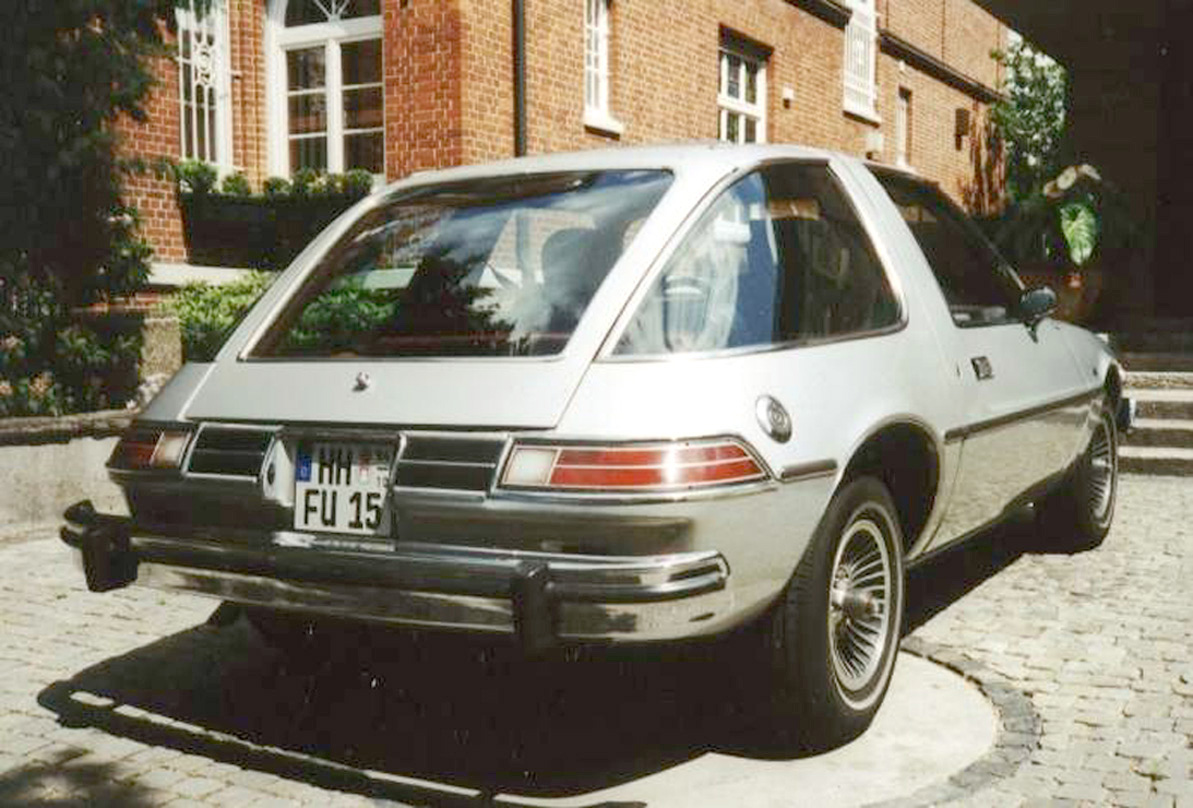
Do they come in silver?
ping
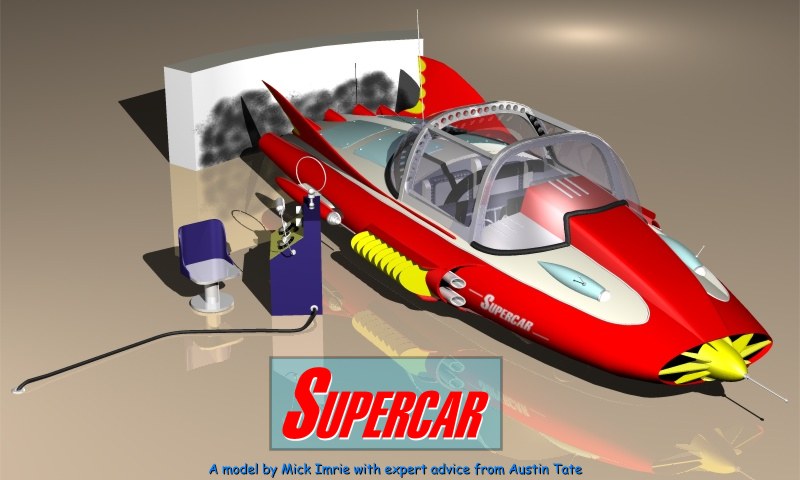
"Calling Occupants of Interplanetary Craft" BUMP!
Gotta do what you can to increase that google PageRank. CNN's been dropping comments on blogs that mention its articles with repeating terms to increase its visibility lately, too.
The Russians also build some ground effect troop transport aircraft. They could haul quite a bit and were a great way to make lots of troops air/sea sick.
The Pacer was so ahead of its time. It was the feature vehicle in "Oh God." I drove a Rambler station wagon and thought the Metropolitan was cool!
it also could be a poor translation of word usage/descriptions from a russian language site into english.
Good point. It's already 10th in the "flying vehicles" search.
Disclaimer: Opinions posted on Free Republic are those of the individual posters and do not necessarily represent the opinion of Free Republic or its management. All materials posted herein are protected by copyright law and the exemption for fair use of copyrighted works.