
Posted on 02/20/2004 3:00:44 AM PST by Cannoneer No. 4
MOSUL, Iraq - For a while, Capt. A.J. Newtson considered removing the slat armor cages from his company's Stryker infantry carriers. The big steel cages make it tough to maneuver the vehicles through some of Mosul's narrow streets.
Then two of his trucks got hit by rocket-propelled grenades.
"We're going to keep it," said Newtson, commander of the 2nd Battalion, 3rd Infantry Regiment's Charger Company.
The cages, so far, are working as advertised. Strykers have come through four RPG hits with no major damage. One soldier was injured - a small shrapnel cut on his face.
Soldiers on board say they were able to absorb the shock of the blast, quickly recover their senses and keep on fighting.
Spc. Steven Bentz was driving his vehicle, Charlie 2-2, the morning of Jan. 30 when it was hit in the Domiz neighborhood in southeast Mosul. The round came in from close range - less than 100 yards.
"It was too fast. I didn't even have time to tell anyone it was coming," Bentz said. The explosion slammed his head against the bulkhead inside his driver's compartment, but it didn't knock him out.
It was a direct hit, right in front of him.
Officials at first believed the grenade skipped over the slat armor, but now they're convinced it detonated when it hit the cage.
The blast sent shards of shrapnel flying across the angled front of the vehicle, knocking out both headlights and penetrating a seam just above the engine compartment, Newtson said.
The metal cut a coolant hose, but Bentz and others on his vehicle didn't realize that until 90 minutes or so later, after they'd joined the other three Strykers in their platoon as they tried to find the shooter.
Charlie 2-2 vehicle commander Sgt. Brent Benjamin had a shot at the attacker's getaway car, but his Mk 19 grenade launcher malfunctioned three times.
"It ka-chinked," said Sgt. David Rudge, one of 2nd squad's two team leaders.
Newtson attributed the weapon's failure to the fact there is no local range where soldiers can test-fire the grenade launcher. The weapon occasionally produces a dud round, and Army commanders in Mosul haven't yet built a firing range where they're willing to risk adding to the already large volume of unexploded munitions in the fields around the city.
After the smoke cleared, the squad leader, Staff Sgt. Francisco Pinedo, fired his M-4 rifle at men he saw running from the end of the alley where the RPG was fired. The shooters got away.
Pinedo was standing in the squad leader's hatch, just to the left of the grenade launcher, and got hit with a small piece of shrapnel just left of his nose.
He bled like he cut himself shaving, Newtson said, but doctors later determined it would do more harm than good trying to remove the metal from his cheek.
For his trouble he was awarded the Purple Heart on Sunday and was among the first batch of Stryker brigade soldiers heading home for midtour leave.
Rudge was standing in one of the rear hatches.
"I heard this big bang - it happened so fast - and there was debris flying over my head," he said. "I felt the vehicle shake, and the next thing I know Sgt. Pinedo was firing. I didn't really know what happened."
Benjamin felt the shake from his position in the vehicle commander's seat next to Pinedo.
"There was a cloud of smoke covering me. I determined the driver was OK, the smoke cleared and we moved out," he said.
Bentz said that about an hour and a half later the vehicle's temperature gauge started to rise. Newtson decided to have the vehicle towed back to the company's base camp rather than risk any damage to the engine.
Bentz said he doesn't have bad dreams about his close encounter, although he had a pretty good headache for the next day or so. He said he's lucky he had his driver's hatch closed. He often drives with it open because it's easier to see that way.
But the periscopes that circle the hatch - they're a series of small but thick glass windows - were specked by shrapnel that would have hit him had he not had the hatch down, he said.
The Army added the 5,200-pound slat armor cages to the vehicles after the brigade arrived in Kuwait in November to enhance their protection against RPGs, the most common anti-armor weapon in the world. They are widespread throughout Iraq.
Newtson said RPGs typically contain a shape charge that blows a hole in its target when it makes contact with a solid surface, such as the side of a vehicle. When the nose of the round hits the target, it starts a secondary motor inside the round that shoots a hot metal core through the hole created by the shape charge.
The slat armor defeats the shape charge by detonating it against the rails of the cage, rather than the wall of the vehicle, and stops it from creating the hole for the hot rocket-powered core to penetrate.
The slats also apparently stopped the RPG that hit Charlie 1-2 three days later.
The crew from Charger Company's 1st Platoon was just wrapping up a security detail near Mosul's southernmost bridge after deputy defense secretary Paul Wolfowitz's walking tour on the other side of the Tigris River.
The three other vehicles had all made U-turns and were ready to roll out when the RPG hit Charlie 1-2 at the front right side, said the squad leader, Staff Sgt. Chris Maxwell. He was in the left forward hatch.
Traffic was heavy and there were a lot of people in the streets, he and other crew members said.
The blast hit Maxwell hard, he said, ripping his communications helmet off his head and sending him falling down into the hatch.
"I got the hell knocked out of me," he said. But it lasted only a few seconds, and then he was back up in the hatch with his weapon, looking for the guys who did it.
"All the vehicles around were flooring it forward and in reverse, people were down and running in every direction," he said. "There were too many people, too many vehicles - no way of telling who to shoot at."
Spc. Adam Rawson was in the left rear hatch, farthest from the explosion. It knocked him backward, but he got down in the hatch and then popped back up looking for the shooters.
Sgt. Jeff Kissler was in the right rear hatch watching the crowd, checking to make sure the vehicle didn't hit any elderly Iraqi women as it backed up. They tend to not be afraid of the military, he said, and will walk right up close to the Strykers as they pass by.
"My eyes were just coming back to the direction where the round came from," he said. "It tore up the vehicle's drip pan (mounted on the side), because there was plastic flying everywhere.
"At first I thought it was an IED (improvised explosive device) because there was debris all over me. But I saw the puff of smoke where it was fired from."
The round was fired from about 100 to 150 yards away, from an alley across the busy street.
There's a bend in the slats where the RPG hit and part of it passed through. It hit the steel tab where the vehicle's tow bar is mounted for storage, then followed along the side of the truck until it stopped in a cargo rack.
And as was the case with Charlie 2-2, the vehicle had been stationary for some time before it was attacked.
"They had to be watching us for at least a half-hour," Kissler said.
In one of the other two RPG hits, a round apparently put a fist-sized dent in one of the rear gas tanks of a B Company, 2-3 Stryker on Feb. 6 but did no further damage. Officials think it must have been a dud.
And Lt. Col. Gordie Flowers, the 2-3 battalion commander, said one more of his vehicles was hit in a wheel but sustained only a bent rim.
Spc. Joseph Horton, the Charlie 2-2 driver, was part of the work detail back at Camp Udairi in Kuwait that had to help contractors install the slat armor. It was a pain in the neck - the armor's heavy, and the job took nearly all day working in the garage.
These days he figures it was time well-spent.
"It did its job," he said. "Keep it on."
Staff writer Michael Gilbert is embedded with the Stryker brigade in Iraq. Reach him at jgilbert41@yahoo.com.
(Published 12:01AM, February 20th, 2004)
Staff Sgt. Chris Maxwell stands near a damaged Stryker infantry carrier that was hit by a rocket-propelled grenade Feb. 2 in Mosul, Iraq. No soldiers in the vehicle were injured in the attack.
The bad news is the main armament doesn't. Somebody who knows more about MK19s than I do will have to comment on how much test firing must be done to ensure reliable function.
Spc. Steven Bentz was driving his vehicle, Charlie 2-2, the morning of Jan. 30 when it was hit in the Domiz neighborhood in southeast Mosul. The round came in from close range - less than 100 yards.
"It was too fast. I didn't even have time to tell anyone it was coming," Bentz said. The explosion slammed his head against the bulkhead inside his driver's compartment, but it didn't knock him out.
Private Mail to be added to or removed from the GNFI (or Pro-Coalition) ping list.
It may not be entirely necessary but it certainly builds confidence knowing that a short time ago, it fired when you pulled the trigger.
Way back when we would test fire every weapon just before heading up river even though we tore them down earlier and did complete inspections and cleaning - it was good to know they worked properly. In the middle of a firefight is not the time to tear down a .50.
Shoot ALL of 'em! After all, the were NO 'witnesses' to the RPG attack, were there!

Remember all the screaming about dead kids during the beginning of the war? You're asking for trouble Lady.
Winning hearts and minds is the only way to defeat a guerrilla war in the long-run. Machine-gunning a bunch of civilians is generally not a good way to win the support of the local populace.
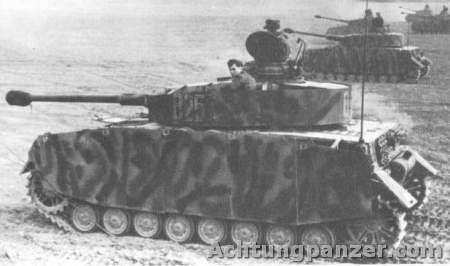
Some good ideas never go out of style
Disclaimer: Opinions posted on Free Republic are those of the individual posters and do not necessarily represent the opinion of Free Republic or its management. All materials posted herein are protected by copyright law and the exemption for fair use of copyrighted works.