Skip to comments.
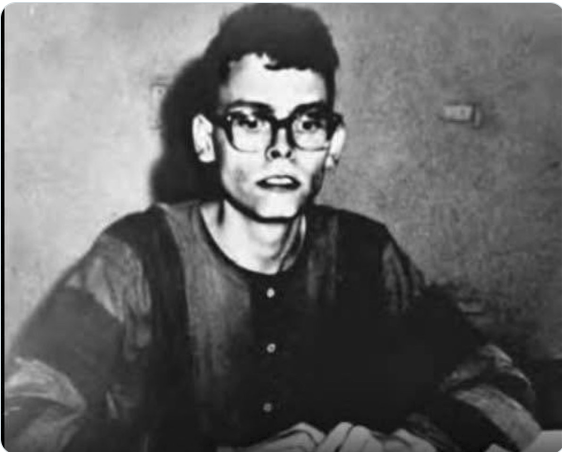
On April 6, 1967, 20-year-old Douglas Hegdahl, a farm kid from South Dakota, was knocked overboard from the USS Canberra in the South China Sea. By dawn, he was a prisoner of war in North Vietnam.
x.com ^
| October 16, 2026
| FeelGoodThoughts @feelgoodtale
Posted on 10/29/2026 6:00:27 PM PDT by ransomnote
FeelGoodThoughts
@feelgoodtale
On April 6, 1967, 20-year-old Douglas Hegdahl, a farm kid from South Dakota, was knocked overboard from the USS Canberra in the South China Sea. By dawn, he was a prisoner of war in North Vietnam. Unlike the captured pilots who arrived in Hanoi, Doug had little military training or intelligence experience. His captors saw a confused, inexperienced young sailor and assumed he was too simple to be dangerous. Doug made a decision that would change his life and the lives of hundreds of others: he let them believe it. He acted clumsy, confused, and almost comically incompetent. His captors mocked him, gave him humiliating nicknames, and eventually stopped watching him closely.
While the North Vietnamese underestimated him, Doug quietly gathered intelligence. He sabotaged equipment when opportunities arose, but his most important mission was collecting information about fellow American prisoners of war. He memorized their names, ranks, capture dates, military units, and hometowns. Unable to write anything down, he devised an extraordinary solution: he encoded the information into a song using the melody of Old MacDonald Had a Farm. Through constant mental rehearsal, he memorized the details of 256 American POWs, ensuring their identities and circumstances would not be forgotten. Among those who recognized the significance of his achievement were senior officers, including future Senator John McCain.
On August 5, 1969, North Vietnam released three American prisoners, including Doug, believing his release would serve their propaganda purposes. Instead, they had unknowingly freed a remarkable intelligence asset. The moment he reached friendly territory, Doug delivered the information he had painstakingly memorized. The 256 names gave the U.S. government concrete evidence of American prisoners being held in North Vietnam. Families who had endured years of uncertainty gained vital information about their loved ones, and officials had specific cases to raise with the North Vietnamese. Doug later received the Silver Star and testified before Congress about the treatment of American POWs.
Think about the price he was willing to pay. Doug endured ridicule and humiliation, sacrificing his pride so other men would not be forgotten. He understood that appearing weak could be more powerful than trying to look strong, and that being underestimated could become an extraordinary advantage. His story is a reminder that courage doesn’t always look like defiance, and intelligence doesn’t always announce itself. Sometimes, the bravest person in the room is the one everyone else dismisses. Douglas Hegdahl proved that a young man armed with patience, discipline, and a song could carry the identities of 256 men out of a prison—and help bring hope to the families waiting for them back home.
October 16, 2026
TOPICS: Miscellaneous
KEYWORDS: dollyparton; douglashegdahl; heroic; memory; oldmacdonaldhadafarm; pow; qanon; sailor; silverstar; usscanberra; vietnam
Navigation: use the links below to view more comments.
first 1-20, 21 next last
To: ransomnote
In interrogation classes they bring up playing stupid but they also stress that you have to work within what you can pull off and stay with, playing stupid is hard but can work if you can do it, and this guy pulled it off while doing brilliant things.
2
posted on
10/29/2026 6:09:10 PM PDT
by
ansel12
(Quit anthropomorphizing SI computer functions.)
To: ransomnote
Douglas was indeed heroic, but how he must have suffered while in captivity. That photo shows a young man clearly in the advanced stages of starvation.
To: ransomnote
To: Flaming Conservative
To: Tijeras_Slim
Thank you! The LORD bless him, and may his latter days be greater than his former days, and may he declare the great and mighty works of the LORD!
To: ransomnote
Don’t underestimate Navy enlisted.
7
posted on
10/29/2026 7:15:26 PM PDT
by
Thud
To: ransomnote
8
posted on
10/29/2026 7:38:14 PM PDT
by
daniel1212
(Turn 2 the Lord Jesus who saves damned+destitute sinners on His acct, believe, b baptized+follow HIM)
To: Flaming Conservative; Tijeras_Slim
Thank you! The LORD bless him, and may his latter days be greater than his former days, and may he declare the great and mighty works of the LORD! Amen! What a great patriot and hero he is. I hadn’t heard this story before.
9
posted on
10/29/2026 7:46:32 PM PDT
by
Allegra
(<i>I hate the word “literally.” )
To: Allegra
Another example of why I hold Vietnam veterans in such high regard. God bless every one of them. Shame on those who chose to spit on them and call them baby killers.
10
posted on
10/29/2026 8:26:04 PM PDT
by
sgt_lau
(Never, ever, ever, vote for a muslim. They really do want us dead.)
To: sgt_lau
Another example of why I hold Vietnam veterans in such high regard. God bless every one of them.
Yes, God bless them. Everything was stacked against them.
They were mostly prohibited from entering DRV territory, had a commander-in-chief who had no interest in winning the war, and they were equipped with the worst rifle in the history of modern warfare, the M16.
To: ransomnote
Doug Hegdahl was one of my instructors at SERE school.
To: Salvavida
New friend of mine is a double Silver Star recipient and the events he went through on three tours will curl our hair. Just for fun, I looked up the award details and he is actually being quit modest.
13
posted on
10/30/2026 5:21:19 AM PDT
by
KC Burke
To: ansel12
playing stupid is hard but can work if you can do it,
So true, but a large part of the problem is pride. The vast majority of the people who go into the intelligence field already have a high opinion of themselves and their abilities, and seldom can keep those under their hat, so to speak.
I found that being overly religious usually worked to keep other people at bay much better, since most of them think that anyone who has religious beliefs is already "dumb" just as a basis of fact. It definitely made the men or women who sat next to me on planes decide to talk to someone else.
14
posted on
10/30/2026 5:27:10 AM PDT
by
wbarmy
(Trying to do better.)
To: wbarmy
The issue is being interrogated by professional interrogators though, not just normal life.
Professionals teach the classes and they are the same professionals conducting the interrogations, of course methods and even goals, vary from country to country and culture to culture.
15
posted on
10/30/2026 5:31:02 AM PDT
by
ansel12
(Quit anthropomorphizing SI computer functions.)
To: ransomnote
This is why the world fears the American fighting man....
Rightly so.
16
posted on
10/30/2026 11:35:01 AM PDT
by
BFW
To: ransomnote
Douglas Heghdahl is a true hero and a great American.
One of the few “joys” of going to Navy Survival, Evasion, Resistance, and Escape (SERE) School back in the day was the lesson he taught.
17
posted on
10/30/2026 2:16:40 PM PDT
by
Natty Bumppo@frontier.net
(We are the dangerous ones, who stand between all we love and a more dangerous world.)
To: ransomnote
Douglas Heghdahl is a true hero and a great American.
One of the few “joys” of going to Navy Survival, Evasion, Resistance, and Escape (SERE) School back in the day was the lesson he taught.
18
posted on
10/30/2026 2:16:41 PM PDT
by
Natty Bumppo@frontier.net
(We are the dangerous ones, who stand between all we love and a more dangerous world.)
To: ansel12
That is my point. It’s not just the professional type who are evaluating you, when evading interrogation or intelligence. The cook who brings the gruel sees you act differently then normal, and he passes it on to the officers. The guy who cleans the port-a -pots sees you reading something to yourself and realises your smarter than you let on, and he tells the officers.
Hegdahl had to sell this to everyone on that post, even other Americans, because they might inadvertently let on what he was.
19
posted on
10/31/2026 5:36:41 AM PDT
by
wbarmy
(Trying to do better.)
To: wbarmy
You are right of course but I assume that Hegdahl doesn’t have a problem doing that because playing stupid is usually the choice of someone that it works for in normal life and who lives it to some degree.
Take a good ol boy with folksy ways, someone who doesn’t have the physical appearance or speech patterns of the intelligent, throw in a country accent and someone like that often likes people underestimating him and uses it in daily life, you see it in high IQ E-4s dealing with officers.
Someone doesn’t just put on the costume of playing simple, it just fits some people who are bright but grew up simple and lived among the simple, people in elevated classes of life work hard to develop the persona of intelligent, they don’t dumb down their speech they try to elevate it, they develop the halting speech (what I call the liberal pause) to sound thoughtful and deep, they develop body language to show breeding and intelligence, and they usually have the bone structure that reinforces the image.
20
posted on
10/31/2026 12:43:09 PM PDT
by
ansel12
(Quit anthropomorphizing SI computer functions.)
Navigation: use the links below to view more comments.
first 1-20, 21 next last
Disclaimer:
Opinions posted on Free Republic are those of the individual
posters and do not necessarily represent the opinion of Free Republic or its
management. All materials posted herein are protected by copyright law and the
exemption for fair use of copyrighted works.
FreeRepublic.com is powered by software copyright 2000-2008 John Robinson