Skip to comments.
𝗘𝘃𝗲𝗿𝘆𝗼𝗻𝗲 𝗼𝗻 𝗫 𝗦𝗮𝘆𝘀 𝗦𝗮𝘂𝗱𝗶 𝗔𝗿𝗮𝗯𝗶𝗮'𝘀 𝗣𝗶𝗽𝗲𝗹𝗶𝗻𝗲 𝗪𝗶𝗹𝗹 𝗕𝗲 𝗙𝗶𝘅𝗲𝗱 𝗶𝗻 "𝗗𝗮𝘆𝘀". 𝗜 𝗛𝗮𝘃𝗲 𝗪𝗼𝗿𝗸𝗲𝗱 𝗧𝗵𝗼𝘀𝗲 𝗗𝗲𝘀𝗲𝗿𝘁𝘀. 𝗧𝗿𝘆 𝗢𝗻𝗲 𝘁𝗼 𝗧𝗵𝗿𝗲𝗲 𝗠𝗼𝗻𝘁𝗵𝘀.
X.com ^
| September 17, 2026
| AJ Signal @aj_geo_analysis
Posted on 09/18/2026 12:09:27 PM PDT by ransomnote
AJ Signal
@aj_geo_analysis
𝗘𝘃𝗲𝗿𝘆𝗼𝗻𝗲 𝗼𝗻 𝗫 𝗦𝗮𝘆𝘀 𝗦𝗮𝘂𝗱𝗶 𝗔𝗿𝗮𝗯𝗶𝗮'𝘀 𝗣𝗶𝗽𝗲𝗹𝗶𝗻𝗲 𝗪𝗶𝗹𝗹 𝗕𝗲 𝗙𝗶𝘅𝗲𝗱 𝗶𝗻 "𝗗𝗮𝘆𝘀". 𝗜 𝗛𝗮𝘃𝗲 𝗪𝗼𝗿𝗸𝗲𝗱 𝗧𝗵𝗼𝘀𝗲 𝗗𝗲𝘀𝗲𝗿𝘁𝘀. 𝗧𝗿𝘆 𝗢𝗻𝗲 𝘁𝗼 𝗧𝗵𝗿𝗲𝗲 𝗠𝗼𝗻𝘁𝗵𝘀.
First, let me say plainly that I love the desert and the Arab cultures. But it does shape a timeline the media does not understand because they are talking about something they have never experienced.
Lots of people on @X are saying the Saudi East-West pipeline and its pumping stations will be back online in days!?!
I have worked these deserts, in Saudi Arabia and across the Middle East, and that is not how it goes. Even if it is "Expedited", you are still looking at a month at the very least, and realistically one to three.
You have to first understand what the work actually is. This is not a "gas station attendant" tightening a few bolts or replacing a motor.
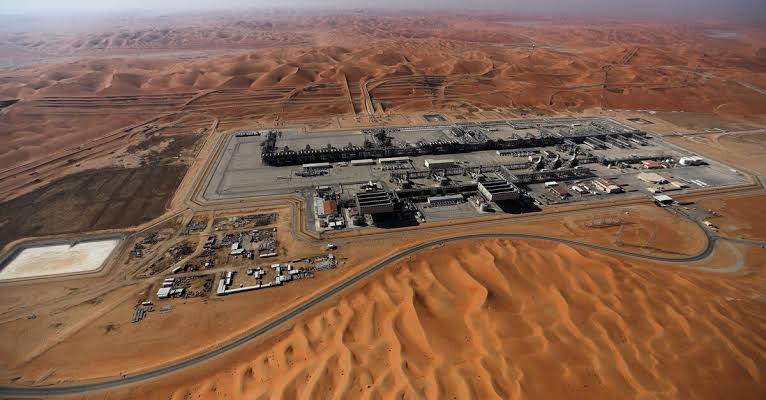
A pumping station hit by a ballistic missile has to be completely demolished, cleared, re-engineered and rebuilt, from the ground and concrete upwards, often with newer technology because the stations are decades old anyways and the original parts no longer exist.
That means engineering, contractors, subcontractors and sub-subcontractors, each waiting on the one below them, each relying on a supply chain that is nothing like the robust, on-time machine people imagine in Germany or Norway or the West.
Now layer the desert summer heat on top of that (we are still in September where the desert heat burns your feet even with shoes), and this is where the delays compound.
If you are not short on supplies, your truck is stuck in the sand.
If the truck moves, you are waiting on water, or waiting for the temperature to drop, because September in the Saudi desert is so brutal that crews can only work at night or in short bursts before exhaustion and medical emergencies set in.
The skilled labor is largely foreign, Pakistani, Afghan, Indian and others, working under experienced engineers who must be flown in and coordinated and some of those highly skilled workers likely left when the missiles started months ago. So how do you convince them to come back? Sure you have some of your own engineers but the highly skilled ones are always brought in from overseas.
And the rhythm of the day is cultural. There are the Prayer times that take thirty to forty five minutes each, several times a day, if they end up working during the day.
There is a midday rest or naps. These are not flaws, they are how the society works, but they are real hours that Western timelines never account for.
Then the piece almost no one has factored in.
The ports are blocked via Strait of Hormuz and Bab Al Mandeeb. The heavy equipment a rebuild like this needs, the kind that normally arrives by sea ordered from overseas, cannot come by sea now.
It has to be airlifted, which is far more expensive, far slower, and limited by what fits on an aircraft.
Some of this machinery is too large to fly intact, so it must be disassembled, flown in pieces, and reassembled on site. Every one of those steps is a new bottleneck stacked on the last.
I like to look at things from an order of effects point of view so;
1. FIRST, the immediate one, the repair itself drags out to weeks or months, not days, so Saudi export capacity stays crippled far longer than the market expects.
2. Second, the market one, that prolonged outage keeps upward pressure on oil and shipping costs, because the bypass everyone assumed would reopen quickly does not.
3. Third, the strategic one, and this is the part the optimists miss, even a fully repaired pipeline sits under the same threat that broke it. Why would the Houthis not simply hit it again, you bet they will.
They have shown they are less about careful calculation than the IRGC and more about action.
A rebuilt station is just a fresh target, which means the real constraint is NOT the repair time at all, perhaps it never was. It is that you cannot durably fix a node your enemy can strike at will at any time of day regardless of the weather conditions....
So ignore the days talk.
Between the engineering, the desert, the blocked ports and the standing threat of another strike, this is a one-to-three month problem at best, and possibly one that cannot be permanently solved while the war continues at all.
You know what to do, amplify this Signal.
𝗦𝗜𝗚𝗡𝗔𝗟, 𝗡𝗢𝗧 𝗡𝗢𝗜𝗦𝗘!!
September 17, 2026
TOPICS: Miscellaneous
KEYWORDS: dollypartoneatskids; getsnewsfromtwitter; qanon; saudipipeline; slop
Message from Jim Robinson:
Dear FRiends,
We need your continuing support to keep FR funded. Your donations are our sole source of funding. No sugar daddies, no advertisers, no paid memberships, no commercial sales, no gimmicks, no tax subsidies. No spam, no pop-ups, no ad trackers.
If you enjoy using FR and agree it's a worthwhile endeavor, please consider making a contribution today:
Click here: to donate by Credit Card
Or here: to donate by PayPal
Or by mail to: Free Republic, LLC - PO Box 9771 - Fresno, CA 93794
Thank you very much and God bless you,
Jim
Navigation: use the links below to view more comments.
first previous 1-20, 21-40, 41-49 next last
To: ransomnote
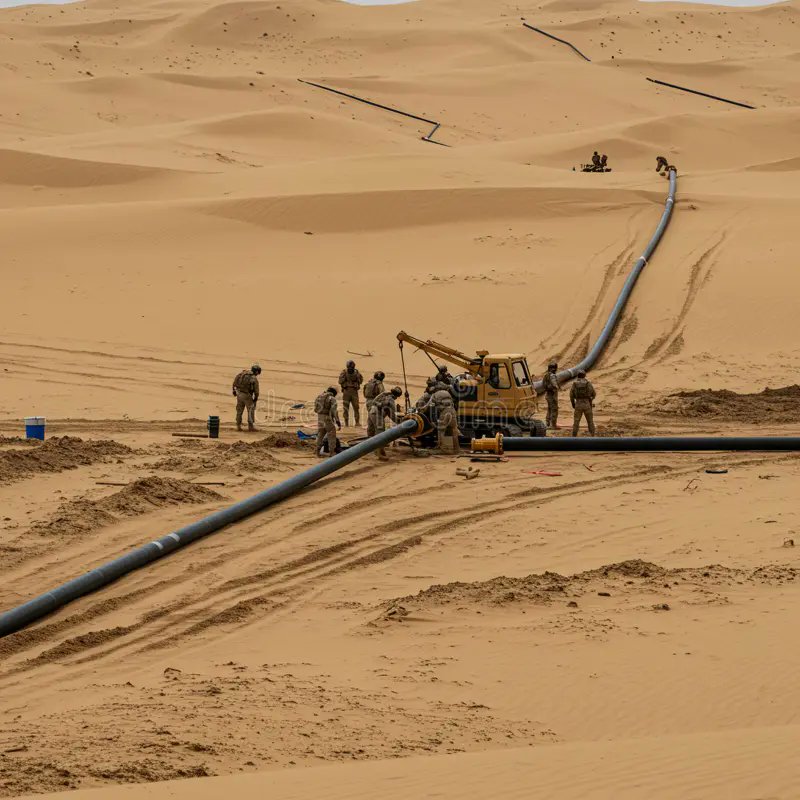
That first photo is funny...smallish pipe, maybe 12 inch? I would have thought that the pipe across the desert must be 48 inch.
To: ransomnote
As someone noted, can I get a CV for the author. I mean, he says things but so could I. I am an expert at pipeline construction and have worked on them for decades.
Of course, I am just saying that and have no expertise whatsoever and if I did could not prove it here.
But perhaps I have an agenda. And an agenda and some AI make me all the expert and whatever it is that I need to be in order to advance my agenda.
To: ransomnote
The real question here is whether or not Saudi Arabia can protect the pipeline from further attacks - the X poster’s point 3. IF they can do that, from what I’ve read, the X poster’s comments aren’t wrong, but off point. Chris Wright said that the damaged portions are being bypassed to get *partial* flow going in a few days. Those bypass damaged pumping stations, so pressure in the line is dropped, and that’s why it’s partial flow. Then the plan is to keep it running at partial flow until the pumping stations can be repaired and in-lined again. The estimates for that, according to Chris Wright, is 5 to 6 weeks. 6 weeks is literally in the middle of the X poster’s 1 to 3 month estimate.
It sounds to me like this guy certainly has experience, but is either not working with all of the facts or is intentionally ignoring some of the facts.
The beauty here is, by this time next week we’ll know who was right (assuming Saudi Arabia fends off more attacks on the pipeline).
23
posted on
09/18/2026 1:10:04 PM PDT
by
Merrick
To: ransomnote
You mean our government lied to us?
24
posted on
09/18/2026 1:12:42 PM PDT
by
McGruff
To: ProtectOurFreedom
And I certainly don’t know anything, but do you really think Saudi Arabia has absolutely NONE of this in storage for occasional repair work? The obvious answer is *OF COURSE* they do. The less obvious answer is, do they have EVERYTHING they need to complete the repairs? But if they have, let’s say, 80% of what they need, getting the remaining 20% out of Europe is a whole let less stressful than you portray, isn’t it?
25
posted on
09/18/2026 1:13:12 PM PDT
by
Merrick
To: E. Pluribus Unum
When oil money is involved forget about accurate or honest reporting. Futures and options trading guarantees totally unreliable information.
I just try and figure out whose got the assets to mess up the other guys’ assets. Then what the effect will be on global crude prices. Then trade accordingly. So far this year I’m beating the market rather well. Just sayin.
26
posted on
09/18/2026 1:13:24 PM PDT
by
Justa
(Our constitution was made only for a moral and religious people....)
To: ransomnote
He narrates a familiar part of my working life. There were times and places where we paid the work agreement crew and let them do their cultural thing and brought in others to do the real work. visas were the biggest problems after visas came customs. Try having an entire operation shut down in some way because you can’t get a computer card through customs. Even the miracle workers at one of the freight forwarders or DHL CAN’t make it happen. Customs has impounded your only one of two cards in captivity and don’t care about your time or money. What they really want is a “Facilitation” payment and legal won’t let that happen because it looks too much like an FCPA violation. You don’t want your last card impounded so you get someone to carry the part in their briefcase to a remote airport down the coast on a charter flight, clear local customs and meet them with a helicopter. Yeah. It really happens that way some times, or it did. Lots of fun and games
27
posted on
09/18/2026 1:16:00 PM PDT
by
Sequoyah101
(Opinions and belly buttons, everybody has one and they get to show them if they want to.)
To: KarlInOhio
Inshallah = “If the good Lord’s willing and the creeks don’t rise”.
28
posted on
09/18/2026 1:16:25 PM PDT
by
Jim Noble
(Assez de mensonges et des phrases)
To: ProtectOurFreedom
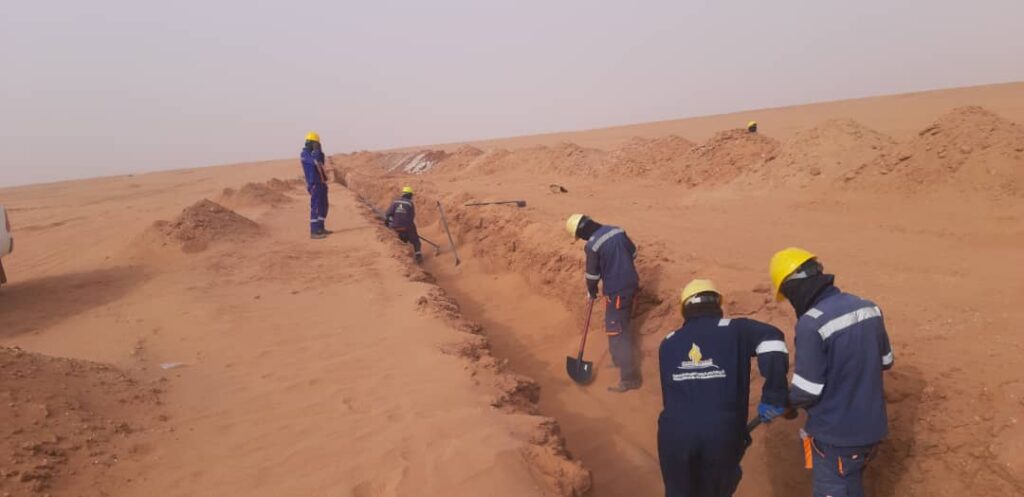
Those are local well pipes not transit pipes. The transit pipes are usually in the 36” range and sometimes preferably buried.
29
posted on
09/18/2026 1:17:10 PM PDT
by
Justa
(Our constitution was made only for a moral and religious people....)
To: Merrick
Inventory for occasional repairs and replacements might be 10% of what you need to rebuild a completely destroyed pumping station. I very much doubt that they have a complete pumping station in inventory ready to install.
I worked in the power industry for over 3 decades and can speak from experience about spares kept in inventory. Large motors, pumps, pulverizers, fans...none of it is stocked. They have experienced crews that can grind out cracks and re-weld things to repair it good as new. But that is totally different from a complete rebuild on a new pad.
That heavy equipment is long-lead items and not lying around at the manufacturer, either.
There might be oil field supply companies that can provide the equipment. Their procurement people are no doubt on the phone scrambling to find the equipment from supply companies right now. You can cobble it together from many companies. Plus, I would not be surprised if there are mutual-aid agreements with other companies to fill equipment needs. That is common in large, capital intensive industries.
To: Justa
“local well pipes not transit pipes”
That’s what I figured. Feeder lines.
To: ransomnote
Ah me, the photo brings back so many memories...mostly good memories.
HOT, HOT, HOT, HOT, HOT, HOT, HOT, HOT, HOT, HOT, HOT, HOT, HOT, HOT, HOT, HOT, HOT, HOT, HOT, HOT, HOT, HOT, HOT, HOT!
One tried NEVER, EVER to leave one's car outside.
Well, the weather wasn't so terribly hot from mid-November to March. It was actually livable.
To: Merrick
Little confused by his statement that equipment can’t arrive by sea and that airlift is slower. I would think an airplane is faster. And think the United States will make sure this particular cargo gets through by sea if necessary.
33
posted on
09/18/2026 1:32:14 PM PDT
by
Williams
(Thank God for the election of President Trump!)
To: ransomnote
I used to worry about widespread opposition to Trump’s war against the IRGC.
Not anymore.
They are like pirates - threatening everyone. There is no one left (other than Democrats) who doesn’t want Trump to finish them off.
34
posted on
09/18/2026 1:41:25 PM PDT
by
enumerated
(81 million votes my ass )
To: ransomnote
“airlifted”
President Trump,
....
Yes, your majesty.
To: allendale
Agreed. Those that say pipelines will somehow replace the Strait of Hormuz are delusional.
The Saudi pipeline is about 700 miles with about a dozen pumping stations. Look how easy it was for the Houthis to shut down just one!…..and it will likely be shutdown for many weeks.
It would be so much easier for a terrorist to attack any of the 12 pumping stations than to attack a moving ship—which might even have escort protection.
The underground part of the pipeline would not be invulnerable either. Over 700 miles would have to be somehow defended. Reliance on the Strait will continue for a long, long time.
36
posted on
09/18/2026 1:41:52 PM PDT
by
volare737
( Diversity is something to be overcome, not celebrated.)
To: ransomnote
Good luck in winter, Saudis tell Europe oil refiners they’ll get no crude next month.
37
posted on
09/18/2026 1:47:13 PM PDT
by
Theoria
To: nesnah
The author never gives their credentials just their “experience”. That “experience” could be in creative writing. Sounds like one of the many “experts” frequently cited on evening news (bullshit) casts.I agree. I did work that same brutal desert on the Oman side of the border. My work was on drilling rigs and not pipelines. It was hot as hell and we worked 24-7. The Saudi's are well known to keep ample repair parts for all their oil field operations. I doubt it will be just a few days to being fixed. It will not be months.
38
posted on
09/18/2026 2:34:51 PM PDT
by
cpdiii
(cane cutter, deckhand, oilfield roughneck, drilling fluid tech, geologist, pilot, pharmacist, MAGA)
To: ransomnote
TO BE FAIR-—THEY DID NOT SAY HOW MANY DAYS
39
posted on
09/18/2026 2:45:57 PM PDT
by
ridesthemiles
(not giving up on TRUMP---EVER)
To: Gen.Blather
Unfortunately, Saudi’s military is a palace guard staffed mostly with family members who like the dress uniform, the status and the pay to be leaders. I ran across a podcaster the other day who described the Saudi military as "an army of Prince Harry's." Which would explain their performance against the Houthis over the last decade.
Navigation: use the links below to view more comments.
first previous 1-20, 21-40, 41-49 next last
Disclaimer:
Opinions posted on Free Republic are those of the individual
posters and do not necessarily represent the opinion of Free Republic or its
management. All materials posted herein are protected by copyright law and the
exemption for fair use of copyrighted works.
FreeRepublic.com is powered by software copyright 2000-2008 John Robinson