Posted on 07/16/2026 6:49:45 AM PDT by MtnClimber
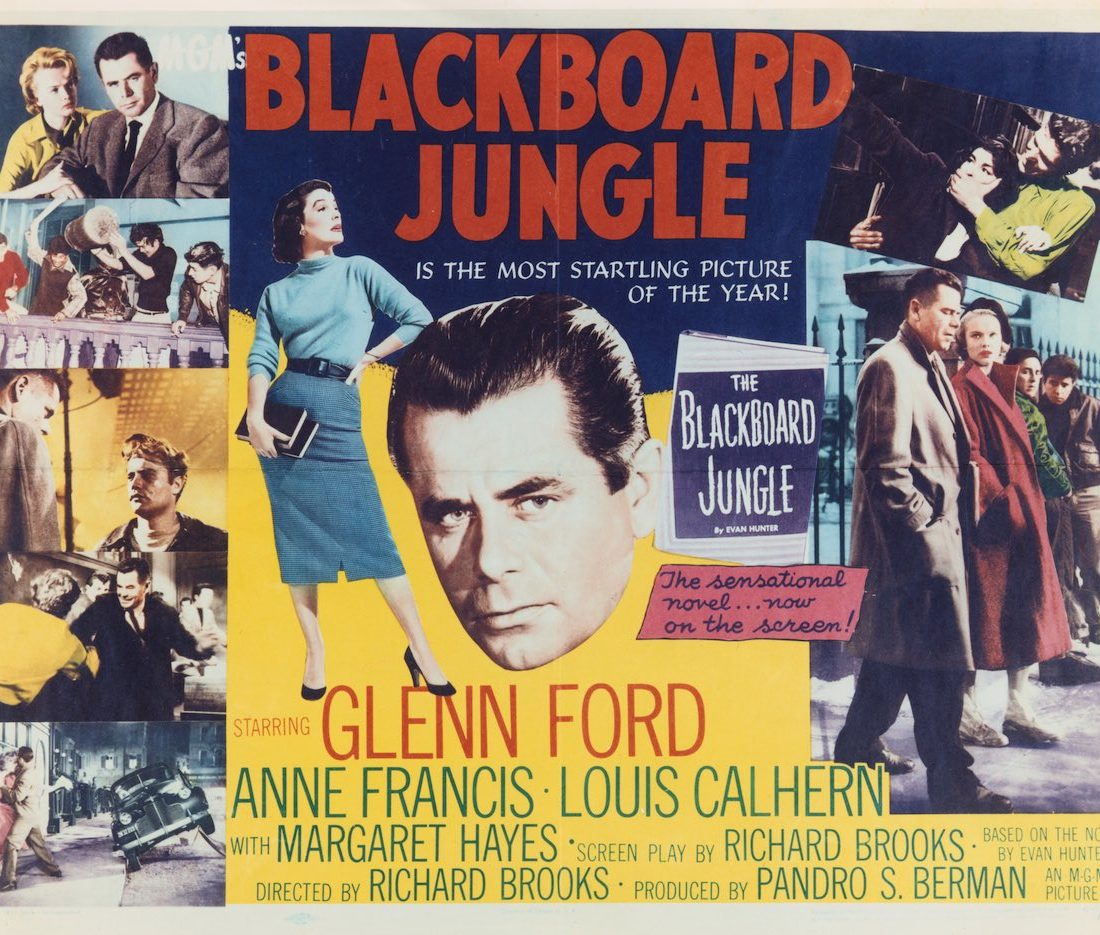
Student violence in many of our nation’s schools is out of control. An Education Week teacher survey, whose results were released in March, found that 35 percent of respondents said classroom behavior was “a lot worse” than last year. It’s not just children fighting with each other; teachers are often on the receiving end of assaults.
Examples of student violence against teachers are common. In southern California, as reported by the Long Beach Post in June, a Carver Elementary School teacher left school with “major purple marks” after students hit, pinched, bit, and scratched her.
In an explosive moment, one child headbutted her so hard that part of her vision went dark. She went to the emergency room and learned she had an eye injury that permanently altered her eyesight, causing floating dots and flashing lights.
Near Boston, a Roxbury teacher asked an eighth grader to pay attention—and was punched, leaving multiple bruises. A nurse at a Dorchester school sustained a concussion and a pinched nerve after being attacked by a student.
Nationwide, surveys indicate that 6 percent to 10 percent of U.S. K-12 teachers are physically attacked by students each year, and an additional 10 percent to 45 percent experience verbal threats or harassment.
While the problem is currently garnering significant media attention, it is not new. A 2014 survey by the American Psychological Association Classroom Violence Directed Against Teachers Task Force found that a stunning 44 percent of educators declared that students physically attacked them. More than half of the surveyed educators reported that pupils destroyed personal property (computers, cars, phones, etc.).
What is the reason for the rampant violence?
Many teachers say parental support is key and that parents need to do a better job of reining in their kids.
While soft or neglectful parenting is certainly part of the problem, schools must also accept responsibility. In that vein, about 50 percent of educators said that tougher consequences for students, such as expulsions, are needed. Unfortunately, many schools don’t pursue that approach.
Administrators’ response has weakened, many teachers explain, because they have to go through eight or nine steps before they can even consider sending the kid to the office.
Also, many schools still use the discredited—and teacher union-supported—restorative justice procedure. This racially motivated, 50-year-old regimen emphasizes “making the victim and offender whole” and involves “an open discussion of feelings.” It arose in the 1970s because black students were far more likely to be suspended than those of other ethnicities. The implication, of course, is that white teachers and administrators tend to be racist. But the racial bean counters never explain why the racial disparity persists even in schools where black principals and staff predominate.
In addition, the Positive Behavioral Interventions and Supports (PBIS) approach, also supported by the two national teachers’ unions, remains widely used. This system, a touchy-feely, new-age idea from the 1990s, aims to create a “framework for creating safe, positive, equitable schools, where every student can feel valued, connected to the school community, and supported by caring adults.”
The practitioners claim that by applying “evidence-based practices within a PBIS framework, schools promote students’ academic, social, emotional, and behavioral success, collaborate with families to develop locally meaningful and culturally relevant outcomes, and use data to make informed decisions that enhance overall effectiveness.”
But PBIS has not helped. Neetu Arnold, a policy analyst at the Manhattan Institute, recently wrote, “When I began asking teachers about PBIS, I heard no shortage of complaints. Educators described how it drove disruptive classrooms, undermined their authority, and made effective teaching nearly impossible. Yet when I spoke with PBIS trainers and reviewed official materials, the disconnect was striking: trainers insisted that the teacher accounts didn’t reflect the structured framework they endorsed.”
Student suspensions, a longtime disciplinary measure, are looked down upon these days. In fact, California prohibits suspensions for low-level misbehavior, such as willful disobedience. Similarly, Massachusetts sets prerequisites for suspensions, directing administrators not to suspend pupils as a consequence until alternative remedies have been tried and documented. In practice, this makes suspension a last resort rather than a baseline tool for classroom management.
Suspensions don’t always work, however. When I taught middle school in the 1990s and 2000s, I found that suspending an out-of-control student made it easier to teach willing learners, but it didn’t always improve the miscreant’s behavior. Upon their return to class after a suspension, I always asked the disruptors how they spent their time out of school. All too often, the reply was a shrug, followed by “Watched TV.” In those cases, it was hardly an effective punishment.
My school, however, was fortunate to have Mr. Thomas as the school’s guidance counselor and discipline dean. He was a former Marine drill sergeant, and his approach was old-school. When misbehaving students were sent to him, he would make them stand facing the front of the room for an hour or two without speaking. He also kept the room a few degrees warmer than necessary. This discouraged pupils from engaging in antisocial behavior when they were threatened with a visit to Mr. Thomas. But few schools have ex-military personnel in the counseling office.
As a result of the upsurge in student violence, many teachers are considering leaving the profession. About 20 percent of educators across the U.S. said they plan to leave their jobs before school starts in the fall, according to June data from the Rand Corp.’s 2026 State of the American Teacher and the American Life Panel surveys. Misbehaving students are cited as the top stressor.
In Wisconsin, teacher resignations are at an all-time high, with students’ disorderly behavior cited as a top reason.
The problem is particularly acute in California, where a recent survey found that 40 percent of teachers plan to retire or quit in the next 10 years, with many citing declining behavioral standards as the primary reason.
In sum, schools must do a better job of disciplining disruptive and violent students. Both offenders and well-behaved students aren’t being properly educated. Additionally, many teachers are fed up and are leaving the profession.
“Suspend disruptive students, and your career is on the fast track to nowhere.”
Dear Mr. Principal:
The school you run is a zoo. Therefore, as per the union contract, no salary increase will be forthcoming for the upcoming school year. Do try harder. Consider filling out the accompanying school discipline forms as appropriate.
You may file an appeal of this decision at union headquarters before July 30th, 2026.
Teachers’ Union Representative Tammy Teacher
PBIS is a major cause of the problem. Second is lack of support by parents. When I was in school, if I got in trouble in school, I was in twice as much trouble when I got home. Now there is no support. Indeed, Karmelo Anthony was treated as the injured party by blacks despite the fact that he stabbed an unarmed youth. Gees, people need to take responsibility for their actions.
And a lot of the female teachers were just as tough. A kid would have had to be crazy to try laying a finger on my 10-grade geometry teacher, to mention only one.
LOL. Had the exact same experience in 8th grade Catholic school in NY City. There was a weak, effeminate male teacher who could not control the boys in his large class.
He was removed, and the nuns brought in a guy who I swear could have been a mafia hitman. He quickly identified the lead troublemaker and did almost exactly the same thing as you described. Peace was restored for the rest of the year.
Students are not held accountable for their behavior. Thanks to Obama, it is near impossible to reprimand, let alone suspend students for the most aberrant, violent behaviors.
Many students are a-moral, drugged up, self-important and egotistical - and have little to no control over their emotions; proper school behavior is not taught at home. This is carried into the schools and out in society in general - re: "Teen Take Overs" resulting in a lot of destruction, "no arrests made."
Don't count on the union to do anything either - they are too busy with fund raising and promoting lefty politics to bother with classroom issues.
Speaking as a recently retired 33-year, professional teacher and veteran of public schools.
Students are growing up watching people on tv or online rioting, burning, destroying property and attacking legal authority, all with impunity, no consequences, and even encouragement from media and political figures. Parents and admin people are intimidated from setting limits and enforcing reasonable expectations.
Why should some surly kid be expected to behave better than his role models? Welcome to the revolution.
10th-grade
They call them schools but they're daytime prison/detention centers.
In the 80’s teachers didn’t take ANY crap from kids. They would often slam the kid up against the wall, often by the neck, or tackle them if 2 students were fighting, and parents for the most part supported the teachers and principles, and the kid would be in deep doo doo when they got home...
Then came the lawsuits from parents who no longer cared about raising their kids right, or were too busy or whatever. Their kids got spoiled at home, and the parents almost feared the kid’s reactions if the parent didn’t defend the kid no matter how guilty the kid was.
You could see the change happening in the schools. Pretty soon kids were violent towards teachers, and teachers were ordered not to confront kids for fear of lawsuits.
Spoiled rotten kids and greedy lawyers and lazy fearful parents, and liberal teachings have made a complete mess of education
> Teachers aren’t even allowed to defend themselves against assault with a deadly weapon. <
Right you are. As I noted earlier, I’m a retired urban high school teacher.
A story:
One day there was a huge fight in one of the hallways. The next day a staff meeting was called, and lawyer from the school district addressed us.
He didn’t take any questions. And he offered no sympathy for the difficulties we faced. He just said that if we were injured while trying to break up a fight, we were on our own. Medical bills, any lawsuits. We were on our own.
I guess we were supposed to just stand around and let stronger students gang up and beat the crap out of weaker students.
We were supposed to wait for the school police to show up. Heck, sometimes that would take 20 minutes or more. We weren’t allowed to call the city police.
Very depressing.
Oh, and one more thing. Most teachers intervened in fights anyway. To just watch means that the weaker student would be badly injured. Can’t let that happen.
Tammy Teacher was threatened and forced out of the Teacher’s Union the day after she wrote that letter.
Some years later, one of dad's younger and less than friendly colleagues came up to him and admitted that he had been pretty much on the money. Equally surprising was this younger man's realization that the last few years had convinced him that "none of this" (teaching in the public schools) was making "one damn bit of difference anymore."
Teachers can call the police in cases of battery.
I can’t tell you the number of times I’ve sat in on student-parent conferences due to a student’s aberrant behavior in the classroom and on school grounds - sometimes with an advocate or even a lawyer (for the student).
Whenever I’ve been a part of this type of situation I know it’s going to be a s*** show with the parent and advocate blaming the teacher, racism, not understanding “the community,” picking on their child specifically (heard this one a lot, as if I had the time to do this). Usually these meetings ended with nothing happening to the student, b/c the schools’ hands are tied with ridiculous laws that prevent suspension, expulsion or even a reprimand.
I would advise against physically attacking a person who is trained to kill and has used that training before. These teachers need to fight back in self defense. It is the only thing that these animals will listen to.
“The behavior is worse because the students are allowed to get away with it.”
______________________________
My wife teaches ELEMENTARY in a mostly rural school which touches one end of a small city, and is ready to retire!
The kids are mostly feral, with only several per class who are capable, and the rest nothing but trouble, mentally incapable, or have severe medical issues. IT IS A MESS!!!
And administration?? You think they’d have some help there? Think again—NOTHING!
No consequences for bad behavior, and don’t want lawsuits!!
Oh, but, but they’re supposed to teach, and produce an excellent student who has manners, good grade, and good demenor.
IMPOSSIBLE task, when EVERY roadblock you can imagine is put in your way!!
I had been working until the end of March. Then a fight broke out between two students in a classroom I was in and the teacher I was working with got caught in the middle. I jumped in to get her out of it. The teacher said I was her hero. The agency that hired me to be a sub said that I broke their rules about getting involved in fights and I was let go.
It didn't used to be like this.
Thank you and yes.
I don’t know of a single teacher in all of my three + decades as a public school teacher who made excuses for students’ outrageous and often violent behavior. I even had students who had been to court b/c of violence they caused - and a judge ordered them back to the classroom. We were dealing with psychopathic students.
My dear friend taught Special Ed for decades - he said what he saw in his classroom is what he used to see locked up in psychiatric facilities (where he worked for years) - and behavioral students that he normally dealt with, mainstreamed
into regular classrooms. I saw some of these students - they were supposed to have aides or helpers - but they rarely, if ever showed up.
That and class size norms of 35+ of every level possible b/c separating students by ability was racist.
Interesting that you should mention teacher unions.
Back when I started teaching many decades ago, the local union leaders were just as liberal as they are today. But they truly cared about staff safety.
I remember one time when a black student assaulted a white teacher. Our local union president went ballistic. He said he didn’t care if the student was black. Give him a long-term suspension. And prosecute him for his criminal behavior.
This no longer happens. In the district where I worked, the shift occurred around the year 2000. The old union bosses retired. The new ones were just as woke as were the newer administrators.
In my district anyway, the union and the administrators now have a common goal: Make the district look good. Keep suspensions down. Bury all reports about teachers being assaulted.
Disclaimer: Opinions posted on Free Republic are those of the individual posters and do not necessarily represent the opinion of Free Republic or its management. All materials posted herein are protected by copyright law and the exemption for fair use of copyrighted works.