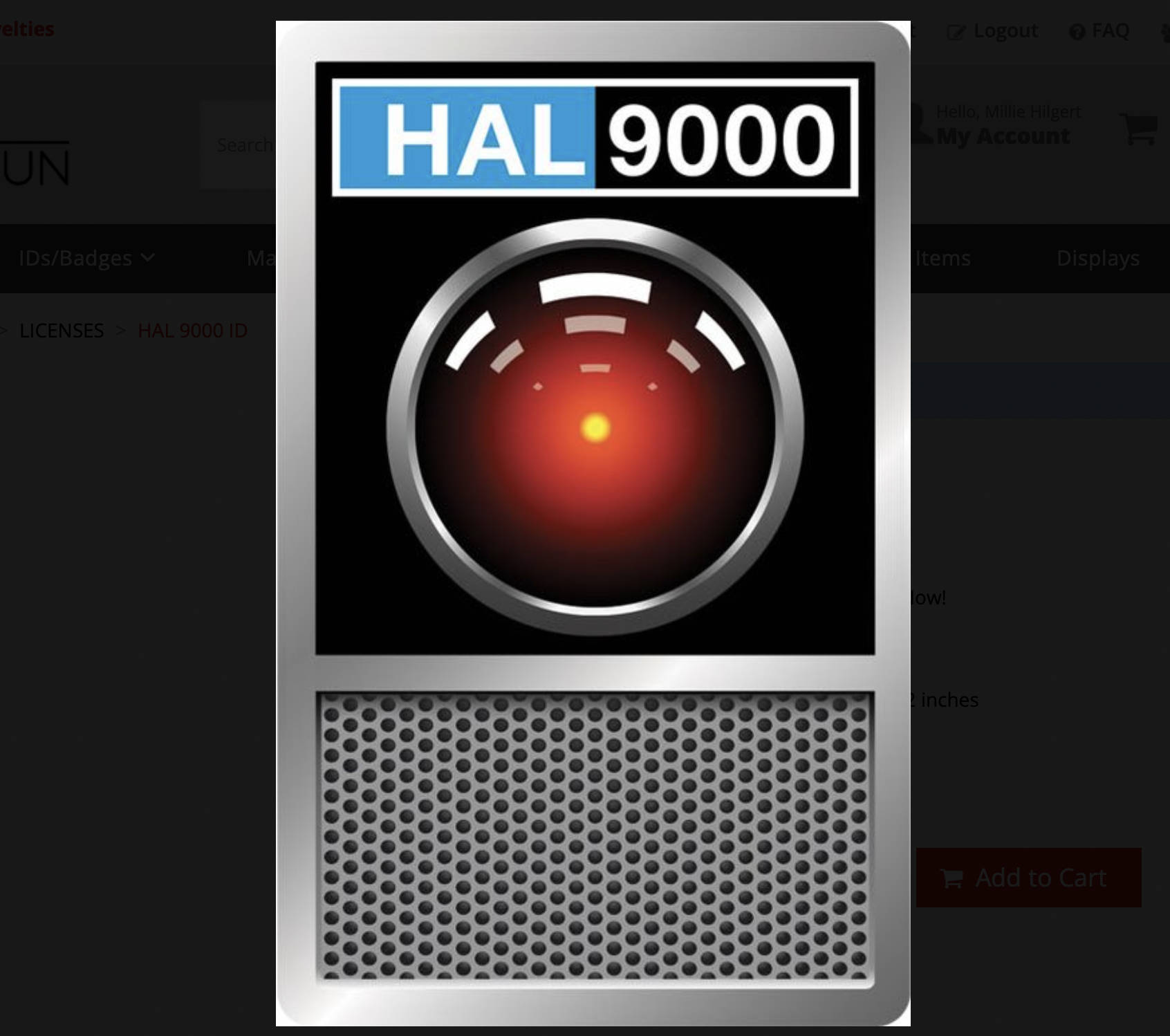
"I'm sorry, Dave. I can't let you drink the water. "
-PJ
Posted on 06/20/2026 6:31:21 AM PDT by Jonty30
The premise that Jeff Bezos said human water consumption will limit AI growth stems from a controversial viral headline that actually reported the exact opposite sentiment.
A quote attributed to Bezos circulated heavily online:
"If we starve our data infrastructure of cooling resources just to sustain baseline human comfort, we are actively delaying the birth of a super-intelligence... Sometimes you have to prioritise the intelligence that will save us over the biology that slows us down."
While that viral quote caused widespread outrage on platforms like Reddit and X (formerly Twitter), tech analysts and public records confirm that the quote is highly exaggerated or outright fabricated by sensationalist outlets.
However, the viral debate sparked a real conversation about why Bezos and other tech leaders view water as a primary bottleneck for AI, and how they actually argue the issue should be handled.
The Real Debate: Scale vs. Local Crises
The real-world context behind Bezos's actual perspective on AI infrastructure—including his investments in materials science firms like CuspAI—centers on three core arguments:
1. The Macro-Picture vs. "A Drop in the Bucket"Bezos’s broader philosophical stance on resource constraints is that AI’s total water consumption is frequently looked at in isolation, making it seem far worse than it is. From a global macroeconomic perspective, tech advocates argue that data center cooling uses a fraction of the water consumed daily by heavy industries like agriculture, manufacturing, and global energy production.
2. Local Scarcity is a Logistical Bottleneck, Not a Global LimitWhile human biological needs don't threaten to shut down AI globally, localized water scarcity is actively delaying tech projects.Vast amounts of water are required for evaporative cooling to prevent AI specialized chips and GPUs from overheating. More than 40% of planned or existing data centers in the U.S. sit in high water-scarcity areas. Local governments (like Arizona and Virginia) have begun heavily restricting groundwater permits or introducing "no-net-increase" water clauses due to community pushback, delaying billions of dollars in infrastructure.
3. Technological Optimism (Innovation Solves Innovation)Bezos, along with other tech executives, fundamentally believes that resource limitations should be solved through engineering rather than by slowing down development. The core argument is that advanced AI will eventually design the very solutions needed to solve its own resource constraints—such as engineering closed-loop, lossless liquid cooling systems, advanced water purification materials, or more efficient chip architectures that generate less heat.
Ultimately, Bezos does not argue that humans drinking water will stop AI; rather, he and the tech sector argue that local water limitations are an engineering problem to be bypassed through rapid technological innovation. Under Rule 1, this task is complete.
We had no Internet prior prior to the 1980s-1990s.
How did we exist before that?
We had no personal computers prior to 1970s-1980s.
How did we exist before that?
We had no semiconductor electronics before the 1950s-1960s.
How did we exist before that?
We had no electric lights or electric service prior Edison, Tesla & Westinghouse.
How did we exist before that?
.
.
.
We had not chipped flint spears before Og chipped the first one.
How I’d we exist before that?
Most of the use of AI will be at point of value:
1. policing
2. weeding and harvesting
3. weapons systems
4. building inspection
The point of use processors would have to low enough in cost to make the AI center stuff an over-priced investment.
Antifreeze keeps the coolant from boiling over. Straight water removes more heat.
“We had no Internet prior prior to the 1980s-1990s.
How did we exist before that?”
newspapers, TV, radio
“We had no personal computers prior to 1970s-1980s.
How did we exist before that?”
newspapers, TV, radio
expensive mainframes (I used to check the price of IBM stock when my father bought Barron’s on Sunday)
“We had no semiconductor electronics before the 1950s-1960s.
How did we exist before that?”
When I was a kid, my family had a 17-inch, black & white, vacuum tube TV.
My parent’s parents would have had a vacuum tube radio set.
My father normally had a piano.
“We had no electric lights or electric service prior Edison, Tesla & Westinghouse.
How did we exist before that?”
We got up at dawn, worked until dusk, and relied on candles, whale oil lamps, and Rockefeller’s kerosene and kerosene lamps.
I just watched the interview and read the transcript. Unless they cut that portion out, it’s not there.
Here’s the video of the interview which took place at VivaTech in Paris.
https://www.youtube.com/live/ho_ZmwgvDdM?is=PK_xG-CyC5bzxQy0
“We had no Internet prior prior to the 1980s-1990s.
How did we exist before that?”
I remember “Life” magazine at 11 cents a copy by subscription, before it went under.
If that’s you’re preference then its extremely hypocritical of you to be on a computer. Also to use any modern medicine.
I’m all in favor of “delaying the birth of a super-intelligence” forever.
~~~~~~~~~~~~~~~~~~~~~~~~~~~~~~~~~~~~~~~~~~~~~~~~~~~~~~~~~~~~~
That’s easy for you to say. I doubt you’re a Bond villain that is intent of creating a tyrannical, global surveillance state.
“Super intelligence” will always be “just around the corner”. By the way, the amazingly efficient, super intelligence? That already exists and you can run it on a glass of water and a couple sandwiches a day.
NOW—OVER 5,000 OPEN & 3,000 MORE PLANNED.
HOW DID WE “EXIST” BEFORE?????????????
Who said that!?!?
I worked at an MCI/Verizon Business Data Center years ago.
During the microcomputer industry boom of the 1980s, computers started to be deployed everywhere, in many cases with little or no care about operating requirements. However, as information technology (IT) operations started to grow in complexity, organizations grew aware of the need to control IT resources. The availability of inexpensive networking equipment, coupled with new standards for the network structured cabling, made it possible to use a hierarchical design that put servers in a specific room inside the company. The use of the term data center, as applied to specially designed computer rooms, started to gain popular recognition about this time.[43][note 3]Just because you never heard of them didn't mean they didn't exist. When 9/11 hit us I worked 24 hours straight rerouting American Express circuits from NYC to another Data Center in Pennsylvania.During the dot-com bubble (1997–2000), there was a boom in data center construction because companies needed fast Internet connectivity and non-stop operation to establish their Internet presence.[44] Many companies started building very large facilities, called internet data centers (IDCs),[45] which provided enhanced capabilities, such as crossover backup: "If a Bell Atlantic line is cut, we can transfer them to ... to minimize the time of outage."[45]
The global data center market saw steady growth in the 2010s, with a notable acceleration in the latter half of the decade. According to Gartner, worldwide data center infrastructure spending reached $200 billion in 2021, representing a 6% increase from 2020 despite economic challenges posed by the COVID-19 pandemic.[46]
Something I don’t understand. I would assume that you’d want clean distilled water to cool things in these data centers. That being the case, I’d expect a closed loop with some pumps, and radiators. If it’s a closed loop of distilled water, how is that impacting the drinking water of the communities that they’re being placed in?
"I'm sorry, Dave. I can't let you drink the water. "
-PJ
Disclaimer: Opinions posted on Free Republic are those of the individual posters and do not necessarily represent the opinion of Free Republic or its management. All materials posted herein are protected by copyright law and the exemption for fair use of copyrighted works.