Skip to comments.
Nearly half the objects orbiting Earth are ‘uncontrollable’ space junk — and jeopardize future space travel
NY Post ^
| 05/17/2026
| Alex Oliveira
Posted on 05/17/2026 12:36:29 PM PDT by DFG
Nearly half the manmade objects orbiting Earth are chunks of “uncontrollable” space junk — with just three countries fueling the problem and endangering future space travel, a shocking new study found.
At least 15,587 of the 33,269 tracked objects circling the planet are discarded debris from space launches — meaning a whopping 47% of the stuff hurtling around the planet is potentially hazardous junk, according to a May report from the engineering supply company Accu.
Those objects include at least 2,396 discarded rocket bodies — sometimes hundreds of feet across in length — 12,550 expended launch components which can vary in size and shape, and 641 objects which haven’t been classified.
The other 17,682 objects are “payloads” — satellites ranging from the likes of SpaceX’s StarLink networks to NASA’s James Webb Space Telescope.
But some of those payload satellites are out of commission, which only adds to the amount of junk orbiting Earth.
And most alarmingly, many of those bodies of heavy metal junk are whipping around the planet at nearly 20,000 mph every day — posing an enormous risk to other space missions, experts said.
“Nearly half of all tracked objects already fall into categories with no control or purpose,” wrote the Accu report, which collated data from the US Space Force’s Space-Track.org for its study.
“As a result, spacecraft must now be designed with greater tolerance to debris impacts and more robust shielding, as even a tiny fragment can destroy an entire mission,” the report said.
The warning is no exaggeration: In 2016, a fleck of paint or metal just a fraction of a millimeter across left a 7mm-long gouge in a window of the International Space Station.
(Excerpt) Read more at nypost.com ...
TOPICS: Science
KEYWORDS: accu; jameswebb; kesslersyndrome; spacejunk
Navigation: use the links below to view more comments.
first previous 1-20, 21-36 last
To: PeterPrinciple
Thanks! Most of the debris consists of pieces lost off things, including some screws that floated off during an ISS spacewalk, and I think a hand tool (custom made for the job, compatible with space suit gloves, and probably a bit pricey), and other small debris.
The current Starlink constellation is entirely operational and functional, with the defunct ones already having been safely deorbited. It would be great to do the same with those expended Zenit boosters as a start.
21
posted on
05/17/2026 3:07:43 PM PDT
by
SunkenCiv
(TDS -- it's not just for DNC shills anymore -- oh, wait, yeah it is.)
To: Dr. Sivana
First thing I thought of.
22
posted on
05/17/2026 3:26:11 PM PDT
by
ifinnegan
(Democrats kill babies and harvest their organs to sell)
To: Jeff Chandler
Thanks!
That’s the image that immediately came to mind.
Need to Elon on it.
23
posted on
05/17/2026 3:31:38 PM PDT
by
sjmjax
To: DFG
I think space travel is a big waste of money.
24
posted on
05/17/2026 3:58:50 PM PDT
by
b4me
(Pray, and let God change you. He knows better than you or anyone else, who He made you to be.)
To: DFG
Time for Roger Wilco, Space Janitor!
25
posted on
05/17/2026 4:03:18 PM PDT
by
Mushinronshasan
(insert generic tagline here)
To: DFG
Quark (1977): Created by Buck Henry (who also co-created Get Smart), this short-lived NBC sci-fi sitcom follows Commander Adam Quark and his dysfunctional crew aboard an interstellar garbage scow operating out of Space Station Perma One. The crew collects cosmic trash and bizarre objects while actively spoofing popular sci-fi franchises like Star Trek, Star Wars, and 2001: A Space Odyssey.Seems like there were a lot more shows about space garbage collectors.
26
posted on
05/17/2026 4:11:17 PM PDT
by
x
To: DFG
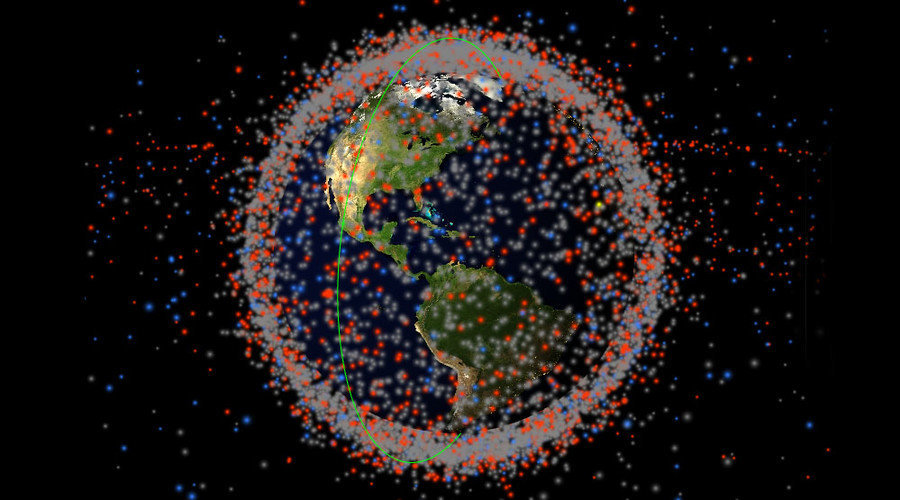
You can search by satellite name or simply get lost roaming around the interactive Earth map. One thing that stands out is the more than 21,000 pieces of 'orbital debris' which "no longer serve a useful purpose".
Orbital debris ranges from derelict spacecraft to debris released during spacecraft separations from their launch vehicles or during mission operations.
27
posted on
05/17/2026 4:19:58 PM PDT
by
henbane
(✧ 𝕁𝔸ℕ𝕌𝔸ℝ𝕐 𝟚𝟘 𝟚𝟘𝟚𝟝--𝕄𝔸𝔾𝔸 𝕄𝔸𝔾ℕ𝕀𝔽𝕀ℂ𝕌𝕊 ✧)
To: DFG
And yet you cannot see any of this junk from the “space station”.
28
posted on
05/17/2026 4:22:01 PM PDT
by
roving
To: SpaceBar
He certainly has put a bunch up there. SpaceWeather.com has a section dedicated to tracking Starlink. It’s worth a peek.
To: b4me
“I think space travel is a big waste of money.”
It is not. Modern telecommunications, spy satellites, scientific advancements more than compensate the cost. Elon Musk earns good money from space travel.
30
posted on
05/17/2026 6:54:04 PM PDT
by
wildcard_redneck
( Neocons in love with the Ukraine War hate how long the Iran War is taking.......... )
To: DFG
And most alarmingly, many of those bodies of heavy metal junk are whipping around the planet at nearly 20,000 mph every day — posing an enormous risk to other space missions, experts said.
Idiot experts, sure. If the junk went a bit faster, it wouldn't be orbiting the Earth anymore. If it went a bit slower, it would be hitting the Earth...
To: henbane
If all 21000 useless pieces of debris were on the Earth instead of in space, each one would have about 9360 sq mi to itself. That doesn’t include the larger ‘surface area’ from being further out, nor the various altitudes further separating the junk.
It’s the same as the real-life images of the asteroid belt vs people thinking they’re constantly bouncing off each other..
To: roving
And yet you cannot see any of this junk from the “space station”.
The average distance from one space junk to another is something over 100 miles..
To: alternatives?
So somebody could put a large amount of small washers in orbit and cause havoc with all the satellite surveillance systems?
If by 'large amount' you mean tens to hundreds of thousands, maybe. You'd need a pretty fancy washer launcher to shoot them every which direction to slightly change their orbit from yours.. I'm talking a really big gun to significantly spread their orbits around, then yea, maybe. And by big gun, I mean shooting these washers at 2-3x faster than the Barrett .50 is firing at.
To: DFG
Most space junk follows a specific orbit so they know where the items are. My son flies satellites. He’s had to change orbit a few times to avoid getting hit.
35
posted on
05/18/2026 5:03:03 AM PDT
by
cyclotic
(Don’t be part of the problem. Be the entire problem)
To: DFG
OR they are a cleverly constructed barrier to keep aliens out....
🛸🛸🛸
👾👾👾
👽👽👽
36
posted on
05/18/2026 12:26:14 PM PDT
by
BFW
Navigation: use the links below to view more comments.
first previous 1-20, 21-36 last
Disclaimer:
Opinions posted on Free Republic are those of the individual
posters and do not necessarily represent the opinion of Free Republic or its
management. All materials posted herein are protected by copyright law and the
exemption for fair use of copyrighted works.
FreeRepublic.com is powered by software copyright 2000-2008 John Robinson